Physical Address
304 North Cardinal St.
Dorchester Center, MA 02124
Physical Address
304 North Cardinal St.
Dorchester Center, MA 02124
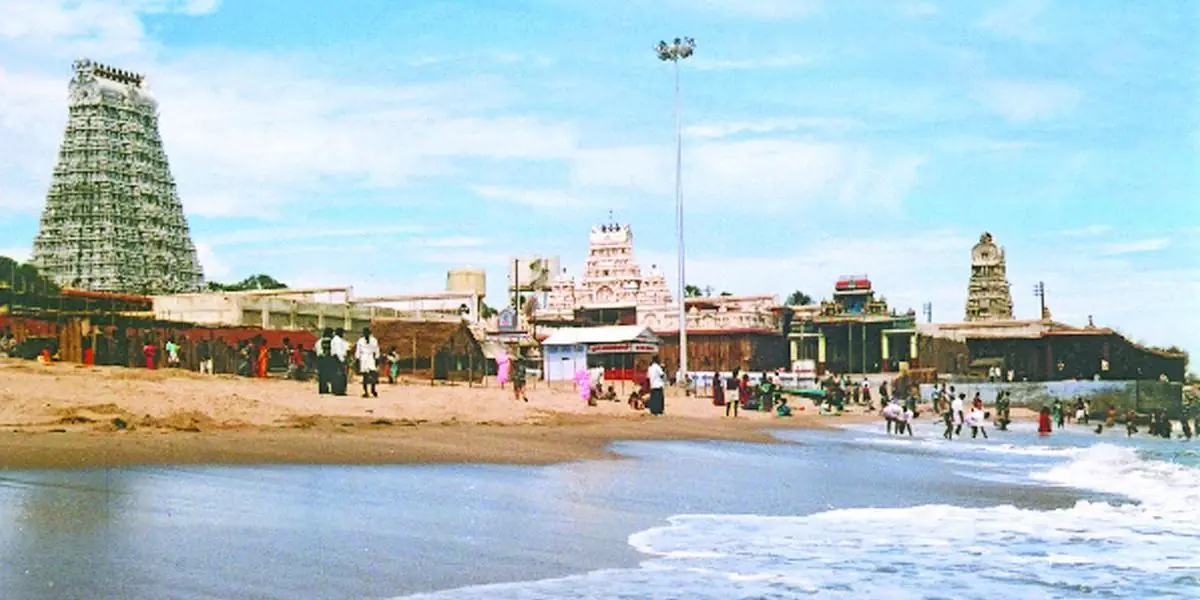
Tiruchendur temple timings matter because a small change in darshan entry, pooja sequence, or the afternoon break can affect your entire pilgrimage. The Tiruchendur Murugan Temple attracts devotees throughout the year, while festival days bring a very different crowd and timetable.
Before travelling, you need more than a general opening time: you should understand daily darshan timings, ritual periods, special darshan tickets, online booking, dress expectations, and ways to confirm the temple closing time today. This article explains how to plan a smoother visit while keeping official schedule changes and local temple decisions in mind.
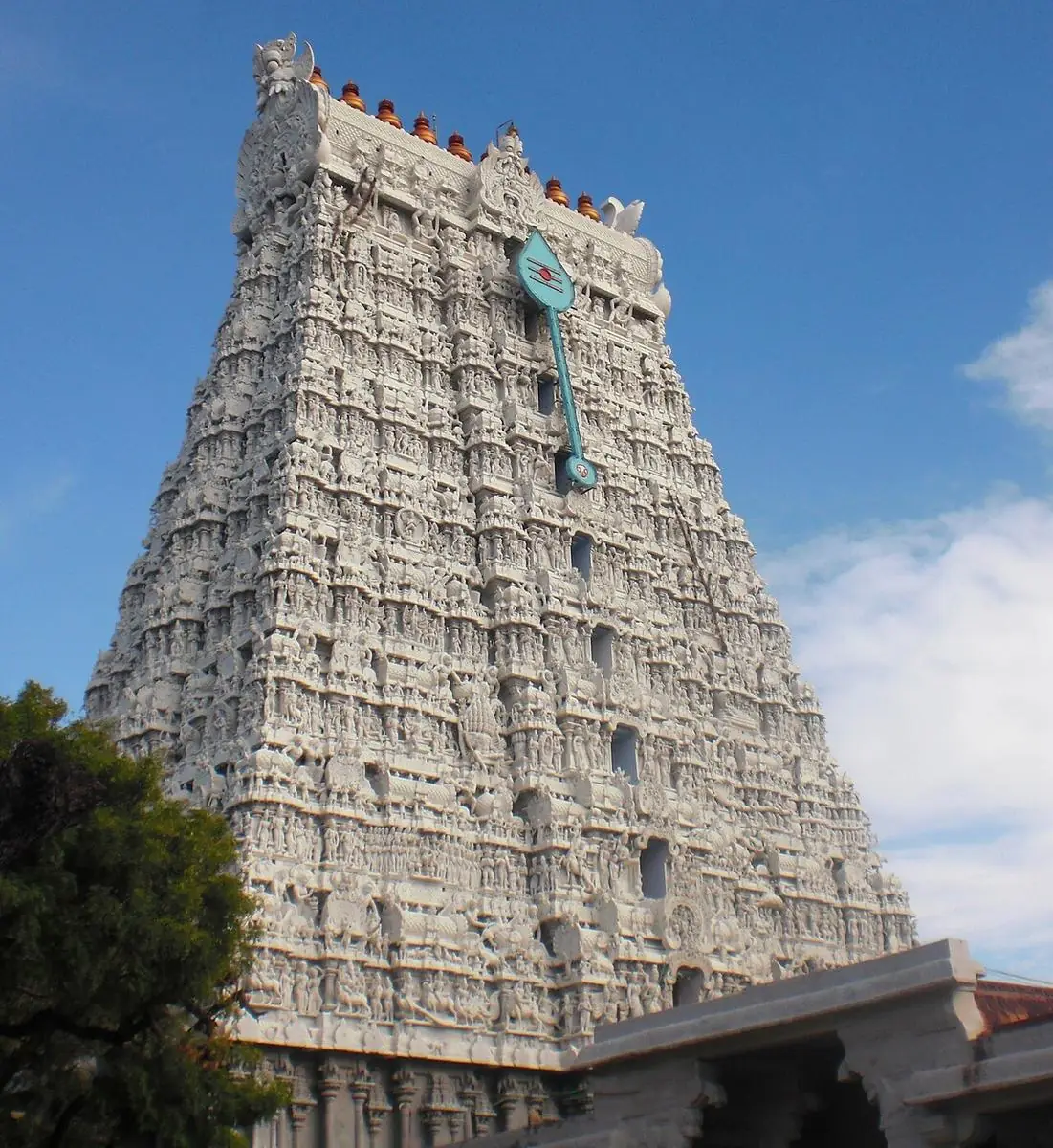
The temple is also known as the Arulmigu Subramaniyaswamy Temple and is one of the important Murugan shrines in Tamil Nadu. Because current timings can change, use the practical checks below rather than relying on an old social-media post or an unverified travel listing.
A temple timetable is not always a single fixed line such as “open from morning to night.” Several activities take place within the same day: sanctum preparation, worship, abhishekam, naivedyam, alangaram, general darshan, special entry, and closing rituals. If you arrive during an important pooja, the queue may pause or move more slowly even though the temple complex itself is open.
The most common planning mistake is to confuse the temple’s opening time with continuous darshan availability. A devotee may reach the Tiruchendur Temple location early in the morning and find that entry is being regulated for a ritual. Another visitor may arrive late in the afternoon, assuming the shrine is open throughout the day, only to encounter an interval or restricted access.
Timings can also change for reasons that have nothing to do with the regular daily schedule. Temple authorities may adjust arrangements for:
That is why “today’s darshan schedule” and “tomorrow Tiruchendur Temple timings” should be treated as live-information queries. Search results can display old timings for months or years, and a booking page may show availability without explaining a temporary entry restriction. Confirm the latest information through the official temple office, official notice, authorised booking channel, or the Tamil Nadu Hindu Religious and Charitable Endowments Department before leaving for the temple.
The Tiruchendur Murugan Temple generally follows a day divided into early-morning worship, daytime temple activity, evening worship, and night closure. The exact clock time for each phase should be confirmed locally because the schedule may be revised for festivals or special rituals. A broad understanding of these periods is still useful when arranging transport, accommodation, meals, and queue time.
| Planning phase | What devotees may encounter | What to verify before travel |
|---|---|---|
| Early morning | Temple opening preparations, first darshan opportunities, and morning worship | Morning opening time, first entry, and whether a ritual temporarily regulates access |
| Late morning | General darshan, pooja activity, and possible abhishekam-related movement | Abhishekam timings, queue status, and special darshan availability |
| Afternoon | Possible interval, restricted movement, or a change between worship sessions | Afternoon closing time and the next reopening time |
| Evening | Evening darshan, alankaram, and Sayaraksha-related worship | Evening opening time and whether a festival procession affects entry |
| Night | Final worship, night rituals, and closure of darshan access | Temple closing time today and the final permitted entry time |
In practical terms, you should distinguish three separate questions: when the temple opens, when devotees can enter the darshan queue, and when the final entry is accepted. These may not be identical. A temple could remain open for a ritual while general visitors wait outside, or the queue could close before the building’s official closing time.
If you’re planning a same-day return journey, don’t schedule your transport around the advertised closing time alone. Allow time for footwear collection, prasadam, parking, queue movement, and possible crowd-control holds. The final entry rule is especially important for elderly devotees, families with children, and visitors travelling by bus or train.
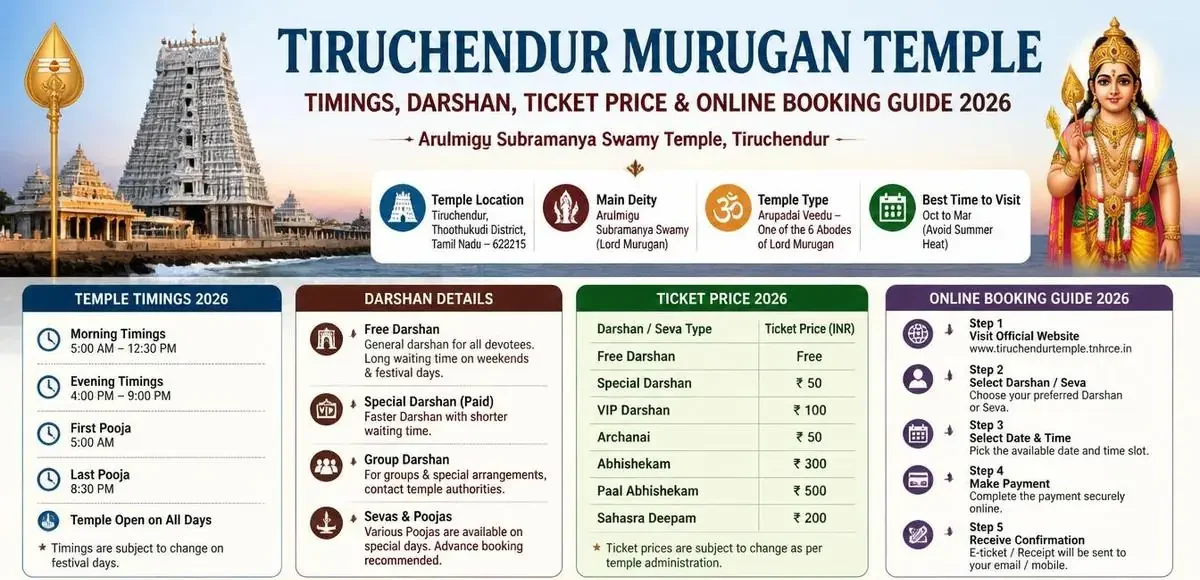
Ask the accommodation desk or local transport operator for the temple office contact, but treat their answer as preliminary. The most dependable confirmation comes from an official notice, the temple’s authorised communication channel, or a direct enquiry at the temple information counter. If you’re already nearby, look for the day’s displayed notice near the entrance and ticket counters.
When calling or enquiring, ask clearly: “What is the general darshan entry time today?”, “Is there an afternoon break?”, “What is the temple closing time today?”, and “Are special darshan tickets available?” These questions are more useful than asking only whether the temple is open.
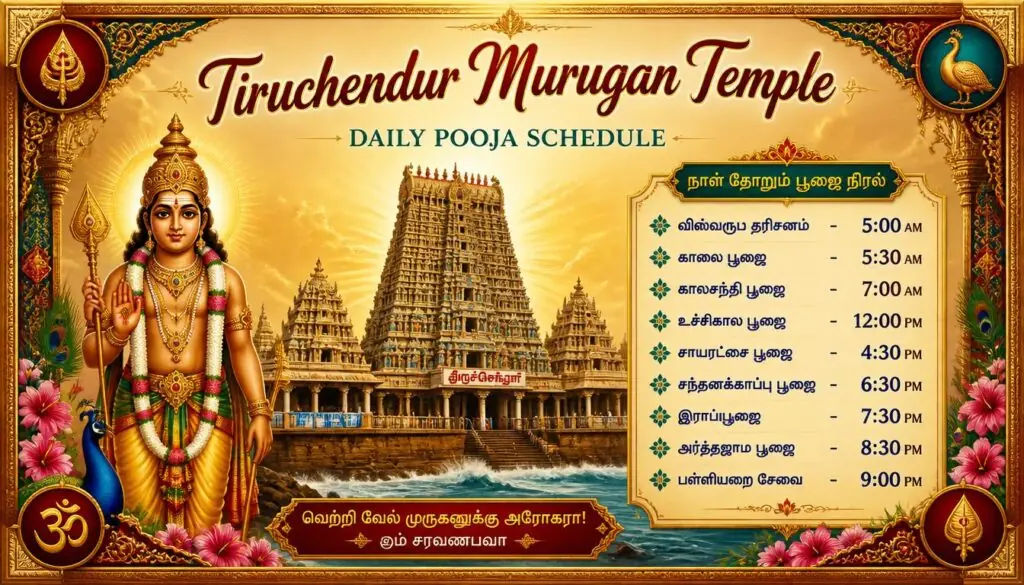
Devotees often search for Tiruchendur pooja timings because worship at the shrine is closely connected with the daily ritual sequence. Names such as Viswaroopa Darshan, Udaya Marthanda Pooja, Uchikala Pooja, Sayaraksha Pooja, and Rakkala Pooja may appear in temple schedules or devotional references. Their order and timing are part of the temple’s religious routine, but the precise clock times should be checked against the latest official schedule.
Viswaroopa Darshan is associated with the early opening phase of worship. Many pilgrims who want a quiet spiritual start try to reach the temple before the first major rush. That doesn’t guarantee a short queue, particularly during auspicious days, school holidays, or festival periods.
Udaya Marthanda Pooja belongs to the morning worship sequence, while Uchikala Pooja is connected with the midday period. Sayaraksha Pooja takes place in the evening worship cycle, and Rakkala Pooja is associated with the night rituals before the temple closes. These ritual names help you understand the day’s structure, but they should not be used as substitutes for a current notice.
Abhishekam timings can be particularly important for devotees who have booked or intend to book a specific worship service. An abhishekam may involve designated tickets, a limited number of participants, or a separate reporting point. General darshan may continue differently from the ritual queue, so confirm whether your booking gives access to the service, the sanctum viewing area, or only a specified participation facility.
If your priority is witnessing a ritual, arrive well before the stated reporting time. Ticket holders may need to complete verification, deposit footwear, and reach a designated counter before the worship begins. Late arrival can create difficulty even if the ritual itself has not finished.
If your priority is simply darshan, avoiding the busiest ritual transition may be more comfortable. Ask whether a pooja is in progress and whether general darshan entry is temporarily paused. Temple staff may direct visitors to wait until the ritual movement is complete.
Never assume that a pooja ticket is the same as a special darshan ticket. They may be separate services with different rules, reporting times, and availability. Read the description on the official booking page carefully and retain the receipt or confirmation message.
Special darshan arrangements can reduce uncertainty, but they don’t always mean immediate entry. A ticket may provide access to a separate queue or a defined service, while the actual waiting time still depends on crowd conditions and the temple’s ritual schedule. Before paying, check the service name, date, reporting time, ticket quantity, identity requirements, and cancellation or modification conditions.
Questions about the special darshan ticket cost are common. The amount can vary according to the service selected and the current decision of the temple administration.
Since prices and categories may change, don’t rely on a screenshot, a travel agent’s message, or an old article. Confirm the amount on the official temple booking facility or at an authorised counter.
Online booking may be available for selected services, but availability is not necessarily continuous. A booking portal may open slots in batches, close a service during festival preparation, or show no inventory even though general darshan is operating.
Use only an official or clearly authorised platform. Avoid sending money to individuals who promise faster entry through a personal UPI number or informal social-media account.
Take a screenshot of the confirmation, but don’t edit it or depend only on a screenshot if the portal provides a downloadable receipt. Carry the original identity document named in the booking. If the booking is for a group, verify whether all members must arrive together and whether children or senior citizens need separate details.
Official booking doesn’t remove the need to check the physical entry point. Some temples use different counters for general darshan, special darshan, pooja participation, and prasadam. Ask a temple employee rather than following an unsolicited guide who approaches you outside the complex.
There isn’t one universally best day to visit Tiruchendur Temple. The right choice depends on your purpose. A devotee seeking a particular festival may deliberately choose a very busy day, while a family with an elderly member may prefer a regular weekday with fewer processions and less congestion.
Weekends, public holidays, school vacations, and auspicious dates can draw more visitors. Festival days such as Skanda Sashti, Thaipoosam, Panguni Uthiram, and Vaikasi Visakam can have special festival timings, additional rituals, processions, and controlled movement. These occasions are spiritually significant, but they require more patience and earlier planning.
| Your priority | A practical planning choice | Important caution |
|---|---|---|
| Quiet general darshan | Consider a regular non-holiday day and reach during an early or less crowded window confirmed locally | A quiet period cannot be guaranteed during auspicious dates or local events |
| Participation in a named pooja | Plan around the official reporting time and arrive early for verification | The pooja schedule may change, and late entry may not be accepted |
| Festival experience | Check festival timings, road restrictions, accommodation, and transport before booking | Queues, parking arrangements, and access routes may be substantially different |
| Visit with senior citizens | Ask about senior citizen darshan, assistance, seating, and accessible entry options | Availability and procedure must be confirmed for the specific date |
| Same-day return | Choose a time with a generous buffer before your bus or train | Final entry, crowd control, and ritual pauses can delay the visit |
For many travellers, the most comfortable approach is to arrive with flexibility rather than trying to reach the shrine at the last possible minute. Keep drinking water, meals, and transport alternatives in mind, especially during warm weather and festival crowds.
Example, not a verified live schedule: Imagine a family from Madurai travelling with a grandparent and a child. They want general darshan, not a paid pooja, and have a return bus in the evening. Instead of assuming that the morning opening time guarantees immediate entry, they confirm the day’s opening, afternoon interval, final entry, and senior citizen arrangements with the temple office.
They reach the Tiruchendur temple location early, keep the booking and identity documents ready, and avoid fixing lunch or transport during the expected transition between morning and afternoon worship. If the queue is longer than expected, the family can adjust its sightseeing plan rather than missing the return bus. This example shows why a schedule check should include entry conditions, not just opening and closing hours.
Searches for Tiruchendur temple timings for senior citizens often reflect a practical need: older devotees want to know whether they can avoid prolonged standing or use a separate arrangement. The answer may depend on the day, the temple’s current system, medical considerations, and the availability of staff assistance. Don’t assume that a general priority policy applies automatically to every service or festival.
Before travelling, ask these specific questions:
Families with children should also consider heat, waiting time, footwear arrangements, and toilet access. Young children may find a long queue tiring, particularly if the family arrives during a peak period. Carry only what the temple rules permit, and check restrictions on mobile phones, cameras, bags, and food before reaching the entrance.
Visitors with mobility limitations should explain their needs politely to the temple staff. A separate route, if available, may not be advertised prominently. It’s better to request official assistance at the information counter than to accept help from an unauthorised person demanding payment.
Keep prescriptions, water, and essential medicines with the family member who needs them. If someone cannot stand for long periods, plan a rest break and avoid promising children that the visit will take only a few minutes. Temple visits are devotional experiences, but preparation helps everyone participate with dignity.
Festival days can transform the ordinary rhythm of the Arulmigu Subramaniyaswamy Temple. More devotees may arrive before dawn, processions can affect road access, and the temple administration may introduce barricades, holding areas, or route changes. Pooja timings can be advanced, delayed, or supplemented with special worship connected with the occasion.
Skanda Sashti is especially significant for Murugan devotees and is associated with intense worship and large gatherings at many Murugan temples. At Tiruchendur, devotees may plan visits around special rituals and religious events, but the exact programme should be verified for the relevant year rather than copied from a previous calendar.
Thaipoosam, Panguni Uthiram, and Vaikasi Visakam can also attract pilgrims who arrive from different parts of Tamil Nadu and other states. Transport demand, accommodation rates, parking arrangements, and walking distances may all change. The usual daily darshan timings may not describe the actual experience on a major festival day.
For a festival visit, check the following at least several days in advance:
Arriving very early doesn’t guarantee a short wait during a major observance. The entire town may be busy, and movement near the temple can be regulated for safety. Follow barricades and staff instructions even if you have visited before; festival arrangements are often different from ordinary days.
Good planning includes understanding the difference between public access and respectful temple conduct. Dress modestly and comfortably for the climate, particularly because the queue may involve walking and standing. Traditional clothing is often chosen by devotees, but the key requirement is to follow the temple’s current dress and entry instructions.
Rules may apply to mobile phones, photography, handbags, food, footwear, and offerings. Some items may need to be deposited at designated counters.
Don’t leave valuables with an unauthorised person outside the temple. Use official cloakroom or storage facilities only when available and clearly identified.
Follow the queue even if someone claims to offer a faster route. Paid services should be purchased only through official counters or the official booking process. If a person outside the temple promises guaranteed darshan, a private sanctum visit, or a special price, treat the offer as a warning sign.
During a ritual, remain patient and avoid blocking the passage for photographs or prolonged prayer. Temple staff may move devotees forward quickly during busy periods. You can offer prayers respectfully without stopping the queue or touching restricted structures.
Offerings should be accepted only through recognised channels. If you’re carrying flowers, coconuts, or other permissible items, ask where they should be submitted. Requirements can differ according to the service and the day’s arrangements.
People frequently search for “Is Tiruchendur Temple crowded today?” or “What are tomorrow Tiruchendur Temple timings?” Search engines may provide useful leads, but they cannot always show live queue conditions. A map listing might have the regular hours, while a festival notice on the temple premises reflects a temporary change.
Use a verification sequence rather than trusting one source:
The Tamil Nadu Hindu Religious and Charitable Endowments Department is a relevant official authority for many temples in the state. You can consult the Tamil Nadu HR&CE Department’s official temple information portal as one starting point, while still confirming the specific day’s arrangements with the temple itself.
When using a booking website, inspect the domain name and page details before entering personal or payment information. A genuine-looking logo does not prove that a page is official. Save the confirmation number and note the reporting location, since a booking may be valid only at a particular counter and time.
Suppose one source says the temple closes in the afternoon and another says it remains open. Ask whether they’re referring to the temple complex, general darshan, or a specific sanctum entry. Similarly, “special darshan available” may mean that tickets are sold at a counter, not that online slots are open.
For urgent travel, ask for the final permitted entry rather than the closing time. Also confirm whether the stated time applies to the current date, a normal day, or a festival schedule. These small distinctions prevent avoidable confusion.
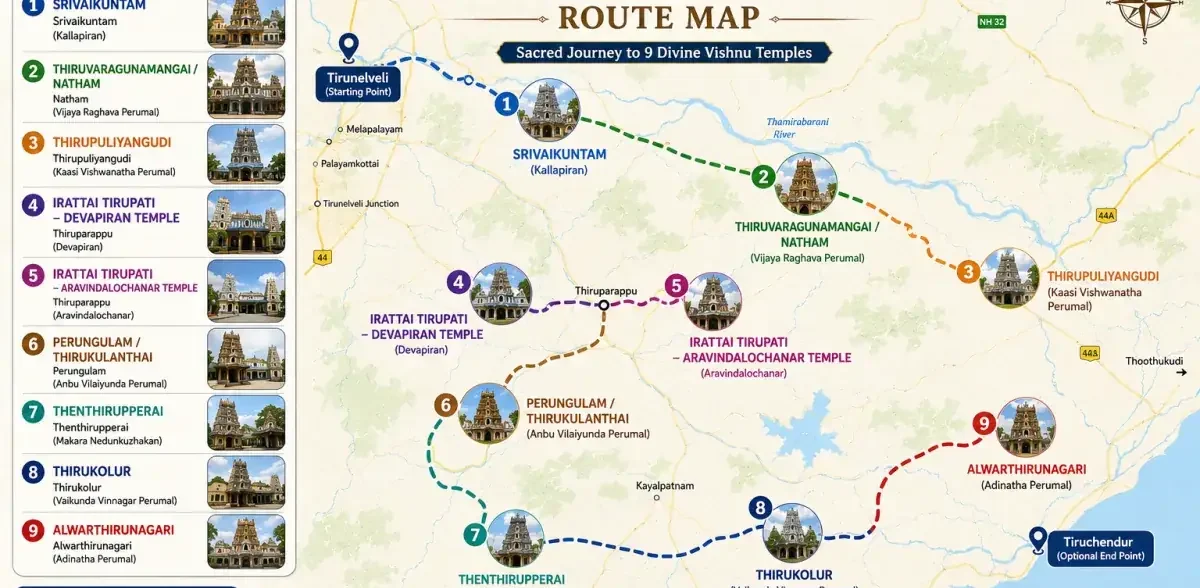
The temple is located in Tiruchendur in Tamil Nadu, close to the coast and associated with the worship of Lord Murugan. Travel planning should account for the final approach to the temple, local traffic, parking, walking distance, and the time required to find the correct entrance. A map application can help with route planning, but it may not show temporary festival diversions or restricted vehicle access.
If you’re travelling from another city, build a buffer between your arrival and the intended darshan. A bus or train delay can turn a comfortable morning plan into a rushed queue experience. During peak periods, local transport may take longer because roads near the temple are busy or vehicles are directed to peripheral parking areas.
Accommodation within Tiruchendur can be helpful for an early visit, particularly for families, senior citizens, and devotees attending a named pooja. Confirm check-in and check-out times before booking. A hotel’s claim that it is “near the temple” doesn’t always mean the entrance is a short walk, especially if roads are closed or the route changes during a procession.
Keep your itinerary simple on the day of darshan. You may want to visit nearby religious or coastal places, but don’t place a tightly timed activity immediately after the temple. Queue delays, ritual pauses, and crowd movement are normal possibilities.
A practical travel plan includes:
One mistake is copying a timetable from a blog published several years earlier. Even if the regular daily schedule has remained similar, the information may omit a new booking procedure, revised ticket category, or festival restriction. Always check the date and source of the information.
Another mistake is treating every form of entry as identical. General darshan, special darshan, pooja participation, and senior citizen arrangements may use different queues. A devotee with a valid booking can still be directed to a reporting counter before reaching the main entry line.
Some visitors also arrive exactly at the opening time, expecting to be first. Staff may still be completing preparations, and the first ritual may affect general access. Reaching early is sensible, but allow a reasonable waiting period rather than treating the published time as a guarantee of immediate viewing.
Travellers sometimes plan their return journey around the temple closing time today. That’s risky.
The queue can close before the building closes, and a festival can cause unexpected delays. Keep the return ticket flexible where possible, or leave a substantial margin.
Finally, don’t rely on unofficial touts for special darshan tickets. If the price, receipt, or service description is unclear, walk away and ask at the official counter. A genuine booking should have understandable terms and a verifiable reference.
The temple follows early-morning, daytime, evening, and night worship periods, but the exact clock timings and final entry can change. Confirm the current schedule through the official temple office or authorised notice before travelling.
The closing time may differ on ordinary days, festival days, and days with special rituals. Ask specifically for the final darshan entry and not only the time at which the premises close.
Online booking may be available for selected services and dates. Availability, ticket categories, prices, and reporting instructions can change, so use only the official booking channel and check the receipt carefully.
There is no safe single answer without knowing the service and current official rate. Verify the special darshan ticket cost on the authorised portal or at the temple counter on your travel date.
A regular non-holiday day may be more manageable if you want less crowd pressure, while festival days are suitable if you specifically want to participate in major Murugan observances. Check crowd status and festival timings before deciding.
A special arrangement may be offered depending on the date and temple administration. Confirm eligibility, accompanying-person rules, reporting time, and accessibility facilities directly with the temple.
You may be able to attend or book certain services, subject to the current pooja schedule and entry rules. Confirm whether a ticket is required and where you must report before the ritual begins.
Tiruchendur temple timings are best treated as a planning framework, not a permanent promise printed once and followed forever. Check the current opening, final entry, pooja schedule, special darshan availability, and crowd conditions shortly before travel. That small step is especially valuable during Skanda Sashti, Thaipoosam, Panguni Uthiram, Vaikasi Visakam, weekends, and public holidays.
Before you leave, save the official contact details, booking confirmation, travel buffer, and a backup plan. With those checks in place, you can approach the Tiruchendur Murugan Temple with fewer logistical worries and more time for the purpose of your visit.





