Physical Address
304 North Cardinal St.
Dorchester Center, MA 02124
Physical Address
304 North Cardinal St.
Dorchester Center, MA 02124
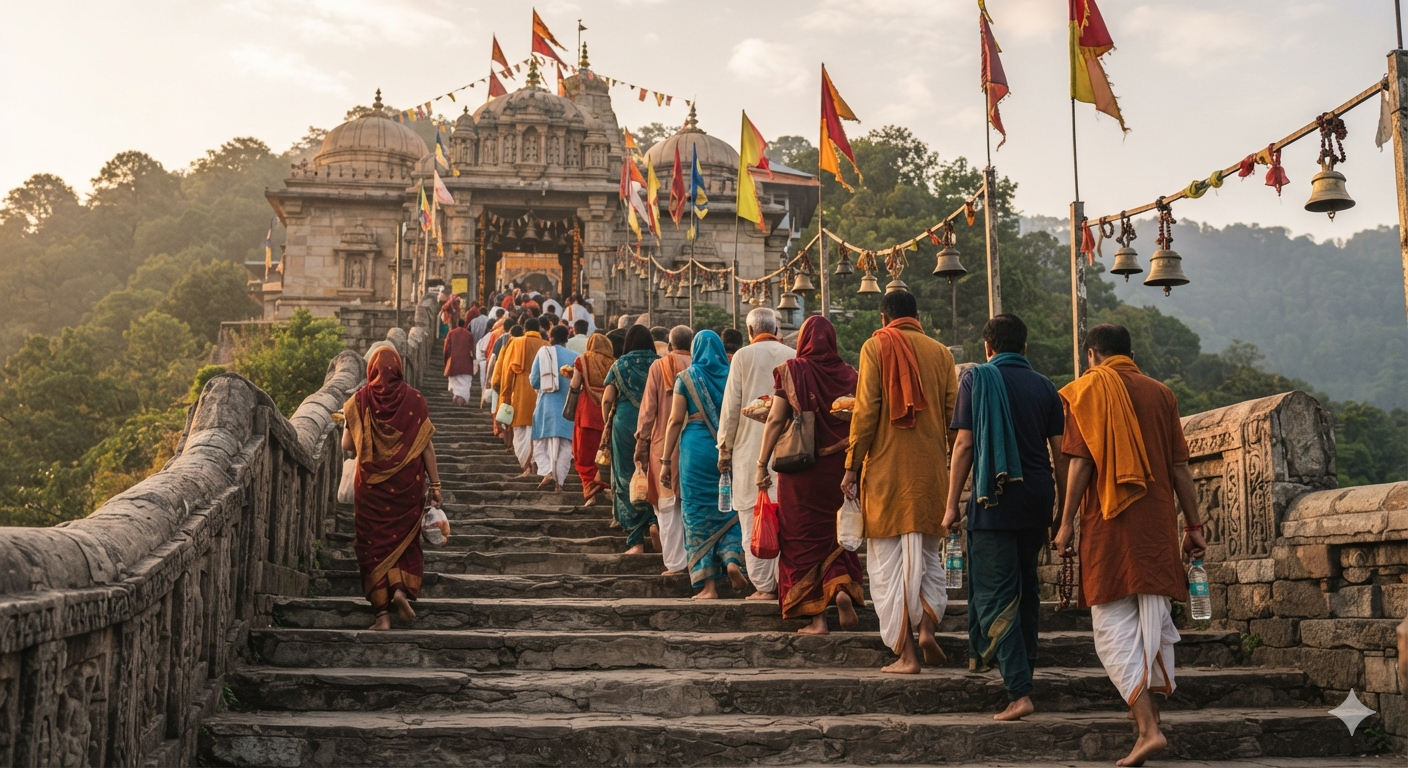
If you’re planning a trip to the Sri Lakshmi Narasimha Swamy Temple, getting the Yadagirigutta temple timings right can make or break your visit. Show up at the wrong hour and you’ll either wait in a massive queue or miss the ritual you actually wanted to see. This temple, perched on a hillock about 60 km from Hyderabad, draws thousands of devotees every single day, and the daily schedule is more layered than most people expect.
This guide walks you through the full darshan and seva timetable, ticket prices, booking steps, and a few things competitors rarely mention, like what a real visit actually costs and how to handle the climb if you’re travelling with elderly family members. Let’s get into it.
Here’s the first thing you should know: you’ll find slightly different opening and closing times depending on which source you check. Some list the temple opening at 4:00 AM, others say 3:30 AM. Closing times bounce between 9:30 PM and 9:45 PM too.
This isn’t because anyone’s wrong. Temple authorities do adjust the schedule seasonally and during major festivals, and older sources simply reflect an earlier version of the timetable. The safest approach is to treat the table below as your baseline, then double-check with the temple’s official booking portal a day or two before you travel, especially if you’re visiting during Brahmotsavam or a long weekend.
| Activity | Timing |
| Temple Opens | 3:30 AM |
| Suprabhatam | 3:30 – 4:00 AM |
| General Darshan (Morning) | 7:00 – 9:00 AM |
| Afternoon Break (Dwarabandanamu) | 3:00 – 4:00 PM |
| Evening Darshan | 5:00 – 7:00 PM |
| Temple Closes | 9:45 PM |
The temple is open every single day of the week, with no weekly holiday. That’s worth knowing if you’re used to other Telangana temples that close for a day mid-week. Yadagirigutta runs a continuous daily cycle from the pre-dawn Suprabhatam right through to the night-time Shayanotsavam.
Between roughly 3:00 PM and 4:00 PM, the temple observes what’s called Dwarabandanamu, essentially a short closure while priests prepare for the evening rituals. A lot of first-time visitors don’t plan for this gap and end up standing outside for an hour they didn’t budget for. Build it into your schedule and you’ll avoid that entirely.
During Brahmotsavam, Swathi Nakshatram, and other major occasions, darshan hours often extend, and some intermediate breaks get shortened or dropped altogether to handle the extra footfall. Weekends behave similarly, just with less advance notice. If your trip lands on a Saturday, Sunday, or festival date, expect the temple to stretch its hours, not shrink them.
The daily ritual calendar at Yadagirigutta follows Pancharatra Agama procedures, and it’s genuinely intricate. Rather than splitting this into separate morning and evening tables the way a lot of guides do, here’s the whole day laid out as one continuous timeline so you can see exactly where you’d slot in.
| Time | Ritual |
| 3:30 – 4:00 AM | Suprabhatam (waking the deity) |
| 4:00 – 4:30 AM | Thiruvaradhana |
| 4:30 – 5:15 AM | Bala Bogam |
| 5:15 – 6:15 AM | Nijabhishekam |
| 6:15 – 7:00 AM | Archana |
| 7:00 – 9:00 AM | General Darshan |
| 9:45 – 11:30 AM | Nitya Kalyanotsavam |
| 11:45 AM – 12:30 PM | Maharaja Bhogam |
| 12:30 – 3:00 PM | Darshan Resumes |
| 3:00 – 4:00 PM | Dwarabandanamu (Temple Closed) |
| 5:00 – 7:00 PM | Evening Darshan |
| 7:00 – 7:30 PM | Thiruvaradhana (Evening) |
| 7:30 – 8:15 PM | Evening Archana |
| 8:15 – 9:00 PM | Final Darshan |
| 9:00 – 9:45 PM | Aragimpu and Temple Closure |
Suprabhatam is the ceremonial waking of the deity, performed before sunrise. It’s followed by Nijabhishekam, the sacred bathing ritual, which many devotees consider the most spiritually significant part of the day. If you want to witness Nijabhishekam specifically, you’ll need to be at the temple well before 5:15 AM, since it’s not repeated later.
Once the morning archana wraps up, general darshan opens for a few hours before the Maharaja Bhogam offering. This midday window tends to be less crowded than early morning or evening slots, particularly on weekdays.
The evening sequence mirrors the morning in structure but ends with Shayanotsavam, the ritual that puts the deity to rest for the night. Watching this closing sequence has its own quiet appeal; the crowd thins out considerably after 8:30 PM.
Not every devotee wants the same experience, and Yadagirigutta offers a genuinely wide spread of options, from free general darshan to paid fast-track entries and elaborate sevas. The trick is matching the type to your actual situation rather than defaulting to whatever’s listed first.
| Darshan / Seva Type | Price (INR) | Best For |
| General Darshan | Free | Budget travelers, no time pressure |
| Special Entry Darshan | ₹150 | Slightly faster queue, small groups |
| VIP / Break Darshan | ₹300 | Families, senior citizens, limited time |
| Nijabhishekam (1 person) | ₹400 | Devotees seeking a personal ritual |
| Nitya Kalyanotsavam | ₹1,500 | Couples, milestone occasions |
| Suprabhata Darshanam | ₹100 | Early risers wanting a peaceful start |
General darshan costs nothing, and it’s genuinely the way most pilgrims experience the temple. The trade-off is queue time, which can stretch past two hours on weekends.
Special Entry Darshan at ₹150 and VIP Darshan at ₹300 both cut down waiting time significantly. VIP darshan runs in two dedicated slots, 9:00–10:00 AM and 4:00–5:00 PM, and grants entry through the North Rajagopuram, which is a separate, faster route into the sanctum.
If you’re visiting for a specific occasion, like a new job, a wedding, or recovery from illness, sevas like Nijabhishekam or the Sudarshana Narasimha Homam carry particular significance. These do need advance booking, especially during peak months.
Here’s something almost no guide walks you through properly: what does an actual trip look like once you add up tickets, travel, food, and time? Let’s use a real-world scenario to make this concrete.
Case study: A family of four from Hyderabad, one-day visit.
Ramesh, his wife, and their two teenage kids decide to drive from Hyderabad on a Saturday. They leave home at 5:30 AM to beat the weekend crowd, reach Yadagirigutta by around 7:00 AM, and opt for VIP darshan for all four since Ramesh’s mother-in-law, who’s travelling with them, can’t stand in long queues comfortably.
Total for the day comes to somewhere between ₹3,800 and ₹4,200, not counting any shopping or donations at the hundi. That’s a realistic number for a family that wants a comfortable, unhurried visit rather than the bare-minimum free darshan.
If the same family decides to stay overnight, a room at one of the Devasthanam-run guesthouses runs anywhere from ₹560 to ₹1,008 depending on the category. Add that to the day-trip budget and you’re looking at roughly ₹4,500–₹5,500 total for a two-day, relaxed pilgrimage, including an early morning Nijabhishekam slot on day two before checkout.
Booking has genuinely improved in the last few years. You’ve got two real options here, and each suits a different kind of traveler.
The official portal lets you reserve darshan and seva slots in advance. It’s a straightforward process:
You can still walk up and buy tickets at the counters on-site. This works fine on regular weekdays, but during festivals or long weekends, counter tickets for VIP darshan and popular sevas often run out by mid-morning.
If your ideal slot is sold out, general darshan is always available and never requires a booking. Alternatively, shifting your visit by even one day, from Saturday to Friday, for instance, usually opens up far more availability across every ticket category.
Reaching Yadagirigutta is fairly simple since it sits close to Hyderabad, but getting up the hill itself is where planning actually matters.
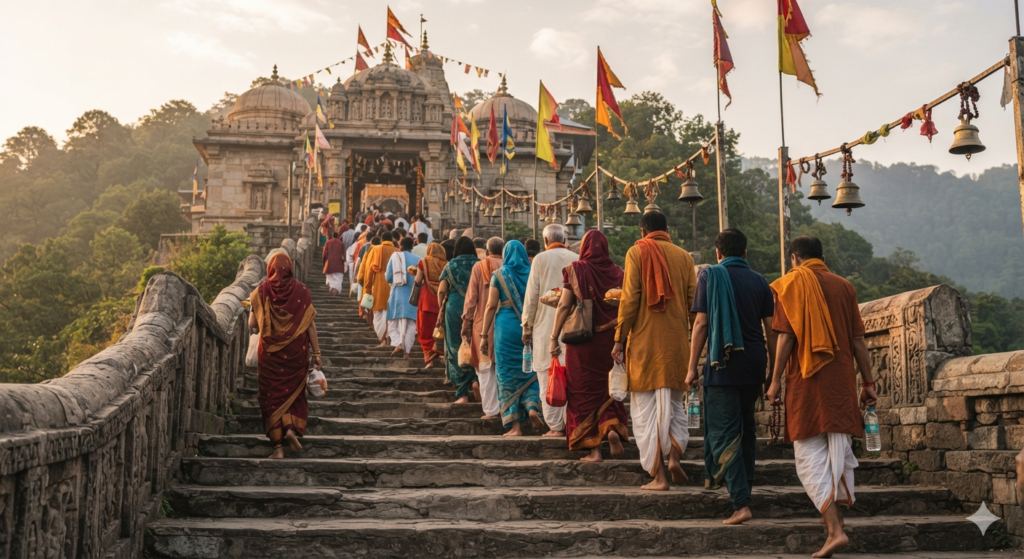
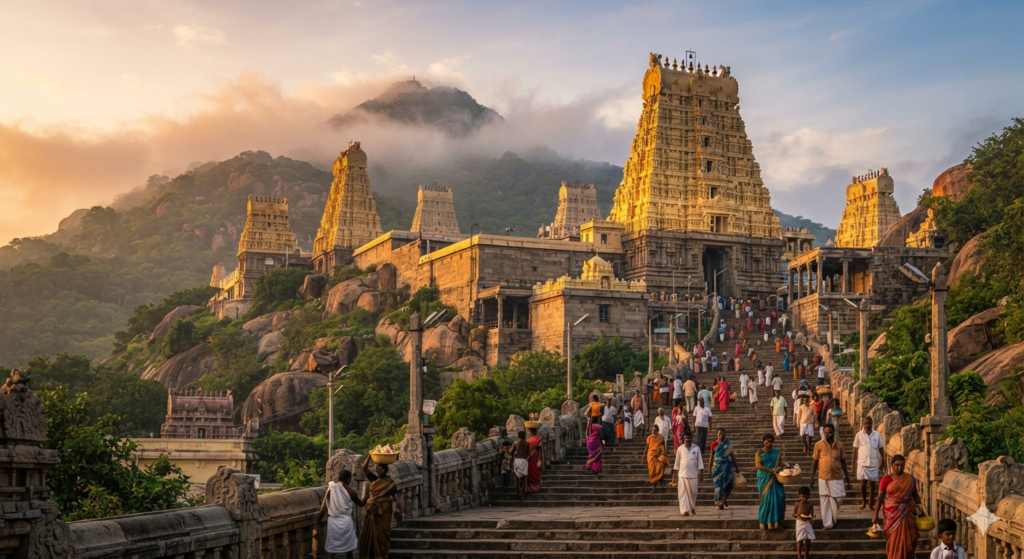
This is genuinely underexplained in most guides. The temple complex sits on a hillock, and visitors have two ways up: a flight of steps or a ropeway. The steps are manageable for most healthy adults, but they can be tough in Telangana’s summer heat. The ropeway is the far more comfortable option for anyone who struggles with prolonged walking or climbing, and it’s specifically designed to ease access for elderly visitors and those with mobility concerns.
If you’re traveling with grandparents or family members who have mobility issues, plan around the ropeway rather than the steps. Combine that with a VIP darshan booking, and you cut both the physical strain and the wait time considerably. It’s a small planning decision that makes an enormous difference on the day itself.
A few simple things trip up first-time visitors more than anything else, and most of it comes down to not knowing the rules in advance.
Traditional attire is encouraged, though not strictly enforced the way it is at some South Indian temples. Carrying a valid government ID is a good habit, particularly if you’re booking VIP or seva tickets under a specific name.
Phones and cameras are restricted once you approach the sanctum sanctorum. Cloakrooms and locker facilities are available near the entrance, so you don’t need to carry valuables through the queue.
Everyone tells you October to March is the best time to visit, and that’s true for the weather. But it’s worth connecting that advice to the actual darshan timings you’ve just read about.
Early morning, between 4:00 AM and 8:00 AM, avoids both VIP darshan rush windows (9–10 AM and 4–5 PM) and gives you a shot at witnessing Nijabhishekam. Seasonally, October through March keeps the climb and the queue far more bearable than the peak summer months, when the stone steps get uncomfortably hot underfoot.
The Devasthanam runs several guesthouses, ranging from budget rooms around ₹560 to more comfortable options near ₹1,008 a night. Booking ahead is strongly recommended around festivals, since rooms fill up fast.
Yadagirigutta isn’t just a quick darshan stop; it rewards a bit of planning. Once you know when the gates open, when the crowds peak, and how to move up the hill comfortably, the whole trip shifts from a rushed errand into something closer to what a pilgrimage is meant to feel like. So, which slot are you booking first, the early morning Nijabhishekam, or the quieter evening darshan?