Physical Address
304 North Cardinal St.
Dorchester Center, MA 02124
Physical Address
304 North Cardinal St.
Dorchester Center, MA 02124

The Falgun Mela 2026 date is expected to fall around the Phalguna Shukla Ekadashi period, when lakhs of devotees travel to Khatu village in Sikar, Rajasthan, for Baba Shyam darshan, Nishan Yatra and devotional celebrations. The exact start and end dates, crowd controls and temple timings must be confirmed through the official Shri Shyam Mandir Khatu administration because the annual programme can change with the Hindu lunar calendar and local arrangements. This article explains the likely festival period, darshan and pooja planning, booking options, entry rules, travel preparation and the key checks to make before leaving home.
Readers searching for the Khatu Shyam Mela 2026, Fagun Utsav 2026 or Khatu Shyam Falgun Mela 2026 should treat online date lists as preliminary until the temple trust or district administration issues its final notice.
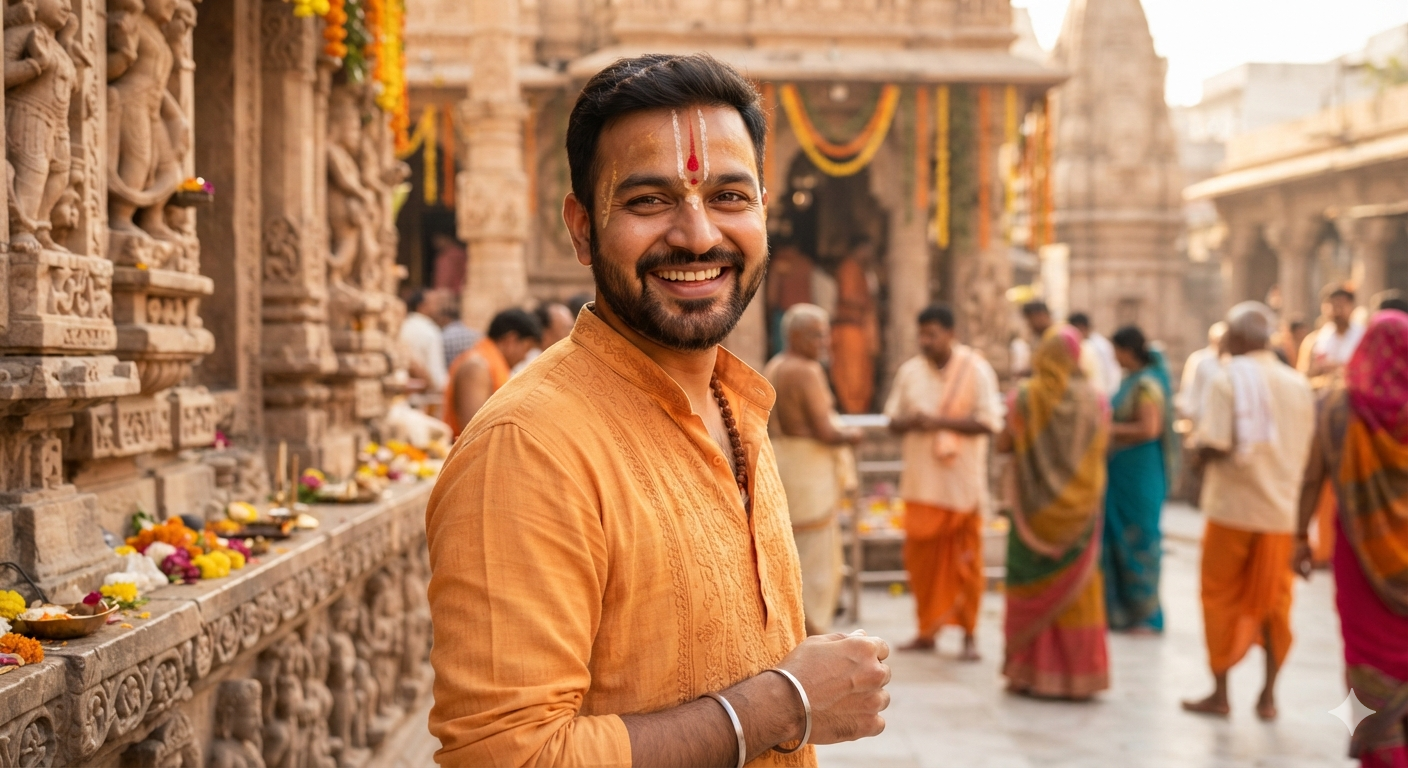
The Khatu Shyam Falgun Mela is held each year in the Hindu month of Phalguna, generally around Phalguna Shukla Ekadashi. It is one of the most important annual gatherings at Khatu Shyam Temple Rajasthan. Devotees visit Shri Shyam Baba to offer prayers, carry a Nishan Dhwaja, sing Khatu Shyam bhajan and participate in the festive atmosphere surrounding the temple town.
Based on the 2026 Hindu calendar used by many North Indian panchangs, Phalguna Shukla Ekadashi is expected to occur in early March 2026, with the main mela period likely extending over several days around that date. Some calendars and local notices may show different civil dates because the Ekadashi tithi can begin or end at different times. The final Phalgun Mela 2026 start date and Phalgun Mela 2026 end date should therefore be confirmed from an official temple announcement.
| Search topic | What it generally refers to | What visitors should verify |
|---|---|---|
| Falgun Mela 2026 date | The annual fair and pilgrimage period at Khatu Shyam Ji | Official opening and closing dates, crowd plan and entry rules |
| Khatushyamji Ekadashi 2026 | The important Ekadashi observance in the Phalguna bright fortnight | Local panchang date, temple schedule and special darshan rules |
| Fagun Utsav 2026 | A broader devotional and cultural description of the spring festival | Whether a particular event is organised by the temple or a private group |
| Chulkana Falgun Mela 2026 | A separate festival reference associated with Chulkana Dham | Its own dates, temple timings and administration |
The phrase “Falgun Mela” isn’t always used for one single day. It can describe the entire pilgrimage season, including the days before and after the principal Ekadashi. For practical planning, you should check three dates separately: the official mela opening, the main peak day and the official closing or normalisation date.
Hindu festivals follow lunar tithis rather than a fixed Gregorian date. A tithi may span parts of two civil days, and different panchangs can apply different sunrise or local-calendar calculations. The temple’s own notice is the most useful source for darshan arrangements, even when a calendar has already published the religious date.
Do not confuse the mela date with Holika Dahan 2026 or Holi 2026. Holi occurs later in the Phalguna festival cycle, although local devotional programmes may continue around the wider season. The Khatu Shyam administration may also publish separate notices for special bhajan programmes, route diversions and temporary closures.
Khatu Shyam Ji is worshipped by devotees as Shri Shyam Baba, a revered form associated with Barbarika in the Mahabharata tradition. Khatu Shyam Temple is located in Khatu village, in Sikar district of Rajasthan. During the annual mela, the temple town becomes a major Rajasthan pilgrimage centre, with visitors arriving from Rajasthan, Delhi, Haryana, Uttar Pradesh, Madhya Pradesh, Gujarat and other parts of India.
The festival combines temple worship with a large public pilgrimage. Devotees may walk long distances, join a Nishan Yatra, carry a sacred flag, listen to devotional music and seek Baba Shyam darshan. The atmosphere is deeply religious, but the practical scale is also significant: roads, queues, accommodation, sanitation, medical facilities and transport services all come under pressure.
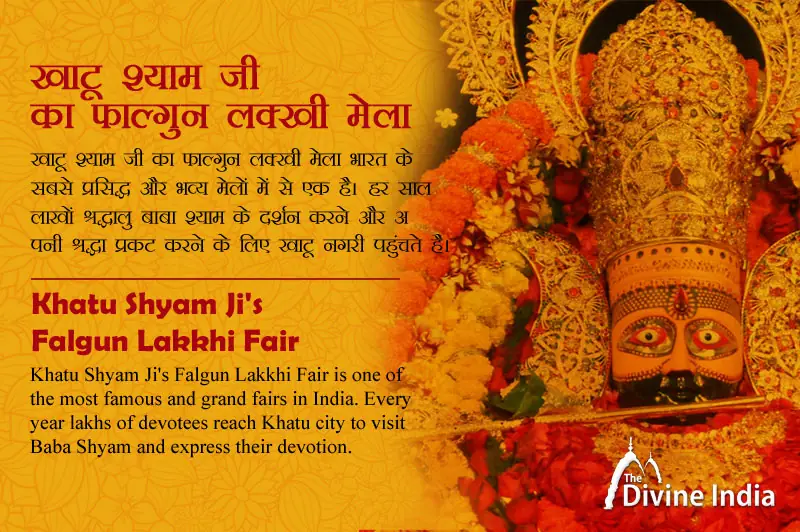
There is no single all-year darshan schedule that can safely be applied to the mela. On ordinary days, the Shri Shyam Mandir Khatu may follow a daily routine involving opening rituals, mangala darshan, regular darshan, bhog, aarti and closing worship. During the festival, the temple administration may extend, restrict or reorganise access because of crowd volume.
Exact darshan timings should be checked on the official temple notice, trust office or authorised booking portal shortly before travel. Search snippets, old social media posts and travel videos may show a schedule from a previous year. They’re useful for context, not proof of the 2026 timetable.
| Temple activity | Typical planning meaning | Important caution |
|---|---|---|
| Opening darshan | Early access after morning temple rituals | May be delayed or controlled during special worship |
| Regular darshan | General devotee entry through designated queues | Queue routes can change during mela days |
| Special pooja | Ritual service booked under a particular category | Requires confirmation of availability, reporting time and documents |
| Bhog or aarti | Scheduled offering or ceremonial worship | Devotee viewing may be restricted during the ritual |
| Closing darshan | Final access before the temple’s night closure | Entry may stop earlier if the queue becomes too long |
During the busiest hours, the practical closing time for new entrants can be earlier than the formal temple closing time. This is a common crowd-management measure, but it must be confirmed for the relevant day. Arriving just before the advertised closing time is risky.

The main Ekadashi day is likely to attract the highest number of pilgrims. The night before, early morning and the following day may also be exceptionally busy. If your travel is flexible, consider visiting on a non-peak mela day rather than concentrating your trip on the central festival date.
Families with older people, young children or anyone with mobility concerns should ask the administration about accessible routes and waiting arrangements before arrival. A queue that seems manageable on an ordinary weekday can become physically demanding during the Falgun Mela.
Temple pooja schedules are usually different from general darshan schedules. A devotee may be permitted to enter for darshan while a particular ritual booking is already full. Likewise, an aarti may be visible from a designated area without allowing every visitor to participate inside the main ritual space.
Common terms used in temple timetables include mangala aarti, shringar, bhog, sandhya aarti and shayan aarti. The exact names, times and access arrangements at Khatu Shyam Temple should be treated as temple-specific information. Do not rely on a timetable copied from another Shyam temple or from an earlier year.
Some temples restrict photography, mobile phones, bags and offerings during ritual access. These restrictions are not necessarily the same as the rules for ordinary darshan. Read the receipt and official instructions carefully rather than assuming that a pooja booking guarantees unrestricted temple entry.
Booking arrangements can change from one festival year to another. Depending on the temple’s policy, devotees may find online options for special darshan, pooja, donation, accommodation or other services, while general darshan may remain queue-based. A payment page or third-party listing should not be treated as authorised unless it is clearly connected to the temple trust or official administration.
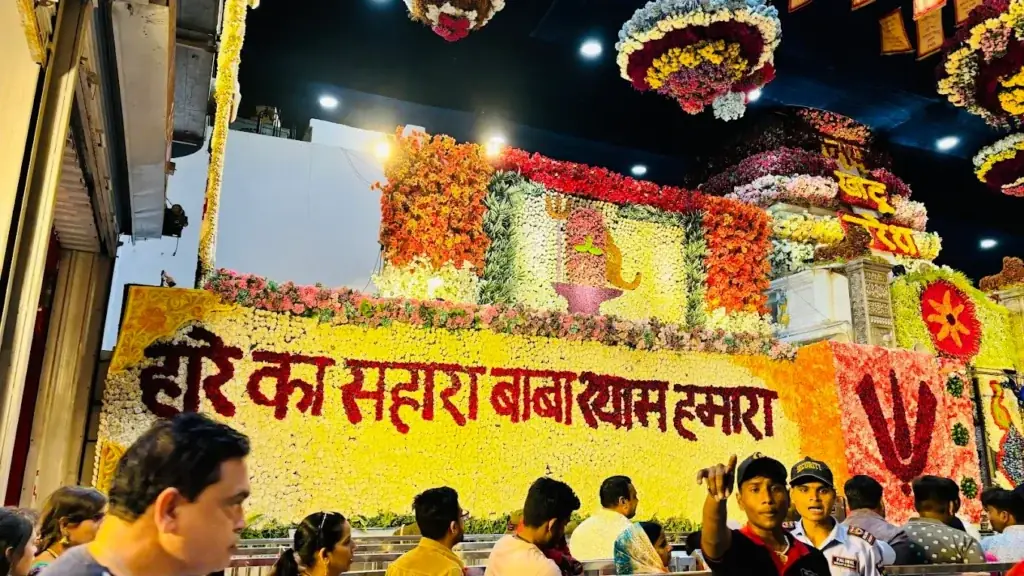
Booking windows may open weeks or months before a festival, or they may be released in smaller batches. There is no safe universal rule for the opening hour. The official portal, temple office and district notices should be checked regularly.

Offline counters may be available for selected pooja or special services, but their presence, location and operating hours can be altered during the mela. A counter may stop issuing tokens when the daily capacity is reached. Carrying cash in small denominations can be useful for permitted local payments, although you should avoid handing money to unauthorised intermediaries who claim they can guarantee faster darshan.
Ask for an official printed receipt. It should identify the service, date and issuing authority. If the receipt has unclear charges, missing details or pressure to pay immediately, verify it at the temple office before proceeding.
Entry procedures are likely to be stricter during the Khatu Shyam Falgun Mela 2026 than on a quiet day. Police and district officials may establish barricades, pedestrian corridors, holding areas and one-way routes. These can extend beyond the temple complex into the town.
Keep the following items ready, subject to the latest official rules:
Accepted identity documents can vary by service. A booking may require the same identification details entered online, and a mismatch can create difficulty at verification. Check whether children need separate registration or whether they can enter with an adult under the relevant temple rule.
Large bags, outside food, cameras, tripods, tobacco products, alcohol and other prohibited articles may not be allowed. Rules are often posted at entry points, but it’s better to pack lightly from the beginning. Never leave luggage unattended near a queue or barricade.
Khatu village is in Sikar Rajasthan, and the final part of the journey may be slower than the map distance suggests during mela days. Traffic diversions, parking restrictions and pedestrian-only stretches can add substantial time. Official traffic advisories should take priority over directions from a normal-day travel app.
For a booked pooja or special service, arrive well before the stated reporting time. A reasonable buffer is more important than trying to predict the shortest driving route. For general darshan, reaching the designated queue or holding area before the busiest part of the day may reduce uncertainty, but no arrival time guarantees immediate entry.
Visitors travelling overnight should plan a safe rest stop. Fatigue, heat, dehydration and long standing periods can affect the elderly and children quickly. Carry drinking water where permitted, wear comfortable footwear and avoid bringing valuables that could be lost in a dense crowd.

Hotels, dharamshalas, guest houses and temporary camps may operate around Khatu village during the festival, but availability and standards vary. Some properties require advance payment, while others may have strict check-in rules. Confirm the exact property address, cancellation policy and distance from the official drop-off point.
Do not assume that a room advertised as “near the temple” will remain accessible by vehicle during the mela. Ask the accommodation provider whether guests must walk from a parking area and whether late-night arrival is accepted.
The main festival interest is centred on Khatushyamji Ekadashi 2026, particularly the Phalguna Shukla Ekadashi observance. Searchers may also use the phrase Khatu Shyam Ekadashi January 2026, but January and the Phalguna mela period should not be treated as the same event without checking the panchang and official temple calendar.
Other dates that may appear in searches include Holika Dahan 2026, Holi 2026 and the broader Fagun Utsav 2026. These are related to the seasonal and religious calendar, but they don’t automatically indicate special darshan at Khatu Shyam Temple. A local event organiser may advertise a bhajan sandhya or procession using a festival name that isn’t an official temple programme.
Chulkana Falgun Mela 2026 is another separate search topic. Chulkana Dham has its own traditions, administration and timetable. Visitors should not combine the Khatu Shyam schedule with Chulkana dates unless they have independently confirmed both itineraries.
A mela is a devotional gathering, not simply a sightseeing trip. Respecting the queue, following police instructions and allowing space for elderly devotees helps the whole system work better. Avoid arguments with volunteers or other pilgrims if a route changes; ask for clarification from an identifiable official.
Devotees carrying a Nishan Dhwaja should learn where the flag may be carried, deposited or offered. Processions can be regulated by the administration, and a route used in a previous year may not be open in 2026.
Temple booking policies are not uniform. Some services may be non-refundable after payment, while others may permit cancellation before a specified deadline. Festival disruptions, route closures or personal travel problems may not automatically qualify for a refund.
Before paying, look for the written policy covering:
Save transaction numbers, emails, SMS messages and screenshots of the confirmation page. If a payment is deducted but no receipt appears, don’t immediately pay again. First check the portal’s booking history or contact the official helpdesk to avoid duplicate reservations.
Consider a family of four travelling from Jaipur for a booked morning pooja during the peak Falgun Mela period. They confirm the service on the official portal, note the reporting time, carry the same identity documents used during booking and reserve accommodation outside the most restricted vehicle zone. Because they expect road diversions, they arrange to reach the town early and walk from the designated drop-off point.
On arrival, one adult checks the queue instructions while another stays with the children. They keep the receipt available, avoid carrying large bags and do not assume that the pooja receipt provides automatic access to every part of the temple. This is a planning example only; actual routes, timings, entry categories and document rules must come from the 2026 official notice.
The safest information chain begins with the temple trust or official temple administration, followed by the Sikar district administration and authorised government notices. Rajasthan Tourism’s official page on Khatu Shyam Ji temple and pilgrimage information can provide useful background, but it may not publish every temporary mela instruction.
Check the date of every notice. A post can be genuine and still be outdated. Confirm the following as close to travel as practical:
If the official website is unavailable, verify information directly at the temple office or through a published district administration notice. A local shopkeeper, taxi driver or social media account may offer useful practical advice, but that advice shouldn’t replace an official confirmation about entry or bookings.
The 2026 Falgun Mela is expected to take place around the Phalguna Shukla Ekadashi period, likely in early March 2026 according to widely used Hindu calendar calculations. The official Khatu Shyam temple administration must confirm the precise opening date, main day and closing date because the mela can span several days and local arrangements may change.
There is no single date that should be treated as final until the temple trust issues its 2026 programme. Online calendars may identify the religious observance, but the start and end of the public mela, crowd controls and special darshan operations are administrative decisions.
General darshan arrangements depend on the temple’s current policy. Some temples provide a free queue for ordinary darshan while offering separate paid services for selected pooja or access categories. Confirm the official entry system before paying anyone, and never assume that a paid pass is required unless the temple has announced it.
Not necessarily. Booking requirements differ between general darshan, special darshan, pooja and other services. During a major mela, the administration may introduce tokens, registration or controlled entry, so check the current official notice rather than relying on an ordinary-day experience.
No. Chulkana Falgun Mela 2026 refers to a separate pilgrimage event and may follow a different calendar, temple authority and entry procedure. Anyone planning to visit both places should verify each venue independently and allow extra time for travel and crowd-related delays.
The most useful answer to the Falgun Mela 2026 date is not just a Gregorian day; it’s a confirmed festival window paired with the correct darshan, pooja and traffic instructions. Treat early calendar dates as provisional, keep your booking receipt and identity documents ready, and recheck the temple or administration notice before departure.
Once the official schedule is released, choose your travel day according to your group’s health, mobility and tolerance for crowds rather than chasing the busiest date. Will you plan for the main Khatushyamji Ekadashi 2026 gathering, or choose a quieter day for a more manageable Baba Shyam darshan?