Physical Address
304 North Cardinal St.
Dorchester Center, MA 02124
Physical Address
304 North Cardinal St.
Dorchester Center, MA 02124
Arunachalam Temple darshan tickets price information matters because Tiruvannamalai’s Arunachaleswarar Temple follows a living worship schedule, not a fixed tourist timetable. General darshan, special entry, abhishekam, sevas, and festival access may have different rules, fees, counters, and booking windows.
This article explains how to check the latest official position, understand possible ticket categories, plan around pooja timings and crowds, and avoid misleading price claims. You’ll also find practical advice for Girivalam, online booking, temple etiquette, and last-minute changes before your visit.
Use the information below as a planning guide, then confirm the final amount and availability directly with the temple administration or its authorised booking channel before travelling.
Arunachalam Temple, formally associated with the Arunachaleswarar Temple in Tiruvannamalai, Tamil Nadu, is one of the most important Shiva temples in India. Devotees visit to worship Arunachaleswarar, associated with the element of fire, and Unnamulai Amman. The temple is also closely connected with Arunachala Hill, Girivalam, Karthigai Deepam, and a large calendar of daily and festival rituals.
Because several kinds of worship and entry may exist, a search for one universal “ticket price” can be misleading. A visitor asking about darshan might mean ordinary entry into the temple, a faster queue, a paid special darshan, a particular seva, an abhishekam, or an offering made at a shrine. These are not necessarily the same service, and they may not be sold through the same channel.
General darshan may be managed differently from paid services. On some temple visits, devotees enter through a regular queue without purchasing a ticket, while a special queue or ritual participation may involve a separate charge if the temple administration provides it. The existence, price, and availability of such services can change.
There’s another important distinction: the temple’s entry arrangements and Girivalam are separate matters. Walking around Arunachala Hill generally isn’t the same as buying a temple darshan ticket. A devotee may perform Girivalam and visit the temple according to the access arrangements operating that day, but crowd controls, festival restrictions, or local instructions can affect the sequence.
The final amount, if any, may depend on the service selected, the number of devotees, whether the booking is online or at a counter, and whether the visit falls on an ordinary day or a major festival. A receipt, token, or booking confirmation should clearly identify the service and date. If a person offers a vague “VIP ticket” without an official receipt, treat that as a warning sign.
Reliable pricing requires a current official source. Temple fees are administrative information and can change after a new notice, revised service schedule, or festival arrangement. A page that shows a figure from a previous year may still rank in search results even though the temple has altered the service or stopped issuing that category of ticket.
Start with the temple’s official notice, authorised booking portal, or the relevant Tamil Nadu Hindu Religious and Charitable Endowments administration channel. The Tamil Nadu Hindu Religious and Charitable Endowments Department website is a useful official starting point for locating temple-related information, but you should still check whether the specific service, date, and booking link apply to Arunachaleswarar Temple.
Don’t rely solely on a search snippet. Search snippets often omit whether a displayed amount applies to general entry, a seva, a donation, a queue facility, or a particular festival. Open the official page and check the service description, date availability, terms, reporting time, and cancellation or refund instructions.
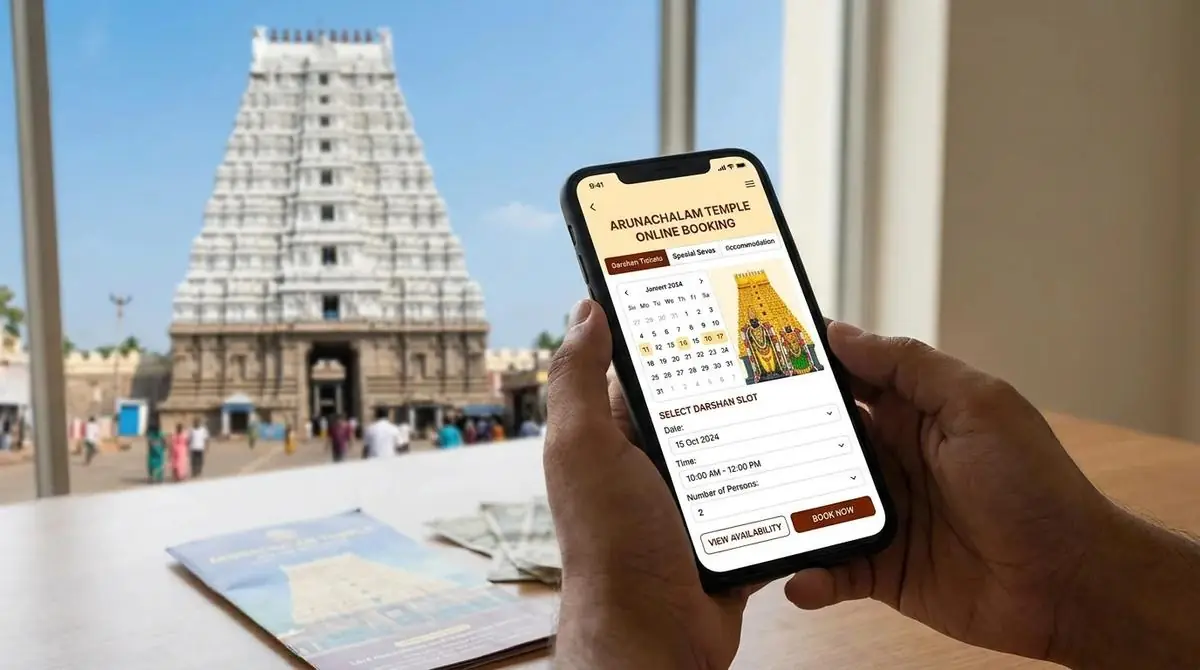
If no current online price is published, that absence doesn’t prove that the service is free or unavailable. It may mean that booking is handled at a physical counter, that the service is released only for selected dates, or that the temple has temporarily changed its process. Call the official helpline or ask at the temple office rather than paying an intermediary based on an unverified claim.
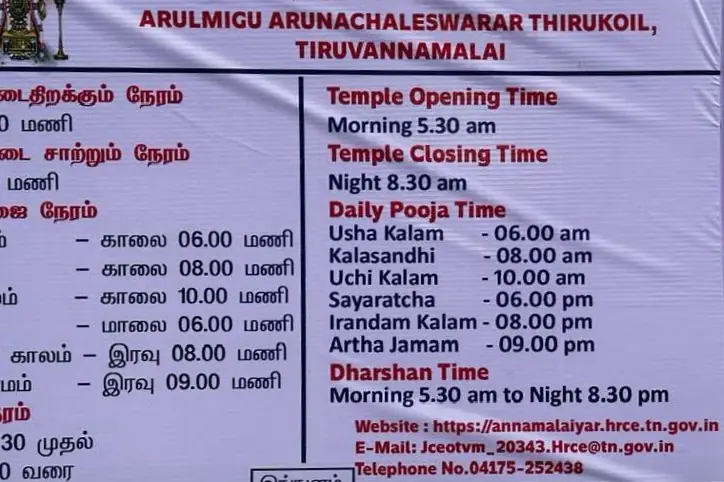
Arunachaleswarar Temple’s daily rhythm is shaped by worship, including opening and closing periods, shrine arrangements, and scheduled pooja. Darshan availability may not be continuous in the same way as entry to a secular attraction. At certain times, devotees may need to wait while a ritual takes place or while priests and temple staff manage movement inside the complex.
Daily timings can include early morning access, several pooja periods, afternoon arrangements, and evening worship. The precise schedule should be confirmed for your date because the temple may revise access during special occasions. A timing shown on a travel blog can be useful for general orientation, but it shouldn’t override an official announcement.
Ritual timing and queue timing are also different. A pooja may begin at a stated hour, while the line for darshan opens earlier or closes before the ritual begins. If you want to see a particular worship service, ask whether devotees can remain inside, whether a separate token is required, and where the queue forms.
Allow a buffer before and after the intended darshan period. A family arriving exactly at a listed opening time may find that parking, footwear storage, security screening, and the queue take additional time. On a busy day, the total visit can be much longer than the time spent before the sanctum.
| Planning item | What to confirm | Why it matters |
|---|---|---|
| Temple opening period | When devotees may enter the relevant area | Opening time may not equal immediate sanctum access |
| Pooja or seva | Reporting time, token rules, and participation limits | Late arrival may mean missing the ritual even with a receipt |
| General darshan | Queue opening, closing, and temporary pauses | Movement can change during rituals or crowd control |
| Evening worship | Final entry and expected crowd conditions | Large numbers may gather before important rituals |
Do not treat a table like this as the temple’s official timetable. It explains what to ask, not what time the temple must follow. Always compare your travel plan with the latest notice before leaving.
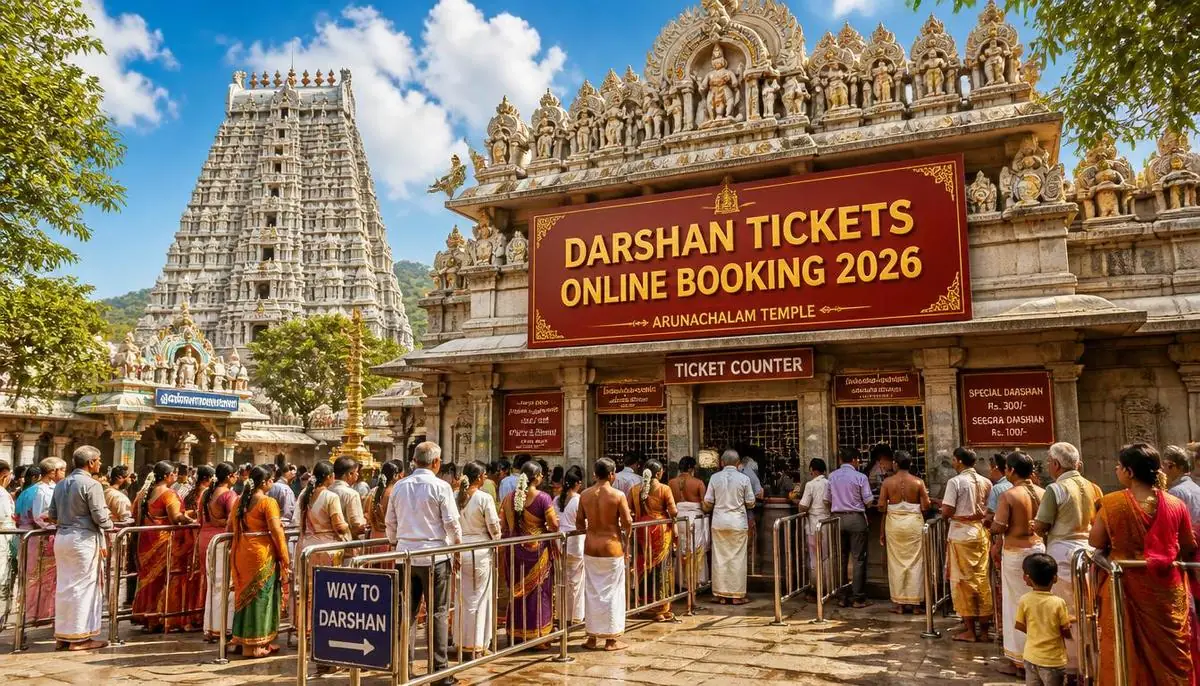
Many devotees use “VIP darshan” as a broad phrase, but temples may use different names for special entry services. A temple could provide a paid special queue, a donor-related facility, a seva-linked entry, or no separate VIP service on a particular day. The name alone doesn’t establish the price or the privileges included.
General darshan usually refers to the ordinary devotional queue or access arrangement. It may be free of a separate ticket charge, but that should be confirmed locally rather than assumed. A special darshan ticket, where officially available, may provide a different queue or designated access route; it doesn’t necessarily guarantee immediate entry or a private audience with the deity.
During major events, special access can be suspended even if it normally exists. Karthigai Deepam, full-moon Girivalam periods, weekends, public holidays, and important Tamil religious observances can bring exceptional crowds. The administration may prioritise safety, regulate movement, or restrict particular services.
Be cautious with people near the temple who promise guaranteed instant darshan, access through a restricted door, or a price substantially different from the official notice. Genuine staff may direct you to a counter or helpdesk, but you should be able to ask for documentation and a receipt.
For families, the cheapest option isn’t always the most practical if a small child, elderly person, or visitor with mobility needs is travelling. Ask the official counter about accessibility and queue arrangements. Don’t assume that a paid service permits bypassing security or ritual restrictions.
Abhishekam is a sacred bathing ritual performed for the deity, usually with materials prescribed by temple custom. Devotees may also encounter archana, alankaram-related offerings, deeparadhana, or other sevas. The availability of these services, their timings, and the way devotees participate depend on the temple’s current administration and ritual practice.
An abhishekam booking may not be the same as a darshan ticket. It could cover the offering or participation in a designated ritual, while general temple entry remains subject to the day’s queue.
In another arrangement, a seva receipt might include access for a defined number of people. Never infer the benefit from the word “abhishekam” alone.
Some bookings are made for a specific date or lunar occasion. Others may be accepted only at a counter and may close once the daily limit is reached. If you’re travelling from another city, ask whether the service is performed every day, whether materials are supplied by the temple, and whether devotees may bring anything from outside.
Temple rituals are not commercial performances. A receipt gives permission under the stated service rules; it doesn’t entitle a devotee to alter the ritual, touch the deity, enter a restricted area, or demand a particular duration. Follow the priest’s and temple staff’s instructions respectfully.
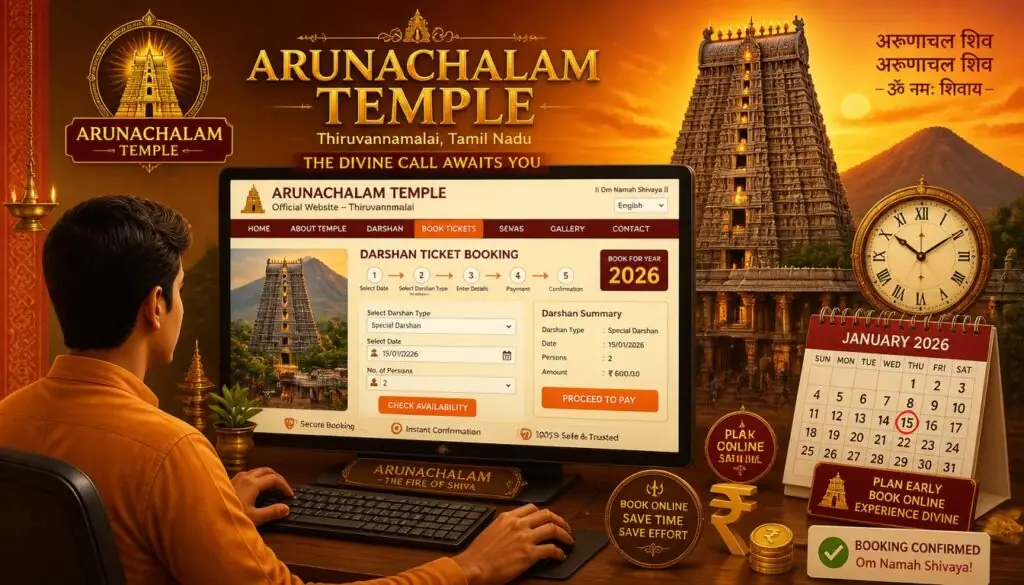
Online booking is convenient when the official system clearly displays the service, date, price, and terms. It can reduce uncertainty before travel, especially for a ritual with a limited daily capacity. Yet not every temple service is necessarily listed online, and a website may show only selected categories rather than all services available at the temple.
Counter booking is useful when you need clarification or when the temple releases tickets locally. The counter can explain reporting points, the number of persons covered, and whether a service is operating that day. It can also be the only practical choice if the online portal is unavailable or if a booking window opens shortly before the ritual.
| Booking route | Useful for | Check carefully |
|---|---|---|
| Official online portal | Advance planning and visible availability | Domain, payment receipt, date, slot, and identity rules |
| Temple counter | Same-day questions and locally released services | Counter hours, token limits, and accepted payment methods |
| Official helpline | Confirming a change or unclear instruction | Record the call details and ask for the latest notice |
| Unauthorised agent | Not a dependable booking route | Avoid payment without official confirmation and receipt |
Before making an online payment, check the web address carefully. Don’t share an OTP with an unknown person claiming to complete a temple booking. A genuine confirmation should normally identify the service, date, applicant or devotee details, amount, and reference number.

Tiruvannamalai can become exceptionally busy around Karthigai Deepam, full-moon periods, weekends, holidays, and other major observances. Arunachala is also associated with Girivalam, the devotional circumambulation of the hill. Crowd movement on these occasions can affect roads, parking, buses, security checks, and access to the temple complex.
A normal-day estimate of waiting time doesn’t apply automatically to a festival. The administration may close or redirect an entrance, limit vehicles, suspend a special service, or alter the route used by devotees. A paid ticket, if offered, doesn’t necessarily remove these practical delays because all visitors remain subject to safety and crowd-management decisions.
Plan conservatively. If a ritual matters to you, arrive with time to locate the correct counter and complete screening. Don’t schedule a train or bus immediately after darshan, especially during a major observance.
There isn’t one universal answer for every date. Some devotees choose to visit the temple before beginning Girivalam, while others complete the circumambulation first according to personal practice. The practical choice depends on the temple’s current access, your health, weather, and crowd conditions.
Ask the official staff about the safest and most workable route on the day. During a heavily attended event, movement around the temple and hill may be regulated. Elderly devotees and families with children should avoid treating a religious itinerary as a race; hydration, footwear, rest, and safe road crossing matter.
Remember that Girivalam itself and a temple seva are separate devotional activities. A temple ticket, if purchased, won’t automatically include transport, hill access, accommodation, food, or priority movement along the entire circumambulation route.
Arunachaleswarar Temple is a functioning place of worship. Visitors should dress modestly, follow security instructions, and respect areas marked for priests, staff, or specific ritual use. Rules may be announced at the entrance and can be enforced more strictly during crowded periods.
Photography and mobile-phone use may be restricted in particular areas. Don’t assume that a phone, camera, large bag, or food item can be carried everywhere in the complex. Ask before photographing a ritual or a person engaged in worship.
Temple etiquette is simple but meaningful: keep the queue moving, avoid loud conversations near shrines, don’t push, and don’t make unauthorised offerings. If you’ve paid for an archana or seva, submit the receipt where instructed instead of handing money to an unknown intermediary.
Devotion and convenience can coexist, but convenience should never come at the cost of respect or safety. A calm visit is usually better than trying to force a particular ritual into an unrealistic schedule.
Example only, not a verified account or official schedule: imagine a family of four travelling to Tiruvannamalai on a Saturday. They search for Arunachalam Temple darshan tickets price and find one website quoting a special amount, while a social media post mentions a different abhishekam fee. Neither source clearly identifies the official temple service or the date on which the figure applies.
A careful family would first identify its actual goal. If the aim is ordinary darshan, there may be no reason to book an abhishekam. If the family wants to attend a specific ritual, it would ask whether that seva is available on Saturday, how many people one receipt covers, and what time they must report.
Before leaving, one adult would check the official temple or department notice, save the confirmation, and call the official contact if the online details conflict. The family would then arrive with spare time, carry identification if requested, and avoid promising the children an exact darshan duration.
At the temple, the family would follow the designated queue rather than accepting an unsolicited offer from someone outside the gate. If the administration changes entry because of a ritual or crowd condition, the family would treat the official instruction as final. This approach doesn’t guarantee a quick visit, but it sharply reduces confusion and unnecessary payment.
The first mistake is treating a search result as a price list. Search engines combine old pages, user comments, travel articles, and official notices. A result can be relevant to Arunachalam Temple but still describe a previous arrangement or a different seva.
The second mistake is confusing a donation with a compulsory entry charge. Some religious services use terms that sound similar but have different administrative meanings. Read the receipt description carefully, and ask whether the amount is refundable, transferable, or linked to a specific ritual.
Another common problem is buying several services without checking the schedule. A devotee may book an abhishekam in the morning and a special darshan later, only to discover that the reporting times overlap or that the temple has issued revised instructions. Build the day around the official reporting time, not just the time printed in a promotional post.
Even a genuine booking can’t override a temple closure, security order, ritual pause, or festival restriction. Keep your expectations realistic and preserve evidence of any official transaction.
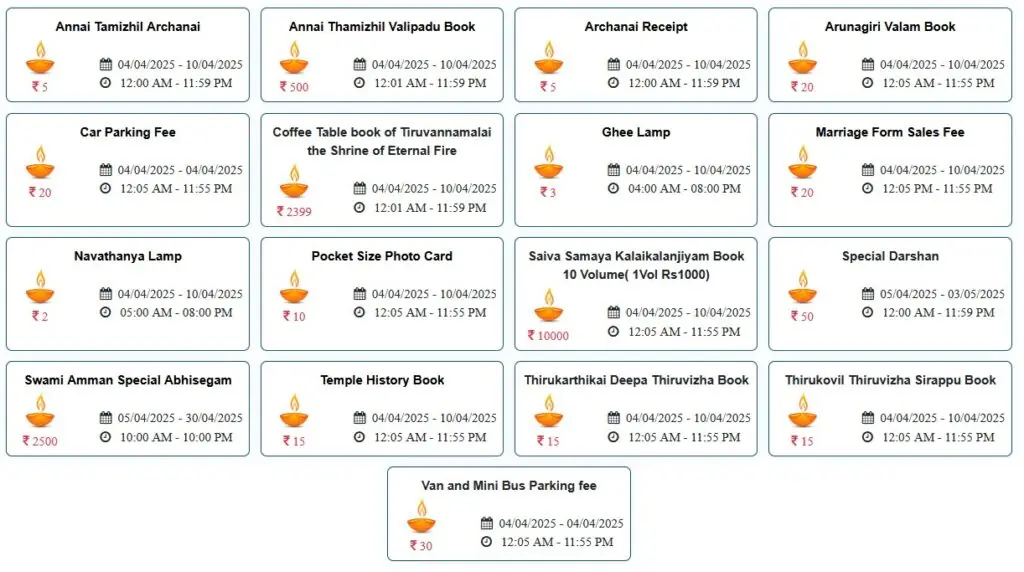
There isn’t a single permanent amount that applies to every kind of darshan or ritual. General entry, special queue access, abhishekam, and other sevas may follow different arrangements. Verify the current fee through the official temple or authorised department channel for your date.
Do not assume either way without checking the current instruction. The temple may provide ordinary access without a separate ticket while charging for selected services or queues. Ask at the official counter if the online information doesn’t explain the distinction.
A special or VIP-style facility may be available at certain times, unavailable on particular days, or described under another service name. Availability and price must be confirmed through the official booking channel or temple office. Unofficial promises of guaranteed access should be avoided.
Some services may be listed online, while others may be handled at a temple counter or released only for selected dates. Check the official portal for the exact abhishekam name, reporting time, participant limit, and receipt instructions.
Waiting time changes with the day, season, ritual schedule, and crowd. The time shown for a ticket, if any, may be a reporting or slot time rather than a guarantee of immediate darshan. Leave a generous buffer for security and queue movement.
Yes. Festivals, ritual requirements, VIP visits, maintenance, weather, security, and crowd management can lead to changes. Check for a fresh notice before travelling and follow the temple’s instructions if the schedule is revised.
Girivalam and temple darshan are separate devotional activities. A temple receipt should not be treated as a ticket for every part of the hill circuit or surrounding arrangements. Confirm local instructions for the day.
For accurate Arunachalam Temple darshan tickets price information, first decide whether you need general darshan, special entry, abhishekam, or another seva. Then verify the exact service, current amount, reporting time, and booking route through an official source. Keep your receipt, arrive with a time buffer, and remember that festival and ritual changes can override a normal schedule.
The safest plan is simple: check shortly before departure and again on the day if possible. If you’ve recently visited or received a current official notice, sharing the service name and date with other devotees can help them plan responsibly without turning an old price into a permanent promise.





