Physical Address
304 North Cardinal St.
Dorchester Center, MA 02124
Physical Address
304 North Cardinal St.
Dorchester Center, MA 02124
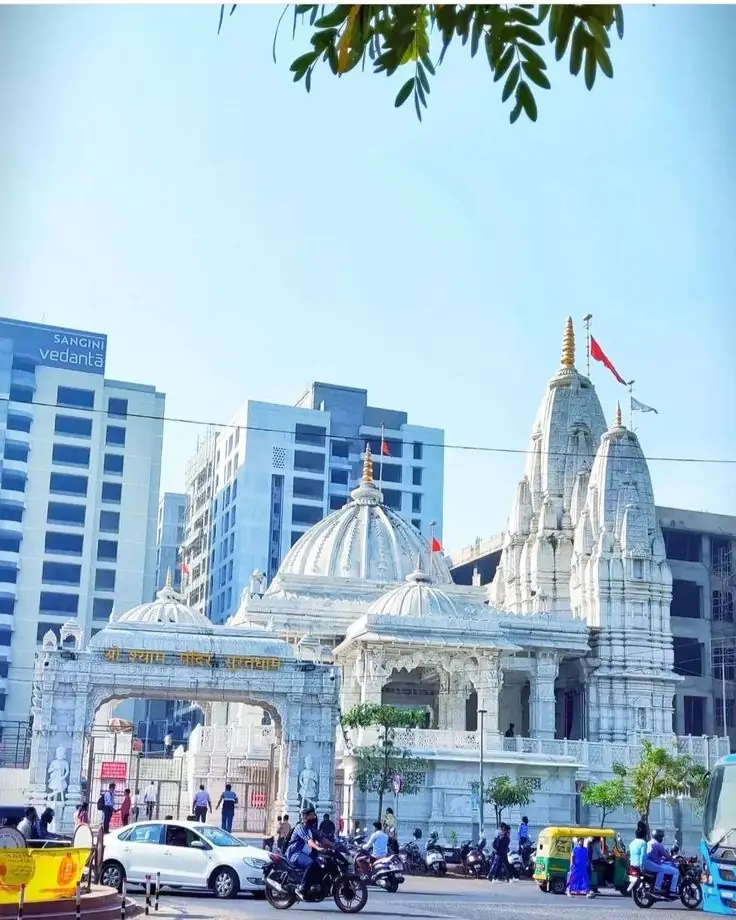
Khatu Shyam Mandir Surat can mean a local Shyam Baba temple in the city or a planned visit from Surat to the famous Khatu Shyam Ji temple in Rajasthan. That distinction matters because temple timings, addresses, darshan arrangements, and booking procedures may be completely different. Before travelling, devotees should confirm the exact temple name, current opening hours, aarti schedule, contact number, and any festival restrictions through an official notice or temple management.
This article explains how to verify the Khatu Shyam Mandir Surat location, plan darshan, understand common rituals, estimate travel requirements, and avoid unreliable timing information. It also covers crowd conditions, prasad, Nishan Yatra, Phalguna Mela, Ekadashi visits, and practical steps for checking today’s darshan timing before leaving home.
People searching for Khatu Shyam Mandir Surat are often referring to one of two different pilgrimage plans. The first is a Shyam Baba temple or devotional centre located in Surat or the surrounding area. The second is a journey from Surat to Khatu Shyam Ji Rajasthan, where the principal temple associated with Baba Shyam is located in the Sikar district of Rajasthan.
This difference is easy to miss in online searches. A result may show a local temple with “Khatu Shyam” in its name, while another result may describe the original shrine in Khatu village. Their temple opening time, temple closing time, queues, parking facility, darshan booking system, and festival arrangements cannot be assumed to be identical.
The main deity is commonly worshipped as Khatu Shyam Ji or Shyam Baba. In popular Hindu tradition, Khatu Shyam Ji is identified with Barbarika, the grandson of Bhima and the son of Ghatotkacha from the Mahabharata tradition. Devotees also associate his worship with Lord Krishna, especially through the story that Krishna granted Barbarika a revered identity after witnessing his devotion and sacrifice.
For a local Surat visit, search results should be treated as starting points rather than final authority. Confirm the complete Surat temple address, the deity’s name, a map pin, and whether the site is a permanent mandir, a community prayer hall, or a temporary festival venue. These details are particularly important if you’re travelling with older family members or children.
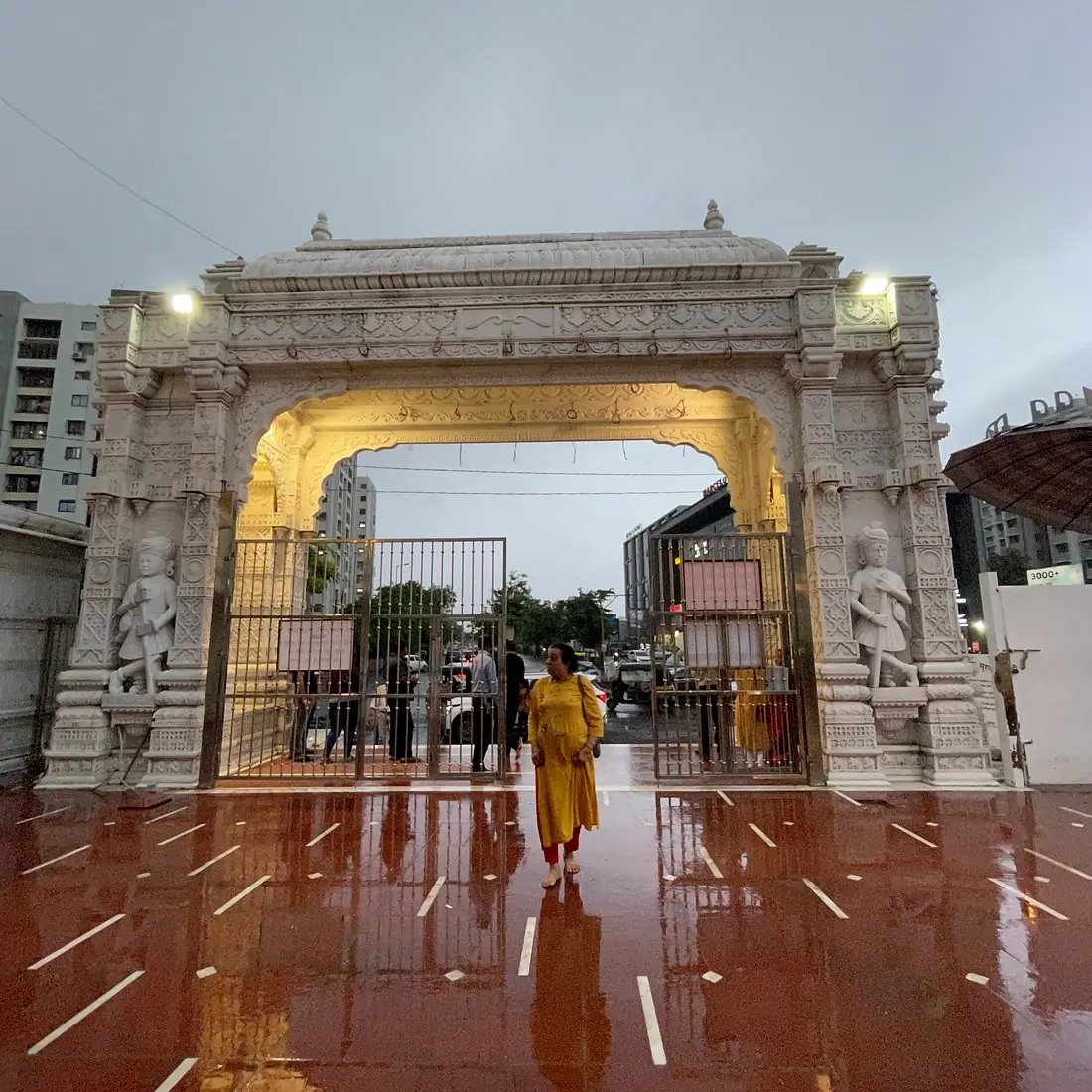
Several neighbourhood temples may use similar names, and spellings can vary between “Khatu Shyam,” “Khatushyam,” “Shree Shyam,” and “Shyam Baba Mandir.” A listing may also display outdated hours or an incorrect phone number. If a temple has recently shifted, expanded, or changed its entry gate, an old listing can create unnecessary confusion.
Before setting out, compare at least two current signals: a recent notice from the temple management and a current map listing or telephone confirmation. Do not rely only on a social media post from an unknown account, especially before a major festival.
There is no single universally applicable Surat temple address that can safely be given for every search using this keyword. A local mandir’s location must be identified by its official name and neighbourhood. If you find multiple listings, check whether they refer to the same shrine or to separate temples managed by different trusts.
A reliable location check should include more than a street name. Look for a complete address, a recognisable nearby landmark, the correct entrance, and a telephone or official communication channel. If the listing says only “Surat Khatu Shyam Mandir” without a locality, treat it cautiously.
| Information to verify | Why it matters | Best way to confirm |
|---|---|---|
| Complete temple address | Similar names may refer to different shrines | Temple notice, official page, or confirmed phone call |
| Map pin and entrance | The nearest road may not be the visitor entrance | Google Maps directions plus local confirmation |
| Darshan hours | Doors may close during bhog, cleaning, or aarti | Same-day temple announcement |
| Parking facility | Small lanes may not accommodate cars during peak periods | Temple office or recent visitor instructions |
| Contact number | Numbers on old directories can be inactive | Officially displayed number or verified trust notice |
Google Maps directions can help you estimate the distance from my location, but the result may change depending on your starting point, traffic, road closures, and the selected entrance. For visitors asking about Khatu Shyam Mandir Surat distance from Surat Railway Station, the only responsible answer is to enter the verified temple pin into a live navigation service. Different local temples will produce different distances.
Public transport is another area where current information matters. Bus routes, auto-rickshaw availability, and local road access can change. A route that works comfortably on an ordinary weekday may be slow during a procession, Nishan Yatra, or a major Ekadashi gathering.
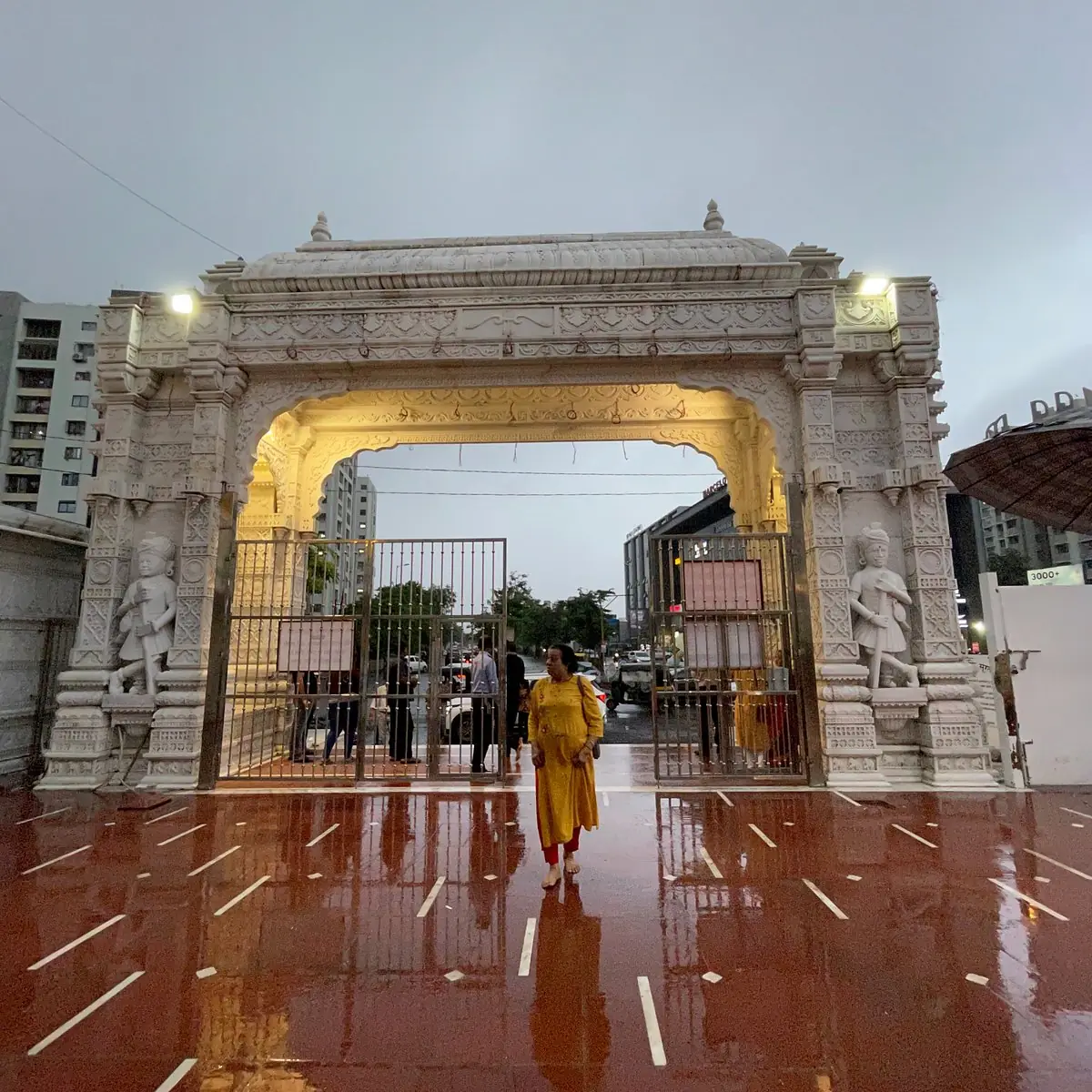
Searches for Khatu Shyam Mandir Surat timings or “Khatu Shyam Mandir Surat timing today” often return a fixed opening-and-closing schedule. Such information can be useful for planning, but it should not be treated as permanent unless the temple itself has confirmed it. Many mandirs alter public access around morning aarti, evening aarti, bhog, cleaning, special puja, or crowd-control arrangements.
A normal day may have separate periods for opening the sanctum, general darshan, devotional offerings, and closing rituals. Some temples keep the doors open for much of the day but pause entry during particular ceremonies.
Others may close briefly in the afternoon. The public schedule may also differ from the actual time at which the main deity’s doors open.
For that reason, ask specific questions instead of requesting only “the timing.” Confirm the temple opening time, the first available darshan, the morning aarti, any mid-day closure, the evening aarti, last entry, and temple closing time. If you plan to offer bhog or a special puja, ask whether those services require prior registration.
Timing information can change for reasons that have nothing to do with a regular calendar. Temple management may respond to an unexpected crowd, a VIP visit, maintenance, local administration instructions, or a special religious programme. A same-day phone confirmation is especially sensible if your journey takes more than an hour.
When official information is unavailable online, it is better to say that current timing details are unverified than to publish an attractive but potentially wrong timetable. Readers should be wary of websites that state exact hours without identifying the temple trust, date of update, or official source.
Darshan means viewing and offering reverence to the deity. It may be brief during a busy period, while a quieter weekday visit can allow more time near the shrine. The experience depends on the temple layout, queue design, crowd size, and whether a ritual is taking place.
Aarti is a devotional ceremony involving lamps, singing, bells, and other customary offerings. The morning aarti and evening aarti are usually among the busiest periods because devotees prefer to participate rather than simply pass through for darshan. Exact aarti times are temple-specific and must be checked locally.
Pooja timings can refer to several different services. A personal sankalp, a flower offering, a special shringar request, a bhog booking, or a group devotional programme may each follow a separate process. Some local mandirs accept requests at the office, while others restrict special services to designated days.

Depending on the temple’s tradition, visitors may encounter shringar darshan, aarti, bhajan and kirtan, prasad distribution, and devotional offerings made by families. The deity may be decorated differently for ordinary days, Ekadashi, Shyam Janmotsav, or a large annual celebration.
Devotees should avoid treating every ritual as a paid service. A donation, offering, or puja contribution should be made only through the recognised temple counter or an officially stated process. Be cautious if someone outside the premises pressures you to pay for immediate darshan or promises special access.
During an aarti, follow the instructions of volunteers. Keep phones on silent, avoid pushing toward the sanctum, and allow elderly devotees to use any designated assistance. If the shrine is crowded, standing at a respectful distance may be the safest and most considerate option.
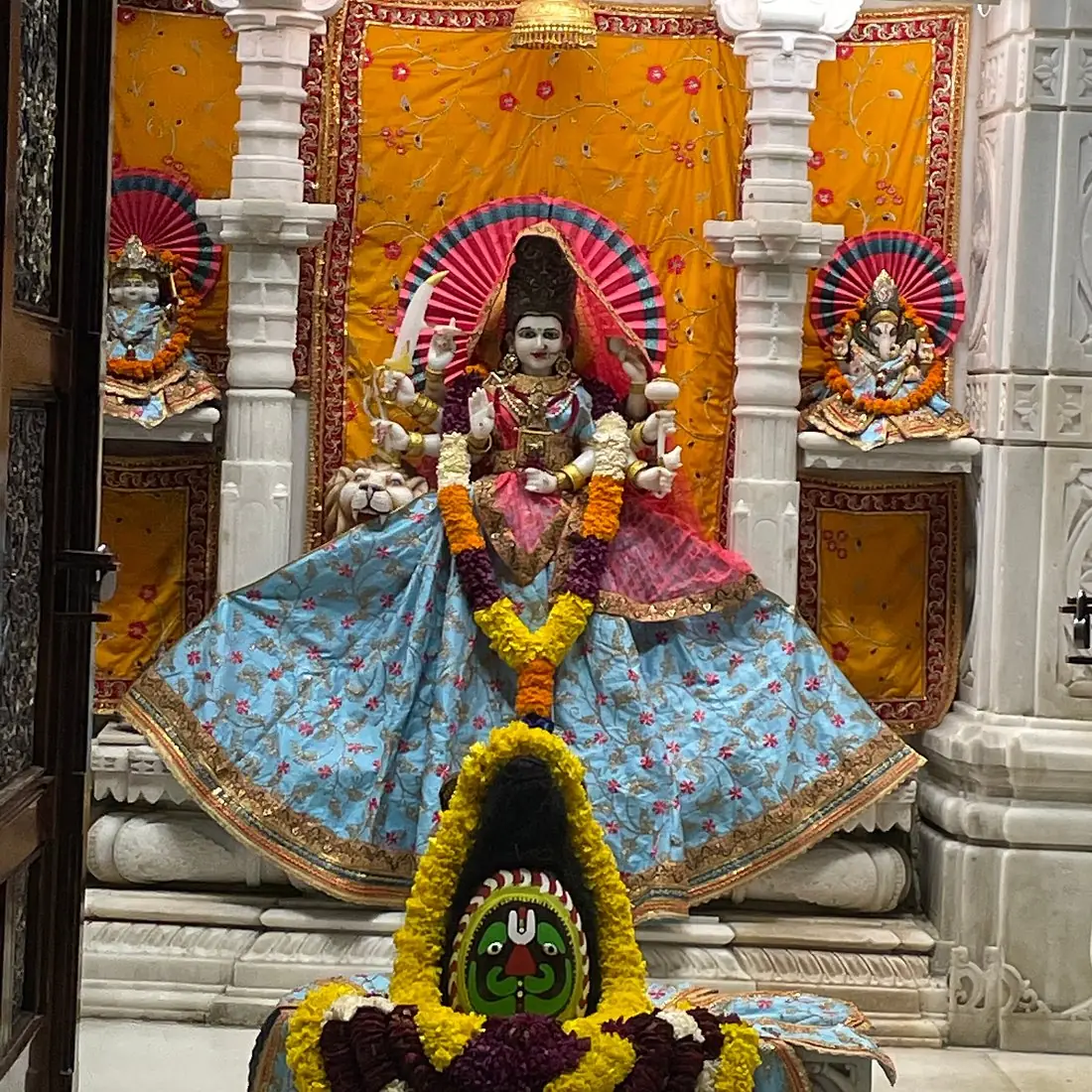
Not every Khatu Shyam temple in Surat has an online darshan booking system. Some local shrines operate entirely through walk-in entry, while larger temples may introduce tokens, passes, or registration for special events. Never assume that an online form found through a general search belongs to the temple you intend to visit.
If darshan booking is available, check whether it is for ordinary entry, a particular aarti, a special puja, or a festival queue. Booking timings may refer to the hours during which the counter accepts requests, not to the actual time of darshan. The confirmation should clearly state the date, reporting time, number of devotees, identity requirements, and cancellation or rescheduling terms.
A booking may also become invalid if a temple changes its schedule for crowd management. That doesn’t mean the reservation is necessarily fraudulent, but you should verify the revised arrangement through the same official channel. Keep a screenshot or printed acknowledgement if the temple asks visitors to show proof at the gate.
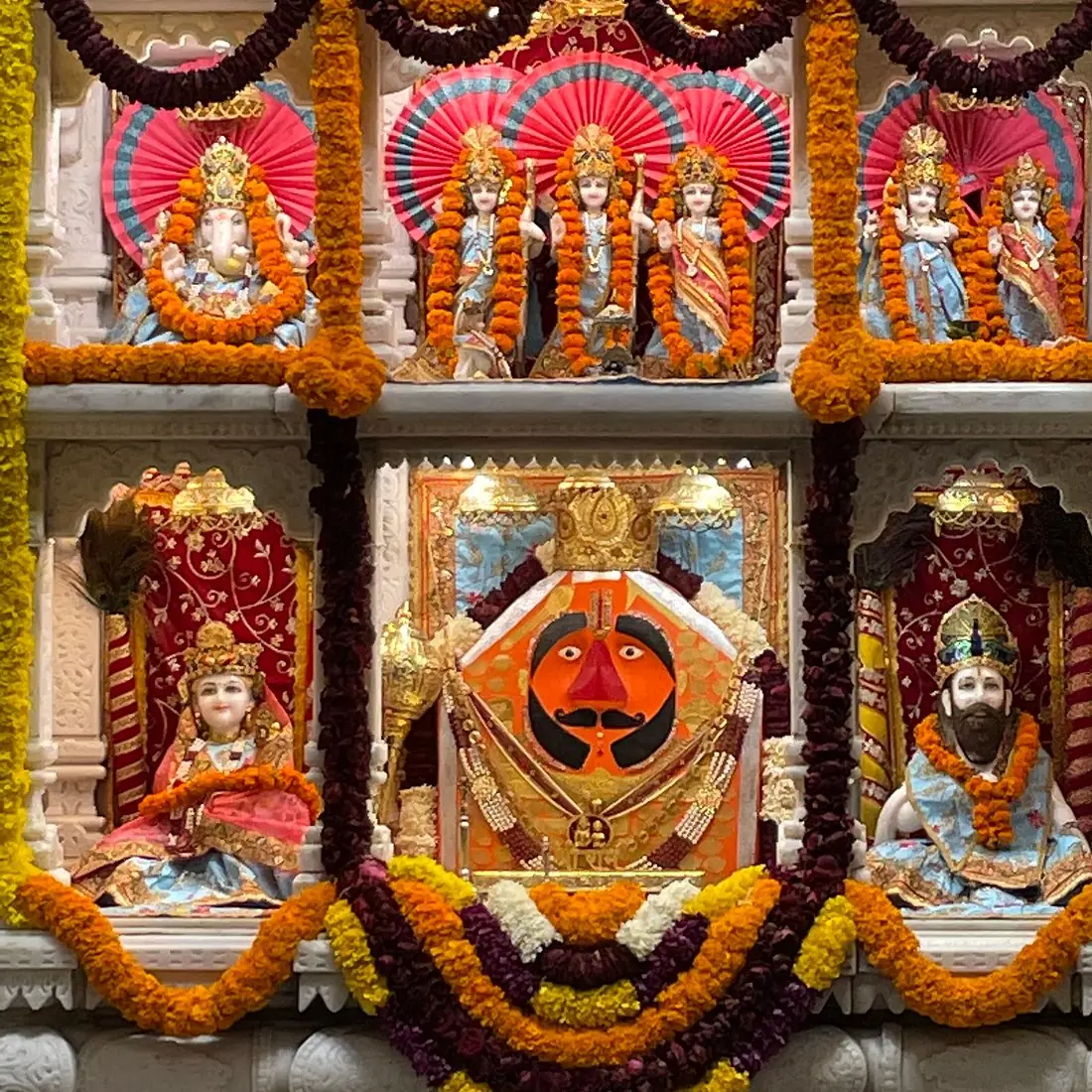
For a local Surat mandir, a direct call may be more useful than searching for a booking portal that doesn’t exist. If a phone number is unavailable, visit the temple during a non-peak period and ask at the office about the current system. Use public information cautiously because booking arrangements often change first during festivals.
Khatu Shyam Ji worship is strongly associated with faith, remembrance, singing, and offerings made with devotion. Visitors may bring flowers, garlands, coconut, sweets, or other items permitted by the local temple. The exact practice differs between temples, so the shrine’s own instructions should take priority over general assumptions.
Prasad may be distributed by the temple or offered by devotees after a sanctioned puja. Some temples sell prepared prasad through an authorised counter, while others ask visitors not to bring food into the inner area. Ask before carrying an offering, particularly if it contains packaged items, loose grains, or ingredients restricted by the temple.
Bhog is an offering of food to the deity. It may be part of a scheduled ritual rather than an individual service available at any time.
If you want to arrange bhog for a family occasion, ask about the application process, permissible menu, contribution, and collection procedure. Do not infer prices or rules from another city’s Shyam temple.
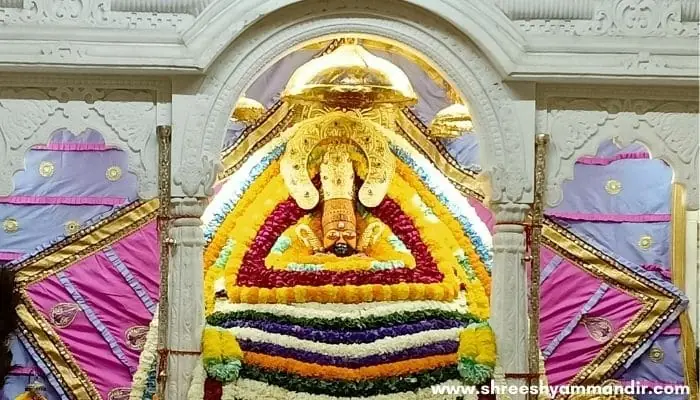
The story of Barbarika is central to the identity of Khatu Shyam Ji for many devotees. In the popular narrative, Barbarika possessed exceptional martial ability and promised to support the weaker side in the Mahabharata conflict. Lord Krishna tested his resolve, and the story culminates in the offering of his head and the blessing that he would be worshipped in the age of Kali as Shyam.
Devotees understand this story in different devotional and regional ways. It is best presented as a revered religious tradition, not as a historical claim that can be verified in the same way as a modern temple record. A visit can be meaningful even for someone who knows little about the story, provided the person respects the worshippers and the temple’s customs.
Bhajan and kirtan programmes may be held on ordinary evenings or special occasions. Their timings can run beyond regular darshan hours, so ask whether the programme is open to all, whether seating is available, and whether visitors should arrive early.
Festival dates can change the practical experience of visiting a Shyam temple. Ekadashi is considered important by many devotees, and footfall may rise on certain Ekadashi observances, weekends, or dates selected by the local trust. Shyam Janmotsav and other annual celebrations may include decoration, bhajan, extended aarti, devotional processions, and prasad distribution.
The largest pilgrimage season associated with Khatu Shyam Ji Rajasthan is the Phalguna Mela. Visitors travelling from Surat to the principal temple should expect a very different environment during this period than on a regular day. Roads, transport, queues, accommodation, security checks, and entry systems may be managed under special arrangements.
Nishan Yatra is another devotional activity associated with Shyam worship. Participants may carry a sacred flag, often called a nishan, as part of a procession or pilgrimage. A local Surat event may have its own route and registration rules, and visitors should not assume that the arrangements match those of Khatu village.
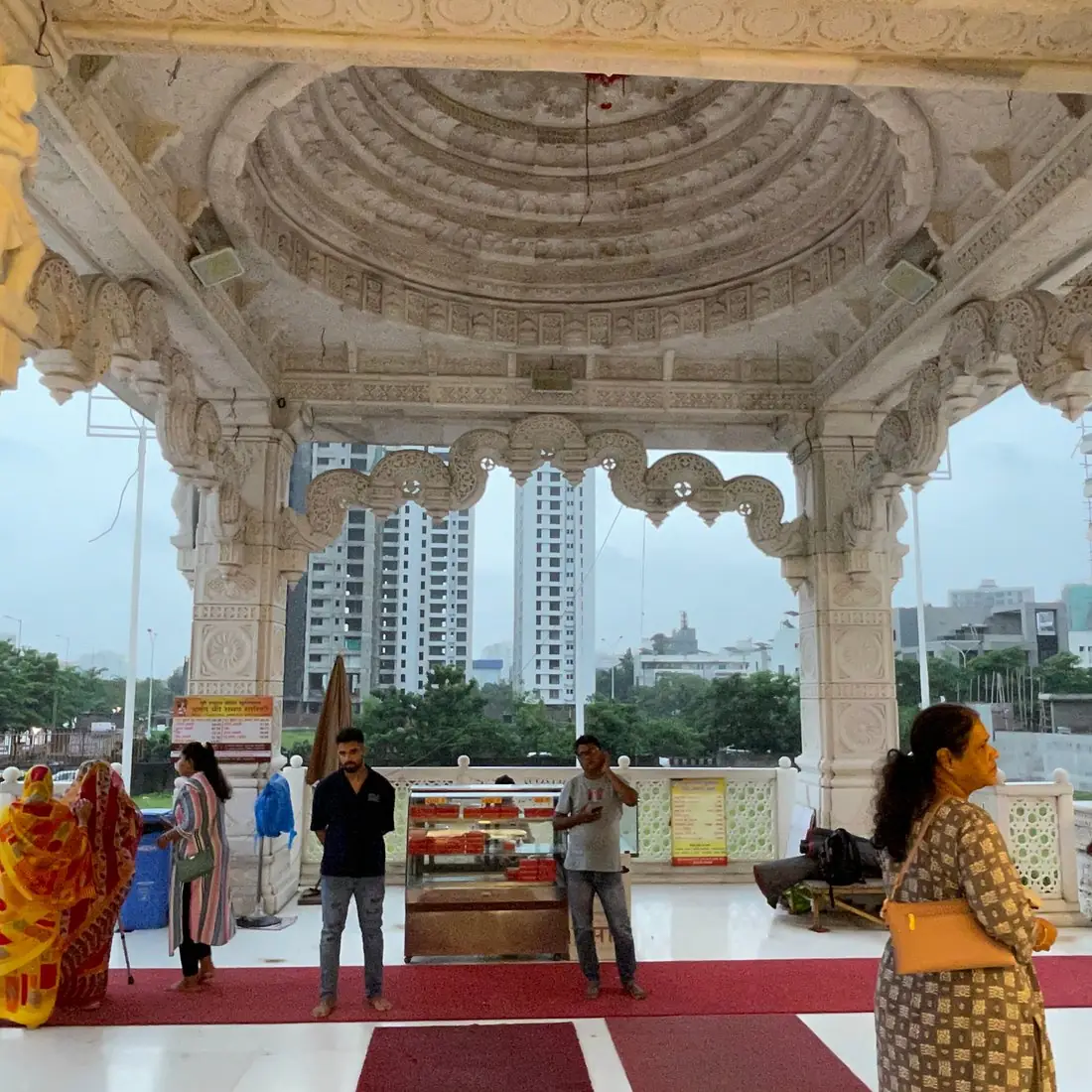
Check the festival notice before booking transport. Ask whether general darshan will remain open, whether a separate queue exists for families or senior citizens, and whether bags, cameras, or vehicles are restricted. Arrive with water and essential medicines, but confirm what can be carried inside the premises.
Large gatherings can involve temporary barricades and long outdoor waits. Wear comfortable clothing, protect yourself from sun or rain, and keep children close. If you’re travelling in a group, choose a meeting point outside the main queue area in case mobile networks become congested.
Festival timing changes should always be treated as possible, even when a printed poster gives a schedule. Temple management may adjust the order of rituals because of crowd size, weather, security instructions, or the presence of a visiting religious group.
The famous Khatu Shyam Ji temple in Rajasthan is not the same destination as a local Khatu Shyam mandir in Surat. This is the answer to one of the most common search confusions. If your intention is to visit the principal shrine, plan a longer intercity journey and verify the final route, transport connections, accommodation, and temple entry conditions separately.
The distance from Surat depends on the route and mode of travel, so an exact figure should be obtained through a current railway, road, or flight planning service. A direct map estimate may not reflect rest stops, diversions, transfers, or the last stretch from the nearest transport point to Khatu village.
Rail travel may require a connection depending on the service selected. Road travel offers flexibility but can be tiring, especially for senior citizens.
Air travel may shorten the long-distance portion while still requiring surface transport to the temple area. Check the complete door-to-door plan rather than comparing only the first leg.
For background on the Rajasthan destination, readers can consult the Rajasthan Tourism information on Khatu Shyam Ji. The official destination information is useful for distinguishing the Rajasthan shrine from a local Surat temple, but current darshan timings and entry procedures should still be confirmed before departure.
Do not use a local Surat listing to plan the Rajasthan journey. Likewise, don’t use the Rajasthan temple’s schedule to decide when a neighbourhood mandir in Surat opens.
Transport planning is part of a successful darshan visit. A local Surat temple may be situated inside a dense residential or commercial area where road-side parking is limited. Even if a listing mentions a parking facility, capacity can be reduced during aarti, festival processions, or weekend crowds.
Two-wheeler access may be easier than car access in narrow lanes, but the final decision should consider the safety and comfort of your group. If you’re travelling by auto-rickshaw or cab, ask the driver to stop at an authorised drop-off point rather than directly outside a crowded gate.
Public transport can be practical for a weekday visit. Confirm the last return service if you plan to attend evening aarti. A late religious programme may finish after normal bus frequency has reduced, so keep a backup plan such as a trusted cab service or a designated family pickup point.
Temple etiquette is simple but important. Dress modestly, follow queue barriers, avoid loud conversations near the sanctum, and ask before taking photographs. Do not touch railings, offerings, or ritual objects unless the temple explicitly permits it.
Avoid carrying unnecessary valuables. Security rules can change, and some temples may not provide storage for large bags, helmets, or electronic equipment.
Example, not a verified account: imagine a family in Surat planning to attend evening darshan at a local Shyam Baba temple on a Saturday. A map search displays two similarly named mandirs, one near a railway area and another in a residential neighbourhood. The family chooses the first result without checking the address and later discovers that its evening ritual begins earlier than expected.
A better approach would be to call both listed temples, confirm the deity’s name and locality, and ask about the evening aarti, last entry, parking, and prasad counter. After selecting the correct shrine, the family could use Google Maps directions for traffic guidance while treating the temple office’s same-day confirmation as the authority for darshan timing.
This example does not establish the timings or rules of any real temple. It shows why “open now,” a review, or an old directory entry should not be the only basis for a religious journey. A few minutes spent confirming details can prevent a long and disappointing trip.
The most widely recognised Khatu Shyam Ji shrine is in Khatu village in Rajasthan. Surat also has local temples and devotional centres using the Shyam name, so the exact destination must be confirmed before travelling.
There is no single contact number that applies to every temple using this search term. Use the number displayed by the specific temple trust, on its current notice, or at the temple office. Treat an undated directory number as unverified.
Call the temple management on the day of your visit, check its current official announcement, and ask specifically about aarti, bhog, temporary closure, and last entry. “Open” on a map service doesn’t always mean that darshan is available at that moment.
Possibly, but it depends on the temple. Many smaller mandirs accept walk-in devotees rather than online bookings. Use online darshan booking only through a channel clearly connected to the temple trust, and confirm whether the booking is for general entry or a special ritual.
Devotees honour Shyam Baba through darshan, aarti, bhajan, kirtan, devotional offerings, prasad, and remembrance of the Barbarika tradition. The meaning is personal and devotional, so claims of miracles should be understood as matters of faith rather than guaranteed outcomes.
The answer depends on whether you mean a local Surat mandir or Khatu Shyam Ji Rajasthan. For the Rajasthan journey, use a live route planner and verify the final transport connection; for a local temple, enter the confirmed address rather than relying on the search phrase alone.
The safest next step is to identify the exact mandir, save its complete address, and confirm the current schedule directly with temple management. Ask about today’s darshan timing, morning aarti, evening aarti, bhog, prasad, parking, entry restrictions, and any festival-related change instead of relying on a copied timetable.
Once those details are confirmed, your visit to Khatu Shyam Mandir Surat can be calmer and more respectful. If your destination is actually Khatu Shyam Ji Rajasthan, treat it as a separate pilgrimage plan and verify the long-distance route, temple notice, and crowd conditions before booking travel.





