Physical Address
304 North Cardinal St.
Dorchester Center, MA 02124
Physical Address
304 North Cardinal St.
Dorchester Center, MA 02124
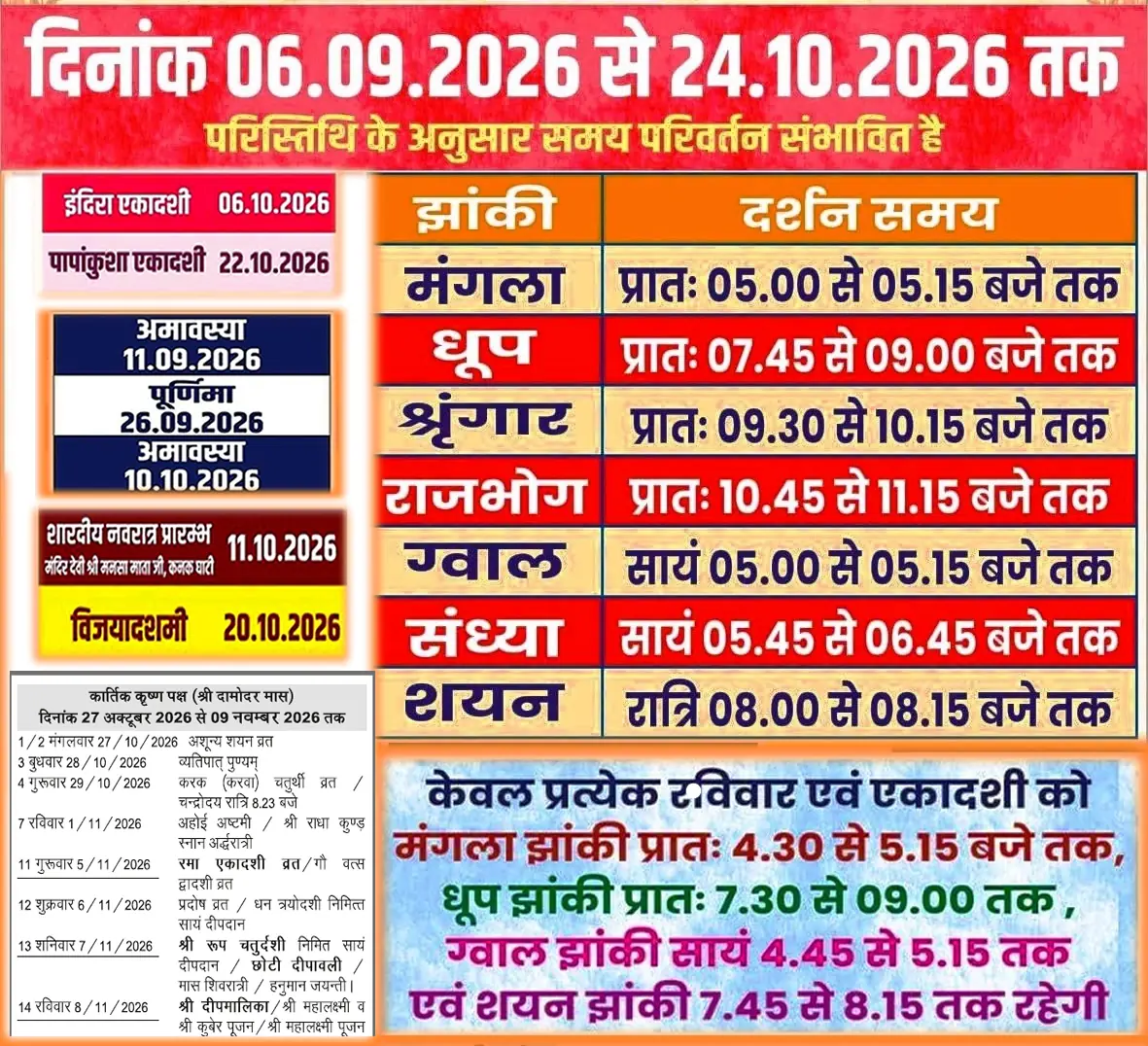
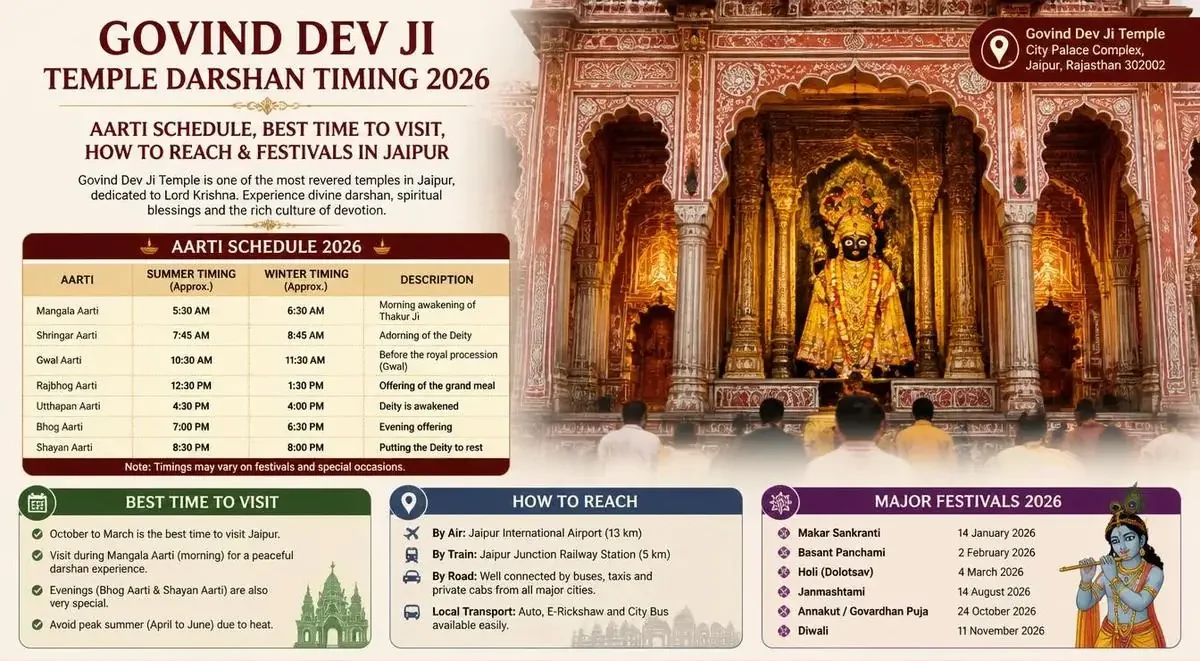
Checking Govind Dev Ji aarti time today is an important first step before visiting the famous Govind Dev Ji Temple in Jaipur, Rajasthan. The temple’s darshan, bhog, shringar and aarti schedule can change with the season, festivals, special rituals, crowd arrangements or instructions from the temple management.
This article explains how the daily worship sequence generally works, where timing changes are most likely, how to verify the latest information, and what to know about entry, booking, dress, photography and peak crowds. You’ll also find a practical timetable format and clear advice for checking the schedule on the day of your visit.
Govind Dev Ji Temple, located within the City Palace complex in Jaipur, is one of the best-known Krishna temples in India. The principal deity, Govind Dev Ji, is worshipped as a form of Lord Krishna, and devotees visit throughout the day for darshan, aarti, bhog and the changing devotional presentations known as shringar. Because the temple follows a living worship tradition rather than a fixed tourist attraction timetable, the hours displayed on one day may not apply exactly on another.
Many people search for a morning aarti, evening aarti or “live darshan” time shortly before leaving home. That is sensible, but a search result alone shouldn’t be treated as confirmation. Daily schedules may be adjusted for Ekadashi, Janmashtami, Holi, Radhashtami, Diwali, special palace events, visits by dignitaries, maintenance, security restrictions or unusually large crowds.
The phrase “today” matters particularly during winter and summer. Seasonal changes can affect the length of individual darshan windows, while festival days may include additional offerings, devotional singing or altered intervals. The temple may also close the sanctum briefly between public darshan periods while priests prepare the idol for the next seva.
Before travelling, check the latest notice from the temple trust or the official contact channel. If a website shows a contact address described as a mandir Gmail or a Gmail com account, confirm that the address is published on an official temple, trust or government page rather than copied from an unrelated directory. A genuine-looking social media profile is not automatically an official source.
There is no responsible way to guarantee a precise “today” timing without checking a current notice or speaking with the temple. Static pages can remain online after a schedule has changed, and third-party listings often simplify several separate darshan periods into one broad opening time. Use a verification process that matches the importance of your visit.
Look first for the official Govind Dev Ji Temple website, the temple trust’s verified page, an official booking portal or a notice displayed by the temple administration. Rajasthan’s government tourism information can also help confirm the temple’s location and basic visitor context. For background information about the site, you can consult the Rajasthan Tourism page on Govind Dev Ji Temple, but use the temple’s own current notice or helpline for same-day aarti and darshan changes.
If no current schedule is posted, call the official helpline during reasonable hours. Ask specifically for the morning mangla darshan, shringar, rajbhog, afternoon, evening and shayan periods. Saying only “What time is the temple open?” may produce a broad answer that doesn’t tell you when the idol is visible to devotees.
A second check is useful on Sundays, public holidays and festival dates. Compare the official notice with the latest verified temple communication, but don’t average conflicting timings or assume the later time is correct. If the temple has announced a special schedule, that announcement takes priority over an old timetable circulating on WhatsApp, YouTube or a travel page.
If you’re travelling from outside Jaipur, don’t rely on a live-stream start time as proof that physical entry is open. Online darshan and in-person darshan can follow different arrangements, and a stream may begin late or be unavailable during a private ritual.
Govind Dev Ji worship follows the tradition of presenting the deity as a living royal form of Krishna. The idol is awakened, dressed, offered food, shown to devotees at different stages and finally prepared for rest. This explains why a day at the temple is divided into several darshan periods rather than one continuous opening.
Names used for these periods can vary in spelling and local usage. You may see mangla, shringar, rajbhog, gwal, sandhya and shayan in a timetable. The sequence is more useful than memorising a single clock time, because it helps you understand what is happening when a public window opens or pauses.
| Worship period | Meaning in simple terms | What visitors may experience | Why the timing may shift |
|---|---|---|---|
| Mangla | Early morning awakening darshan | A quiet devotional atmosphere and the first glimpse of the idol | Seasonal routine, festival observance or a special seva |
| Shringar | Darshan after dressing and ornamentation | The deity appears in fresh clothing, flowers and devotional decoration | Time required for dressing, decoration and ritual preparation |
| Rajbhog | Main food offering | A formal bhog presentation, sometimes followed by a darshan pause | Offering procedure, festival menu or crowd management |
| Gwal | A later offering associated with Krishna’s daily care | A shorter worship interval in some schedules | Temple-specific practice and the day’s ritual plan |
| Sandhya | Evening worship | Devotees gather for the evening darshan and aarti atmosphere | Sunset, special kirtan, festival arrangements or crowd size |
| Shayan | Night resting darshan or closing ritual | The final public worship period before the temple closes | Night ritual, seasonal closing practice or special events |
Terms such as dhoop, shringar rajbhog, rajbhog gwal and gwal sandhya may appear in regional schedules or devotional discussions. They should not be assumed to mean identical public entry periods at every Govind Dev temple. The Jaipur shrine’s own notice is the reliable reference for how each label is used on a particular day.
The early morning period appeals to devotees who want a calmer start to the day and a traditional first darshan. Mangla darshan can be spiritually meaningful because it represents the awakening of Govind Dev Ji, but an early opening also means that visitors must plan transport carefully. Jaipur streets may be quieter before sunrise, yet local transport options can be less frequent.
Shringar darshan is often preferred by visitors who want to see the idol after the deity has been dressed and decorated. The visual presentation may change according to the day, season and festival calendar. Flowers, garments, ornaments and the backdrop can create a different impression from the morning awakening period, even though the central act of darshan remains the same.
Evening visitors generally ask about sandhya or aarti. This period can feel especially busy because residents, office-goers, pilgrims and tourists arrive together. During a popular festival, the queue may form well before the listed aarti time, and entry could be regulated once the inner area reaches capacity.
There isn’t one universally “best” darshan time. Your choice depends on whether you value a quieter visit, a particular ritual, the decorated idol or the evening devotional atmosphere. Confirm the latest public entry window before choosing your travel route.
Darshan means viewing or being in the presence of the deity. It doesn’t always mean that a visitor can enter the sanctum or stand close to the idol.
In many Indian temples, devotees remain in a designated viewing area while priests perform the seva inside. At Govind Dev Ji Temple, crowd movement and barriers may be arranged differently according to the day’s requirements.
Aarti is a devotional offering involving a lamp or flame, accompanied by prayers, bells, music or chanting. The public may be able to witness the aarti from a designated area, but the length of the visible ceremony and the number of people allowed near it can vary. Arriving just before the ritual can be risky if security staff stop entry temporarily.
Follow the instructions of temple staff, volunteers and security personnel. Common expectations at a major mandir include modest clothing, removal of footwear before the relevant area, respectful speech and compliance with restrictions on bags or electronic devices. The exact rules should be confirmed on the current notice because arrangements can change.
Temple etiquette isn’t merely formal. It protects the sanctity of worship and helps staff manage thousands of individual visits without unnecessary conflict. A short, respectful visit is better than delaying the queue for a photograph or argument over a preferred position.
Visitors often use the word “booking” broadly. It may refer to a special darshan pass, an online appointment, a group visit, a paid seva, a donation receipt or a palace-area entry ticket.
These are not automatically the same thing. Govind Dev Ji’s regular darshan may operate differently from any separately managed City Palace attraction or special religious service.
Never assume that a payment page or registration form is official because it uses the temple’s name. Check the domain, spelling, contact details and privacy information. An official booking portal should be linked from an official temple or trust communication, not merely from a sponsored search result or a social media message.
Booking windows can close before the physical darshan period starts. They may also be unavailable on days when the temple uses a first-come arrangement or when a special festival system is introduced. If the official source does not mention online booking, contact the temple rather than paying an intermediary who promises priority entry.
For a simple darshan visit, a phone call or same-day official notice may be more useful than searching repeatedly for a booking link. Keep a screenshot of any confirmed instruction, but still check for last-minute changes after reaching Jaipur.
Festival days can transform the usual rhythm of Govind Dev Ji Temple. Janmashtami may bring extended devotional activity and heavy crowds.
Holi-related observances, Diwali, Radhashtami and Ekadashi can also influence the day’s offerings, decoration, queue system and public darshan periods. The temple may publish a separate schedule, or staff may communicate changes at the entrance.
Ekadashi is especially significant for many Vaishnava devotees, though the exact worship practice and public arrangements depend on the temple calendar. Visitors should not infer the schedule from another Krishna temple in Vrindavan, Nathdwara or elsewhere. Similar names for rituals do not prove that two temples follow identical hours.
On major occasions, the most visible aarti may not be the only event affecting access. A procession, special bhog, devotional singing or VIP movement can create temporary closures. The idol may be presented in a festival-specific shringar, and devotees may queue for much longer than on a normal weekday.
Check the official festival notice several days in advance and again on the morning of travel. Plan to arrive early, but don’t block the entrance while waiting for companions. If public transport or parking is restricted, arrange a drop-off point away from the busiest approach roads and allow time to walk.
For children and older relatives, carry water where permitted and decide on a meeting point outside the main queue. Don’t depend on mobile connectivity inside a crowded palace or temple area. A festival visit can be deeply memorable, but flexibility is essential because the published schedule may be a guide rather than a minute-by-minute guarantee.
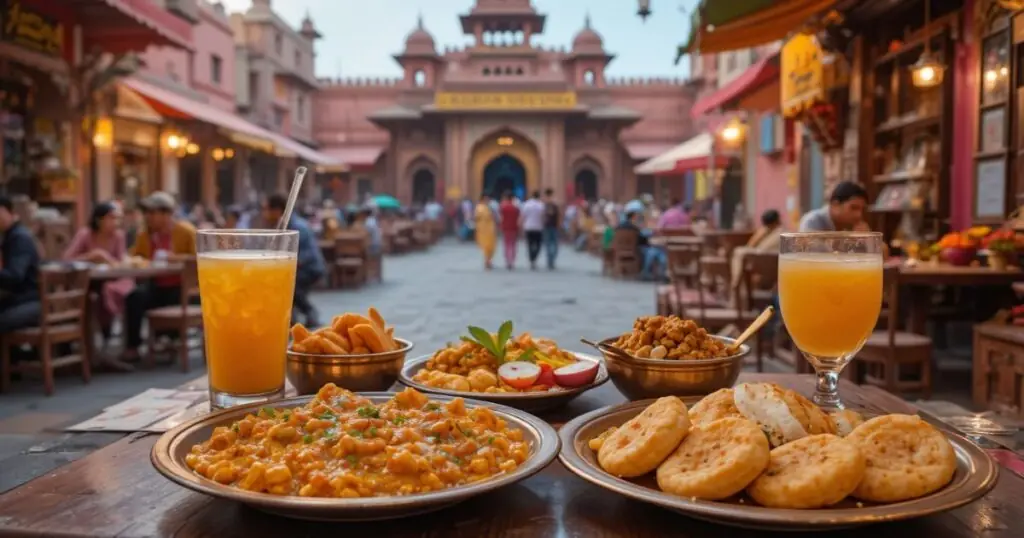
This is a planning example, not a verified report of a particular day’s schedule. Suppose a family from Delhi reaches Jaipur in the morning and wants to attend Govind Dev Ji’s evening aarti. They find two different times online, one from an old travel article and another from a social media post. Rather than selecting one at random, they contact the temple’s current official channel and ask whether the evening darshan, aarti and final shayan period are open to general visitors.
The family also asks whether mobile phones are allowed, whether a special pass is needed and how early the queue typically begins on that weekday. They plan their hotel departure around the confirmed public entry period, leaving extra time for Jaipur traffic and security screening. If staff later announce a festival adjustment, they’re prepared to attend the next available darshan instead of insisting on entry during a restricted ritual.
This approach prevents three common mistakes: treating an old timetable as current, confusing aarti with continuous temple opening, and arriving with luggage or devices that cannot enter. The family may not experience the exact ritual they first imagined, but they have a better chance of completing a respectful and practical visit.
The example also shows why “today” requires local confirmation. A schedule can be accurate in a general sense and still be wrong for the date on which you travel. Reliable planning is less about finding the most confident-looking answer and more about checking the source, date and meaning of each listed time.
Govind Dev Ji Temple is associated with Jaipur’s historic City Palace area, so the visit is often combined with other heritage stops. That makes location planning important. A map may show a short distance while the actual route includes vehicle restrictions, pedestrian areas, security checks or a walk through a busy market zone.
Ask your hotel or driver to identify the appropriate drop-off point rather than assuming a vehicle can stop directly beside the entrance. On festival days, local restrictions may change the usual route. The temple’s official notice or local administration announcement should take precedence over a map application’s estimated arrival time.
Crowds are influenced by weekday, school holidays, public holidays, festival calendars, weather and the popularity of a particular aarti. Evening periods and special shringar presentations can draw more people. The largest crowd isn’t always at the exact start of aarti; it may build before entry opens and remain after the ritual ends.
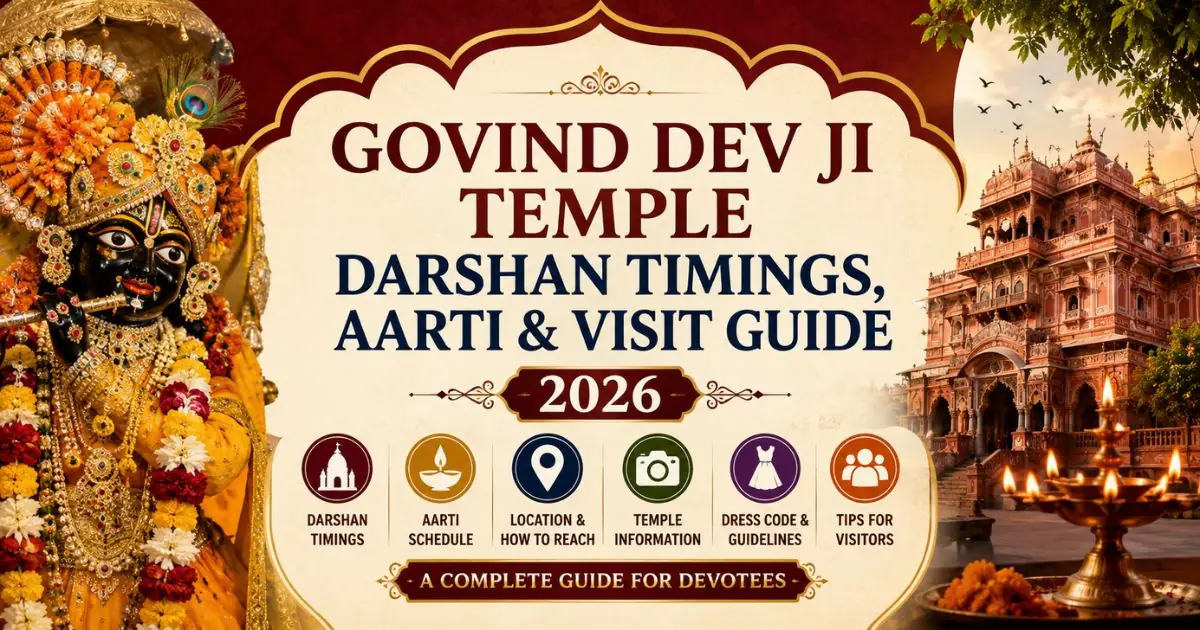
Visitors near Bountiful or Salt Lake City in Utah sometimes search for Govind Dev Ji aarti time today because they’re looking for a local Krishna community or a live online broadcast. The Jaipur temple’s schedule won’t automatically apply to a Govind Dev or ISKCON centre in the United States. Check the local centre’s own notice for its time zone, worship format and livestream arrangements.
The exact aarti time depends on the date, season and temple announcement. Govind Dev Ji Temple has multiple daily worship periods, and the evening sandhya aarti is only one part of the schedule. Confirm the current timing through the official temple channel before travelling.
Darshan is usually divided into separate windows connected with mangla, shringar, rajbhog, gwal, sandhya and shayan worship. The public may not be able to enter continuously between those windows. Ask the temple for today’s opening and closing periods, not just the general temple hours.
It may be open while a particular darshan window is closed. Ritual preparation, bhog, security arrangements and special events can temporarily stop public viewing. A same-day official notice or phone confirmation is the safest answer.
No. Govind Dev Ji and Gopinath Ji are distinct Krishna forms and are associated with different temples, traditions and locations. Devotees may honour both, but the names should not be used interchangeably when searching for darshan timings.
Some temples or devotional organisations may provide a livestream, but availability and broadcast hours can change. An online video may show a recorded glimpse rather than live footage. Check the verified temple or trust channel, and don’t assume that a stream’s start time confirms physical entry.
Seasonal schedules may differ, especially for early morning and evening worship. Winter daylight, festival dates and local temple practice can all affect the timetable. Use the current winter notice rather than carrying forward a schedule from another year.
Govind Dev Ji aarti time today should be treated as a date-specific question, not a permanent fact copied from an old timetable. Verify the temple’s latest darshan and aarti notice, confirm whether booking is needed, and allow time for security, walking and possible crowd controls. If the official source is silent, call rather than trusting an unverified Gmail address, directory listing or forwarded message.
A thoughtful visit begins with realistic expectations. The idol’s shringar, the sound of aarti and a quiet moment of darshan can be deeply moving, but temple access follows the needs of worship first. Before starting your journey, check the latest official update once more—and be ready to accept a revised time if the temple changes its routine to serve devotees safely.





