Physical Address
304 North Cardinal St.
Dorchester Center, MA 02124
Physical Address
304 North Cardinal St.
Dorchester Center, MA 02124

Maha Shivaratri in 2027 will be observed on Saturday, 6 March, according to the commonly followed Hindu lunar calendar. The festival date matters because temple opening hours, night-long Darshan, Abhishek, Aarti, Pooja slots and online ticket reservations often change for this occasion. A normal weekday schedule may not apply on the great night of Lord Shiva.
If you’re planning a Mandir visit, you’ll need more than the festival date. This article explains how the Shivratri 2027 date is determined, which timing categories to check, how temple queues and booking systems usually work, and why you should confirm the final notice with the relevant temple administration before travelling.
The widely observed Maha Shivaratri date in 2027 is Saturday, 6 March. It falls during the Krishna Paksha Chaturdashi, the fourteenth lunar day of the dark half of the month of Phalguna in many North Indian calendars.
In some regional calendars, especially those used in parts of South India, the month may be named differently because the lunar month system is not identical across the country. The festival itself remains associated with the same lunar observance, but printed calendars may describe the month and tithi in different ways.
For devotees, the most important distinction is between the civil date and the religious night. Maha Shivaratri is observed at night, and the principal worship period is connected with the Nishita Kaal, or midnight period, on the festival date. The exact beginning and ending of Chaturdashi tithi are calculated for a particular location, so the date and Pooja time shown in Delhi, Varanasi, Bengaluru, Mumbai or a town outside India may not be identical.
That’s why a search for “Shivratri 2027 date and time” can produce several timings. One calendar may show the festival date, another may show the tithi start and end, while a temple notice may publish its own Abhishek, Darshan and Aarti timetable. These are related but not interchangeable details.
| Timing or term | What it means | Why it matters for visitors |
|---|---|---|
| Festival date | The civil calendar day on which Maha Shivaratri is observed | Helps you plan travel and leave arrangements |
| Chaturdashi tithi | The lunar date associated with the main observance | Used by priests and calendars to determine religious timing |
| Nishita Kaal | The midnight worship period calculated for a location | Relevant to special Pooja, Abhishek and night worship |
| Darshan hours | The period when devotees may see or approach the deity | May be shortened, extended or divided into ticketed slots |
| Booking window | The period during which online or counter reservations are available | Can close before the festival because capacity is limited |
Hindu festival dates are based on lunar calculations rather than a fixed Gregorian date. The Gregorian calendar places Maha Shivaratri in February or March, but the exact day changes each year. In 2027, the commonly published date is Saturday, 6 March, while the surrounding tithi timings may begin or end at hours that vary according to location.
Indian calendars also follow regional traditions. A Gujarati calendar, a Malayalam calendar, a Tamil calendar and a North Indian panchang may use different names for the lunar month.
The wording can therefore create confusion: one source may refer to Phalguna Krishna Chaturdashi, while another may describe the observance through a regional month name. This doesn’t automatically mean that one source is wrong.
The practical question is not only “What day is Shivratri?” You should also ask which city’s sunrise, sunset and midnight calculations are being used. A calendar prepared for India may not provide the correct Nishita Kaal for the United States, the United Kingdom or another country. The phrase “Shivratri 2027 date USA,” for example, requires a location-specific panchang rather than a simple conversion of Indian midnight.

The festival date comes from the lunar observance. The temple schedule is an operational decision made by the trust or administration.
A Mandir may keep its sanctum open for longer hours, introduce a special queue, suspend ordinary Darshan for a ceremony, or offer a separate paid Pooja arrangement. None of those operational changes alter the religious date.
Printed calendars are useful for advance planning, but they shouldn’t be your only source for a physical visit. For the final decision, check the temple’s official website, official booking portal, verified social media announcement or notice issued by the temple administration. If the sources disagree, contact the Mandir directly before booking transport.
Darshan means viewing or respectfully approaching the deity. It doesn’t always mean that you can stand inside the sanctum, perform your own ritual or remain in front of the shrine for an unlimited period. On a major Hindu festival such as Mahashivratri, temples may divide visitors into ordinary Darshan, priority Darshan, special-entry Darshan and Pooja participants.
Many popular Shiva temples receive a much larger number of devotees during Shivratri than on an ordinary day. The temple may therefore open earlier, continue later into the night or operate in controlled batches.
In another temple, the opposite may happen: a ceremonial period can temporarily pause public entry while priests conduct an important ritual. Only the administration can confirm the exact arrangement.
Don’t assume that an online Darshan ticket guarantees immediate entry. A ticket may provide access to a designated queue or time band, but security screening, crowd controls, road closures and local instructions can still affect your waiting time. Read the ticket wording carefully. “Valid on date” and “valid for a particular slot” are not the same thing.
These questions are especially important at temples with a small approach road or a compact inner complex. A short journey on a map can take much longer during a festival because vehicles may be stopped away from the entrance and visitors may need to walk through a regulated route.
Temple websites often use several ritual terms without explaining them. Pooja is a broad word for worship.
Abhishek generally refers to the ritual bathing or offering performed for the deity, while Aarti is the ceremonial offering of light. The exact form, duration, eligibility and fee for each service differ from one temple to another.
On Maha Shivaratri, a temple may publish separate timings for morning Pooja, Rudrabhishek, special Abhishek, four-prahar worship and midnight Aarti. The four-prahar concept refers to worship performed during four portions of the night, but a particular temple may not offer public participation in every period. Some ceremonies are conducted by priests only, while devotees may receive Darshan before or after them.
If you book a Pooja, check what the service actually includes. One ticket may allow you to attend a ceremony from a designated area.
Another may permit a priest to perform the ritual on your behalf without allowing you into the sanctum. Some temples issue a receipt or Prasad collection token, while others provide only entry access.

The Nishita Kaal is often treated as a significant worship period for Maha Shivaratri. Its clock time is not a single nationwide figure because it depends on local sunset and sunrise calculations.
A temple may publish a rounded public schedule that differs slightly from an astronomical or panchang calculation. Follow the temple’s own notice if you’re attending an organised ritual there.
Do not arrive just before midnight expecting a quick visit. Special Pooja participants may be asked to report well in advance, and ordinary Darshan lines can remain active at the same time. If the temple offers night-long worship, you may also need to consider lighting, weather, drinking water, seating and safe transport after the ceremony.
Booking timings refer to when reservations become available, not the time of your Darshan. A temple can open its online booking window weeks ahead, release tickets in batches, or announce festival reservations only after the final schedule is approved. Some Mandir trusts use their own website, while others operate through a designated government or pilgrimage portal.
Search results and unofficial booking pages can be misleading. Use the temple’s official website or a booking link announced by the temple administration.
Before entering payment details, confirm the domain name, contact information, cancellation policy and receipt format. Never rely on a social media post that doesn’t identify the official source.
It’s also possible that a temple doesn’t offer advance booking for ordinary Darshan. In that case, a person claiming to sell a guaranteed entry ticket may not be authorised. The absence of an online option is not proof that the temple has failed to publish its schedule; some places manage entry through counters, tokens, local passes or a queue system.
Read the arrival instructions immediately after booking. A successful payment alone may not create a valid reservation if the portal shows a failed or pending transaction. If money is debited but no ticket appears, don’t pay repeatedly without checking the booking history, bank message and official help desk instructions.
The safest approach is to build your plan around verified information rather than a generic festival article. Start with the official temple website and look for a notice dated close to the event. Words such as “festival schedule,” “Maha Shivaratri arrangements,” “Darshan update,” “special entry,” “Pooja booking” and “visitor advisory” are useful search terms within the site.
Next, check whether the booking button leads to the same official domain or to a clearly identified authorised portal. A temple may publish a schedule on one website and use another platform for reservations, but the relationship should be explained in the official notice. If you’re unsure, call the phone number listed on the temple’s verified website rather than a number copied from an online directory.
Keep a little flexibility in your travel plan. A temple administration may adjust gate arrangements because of crowd conditions, security directions, weather or a local procession. Your reservation should be treated as permission to report according to the stated rules, not as a promise that every stage of the visit will happen at an exact minute.
Begin by choosing the kind of experience you want. If your priority is a brief Darshan, a daytime slot may be easier than the midnight period.
If your priority is a special Abhishek or night Pooja, you’ll need to accept a longer visit and stricter reporting instructions. Families with young children, older relatives or visitors with mobility needs should consider comfort and return travel before selecting a late-night slot.

Check the official announcement, reserve accommodation if needed and confirm your transport route. If you’re travelling to a famous pilgrimage centre such as Varanasi, Ujjain, Srisailam, Somnath or another major Shiva temple, look for local information on traffic diversions and parking. Don’t assume that a hotel’s description of “near the temple” means that vehicles can reach the main gate during the festival.
Recheck your ticket, reporting time and entry gate. Download the confirmation instead of depending on mobile data at the venue.
Pack only what the temple permits. A small amount of water, essential medicines and a copy of necessary identification may be useful, but bags and electronic items are often subject to restrictions.
Arrive early enough to complete walking, security screening and queue registration. Carry identification in the same form used for booking, and keep your group together. Follow announcements from temple volunteers and police personnel even if they differ from older information shared online.
Respect the queue and avoid accepting unofficial offers of instant entry. Don’t block gates for photographs, argue with staff about a changed route or attempt to enter a restricted ritual area. The temple’s festival arrangements are designed around safety and worship, not sightseeing alone.
Plan your return before entering a late-night queue. Public transport may operate on a modified schedule, and app-based taxis may not be able to collect passengers near the temple. If you’re travelling with elderly family members, identify a safe meeting point outside the restricted zone in case mobile networks become congested.
Maha Shivaratri is a major Hindu festival, so an ordinary temple timetable may be replaced by a special arrangement. The temple can introduce barricaded lanes, separate entrances for booked Pooja participants, controlled movement near the sanctum and temporary restrictions on offerings brought from outside. These changes are not uniform across India.
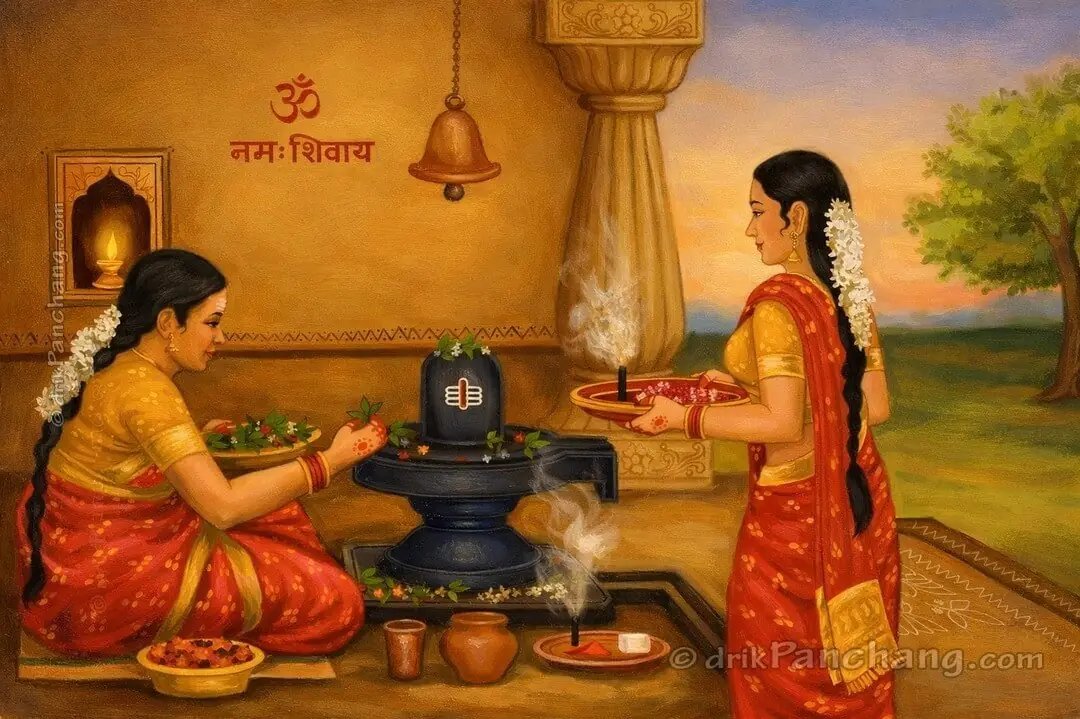
Some temples allow devotees to carry a limited set of traditional offerings, while others provide an authorised counter or prohibit direct offerings during crowded periods. Bilva leaves, flowers, milk and other items may be handled according to local rules. Never assume that an offering accepted at one Mandir can be carried into another.
Dress expectations also vary. Many temples ask for modest, respectful clothing, but precise rules may be published only in the visitor advisory.
Security personnel may refuse prohibited items even if they were allowed on a previous visit. Check the current notice rather than relying on an old photograph or a recommendation from a friend.
Illustrative example, not a claim about a specific temple: imagine that a Shiva temple releases ordinary Darshan tokens for the morning, separate Pooja reservations for the afternoon and a limited night-entry list for the Nishita Kaal. A family that books the afternoon Pooja shouldn’t assume the same confirmation grants midnight Darshan. They must read the service description, report at the correct gate and follow the identity rules attached to that particular reservation.
This example reflects a common scheduling principle, not an invented temple policy. For a real visit, the official trust notice is the controlling source. If you’re planning to visit a well-known temple, use the booking instructions published by that temple’s administration and verify them again close to 6 March 2027.
For temple-specific information, the strongest source is normally the temple trust, temple administration or an officially designated pilgrimage authority. Government tourism pages can help with destination information, but they may not carry live Darshan slots or last-minute Pooja changes. A travel blog can provide useful context, yet it shouldn’t override an official festival notice.
As one real-world verification approach, the Shri Kashi Vishwanath Temple administration has used its official digital presence and designated booking channels to communicate visitor services and access arrangements. The exact facilities and festival rules can change, so readers should verify the current notice rather than rely on a previous year’s process. The temple’s official site is Shri Kashi Vishwanath Temple’s official website.
The source attribution here is limited deliberately: it identifies the temple’s own official channel, not a promise about the 2027 schedule. A booking page may be updated closer to the festival, and a service visible in one year may be paused or redesigned in another. Treat the example as evidence that official digital verification matters, not as a substitute for checking the live booking page.
Be cautious with claims that use urgent language, promise guaranteed access without a receipt or ask you to transfer money directly to an individual. Festival demand creates opportunities for confusion and fraud. If a detail affects your travel, entry or payment, verify it through the temple administration before acting.
The first mistake is treating the date as the whole schedule. Knowing that Shivratri falls on Saturday, 6 March 2027 doesn’t tell you when a particular temple opens, whether Darshan is suspended during Pooja or how long the queue will be. Those details belong to the temple’s operational notice.
The second mistake is mixing up booking time and Darshan time. A portal might open reservations at a particular hour on a release day, while the ticket itself is for a later reporting slot. Read every confirmation screen before completing payment.
Another common problem is arriving at the wrong entrance. Large temples may use different gates for ordinary visitors, online-ticket holders, Pooja participants, senior citizens or local residents. Save the gate information and ask officials for help instead of following unofficial agents.
Small preparations make a noticeable difference. Keep your confirmation accessible, choose practical footwear, carry essential medication and agree on a meeting point with your group. A calm visit is more likely when you plan for waiting, walking and possible changes rather than expecting a normal day at the Mandir.
Maha Shivaratri is widely observed on Saturday, 6 March 2027. The exact tithi and Nishita Kaal timings depend on location, so check a local calendar and the temple’s official announcement for ritual details.
Those dates don’t correspond to the commonly published Indian date for Maha Shivaratri in 2027. The widely observed festival date is 6 March 2027. Confusion can arise when people compare different years, time zones or unrelated monthly Shivratri observances.
No. Some temples arrange extended Darshan or night worship, while others limit public entry during specific ceremonies. Temple opening hours are decided locally and must be confirmed with the administration.
Not necessarily. Some temples provide free or token-based Darshan without advance booking, while others require online reservations for special dates or services. Check the official visitor notice for your chosen Mandir.
Darshan booking generally relates to entry for viewing the deity. Pooja booking relates to participation in, or an offering connected with, a particular worship service. One may not automatically include the other.
Use it for broad planning, but confirm the local tithi and midnight worship period for the country and city where you’ll visit. Lunar timings can differ by location and time zone.
Check when you first begin planning, again after booking and once more shortly before travel. Festival arrangements can be updated because of security, crowd management, weather or local administration instructions.
The Shivratri 2027 date is Saturday, 6 March, but your actual temple experience will depend on the Mandir’s Darshan hours, Pooja schedule, entry rules and booking process. Treat the festival date as the starting point, then confirm the location-specific tithi, reporting instructions and latest visitor advisory through official channels.
Before leaving home, save your reservation, check the gate and allow time for queues and security. A final verification close to the festival can prevent an avoidable journey, especially if you’re travelling for midnight worship. Which temple will you visit, and have you checked its official 2027 notice yet?





