Physical Address
304 North Cardinal St.
Dorchester Center, MA 02124
Physical Address
304 North Cardinal St.
Dorchester Center, MA 02124

Bhadrakali Temple Warangal is one of Telangana’s best-known pilgrimage places, valued for its powerful deity, ancient setting, and connection with the historic Warangal–Hanamkonda region. Accurate Darshan and Pooja timings matter because temple hours can change on festival days, special rituals, weekends, or during local administrative arrangements.
Before leaving home, you’ll want to know when the temple opens, how queues work, whether a booking is actually required, and where to confirm the latest information. This article explains those practical details while also placing the shrine’s history, architecture, festivals, and visitor etiquette in context.
Temple timings are not always fixed in the same way as the opening hours of a shop or museum. A Mandir may open for general Darshan after morning rituals, close briefly during a private Pooja, and follow a different schedule during festivals. At Bhadrakali Temple Warangal, visitors should therefore distinguish between the temple’s opening hours, the hours available for public Darshan, and the time reserved for specific religious ceremonies.
Darshan means viewing and offering prayers to the deity. It doesn’t necessarily mean that every visitor can enter the sanctum area or participate in every ritual.
Pooja refers to a worship ceremony, while Aarti is the ritual offering of light accompanied by prayer. A particular Aarti may be open for devotees to witness, but the exact access arrangement is decided by the temple administration.
The most reliable approach is to check the latest notice from the temple office, an official temple website or booking portal, and verified administration channels before travelling. Search results, map listings, social-media posts, and older travel articles can remain online long after a schedule has changed. They may still help you locate the shrine, but they shouldn’t be treated as final confirmation of today’s Darshan or Pooja hours.
Timing changes are especially important for visitors arriving from Hyderabad, Vijayawada, Karimnagar, or other parts of Telangana. A delayed train, road journey, or family visit can leave little flexibility. Confirming the schedule in advance helps you plan transport, meals, footwear arrangements, and time near Bhadrakali Lake without rushing through the spiritual visit.
Bhadrakali Temple is associated with Goddess Bhadrakali, a fierce yet protective form of the Divine Mother in Hindu worship. The temple’s central idol is widely recognised for its distinctive appearance and powerful presence. Devotees visit the shrine to pray for protection, courage, family welfare, health, and fulfilment of personal vows, although individual religious beliefs and prayer practices naturally differ.
The temple stands in the historic Warangal–Hanamkonda area beside Bhadrakali Lake. Its setting combines an elevated natural landscape, rocky ground, water, and old architectural elements.
That combination gives the visit a different character from a shrine located within a crowded commercial street. Many pilgrims spend time outside the main sanctum, observing the lake and rock formations before or after Darshan.
Historical descriptions commonly connect the shrine with the Kakatiya dynasty and the wider temple-building traditions of the region. Claims about its exact age, original construction, and subsequent repairs should be read carefully because different public descriptions sometimes present different dates or interpretations. A responsible visitor should rely on information displayed by the temple administration, Telangana government tourism material, or recognised historical sources rather than treating every online statement as settled fact.
The temple’s identity is also understood alongside other important Warangal monuments, including the Thousand Pillar Temple and the Warangal Fort area. Those sites reflect the region’s architectural and political history, while Bhadrakali Temple remains an active place of worship. It is both a heritage destination and a living Mandir, so religious activity takes priority over sightseeing during ceremonies and peak hours.
The shrine is sometimes discussed in relation to Shakti worship and Shakti Peetha traditions. Visitors should avoid assuming that every such description has the same scriptural or institutional status. If this distinction matters to you, ask the temple office or consult a recognised religious or heritage authority rather than relying on a casual travel post.
There are several timing categories to understand before visiting. The first is the general temple opening time, which indicates when the premises may begin receiving visitors.
The second is public Darshan availability, which may be interrupted by rituals. The third involves specific Pooja or Aarti services, where participation, viewing, or seating may be subject to separate arrangements.
Because schedules can change, this article deliberately does not publish an unverified clock time as though it were permanent. The temple’s latest notice should take priority, particularly if you’re travelling on a full-moon day, a major festival, a public holiday, or a weekend. Ask whether the published time refers to the main gate, the sanctum Darshan queue, or a specific Pooja.
| Timing category | What it generally means | What you should confirm |
|---|---|---|
| Temple opening hours | Period when visitors may enter the temple premises | Whether the main gate and all visitor facilities open together |
| General Darshan | Time available for ordinary devotees to view and pray to the deity | Queue closure, temporary breaks, and entry restrictions |
| Pooja timings | Scheduled worship performed by priests or through an approved service | Whether advance registration, a receipt, or a name entry is needed |
| Aarti timings | Prayer ceremony involving the ritual offering of light | Whether visitors may watch, join, or stand in a designated area |
| Festival schedule | Special hours and rituals followed on significant religious occasions | Entry gates, crowd controls, parking plans, and queue changes |
Some devotees prefer the quieter atmosphere of an ordinary weekday, while others specifically want to attend an important festival or Aarti. Neither choice is automatically better. A quiet visit may allow more time for prayer, whereas a festival visit can offer a strong sense of community but usually involves longer queues and less predictable movement.
If you have mobility concerns, are travelling with children, or need to return at a fixed time, ask about the least crowded entry period rather than simply asking for “temple timing.” That small distinction can produce a more useful answer from the temple office.
Many visitors arrive with a specific intention: general Darshan, offering flowers, attending Aarti, arranging an Archana, or performing a family Pooja. These services may not all follow the same procedure. A general visitor can usually enter through the ordinary queue, while a special Pooja may require a receipt, a booking reference, or instructions from the counter.
Archana generally involves the priest reciting names or devotional details while making an offering on behalf of a devotee. The exact format differs between temples. Don’t assume that a service available at another Bhadrakali shrine is automatically available at the Warangal temple.
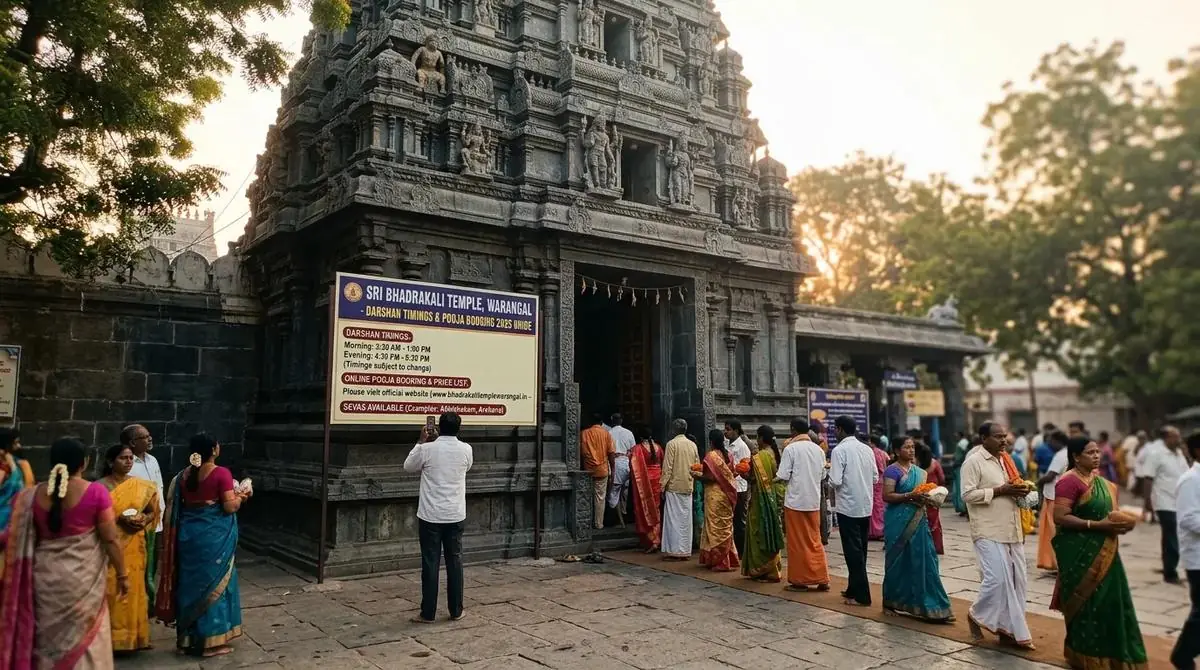
Use only the temple’s authorised counter or verified booking system for paid worship. If someone outside the gate promises guaranteed close Darshan, priority access, or a special ritual without an official receipt, treat the offer cautiously. A genuine temple service should have a clear name, stated fee if applicable, and an identifiable administration process.
Dress respectfully and follow instructions given by priests, volunteers, and security staff. Rules may apply to photography, mobile phones, bags, footwear, food, and movement near the sanctum. These rules aren’t meant to make the visit difficult; they help maintain order while worship is taking place.
“Booking” can mean several different things in a temple context. It may refer to a special Darshan ticket, a Pooja slot, a donation receipt, an accommodation arrangement, or a festival-related pass. Not every visitor needs an online ticket for ordinary Darshan, and not every online page using the temple’s name is an official booking portal.
Before making a payment, check the domain name, contact details, receipt format, cancellation terms, and service description. An official portal should explain what the booking provides. If the page only promises “VIP Darshan” without identifying the temple authority, it deserves extra scrutiny.
Availability can open and close according to the temple’s own calendar. A booking page may show no slots because the service is unavailable, because the date hasn’t been released, or because places have filled. Don’t interpret every unavailable date as a permanent closure.
Keep a digital and printed copy of your confirmation if the portal issues one. Carry the same identity document used during registration when the instructions require identity verification. Arrive with enough time to locate the reporting counter; a booking time is often a reporting window rather than a promise that the entire worship experience will finish at that exact minute.
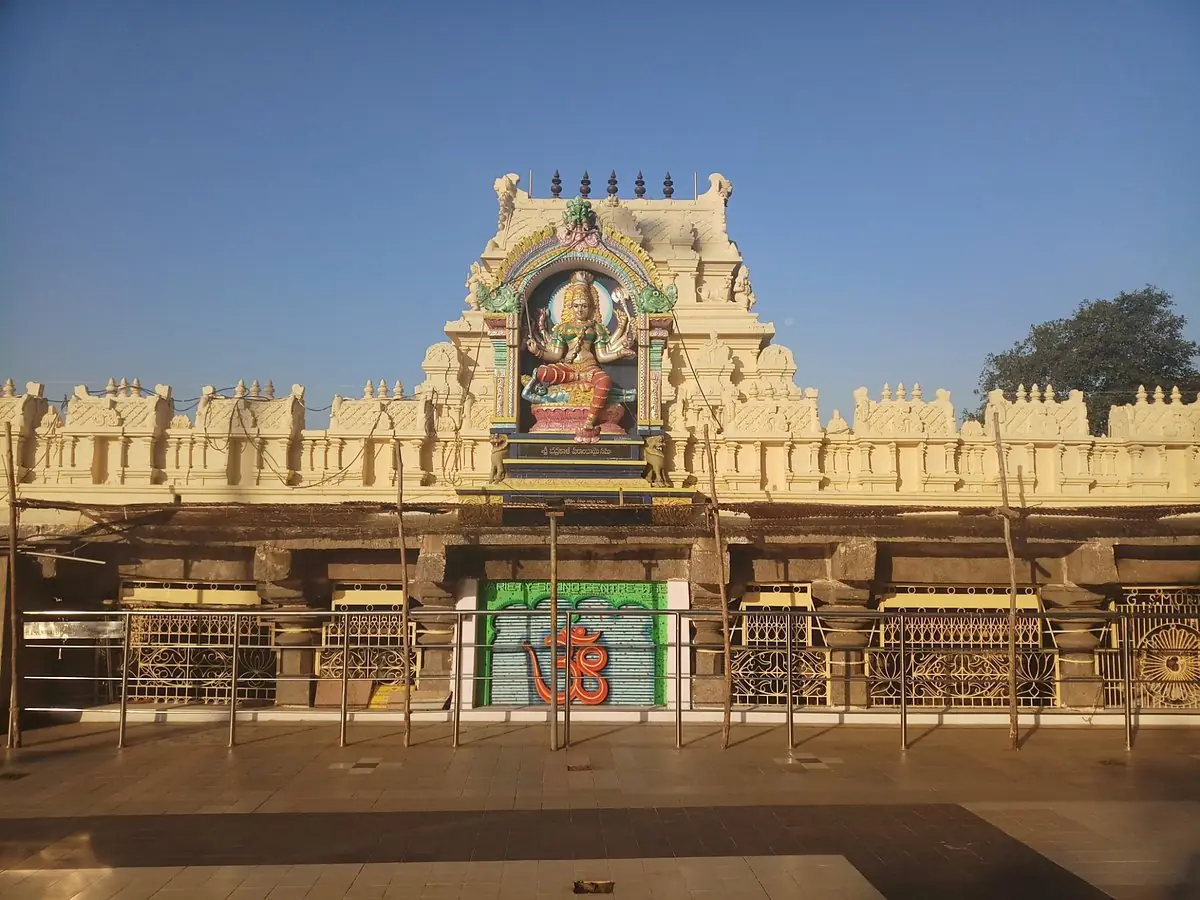
For the latest institutional information about Telangana destinations, you can also consult the official Telangana Tourism portal. It can provide broader destination context, but the temple office or authorised booking channel should still be treated as the final source for live Darshan and Pooja availability.
Start with the temple’s verified communication channel. This might be an official website, a government-listed temple page, an authorised social-media account, a notice issued by the temple trust, or a telephone number displayed at the temple premises. Save the information with the date on which you checked it because a schedule can change between planning and travel.
When you call, ask short, specific questions. “What are today’s temple opening hours?” is useful, but “Is general Darshan open between my arrival and departure?” is better. You can also ask whether the queue closes before the announced closing time, whether there is a midday ritual break, and whether a festival arrangement is in force.
Cross-checking is sensible, but don’t create confusion by treating five unofficial listings as equal to one current administration notice. Map applications often show visitor-submitted information.
A local driver may know the route but not the day’s Pooja schedule. Use each source for what it can reliably provide.
This method is particularly helpful for a same-day trip from another city. You’ll know whether your plan depends on a specific Aarti, a paid Pooja, or simply the availability of general Darshan. It also reduces the chance of paying for a service that isn’t required.
The best time depends on the purpose of your visit. A weekday outside a major festival may be more manageable for visitors who want a calm Darshan. Festival days can be deeply meaningful for devotees, but they may bring extended queues, temporary barricades, traffic diversions, additional security, and restricted movement around the main shrine.
Navratri, Dasara-related observances, and other occasions associated with Goddess worship may draw larger crowds, but the exact scale and arrangements vary by year. Don’t rely on a previous festival visit as a guarantee of what will happen next time. The administration may alter queue routes, entry gates, Pooja timings, or vehicle access for safety and crowd management.
Arrive early only after confirming that the temple will actually be open for public entry at that time. Reaching hours before opening can mean waiting without access to facilities, especially for older devotees or families with small children. Conversely, arriving just before a closing ritual may leave too little time for Darshan.
Carry water where permitted, wear comfortable footwear, and keep essential medicines with you. Since rules about bags and food can vary, avoid carrying unnecessary items. If you’re travelling as a group, agree on a meeting point outside the main queue in case mobile connectivity becomes unreliable.
Bhadrakali Lake adds to the appeal of the location, but visitors should keep the temple visit and lakeside sightseeing separate in their planning. Water edges, rocky areas, and crowded festival surroundings require ordinary caution. Children should remain with an adult, and nobody should enter restricted areas for photographs.
The temple’s architectural interest comes from its older regional setting, stone construction, shrines, and relationship with the surrounding landscape. Public descriptions may use terms such as Chalukyan influence, Kakatiya-era association, natural rock, or ancient temple traditions. These labels can refer to different layers of history, so avoid treating one online caption as a complete architectural analysis.
Warangal and Hanamkonda are well known for historic temples and monuments. The Thousand Pillar Temple, sometimes called the Thousand Pillar Temple or Rudreswara Temple, is a separate heritage site and should not be confused with Bhadrakali Temple. Both places are valuable, but they have different histories, layouts, religious functions, and visitor arrangements.
Visitors sometimes describe the temple as being on a hill between parts of Warangal and Hanamkonda. Local geography and map labels can make these descriptions sound inconsistent, especially when administrative boundaries or neighbourhood names are used differently. For directions, rely on a current map and confirm the final approach locally rather than following an old written route.
Respect for a living shrine matters more than taking the perfect photograph. Ask before photographing priests, ritual objects, or other devotees. Don’t block a queue, sit in a restricted passage, touch an idol without permission, or treat sacred areas as ordinary exhibition spaces.
A useful real-world reference is the Telangana Tourism portal’s presentation of Warangal as a destination combining heritage monuments, temples, and lake landscapes. That is a verified tourism-source description of the region’s visitor context, not proof of a particular daily Darshan time. For practical scheduling, the temple administration remains the correct authority.
The most frequent mistake is trusting an old timing copied across multiple websites. Repetition doesn’t make a detail current. A listing may show a regular schedule even when a festival, repair, security arrangement, or special ritual has changed entry for that day.
Another problem is confusing the temple opening time with the last permitted Darshan. Some visitors arrive at the gate shortly before closing and expect immediate entry.
If a queue has already been stopped, the published closing time won’t help. Ask specifically about the last entry or queue-closing procedure.
Visitors also sometimes use “VIP,” “special,” and “online Darshan” interchangeably. Those terms may have different meanings, or may not be official terminology at all. Read the service description and ask the administration what access is actually included.
If you’re visiting for a family vow or an important religious occasion, write down the names, date, preferred service, and questions before calling. Clear information helps the temple staff respond accurately and prevents last-minute misunderstandings at the counter.
The shrine is known for its worship of Goddess Bhadrakali, its historic association with the Warangal–Hanamkonda region, and its setting near Bhadrakali Lake. Its importance is both religious and regional: it remains an active Mandir as well as a place visited by heritage travellers.
Online descriptions vary, and the answer can depend on the tradition or definition being used. Don’t rely on an unsupported label for religious or historical certainty. If the distinction matters to your pilgrimage, ask the temple administration or consult a recognised authority in Shakta traditions.
That can change according to the temple’s current policy, crowd conditions, or festival arrangements. Confirm whether a ticket is needed for general entry or only for a special Pooja, Aarti, or priority service.
Visitors may be allowed to witness or participate in an Aarti, but access can depend on crowd control and the day’s ritual plan. Check the current Aarti timing and ask where devotees should stand.
Arrive with enough time for travel delays, parking, walking, footwear arrangements, and the queue. On festival days, allow a wider margin, but confirm opening hours first so you’re not waiting unnecessarily before entry begins.
No. General Darshan is the ordinary opportunity to pray before the deity, while a Pooja is a specific worship service. A Pooja may occur during or around Darshan but can have separate registration and reporting instructions.
Use the temple’s official website, authorised booking portal, temple office, or verified administration notice. Government tourism pages are useful for destination information, but the temple administration should confirm live ritual and entry timings.
A visit to Bhadrakali Temple Warangal is easier when you separate three questions: when the premises open, when public Darshan is available, and whether your chosen Pooja or Aarti requires a booking. Check those details close to your travel date, especially if you’re visiting during a festival or travelling on a strict timetable.
Keep the official confirmation, arrive respectfully, and allow your schedule enough room for queues and rituals. Before setting out for Bhadrakali Temple Warangal, verify the latest notice through the temple’s authorised channels—then you can give your attention to the deity, the historic setting, and the purpose of your visit rather than worrying about avoidable timing surprises.





