Physical Address
304 North Cardinal St.
Dorchester Center, MA 02124
Physical Address
304 North Cardinal St.
Dorchester Center, MA 02124

Ambalapuzha palpayasam online booking can mean different things: reserving the famous rice-and-milk offering, arranging a temple pooja, or checking whether a Darshan facility is available online. The distinction matters because temple schedules, counters, festivals, and booking methods may change without much notice. Ambalapuzha Sree Krishna Temple in Alappuzha is an important pilgrimage destination, but visitors shouldn’t rely on old timing posts or unofficial payment links.
Before travelling, confirm the latest information from the temple administration or its verified channels. You’ll also learn how to plan Darshan, understand Pooja timings, prepare for festival crowds, and avoid common booking mistakes.
The phrase “ambalapuzha palpayasam online booking” is commonly used by devotees searching for a way to reserve the temple’s well-known palpayasam offering. In practice, the available arrangement may be connected to an offering counter, Devaswom office, temple booking desk, or an official digital service. It shouldn’t automatically be understood as a guaranteed online Darshan ticket or a general visitor pass.
Palpayasam is a traditional sweet rice-and-milk offering associated with Ambalapuzha Sree Krishna Temple. Devotees may wish to offer it as part of a prayer, family observance, memorial remembrance, or visit to the deity. The temple’s current procedure can depend on the day, availability, festival calendar, and the administrative system operating at the time of your visit.
That is why the first step is identifying exactly what you want to book. A request for palpayasam may be different from a Pooja booking, and both may be different from ordinary Darshan.
Some temples accept online requests for selected offerings while still requiring an in-person receipt or collection process. Others may direct devotees to the temple office rather than a public web portal.
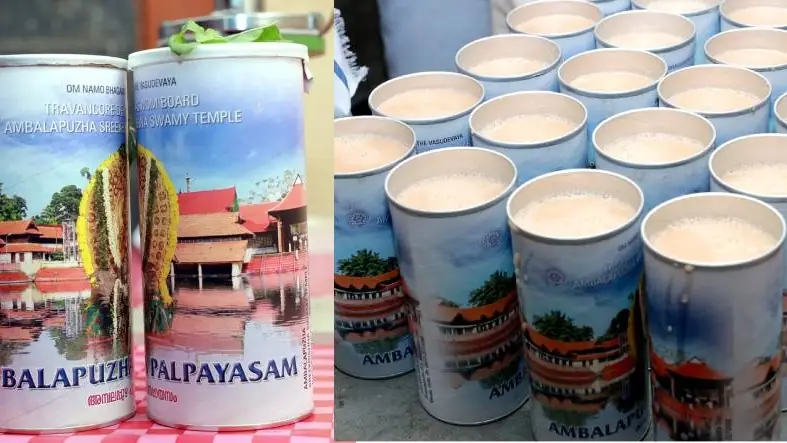
Before paying, read the service description carefully. Check whether the amount is for one offering, a quantity, a ritual, a receipt, or a separate administrative service. If the wording is unclear, contact the official temple administration instead of relying on a social-media post or a private agent.
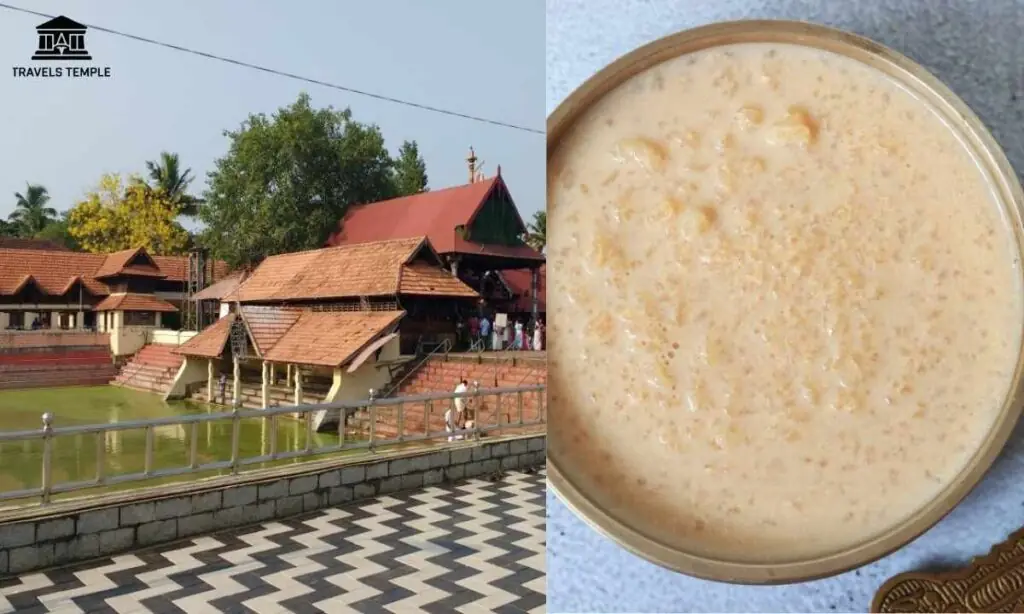
Ambalapuzha Sree Krishna Temple is located in Ambalappuzha in Kerala’s Alappuzha district. It is widely associated with Lord Krishna worship, traditional temple rituals, the Ambalapuzha palpayasam offering, and Kerala’s distinctive temple culture. The temple is often written as Ambalapuzha, Ambalappuzha, or Ambalapuzha Sree Krishna Temple, so you may see several spellings while checking maps and official notices.
The deity is worshipped as Sree Krishna, and the temple’s religious life includes daily rituals, offerings, ceremonial observances, and festival days. These activities are not simply visitor attractions.
They follow established customs, and a visitor’s movement may be restricted while a ritual is taking place. Darshan means viewing or having the opportunity to pray before the deity, but the exact queue route and waiting process can vary according to temple management.
The temple is also connected with the cultural identity of central Kerala. Its architecture, worship practices, Malayalam notices, music, traditional dress, and festival observances form part of the experience for both local devotees and visitors from other parts of India. A calm visit requires respect for the place rather than treating it like a sightseeing stop with fixed, tourist-style hours.
Historical and traditional accounts about Ambalapuzha Sree Krishna Temple may differ in detail. Stories connected with Krishna, the offering, and the temple’s origin are part of local religious culture, but visitors should distinguish traditional belief from independently verified historical documentation. The Kerala Tourism information on Ambalapuzha Sree Krishna Temple is a useful starting point for general destination context; it does not replace a current temple notice for booking or Darshan timings.
Temple timing information usually falls into several categories, and confusing them can lead to a disappointing visit. Opening hours refer broadly to when the temple premises or public access begins and ends. Darshan timing refers to the period in which devotees may view and pray before the deity. Pooja timing relates to scheduled rituals, while offering timing may indicate when a devotee can submit a booking or collect an offering.
These periods may overlap, but they’re not identical. A temple can be open while a particular inner ritual is underway.
During that interval, the queue might pause, access might be limited, or visitors might be asked to wait. A devotee who arrives just before a major ritual may spend longer in the queue even though the gate is technically open.
Daily schedules can also include morning and evening worship periods. Don’t assume that a timing shown on an old travel page remains current.
Kerala temples may adjust arrangements for festivals, maintenance, special ceremonies, local events, or administrative reasons. The correct source is the latest official notice or direct confirmation from the temple office.
| Timing category | What it generally means | What you should verify |
|---|---|---|
| Temple opening hours | Period when public access to the temple or designated areas may begin | Entry and closing times for your specific date |
| Darshan timing | Period when devotees can seek viewing of the deity | Queue entry, pauses during rituals, and any special access rules |
| Pooja timing | Scheduled worship or ritual service | Whether visitors may watch, wait outside, or join through a permitted offering |
| Offering booking time | Time or date connected with submitting or receiving a Vazhipadu | Availability, receipt requirements, collection instructions, and cancellation terms |
| Festival schedule | Special observances that may alter the normal routine | Processions, crowd controls, route restrictions, and revised timings |
Use the table as a planning framework, not as a substitute for a current schedule. Exact hours should be obtained from the temple’s official administration or a verified notice before you leave home.
Reliable information begins with source checking. Search engines often show pages that have copied older timings, and social-media accounts may use the temple’s name without being officially connected to it. A professional-looking payment page is not proof that it belongs to the Devaswom or temple administration.
Start by identifying the official temple website, official booking portal, or verified administration channel. If the temple operates under a Devaswom or other institutional authority, look for the parent organisation’s current notice.
Read the contact details carefully and compare the phone number or office information across official pages. When two pages disagree, treat the conflict as a reason to confirm directly.
Use Malayalam or English notices according to your comfort, but don’t guess at an important instruction. If a notice is only in Malayalam, ask a trusted family member or the official office for clarification. Translation apps can help with general meaning, yet they may not explain a temple-specific term correctly.
Booking windows may open and close according to administrative capacity. The online service may also show dates as unavailable even when the temple itself is open for ordinary Darshan. That distinction is normal and should not be interpreted as a temple closure without confirmation.
A careful process reduces mistakes, particularly if you’re travelling from outside Alappuzha. Keep the booking and the visit plan separate: a confirmed offering does not necessarily guarantee a special queue, reserved seating, faster Darshan, or permission to enter restricted areas.
For families, one person should keep the booking details accessible while another manages footwear, bags, children, or elderly relatives. This small arrangement can make the arrival less stressful without disrupting the queue.
Ambalappuzha is near Alappuzha, and many visitors combine a temple visit with travel through Kerala’s backwater region. Travel time can vary significantly depending on the starting point, road conditions, public transport, and the season. It’s sensible to plan the temple visit around the confirmed Darshan period rather than assuming that a nearby hotel or railway arrival time will be sufficient.
Reach the area early enough to locate the entrance, footwear facilities, queue line, and any booking or offering counter. If you’re carrying a receipt for palpayasam or another Pooja, find out whether the collection point is inside the temple compound or at a separate office. The answer may not be obvious from a digital confirmation.
Dress respectfully and follow the temple’s current entry rules. Clothing expectations can vary between temples and may be applied differently during ordinary days and festivals. Questions about whether men may wear trousers, whether women may wear particular garments, or whether children have separate requirements should be directed to the official temple administration before your journey.
Entry for non-Hindu visitors is another matter that shouldn’t be answered through guesswork. Some temples have specific access policies, restricted areas, or customary rules. A visitor should confirm the current policy directly and respect staff instructions, rather than relying on a general statement about Kerala temples.

Photography, mobile-phone use, footwear, bags, and food restrictions may be controlled within the premises. Follow signs and staff directions even if you’ve visited another Krishna temple with different rules.
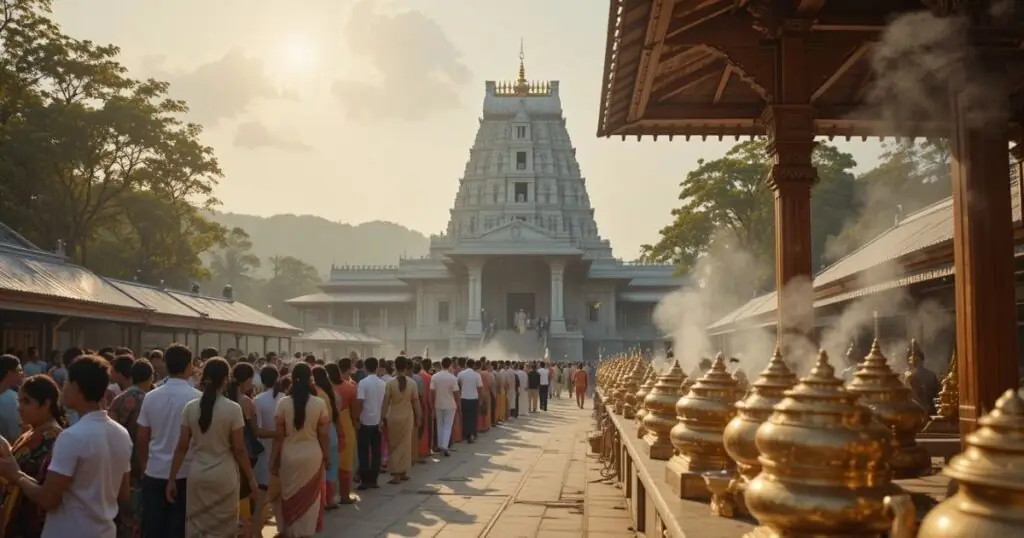
Festival periods can change the practical meaning of a published schedule. A normal Darshan queue may become longer, a road near the temple may be affected by processions, and offering counters may use a different arrangement. Even when the temple remains open, access to certain areas can be restricted while a ceremonial event is taking place.
Moolam festival references are especially relevant in discussions about Ambalapuzha’s cultural and religious calendar. The exact programme, date, procession route, and public-access instructions should be verified for the relevant year. Festival dates and local arrangements aren’t details you should reconstruct from an old blog post.
During festival days, consider travelling with fewer belongings and keeping your group together. Children and older devotees may find a dense queue difficult, particularly if waiting areas are limited. If you have a confirmed offering booking, ask whether the festival affects collection time or the location of the responsible counter.
Peak days may include major Malayalam calendar observances, weekends, public holidays, school vacations, and dates considered important by local devotees. The temple may not publish a crowd forecast, so the practical approach is to allow more time and confirm arrangements shortly before departure.
| Planning point | Ordinary day | Festival or peak day |
|---|---|---|
| Arrival | Use the confirmed Darshan period with a reasonable buffer | Arrive earlier and allow extra time for queues and traffic |
| Booking check | Confirm receipt and counter instructions | Reconfirm whether the counter or collection process has moved |
| Transport | Normal routes may be practical | Check for diversions, parking changes, or procession-related restrictions |
| Darshan expectations | Queue length may still vary | Waiting and access restrictions may be more significant |
Festival participation can be a meaningful experience, but it requires patience. Don’t treat a special day as an ordinary sightseeing itinerary with several fixed stops.
Verified source example: Kerala Tourism’s public destination listing identifies Ambalapuzha Sree Krishna Temple as a notable temple destination in Kerala and associates the site with the Ambalapuzha palpayasam tradition. This is useful for confirming the temple’s identity, location context, and cultural relevance. It is not evidence of a current online reservation window, exact Darshan hours, price, or festival-day access rule.
This distinction is important. A government tourism portal may provide stable destination information, while the temple administration controls operational matters such as booking availability, queue procedures, Pooja timing, entry restrictions, and changes for a particular day.
The verified facts in this example are the public destination description and its association with the temple. The practical advice about checking a current notice is general guidance, not a claim that a particular booking system is always active.
Suppose a visitor reads the tourism listing, finds an old page elsewhere promising a guaranteed palpayasam slot, and pays through a personal UPI number. The listing does not validate that payment route. A safer approach is to use the tourism page for orientation, then obtain booking and timing confirmation from the current official temple or administration channel.
This method applies to other temples too. Separate stable identity information from changeable operational information. It protects you from both accidental misinformation and fraudulent booking requests.
Most problems arise from assumptions rather than from the act of booking itself. Visitors often treat a search result as an official notice, confuse an offering receipt with a Darshan ticket, or arrive without checking whether the collection process has changed.
Agents can sometimes help with travel logistics, but you should not let an agent replace direct verification of a religious booking. Ask for the official receipt and independently confirm the service with the temple administration whenever possible.
Check the temple’s current official website, authorised booking portal, or verified administration contact for the available procedure. Confirm whether the service is online, counter-based, or a combination of both. The process, availability, and payment instructions can change, so don’t rely on an old screenshot or private payment request.
Not necessarily. An offering receipt and a Darshan arrangement are separate matters unless the official terms clearly connect them. Ask whether the booking is only for the offering, where it must be collected, and whether you still need to join the ordinary queue.
Daily opening, Darshan, and Pooja periods should be confirmed for your visit date through the official temple administration. Timing may vary during rituals, festivals, maintenance, or special observances. Avoid treating an unverified online timetable as current.
Entry rules are determined by the temple’s current policy and should be confirmed directly before travelling. General assumptions about other temples don’t establish the rule for Ambalapuzha. Visitors should respect any restrictions on entry, dress, photography, and access to specific areas.
Clothing requirements can be temple-specific and may change in application. Wear modest, respectful clothing and verify the current rule with the temple office, particularly if you’re travelling from outside Kerala or visiting during a festival.
No assumption is safe. A portal may offer only selected offerings, selected dates, or limited booking windows. It may also be temporarily unavailable while the temple continues ordinary Darshan or counter-based services.
Arrive with enough time for travel delays, parking, footwear storage, security checks, queue formation, and pauses during rituals. On festival days or public holidays, allow substantially more time and confirm the route and access arrangements before leaving.
Ambalapuzha palpayasam online booking is best approached as a temple-service question, not simply an online shopping transaction. Confirm whether you’re reserving an offering, arranging a Pooja, or planning Darshan, then match that service with the correct official instructions. Keep your receipt, respect entry rules, and allow extra time whenever festivals or major rituals are involved.
Before travelling to Ambalappuzha, check the latest temple schedule and booking status through the responsible administration rather than relying on a recycled timetable. That final verification can protect your money, reduce waiting, and help you experience this important Kerala Krishna temple with the consideration it deserves.





