Physical Address
304 North Cardinal St.
Dorchester Center, MA 02124
Physical Address
304 North Cardinal St.
Dorchester Center, MA 02124
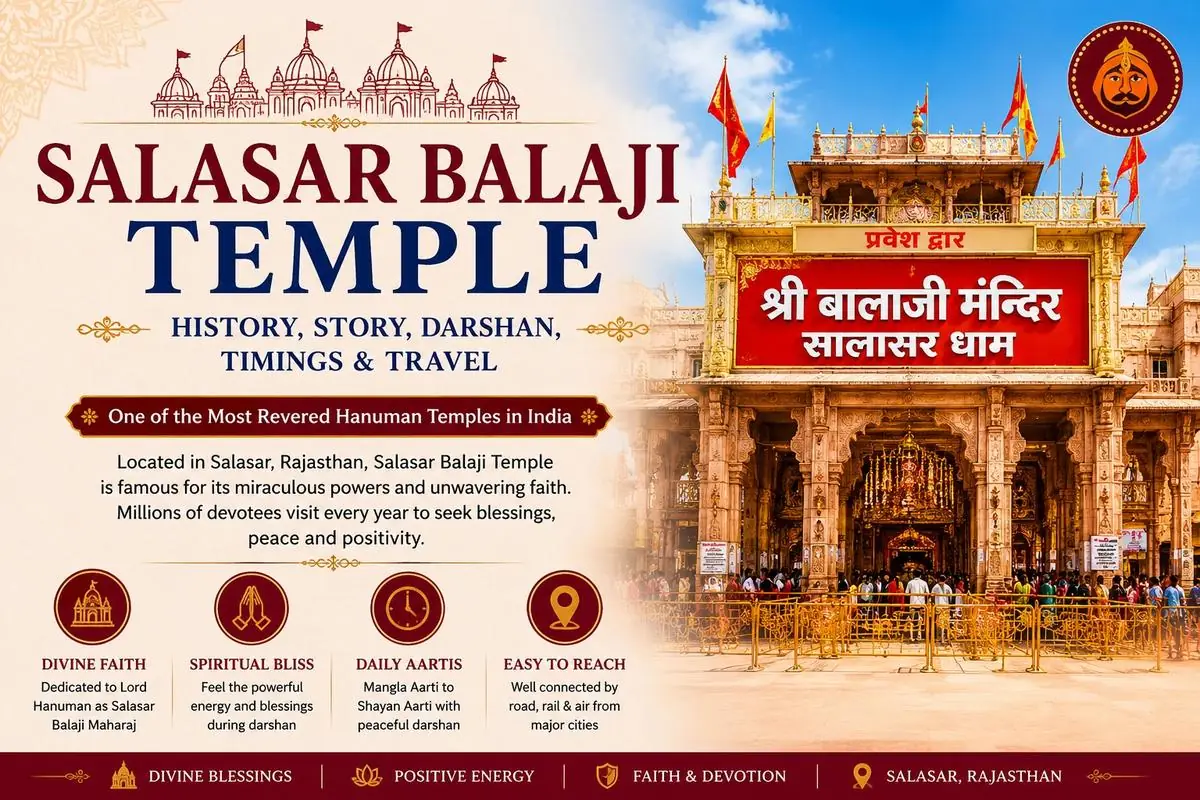
A smooth visit to Salasar begins with checking the Salasar Balaji mandir timing before you leave, especially if your plan includes an early aarti, family darshan, or a festival-day visit. The temple in Salasar, Churu district, Rajasthan, follows a daily devotional routine, yet crowd movement, security arrangements, and special pooja schedules can alter the practical experience.
Regular opening hours, darshan windows, aarti timings, seva arrangements, online booking rules, and festival-day changes don’t always appear together in one notice. The details below explain how to read the schedule, which timings need confirmation, and how to plan your journey with fewer surprises.
Salasar Balaji, also called Shree Salasar Balaji or Salasar Dham, is a major religious destination dedicated to Lord Hanuman. Devotees visit for darshan, personal prayers, bhog, aarti, and different forms of seva. The mandir is in Salasar, near Sujangarh, in Churu district of Rajasthan, and receives visitors from across India throughout the year.
For general planning, many visitor-facing schedule summaries have traditionally shown the temple opening in the early morning, often around 4:00 a.m., with darshan continuing into the late evening, commonly around 10:00 p.m. These times should not be treated as a guaranteed live schedule. The official temple trust can adjust entry, darshan flow, or closing arrangements for security, religious ceremonies, crowd pressure, maintenance, or festival management.
The most important distinction is between the time the temple premises are open and the time a particular ritual takes place. A person arriving at 8:00 a.m. for ordinary darshan may have a different experience from someone arriving shortly before a morning aarti. At ritual times, the queue can slow, a section can be managed differently, or entry can be regulated for a short period.
| Visit element | Useful planning reference | What may change | What to verify |
|---|---|---|---|
| Temple opening and morning darshan | Public schedules commonly show an early-morning opening, often around 4:00 a.m. | Seasonal notices, security checks, and festival arrangements may affect entry. | Opening time for your exact date through the temple trust. |
| General daytime darshan | Usually planned as a continuing daytime visitor window. | Queues may pause or move slowly during pooja, bhog, or crowd-control periods. | Whether ordinary darshan remains open during the ritual you want to attend. |
| Aarti | Several daily aarti slots are commonly listed in public temple information. | Clock times, access rules, and viewing arrangements can be revised. | The same-day aarti notice, temple counter, or official announcement. |
| Late-evening darshan and closing | Public listings often show late-evening closure, frequently around 10:00 p.m. | Final entry may stop before the gate officially closes. | Last permitted entry, not only the advertised closing time. |
| Festival or purnima visit | Use a separate special-day schedule rather than the routine timetable. | One-way queues, barricades, passes, and restricted access may apply. | Festival notice, reporting time, and entry route. |
If you only want darshan, reaching outside the busiest ritual period may be more comfortable. If the purpose of your trip is aarti, plan around the published ritual time and allow a generous buffer for parking, walking, security, and the queue. The displayed temple closing time also may not mean that a new visitor can enter at that exact minute.
Searches such as “Salasar Balaji mandir timing today” and “Salasar Balaji mandir timing tomorrow” are useful starting points, but search results can combine old schedules, travel listings, and user-submitted information. A result that was accurate during a normal weekday may be unsuitable for Saturday, Tuesday, purnima, or a major festival. The temple trust’s latest notice should take priority over an undated directory entry.
Before travelling, check the official Shree Salasar Balaji temple trust website and look for a current notice, daily timetable, contact detail, booking instruction, or festival announcement. If the website doesn’t display a live update, use the trust’s stated communication channel or the temple’s on-site information counter. Avoid treating a map application’s “open” label as confirmation of aarti access or final-entry rules.
A practical verification routine is simple:
Ask specifically about the phrase “darshan open.” It may mean that visitors can enter the general queue, not that the inner viewing line is moving quickly. A second useful question is, “What is the last reporting time?” That is often more important than the nominal temple closing time for a traveller arriving from another city.
Darshan means viewing or paying respects to the deity. It is different from attending a formal pooja or aarti. Ordinary darshan generally follows the temple’s visitor queue, while a pooja may involve an offering, a priest-led ritual, or a booked seva.
Aarti is the ceremonial offering of light accompanied by devotional prayers. These activities can share the same temple space but operate under different timings and access arrangements.
Many schedules use names such as Mangla Aarti for an early morning ritual, Rajbhog or bhog-related worship around a meal offering, Sandhya Aarti in the evening, and Shayan Aarti at night. The exact names and clock times can differ in notices, and a schedule found on an old travel page should not override a current temple announcement. If a particular aarti is central to your visit, confirm both the time and whether general visitors may stand in the viewing area.
There may be periods when darshan continues while a pooja is taking place. In other situations, the queue may be slowed or temporarily managed until the ritual is complete.
That is why a visitor should not assume that every printed aarti time creates a full temple closure. The practical arrangement depends on the trust’s crowd-management decision for that day.
Suppose you arrive for a short morning visit and see a long line near the entrance. The queue may represent several groups: ordinary darshan visitors, people carrying offerings, booked seva participants, elderly devotees using an assisted route, or pilgrims waiting for a special ritual. Knowing the difference helps you ask the right question at the counter instead of assuming that the entire line has one purpose.
Pooja and seva also have different meanings in administrative terms. A seva is a devotional service or offering arrangement made through the temple’s approved process.
It may require a receipt, a name, a reporting time, or a separate counter. Paying for prasad at a local shop is not the same as booking an official temple seva, and a private agent’s promise should never be confused with a trust-issued confirmation.
For simple darshan, take the least complicated route: check the current entry gate, follow the queue instructions, and avoid arriving at the final minute of an aarti or closing period. For a ritual, allow extra time and confirm whether the receipt grants participation, a viewing opportunity, or only access to a specific offering service.
People often search separately for Salasar Balaji mandir timing Tuesday, Saturday, and Sunday because these days can feel different from a quiet weekday. Tuesday and Saturday are traditionally important days for many devotees of Lord Hanuman, so the number of visitors may rise even when the published opening and closing hours remain unchanged. A busy queue does not automatically mean the temple has changed its official timetable.
Sunday can also bring more family groups and travellers who work during the week. If a Sunday visit is part of a larger Rajasthan route, check whether a local holiday, school break, public event, or festival has increased demand. The temple trust may use barricades, separate lines, or controlled entry without changing the headline opening hours.
Winter planning needs a little care. Searches for Salasar Balaji mandir timing in winter often reflect concern about early-morning travel, not necessarily a formal seasonal timetable.
Cold conditions can make a pre-dawn arrival uncomfortable, while fog or reduced visibility can affect road travel from nearby towns. Confirm whether the trust has issued revised morning timings before choosing an early aarti, and leave enough time for clothing, parking, and walking.
October deserves a separate check because it may overlap with a purnima, a local religious observance, or a special mela period depending on the Hindu calendar. The date of a festival is not fixed by the Gregorian month alone. A Saturday in October can therefore have a very different crowd pattern from an ordinary Saturday in another month.
The sensible approach is to plan around the day’s demand rather than assume a new schedule:
Festival days can change the practical meaning of “temple timing.” On a routine day, a visitor may join the general queue and proceed at the pace set by the crowd. During a major religious occasion, the trust may create separate lines for different categories, control the number of people entering an area, change the route, or issue instructions for prasad and offerings.
Purnima, the full-moon day in the Hindu lunar calendar, is important to many devotees. A purnima visit may draw pilgrims even when no national holiday is involved.
Local mela arrangements, transport diversions, volunteer deployment, and temporary barricades can affect how quickly a person reaches the mandir. The official date and schedule should be checked rather than inferred from a generic monthly calendar.
Special arrangements may also apply during Hanuman-related festivals and other religious observances. The trust can publish a separate notice for opening, aarti, queue entry, accommodation guidance, seva availability, or prohibited items. A routine table copied from an ordinary weekday cannot answer those questions.
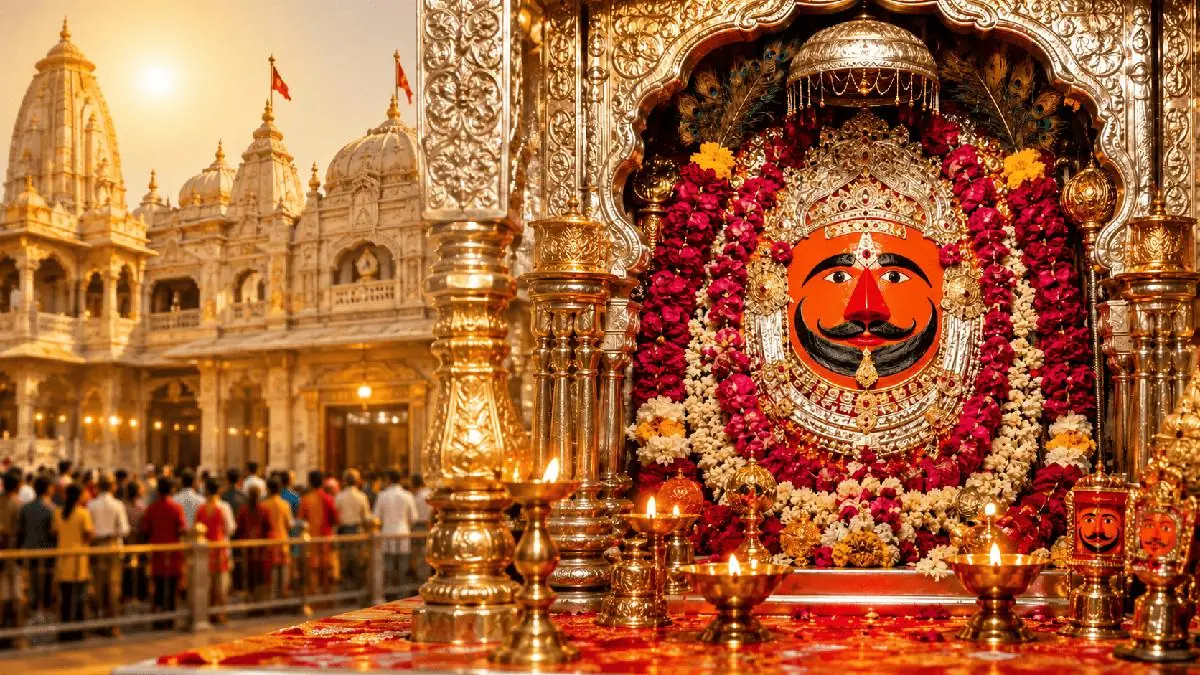
Start by identifying the purpose of the journey. Someone who wants only a brief darshan can choose a less crowded time within the permitted window, while someone attending a special aarti must accept that the area may be busy well before the ritual begins. Families with children or older relatives should avoid making the schedule so tight that one delay causes the entire visit to fail.
Ask these questions before setting out:
Do not rely on a social media post that says “open all day” without a date and issuing authority. A festival notice from the temple trust, local administration, or an official booking channel is more useful than an informal message circulated in a travel group.
Online booking can refer to several different things: a pooja appointment, a seva receipt, a special darshan facility, a donation-linked service, or a request submitted for a festival arrangement. These are not interchangeable. A person searching for “Salasar Balaji VIP darshan price” should first establish whether the service is officially offered for the chosen date and what the payment actually covers.
There is no safe reason to assume that a VIP facility is available every day, that it has one permanent price, or that a private person collecting money is authorised by the temple trust. Fees, quotas, identity requirements, reporting windows, and cancellation rules can change. If an online option is not displayed through an official channel, use the temple’s authorised counter or contact process instead of relying on an agent.
An official booking workflow normally makes several points clear before payment:
Save the confirmation on your phone and carry the identification used during booking. A screenshot is helpful if mobile connectivity is weak, but it does not replace the original requirement if the notice asks for a valid identity document. Arrive before the reporting time rather than at the booked ritual time; administrative checking, queue formation, and security screening may happen first.
Be cautious with anyone promising guaranteed entry, a fixed short queue, or a special price without a trust-issued receipt. The phrase “VIP darshan” is used loosely by private businesses, and a paid local assistance service may not be the same as an official temple facility. Ask for the issuing authority, receipt type, and terms before paying.
Queue management is often the biggest practical factor in a Salasar visit. The nominal darshan window may be long, but the time spent on the road, finding a parking area, walking to the entrance, passing security, and joining the correct line can add considerably to the visit. On a busy day, the queue can also be reorganised without advance notice to keep movement safe.
Arriving early is sensible if you want a morning ritual or hope to avoid the strongest daytime heat. It is not a guarantee of immediate darshan.
If many devotees have made the same decision, the pre-dawn line may already be substantial. For a family trip, a slightly later ordinary darshan can sometimes be more manageable than rushing for the first available ritual.
Entry rules can change, so confirm them for your date. Temples commonly regulate footwear, bags, electronic devices, photography, offerings, dress, and the movement of large groups, but the precise Salasar arrangement must come from the trust or on-site security staff. Do not assume that a rule followed at another balaji mandir applies identically here.
Older devotees and people with mobility limitations should ask about the current assisted-entry arrangement before reaching the busiest gate. Do not assume that a separate facility is always available or that an accompanying family member can automatically use it. A calm, direct question at the authorised information counter is more reliable than a promise made outside the premises.
Keep the return journey in mind too. If you have a train, bus, hotel check-in, or second temple visit planned, do not calculate the connection using only the listed darshan time. Queue length, ritual pauses, crowd control, and walking distance all need a buffer.
Salasar Balaji Temple is located in Salasar in Churu district, Rajasthan. The town is near Sujangarh, and many visitors combine the mandir with a wider route through Rajasthan.
A route planner can help with distance and road direction, but it cannot confirm temple entry or aarti availability. Keep the temple trust’s notice separate from your transport plan.
People also ask whether they should visit Khatu Shyam first or Salasar Balaji first. There is no universal religious rule that decides the order for every traveller. The practical choice depends on your starting point, overnight stop, transport, the date-specific timings at both temples, and whether you have a confirmed seva or aarti at either location.
If you plan both destinations in one trip, avoid treating them as a single appointment. Each temple has its own trust, queue system, security arrangements, and festival calendar. Check both schedules independently, allow for road delays, and consider staying near the second destination if your plan includes an early morning ritual.
A comfortable itinerary usually leaves space for four separate activities: reaching the town, finding parking or a drop-off point, completing the temple visit, and departing without rushing. During summer, the heat can make a long queue more tiring.
During winter, an early journey may involve cold or fog. October and other festival-heavy periods may require still more flexibility.
Accommodation and food arrangements should also be considered before a major festival day. Availability near Balaji Dham may tighten when large numbers of devotees arrive. Book only through a source you can verify, and confirm check-in rules if your arrival depends on a late-night or pre-dawn temple visit.
Source-based planning example: The Rajasthan Tourism Department’s official destination information places Salasar Balaji in Salasar, Churu district, Rajasthan. That type of government tourism listing is useful for confirming the destination’s regional context and identifying the temple as a place to include in a Rajasthan itinerary. It is not a live queue dashboard and should not be treated as proof that a particular aarti, seva, or entry gate will operate at a certain hour.
This real-world example shows why visitors need two kinds of information. A government tourism source can help with destination planning, while the temple trust is the more appropriate authority for current darshan timing, pooja arrangements, aarti access, booking rules, and festival restrictions. A traveller coming from near Sujangarh may use destination information to plan the route, then check the trust’s same-day notice before leaving.
The same source hierarchy applies to online booking. A travel page may describe a service in general terms, but only an authorised temple channel should confirm whether that service is available, what it costs, and what the receipt provides.
If the two sources disagree, do not combine the most convenient parts of both. Follow the latest instruction issued by the responsible authority.
A short confirmation routine can prevent most timing-related problems. Start the evening before travel, then check once again on the morning of departure if your visit falls on a busy date. This is especially important for pilgrims coming from another city, travelling with children, or coordinating more than one temple.
Use this final checklist:
If the website shows only a general timetable, ask for the date-specific position through the trust’s authorised contact method. Use precise language: “Is general darshan open on Saturday morning?” is better than “Is the temple open?” Also ask whether the published closing time is the gate-closing time or the last time a new devotee may enter.
For a first visit, carry a simple plan rather than a rigid minute-by-minute schedule. Choose the main purpose of your trip, keep one alternate darshan window in mind, and avoid promising children or older family members that the queue will take a fixed amount of time. Temple schedules are devotional and administrative schedules at the same time; both can be affected by conditions on the ground.
Publicly circulated schedules commonly show early-morning opening and late-evening closure, often around 4:00 a.m. to 10:00 p.m. The exact current window, last entry, and darshan movement can change, so confirm the date-specific schedule with the official temple trust before travelling.
First check whether an official special-darshan facility is available for your date. Use only the temple trust’s authorised booking or counter process, confirm the fee and reporting time, and obtain a proper receipt. Do not assume that a private agent’s promise or a fixed online price represents an official temple service.
Visitor pressure is generally more likely on Tuesdays, Saturdays, Sundays, purnima dates, and major festivals. The busiest periods can vary by calendar and local arrangements. Check the special-day notice and allow extra time for security, parking, walking, and queue management.
The published regular opening hours may remain similar, but the queue and entry process can be different because of higher attendance. Confirm whether any special route, barricade, or last-entry instruction applies to your chosen day instead of assuming that the weekday timetable will operate normally.
There is no single order that suits every traveller. Compare the current timings at both temples, your starting point, transport route, and any booked aarti or seva. Plan each mandir as a separate visit and leave enough time for road delays and queues.
The most reliable way to use Salasar Balaji mandir timing is to separate the regular daily reference from the live schedule for your date. Confirm opening, last entry, darshan, aarti, pooja, seva, and booking instructions through the temple trust before setting out, especially for Tuesday, Saturday, Sunday, purnima, October dates, and major festivals.
Keep your plan flexible, save any official booking proof, and ask about the exact reporting time rather than relying only on a closing-hour listing. With that simple check, your visit to Shree Balaji in Salasar Dham can be more orderly, respectful, and confident.





