Physical Address
304 North Cardinal St.
Dorchester Center, MA 02124
Physical Address
304 North Cardinal St.
Dorchester Center, MA 02124
Planning a visit to Mopidevi Temple in Andhra Pradesh is easier when you separate general darshan from a booked pooja or aarti. The shrine is known for Sri Subrahmanyeswara Swamy worship, yet online listings can show different hours, especially on Shashti observances, festival days and crowded weekends. A missed reporting time can matter more than the drive itself.
Before setting out, check the day’s darshan window, ask whether the desired seva needs a ticket, and confirm whether rooms or special entry are actually available. The same care helps with rail and bus connections, because Mopidevi is near several better-known place names that are easy to mix up.
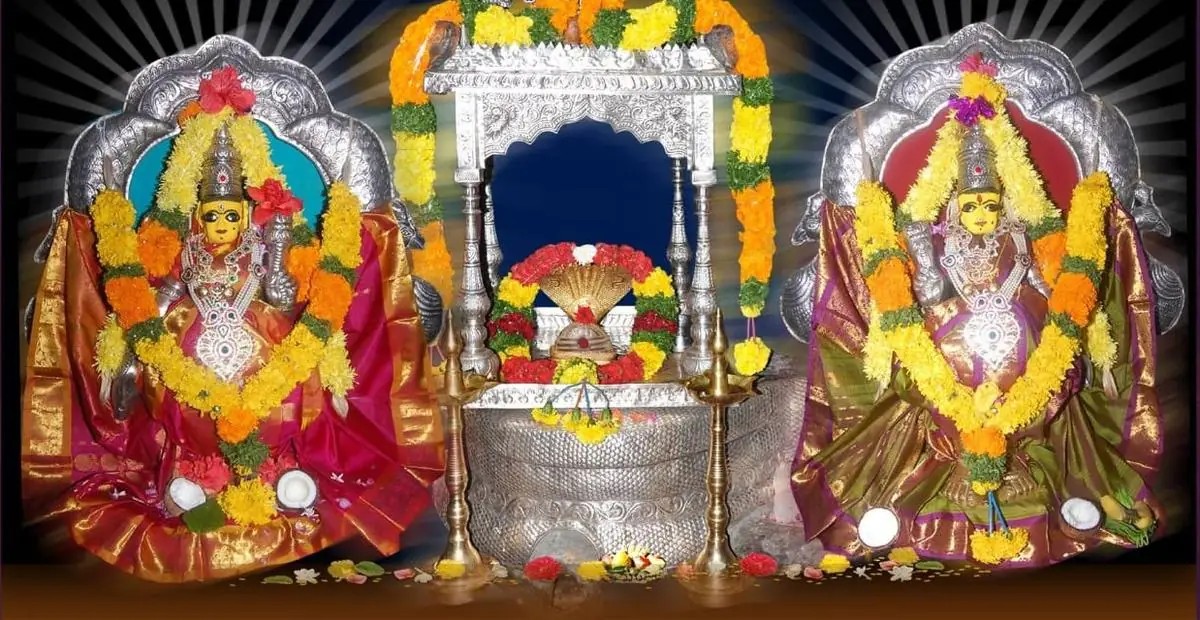
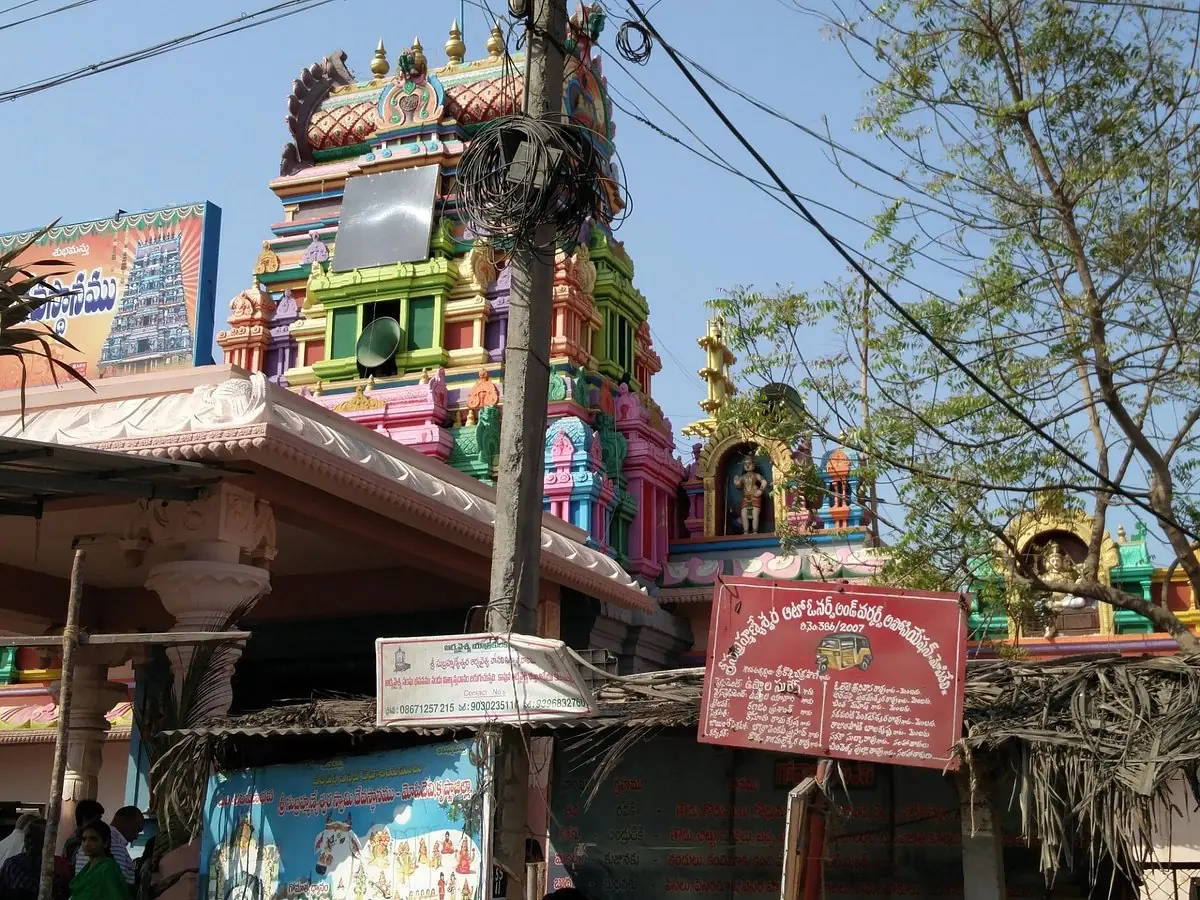
Mopidevi Temple is a prominent Subrahmanya shrine in Mopidevi village, Krishna district, Andhra Pradesh. It stands in the Krishna delta region, with road connections commonly planned through places such as Challapalli, Avanigadda, Machilipatnam and Vijayawada. Local listings often identify the shrine as Sri Subrahmanyeswara Swamy Temple, so using the complete name is safer than searching only for “swamy temple.”
The name matters because several temple-related searches produce mixed results. A page labelled “temple Srikakulam” or “Srikakulam temple” may refer to a different town or district.
Likewise, Sri Kakuleswara and Kakuleswara Temple are separate-looking names that should not be assumed to mean Mopidevi. Check that the address specifically mentions Mopidevi in Krishna district before following a timing, route or booking instruction.
Similar confusion can arise with nearby religious places. Pedakallepalli Temple is a separate shrine in the wider regional circuit and is associated in local references with Sri Durga Nageswara Swamy.
A listing containing Sri Durga, Durga Nageswara or Nageswara temple may therefore describe a different destination. Search phrases such as temple Pedakallepalli, Srikakulam Pedakallepalli, temple Challapalli or Challapalli temple need the same address check.
Even image searches can mislead. Results titled “Pedakallepalli gallery” or “gallery Mopidevi” may combine photographs from more than one shrine, particularly when travel pages use broad regional tags. Terms such as temple Alvarlu or Alvarlu Srikakulam also belong to different devotional and geographical contexts unless the address clearly confirms otherwise.
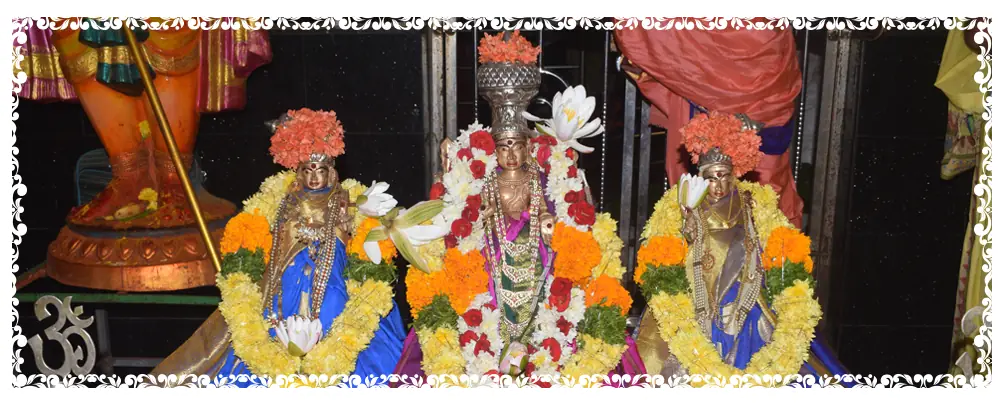
The temple’s importance comes from its association with Lord Subrahmanya, also worshipped in different parts of India as Kartikeya, Skanda or Murugan. Devotees visit for darshan, family vows, abhishekam, archana and prayers connected with protection, wellbeing and the blessing of children. These devotional intentions are matters of faith and personal tradition rather than guarantees of a particular result.
Accounts of the temple history often combine local oral tradition, a sthala purana and descriptions repeated in pilgrim literature. A sthala purana is the sacred account of how a place became important; it may preserve beliefs and community memory without functioning as a modern chronological history.
Some devotional descriptions present the deity as swayambhu, meaning self-manifested, while other accounts focus on the growth of worship around the village. The wording can differ between local sources.
That distinction is useful for anyone researching the history of Mopidevi. A page promising a precise origin story should be checked against information displayed at the temple or supplied by its administration. It is better to say that a tradition is associated with the shrine than to repeat an attractive legend as a proven historical fact.
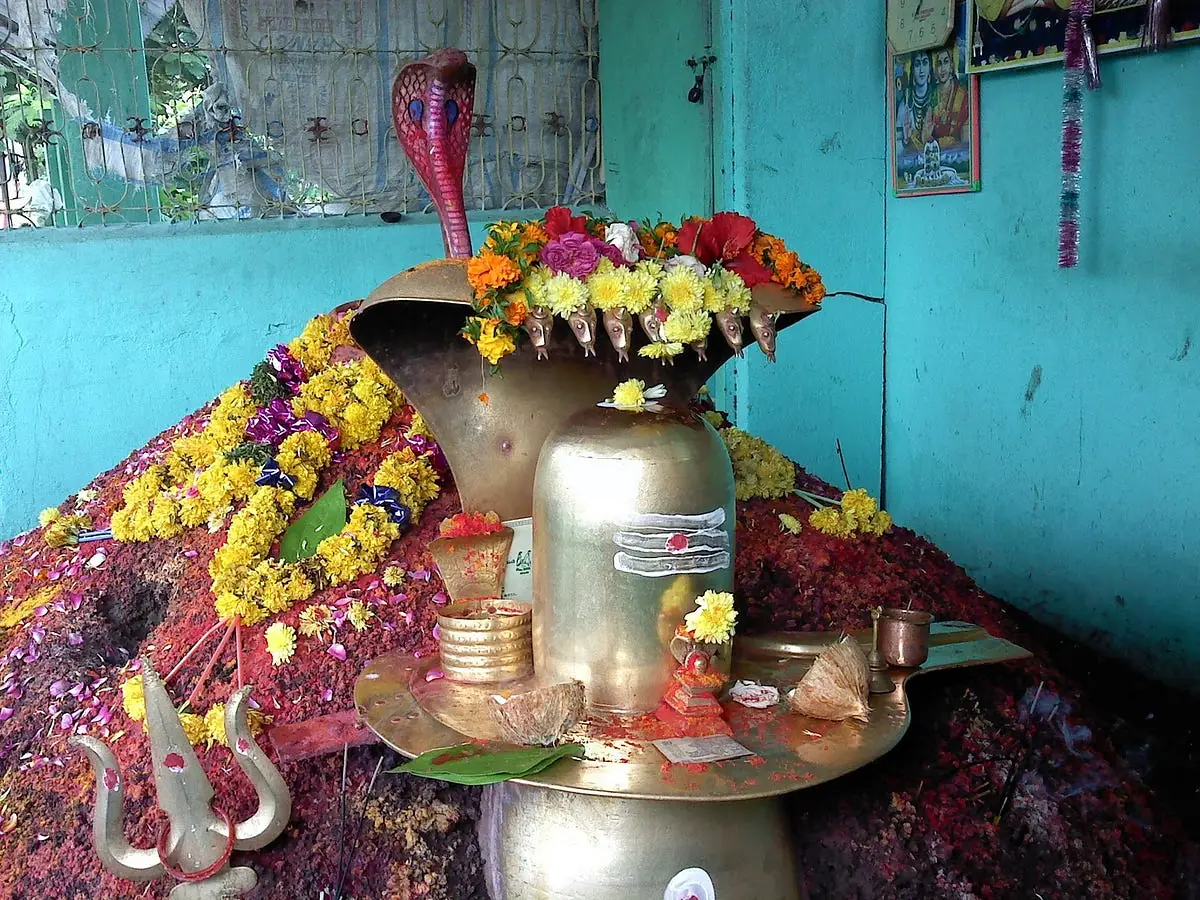
The serpent connection is also important in understanding why some devotees select this shrine for naga-related prayers or sarpa dosha remedies. Sarpa dosha is a belief within some Hindu astrological and ritual traditions concerning difficulties symbolically associated with serpent energy or ancestral matters. Not every visitor follows this interpretation, and not every ritual is available on every day.
For many families, the visit is less about sightseeing than fulfilling a long-held vow. A parent may bring a child, a family may offer a special prayer after a life event, or a devotee may return annually on a preferred lunar day. The respectful approach is to follow the temple’s current procedure rather than assuming that a practice described in a travel post is available at the counter.
The most important timing distinction is between the temple’s opening hours and the period during which general darshan is actually allowed. Darshan means viewing or presenting oneself before the deity. A temple may remain open for a broad period while the sanctum, inner queue or general entry temporarily pauses for a ritual, cleaning, offering or crowd-control measure.
A dependable, date-stamped official timetable is not consistently available in the public material that can be verified here. For that reason, commonly copied clock times should not be treated as permanent fact. Regular-day listings may show separate morning and evening periods, but the actual entry cut-off, ritual break and closing process can change.
Use the following comparison to understand what needs checking. It deliberately avoids unsupported clock times because a wrong exact time is more harmful to a travelling devotee than an honest instruction to confirm the schedule.
| Visit purpose | Regular-day planning | What may change on a special day | What to confirm |
|---|---|---|---|
| General darshan | Usually follows the public entry window while the shrine is open | The queue may become longer, and entry may pause sooner | Opening time, last entry and queue closure |
| Pooja or abhishekam | May run at a designated ritual slot and may require reporting early | Slots can be restricted or rearranged around major observances | Ticket requirement, reporting time and participation rules |
| Aarti | Usually linked to the temple’s ritual sequence rather than all-day darshan | Additional or larger congregational arrangements may be made | Whether visitors can attend and where they must stand |
| Seva | Often depends on a named service, quota and counter or online registration | Demand, token limits and reporting rules may change | Availability, fee, receipt and exact reporting point |
| Room or accommodation service | Operates separately from darshan hours | Rooms may be reserved for festival demand or unavailable | Check-in, identification, cancellation and vacancy |
If you are travelling from another town, do not plan to arrive at the final minute of a published opening period. Reach with enough margin for parking, footwear storage, a queue and a possible ritual pause. The person at the counter can also clarify whether a queue closes before the stated temple closing time.
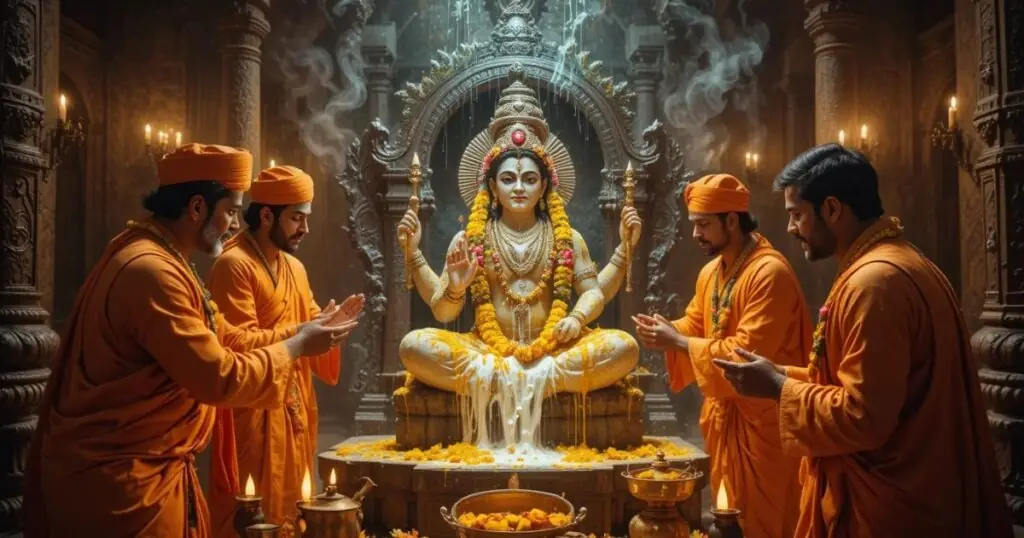
Pooja is a ritual offering performed for the deity. Aarti is the ceremonial waving of a lamp or flame, usually at a particular point in the worship sequence.
Seva means a devotional service offered by a devotee, often through a ticket or registration, and may include participation in a named ritual. These terms are related but they do not describe the same visitor experience.
A person with a general darshan pass may be allowed to view the deity but not join an abhishekam or enter a designated ritual area. Abhishekam refers to bathing or anointing the deity with permitted substances according to temple practice. The service may have a separate token, a limited number of participants and a reporting time that is earlier than the pooja itself.
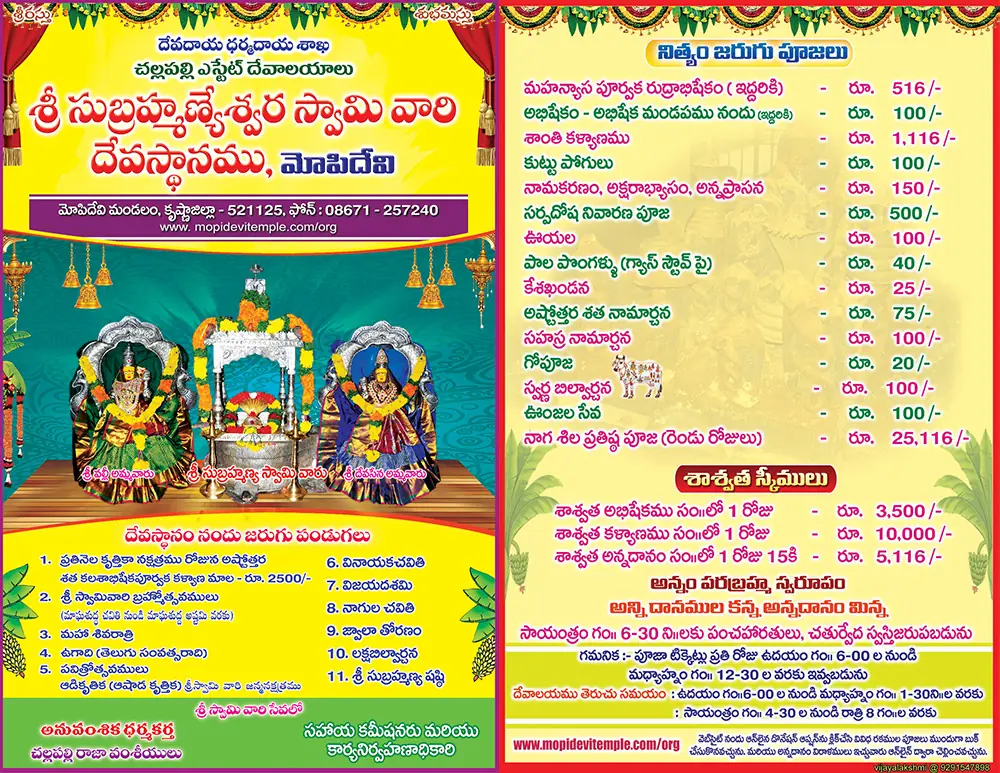
The exact pooja list at Mopidevi should be taken from the current temple counter, noticeboard or officially issued communication. Names and availability can change. A service mentioned on an old blog may have been renamed, paused, shifted to a particular weekday or replaced by a festival arrangement.
Before paying for a ritual, ask these practical questions:
Aarti deserves particular care because it may be brief and closely tied to the priest’s schedule. General darshan could continue before or after it, but visitors may not be able to move into the same position once the ritual begins. If attending aarti is your main purpose, ask for the current aarti time rather than relying on the general opening hour.
The same principle applies to special seva. A ticket is not always a promise of unrestricted temple access. It may allow only the named ritual, at the named time, subject to crowd management and customary rules.

Searches for Mopidevi Temple online booking can be confusing because some pages use “booking” to mean a paid seva, while others refer to accommodation, a donation receipt or a local travel package. These are not interchangeable. A temple trust, endowments office or local administration may handle different services through different counters.
There is no safely verified, dedicated booking link that should be presented here as the universal official portal for every Mopidevi service. If a website claims to sell darshan, pooja, rooms and transport together, confirm that it is authorised before entering personal information or making payment.
The Andhra Pradesh Endowments Department’s official portal is a sensible starting point for department-level information or contact details. It should not be treated as proof that every local service is available online. A government department page may list administrative information while the actual seva ticket is still issued only at the temple counter.
Offline booking remains important in many regional temples. If you choose this route, ask whether the counter opens before general darshan, whether tokens sell out, and whether a separate line is used for pooja materials. Keep a photograph of the receipt on your phone, but carry the original if the counter asks for it.
Never send money to a personal number merely because the message contains temple photographs or a familiar deity name. Confirm the account holder, receipt and official contact through the temple office. A low price is not evidence of authenticity, and a polished website is not automatically an authorised temple trust service.
There is no single “best” day for every visitor. A weekday outside a major observance is often more manageable for people who want a shorter general queue, a relaxed darshan and time to ask questions at the counter. A Shashti-related day, Skanda Shashti observance or other Subrahmanya festival may be more meaningful for devotees who want to visit on a spiritually significant occasion, but it can also bring heavier crowds and a different queue system.
Nagula Chavithi and other serpent-related observances may also influence demand in the region, depending on the temple’s annual calendar and local practice. Do not assume that a festival named on a general Hindu calendar will produce the same event, pooja or timing at Mopidevi. The local notice is the relevant source.
Special-day schedules can affect almost every part of the visit. The temple may open earlier, issue tokens for a limited period, move a pooja to a different slot, create barricaded queues or temporarily restrict some forms of entry. Parking and last-mile transport may also take longer than on an ordinary day.
Choose a regular weekday if your priority is efficient darshan, a calmer conversation with the counter staff or a visit with elderly family members. Choose a festival day only after confirming the crowd plan, because spiritual importance does not guarantee comfortable access.
Weekends can be busy even without a major festival. Families travelling from Vijayawada, Machilipatnam, Challapalli and nearby villages may arrive in the same morning window. If you have a booked seva, treat its reporting time as the anchor for the entire trip and allow extra time for road delays.
Shashti dates follow a lunar calendar and therefore need confirmation for the particular year. A screenshot without a year can be misleading. Ask whether the temple follows a special schedule for that date and whether the usual general darshan line remains open.
Mopidevi is primarily a road-access destination. Visitors commonly plan the final leg through Challapalli or Avanigadda, while those starting from Vijayawada or Machilipatnam may use a combination of bus and local road transport. The delta is reasonably well connected by road, but the final village connection can still require careful timing.
Repalle railway station is often mentioned as a nearby railhead for Mopidevi. It is not automatically the best choice for every traveller.
Train availability, the day of travel and the onward road connection matter, so compare Repalle with other practical stations such as Machilipatnam, Tenali or Vijayawada according to your train route. A station that is nearest on a map may be less convenient if local transport is infrequent.
For a rail-and-road journey, confirm three separate points: the train’s arrival time, the availability of a bus or taxi from the station, and the return connection after darshan. Do not assume that a late evening train will leave enough time after a festival queue. The temple may be open while your transport option has already ended.
Buses may display the name of a larger town rather than the shrine itself. Ask whether the service passes through Mopidevi village, stops at a junction or requires a change at Challapalli or Avanigadda. If you are using a private vehicle, save the temple location in advance and confirm the approach road locally, especially during festival traffic diversions.
Distance searches should be treated as estimates rather than fixed facts. Your starting point, selected station and road route will change the result. A travel page quoting one distance may be measuring from Vijayawada, while another may be measuring from the nearest railway station.
Entry rules can change according to the temple’s administrative decision and the crowd on a particular day. Basic respectful dress is appropriate, but a visitor should still check whether a special pooja requires additional clothing or participation conditions. Do not assume that a rule followed at another Subrahmanya or Shiva temple automatically applies here.
Footwear is normally left in the designated area, and some temples restrict photography, video recording, large bags or mobile-phone use near the sanctum. These details should be confirmed from the noticeboard or staff. Keep valuables to a minimum, especially during crowded festival timings.
Queue management may separate general darshan, seva ticket holders, senior citizens, donors or other categories. A special-entry line is not necessarily a guaranteed immediate darshan route; it may simply lead to a different reporting point. Follow the signboards and do not change lines because another visitor offers informal advice.
Families with children should decide in advance who will hold tickets, footwear tokens and personal belongings. Older visitors may need a place to rest, but seating and wheelchair support should not be assumed. Ask the temple staff where the accessible route or less crowded waiting area is located.
Good conduct protects both the devotional atmosphere and your own plans:
If a ritual is already underway, wait for staff instructions instead of entering a restricted area. Temple etiquette is not only about personal devotion; it also helps priests, volunteers and other visitors manage a busy schedule safely.
Can you sleep in Mopidevi Temple? Do not assume that the presence of a temple means free or guaranteed overnight accommodation.
Some temples have rooms or dormitory arrangements, while others provide only a shrine and daytime services. Availability, check-in rules and charges can change with festival demand.
Temple rooms booking, if offered, is usually separate from darshan or pooja booking. Ask whether the room is managed by the temple office, a temple trust, a local endowments unit or an outside accommodation provider. Confirm identity requirements, check-in time, checkout time, cancellation terms and whether the room is available on your exact date.
If the temple cannot confirm accommodation, plan a private stay in a nearby town such as Challapalli or Avanigadda rather than arriving without a backup. The suitability of local lodging can vary, so check the property’s current availability directly and consider the return journey to the shrine. A room several kilometres away may be inconvenient if your seva reporting time is early.
Visitors sometimes combine the shrine with another local temple visit. Pedakallepalli Temple may appear in regional itineraries, but it is a separate destination and its own timings, pooja rules and route should be confirmed independently. The same caution applies to any Sri Durga or Nageswara temple listed near the route.
Photography is useful for remembering signboards, counters and approach roads, but online galleries can confuse locations. A gallery labelled Mopidevi may contain images from Pedakallepalli, Challapalli or another Krishna-delta shrine. Use the image only as a visual aid; use the current address and local signage for navigation.
The safest plan uses two checks: one shortly before the journey and another on arrival. The first confirms whether the temple is following a regular or special-day schedule. The second confirms the actual queue, counter and reporting arrangement, which may change during the day even when the opening hours remain the same.
Try to obtain the information from the temple office, an official notice, a recognised endowments contact or a booking receipt that clearly names the service. If a local number is supplied by the official administration, ask the person answering to repeat the date, darshan window, pooja reporting time and room status. Write down the name of the service rather than relying on a vague phrase such as “morning pooja.”
A useful real-world comparison comes from the official Tirumala Tirupati Devasthanams booking system. TTD presents darshan, seva and accommodation as separate service categories, with their own availability and conditions. That publicly established structure shows why a Mopidevi page labelled “online booking” must be examined carefully: it may concern only one seva or one room category, not every form of temple entry.
This example does not prove that Mopidevi uses the TTD platform or follows the same rules. It demonstrates a sound booking habit: identify the exact service, read its reporting instructions and keep the confirmation separate from general temple timings. The same approach reduces confusion when a local temple trust uses an offline counter for some services and a digital form for others.
Before leaving home, confirm the following:
Save the official message or receipt offline because mobile connectivity can be unreliable during a crowded event. If the information conflicts, give priority to the latest notice from the temple administration rather than an undated social-media post or an old travel page.
Exact timings can vary by date, ritual and festival. Confirm the current opening period, general darshan window, last entry and any midday or pooja-related pause with the temple office before travelling. Avoid relying on an undated timetable copied across websites.
A weekday outside a major festival is usually easier for a calmer visit, while Shashti or Subrahmanya-related observances may carry greater devotional importance for some families. Special days can also be much busier, so choose according to your purpose and verify the day’s queue and ritual schedule.
Repalle railway station is often mentioned as a nearby rail option, but the most convenient station depends on your train and onward transport. Compare Repalle with Machilipatnam, Tenali or Vijayawada, then confirm the last road connection to Mopidevi village.
Some services may be available through an authorised online or local booking process, but availability should not be assumed. Confirm that the page or contact is connected with the temple administration, identify the exact seva, and check the receipt, reporting time and cancellation conditions.
Overnight accommodation is not guaranteed. Ask the temple office or trust whether rooms are operating on your date and whether booking is separate from darshan. If there is no confirmed room, arrange accommodation in a nearby town before starting the journey.
A well-planned visit to Mopidevi Temple starts with one simple discipline: verify the day’s official information instead of relying on an old timetable screenshot. Confirm darshan, the desired seva, reporting time, room availability and the return transport connection before leaving home.
The shrine’s spiritual importance is personal, and a quiet weekday or a busy Shashti day may suit different intentions. Keep the temple office or current endowments contact as your final reference, allow a little travel buffer and share any confirmed official schedule with fellow pilgrims who may be planning the same journey.





