Physical Address
304 North Cardinal St.
Dorchester Center, MA 02124
Physical Address
304 North Cardinal St.
Dorchester Center, MA 02124
Knowing the ISKCON Temple Bangalore timings before you leave can make your visit calmer and more meaningful. The Rajajinagar temple follows separate morning, afternoon and evening darshan periods, with a midday break and special schedules on festivals. Visitors also want clarity about aarti, puja, live darshan, dress expectations, parking and whether advance booking is needed.
The most dependable approach is to treat published timings as a daily framework, then verify changes through ISKCON Bangalore’s official channels before travelling. That matters especially on weekends, public holidays and major Vaishnava celebrations, when crowd movement and access arrangements may differ from an ordinary weekday.
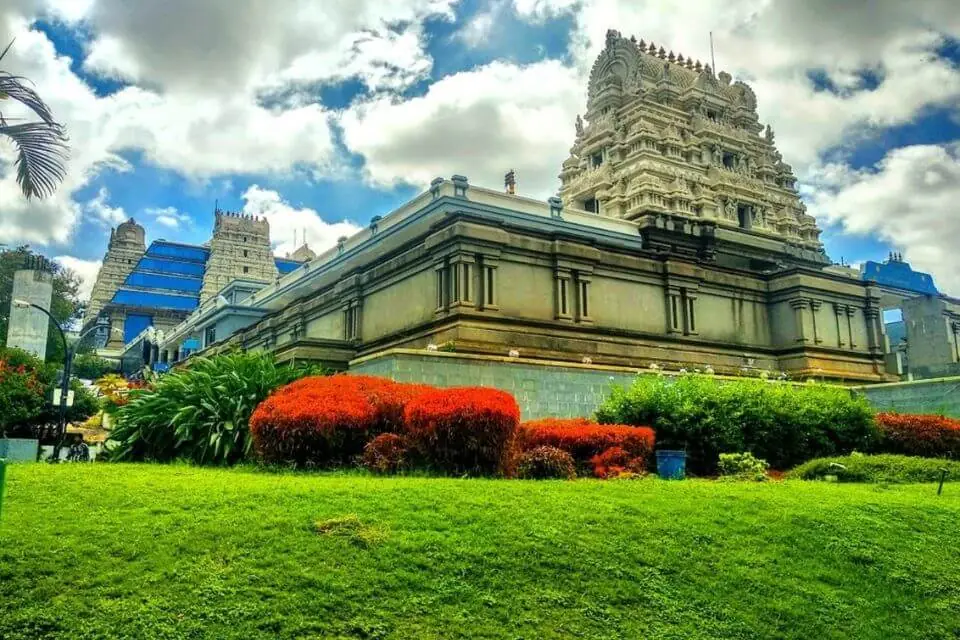
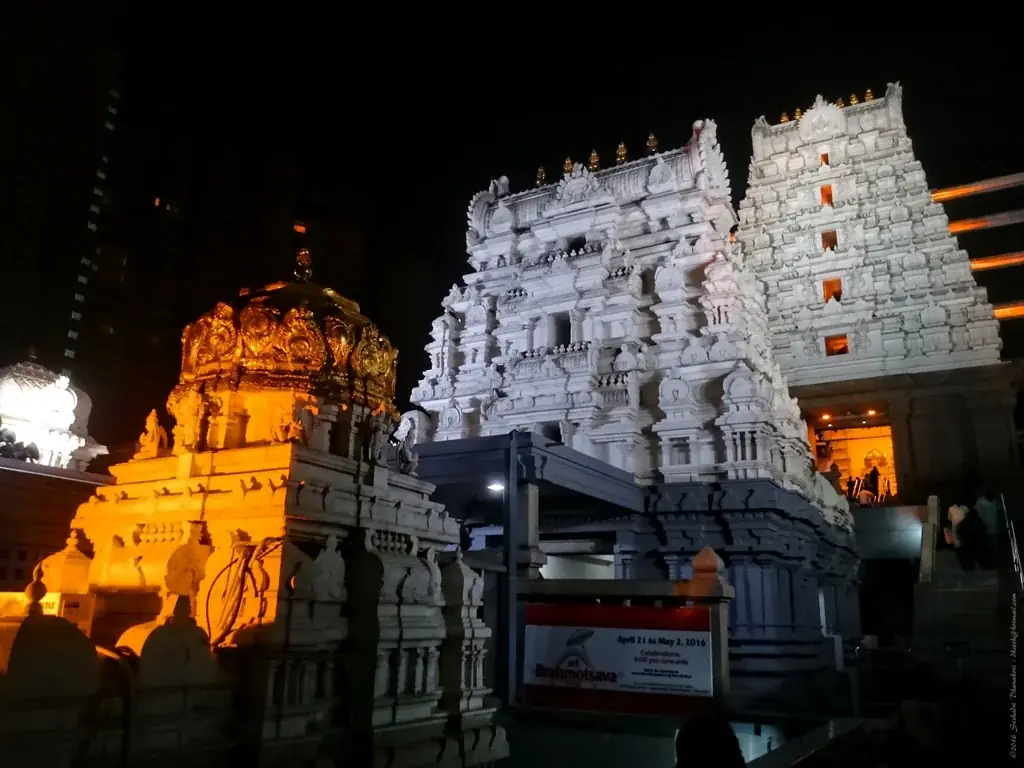
ISKCON Sri Radha Krishna Temple in Bengaluru is located on Hare Krishna Hill in Rajajinagar, near Mahalakshmi Layout and Yeshwanthpur. It is one of the city’s best-known Vaishnava temples and is commonly referred to simply as ISKCON Bangalore. The complex includes the main shrine, worship areas, cultural and educational spaces, vegetarian food services, shops and facilities used by devotees and visitors.
The temple’s regular public darshan is divided into three broad periods. “Darshan” means viewing and respectfully approaching the deities; it does not necessarily mean a private appointment or a guaranteed uninterrupted viewing experience. The published daily schedule is useful for planning, but it should not be treated as a promise that every ritual, queue or entry arrangement will remain identical on a festival day.
| Visitor purpose | Usual published timing | Practical meaning |
|---|---|---|
| Early morning temple programme | Approximately 4:15 a.m. to 5:00 a.m. | Primarily associated with early devotional services; confirm public access before travelling specifically for this period. |
| Morning darshan | Approximately 7:15 a.m. to 12:30 p.m. | The main morning visiting window for many devotees and tourists. |
| Midday interval | Approximately 12:30 p.m. to 4:00 p.m. | Public darshan may be unavailable or restricted during the daily break. |
| Evening darshan | Approximately 4:00 p.m. to 8:30 p.m. | A popular period for worship, aarti-related activity and family visits. |
These times reflect the regular schedule published by ISKCON Bangalore for its temple visit information. The early morning period and the larger public visiting blocks should be understood separately. If your plan depends on a particular ritual, don’t rely only on the broad opening and closing hours; confirm the day’s detailed programme through the official temple information before setting out.
A temple is not operated like a shopping centre that remains open continuously. Deity worship follows a daily routine involving offerings, altar services, cleaning, preparation and rest periods. The midday closure also gives temple staff and worship teams time to conduct activities that may not be designed for general visitor movement.
For an ordinary sightseeing visit, arriving during the morning or evening window is simpler. A family travelling from another part of Bengaluru should allow time for traffic, parking and the security or queue process instead of aiming to arrive at the exact published opening minute.
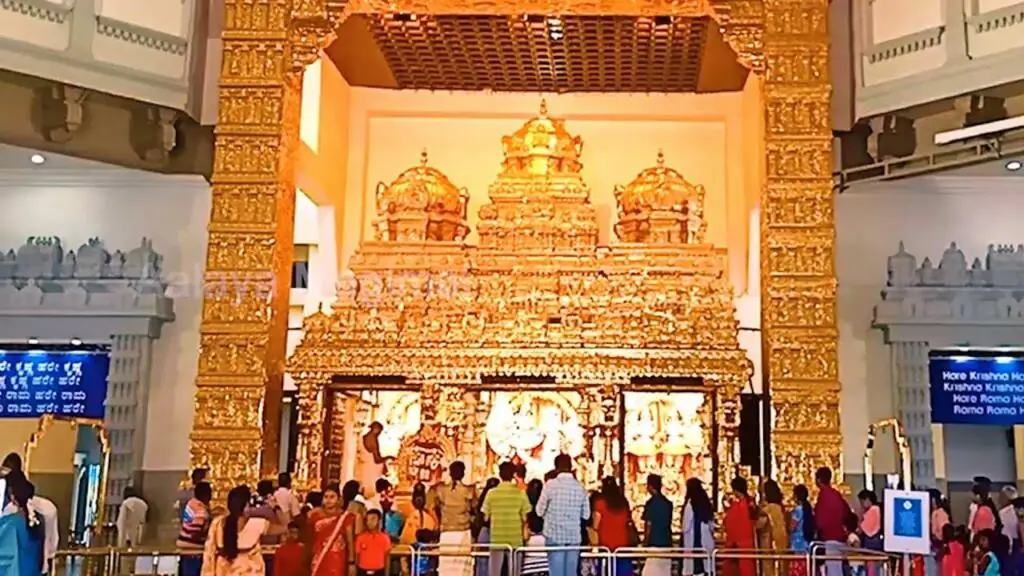
ISKCON worship is centred on Sri Sri Radha Krishna and other deities worshipped at the temple, including Sri Srinivasa Govinda and Prahlada Narasimha in the temple’s devotional setting. The word “aarti” or “arati” refers to a ceremonial offering of light, usually accompanied by singing, bells and other forms of worship. A visitor may watch aarti respectfully, but the experience can be more crowded than a normal darshan period.
The early morning programme traditionally begins with Mangala Arati, followed by devotional practices and scripture-based activity. A temple schedule may also include japa meditation, guru worship, offerings, Srimad Bhagavatam classes and other lectures. Not every item in the daily routine is intended as a walk-in tourist event, so check access details if you specifically want to attend a class or ritual.
| Activity or visit type | What it generally involves | What visitors should confirm |
|---|---|---|
| Early morning Mangala Arati | A devotional service held at the start of the temple day. | Whether general visitors can enter at that hour and whether any access instructions apply. |
| Morning darshan | Viewing the deities during the principal daytime opening. | Current opening time, queue arrangements and any festival changes. |
| Scripture class or lecture | Religious teaching, often connected with Bhagavad Gita or Srimad Bhagavatam. | Language, venue, start time and whether seating is available to visitors. |
| Evening worship | Darshan and devotional activity during the second main public period. | Whether a special aarti creates a larger crowd or changes movement inside the temple. |
The atmosphere differs between morning and evening. Morning visits are often preferred by people who want a quieter start, although early services can have their own dedicated congregation. Evening and weekends tend to attract families, office-goers and groups arriving together, which can make the entrance and main viewing areas busier.
Live darshan may be available through an official digital channel during selected worship periods or special occasions. Availability can change because of technical, ritual or programming reasons. Treat live darshan as a useful alternative for remote participation, not as evidence that the physical temple will remain open outside its stated public hours.
Many visitors search separately for ISKCON Temple Bangalore timings on Saturday, Sunday or a particular public holiday. The regular daily framework may continue, but the actual visitor experience can change substantially. Weekends often bring heavier attendance, while major celebrations may involve special entry systems, extended devotional programmes, altered queue routes or controlled movement around the shrine.
Important festivals associated with ISKCON and the broader Vaishnava tradition include Janmashtami, the appearance day of Lord Krishna, and other observances such as Gaura Purnima, Narasimha-related celebrations and Rathotsava events where scheduled by the temple. A festival programme can begin before the normal visitor day or continue beyond ordinary darshan periods. It may also prioritise registered participants for certain services.
For this reason, “tomorrow’s timing” is not always answered safely by repeating the standard schedule. Check the official notice for the actual date, especially if you’re travelling from outside Bengaluru or planning to reach the temple for a specific aarti. A phone confirmation can also be sensible when the online page does not clearly mention a festival adjustment.
On an ordinary Sunday, visitors can generally plan around the regular morning and evening public periods, but crowd levels may still be higher than during a weekday. Arrive with a buffer rather than choosing a tight train, bus or flight connection immediately after darshan.
There is an important difference between visiting the temple for general darshan and booking a special service. General darshan is usually approached as public worship during the listed opening blocks. A puja, archana, seva, sponsorship or ceremonial offering may be handled through a separate counter, office or official online system, depending on the service.
Don’t assume that every service is available every day or that an online form guarantees immediate entry into the main shrine. Booking pages can have their own cut-off times, payment rules, reporting instructions and cancellation conditions. The relevant service page should be read carefully before payment.
Keep the confirmation message, receipt or booking reference on your phone and, if practical, carry a printed copy. A screenshot can help if mobile reception is weak at the entrance. Use only an official temple page, an official booking interface or a clearly identified temple office; avoid sending money to an unverified individual who promises priority darshan.
For the standard public visit, an advance booking may not be necessary, but that does not mean every special event is walk-in. Booking availability, prices and payment options can change. Since these details are particularly vulnerable to outdated third-party information, confirm them for your chosen date rather than relying on an old social media post.
The most reliable plan combines the regular schedule with a same-day check. The official temple information is the best starting point because the local trust or temple administration controls announcements about worship, entry and services. For an authoritative reference, consult the official ISKCON Bangalore temple timings page before travelling.
If the official page and a third-party listing disagree, give priority to the temple’s own notice and contact information. A map application may show a business as “open” even when a particular shrine, service counter or darshan route is temporarily unavailable. “Open” is too broad a label for religious visits that involve several separate facilities.
ISKCON temples generally expect visitors to behave in a clean, respectful and non-disruptive manner. Dress expectations are best understood as a request for modest, formal or traditional clothing rather than a demand for expensive attire. Indian visitors may choose a kurta-pyjama, dhoti, saree, salwar suit or another comfortable outfit that covers the shoulders and knees.
Jeans may be accepted in ordinary circumstances if worn with a modest top, but very short clothing, sleeveless attire, beachwear and shorts can be inappropriate for a shrine setting. A simple rule is useful: avoid shorts, avoid revealing clothes and choose something suitable for sitting, walking and standing in a devotional environment. If you’re unsure, dress more conservatively.
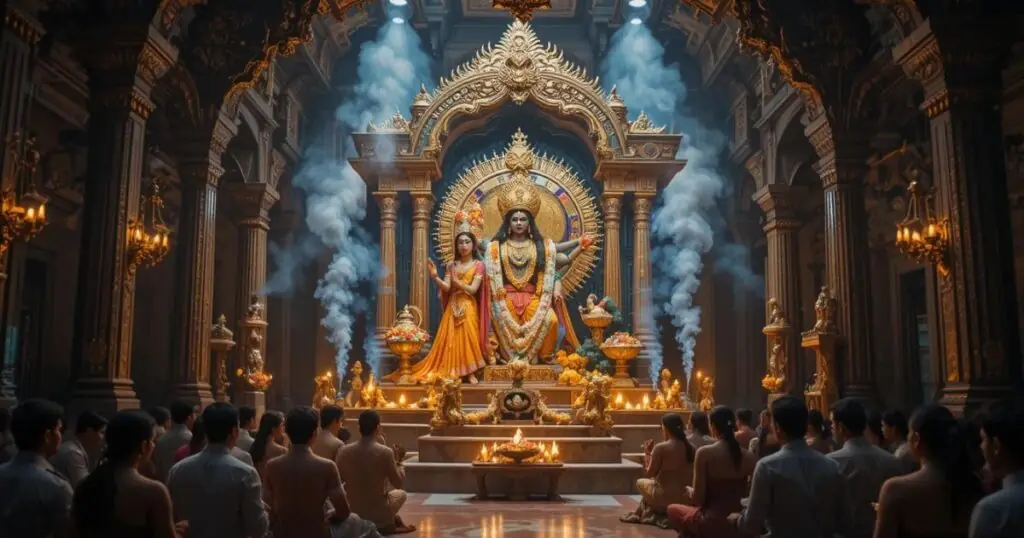
Photography rules can be more specific than a general “camera allowed” assumption. The temple may permit photographs in some public spaces while restricting images near the sanctum, during aarti or in areas where worshippers are participating. Ask a volunteer if a sign is unclear.
Identification requirements usually depend on the service or booking rather than ordinary darshan, but requirements can change for special events. Carrying a government identity document is sensible if you have booked a paid puja, selected a named service or received an instruction to report to a registration counter.
The temple stands on a hill, and reaching the main visitor areas can involve walking, ramps, steps or movement through a large complex. If you’re visiting with an elderly person, a wheelchair user, someone with limited mobility or young children, contact the temple in advance about the most suitable entrance and available assistance. Accessibility arrangements may depend on the day’s crowd management and should not be assumed from photographs of the premises.
Parking can become difficult during evening weekends and major celebrations. Public transport may be more predictable than driving directly to the entrance, particularly when nearby roads are busy. The nearest practical metro or bus option depends on your starting point and the route operating on the day, so check a current Bengaluru transport map rather than relying on an old travel article.
| Travel choice | Useful for | Planning caution |
|---|---|---|
| Metro and local transport | Visitors who want to reduce dependence on parking and road traffic. | You may still need an auto-rickshaw, cab or walk from the station. |
| Cab or auto-rickshaw | Families, older visitors and people carrying fewer belongings. | Drop-off points and traffic restrictions may change on busy days. |
| Private car | Groups carrying children or visitors travelling from outside the city. | Parking availability isn’t guaranteed during festivals or peak evening hours. |
| Bus | Budget-conscious visitors familiar with Bengaluru routes. | Allow extra time for traffic, walking and route changes. |
When using navigation apps, search for the temple’s official name and verify that the destination points to the Rajajinagar/Hare Krishna Hill complex rather than another ISKCON centre in Bengaluru. The city has several religious institutions and similarly named locations, so checking the full address before departure prevents a frustrating detour.
A useful real-world example is the regular schedule published by ISKCON Bangalore itself. Rather than presenting one uninterrupted “open all day” claim, the temple information separates the early morning devotional period, the morning darshan window, the midday interval and the evening opening. That distinction is practical: a visitor who reaches the hill at 1:30 p.m. may find that the broad temple complex is not operating as a continuous public attraction, while someone arriving after 4:00 p.m. is planning around the next listed darshan block.
This official schedule also shows why timing questions need context. A person asking for the temple opening time may be asking about Mangala Arati, general darshan, a booking counter or the evening worship period.
These are not interchangeable. The published information is therefore more useful when matched to the visitor’s purpose instead of reduced to one headline time.
Use the schedule as a planning framework, then check for announcements affecting your date. That approach is more dependable than copying timings from an old travel listing, especially because temple routines can be adjusted for festivals, maintenance, special guests, crowd control or other administrative reasons.
The commonly published public visiting periods are approximately 7:15 a.m. to 12:30 p.m. and 4:00 p.m. to 8:30 p.m., with an early morning devotional period around 4:15 a.m. to 5:00 a.m. Confirm the official schedule before visiting because timings may change.
The regular schedule includes a midday interval, generally from about 12:30 p.m. to 4:00 p.m. Public darshan may not be available throughout that period. Plan for the morning or evening opening instead.
Sunday often follows the regular morning and evening framework, but it can be busier. Special programmes, festivals and public holidays may alter the routine, so check the official notice for the specific Sunday.
General darshan and a special puja are different. A regular visit may not require an advance booking, while a seva, sponsorship or festival entry arrangement may. Confirm the requirements for the service you want.
Live darshan may be offered through an official digital channel for selected services or occasions. Availability can vary, so check the temple’s current official information rather than assuming it is available continuously.
Modest jeans may be acceptable, but clothing should be respectful and not revealing. Avoid shorts, very short skirts, beachwear and sleeveless or excessively casual outfits. Formal traditional clothing is welcome but not necessarily required for every visitor.
Don’t assume that a general temple visit and a booked devotional service have the same financial rules. Any contribution, puja amount or service charge should be confirmed through the official temple information. Avoid relying on an unverified price quoted by a third party.
The best station and last-mile route can depend on your starting point and current Bengaluru Metro operations. Check a current map and confirm the final walking or auto-rickshaw distance to Hare Krishna Hill before travelling.
The most useful way to approach ISKCON Temple Bangalore timings is to separate regular darshan from aarti, special puja, festival entry and digital live darshan. For a normal visit, choose the morning or evening public window, dress respectfully and allow time for traffic, parking and queues. For a booked service, follow the exact reporting and identification instructions attached to that service.
Before you leave, check the official schedule for the date rather than relying on a search snippet or an old listing. A quick verification can save a long journey during a midday closure or festival change—and it also lets you arrive prepared for the kind of worship experience you actually want.





