Physical Address
304 North Cardinal St.
Dorchester Center, MA 02124
Physical Address
304 North Cardinal St.
Dorchester Center, MA 02124
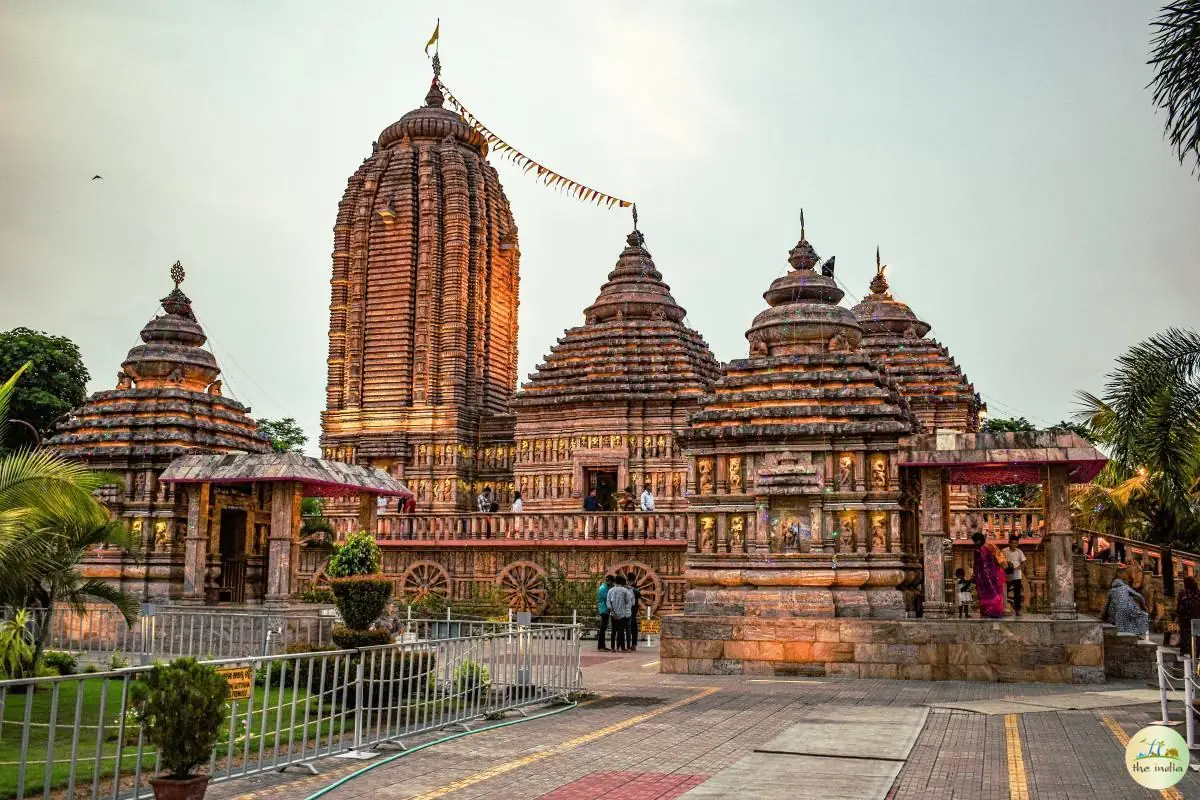
Puri temple timings matter because a small change in the daily ritual schedule can affect your entire visit to the Jagannath Temple. Darshan, Aarti, special rituals, entry arrangements and reporting times may not follow the same clock every day, particularly during festivals or ceremonial occasions.
Before travelling to Temple Puri, you need more than a simple opening-and-closing time; you need to understand when devotees may enter, when the deity is visible, which rituals pause public Darshan and where genuine updates are published. This guide explains how to plan your visit to Puri, Odisha, without relying on forwarded messages or unverified booking claims.
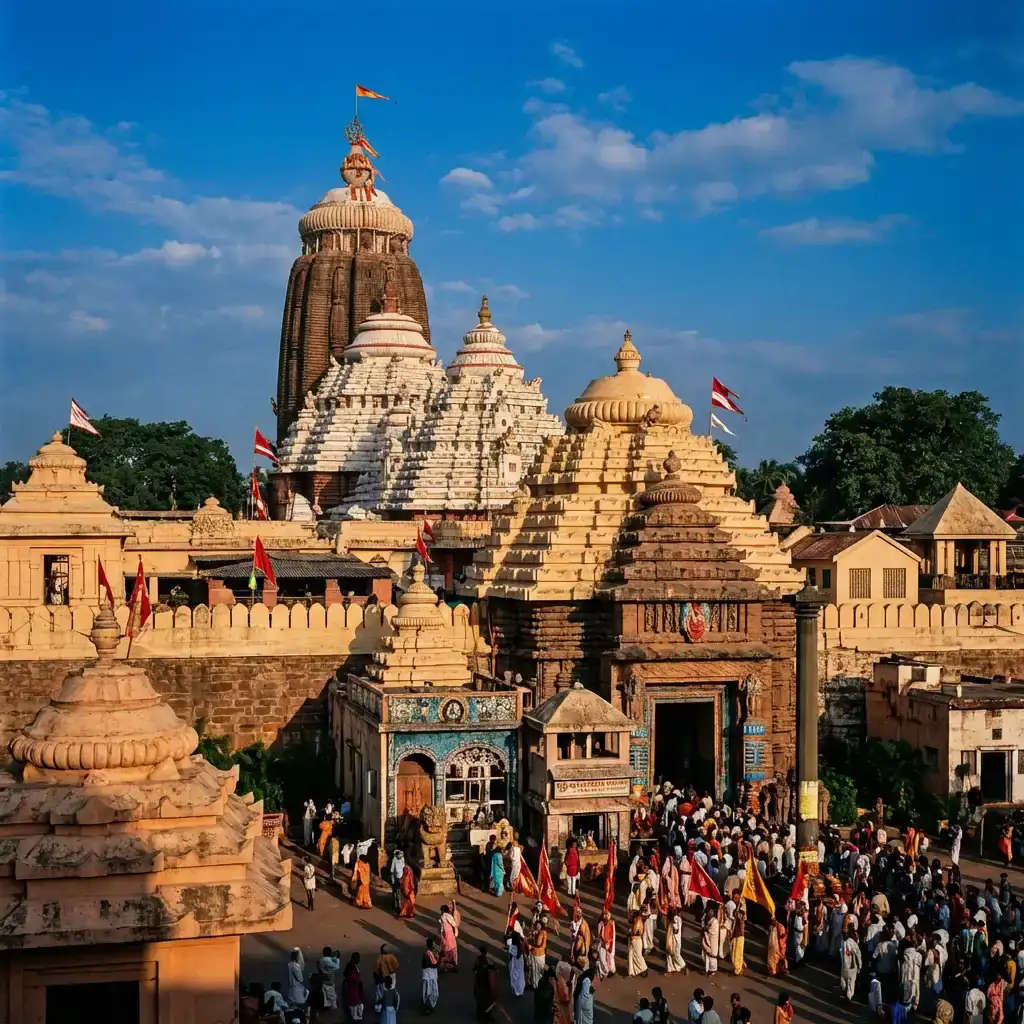
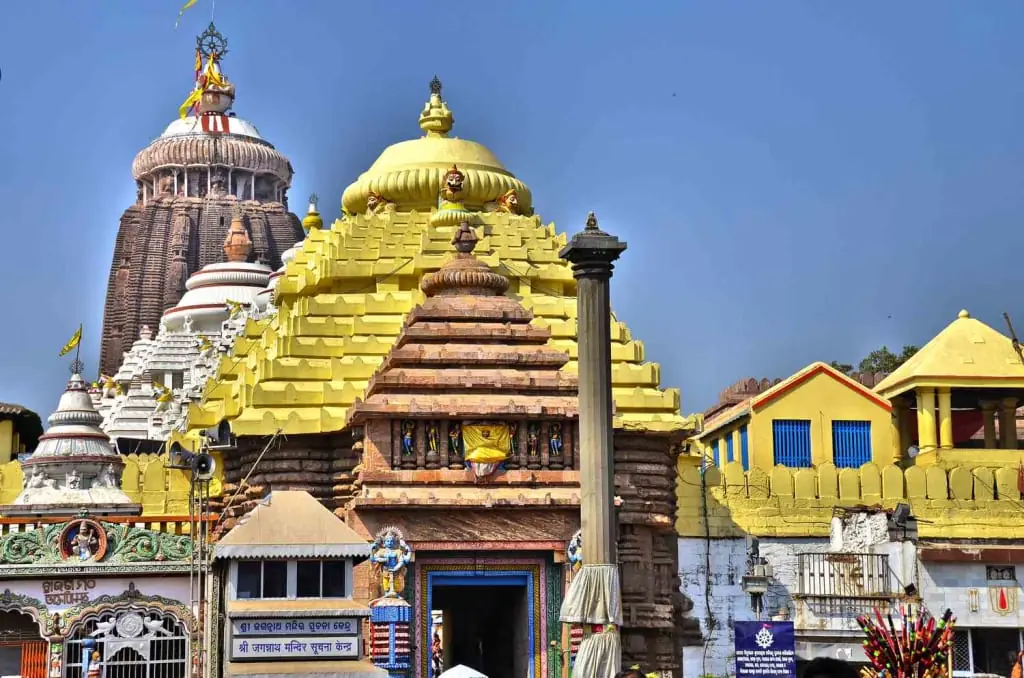
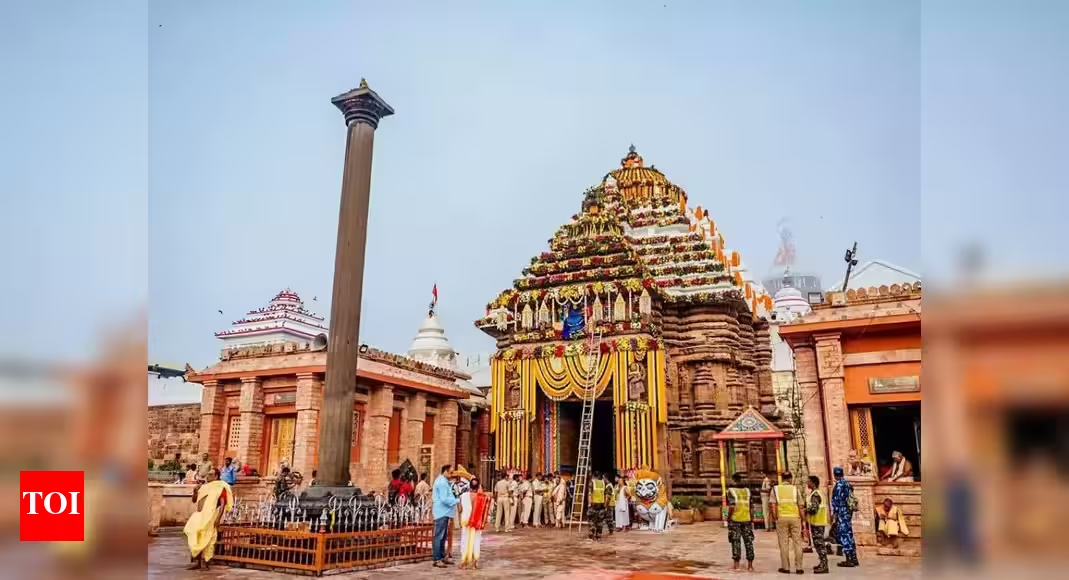
The Shri Jagannath Temple in Puri is an active place of worship, not a museum with a fixed visitor timetable. Its daily routine is shaped by traditional rituals, offerings, changes in the temple’s ceremonial programme and decisions made by the temple administration. That means the time shown in an old travel article, hotel leaflet or social media post may not match the schedule on the day you arrive.
Many visitors search for the Jagannath Temple opening and closing time as if one pair of hours will answer every practical question. It won’t. The temple may be open to the public during one period, while Darshan is temporarily restricted because a Pooja is taking place.
A visitor may also need to report before an approved slot rather than arrive at the exact starting time. The final public entry can occur before the stated closing period.
Timing also affects travel decisions. An early arrival can be sensible on a busy day, but arriving too early does not guarantee immediate entry if a ritual is in progress. Similarly, visiting in the evening may suit your train or hotel plans, yet the evening schedule can change around Aarti, Bhoga, ceremonial observances or festival arrangements.
For the most reliable information, check the temple administration’s latest notice, its official website or official booking channel shortly before your journey. If online information is unclear, ask the authorised enquiry counter in Puri. Treat a message promising guaranteed VIP access, instant Darshan or a fixed “tomorrow” slot with caution unless it comes from an official source.

Temple information can seem confusing because several words are used interchangeably in casual conversation. They describe different parts of the visit. Knowing the terminology helps you understand whether a notice refers to worship, entry, booking or waiting time.
One more distinction is useful. “Open” may refer to the temple’s operational status, while “Darshan open” refers to the period in which visitors can actually seek viewing of the deities. Those two statements may not mean exactly the same thing.
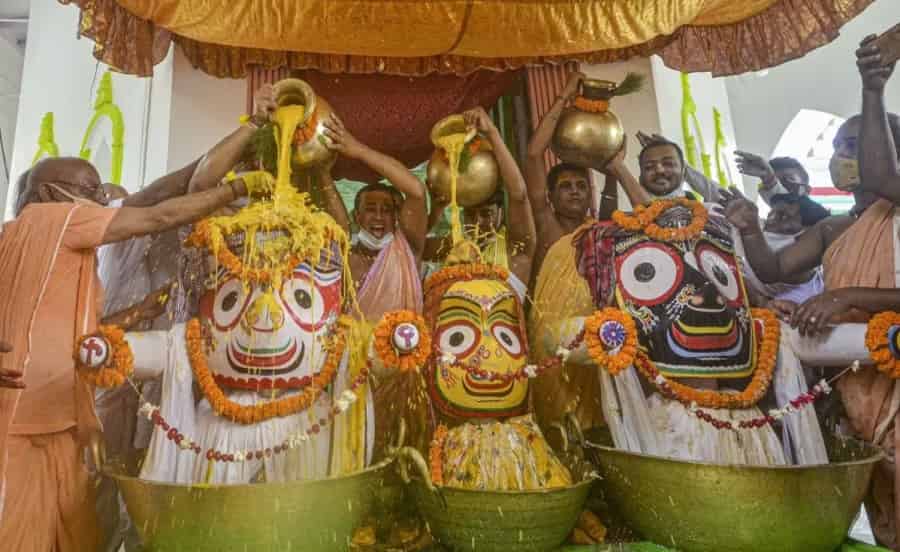
The daily programme at the Jagannath Temple follows a sequence of traditional rituals rather than a visitor-focused timetable. Activities begin with early morning observances and continue through bathing, dressing, offerings, ceremonial worship and night rituals. The names and order of rituals are part of the temple’s religious practice, but the exact public access window can be adjusted by the authorities.
For an ordinary visitor, the day can be understood in broad phases: early morning preparation, daytime worship and offerings, afternoon or evening ritual periods, and the final night observances. Public Darshan may be possible during some intervals and restricted during others. A particular ritual called an offering or Bhoga may temporarily change the way devotees move through the temple area.
It’s important not to treat broad phases as guaranteed clock times. A schedule printed for one date may not apply during Snana Yatra, Rath Yatra, Bahuda Yatra, Suna Besha, Niladri Bije or other important occasions. Special arrangements may also be introduced for security, crowd management or visits by dignitaries.
| Timing term | What it usually means | What a visitor should confirm |
|---|---|---|
| Temple opening time | The beginning of a period when the temple or designated area becomes accessible under the day’s rules | Whether general visitors can enter immediately or must wait for a public Darshan window |
| Darshan timing | The period when devotees may seek viewing of the deity | Whether Darshan is continuous or interrupted by rituals and offerings |
| Pooja or Aarti timing | A scheduled worship ceremony | Whether visitors may watch, participate, or must remain outside during the ritual |
| Booking window | The period when an official reservation or registration can be made | Opening date, identity rules, payment terms and cancellation policy |
| Reporting time | The time a confirmed visitor must reach the assigned point | How early to arrive, which gate or counter to use and late-entry rules |
| Closing period | A time when public access, Darshan or entry is stopped | Whether the temple is fully closed or only public Darshan is paused |
Use this distinction while planning your hotel checkout, transport and return journey. A train booked immediately after an assumed Darshan window can create unnecessary stress if the day’s ritual schedule changes.
The safest approach is to check timing information twice: once while planning the trip and again shortly before leaving for Puri. The first check helps you choose a suitable date. The second helps you catch festival notices, temporary restrictions, revised entry rules or changes to a booking process.
Start with the official website of the Shri Jagannath Temple administration or an official government-supported information channel. The official Shri Jagannath Temple Administration website is the kind of primary source you should prioritise over a random booking page. Look for current notices, Darshan instructions, visitor advisories, festival announcements and contact details.
Official verified social media accounts can also be useful when the administration uses them for urgent announcements. Check that the account is genuinely associated with the temple authority. A logo, temple photograph or a large follower count is not proof of authenticity.
If you’re already in Puri, use the authorised enquiry counter rather than a tout near the temple approach roads. Ask clear questions:
Hotels and local drivers may offer useful practical advice about traffic and crowd levels, but they shouldn’t be your only source for temple policy. Their information may be based on a previous visit. For current rules, the temple administration remains the better authority.
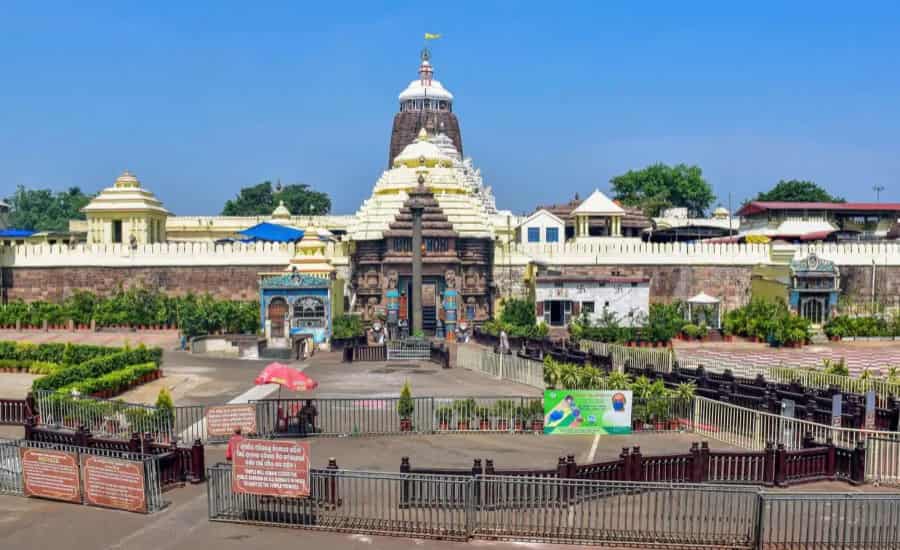
Darshan at an ancient temple is not always comparable to entering a tourist attraction. The flow may be controlled, waiting areas may become crowded and access may be affected by an ongoing ritual. Your experience can also depend on the day, season, security arrangement and the number of devotees arriving at the same time.
Aarti and Pooja periods are especially important to understand. During a sacred ritual, ordinary movement may be paused or redirected.
That doesn’t necessarily mean the temple is closed for the entire day. It may mean only that public access is restricted for a shorter period while the service is conducted.
Visitors sometimes ask whether an Abhishekam or a particular Pooja can be booked as part of a standard Darshan visit. There is no universal answer.
Some temples operate separate services for devotees, while others reserve specific rituals for authorised temple servants or prescribed ceremonies. Don’t pay an intermediary who promises access to an inner ritual without written confirmation from the temple authority.
Prasad arrangements also deserve attention. The time when food offerings are prepared, offered, distributed or made available to visitors may not match the Darshan schedule.
If Prasad is important to your yatra, ask the authorised counter about collection rules and the correct place to obtain it. Avoid accepting food or religious items from unknown people who claim that a payment is mandatory.
Clothing and conduct should reflect the place of worship. Follow posted instructions, respect queues, avoid blocking entry routes and don’t attempt photography where it is prohibited. The temple’s current rules take priority over advice found in older travel videos.
Online registration sounds straightforward, but pilgrims should first determine whether the service they want is actually offered through an official portal. Search results may show private tour operators, hotel agents or websites using phrases such as “confirmed VIP Darshan.” Those services might arrange transport or assistance, but they should not be confused with a temple-issued booking.
If an official booking facility is available for your chosen date, read the instructions from beginning to end before making payment. A genuine process should identify the authority, explain eligibility and show the applicable terms. Keep a copy of the confirmation, transaction reference and identity details used during registration.
Depending on the service and current policy, an official application may request information such as:
Never upload identity documents to a page reached through an unsolicited message unless you have verified the domain and authority behind it. Check the spelling of the website address, the presence of secure payment processing and the contact details shown on the official source. A screenshot sent by an agent is not enough.
Booking does not always mean immediate entry. Read whether the confirmation gives a fixed slot, a reporting window, a queue category or only a request acknowledgement.
Also check whether every member of the group must carry original identification. If a booking is non-transferable, the name on the document may need to match the visitor at the entry point.
There is no single arrival rule that works for every date. On an ordinary weekday, the practical waiting time may be different from a Sunday, public holiday or major festival. A visitor with an official reporting time should arrive with enough margin for traffic, security checks and locating the correct entry point.
Arriving early is generally more useful when you have a confirmed reporting window, an important onward journey or limited time in Puri. It also gives you room to deal with queues and unexpected instructions. Reaching extremely early without checking whether public entry is available may simply leave you waiting outside, especially if the temple is in a ritual or restricted period.
Build a buffer around your plan rather than scheduling Darshan between two tight transport connections. Roads around the temple can become busy during peak pilgrimage periods, and movement may take longer than the distance on a map suggests. If you’re travelling with older people, children or anyone who needs frequent rest, allow additional time instead of depending on a quick visit.
Keep essentials simple. Carry only what current instructions permit, and use approved storage facilities if the temple directs visitors to them.
Don’t assume that a hotel locker, cloakroom or roadside shop is officially connected to the temple. Ask about charges and receipts before handing over valuables.
A sensible personal schedule might include:
Weekdays can be easier for some visitors, but no weekday guarantees a short queue. Local religious observances, school holidays, public holidays and special temple events can increase attendance unexpectedly. A quiet-looking date on a calendar may still be busy if it coincides with a regional occasion.
Weekends usually bring more visitors from nearby cities, while long weekends can attract pilgrims who are combining Puri with Bhubaneswar, Konark or other Odisha destinations. Hotels may also become busier, and road traffic can affect your reporting time. If you’re travelling during a holiday, verify both temple instructions and accommodation availability before finalising plans.
Major festivals require extra caution. Rath Yatra and associated events have their own enormous religious and crowd-management arrangements.
During such periods, ordinary visitor assumptions may not apply. Entry routes, public access, security controls, vehicle movement and Darshan procedures can all be revised.
The same principle applies to festival days connected with the deities, special decorations, ceremonial processions or annual temple observances. Don’t rely on a timetable from a previous year. Dates may change according to the lunar calendar, and administrative instructions can be issued close to the event.
Peak season also changes the value of a tour package. A package may make transport and accommodation easier, but it doesn’t give an operator authority to promise entry unless the booking is officially recognised.
Ask exactly what the package includes: hotel, transfer, guide, queue assistance or an official temple service. Get the answer in writing.
Schedule changes are frustrating, but arguing with temple staff or relying on a tout rarely solves the problem. First, check whether the change affects the whole day, a particular Darshan period or only one entry gate. Official notices or the enquiry counter may clarify whether visitors should wait, return later or follow a revised route.
If you miss a reporting time, read the booking terms before paying anyone for a replacement. Some services may allow a visitor to request assistance at an official counter; others may not permit late entry or transfer to another slot. Only the issuing authority can confirm your options.
When a ritual delays Darshan, stay patient and follow directions. The delay may be part of the temple’s normal religious functioning rather than an administrative failure. Keep your group together, especially if mobile connectivity is weak or the area is crowded.
If an official booking is cancelled or a schedule is changed, save the notice and your transaction record. Contact the official support number or enquiry office listed on the original source. Don’t share your one-time password, card PIN or full banking credentials with someone claiming to process a refund.
A flexible itinerary helps. Leave space for another visit period, a delayed meal, local traffic and a changed return plan. If your journey is short, prioritise Darshan and essential arrangements over trying to fit several sightseeing stops into the same narrow window.
Use the following process each time you plan a visit. It separates information gathering from payment, which reduces the chance of confusing a travel offer with an official temple facility.
This process is useful even if you’re travelling through a tour operator. Let the operator arrange transport if you wish, but independently verify any claim about guaranteed Darshan, VIP access or a fixed Pooja appointment.
Hypothetical example: A family of four plans to visit Puri on a Saturday and has a train later that evening. They find an old page listing fixed morning and evening Darshan hours, then receive a message offering “instant VIP entry.” Instead of paying immediately, they check the official temple source and discover that the relevant day has a revised public schedule connected with a special observance.
The family then asks the authorised enquiry counter whether a special booking is available, confirms the reporting point and checks the current rules for identification and belongings. They move their sightseeing plan to the afternoon, leave a generous buffer before the train and keep the booking receipt together with their identity documents.
This example doesn’t claim a particular timing or policy. Its lesson is about method: an old timetable and an unofficial guarantee are poor foundations for pilgrimage planning. A current official notice, a verified reporting instruction and a flexible transport plan provide much stronger protection against avoidable problems.
Many timing difficulties are caused by assumptions rather than by the temple schedule itself. One common mistake is reading “open” as “Darshan available continuously.” Another is assuming that an online payment made to a travel website equals a temple reservation.
Visitors also underestimate the time required to reach the correct gate, especially when they’re staying outside the immediate temple area. A driver may drop you near a road that is convenient for vehicles but not the same place where a confirmed visitor must report. Ask for clear, current directions.
Do not plan your visit around an exact time copied from a two-year-old blog, a forwarded WhatsApp image or a video recorded during a different festival season. Such content may be helpful for general context, but it cannot replace the current official schedule.
Another error is paying for a supposed “special Pooja” without checking whether the temple recognises that service. Ask for the official name of the service, issuing authority, receipt and terms. If the seller becomes evasive, walk away.
Finally, avoid carrying more than necessary. Restrictions can change, and items permitted at one place of worship may be prohibited at another. Review the latest instructions before you enter rather than discovering them at the queue.
Check the latest notice on the official Shri Jagannath Temple Administration website or its verified official communication channel. If you’re already in Puri, ask at the authorised enquiry counter. Confirm not only whether the temple is open, but also whether general Darshan is available and whether a ritual is temporarily restricting entry.
Booking requirements depend on the current policy and the type of service. General entry, special arrangements, Pooja participation and festival access may follow different rules.
Don’t assume that a private tour package or an agent’s payment page represents an official booking. Verify the requirement directly with the temple authority.
If you have a confirmed reporting time, arrive with a practical buffer for travel, security and queues. Without a fixed slot, early arrival may help on a busy day, but it doesn’t guarantee immediate entry because morning rituals or other restrictions may be in progress. Check the day’s instructions before deciding how early to leave your hotel.
They can. Major festivals and ceremonial occasions may bring revised Darshan periods, entry routes, security controls and public access rules.
Lunar-calendar dates and local administrative decisions also affect planning. Recheck the official schedule close to your visit instead of relying on a standard daily timetable.
Use only the temple’s official website, official booking portal or authorised counter. Be cautious about guaranteed VIP access, urgent payment demands, personal bank-account transfers and agents who refuse to provide an official receipt. Never share an OTP, card PIN or banking password, and verify the website address before uploading identity documents.
A smooth visit to Puri depends on treating timings as a living temple schedule rather than a fixed tourist timetable. Check the latest Darshan and entry information, distinguish reporting time from opening time, and confirm any Pooja or special service through an authorised source.
Before you travel, take one final look at the current Puri temple timings and keep your itinerary flexible enough for rituals, crowds or revised instructions. That small step can protect your time, money and peace of mind—and help you approach this sacred place with the respect it deserves.





