Physical Address
304 North Cardinal St.
Dorchester Center, MA 02124
Physical Address
304 North Cardinal St.
Dorchester Center, MA 02124
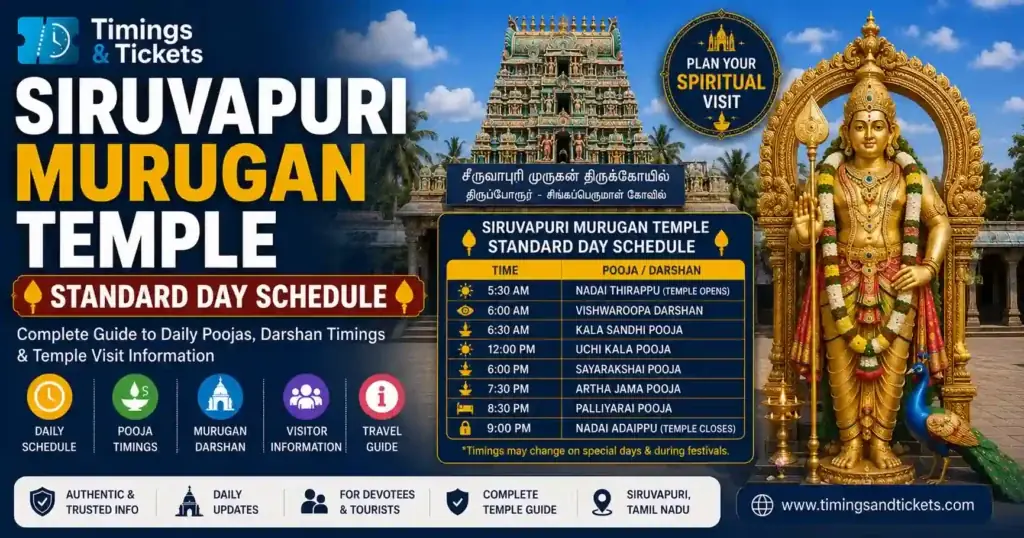
Siruvapuri Murugan Temple timings matter because a small change in darshan hours can affect your entire journey from Chennai or another part of Tamil Nadu. The temple’s opening and closing hours, morning and evening darshan, abhishekam, alangaram, and deeparadhana schedules may differ on ordinary days, Tuesdays, festival days, and special occasions.
This article explains how to plan a visit to the Siruvapuri Murugan Temple, where to verify today’s timings, what to expect at the temple queue, and how booking or ritual schedules can change. You’ll also find practical advice for families, senior citizens, and first-time visitors travelling to Chinnambedu in Tiruvallur district.
Many devotees search for a single fixed answer to the question, “What time does Siruvapuri Murugan Temple open?” In practice, temple hours are often more flexible than a simple opening-and-closing statement suggests. The published schedule may refer to the outer entrance, general darshan, a particular shrine, a pooja, or the period during which devotees can join a queue. These are not always identical.
The Siruvapuri Murugan Temple, associated with Lord Murugan in the form of Balasubramaniar, is located at Chinnambedu in Tiruvallur district, Tamil Nadu. Devotees from Chennai and surrounding areas commonly plan visits around Murugan darshan, special prayers, abhishekam, and offerings. Since rituals take place at fixed or customary times, general access can pause briefly while the temple performs an important ceremony.
A timetable displayed on an older webpage, travel listing, map profile, or social-media post may not reflect the latest decision of the temple administration. The schedule can change because of:
For that reason, use online information as a starting point rather than a guarantee. Before travelling, verify the Siruvapuri temple timings through the temple’s current notice, official trust or administration contact, official booking channel, or the relevant Tamil Nadu Hindu Religious and Charitable Endowments source. The Tamil Nadu HR&CE official portal may help you identify official temple information, but you should still confirm whether the specific schedule shown applies to your intended date.
A temple day is normally divided into worship periods rather than one uninterrupted stream of visitors. The exact structure at Siruvapuri may vary, but devotees commonly encounter a morning opening period, ritual activity during the day, an afternoon or late-day darshan window, and evening worship before closure. Understanding this pattern helps you interpret a schedule correctly.
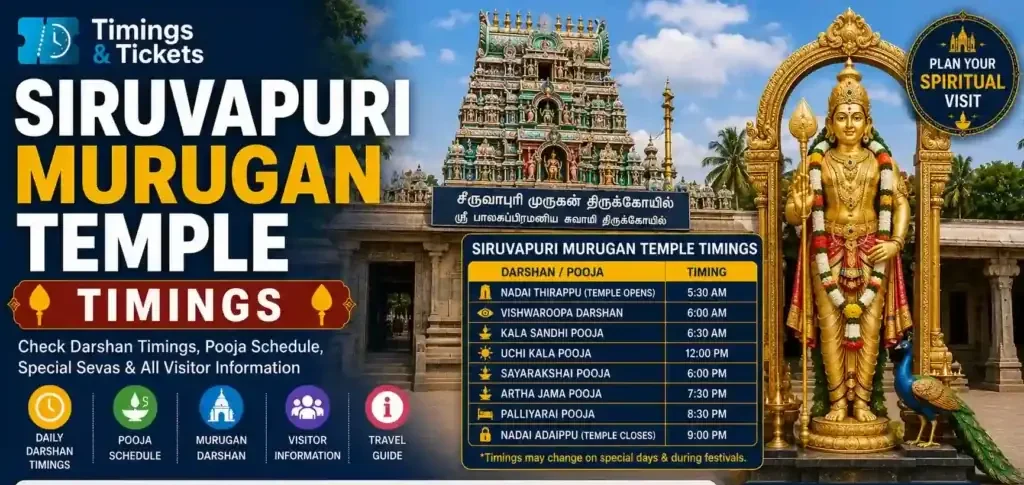
Morning darshan is often preferred by devotees who want to pray before the heat and heavier traffic build up. It can also be convenient for families travelling from Chennai because an early start leaves time to return the same day. The first period after opening may be busy if a significant pooja attracts local worshippers, so “arrive early” doesn’t always mean “walk straight in.”
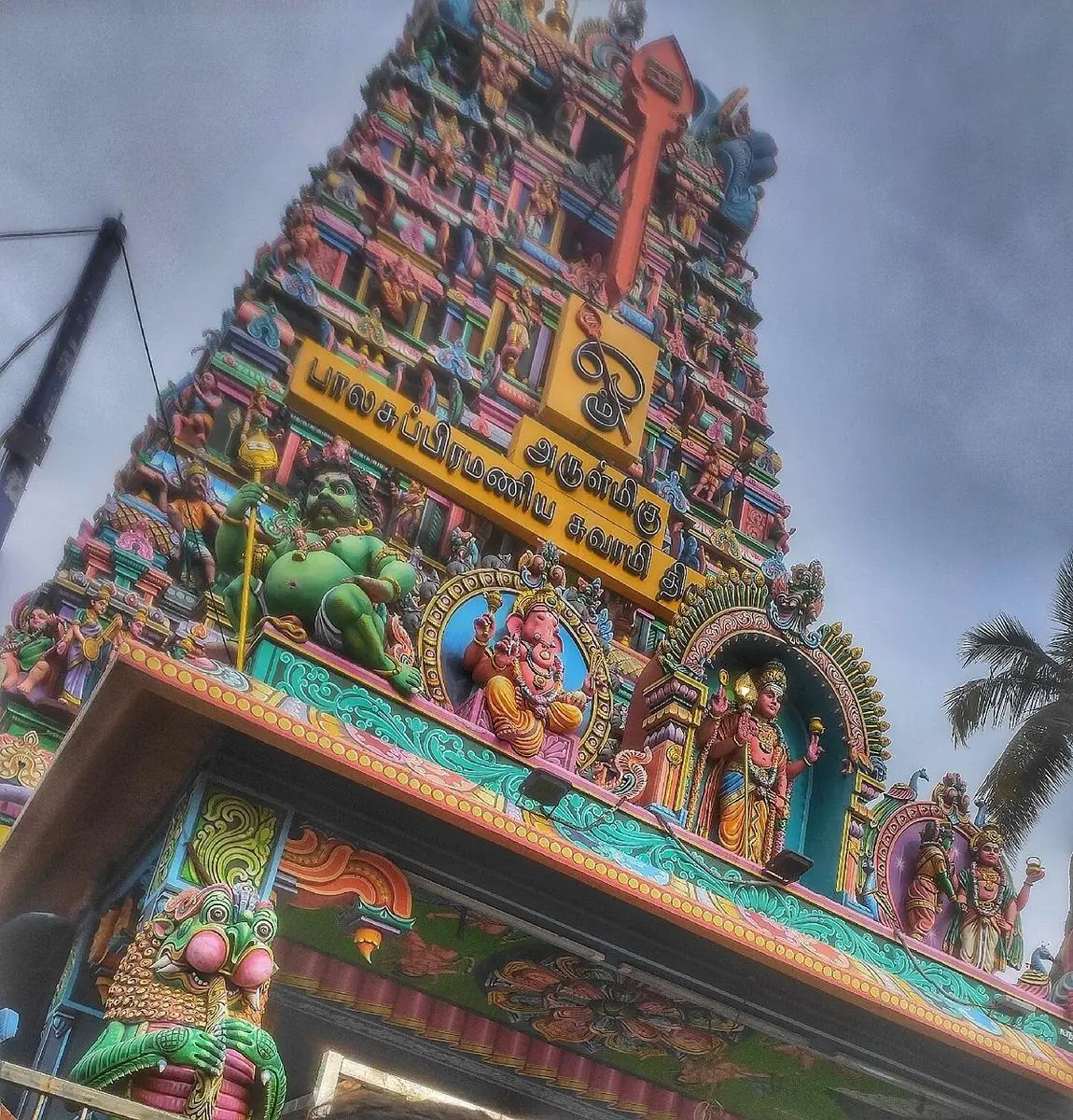
Afternoon darshan is the period people most often misunderstand. Some temples reduce general access for a few hours during the middle of the day, while others continue with limited worship and reopen a queue later.
If a website lists morning and evening hours only, don’t assume that afternoon entry is available. Ask whether the temple remains open to visitors, whether the sanctum is accessible, and whether a particular ticket counter operates during that interval.
Evening darshan can be especially meaningful for devotees who wish to attend deeparadhana or see the deity after alangaram. It may also suit working visitors and groups arriving after office hours.
On popular days, though, the evening queue can become longer than the morning queue. Ritual timing and visitor timing overlap, so a person who arrives just before a major pooja may wait until the ceremony is completed.
Always distinguish between the Siruvapuri Murugan Temple opening time, the start of general darshan, and the time at which the last devotee is allowed into the queue. The same principle applies to the Siruvapuri Murugan Temple closing time. A gate may close to new entrants before the final ritual ends, particularly if a large queue must be cleared safely.
Searches for the Siruvapuri Murugan Temple opening time often produce different answers because online listings may be copied from one another or may describe different kinds of access. One source might show the time the premises open, another might show the first darshan, and a third might record the hours of a ticket counter. Treat a precise time as reliable only when it has a current official basis.
The same caution applies to the closing time. If the temple is scheduled to close at a certain point, that does not necessarily mean a devotee arriving just before that minute will receive darshan.
The queue may stop earlier, and the sanctum may become unavailable while evening rituals are prepared. On a crowded day, the staff may also regulate entry to prevent congestion.
When checking the schedule, look for these details rather than searching only for one time:
If the official source does not publish a daily timetable, contact the temple directly before leaving. Ask a focused question: “Please confirm today’s general darshan hours, whether the temple closes in the afternoon, and whether any special pooja will affect entry.” This is more useful than asking only, “Is the temple open?”
Do not rely on a generic statement that the temple is open every day. A temple can be open while a specific shrine, ticket counter, or darshan route is temporarily restricted. Your travel plan should be based on the latest date-specific information available.
For many devotees, visiting Siruvapuri is not simply a matter of entering the temple and viewing the deity. They want to participate in a ritual, make an offering, or be present for a particular stage of worship. Pooja timings therefore deserve separate attention from general darshan timings.
Abhishekam refers to the ceremonial bathing of the deity with substances prescribed by the temple tradition. Depending on the temple’s practice, devotees may be able to sponsor or attend an abhishekam, but the availability, booking method, and participation rules can vary. An abhishekam may also restrict direct darshan for a short period while the ritual takes place.
Alangaram is the decoration of the deity after worship and preparation. Some devotees prefer to visit after alangaram because the shrine presents a different devotional atmosphere. The exact sequence and public viewing arrangement should be confirmed locally; a listed pooja time does not automatically mean that every visitor can stand near the sanctum throughout the ceremony.
Deeparadhana is the offering of light and is generally associated with an important point in the worship cycle. Evening visitors may plan around it, but the temple can manage crowd movement carefully during the ceremony. If you want to witness deeparadhana, arrive with enough time to pass security, find the correct queue, and settle any ticket or offering requirements before the ritual begins.
Ask these questions if a pooja is the main purpose of your visit:
Never assume that paying for a pooja guarantees a particular viewing duration. Temple rituals follow agamic and administrative procedures, and the staff may adjust the order for crowd safety or ceremonial reasons. A respectful, patient approach usually makes the visit easier for everyone.
Devotees frequently search for Tuesday timings, Thursday timings, Friday timings, Saturday timings, or Sunday timings separately. That search behaviour reflects a practical reality: the day of the week can influence both worship activity and crowd levels, even when the regular schedule remains broadly similar.
Tuesday is widely associated with Lord Murugan worship in many Tamil households. A devotee may therefore choose Tuesday for a vow, special offering, or family prayer.
Thursday and Friday can also attract visitors for personal devotional reasons, while Saturday and Sunday are convenient for people who work or study during weekdays. Convenience and religious preference often combine to create a busier temple.
These patterns shouldn’t be treated as a guaranteed crowd forecast. A Tuesday may be quiet on one date and extremely busy on another because of a festival, school holiday, auspicious day, or local event. A Sunday morning may have a steady family crowd, while a weekday evening may become crowded when commuters arrive from Chennai and nearby towns.
| Visit planning factor | What may affect your experience | What to verify |
|---|---|---|
| Tuesday | Murugan-related devotional visits and special observances | Whether any special pooja or queue arrangement is announced |
| Thursday or Friday | Personal vows, family worship and regular weekday traffic | Whether the normal daily schedule applies |
| Saturday | Weekend travel and visitors arriving from nearby cities | Expected entry process and final queue time |
| Sunday | Family groups, day trips and possible road congestion | Temple crowd status and parking or transport conditions |
| Festival or special day | Rituals, processions, security controls and longer queues | Festival timings, booking rules and temporary access restrictions |
The table is a planning framework, not a substitute for a dated official announcement. If you’re choosing between several days, ask the temple which day is likely to have a simpler general darshan process. Staff may not provide a crowd prediction, but they can often clarify whether a major event is scheduled.
Booking questions need careful handling because temples may offer different types of access, and not every arrangement is available every day. Some services, where offered, can include special darshan, sponsored abhishekam, archana, or other devotional offerings. The name, price, reporting time, and booking window must come from the current official channel.
Never pay a third-party agent merely because a social-media page promises instant access. A screenshot of a ticket or a message claiming to represent the temple does not establish authenticity. Check the name of the organisation, the official receipt, the reporting instructions, and whether the service is actually listed by the temple administration.
Booking times can be different from darshan times. A counter may open before the main darshan period, and a ritual participant may need to report earlier than the scheduled pooja. If you arrive after the reporting deadline, staff may not be able to accommodate you even if the temple is still open.
Keep a digital and printed record of any genuine booking confirmation. Carry the original identification requested by the temple, but don’t hand over sensitive documents to unauthorised intermediaries. If the booking portal appears confusing, call the official contact rather than relying on an unverified tutorial video.
On a high-footfall day, a paid or special darshan option may not eliminate all waiting. Security checks, ritual pauses, and controlled movement can affect every category of visitor. A ticket is an administrative facility, not permission to disregard temple rules.
Festival timings deserve a separate plan. Murugan temples may observe important days in the Tamil calendar with additional abhishekam, alangaram, processions, devotional singing, or other ceremonies. Even when a festival is spiritually meaningful, it can make the visit less predictable for someone who wants a quick general darshan.
Special day timings can also apply to temple anniversaries, public holidays, auspicious dates, or events announced by the administration. The temple may open earlier, remain accessible later, restrict certain areas, or divide visitors into separate queues. None of these changes should be inferred from the ordinary daily temple schedule.
Before travelling on a festival day, verify all of the following:
Festival crowds often begin building before the headline ritual. If you want to attend a major ceremony, allow time for traffic, walking, parking, security, and queue formation. If you prefer a quieter darshan, ask whether an ordinary weekday outside the festival period would be more suitable.
Sudden changes are possible even without a festival. A local road closure, heavy rain, electrical work, an official visit, or an internal temple decision can alter access.
Responsible travel planning includes accepting that a ritual schedule may move. Keep your return journey flexible rather than booking a connection with no margin.
People often ask, “Is Siruvapuri temple crowded today?” That question cannot be answered reliably from a permanent timetable. Crowd status changes by hour and by date. A map application may show visitor activity, but such signals are approximate and may not reflect the queue at the sanctum, the ticket counter, or the entrance used by your group.
The best time to visit depends on your purpose. If your priority is a calmer general darshan, an ordinary day and an early arrival may be sensible.
If your priority is deeparadhana or a particular pooja, the relevant ritual time matters more than avoiding crowds. Families with young children may prefer a period with less heat and shorter road travel, while elderly devotees may need to prioritise seating, shade, and manageable walking distances.
Use this practical method to assess the temple crowd status:
A long queue isn’t always a sign that the temple is disorganised. It may reflect a ritual, a festival, or a controlled entry system designed to protect the sanctum and visitors. Follow the instructions of temple staff, avoid pushing, and don’t block the movement of people leaving the shrine.
If the queue appears unexpectedly long, ask whether the temple has a separate line for special bookings, senior citizens, or differently abled devotees. The available arrangement can change, so use the information provided at the entrance rather than relying on an old visitor’s account.
Siruvapuri is associated with Chinnambedu in Tiruvallur district, and many visitors travel from Chennai for a same-day pilgrimage. The relevant Siruvapuri Murugan Temple distance depends on your starting point, route, traffic, and mode of transport. A distance shown by a map application is an estimate, not a promise about travel time.
Road conditions can be particularly important on weekends and festival days. A route that appears short may take longer because of traffic near towns, diversions, road works, or limited parking close to the temple. Check the route on the morning of travel and keep the temple’s contact details accessible in case you need to confirm the correct approach.
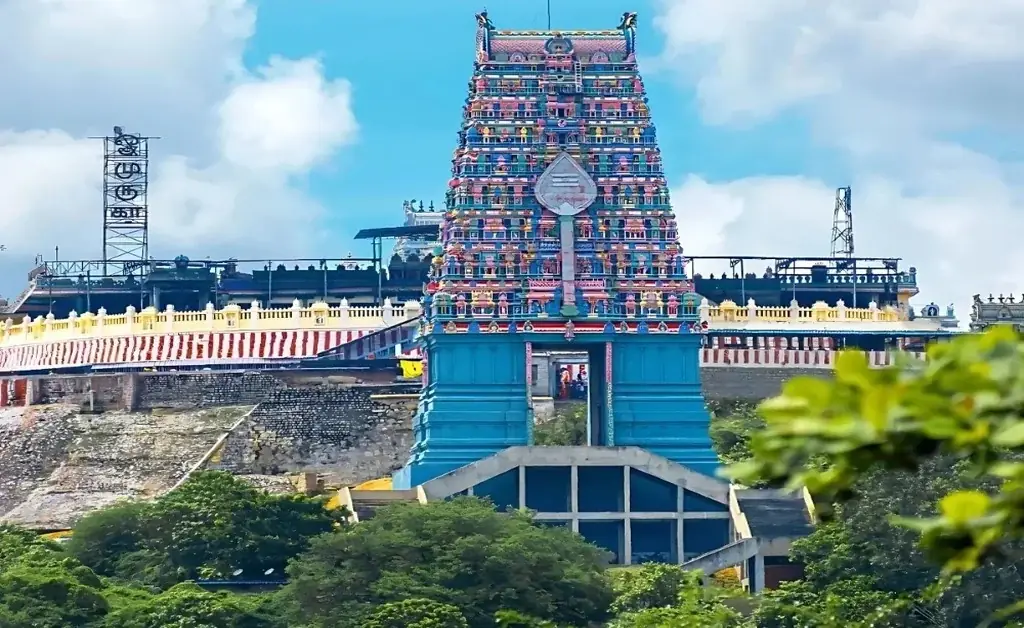
Example only: Imagine a family from north Chennai planning to visit on a Tuesday. They want general Murugan darshan rather than a sponsored ritual, and they are travelling with an elderly parent. Instead of assuming that Tuesday timings are identical to every other day, they contact the temple, confirm that the intended darshan period is operating, ask about the least strenuous entrance route, and leave enough time for traffic and the queue.
This example does not claim that a particular Tuesday schedule or crowd level is verified. It illustrates a sound planning habit: match the temple’s current information to the family’s needs. If the same family were visiting for a festival, they would need to ask additional questions about procession routes, vehicle access, and special day timings.
Carry only what is necessary. Temple rules may restrict large bags, food, cameras, or other items, and facilities can vary. Dress modestly, follow signage, keep footwear in the designated area, and avoid assuming that a familiar practice from another temple is permitted at Siruvapuri.
Plan the return as carefully as the outward journey. If your darshan depends on a ritual that may be delayed, don’t schedule an immediate bus, train, or work commitment. A little flexibility prevents a devotional visit from becoming stressful.
Temple etiquette is practical as well as devotional. Appropriate clothing, orderly queue behaviour, and attention to announcements help the temple manage visitors safely. If you’re visiting with children, explain in advance that the queue may move slowly and that the sanctum may be visible only briefly.
Before leaving home, prepare a short checklist:
Photography and mobile-phone rules should be followed even if other visitors ignore them. Do not photograph restricted areas, priests, rituals, or fellow devotees without permission. Silence or a low voice is especially appropriate near the sanctum and during deeparadhana.
Offerings should be purchased or submitted through recognised temple counters whenever possible. If someone outside the temple claims that a payment is compulsory for ordinary darshan, ask an official staff member before paying. Clear signage and a proper receipt are useful safeguards.
Senior citizens and devotees with mobility limitations should ask at the entrance about available assistance, seating, and queue arrangements. Don’t assume that a separate facility exists, but don’t hesitate to request guidance respectfully. Temple staff can explain the current arrangement better than an old online review.
Afternoon access may depend on the temple’s daily schedule and ongoing rituals. Some days may have a midday pause or restricted entry. Confirm the exact afternoon darshan period with the temple before travelling rather than relying on an undated online listing.
Today’s timings can change because of pooja, festival arrangements, maintenance, or crowd control. Check the latest official notice or contact the temple directly on the day of your visit. Ask specifically about general darshan, not only whether the premises are open.
You may find tomorrow’s timings on an official announcement or booking channel, but not every temple publishes a date-by-date schedule. If no current notice is available, call the temple and confirm the opening period, darshan availability, and any special event planned for the next day.
They may be affected by devotional observances, crowd levels, or special pooja, but a different schedule should not be assumed. Verify Tuesday timings or Sunday timings for the particular date, especially if you are travelling with a group.
There is no dependable fixed waiting time because the queue changes with the day, hour, ritual schedule, and visitor volume. Festival timings and special occasions generally require more planning. Contact the temple for current queue information and keep extra time available.
There is no universally required number of weeks or visits for general darshan. Some devotees follow a personal vow or family tradition, while others visit once. If your visit is connected with a specific religious observance, follow the guidance of your family priest or trusted spiritual adviser rather than an unverified online claim.
That depends on the current temple arrangement and the type of darshan or pooja you want. General entry, special darshan, and sponsored rituals may have different procedures. Confirm the requirement through the official temple channel before paying or travelling.
Reliable planning for Siruvapuri Murugan Temple timings begins with one simple habit: verify the date, the worship period, and the type of access separately. Don’t treat a search-result snippet or an old timetable as confirmation. Check the official source, ask whether today’s or tomorrow’s timings have changed, and keep time for queues, rituals, and travel from Chennai to Chinnambedu.
Once you have the latest information, choose the visit period that suits your purpose—morning darshan for an early start, afternoon access if it is confirmed, or evening darshan around alangaram and deeparadhana. A final call before departure can prevent a wasted journey and help you approach the temple with patience. If you’ve recently visited, sharing a dated, clearly qualified update with other devotees can also help them plan responsibly without presenting temporary timings as permanent facts.





