Physical Address
304 North Cardinal St.
Dorchester Center, MA 02124
Physical Address
304 North Cardinal St.
Dorchester Center, MA 02124
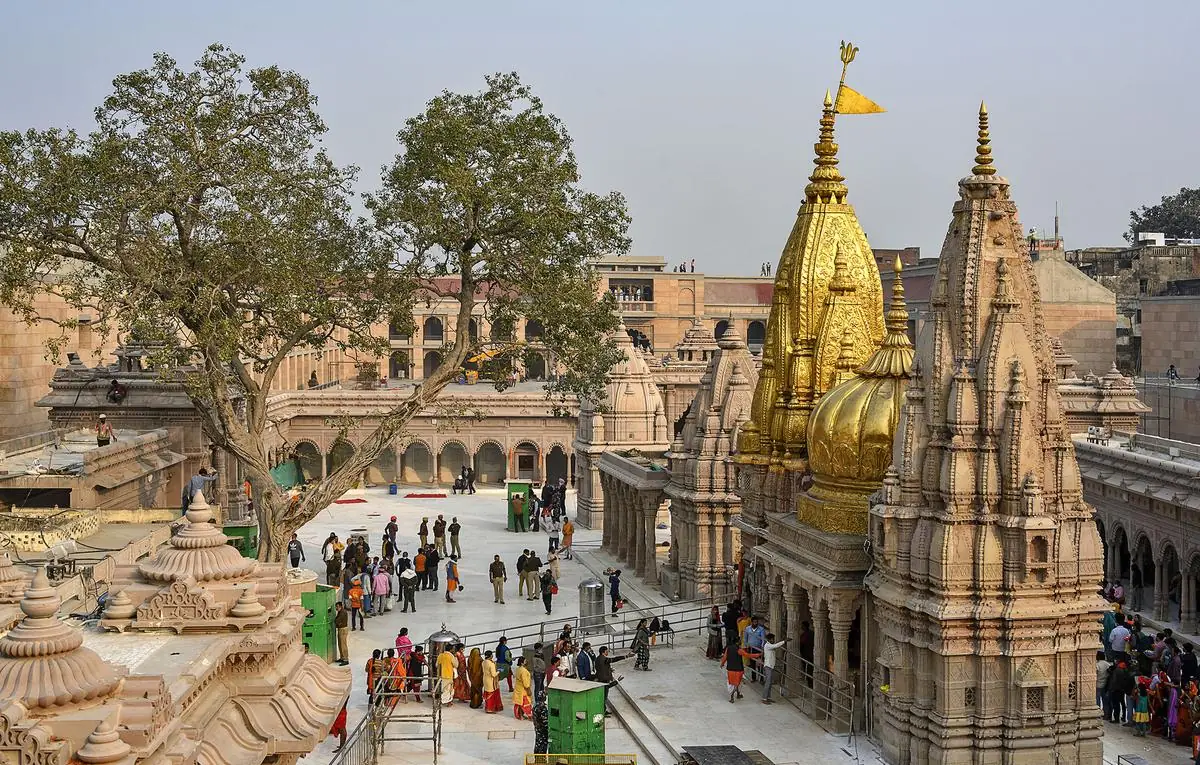
Finding the current kashi vishwanath temple vip ticket price is only one part of planning a smooth visit to Varanasi’s most revered shrine. Darshan categories, Pooja bookings, Aarti schedules, entry rules and festival arrangements can change, so relying on an old fee or social media post may create confusion at the temple entrance.
Your visit becomes easier when you know which service you need, where to check the latest official notice, how much time to allow for security and queues, and what to carry. This article explains those practical details without treating temporary prices or timings as permanent rules.
Searches for the kashi vishwanath temple vip ticket price usually refer to faster or specially arranged Darshan access. In practice, the temple administration may use separate names for services such as Sugam Darshan, special Darshan, Sparsh Darshan, Aarti bookings or ritual participation. These services aren’t necessarily identical, and a fee listed for one may not apply to another.
Prices can also be affected by the type of booking, the selected date, the number of devotees, the ritual involved and temporary administrative instructions. A fee shown on an old blog, a forwarded WhatsApp message or a travel agent’s package shouldn’t be treated as the current official rate. The safest approach is to check the temple’s official booking system or an official notice shortly before travelling.
There’s another important distinction: paying for a service doesn’t always mean you can bypass every security, identification or crowd-control procedure. All visitors may still need to pass through security checks, follow the assigned reporting time and obey instructions from temple personnel. Special access can reduce uncertainty, but it doesn’t remove the need for patience during crowded periods.
The term “VIP” is also used loosely online. Some people mean a paid Darshan ticket, while others mean a protocol visit arranged through an authorised channel.
Ask what the ticket actually includes before paying. Check whether it covers one person or a group, whether children need separate registration, whether the booking is refundable and whether a specific time slot is printed on the confirmation.
The temple’s daily rhythm includes several forms of worship rather than one single opening and closing time. General Darshan, special Darshan, Aarti services and booked Pooja rituals may each have different reporting instructions. A devotee arriving for ordinary Darshan shouldn’t assume that the procedure is the same as someone attending Mangla Aarti, Bhog Aarti, Sapt Rishi Aarti or Shringaar-related worship.
Temple schedules are especially sensitive to religious observances. Aarti timing, entry windows and queue arrangements may be adjusted on major festivals, Mondays, special lunar dates and high-footfall occasions. Local administration and security requirements can also affect movement around the Kashi Vishwanath corridor and nearby lanes in Varanasi.
Use the following table as a planning framework, not as a fixed timetable. It shows what to verify for each type of visit.
| Visit type | What to verify | Why it matters |
|---|---|---|
| General Darshan | Temple opening hours, queue entry point and daily restrictions | Walk-in access may change during rituals or heavy crowd periods |
| Sugam or special Darshan | Current ticket price, reporting time and ID requirements | The service name and access procedure may vary by notice |
| Aarti booking | Aarti name, reporting location, dress or ID rules and booking window | Aarti participation is usually more time-specific than ordinary Darshan |
| Rudrabhishek or other Pooja | Ritual duration, authorised priest arrangement and included materials | A Pooja booking may not automatically include a separate VIP entry |
| Festival-day visit | Temporary notices, route diversions and crowd-control instructions | Normal timings may not apply on peak days |
Some searches use “temple opening hours” as if they describe uninterrupted public access. That can be misleading. The shrine may remain active through several worship periods while particular visitor routes, queues or booked services operate under separate instructions.
Before making travel arrangements, start with the official Shri Kashi Vishwanath Temple Trust website or its officially identified booking channel. The trust’s website is the primary place to look for current service names, booking availability, notices and contact information.
You can also consult the temple administration’s verified announcements for temporary changes. The official source is available through the Shri Kashi Vishwanath Temple Trust website.
Read the booking page carefully instead of searching only for a number. A page may list separate options for Darshan, Aarti, Rudrabhishek, Shastri services, Sanyasi Bhojan or other religious arrangements.
The amount shown beside one service isn’t evidence of the price for another. Check the date, service title, quantity, taxes or service charges if displayed, and final payable amount before confirming.
Look for a last-updated date where one is available. If the page doesn’t clearly show whether information is current, contact the temple office using a verified number from the official website rather than a number supplied by an unknown intermediary. This is particularly important if a person claims to offer guaranteed VIP access outside the recognised booking process.
Keep a screenshot or PDF of the confirmation, but don’t rely only on a screenshot of a payment page. A successful payment and a confirmed booking aren’t always the same thing. Your confirmation should ideally show the devotee’s name, service, date, reporting instruction and booking or reference number.
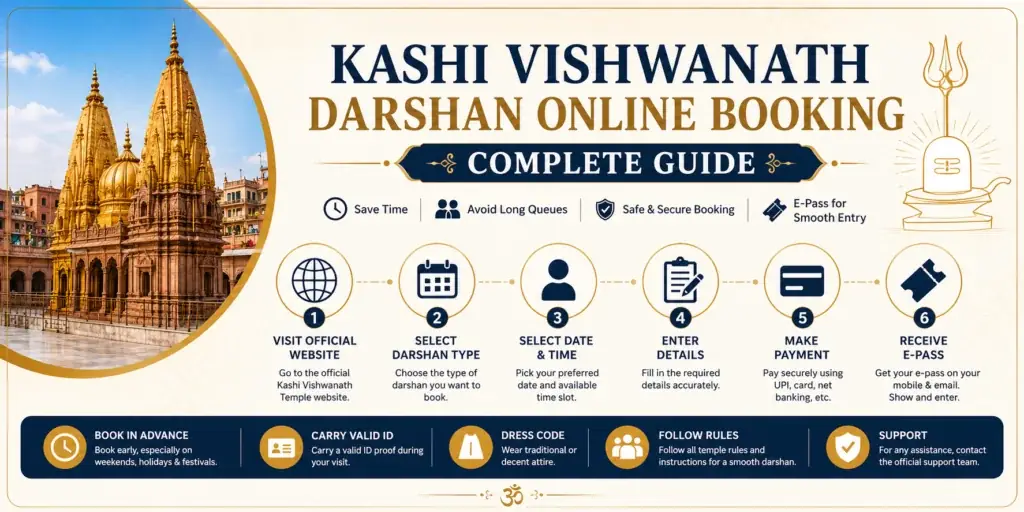
Online reservations are useful because they allow you to prepare before reaching Varanasi, but the process should be handled carefully. Begin by entering the official booking portal manually or by using the link provided on the temple trust’s verified website. Avoid clicking payment links sent through unsolicited messages, even if the sender uses temple photographs or religious language.
Don’t book multiple overlapping services unless the official instructions clearly allow it. A devotee who books an early Aarti and a separate Pooja with a tight gap may find that the queue, security process or walking distance makes both difficult. Religious bookings are time-sensitive, and a late arrival may not be handled like a normal walk-in visit.
If payment fails, first check whether the amount has been debited. Don’t immediately repeat the transaction several times. Save the transaction reference, wait for the portal’s stated processing period and use the official support route for clarification.
“VIP Darshan” is a popular search phrase, but it may not be the formal name used for every paid access service. The official portal might describe an option as Sugam Darshan, special Darshan or another service. That wording matters because each category can have its own eligibility, queue, reporting time and price.
Sparsh Darshan generally refers to an arrangement associated with coming closer to the sacred shrine or having a particular form of access, but the exact availability and procedure must be confirmed from the temple administration. Don’t assume that an old description of Sparsh Darshan applies every day. Crowd control, security instructions and ritual schedules can affect whether it is offered.
Likewise, a Rudrabhishek booking is a Pooja arrangement, not automatically a promise of a separate fast-entry ticket. A devotee asking a “Rudrabhishek Shastri” or priestly service provider to arrange a ritual should verify whether the booking is official, what the ritual includes and whether the priest or Shastri is authorised for that arrangement.
Online searches may also show phrases such as “book Sugam,” “book Rudrabhishek,” “book Sanyasi” or “Aarti book.” Treat these as search language, not as proof that every page using those words is an official service provider. The safest confirmation comes from the temple’s own booking system, receipt and published contact channel.
Ask whether the service provides only entry, includes a ritual, or includes both. Confirm whether the booking is for one person or a family group. If an intermediary promises that you’ll avoid every queue, obtain written details and compare them with the official terms; exaggerated guarantees are a warning sign.
You should also ask about children, elderly devotees, wheelchair access, mobile phones, footwear and permitted offerings. These practical rules can affect your experience more than a small difference in ticket price.
Devotees may be interested in Mangla Aarti, Bhog Aarti, Sapt Rishi Aarti, Shringaar-related worship or other daily religious services. Each has a devotional purpose and a distinct practical arrangement. Aarti booking may require you to report before the worship begins, while a Pooja appointment may involve a designated priest, a specified duration and instructions about offerings.
Names can appear in different spellings online. “Sapt Rishi” may be written as “Saptarishi,” and “Rudrabhishek” may appear as “Rudra Abhishek.” Focus on the official service description and booking reference rather than spelling differences in search results.
For Rudrabhishek, confirm whether the fee covers the priestly service, materials, temple entry, a receipt or only the ritual arrangement. Some private agents use phrases such as “every twenty years Rudrabhishek” or “book twenty years” in promotional messages.
Such unusual wording should be treated cautiously unless it appears in an official temple notice with a clear explanation. It isn’t a basis for assuming a standard temple tariff.
Terms such as Dainik Pooja, Day Bhog, Mid Day worship or Shastri booking may also appear in search results and devotional packages. They can refer to different forms of service, so don’t purchase one simply because it sounds similar to the ritual you want. Ask the administration what the service actually involves and whether devotees can attend in person.
Visitors should remember that a ritual booking doesn’t replace basic temple discipline. Dress respectfully, follow the instructions of the priest and staff, don’t obstruct other worshippers for photographs and avoid carrying prohibited items. Your booking is an arrangement for participation, not permission to disregard the temple’s rules.
Give yourself more time than the printed reporting slot appears to require. Varanasi’s old-city lanes around the temple can be busy, and the final approach may involve walking from a vehicle drop-off point. Traffic restrictions, processions, security checks and crowd diversions can add delay even when your hotel is nearby.
Carry the original identity document mentioned in the booking instructions, along with the confirmation number. Keep your phone charged, but don’t assume that phones, cameras, large bags or outside food will be permitted inside every area. Storage arrangements, if available, can have their own rules and capacity limitations.
Use official contact details for questions about the Kashi Vishwanath temple VIP ticket price, Aarti booking or Pooja timing. A travel agent may be useful for transport and accommodation, but the temple administration should be the authority for entry, ritual and ticket conditions. Never share an OTP or card PIN with anyone claiming to “activate” a Darshan pass.
Families should plan around the needs of older people and children. A long standing queue, early-morning reporting time or a crowded lane may be physically demanding. Ask the official channel about accessibility arrangements rather than assuming that a paid ticket guarantees a particular type of assistance.
Ordinary weekday planning can’t be transferred automatically to Mahashivratri, Shravan-period visits, major Mondays or other important occasions. These dates often attract more devotees, and the administration may issue temporary instructions for routes, passes, barricades, queues, vehicle movement and service availability. A ticket purchased under a normal schedule may not explain all festival-day restrictions.
Weather and travel season also influence the practical experience. Extreme heat, monsoon rain and winter fog can change how long it takes to reach the temple and how comfortable it is to wait outside. The official schedule may remain listed while the surrounding access arrangements become slower.
Label: illustrative example, not a published price or timetable. Imagine that a family books a paid morning Darshan for a regular Tuesday. Two days before travel, the temple administration publishes a festival notice that changes the reporting route and moves the verification point away from the usual lane. The booking may remain valid, but the family still needs to follow the new route and arrive earlier.
This example reflects a general operational reality at major Indian temples: a confirmed service and the day’s physical access plan are related but not identical. It isn’t being presented as a specific historical event or as proof of a particular Kashi Vishwanath policy. For a real visit, the verified source is the latest notice from the Shri Kashi Vishwanath Temple Trust or temple administration.
For peak days, check notices again on the day before departure and once more on the morning of the visit. If you’re travelling with a large group, appoint one person to monitor official updates and distribute the final instructions. That small step prevents different members from arriving at different gates or carrying inconsistent documents.
The most frequent mistake is searching for a price without identifying the service. A person may see a fee for Aarti, assume it is a VIP Darshan charge and then discover that the actual entry procedure is different. Always read the service title, inclusions and reporting rules together.
Another mistake is treating a third-party “guaranteed entry” message as official. Temple-related scams often rely on urgency: the sender claims that only a few passes remain or asks for immediate payment through a personal account. Use the official portal and retain the receipt.
Some visitors arrive at the temple with a digital payment screenshot but no completed booking reference. Others enter the wrong devotee name, select the wrong date or fail to notice a separate reporting time for Aarti. Small errors can become difficult to correct once you’re in Varanasi.
These habits are worth avoiding:
Be especially careful with videos and social posts. A Shastri video, a traveller’s vlog or an old review can help you understand the general atmosphere, but it may not represent the current price, access route or temple policy. For current information, official written instructions carry greater weight.
The temple may offer paid or specially arranged Darshan services, but the formal name, availability and rules can change. Don’t assume that every online reference to “VIP entry” describes an official current service. Check the temple trust’s booking portal or verified administration notice.
There isn’t one permanent amount that can safely be quoted for every paid access category. The price may depend on the specific service, date and current temple notice. Verify the amount at the time of booking and save the final receipt.
First check whether Sparsh Darshan is currently listed as an available service and read its eligibility and reporting instructions. If it isn’t listed, contact the official temple administration rather than paying a third party that promises access.
Not automatically. A Rudrabhishek booking may concern the Pooja itself, while Darshan access may be a separate service. Read the inclusions or ask the official booking office before making payment.
Daily worship follows a religious schedule, but public access, reporting time and crowd arrangements can vary by day and occasion. Festival notices and special security instructions may alter the visitor procedure.
Crowds vary by festival calendar, Mondays, school holidays, weather and local events, so no month should be guaranteed as quiet. Check the Hindu calendar and current local advisories, then keep flexibility in your itinerary.
Save the transaction reference and check the booking status before trying again. Use the official support contact shown on the temple portal. Don’t send another payment to an unverified number.
The safest way to handle the kashi vishwanath temple vip ticket price is to treat it as changeable booking information, not as a permanent public tariff. Confirm the exact service, current amount, reporting time and entry rules through the official temple channel before you travel to Varanasi.
Keep your confirmation, arrive with time to spare and check festival notices again shortly before Darshan. A little verification protects both your budget and your devotional plans—so before leaving for Kashi Vishwanath, will you check the latest official schedule rather than relying on an old forwarded message?





