Physical Address
304 North Cardinal St.
Dorchester Center, MA 02124
Physical Address
304 North Cardinal St.
Dorchester Center, MA 02124
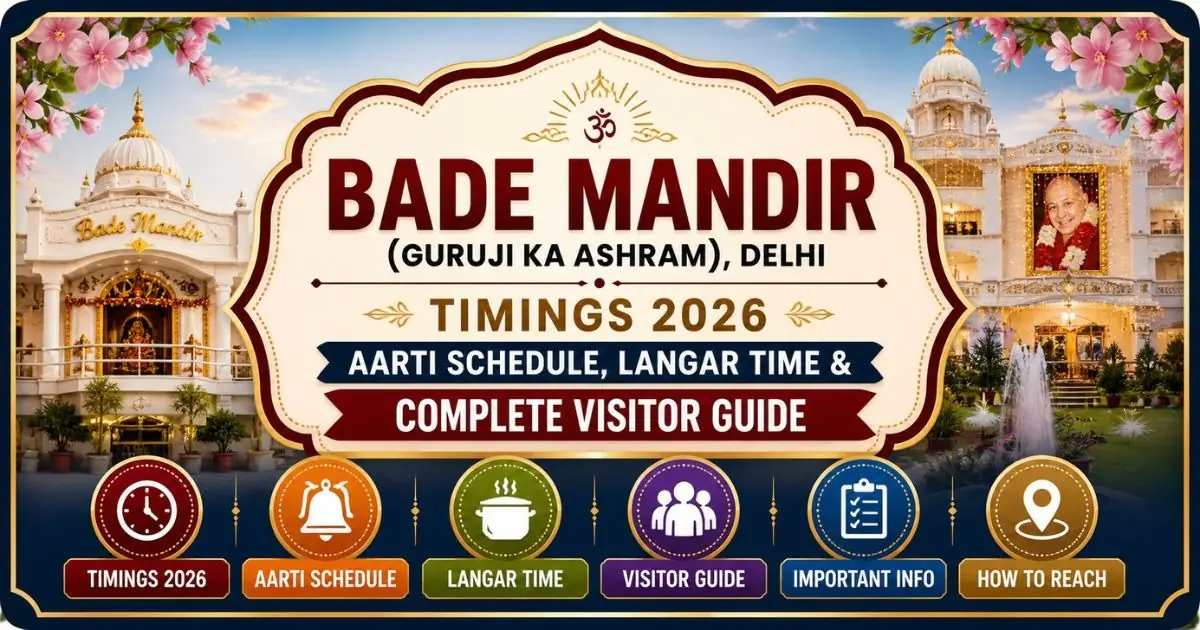
Bade mandir timings can change according to the day, satsang arrangements, festivals, and instructions issued by Guruji’s ashram. If you’re planning a visit to Bade Mandir in Delhi, knowing the likely darshan pattern is useful, but confirming the latest notice before leaving is even more important.
This article explains how visitors can check opening hours, understand darshan and pooja schedules, plan around busy days, and avoid relying on outdated social-media posts. It also covers practical points such as entry, reporting time, dress, photography, accessibility, and festival-day changes.
The name “Bade Mandir” is commonly used for Guruji’s main mandir and ashram associated with Guruji Maharaj in the Chattarpur area of New Delhi. Since the management may issue instructions for particular occasions, treat any general timing as a planning indication rather than a permanent promise.
People searching for Bade Mandir timings are often asking several different questions at once. They may want to know when the gates open, when darshan begins, whether a special pooja is taking place, how long the queue will take, or whether the mandir is open on a particular weekday. These are separate details, and a single “opening time” does not always answer all of them.
At a religious complex, public access may be organised in stages. The outer entrance can open before the main darshan area, while a special prayer, satsang, or seva activity may temporarily affect movement.
On an ordinary day, visitors may be allowed to enter during a broad period rather than during one short appointment slot. On a large religious occasion, the same space may operate under crowd-control instructions.
It’s also useful to distinguish between darshan and pooja. Darshan generally refers to the devotee’s opportunity to see and offer prayers before the sacred presence.
Pooja is a more structured act of worship, which may be conducted by authorised persons or offered through a specific arrangement. A visitor who arrives during darshan hours may not automatically be entitled to attend a particular pooja service.
Publicly circulated timings for Bade Mandir have not always appeared in one consistent, permanently maintained timetable. Different online pages and visitor messages may show different hours, and old festival notices can continue circulating long after the event. For that reason, the safest approach is to confirm the date-specific instruction through the mandir’s current official communication before you come.
There is no responsible reason to present an unverified Monday-to-Sunday schedule as fixed. Regular access can be affected by internal prayer arrangements, maintenance, seasonal crowd levels, or a notice from the trust. A timing that applied on one Wednesday may not necessarily apply to the next Wednesday, particularly if a special event falls nearby.
For planning purposes, visitors often distinguish between weekdays and weekends. Saturday and Sunday generally attract more devotees because many people have time away from work or school.
A Friday visit may also be busier if devotees are preparing for a weekend programme. That does not prove that the mandir follows a different published schedule on each of these days; it simply means that queue conditions and entry arrangements may vary.
The table below shows how to interpret regular-day planning information without treating it as a guaranteed timetable. The “status” column is deliberately cautious because the official date-specific notice should take priority over general expectations.
| Visit day or situation | What you may reasonably plan for | What must be confirmed |
|---|---|---|
| Monday to Thursday | Usually easier to plan around than a major weekend gathering, subject to normal access arrangements. | Whether the mandir is open to general visitors on your chosen date and the active darshan window. |
| Friday | Potentially increasing visitor numbers as the weekend approaches. | Any special evening prayer, satsang, or altered movement instructions. |
| Saturday | Expect a greater possibility of queues and a slower entry process. | Reporting instructions, parking limitations, and whether registration is required. |
| Sunday | Often a popular day for family visits and devotees travelling from nearby areas. | Current gate hours, crowd-control measures, and any special programme timetable. |
| Festival or major observance | Special arrangements may replace the ordinary visitor pattern. | Everything: opening, entry, booking, reporting, permitted items, and closing. |
The word “today” is important. A search result that says the mandir is open daily may not account for a same-day notice, a restricted programme, or a temporary closure. Before travelling, check the latest message from the official mandir or trust channel, and pay attention to the date and time at which the notice was posted.
If you can’t find a current notice, don’t assume that a third-party directory has the final answer. Use the latest official contact or announcement available, and ask a precise question: “Is general darshan open on [date], and what is the reporting time?” That is more useful than asking only for a broad opening hour.
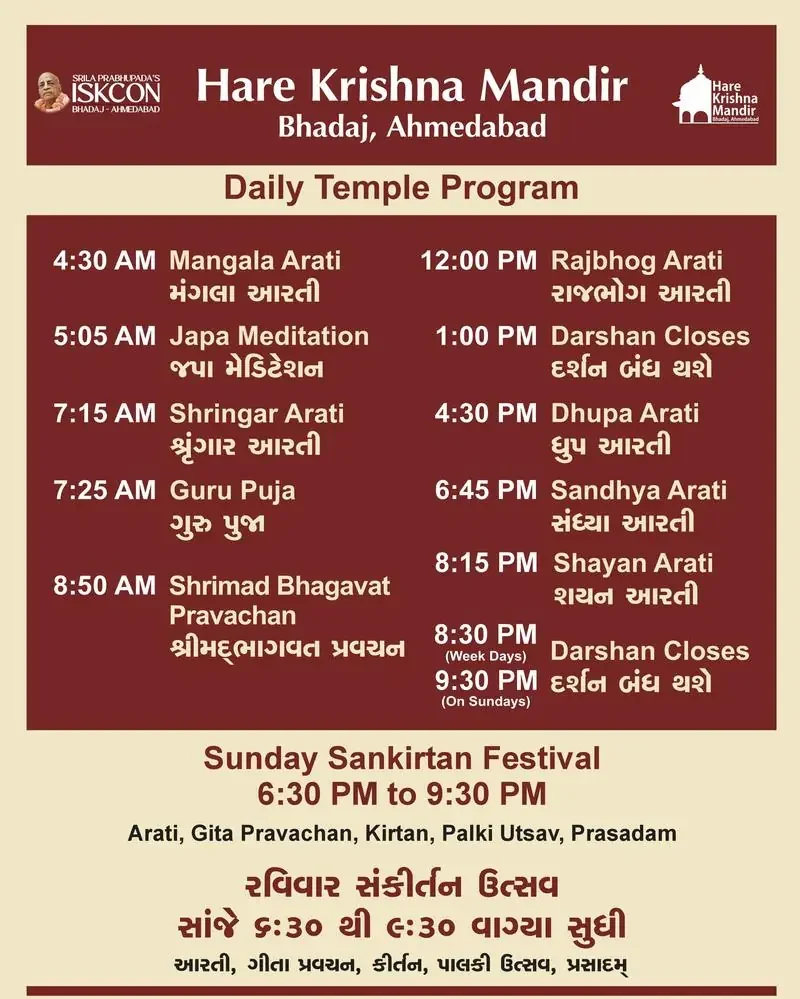
Darshan is usually the central purpose of a visit, but a mandir’s internal schedule can contain several layers of activity. There may be a period for public entry, a time for aarti, a separate pooja offering, and intervals during which devotees are asked to remain seated or move through an area. These arrangements may be especially important at a busy ashram, where a large number of people need to be accommodated respectfully.
Aarti is a devotional ritual involving light and prayer. Attendance at aarti may be open to visitors when the management permits it, but that should not be assumed from the general darshan timing.
The aarti schedule can be changed for an observance, and the area may fill before the ritual begins. If attending aarti matters to you, ask for the reporting time rather than arriving at the advertised start time.
Special pooja services may require prior registration, an offering process, or instructions from authorised volunteers. Avoid paying an unofficial intermediary who promises a guaranteed place, priority access, or a private meeting with Guruji. A genuine booking instruction should identify the responsible trust or office and provide a clear process that can be checked independently.
| Activity | Meaning for a visitor | Timing question to ask |
|---|---|---|
| General darshan | Opportunity for devotees to offer prayers and receive blessings according to the active visitor arrangement. | When does general entry begin, and when is the last entry accepted? |
| Aarti | A collective devotional prayer that may have limited space or movement rules. | What is the reporting time, and can visitors attend without separate registration? |
| Special pooja | A structured worship service that may require an authorised booking or offering. | Is prior booking required, and where is the official registration point? |
| Satsang or programme | A scheduled spiritual gathering that may alter ordinary darshan access. | Will general visitors be admitted during the programme? |
| Prasad or langar arrangement | A devotional food or service arrangement governed by the venue’s instructions. | Where should visitors queue, and are there separate timings? |
Rules can be motivated by compassion and practical crowd management rather than by a desire to make a visit difficult. Follow volunteer instructions, keep conversations quiet, and avoid blocking pathways while trying to watch a ritual. A calm visit helps other devotees experience the mandir with dignity and peace.
Booking information is one of the least reliable areas of informal online advice. Some visits may not require a ticket or advance appointment, while a special event, pooja, or high-demand programme may use registration. The presence or absence of a booking system can change, so never assume that an old form, payment number, or social-media message is still active.
When an official booking facility exists, the page or notice should make the purpose clear. It should tell you whether you are booking darshan, a pooja service, a programme seat, accommodation, or some other facility. Read the conditions before paying, especially the cancellation policy, identification requirement, reporting deadline, and rules for children or accompanying family members.
Reporting time is not always the same as the start time. If a booking says that you must report before a programme, arriving late could mean losing access even if the activity has not started. Build a buffer for Delhi traffic, parking, walking, security screening, and finding the correct entrance.
One useful real-world comparison comes from established shrine administration in India. The Shri Mata Vaishno Devi Shrine Board publishes visitor-facing information and uses official systems for services whose availability can depend on the date and operational conditions. That example shows why devotees should rely on the relevant shrine authority rather than an old search snippet; the official Shri Mata Vaishno Devi Shrine Board visitor information demonstrates how an authorised body communicates services and conditions directly.
This comparison does not mean that Bade Mandir follows the Shrine Board’s system. It illustrates a principle: a legitimate booking process should come from the institution responsible for the visit, and the conditions should be visible before a devotee commits money or travel time.
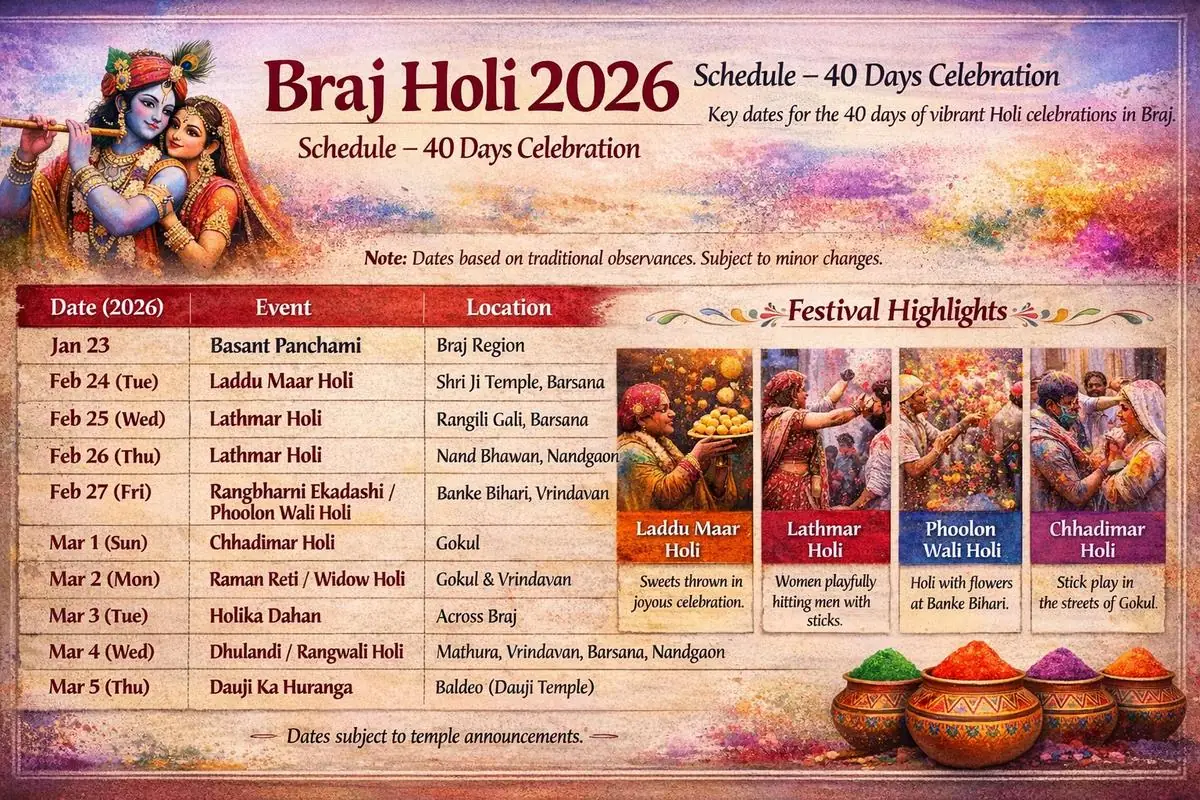
Festival days need separate planning. Holi is one example frequently associated with searches for Bade Mandir timings, but a festival-day schedule should never be inferred from an ordinary weekday. The mandir may announce special entry windows, crowd limits, route changes, or restrictions on items that visitors can carry.
Large gatherings can also alter the meaning of “open.” The premises may be active, yet general darshan may be limited to registered devotees or to a particular period. In another situation, the gates may open for a programme but close earlier than usual because of crowd capacity. Check the notice for the exact visitor category covered by the announcement.
Seasonal conditions matter even when the formal timetable stays unchanged. Delhi summers can make waiting outdoors uncomfortable, while winter mornings may bring fog, cold, and slower traffic.
Monsoon rain can affect walking routes and footwear storage. A practical visit plan should account for water, shade, appropriate clothing, and time spent waiting rather than assuming that the published entry window equals the time you’ll spend inside.
Festival notices may also specify separate instructions for:
Don’t rely on a photograph of a notice without checking whether it is current. A message mentioning “Holi timings” could refer to a previous year, and festival dates change annually. The safest practice is to record the event date first, then obtain the notice issued for that specific occasion.
A mandir visit is not only a timing exercise. Visitors are expected to respect the devotional atmosphere, the instructions of volunteers, and the privacy of fellow devotees.
Dress neatly and modestly, with clothing that allows you to sit, stand, and walk comfortably in a religious setting. If a current notice gives a specific dress instruction, follow that notice over general advice.
Some religious venues ask visitors to remove shoes before entering designated areas. Others have separate shoe counters or instructions for footwear.
Carrying expensive items can make a crowded visit harder, especially if storage is unavailable. Keep only what you need and check the current policy before bringing cameras, large bags, food, or recording equipment.
Photography rules can differ by area. Even where phones are permitted on the premises, photography may be restricted near the sanctum, during aarti, or in spaces where devotees are praying.
Don’t photograph people without consent, and don’t use flash during a ritual. If a volunteer asks you to put away a device, comply immediately.
Identification requirements depend on the service. General entry may not involve the same documents as a registered pooja or special programme.
Carry a government-issued photo ID if your booking notice asks for it, and make sure the name on the confirmation matches the document where required. Never publish another visitor’s booking details or personal information online.
Accessibility should be considered before the journey, especially for elderly visitors, wheelchair users, people with limited mobility, and families with infants. Ask the official contact about step-free access, vehicle drop-off, seating, accessible toilets, and whether an accompanying person can enter. Don’t assume that a large religious complex has identical access at every gate or building.
There is no honest universal answer to the question of waiting time. Queue length can depend on the day, time, weather, event schedule, security checks, and the number of visitors arriving together. A short weekday visit and a major Sunday programme may feel like entirely different experiences even if both are described as “open.”
Plan with a margin rather than scheduling darshan between two tightly timed commitments. Delhi traffic can change quickly, and the final approach to a busy venue may take longer than the journey shown by a navigation app. If you’re travelling with older relatives or children, include time for rest, water, toilet access, and movement at a slower pace.
Early arrival isn’t automatically best. A large group may arrive before the gates open, creating a queue outside.
Late afternoon may be more comfortable in some seasons, yet it could coincide with an evening programme. The right choice depends on the current notice and your purpose for visiting.
| Planning factor | Why it affects your schedule | Practical response |
|---|---|---|
| Weekend crowd | More devotees may arrive during personal leisure time. | Allow additional queue and security time. |
| Festival programme | Ordinary darshan may be replaced or restricted. | Read the event-specific notice and follow reporting instructions. |
| Traffic and parking | The final approach may be slower than expected. | Leave a buffer and confirm the advised drop-off point. |
| Older or disabled visitors | Walking, stairs, and standing may take longer. | Ask about accessibility before travelling and avoid a rushed itinerary. |
| Weather | Heat, cold, rain, or fog can make waiting difficult. | Carry suitable clothing and water where permitted. |
Remember that a peaceful visit is more valuable than forcing a packed schedule. If the queue is long, remain patient and follow the instructions given by the seva team. The atmosphere of love, faith, and shared respect is part of the experience, but it depends on visitors cooperating with one another.
The first mistake is treating a search-engine snippet as an official announcement. Search engines may display information copied from an old directory, a visitor review, or a page that has not been updated. A precise-looking time can therefore be less trustworthy than a current but less detailed notice from the mandir.
The second is confusing the venue with another place. “Bade Mandir” is a familiar expression, and similar names can appear in different cities or neighbourhoods. Confirm the address, entrance, and event organiser before booking transport or accommodation.
A third mistake is assuming that every visitor has the same access. General darshan, special pooja, aarti, satsang, seva, and accommodation may each have separate instructions. Ask what your confirmation actually permits, especially if someone has offered you a package that combines several services.
Visitors sometimes arrive at the closing time and expect to enter. A stated closing hour normally means that public movement must finish by then, not that a new queue can enter at the last minute. Ask about last entry, not merely closing.
Other avoidable problems include:
Good preparation doesn’t make the visit less spontaneous. It reduces preventable stress and leaves you more present for prayer, reflection, and the blessings you came to seek.
A single permanent timetable should not be assumed. General access and special programmes may follow different arrangements, so confirm the current date-specific notice through the mandir or trust’s official communication before visiting.
Sunday is commonly treated as a likely visiting day by devotees, but that does not guarantee unrestricted entry on every Sunday. Check whether general darshan is available and whether a special programme changes the gate or reporting instructions.
They may be different in practice because crowd levels and programmes vary, but you should not rely on an unofficial weekday chart. Ask for the active schedule for your chosen Saturday, Monday, Wednesday, or Friday.
Questions about menstruation and temple entry involve personal faith, family practice, and the rules of the particular institution. Don’t assume a general internet answer applies to this mandir. Ask the official visitor contact respectfully about the current policy, and follow the instructions issued by the management.
Holi arrangements can change from year to year, with special crowd and entry procedures. Use the notice issued for the relevant Holi date rather than an old post or a schedule from another year.
That depends on the current arrangement and the type of visit. Ordinary access may not use the same process as a special pooja or programme. Confirm whether your intended activity requires registration before making travel plans.
Arrive according to the reporting time given in the current official notice, with extra time for traffic, security, walking, and queues. If no reporting time is published, ask the mandir directly instead of choosing an arbitrary arrival time.
Photography rules may vary by location and occasion. Follow signs and volunteer instructions, and keep phones and cameras away from restricted areas or rituals if asked.
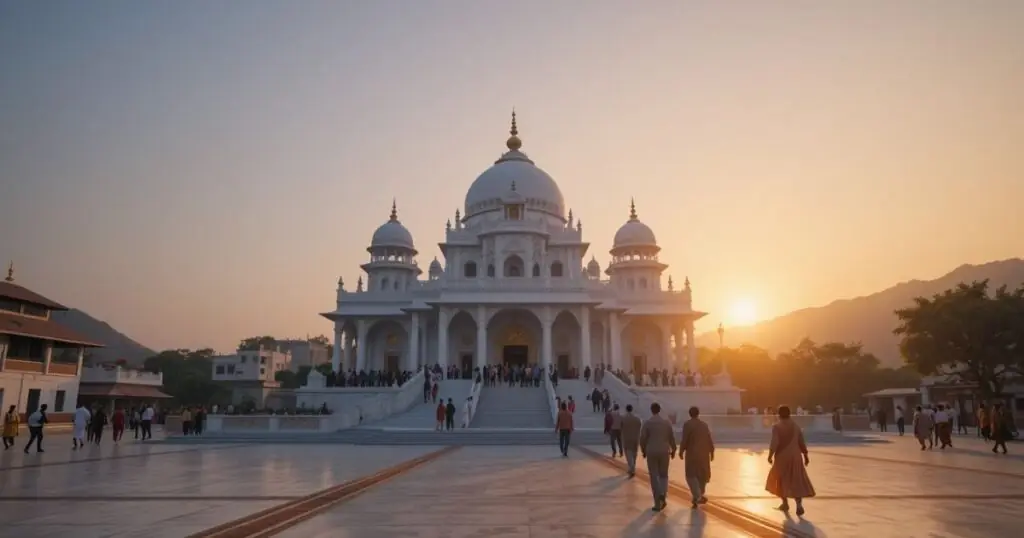
Reliable Bade Mandir timings are date-sensitive, especially on Sundays, festivals, Holi, and days with a special pooja or satsang. Use general information only to begin planning; before you travel, verify the active darshan window, last entry, reporting requirement, booking status, and visitor rules through the authorised mandir or trust communication.
A little checking can make a great change to your day. Save the latest notice, travel with patience, and ask directly if any detail is unclear. Before setting out for Guruji’s mandir, make one final check: is the information current for your date, and does it apply to the kind of visit you intend to make?





