Physical Address
304 North Cardinal St.
Dorchester Center, MA 02124
Physical Address
304 North Cardinal St.
Dorchester Center, MA 02124

Arunachalam Temple timings matter because a visit to Tiruvannamalai often includes more than a quick darshan. Devotees may plan around morning rituals, evening worship, abhishekam, temple closing time, and the full moon Girivalam around Arunachala Hill.
Since schedules can change for festivals, special rituals, crowd control, or temple administration decisions, relying on an old timetable can lead to a wasted journey. The practical details below explain how to check current timings, understand common pooja periods, plan Giri Pradakshina, and prepare for entry without treating unofficial information as final.
You’ll also find guidance on tickets, online booking, Sunday visits, travel from Tiruvannamalai railway station, and what to do when the published schedule differs from the arrangements at the temple.
Arunachalam Temple, formally known as Arunachaleswarar Temple, is one of the most important Shaiva temples in Tamil Nadu. It is located in Tiruvannamalai and is associated with Arunachaleswarar Swamy and Unnamulai Amman. Because worship continues through several daily ritual periods, the hours available for ordinary devotees may not be identical throughout the day.
A timetable found on a travel page or social media post may describe a normal day, while your visit could coincide with a festival, a procession, a special abhishekam, or a security-related restriction. The published daily opening hours should therefore be treated as a planning reference, not as a permanent guarantee. The same caution applies to temple closing time: closing arrangements can involve the end of public entry, completion of a ritual, or closure of particular sanctum access, and these aren’t always the same moment.
Several factors can affect temple darshan timings:
For that reason, check the official temple website, official trust or government notice, authorised booking portal, or temple helpline shortly before travelling. If no current official schedule is available online, call the temple office or ask at the official enquiry counter after arrival. Don’t assume that a result labelled “tomorrow” is live unless it carries a recent official update.
Visitors usually search for morning darshan, evening darshan, and the temple’s daily opening hours. These terms are useful, but they don’t always describe one uninterrupted public-access period. Arunachaleswarar Temple may have intervals in which the sanctum is occupied by a ritual, doors are temporarily managed, or a queue is paused while worship is conducted.
On a regular day, the most practical approach is to divide your visit into three planning windows: early morning, the middle of the day, and evening. Early morning is often preferred by devotees who want a quieter atmosphere and who wish to attend early morning rituals.
The middle of the day may be less convenient if a pooja or meal offering affects general entry. Evening can be spiritually significant and visually attractive, but it may also become busy after work hours, during weekends, and before special worship.
Do not read “open” as “every shrine is continuously available.” Large temples contain several prakarams, subsidiary shrines, mandapams, and routes for different forms of worship. A visitor may be permitted to enter the complex while a specific inner area is temporarily closed. Ask staff which queue is operating for ordinary darshan and whether the stated timing refers to the whole premises or a particular shrine.
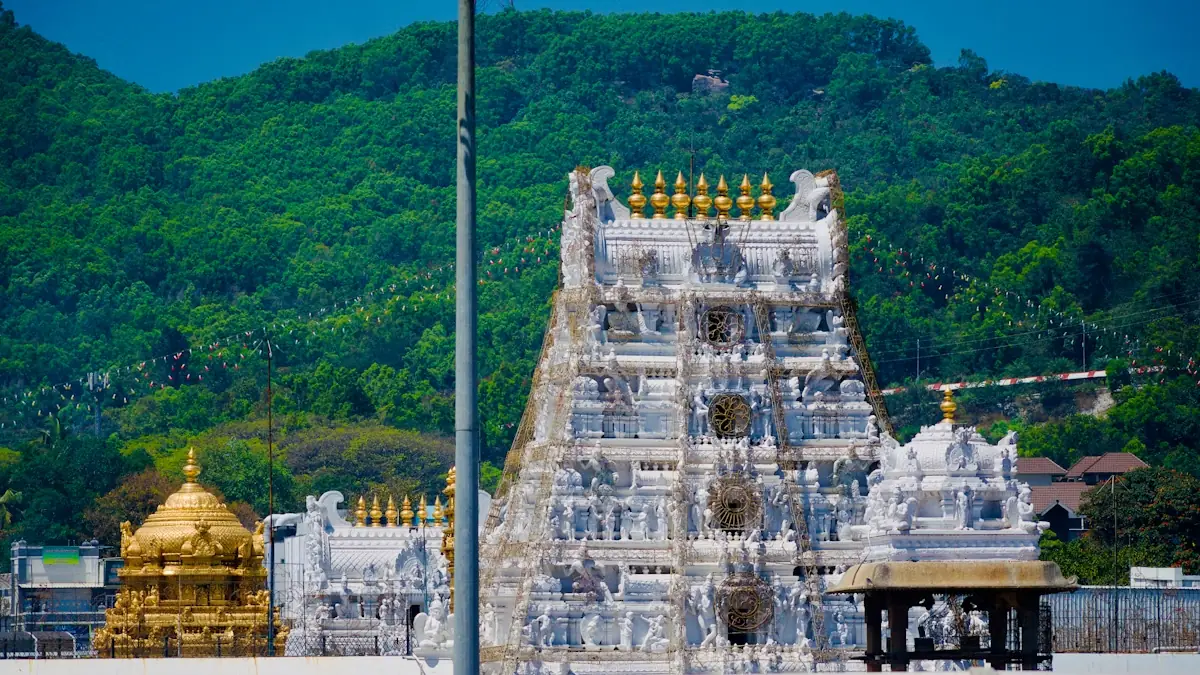
Start with the official source and record the date on which you checked it. Then allow extra time for footwear deposit, security screening, walking between entrances, queue movement, and local traffic.
If your train arrives close to a desired pooja, don’t plan to reach the sanctum at the exact starting minute. A buffer is especially important for first-time visitors who aren’t familiar with the temple’s layout.
The following table is a planning framework, not an official timetable. It shows what to verify rather than supplying unconfirmed clock times.
| Visit purpose | Information to confirm | Why it matters |
|---|---|---|
| Morning darshan | First public-entry time and early ritual restrictions | Entry may begin after a ritual rather than at the time devotees expect. |
| Pooja attendance | Exact ritual name, reporting point, and whether a ticket is required | Different poojas can have different access rules. |
| Afternoon visit | Temporary closure or reduced public access | Some worship periods may interrupt ordinary darshan. |
| Evening darshan | Last entry, queue cut-off, and temple closing time | Reaching the outer gate before closure doesn’t always guarantee inner-sanctum access. |
| Festival visit | Special entry, barricades, transport restrictions, and revised schedule | Festival operations can differ greatly from a normal day. |
Many searches for Arunachalam Temple timings actually mean pooja timings. Devotees want to know when they can witness or participate in worship such as Kala Santhi Pooja, Uchikala Pooja, Sayaratchai Pooja, and Arthajama Pooja. These names refer to traditional worship periods in a Shaiva temple, but the public experience depends on the day’s official arrangements.
Kala Santhi Pooja is generally associated with morning worship, while Uchikala Pooja is connected with the midday period. Sayaratchai Pooja is an evening observance, and Arthajama Pooja is associated with the night.
The presence of a ritual in the schedule doesn’t automatically mean every visitor can stand inside the same area or receive a separate paid service. Some rituals may be observed from a designated location, while others may involve restricted sanctum access.
Abhishekam timings require particular care. An abhishekam can be a routine temple service, a sponsor-supported offering, or a special arrangement connected with a festival or personal prayer.
The name of the service, eligible deity, reporting time, ticket category, dress expectations, and permitted items should be confirmed through an authorised channel. Never pay an unknown intermediary who promises guaranteed access to Arunachaleswarar Swamy or Unnamulai Amman.
These labels help you understand a notice, but they don’t replace the current notice itself. A ritual can begin at a different time on a festival day, and public viewing may be suspended while the temple completes the ceremony. If attending a pooja is central to your trip, plan to arrive early and ask the official counter where devotees should report.
Not every temple visit requires a ticket, and not every paid service provides a faster route. The terms “darshan ticket,” “special darshan,” and “VIP darshan” are sometimes used loosely by agents and unofficial websites. Their meaning can change according to the temple’s current arrangements, so you should verify the exact service before making a payment.
First, identify whether you need ordinary darshan, a paid special queue, a pooja ticket, an abhishekam service, or a donation-linked privilege. These are separate categories in many temple systems. A payment receipt should clearly identify the temple, service, date, number of devotees, reporting instructions, and any terms about cancellation or transfer.
Online booking, where available, should be completed only through a portal linked from an official temple, trust, or government source. Check the web address carefully. A page that copies the temple name, uses urgent language, or asks you to send money to a personal UPI account shouldn’t be treated as an official booking facility.
VIP darshan should be interpreted cautiously. Some temples have officially designated special arrangements; others may not offer a permanent VIP category at all.
A person who claims to bypass every queue for cash isn’t necessarily connected with temple administration. Ask for written confirmation or an official receipt, and keep your transaction record.
If online slots aren’t visible, that doesn’t prove that the temple is closed. The system may be used only for selected services, while ordinary darshan remains managed at the entrance. The official helpdesk is the safest place to clarify the difference.
Giri Pradakshina, commonly called Girivalam, is the circumambulation of Arunachala Hill. Pilgrims walk along the established route, traditionally covering about 14 km, though the exact distance experienced can vary slightly depending on where you start, detours, temporary barricades, and the route you follow. It is a distinct devotional activity from entering Arunachaleswarar Temple for darshan.
People often ask about the Girivalam starting time or whether they can begin at 1 a.m. There may not be one universally enforced start time for every ordinary night.
Personal walking plans, safety conditions, crowd management, local restrictions, road arrangements, weather, and festival operations all matter. On a full moon night, many devotees begin at different hours, and the route can remain active for a long period, but that doesn’t mean every access point or facility operates continuously.
For a safer plan, check local announcements on the day of your walk. Ask about traffic diversions, lighting, drinking-water points, medical assistance, footwear customs, and any restrictions on vehicles.
During Pournami and major festival periods, road movement can be slower than expected. A walking time that looks manageable on a quiet day may feel very different in heat, rain, or dense crowds.
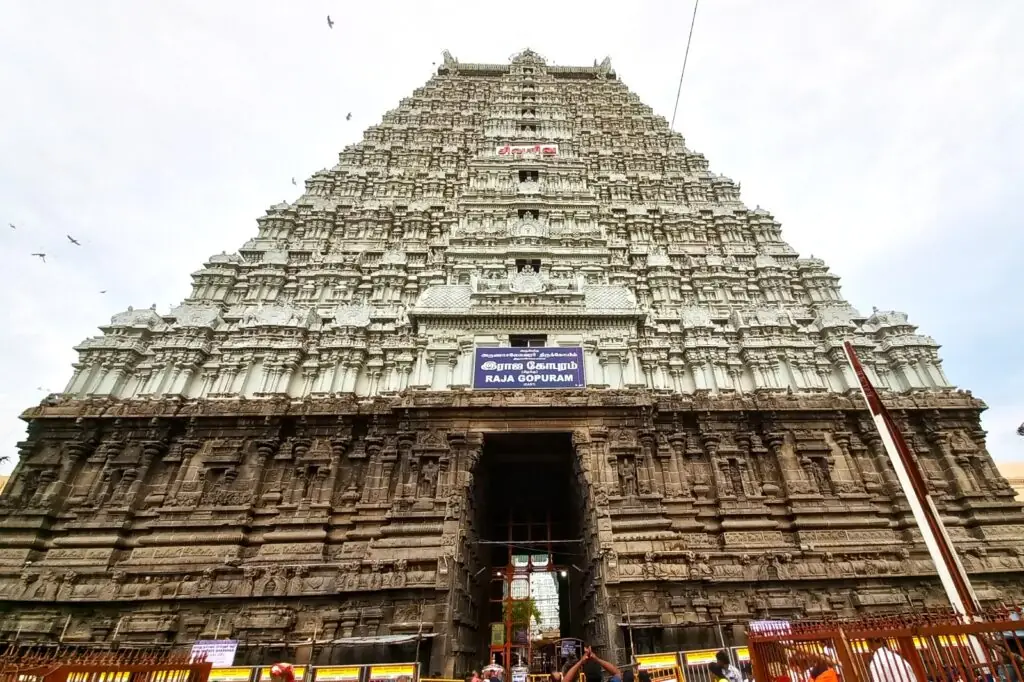
The full moon Girivalam attracts intense interest, but Pournami timings should not be reduced to a single clock time. The lunar observance, temple schedule, crowd arrangements, and local notices may all affect your experience. If you want a quieter walk, ask local authorities or your accommodation provider about less crowded periods, while remembering that local advice is not a replacement for an official safety notice.
Festival days can transform both access and timing at Arunachaleswarar Temple. Karthigai Deepam is the most widely recognised celebration associated with Tiruvannamalai and Arunachala.
It involves major religious activity, large gatherings, processions, security arrangements, and changes to ordinary movement. The usual daily darshan pattern should not be assumed during this period.
The temple festival calendar may also include Brahmotsavam-related events, flag hoisting, processions, special alankaram, Pournami observances, and other occasions important to local worshippers. Each event can produce a different combination of restricted zones, special queues, altered ritual sequence, and transport controls. A schedule published for a normal weekday may have little value during a major festival.
During a large event, the priority may shift from individual convenience to safe movement of a very large crowd. Gates can be closed temporarily, routes can be one-way, and certain bags or objects may be prohibited. Accommodation and transport costs may also rise because demand increases, but the exact commercial conditions vary and shouldn’t be predicted without current information.
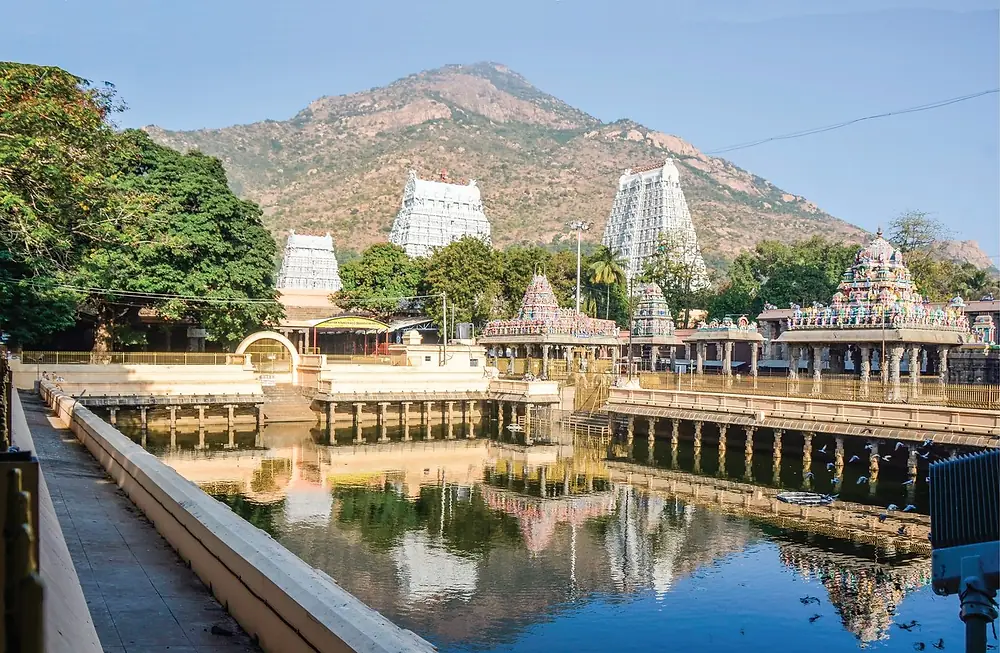
Confirm the official programme, but also check practical notices issued by district administration or local police. These may provide information about parking, bus diversions, pedestrian routes, medical posts, and restricted roads. An established institutional source such as the Tiruvannamalai district administration website can be useful for district-level announcements, although temple-specific darshan details should still be verified with temple authorities.
Reserve accommodation and transport with a realistic margin. On festival days, reaching Tiruvannamalai railway station or a bus stand doesn’t mean you’ll immediately reach the temple entrance.
Walking routes may be longer because vehicles are diverted. If you’re travelling with elderly relatives, children, or someone with mobility limitations, ask in advance about accessible entry and whether crowd conditions make the visit unsuitable at that time.
Sunday temple timings are a common search because many families visit on weekends. A Sunday may follow the broad daily pattern, but weekend crowds can affect queue length, parking, footwear counters, and the time required to reach the inner areas. It’s better to verify the Sunday schedule separately rather than assuming that a weekday notice applies without change.
Tiruvannamalai railway station is a useful reference point for visitors arriving by train, yet the station-to-temple journey varies with traffic, road closures, accommodation location, and the day’s crowd level. A journey that appears short on a map can take longer during Pournami or a procession. If you’re carrying luggage, ask your hotel whether it can arrange a reliable transfer or hold bags before check-in.
Keep your visit sequence simple. Many travellers try to combine arrival, hotel check-in, temple darshan, local sightseeing, and Girivalam within a narrow window.
That plan can fail if a train is delayed or a queue pauses. A better arrangement is to give the temple its own time block and keep one flexible period for food, rest, or an unexpected closure.
Visitors arriving by train should also remember that station information and temple information come from different authorities. A railway timetable cannot confirm temple entry, and a temple notice cannot guarantee a train connection. Check both before you commit to a same-day return.
Temple entry rules can cover clothing, footwear, bags, photography, mobile phones, food, liquids, and the movement of children. The exact rules may be displayed at the gates or communicated by staff. They can also become stricter during festival periods or security-sensitive visits.
Dress respectfully and choose clothing that allows easy movement through a crowded religious site. Avoid assuming that a paid ticket permits access to every part of the temple.
It generally applies only to the service printed on the receipt. Follow instructions from security personnel and temple staff, even if a familiar-looking online post suggests a different route.
Photography rules deserve special attention. A temple may permit photographs in some outer areas but prohibit them near sanctums or during certain rituals.
Don’t photograph worshippers without permission, and don’t use flash where it can disturb devotees or priests. If you’re unsure, keep your phone away.
Before entering, consider these practical points:
People with disabilities, older adults, pregnant travellers, and families with young children should ask about accessible routes before entering a crowded queue. Availability of assistance can vary by day, so practical planning is better than relying on assumptions.
Example, not a verified temple schedule: imagine a family arriving in Tiruvannamalai on a Friday afternoon, staying near the town centre, and leaving by train on Sunday. They want one temple darshan, one morning pooja experience if permitted, and a Girivalam walk. The family should not build its plan around an unverified online timetable or assume that Friday’s hours will apply during a full moon weekend.
On arrival, one adult could visit the official enquiry counter while the others check into the accommodation. The family can confirm whether ordinary darshan is open, whether any pooja requires a ticket, and what time the last public entry is expected that day. They should record the answer and ask whether the next morning has a festival or special ritual that changes access.
For the second day, they might choose early morning darshan and reserve the afternoon for rest. If they decide to walk the 14 km circuit at night, they should check local safety and traffic notices before starting. The family should keep Sunday travel flexible instead of scheduling a train immediately after an assumed temple closing time.
This example demonstrates a planning method, not a claim about current hours, ticket prices, crowd levels, or guaranteed access. The reliable facts must come from the official source available for the actual date of travel.
Unexpected changes are frustrating, particularly after a long journey, but they’re common in places where living worship and crowd safety take priority. A ritual may run late, a procession may occupy a corridor, or security personnel may temporarily close an entrance. Treat these changes as part of the operating reality of a major pilgrimage centre.
If the gate is closed, don’t argue with staff or depend on an agent’s promise that another entrance will open immediately. Ask politely whether there is a revised public-entry time, an alternative official queue, or a notice explaining the interruption. If you have a paid booking, keep your receipt and ask the authorised counter about the applicable procedure.
Build a backup plan that doesn’t require entering the temple at one exact minute. You might visit a nearby permitted area, rest, eat, or adjust the order of darshan and Girivalam. Never attempt to enter a restricted area through a side passage, climb barricades, or follow a crowd into a route that staff have closed.
Before leaving your accommodation, save these details offline:
Information can change while you’re travelling, so a final check on the same day is more valuable than a timetable saved several months earlier. If the official website is unavailable, use the temple office or district administration for confirmation rather than guessing.
Darshan is generally organised around the temple’s daily worship cycle, but the exact public-entry and closing hours should be verified for your date. Rituals, festivals, queues, and security arrangements can change access. Check the official temple notice or enquiry counter before travelling.
Some pilgrims may walk at night, but there isn’t one answer that applies to every date or route. Confirm local safety, lighting, traffic diversions, crowd arrangements, weather, and any restrictions before beginning at 1 a.m. Avoid walking alone in unfamiliar or poorly lit stretches.
The time depends on walking speed, breaks, weather, surface conditions, crowd density, and whether you stop at shrines along the route. Plan generously rather than treating 14 km as a fixed-duration activity. Full moon and festival crowds can slow movement considerably.
Ordinary darshan may not always require a paid ticket, while particular services or special queues may have separate arrangements. Confirm the exact category with the official temple counter or authorised portal. Don’t rely on an agent’s description of a “guaranteed” ticket.
Availability and meaning can change according to temple administration. If an official special-entry facility exists, it should be described through an authorised notice or receipt. Be cautious about unofficial people selling access or promising that every queue can be bypassed.
They may follow the regular pattern, but Sunday crowd levels and special worship can affect queues and access. Verify the Sunday schedule specifically, especially if your train or bus leaves at a fixed time.
Yes, but choose flexible accommodation arrangements if your visit overlaps with Pournami, Karthigai Deepam, or another major event. Room booking details are separate from darshan booking, and a hotel cannot guarantee temple entry. Confirm check-in, luggage storage, and transport options before arrival.
Arunachalam Temple timings are most useful when treated as a current operating schedule rather than a permanent promise. Before you leave, verify the day’s public darshan, pooja or abhishekam arrangements, last entry, festival notices, and any booking requirement through an official channel. Keep extra time for queues and avoid planning a train connection around an unconfirmed temple closing time.
A calm, flexible itinerary usually serves devotees better than a crowded list of fixed appointments. Check the latest notice, carry the right documents, respect temple entry rules, and ask staff when something is unclear. That small final step can make your visit to Tiruvannamalai more comfortable, informed, and meaningful.





