Physical Address
304 North Cardinal St.
Dorchester Center, MA 02124
Physical Address
304 North Cardinal St.
Dorchester Center, MA 02124
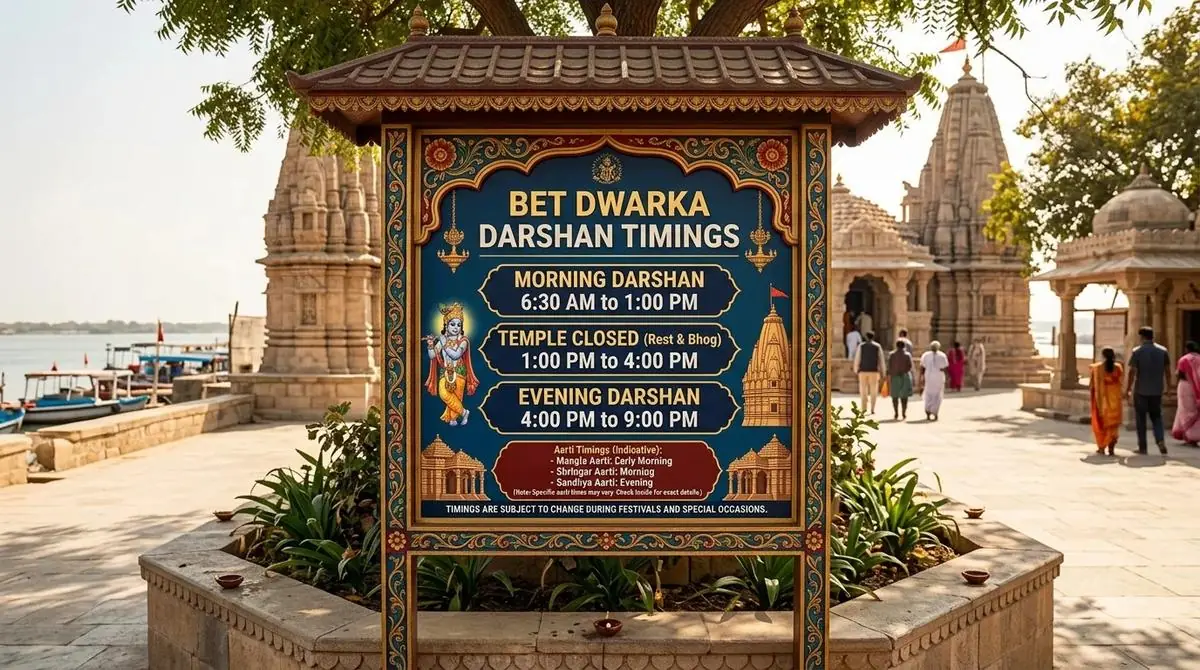
Bet Dwarka darshan time can vary with daily rituals, ferry operations, festivals, crowd control and decisions taken by the temple authorities. Visitors usually want more than an opening hour: they need to know when the mandir is accessible, which pooja periods may affect entry, how much time the island visit requires and where to verify last-minute changes. This article explains the practical side of planning a Bet Dwarka visit, including temple schedules, booking questions, transport, dress expectations, special occasions and useful alternatives if the routine changes after you arrive.
Bet Dwarka is associated with Shri Krishna and is regarded as an important religious place near Dwarka in Gujarat. Since information found online may become outdated, treat the guidance below as planning support and confirm the latest notice before travelling.
Bet Dwarka is not simply another stop on a city temple itinerary. The principal sacred site is located on an island area reached after travelling from mainland Dwarka towards the coastal access point and then using the available local crossing arrangement.
That extra stage means your temple visit depends on more than the mandir’s inner darshan schedule. Road conditions, waiting time, weather, the queue for the crossing and local crowd management can all affect the time at which you reach the shrine.
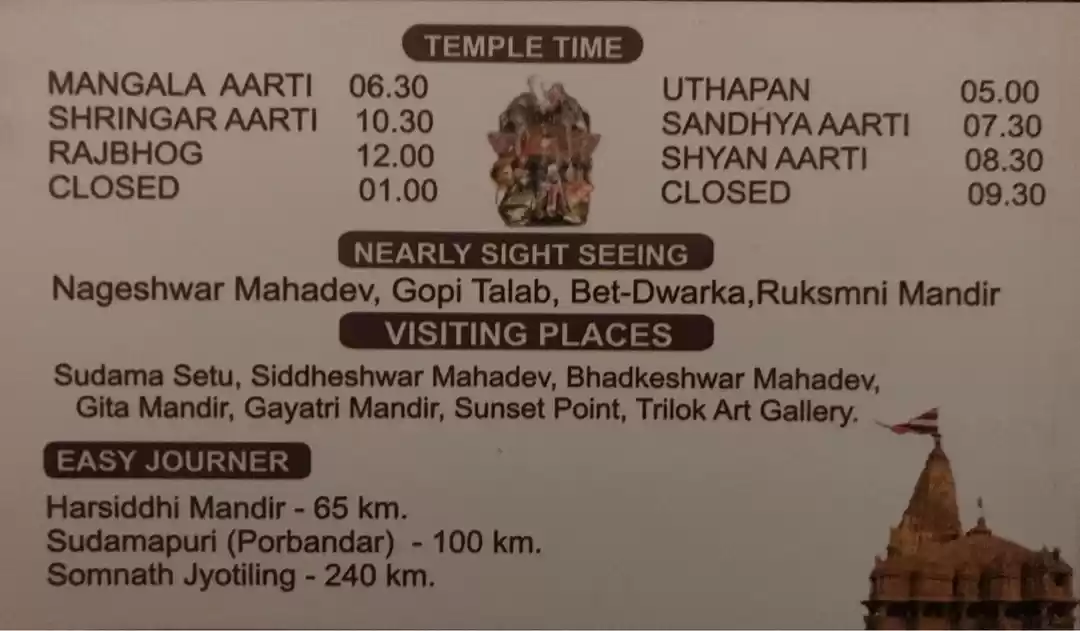
Many travellers search for “Bet Dwarka darshan time today” or “Bet Dwarka temple open and close time” because they want a simple answer. In practice, a single fixed timetable may not cover every part of the visit. The public entry period, the deity’s ritual schedule, temporary closure during bhog or aarti, and access arrangements near the island can be different matters.
The temple is traditionally connected with Krishna’s residence and with the wider sacred geography of Dwarka. Devotees often combine a visit to Bet Dwarka with Dwarkadhish Temple, Nageshwar Jyotirlinga, Rukmini Temple and other nearby religious places. That combination is meaningful, but it also creates a tight itinerary if you assume every stop will operate continuously throughout the day.
A better approach is to plan around a flexible time window rather than one unverified minute-by-minute promise. Allow time for:
This is especially important for families with older people, visitors travelling with children and pilgrims who have onward trains or flights. A schedule that looks comfortable on a map can become stressful if the first crossing or temple entry takes longer than expected.
Temple darshan generally follows the rhythm of Hindu worship rather than a continuous tourist attraction model. The day may include opening rituals, decoration of the murti, different forms of pooja, bhog, aarti and periods when the sanctum is not available for ordinary viewing. The precise order and public access rules belong to the temple’s current management and may not be identical on every date.
For this reason, online references that display one opening time and one closing time should be read cautiously. They may describe a broad visitor window, an older schedule or the hours of a nearby facility rather than the exact period during which devotees can stand before the main deity. The safest source is a current notice issued by the temple trust, authorised local administration or an official booking and information channel.
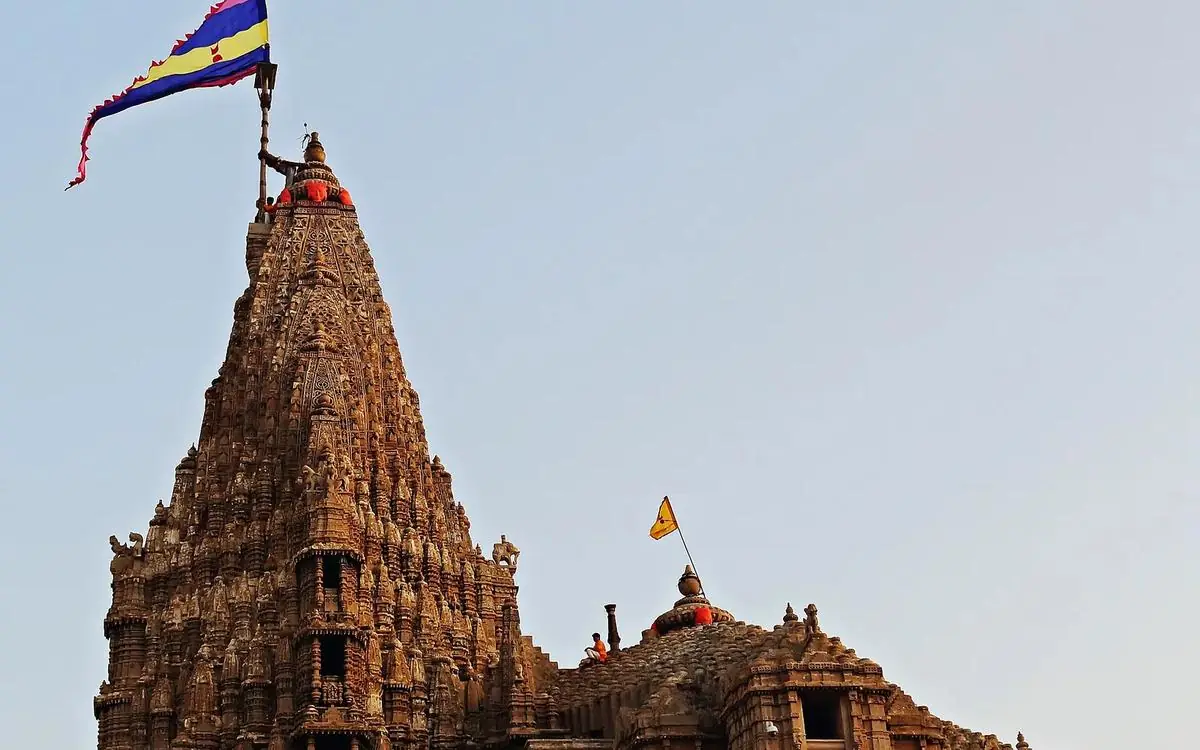
A temple may pause or regulate darshan while a private or restricted ritual is taking place. Bhog is an offering of food to the deity, while aarti involves ceremonial worship with lamps and devotional chanting. Depending on the temple’s practice, devotees may be allowed to wait nearby, redirected through a queue or asked to return after the ritual.
You should also distinguish between attending a ritual and receiving ordinary darshan. A visitor may reach the temple during a period associated with pooja but still not have unrestricted access to the sanctum. Special participation, prasad arrangements or a separate seva may require advance instructions or a booking process.
Because schedules are subject to change, don’t treat an unofficial social-media post as confirmation. Check whether the information is dated, whether it names the temple authority and whether it refers to the specific day of your visit. If those details are absent, use it only as a general indication.
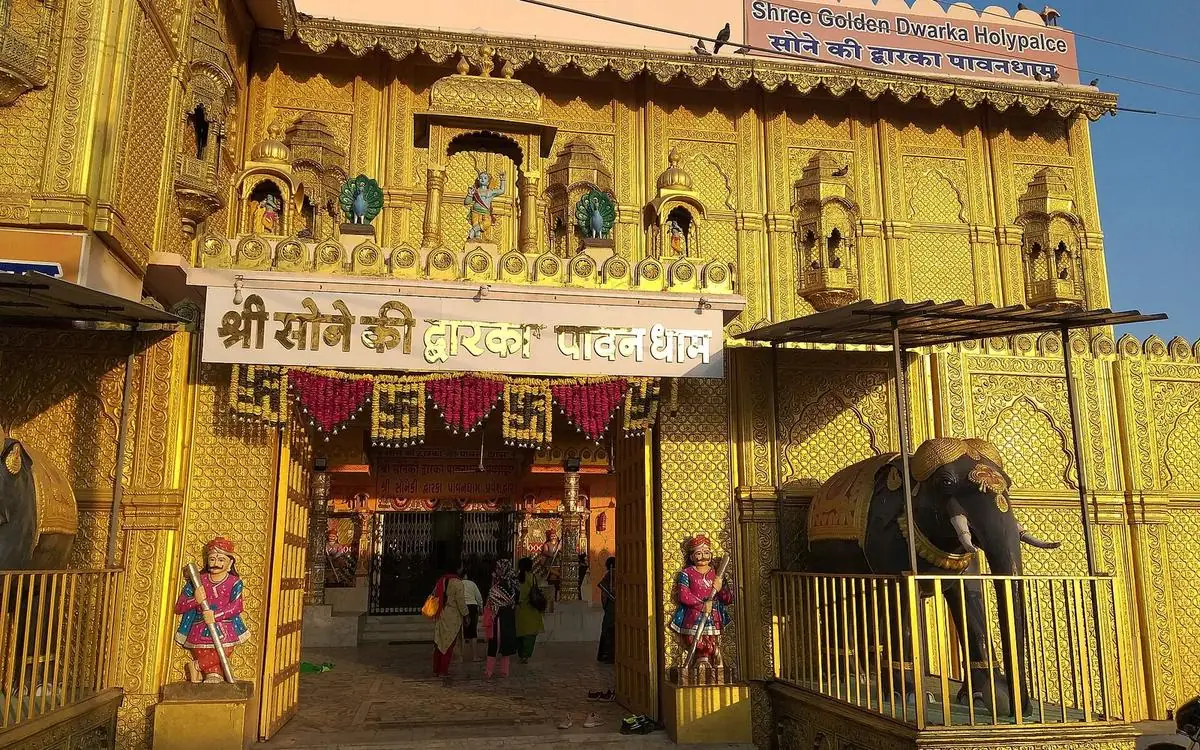
When people ask about Bet Dwarka temple open and close time, they may mean several different things:
Ask a clear question when contacting an official helpdesk: “Is regular darshan available during the time I expect to arrive, and is the crossing operating normally?” That wording is more useful than asking only for a general closing time.
The most reliable planning habit is to verify the schedule twice: once before you begin the trip and again on the day of travel. A timetable can change because of a festival, a VIP visit, maintenance, security instructions, severe weather, crowd pressure or an alteration in the ritual calendar. These changes aren’t necessarily announced far in advance.
Start with the official temple website or the official trust’s verified communication channel, if one is available. Government tourism pages can help you understand the location and broader access arrangements, but they may not carry live darshan notices. The Gujarat Tourism information page for Bet Dwarka can be useful for general destination context, while the temple’s own notice remains the better source for a same-day ritual or entry update.
On the morning of your visit, confirm the following points:
Hotels and drivers can provide useful local updates, but their information should not replace an official confirmation. A driver may know that a route is busy; only the temple or authorised administration can properly confirm a ritual closure or entry rule.
If the official source does not publish a detailed daily timetable, don’t assume that a missing schedule means unrestricted access. It may simply mean that the temple communicates timings locally. In that situation, ask the hotel reception to help you call the relevant office, and reach the access point early enough to handle an unexpected wait.
Devotees often want to attend a particular pooja or aarti rather than merely enter the temple. That intention can make the visit more meaningful, but it requires a different kind of preparation. Rituals may begin at a fixed traditional point, yet public participation can be limited by space, security or the day’s religious programme.
Don’t confuse a listed ritual name with a guaranteed visitor experience. A mangala-style opening ritual, shringar or decoration period, bhog and evening aarti may have different access arrangements. The name and timing of a ritual can also vary between temples, so information from Dwarkadhish Temple should not automatically be applied to Bet Dwarka.
If you’re hoping to attend a specific worship service, ask the temple authority:
These questions matter because “booking available” doesn’t always mean “booking required for ordinary darshan.” Some temples use bookings for special seva while maintaining a separate general queue. Others may change procedures during major festivals. Confirm the exact service, not just the word “darshan.”
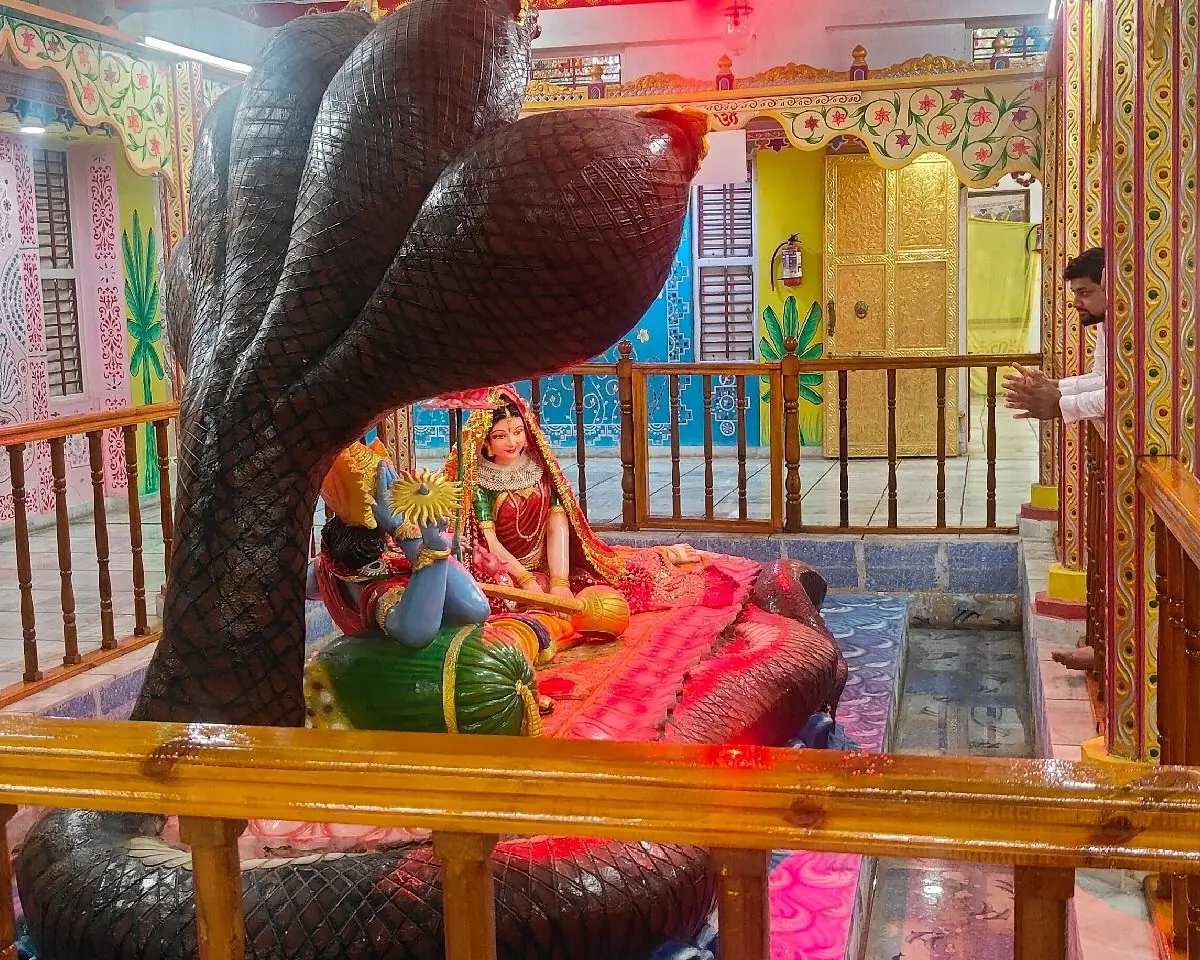
Wear clean, modest clothing suited to a religious site. Follow instructions about footwear, bags and photography, and don’t obstruct the queue while trying to take pictures of the shrine. If a volunteer asks devotees to move forward, keep the flow moving; extended conversations in front of the deity can delay other pilgrims.
Temple visits also involve different personal practices. Some devotees offer flowers or prasad, while others come only for quiet prayer.
You don’t need to copy every ritual. Follow the temple’s instructions, avoid pressuring other visitors and use only offerings accepted by the mandir.
One of the common searches connected with Bet Dwarka is whether VIP darshan is available. The answer should never be assumed from a private agent’s claim, a hotel package or a message circulating in a chat group. A legitimate priority facility, if offered on a particular date, should be explained through an official temple or authorised administrative channel.
Facilities may differ between ordinary darshan, a paid seva, a donation-linked service and a genuine priority entry arrangement. Those categories are not interchangeable. A receipt for a religious offering doesn’t automatically guarantee shorter waiting time, and a tour operator’s package may cover transport without providing any special access inside the temple.
Before paying for anything, check whether the information includes the temple authority’s name, an official receipt process, a clear cancellation or change policy and a contact number that can be independently verified. Be especially careful if someone promises guaranteed entry at a precise time despite a known festival or crowd surge.
Never share an OTP, bank PIN or full payment credentials with a person claiming to arrange temple access. Use only a booking portal that the official temple or administration identifies as authorised. If no official online booking facility is published, ask whether tickets or tokens are issued only at the temple counter.
A sensible checklist is:
Even when an official booking exists, special occasions can alter the practical experience. The temple may restrict access for safety, adjust the queue or stop new entries when the permitted capacity is reached. That is why advance booking should be viewed as one part of planning, not as a guarantee against every delay.
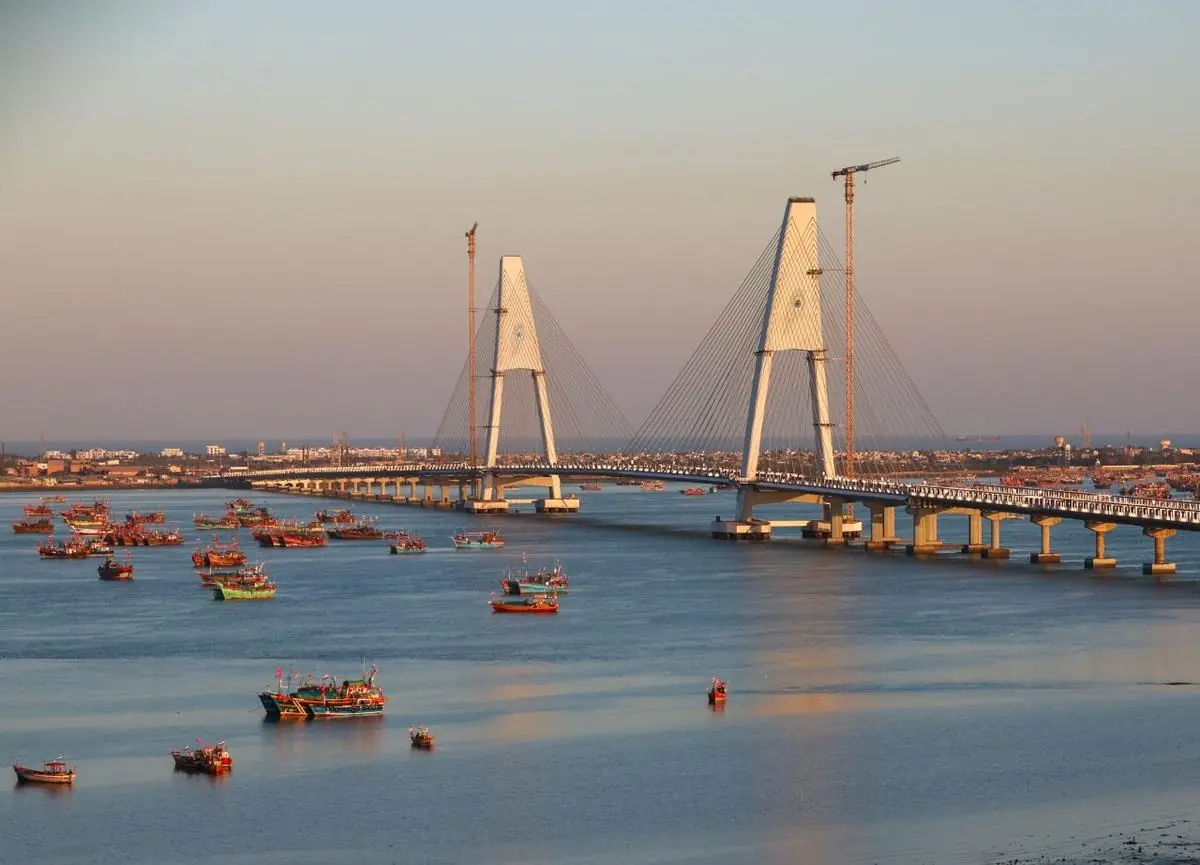
Bet Dwarka’s location makes transport planning central to darshan planning. The time shown on a map usually represents driving distance, not the complete door-to-temple journey. You must account for the route from Dwarka, the final approach, parking or drop-off, the local crossing arrangement and the walk or transfer after arrival.
Access arrangements can change with weather, sea conditions, public safety instructions and local administration. Travellers should confirm the day’s operating status rather than depending on an old video or a review written years earlier. If you’re travelling during monsoon conditions or a period of strong coastal weather, ask specifically whether services are running normally.
| Planning point | What to confirm | Why it affects darshan |
|---|---|---|
| Departure from Dwarka | Road route, traffic and vehicle availability | A late departure may push you into a ritual break or closing window. |
| Access point | Parking, walking distance and local instructions | The vehicle may not reach the temple entrance itself. |
| Crossing or transfer | Operating status, queue and weather-related changes | Waiting time can be longer than the road journey. |
| Temple entry | Security, bags, footwear and current queue rules | Entry procedures can delay the final darshan. |
| Return journey | Last practical connection and onward transport | Missing the return arrangement can affect trains, buses or hotel plans. |
Keep essential items in a small, manageable bag. Large luggage can create problems at security points and may not be accepted inside.
Carry drinking water for the journey, but follow instructions about where bottles are permitted. People with mobility concerns should discuss walking and waiting conditions with their family or driver before setting out.
Do not build a tightly packed pilgrimage circuit around a guessed Bet Dwarka schedule. If you plan to visit Nageshwar Jyotirlinga or another site on the same day, leave a buffer for the island transfer and queue. A relaxed visit is usually more respectful and more enjoyable than rushing from one temple to the next.
There isn’t one universally best time for every traveller. A quiet weekday may suit visitors who want a slower darshan, while a festival date may be important for devotees who wish to experience a particular religious atmosphere. The choice depends on your purpose, tolerance for queues, weather preferences and ability to adjust your schedule.
Weekends, public holidays and school vacation periods can bring more visitors to Dwarka and nearby sacred places. Festival days, Krishna-related celebrations and important dates in the temple calendar may increase demand for transport and accommodation. On such days, even if the formal darshan window remains unchanged, the approach queue can be considerably more demanding.
During Janmashtami or other major observances, the temple’s routine may be adapted for special worship, decoration, processions, security and crowd movement. Don’t rely on a normal-day timetable for a festival visit. Authorities may issue a separate notice, restrict vehicles, create holding areas or change entry routes.
Festival travel requires earlier verification and a more conservative itinerary. Confirm accommodation, transport, access status and the exact temple programme through official channels. If the festival experience is your main purpose, ask whether general visitors can attend the relevant ritual or whether the public programme is held separately from the sanctum schedule.
Many pilgrims prefer an early visit because it leaves room for delays later in the day. That can be practical, but an early arrival doesn’t automatically mean immediate darshan; the temple may have opening rituals before public entry.
Midday travel may be comfortable for some visitors but can coincide with bhog or a pause in public access. Evening plans require particular care because the return route and last local transport may become limiting factors.
Rather than selecting a time based on a generic “best time” statement, match the visit to the confirmed ritual and access windows. Then keep a fallback period in your itinerary.
Example only: Consider a family travelling from a hotel in Dwarka with two older relatives. They want Bet Dwarka darshan, a visit to another nearby temple and enough time to return without rushing for an evening train. They find two different timing claims online, neither carrying a current official notice.
Instead of choosing the earlier claim, the family asks the hotel to help verify the temple’s current public entry status and the local crossing arrangements. They also ask whether a ritual break is expected. After receiving an update, they leave a generous buffer, carry only essential belongings and keep the afternoon free in case the queue is longer than expected.
At the access point, they learn that the crossing is operating but that a crowd has gathered. Because their schedule includes spare time, they can wait calmly.
They complete darshan, return to the mainland and decide whether the second temple is still practical. If the first visit takes longer, they drop the optional stop rather than missing their train.
This is not a verified account of a particular day, and it does not establish a fixed travel duration. It illustrates a planning principle: when the timetable is uncertain, protect the essential pilgrimage visit and keep secondary plans flexible. The family’s success comes from verifying current information, allowing for the transfer and avoiding promises based on an old schedule.
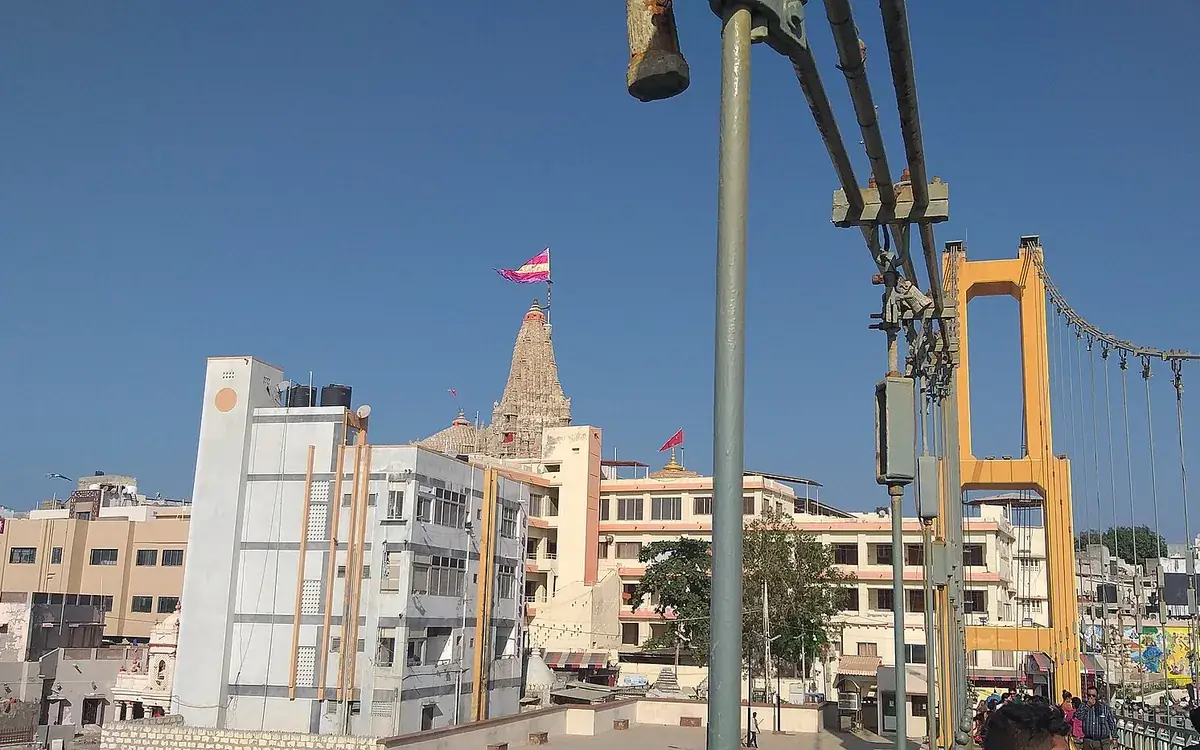
Visitors sometimes use “Dwarka darshan” to describe several different temples and assume that one schedule applies to all of them. Bet Dwarka and Dwarkadhish Temple are separate religious destinations with different management, access arrangements and ritual calendars. Nageshwar Jyotirlinga is another distinct site, so its opening, pooja and queue information must be checked separately.
The difference matters for transport as well. Bet Dwarka is associated with an island visit, while the main Dwarka town temples and Nageshwar are approached differently. A driver’s suggested route may be efficient under normal conditions, but it cannot guarantee that each sanctum will be open when you arrive.
Write down your priorities before booking a vehicle. For example, your first priority may be Bet Dwarka darshan, your second may be Dwarkadhish Temple and your third may be Nageshwar. If you reverse that order without checking the current ritual periods, you could reach the most important temple during a temporary closure.
Keep separate notes for:
The same principle applies to claims about an “underwater Dwarka darshan.” Archaeological, submerged-site and devotional narratives are often discussed together online, but a visitor’s temple darshan is not automatically an underwater visit. Ask what activity is actually being offered, who operates it and whether it is officially available on your date.
Temple rules can be revised without much notice. Security requirements may become stricter during festivals or visits by public figures.
Some spaces may restrict photography, video, leather items, large bags or mobile phone use. Follow the instructions displayed at the entrance and those given by authorised staff, even if an older travel post says something different.
Carry an accepted identity document if an official booking or local instruction requires one, but don’t assume every visitor needs the same paperwork. Confirm the requirement before travelling. Keep cash and valuables secure, and avoid handing money to anyone who promises a faster darshan without a clearly authorised process.
Comfort deserves attention. Coastal heat, wind, humidity and long periods of standing can affect children and older adults.
Choose breathable clothing, comfortable footwear for the approach and adequate protection from the sun. If you have a medical condition, carry prescribed medicines and plan rest points rather than treating the visit as a race.
Food and water arrangements may be limited at certain points of the journey. Eat before beginning a long wait if appropriate, while respecting any personal fasting practice.
Don’t litter near the access route or temple premises. A sacred place is also a shared public environment, and simple care makes the visit easier for everyone.
The most frequent mistake is treating a search result as a live official announcement. Search engines may show pages that are useful for orientation but not updated for today’s conditions. A page can remain online even after a temple changes its schedule, entry route or booking procedure.
Another mistake is confusing the temple’s general hours with the time available for uninterrupted darshan. A shrine may be open to visitors while the main deity is temporarily covered for bhog or another ritual. Ask about the public darshan interval, not only whether the building is open.
Travellers also underestimate the island transfer. They may calculate the road journey accurately and still arrive too late because of parking, queues or weather-related delays. Build the itinerary from your hotel to the temple and back, not from one map pin to another.
Avoid these assumptions:
Good information is specific, dated and attributable. If you can’t identify who issued a timing claim or when it was last updated, treat it as unconfirmed.
The current public darshan period should be confirmed through the temple’s official communication channel or local authorised notice. It can change because of daily rituals, festivals, crowd management, security and access conditions, so a fixed time copied from an old page may not be reliable.
“Open” can refer to the temple, the local crossing or the main sanctum, and these are not always the same. Check all three before leaving, especially during monsoon weather, major festivals or unusual local restrictions.
Don’t assume that VIP darshan is available or that a private agent is authorised. If a priority facility or special seva is offered, verify its rules, price, receipt and booking method directly with the temple or an official authority.
Online booking arrangements can change and may apply only to specific sevas rather than ordinary entry. Use a portal identified by the temple or an official trust, and confirm whether the booking grants ritual participation, a token or only a donation receipt.
Ask an authorised temple volunteer or office about the expected reopening period and whether visitors should remain in the queue. Don’t block an entrance or rely on unofficial promises. If the pause is lengthy, protect your return schedule and consider a nearby alternative only after confirming your transport.
No. Bet Dwarka and Dwarkadhish Temple are separate destinations associated with the wider Krishna and Dwarka tradition. Their timings, entry processes and ritual schedules should be verified independently.
Reliable Bet Dwarka darshan time information is less about memorising one number and more about confirming the complete journey: temple access, ritual breaks, local transport, crowd conditions and the return route. Check an official source shortly before departure, ask precise questions and leave enough time for the island crossing and security process.
Once your essential darshan is protected with a flexible plan, the visit becomes calmer and more respectful. Before you set out, confirm the latest notice, save the authorised contact details and decide which parts of your itinerary can be dropped if conditions change. That small preparation can make your time at this Krishna-associated mandir far more meaningful.





