Physical Address
304 North Cardinal St.
Dorchester Center, MA 02124
Physical Address
304 North Cardinal St.
Dorchester Center, MA 02124
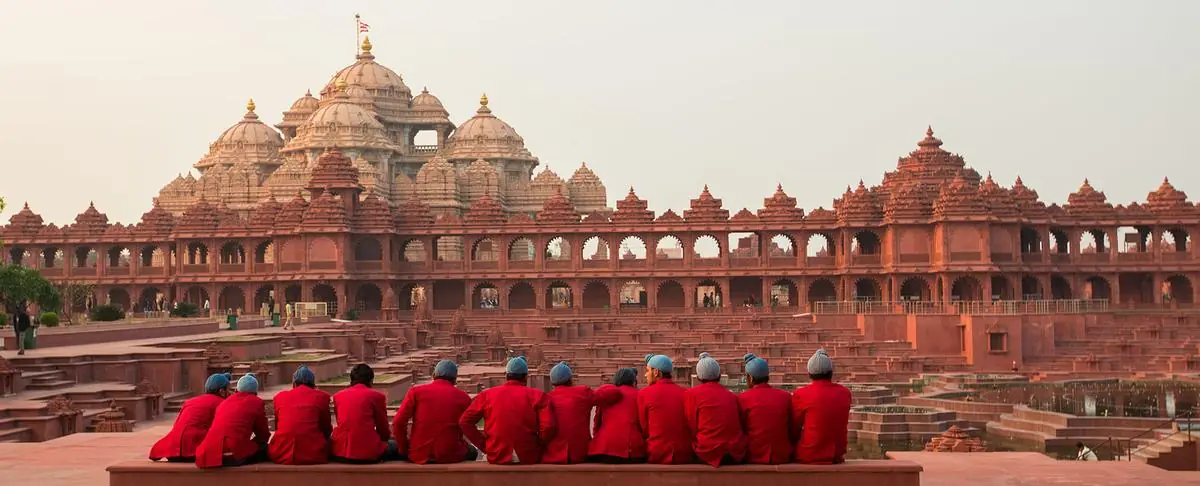
Planning a visit becomes much easier when you understand how Swaminarayan Akshardham tickets relate to Mandir entry, Darshan, exhibitions, and the water show. Timings can differ by location, weekday, festival, and the part of the campus you want to experience, so relying on an old social-media post may create avoidable problems.
This article explains the main ticket categories, Pooja and Aarti considerations, booking steps, dress expectations, queues, and practical arrival advice. It also shows you how to check the latest official schedule before travelling to a BAPS Swaminarayan temple in India.
The phrase “Swaminarayan Akshardham tickets” can refer to more than one kind of admission. At a large Akshardham campus, visitors may be interested in the Mandir itself, cultural exhibitions, a water show, a guided experience, or a special event. These may have separate entry arrangements, and not every activity is necessarily included with another ticket or reservation.
The Mandir is the spiritual centre of the campus. Darshan means respectfully viewing the sacred murtis or deities, usually while moving through an arranged visitor route.
Darshan is not the same as buying a ticket for an exhibition. In some locations, the Mandir may be accessible under different rules from ticketed attractions, while other services may require a booking, an identity check, or a specific time slot.
Akshardham locations also operate under their own administration. Delhi, Gandhinagar, and other BAPS Swaminarayan sites can have different opening days, security procedures, exhibition schedules, and water-show arrangements. Even if you visited one location previously, don’t assume the same system applies at another.
Before paying for anything, identify four details:
Prices, availability, age categories, concessions, and booking windows can change. For that reason, the official temple website or verified administration channel should always be treated as the final authority, not a third-party listing that happens to appear first in search results.
People often search for one opening time, but a major Mandir campus usually has several timing categories. The outer campus may open at one time, the Mandir Darshan route may follow another, and exhibitions or a water show may operate on a separate schedule. Pooja and Aarti are religious observances rather than ordinary tourist attractions, so their access rules may be more restricted.
Temple opening hours can also change around maintenance, security instructions, holidays, special celebrations, or large gatherings. A festival day may bring extended activity in some areas but tighter movement controls in others. A late arrival could therefore affect your planned Darshan even if the campus itself is still open.
| Timing or service | What it generally means | What you should verify |
|---|---|---|
| Campus opening | The period during which visitors may begin entering the visitor area. | Opening day, first entry time, security restrictions, and weekly closure. |
| Mandir Darshan | Access for respectful viewing and prayer at the temple. | Entry route, queue arrangements, dress expectations, and last admission. |
| Pooja or Aarti | A devotional service with its own religious schedule and participation rules. | Whether visitors may attend, whether registration is required, and the reporting time. |
| Exhibitions | Cultural or educational presentations within the campus. | Ticket category, show duration, language options, and available sessions. |
| Water show | An evening or scheduled presentation that may require a separate ticket. | Show dates, start time, weather-related changes, seating, and ticket availability. |
| Last entry | The final time visitors may enter a particular area, which may be earlier than closing. | Last admission for each attraction, not just the overall campus closing time. |
One practical rule is simple: treat the published schedule as a set of deadlines, not a suggestion. If your plan includes Darshan and a ticketed attraction, allow enough time for security, walking between buildings, queues, and possible delays. Reaching just before a listed start time is risky, especially on Saturdays, Sundays, school holidays, and festival periods.
Online booking can be convenient, but only when you’re using the correct reservation system. Search results may show travel agents, tour packages, outdated price pages, or ticket descriptions copied from an earlier season. A reliable booking page should clearly identify the temple administration, the location, the date, the available service, and the terms that apply to cancellations or changes.
Start with the official website for the specific campus. The official Delhi visitor-information page, for example, separates practical information about visiting the complex from general descriptions of the institution.
You can check the official Akshardham visitor information before finalising your plans. If the page redirects you to an official booking partner, confirm that the destination and organisation remain clearly identified.
Don’t book based only on the word “Akshardham.” The name may be used in listings for different cities or for tours that combine transport, meals, guides, and attractions. A package may be useful, but it isn’t automatically an official temple ticket. Read what is included.
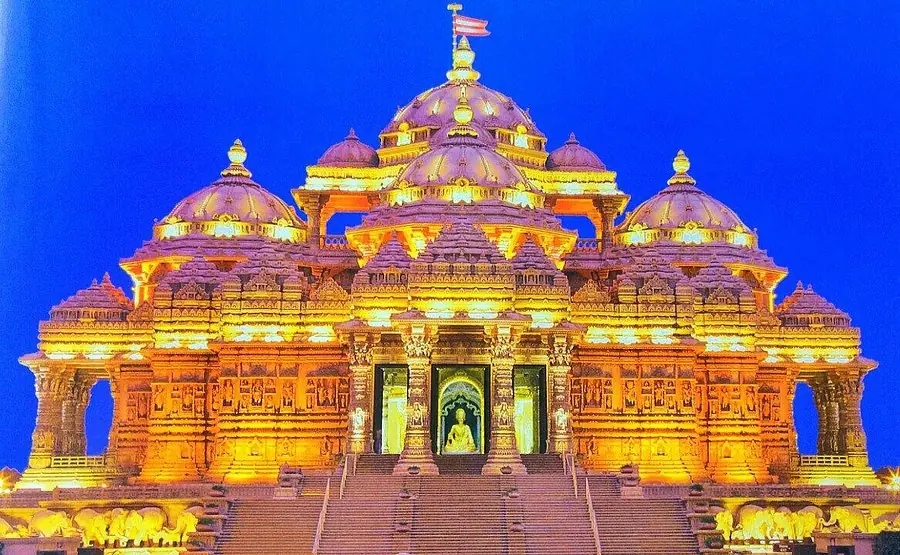
Save the confirmation email or message after payment. Keep a screenshot as well, but don’t edit the ticket image or obscure the booking reference. If the portal shows a QR code, make sure your phone can display it at the entrance and carry a valid identity document if the booking terms require one.
Darshan is a devotional act of seeing and offering respect to the sacred murtis. At a busy Mandir, Darshan may involve a managed queue rather than a pre-booked appointment. Visitors are expected to move with the flow, follow volunteer instructions, and avoid blocking the path for people behind them.
Pooja is a worship ritual that may be performed at a particular time and under specific arrangements. Aarti is a devotional ceremony involving a lamp or flame and prayers.
The public may be able to witness some observances, but access, seating, participation, and photography rules can differ. You shouldn’t assume that an exhibition ticket grants access to every religious service.
For a planned Pooja or Aarti visit, ask the official administration these questions before travelling:
The word “timing” has a different meaning here. An attraction schedule tells you when a presentation starts, while a Pooja or Aarti schedule may also involve preparation, seating, silence, and religious etiquette.
Arrive early enough to settle down respectfully. Entering during the central part of a ceremony can be disruptive to worshippers and volunteers.
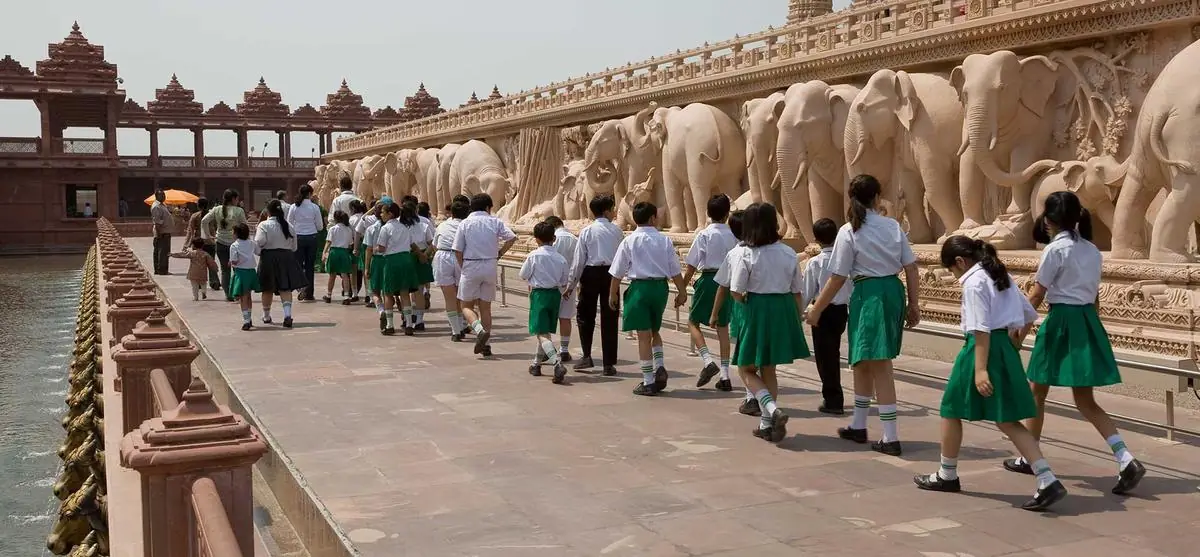
Dress modestly, speak softly, and follow signs even if you’ve visited another Hindu temple with different customs. Keep your hands and belongings under control in crowded areas. Some campuses restrict photography or videography in parts of the Mandir, and staff instructions take priority over assumptions based on what is permitted elsewhere.
Darshan isn’t a race. If the queue moves quickly, offer your prayer without stopping in a narrow passage. If you need more time for personal reasons, step aside only where volunteers indicate that it’s permitted.
Appropriate clothing helps you enter comfortably and shows respect for the sacred setting. Choose clean, modest clothes that cover the shoulders and knees.
Sleeveless or low-cut tops, very short shorts, and short skirts may not be suitable for Mandir entry, even if they’re common in other parts of a city. Families should plan clothing before leaving rather than trying to solve the issue at the gate.
Loose, breathable Indian clothing can be practical in warm weather, particularly if your visit includes walking across a large campus. A kurta, salwar suit, sari, long trousers, or a modest full-length dress may work well, provided it follows the location’s current rules. Clothing guidance can be stricter for a Pooja or special religious programme than for a general visitor route.
Carry as little as possible. Security checks are easier when you don’t bring unnecessary electronics, food, large bags, or items that may be prohibited. The exact cloakroom and storage policy varies, so check the official instructions instead of assuming that every bag can be deposited at the gate.
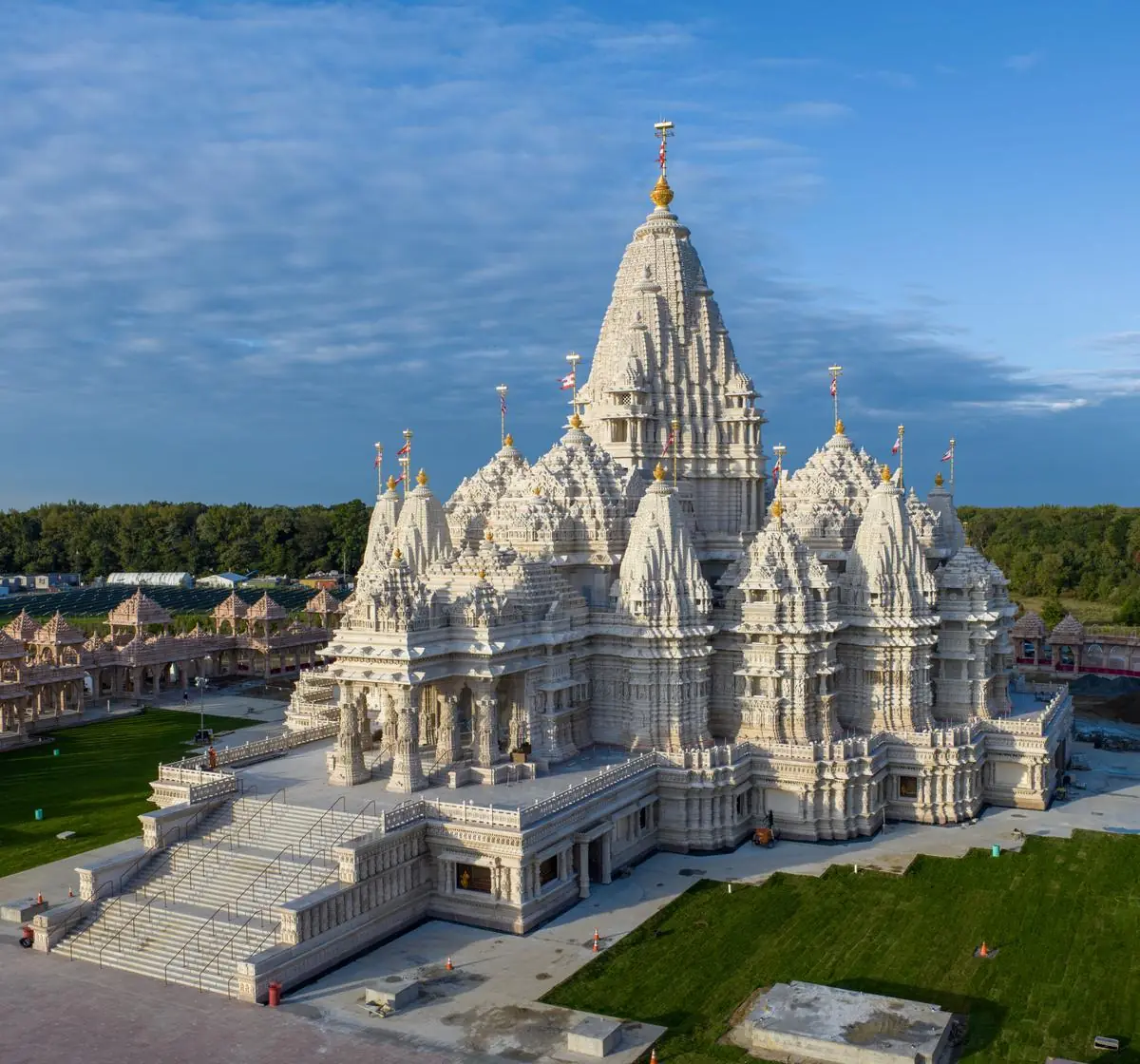
Check footwear instructions before entering the Mandir. Some temple areas require shoes to be removed, while other visitor attractions may have different arrangements. Follow the marked procedure and avoid leaving footwear outside designated spaces.
The best time to visit depends on your purpose. Someone coming for quiet Darshan may prefer an ordinary day with fewer visitors, while a family may choose a weekend because of work and school schedules. A visitor who wants an evening water show must plan around that show’s published availability rather than simply arriving late in the afternoon.
Weekends, public holidays, school vacations, and major Hindu festivals can bring heavier footfall. Special celebrations connected with the Swaminarayan tradition may also affect movement, security, parking, or entry procedures. On such days, a reservation may sell out earlier, queues may lengthen, and some areas may operate under a modified schedule.
Tuesday is not automatically a quiet day, and a weekday is not automatically free of crowds. Weekly closure patterns and festival calendars also vary by location. Check the official schedule for the exact date rather than relying on a general statement such as “the temple is open every day.”
| Visit purpose | Planning approach | Main risk to avoid |
|---|---|---|
| Mandir Darshan | Check opening, last entry, security, and any weekly closure. | Arriving near closing and missing the Darshan route. |
| Pooja or Aarti | Confirm religious-service access and reporting instructions in advance. | Assuming general visitors can enter without registration. |
| Exhibitions | Reserve the available session and allow time for security and walking. | Confusing campus opening with the exhibition start time. |
| Water show | Check the day’s show schedule, seating, and weather-related notices. | Buying a ticket without confirming that the show operates that day. |
| Festival visit | Check special notices and arrive with extra time. | Expecting ordinary weekday queues or access arrangements. |
For most planned visits, arriving before your chosen activity’s reporting or entry time is sensible. Build in a buffer for traffic, parking, metro or taxi delays, security screening, and finding the correct gate. A little extra time is more useful than trying to predict the shortest possible queue.
A simple process can prevent most ticket and timing problems. Use the steps below as a planning sequence, then confirm every time-sensitive detail with the relevant official channel.
If you’re arranging a group visit, appoint one person to hold the booking details and maintain the group’s contact information. Families should also decide where to meet if phones lose signal or members are separated during security checks.
Verified example: The official Delhi Akshardham visitor-information resource presents the complex as more than a single ticketed attraction. Its visitor guidance distinguishes the Mandir and general visit arrangements from the exhibitions and other experiences, while also publishing practical instructions about visiting the campus. This is a useful real-world example because it shows why searching only for “Akshardham entry fee” can produce an incomplete answer.
The same official resource is the appropriate place to verify current opening days, schedules, restrictions, and booking instructions for the Delhi location. Those details can be revised, so the verified fact is the structure of the official information and the need to consult it for the live schedule; any timing or price displayed there should be treated as current only for the date and notice shown on that page.
General guidance, not a claimed fact about every location: Other Swaminarayan Akshardham campuses may use different ticket categories or procedures. A Gandhinagar visit, for example, shouldn’t be planned by copying a Delhi itinerary. Always match the reservation with the correct city, service, and official administration.
Many problems come from treating the campus as if it were an ordinary museum. A visitor may buy an exhibition ticket and assume it covers every part of the Mandir, or see a water-show listing and assume the temple’s religious areas remain open until the same time. Those assumptions are not reliable.
Another frequent mistake is trying to fit too many activities into one short visit. If Darshan is your priority, schedule it first and treat exhibitions or a water show as secondary. A respectful temple visit shouldn’t feel like a race between ticketed time slots.
Akshardham campuses welcome visitors for spiritual, cultural, and educational experiences, but the setting remains a Mandir. Speak quietly in prayer areas, follow queue barriers, and don’t touch sacred objects or architectural features unless permission is clearly provided. Keep children close in crowded spaces and explain beforehand that volunteers may ask everyone to move along.
Accessibility needs should be raised before the visit when possible. Ask the official administration about wheelchair access, seating, lifts, rest areas, accessible toilets, and the best route for elderly guests. A large campus can involve substantial walking, and the most convenient entrance for one visitor may not be the best route for someone with mobility limitations.
Parents should consider the entire day, not only the ticket time. Carry necessary medicines, plan breaks, and confirm whether food or drinks can be brought inside. Infants, older adults, and visitors sensitive to heat may need a slower itinerary with fewer attractions.
Photography rules deserve special care. Even if photos are allowed in an outdoor area, they may not be allowed inside the Mandir or during a Pooja. Don’t use flash, tripods, drones, or large equipment unless the official rules explicitly permit them.
Respect also means allowing other devotees their own experience. Avoid loud calls, arguments in queues, and standing in front of people during Darshan. Small choices make the atmosphere calmer for everyone.
Entry arrangements differ by location and by activity. Mandir Darshan, exhibitions, and the water show may not follow the same ticket policy. Check the official website for the exact campus and date instead of relying on a general price claim.
Some visitor experiences may offer online reservation through an official booking system or an officially identified booking partner. Confirm the location, service, date, and terms before payment. Online availability doesn’t necessarily mean that every form of Darshan or Pooja requires an online ticket.
There isn’t one universal timing for every Akshardham location. Opening hours, last entry, weekly closure, Darshan arrangements, exhibitions, and shows may all differ. Use the official visitor-information page for the campus you’re visiting and recheck close to your travel date.
Often, a water show is handled as a separate experience, but the exact arrangement depends on the campus and the date. Check whether the show is operating, whether a reservation is needed, and whether your existing ticket includes it.
That depends on the specific Mandir and ceremony. Some services may be visible to visitors, while others may require registration, a reporting time, or special permission. Ask the official administration rather than assuming general entry grants participation.
Choose modest, clean clothing covering the shoulders and knees. Avoid sleeveless low-cut tops, very short shorts, and short skirts, especially if you plan to enter the Mandir or attend a religious service. Check the current dress instructions for your location.
Don’t assume that a Tuesday or holiday follows the ordinary schedule. Weekly closures, festivals, and special events can alter opening hours and access. Verify the exact date through the official channel.
Arrive with enough time for security, walking, queues, and finding the correct entry point. For a booked activity, use the reporting time stated on the ticket rather than aiming to reach the gate at the final minute.
Good planning for Swaminarayan Akshardham tickets starts with the right campus, the right activity, and the right date. Confirm whether you’re arranging Mandir Darshan, a Pooja or Aarti visit, an exhibition, or a water show, then check the official timing and entry conditions for each one. Modest clothing, a realistic arrival buffer, saved booking details, and respect for on-site instructions will make the visit more comfortable.
Schedules and booking systems can change, particularly around festivals and holidays. Before you travel, verify the latest information on the official temple website or administration channel, and ask yourself one final question: does your ticket match the experience you actually want to have?





