Physical Address
304 North Cardinal St.
Dorchester Center, MA 02124
Physical Address
304 North Cardinal St.
Dorchester Center, MA 02124
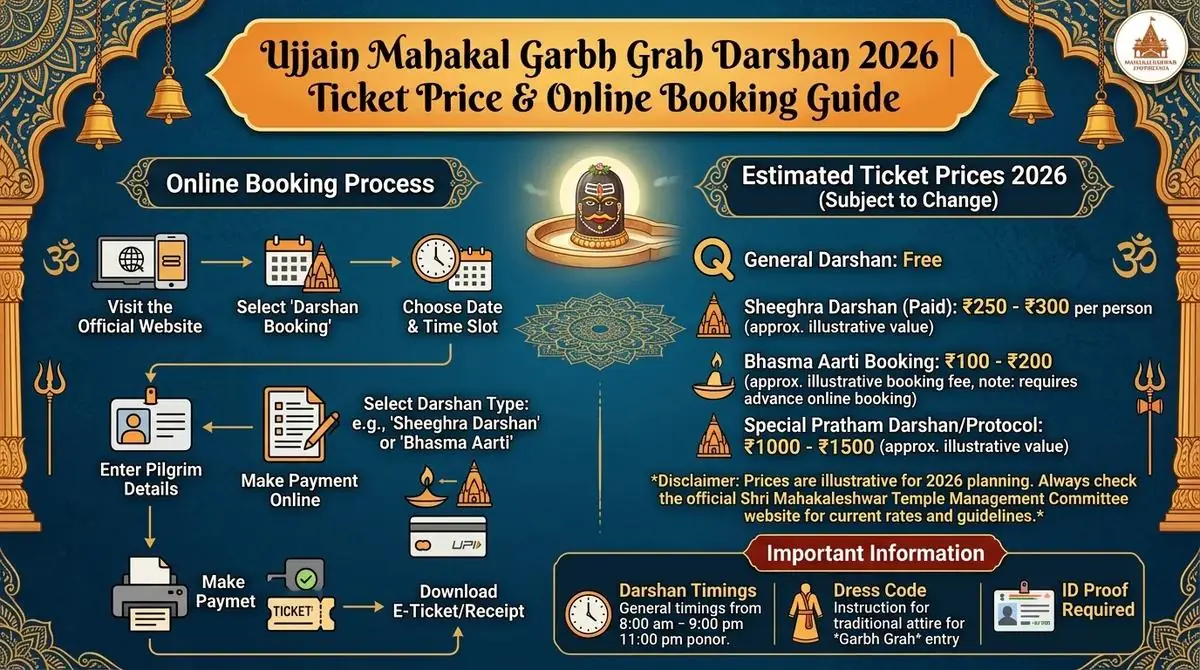
Planning a visit to Mahakaleshwar Temple in Ujjain often turns on one practical question: how does mahakal garbh grah darshan booking work for the date you want? Access to the Garbh Grah, general darshan, Bhasm Aarti, and special pooja may follow different routes, and a temple opening time doesn’t automatically mean every ritual or inner-area entry is available.
That distinction matters. A careful plan means checking the latest official schedule, understanding whether you need a darshan ticket or a seva booking, carrying the right proof, and allowing extra time for security and queues. It also prevents confusion caused by old prices, forwarded messages, or unofficial agents.
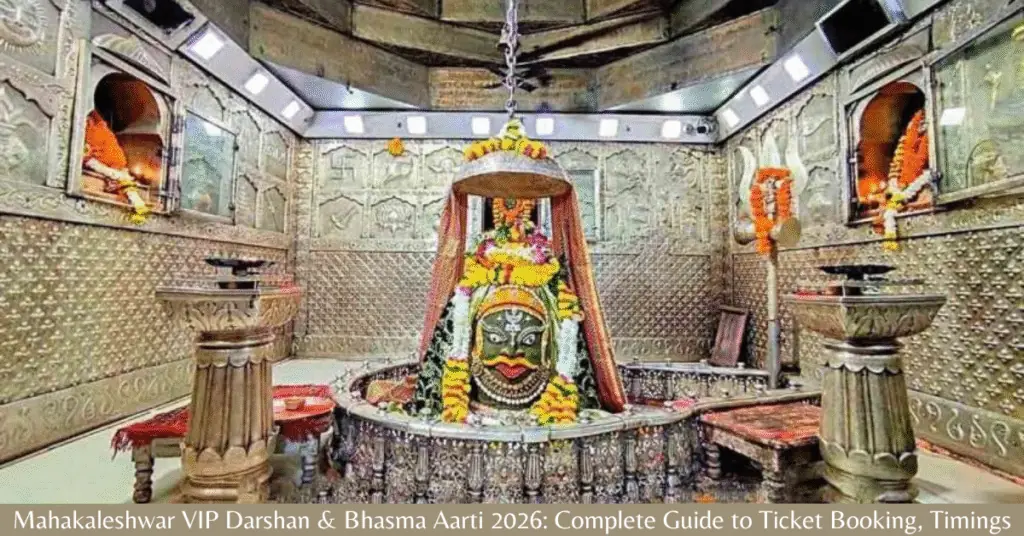
“Garbh Grah” or “Garbh Griha” means the inner sanctum of a Hindu temple. At Mahakaleshwar Temple, the phrase usually refers to darshan connected with the sanctum where the Mahakal Jyotirlinga is worshipped. It is more specific than ordinary temple darshan, which may allow visitors to view the deity from a designated area or through a managed queue without entering the inner section.
The distinction is important because the temple may operate several access categories at the same time. A visitor might find a general darshan queue, a paid or priority darshan option, a pooja booking, a seva facility, and a separate arrangement for Garbh Grah entry. These services can have different reporting points, time slots, identity requirements, and ticket prices.
Garbh Grah access is also affected by the ritual calendar. During pooja, aarti, cleaning, security checks, or special ceremonies, public movement near the sanctum may be paused or redirected. A temple’s broad opening and closing hours therefore shouldn’t be treated as a promise that close darshan will be available continuously throughout the day.
In simple terms, keep these categories separate:
Do not assume that a VIP darshan ticket automatically includes a Garbh Grah visit. The name printed on the official booking page, not a description given by an agent or hotel, determines what you have actually purchased.
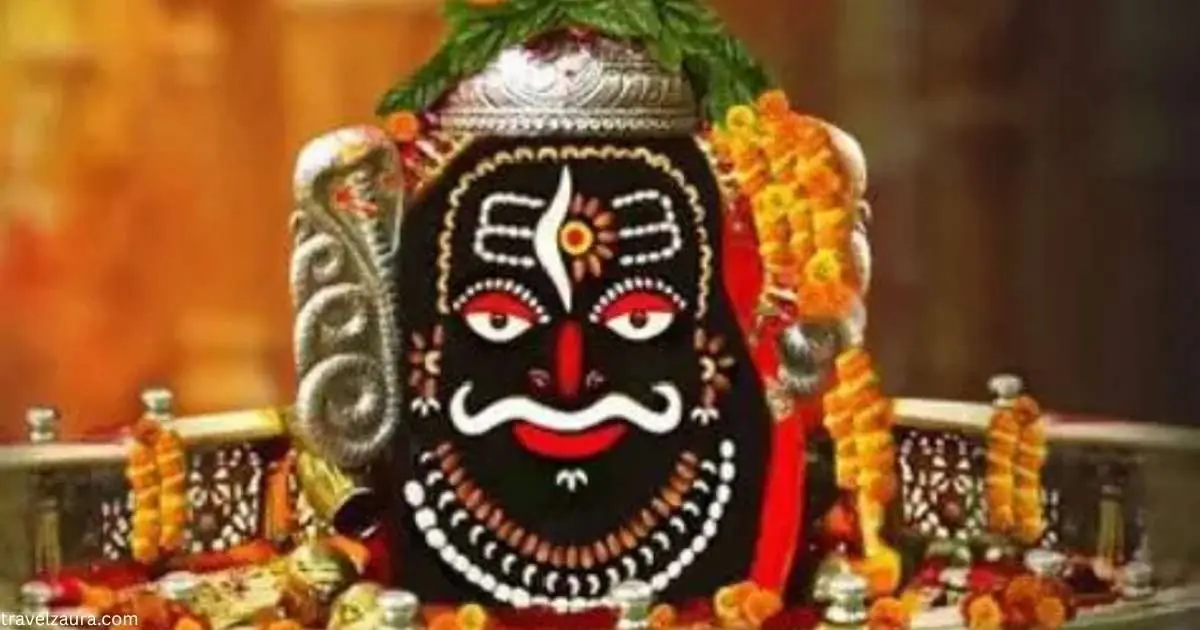
Mahakaleshwar visitors often search for one fixed opening time and one closing time, but temple operations are usually more layered than that. There may be a public gate schedule, a darshan window, an inner-sanctum access window, a reporting time for booked devotees, and separate timings for pooja or aarti. These are not interchangeable.
For example, the temple may be open to visitors while the Garbh Grah route is temporarily restricted for a ritual. Similarly, a booking portal may show a reporting time rather than the exact moment when a devotee will stand before the deity. Queue movement, security checks, crowd limits, and ongoing worship can affect the actual waiting period.
The following table is a planning framework rather than a live timetable. The official temple trust or booking platform should be treated as the final authority for the selected date and time.
| Visitor service | What it generally means | What you should verify | Why the timing may change |
|---|---|---|---|
| General darshan | Regular viewing route for visitors | Gate opening, queue entry and any same-day restrictions | Crowd volume, security arrangements and rituals |
| Garbh Grah darshan | Restricted access connected with the inner sanctum | Eligibility, date, reporting time, ID rules and route | Sanctum rituals, capacity limits and administrative orders |
| Pooja or seva | A booked devotional service rather than simple viewing | Ritual start time, participant details and inclusions | Temple calendar, priestly schedule and festival duties |
| Aarti | A scheduled worship ceremony that visitors may attend under rules | Entry cutoff, seating or viewing arrangement and dress rules | Special ceremonies, crowd control and festival schedules |
| VIP or priority darshan | A managed or faster access category, if offered | Whether it includes only priority entry or any inner-sanctum access | Protocol movement, high footfall and temporary restrictions |
When you check a schedule, look for a complete date and time entry rather than a general statement such as “temple open all day.” A useful notice should make clear whether it concerns the temple gate, a darshan slot, an aarti reporting time, or the booking counter.
Festival timings deserve extra caution. The schedule followed on an ordinary weekday may not apply during Mahashivratri, Shravan or Sawan Mondays, major religious occasions, public holidays, or periods of heavy pilgrimage. Even a regular Monday can have a different crowd pattern from a quieter weekday, so keep your travel plan flexible.
The safest booking process begins with the official temple website or an officially identified booking platform. Search results, social media posts, hotel desks, and travel agents can help you discover that a service exists, but they should not be treated as proof of current availability. A booking is valid only when it is generated through the authorised channel and carries the required confirmation details.
Online booking may open for selected dates rather than the entire calendar. Some services may show several time slots, while others may be released in limited batches or become unavailable during special-day arrangements. The release pattern can change, so the fact that a slot was visible last month doesn’t guarantee that the same booking window will be used for your visit.
Use this sequence when booking online:
A payment receipt alone may not be the same as a confirmed darshan ticket. Check that the document contains the devotee’s name, service name, date, reporting time, booking number, and any identity instructions. If the status says pending, failed, or under verification, contact the official support channel before assuming that entry is assured.
Offline booking should be treated separately. An on-site counter, if operating for a particular service, may have its own hours and limited availability.
Temple opening hours do not automatically indicate that a counter will sell every category throughout the day. Confirm counter details from an official notice before travelling to Ujjain solely to purchase a ticket.
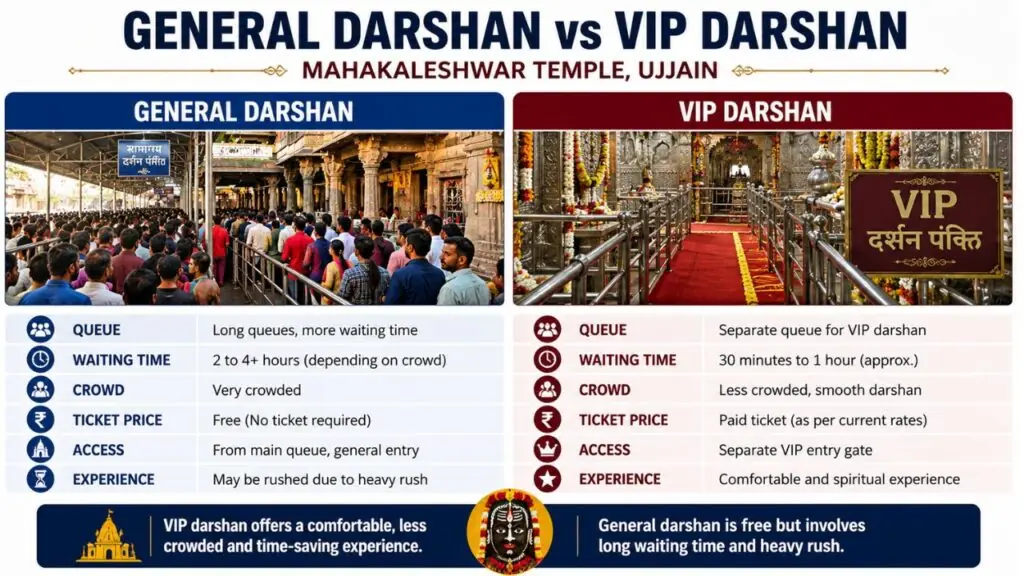
“VIP darshan” is a broad phrase used by visitors and online listings, but it doesn’t always describe one standard product. The official temple system may use terms such as priority darshan, sheeghra darshan, special darshan, protocol entry, or a paid access category. These names can have different rules, and some may be unavailable on busy festival dates.
A priority ticket normally relates to queue or route management. It should not automatically be read as permission to enter the Garbh Grah, touch the deity, perform a personal ritual, or remain inside the sanctum for a chosen length of time. The booking description and the instructions issued for that date control the actual service.
Searches for the “₹750 VIP Darshan ticket” are common, but an amount seen in an old article, video, screenshot, or chat message is not reliable evidence of the current ticket price. Prices can change, categories can be renamed, and a listed amount may apply to one person, one service, or one date only. It may also exclude a payment gateway charge or include conditions that are not visible in a short social media post.
Before paying, confirm all of the following:
Don’t purchase a “guaranteed inner entry” promise from an unauthorised seller. The temple may refuse a ticket that cannot be found in its system, even if the document looks professional. If a seller avoids showing the official service name, refuses to provide a verifiable booking code, or asks for payment into a personal account without a clear receipt, treat that as a warning sign.
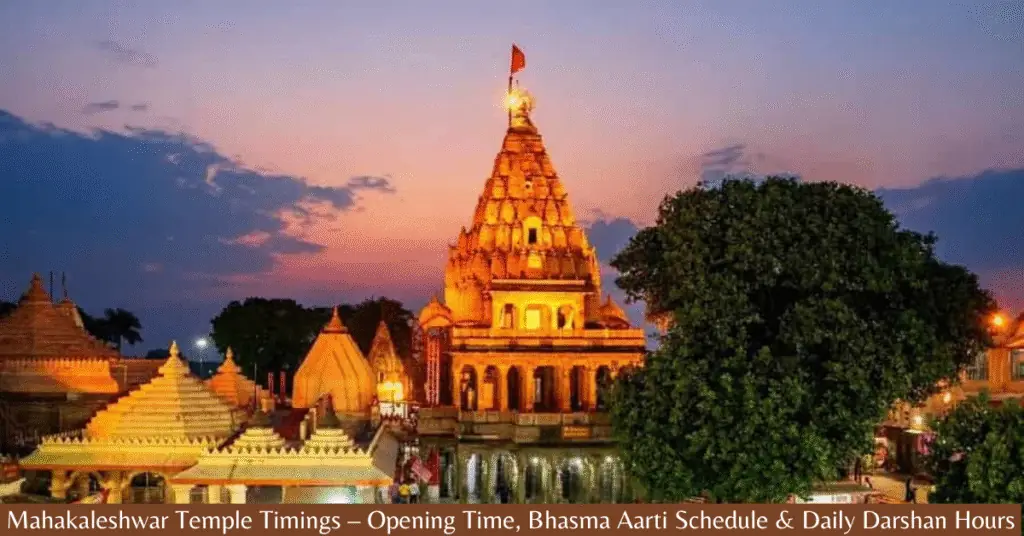
Darshan and pooja are related but different. Darshan means viewing or being in the presence of the deity.
Pooja is a ritual offering or worship service, which may involve a priest performing specific rites on behalf of a devotee. Aarti is a particular worship ceremony, commonly involving a lamp or flame, while seva refers to a devotional service or contribution category.
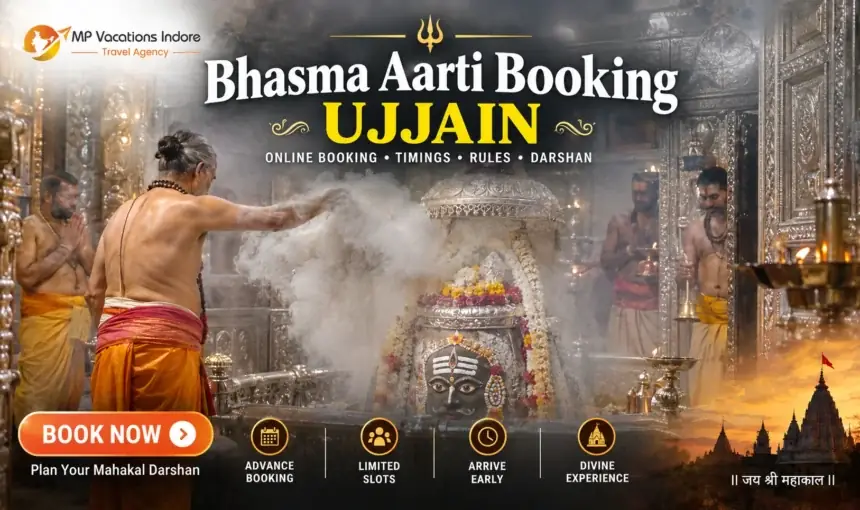
Bhasm Aarti, also written as Bhasma Aarti, is the well-known pre-dawn worship ceremony at Mahakaleshwar. Its early timing makes planning especially important. A visitor who books a Bhasm Aarti opportunity should not assume that the same ticket provides all-day temple access, ordinary Garbh Grah entry, or permission to take part in every other pooja.
Ritual schedules can also affect the regular darshan route. Aarti preparation may close or redirect a queue.
A pooja may require a quiet period near the sanctum. During special observances, the temple may change entry points, limit photography, alter clothing requirements, or suspend a normally available service.
Read the service description with three questions in mind:
Do not plan a tight train, bus, or return flight immediately after an early ritual. Even with a confirmed slot, entry checks and crowd movement can take time. If your group includes older people, children, or anyone with mobility concerns, choose a schedule that leaves room for walking, waiting, and possible route changes.
The latest Bhasm Aarti eligibility, dress instructions, reporting time, identity requirements, and booking status should be checked on the official temple channel. These details are more dependable than a general article because the temple trust can revise them for a particular date.
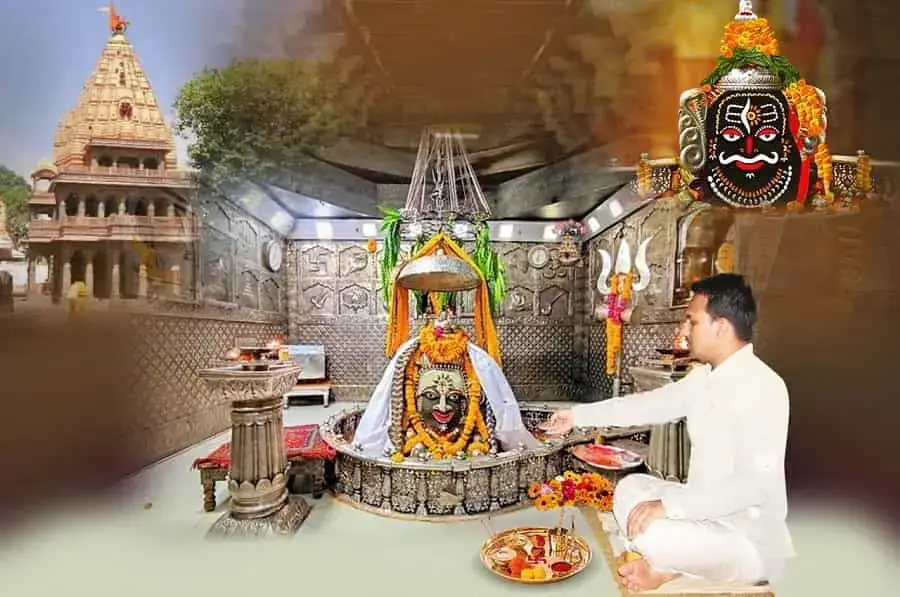
Carry the original identity document used during booking if the official instructions require identity verification. The name on the document should match the booking details. A screenshot of a form with a spelling mismatch may create difficulty even when the payment has succeeded, so review names carefully before submitting the form.
Accepted identity documents and document rules can change. For that reason, don’t rely on a random list copied from an old blog. Check the current booking confirmation and official notice for the permitted proof, whether children need separate identification, and whether one person can present documents for a group.
A practical visit file should include:
Dress and belongings rules should be checked before departure. Religious places may restrict certain clothing, bags, electronics, food items, photography, or footwear inside particular areas.
A locker facility, if available, may have its own queue and operating hours. Don’t assume that a large suitcase, camera, or mobile phone can be carried through every entrance.
Arrive before the reporting cutoff, not merely before the temple’s general opening time. Build in time for parking, finding the correct gate, security screening, depositing restricted belongings, and locating the queue. If your booking says “report by” a specific time, treat it as a deadline rather than an approximate suggestion.
Courtesy also helps queue management. Keep the group together, avoid blocking the entrance while searching for documents, and follow instructions from authorised staff. A booked slot doesn’t justify arguing with security personnel or attempting to enter through a different gate.
Mahakaleshwar receives visitors throughout the year, but crowd behaviour changes sharply around weekends, Mondays, Shravan or Sawan observances, Mahashivratri, Nag Panchami, and other significant religious dates. The temple trust and local administration may introduce barricades, alternate routes, restricted vehicle movement, additional security, or separate queues.
Special-day schedules can affect more than waiting time. A service that is normally bookable may be paused, shifted, or replaced by a festival arrangement.
A general walk-in route may operate under a token system. A paid category may be restricted because the temple is managing protocol movement or a large devotional gathering.
Check the date twice before making travel reservations. A common mistake is selecting a booking date in the portal and then arranging transport for a different calendar date because the journey begins late at night. The confirmation date, reporting date, and ritual date must be read together.
Use extra caution with early-morning services. A Bhasm Aarti reporting time may fall before ordinary local transport becomes convenient.
Consider where you will stay, how you will reach the reporting gate, and whether your accommodation can arrange transport at that hour. Don’t wait until the previous night to discover that the selected hotel is far from the required entry point.
For peak dates, these habits are sensible:
Festival instructions can override regular assumptions. Even if a friend visited under one arrangement, their experience may not apply to your date. The latest notice from the temple trust or district administration should take priority over personal advice.
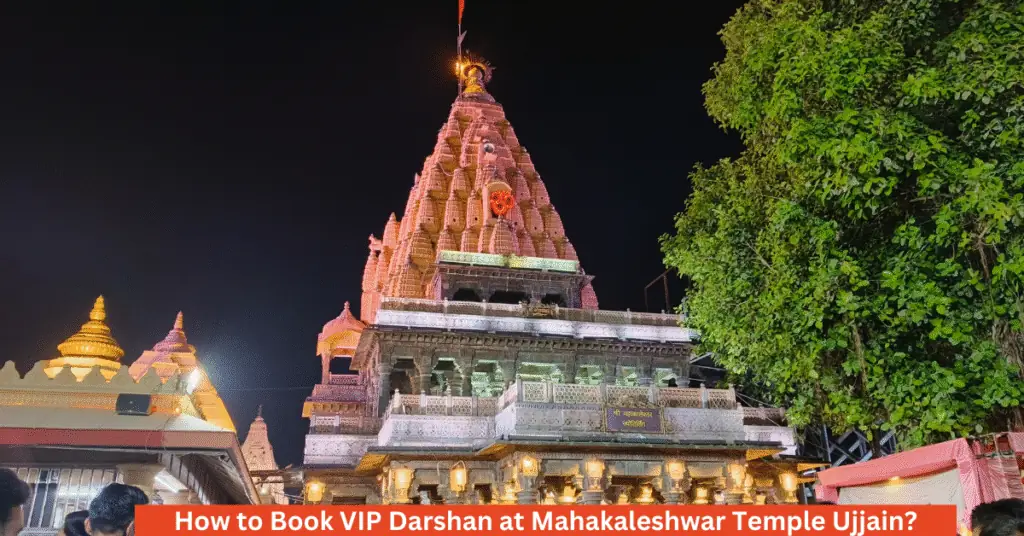
For time-sensitive information, start with the official Mahakaleshwar website and the temple trust’s current notices. The official Mahakaleshwar Temple website is the appropriate place to look for the current booking route, service labels, notices, and contact information. Check that the website domain is correct before entering personal or payment details.
Read beyond the first booking button. The useful information may appear in a notice, terms page, service description, FAQ, or downloadable instruction sheet. Look specifically for the selected date, opening and closing times, reporting location, ticket price, per-person conditions, refund policy, ID requirements, and restrictions on special days.
A reliable verification routine looks like this:
Be careful with pages that imitate official booking sites. A site may use the temple’s name in its page title without being operated by the temple trust. Warning signs include unclear ownership, spelling errors, no terms or contact details, pressure to pay immediately, payment requests to personal accounts, and promises of guaranteed VIP or Garbh Grah access.
If the official website does not show an exact current price or a slot for your date, the honest answer is that availability is not confirmed. Do not fill the gap with a guessed ticket price. Old references to amounts such as ₹750 may be useful for search context, but they cannot replace the current checkout amount or official notice.
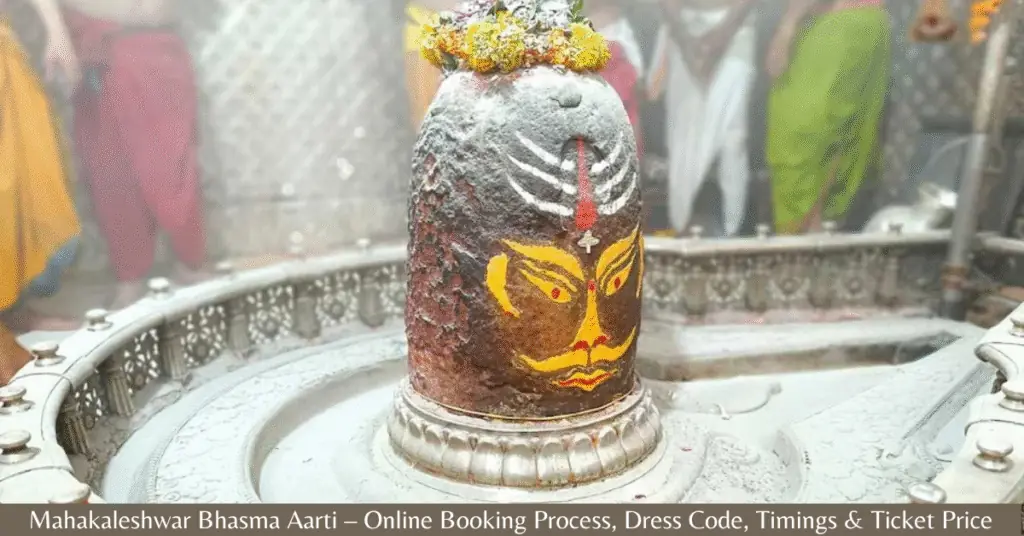
Real-world process example: The official Mahakaleshwar booking channel illustrates why ritual booking and ordinary darshan should be treated separately. A devotee seeking Bhasm Aarti must look for the specific Bhasm Aarti service, select an available date if the calendar is open, provide the requested devotee details, follow identity instructions, and retain the confirmation generated by the authorised system. The precise fields, release pattern, eligibility rules, and time windows may be revised by temple management.
This is not a fictional visitor story or a promise of current availability. It is a practical reading of the official booking process: the word “Aarti” in a search result is not itself a ticket.
The booking must show a valid status and a clear reporting instruction. If the site displays no slot, a third-party offer cannot create official availability.
A sensible travel plan for this kind of visit would involve checking accommodation and transport before final payment, confirming the reporting gate, keeping original proof ready, and avoiding a late-night arrival that leaves no buffer. The group should also decide who will carry the confirmation code and how phones or restricted belongings will be managed at the entrance.
The same method applies to Garbh Grah darshan booking. Start with the exact service, not the broad word “VIP.” Read the inclusions, check the date and time, confirm the number of people covered, and make sure the ticket’s instructions match the entry rules for the day.
If the visit includes more than one activity, leave space between them. A Bhasm Aarti, a separate pooja, and general darshan may each involve different queues or reporting points. Combining them into one tightly timed plan can create unnecessary stress, especially during festival periods.
Online confirmation is only one part of a successful temple visit. The final check should happen after booking and again before departure because schedules, entry routes, and instructions can change. This is particularly important for visitors travelling from another city or arranging a family group.
Use the following checklist:
Keep your expectations realistic. A paid ticket can organise access, but it cannot control crowd movement, weather, security orders, or the duration of a ritual. The temple’s staff may redirect visitors for reasons that are not visible from the booking page.
It’s also wise to keep personal information private. Use only the official booking site for document uploads and payments. Don’t post your QR code, ID number, or confirmation screenshot publicly, and don’t hand original documents to an unknown intermediary.
Check the current official temple booking channel for a service specifically labelled Garbh Grah darshan or the equivalent authorised category. Select the date and slot, fill in each devotee’s details, follow the identity instructions, pay the displayed amount if applicable, and save the confirmed ticket. If the service is not listed, don’t assume that a general VIP ticket includes it.
No. VIP or priority darshan generally describes managed access through a faster or separate queue.
Garbh Grah darshan refers to access connected with the inner sanctum. The two may be separate services, and only the official booking description can confirm whether a particular ticket includes any inner-area entry.
There is no safe single price to quote without checking the live official booking page for your date and category. Amounts mentioned in older posts, including ₹750, may be outdated or may refer to a different service. Confirm the final price, taxes, per-person rule, and refund conditions before payment.
General darshan and restricted services may follow different arrangements. Walk-in access, tokens, counters, or queues can depend on the day’s crowd and temple instructions. Never assume that walk-in availability for general darshan means that Garbh Grah entry, Bhasm Aarti, or a booked pooja will also be available without prior registration.
Reach before the reporting cutoff shown on your confirmation, allowing extra time for transport, security, baggage restrictions, and queue management. For pre-dawn or festival services, plan your route in advance and avoid arriving at the last minute. The reporting time is more important than a general statement about temple opening hours.
A calm Mahakal visit begins with the right category, not simply the fastest-looking ticket. For Mahakal’s Garbh Grah darshan booking, verify the current service name, date, time slot, price, identity rules, and reporting instructions through the official channel. Keep your confirmation and original proof ready, allow a realistic buffer, and recheck festival notices before leaving home.
Schedules can change, but careful verification keeps your plans dependable. Check the latest official update, then travel with a clear understanding of what your booking actually provides.





