Physical Address
304 North Cardinal St.
Dorchester Center, MA 02124
Physical Address
304 North Cardinal St.
Dorchester Center, MA 02124
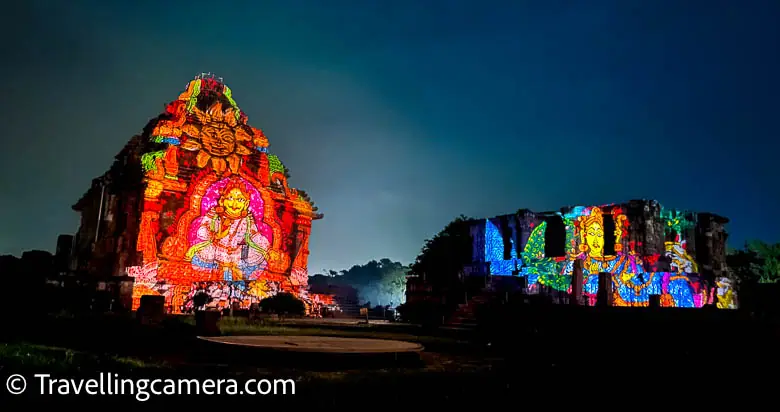
The Konark light and sound show brings Odisha’s famous Sun Temple to life through narration, illumination and music after the monument’s daytime visiting hours. If you’re planning a visit, the key questions are practical: what time the show starts, where tickets are sold, whether online booking is available, and how the evening programme differs from temple darshan or pooja.
Schedules can change because the show is a managed visitor attraction rather than a daily religious service. The safest plan is to confirm the latest timing and ticket instructions with Odisha Tourism or the authorised booking channel before travelling, especially during festivals, monsoon weather and public holidays.
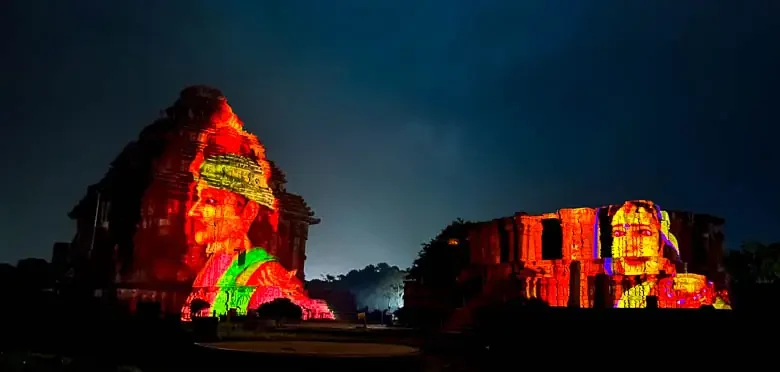
The Konark light and sound show is an evening cultural presentation held in the wider Sun Temple visitor complex at Konark, Odisha. It uses projected or focused lighting, recorded narration, music and the architectural setting of the monument to explain the history, symbolism and artistic importance of the temple. The programme is designed for visitors, not as a replacement for worship inside a functioning mandir.
That distinction matters. The Konark Sun Temple is a protected monument administered as a heritage site, and the visible temple complex is not generally operated like an active shrine where visitors attend a regular morning pooja, receive daily darshan of a presiding deity or watch a scheduled aarti.
The evening show is therefore best understood as a heritage interpretation experience. It tells the story of the temple and its builders through sound and light, rather than offering a religious service.
Konark’s main temple was built in the thirteenth century during the reign of King Narasimhadeva I of the Eastern Ganga dynasty. Its famous chariot form, stone wheels, horses and sculptural programme reflect the temple’s association with Surya, the sun god.
The monument is also recognised internationally: UNESCO lists the Sun Temple at Konârak as a World Heritage property. Visitors who want historical context can consult the UNESCO World Heritage information for the Sun Temple at Konârak.
The show adds a different layer to a daytime visit. In daylight, you can study the carvings, wheel designs and structural details.
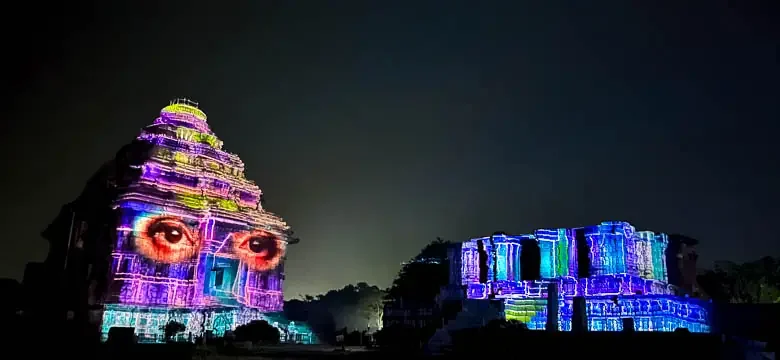
After dark, controlled illumination directs attention to selected parts of the architecture while the narration connects the monument with Odisha’s culture, history and artistic traditions. It’s a good option for people who have already explored the temple in the afternoon and want a more guided presentation in the evening.
In common Indian usage, darshan means viewing or being in the presence of a deity. Pooja refers to ritual worship, while aarti is a devotional ceremony involving lamps, chants or music. These terms are central to an active temple’s timetable, but they shouldn’t automatically be applied to Konark’s evening programme.
People often search for “Konark light and sound show timing today,” but there may not be one permanent time that applies throughout the year. Evening programmes can be arranged in one or more sessions, and the published schedule may vary by season, operational planning, language presentation or special events. A timing shown on an old travel page should never be treated as confirmation for your travel date.
Public information about the attraction has commonly described evening shows rather than daytime presentations. In practical terms, that means visitors should plan to reach the complex before the reporting time printed on the ticket, not arrive at the start time and expect immediate admission. Security checks, ticket verification and seating can take several minutes.
| Visitor requirement | What to check before travelling | Why it matters |
|---|---|---|
| Show start time | The official session time for your date | Sessions may vary by season or administration |
| Reporting time | Whether entry is required 15–30 minutes early, or as printed on the ticket | Late arrivals may face delayed seating or refusal of entry |
| Show duration | The duration stated by the booking system or ticket counter | Useful for planning transport back to Puri or Bhubaneswar |
| Weekly closure | Any maintenance day or non-operational day | A show may not run every day even if the monument is open |
| Weather status | Cancellation or postponement notices during rain or storms | Outdoor or semi-open arrangements can be weather-sensitive |
Don’t confuse the show’s evening schedule with the Sun Temple’s daytime visiting hours. The Archaeological Survey of India controls access to the protected monument, while the light and sound programme may be managed through a separate tourism or interpretation facility. Their tickets, counters and operating rules can therefore differ.
Allow more time than the stated performance length. A sensible evening plan includes travel to the venue, parking or drop-off, ticket verification, security screening, seating and the journey out after the final session.
If you’re travelling from Puri, remember that the road journey can take longer during holiday traffic. Visitors based in Bhubaneswar or near the airport should also account for return travel rather than booking a tight late-night connection.
For a relaxed visit, explore the temple during daylight and keep a buffer before the show. This gives you time to examine the sculptures without rushing and reduces the risk of missing your reporting window.
Online booking for the Konark light and sound show may be offered through an authorised Odisha Tourism, government tourism or designated ticketing system, but availability is not always consistent. Some dates may appear online while others are released closer to the performance day. A search result or third-party listing can show a price or session that no longer applies, so the booking page itself should be treated as the final reference.
Offline tickets may be available at an authorised counter near the show venue when a session is operating. That doesn’t guarantee a seat.
Popular weekends, school holidays, winter travel periods and festival dates can fill more quickly than ordinary weekdays. If the online system shows a “sold out” status, buying a ticket at the venue may not be possible.
| Booking method | Best suited to | Important caution |
|---|---|---|
| Authorised online booking | Travellers who need a confirmed session before arrival | Check the date, language, venue and cancellation policy before payment |
| Official counter | Visitors already in Konark or making a same-day decision | Tickets may depend on availability and the counter’s operating hours |
| Hotel or tour operator | Travellers arranging transport and sightseeing together | Ask for the official ticket component and a receipt; don’t assume a verbal promise is a reservation |
Most formal ticket systems ask for basic contact information and may require an identification document at entry. The exact requirement depends on the operator and the booking channel. Keep the confirmation message, transaction reference and a screenshot available in case mobile connectivity is weak near the venue.
Never pay an unofficial individual who claims to guarantee entry without giving a verifiable receipt. A reliable booking channel should clearly identify the operator, show the selected session and state the payment or cancellation conditions. If a page has no venue information, no contact details and no transparent ticket terms, treat it cautiously.
The question “Why is Konark Mandir closed?” often comes from visitors expecting an active temple. The historic Sun Temple is a protected monument, and access is governed by conservation, safety and visitor-management rules.
The sanctum is not used in the same way as a functioning neighbourhood or pilgrimage temple. As a result, visitors should not plan around a conventional darshan, special pooja booking or daily aarti timetable at the main monument.
Daytime entry hours are usually published by the Archaeological Survey of India or the relevant monument ticketing authority, but they can change because of administrative decisions, national holidays, conservation work or exceptional circumstances. The light and sound show has a separate evening schedule. Confirm both if you plan to do a daytime visit followed by the presentation.
| Activity | What it generally means at Konark | Where to verify the latest information |
|---|---|---|
| Daytime monument visit | Entry to the protected Sun Temple complex during published visitor hours | ASI or authorised monument ticket information |
| Darshan | Not a standard daily service like one found at an active temple shrine | Do not rely on generic pilgrimage timetables |
| Pooja or aarti | No regular public schedule should be assumed for the main protected monument | Only trust a specific official notice from an authorised religious institution |
| Light and sound show | An evening heritage and interpretation programme with separate admission arrangements | Odisha Tourism or the authorised show booking channel |
There are religious sites in and around Konark where worship may take place, but their rituals should not be presented as the schedule of the Sun Temple itself. A local shrine can have its own priest, opening hours and festival customs. If your purpose is devotional worship rather than architectural exploration, identify the specific temple first and verify its pooja timings directly.
A visitor who expects a morning aarti at the main Sun Temple may be disappointed, while someone coming for architecture and cultural heritage may find the site deeply rewarding. The monument’s wheel carvings, surviving structures and sculptural details are best approached as part of a historical visit. The evening programme then offers a narrated interpretation of what you saw.
Konark is also close enough to fit into a broader Odisha journey involving Puri and Bhubaneswar. Yet a packed schedule can become stressful if you try to combine a long temple visit, beach travel, hotel check-in and a fixed show session on the same evening. Give the programme its own time window.
The presentation typically combines narration with illumination of the temple’s architectural features. Depending on the current production, the story may refer to the Sun Temple’s origin, the Eastern Ganga period, Surya worship, the chariot concept, Odisha’s maritime and artistic history, and the preservation of the monument. Language options, if offered, should be confirmed at booking rather than assumed from an old description.
Some light and sound attractions use headphones or wireless headphones so that visitors can hear narration clearly without excessive loudspeaker volume. Whether Konark’s current arrangement uses such equipment, fixed speakers or another system may depend on the installation and session. The ticket or venue staff should explain collection, return and replacement rules if any audio device is issued.
Lighting can make carvings appear different from the way they look in the afternoon. That’s part of the experience, but it doesn’t replace daylight observation. Fine sculptural details, stone texture and the full setting are easier to appreciate before sunset, while the show provides a more directed story after dark.
The Sun Temple’s UNESCO World Heritage status provides a useful example of why interpretation matters. The property was inscribed in 1984 because of its architectural and sculptural significance, not because it operates as a conventional living temple with an everyday pooja roster. The light and sound show fits within that heritage-education context: it helps general visitors understand a complex monument without claiming that an evening performance is a religious ritual.
This distinction also explains why conservation rules may be strict. A protected stone monument cannot be treated like an ordinary event venue.
Lighting equipment, visitor movement, sound levels and access routes need to be managed so that the show doesn’t compromise the ancient architecture. If a particular zone is closed, follow the staff’s instructions rather than trying to find a better photograph.
There may not be a single dress code for the show comparable to the rules at an active shrine. Still, respectful clothing is appropriate because you’re visiting a major cultural and religiously significant monument. Comfortable, modest attire is practical in a public heritage setting, particularly if you’re also visiting nearby temples during the same trip.
Photography rules can differ between the daytime monument visit and the evening show. Flash photography may be discouraged, and tripods or large camera equipment may be restricted in seating areas. Don’t assume that a camera permitted at the outer complex is automatically acceptable during the performance.
Accessibility deserves advance attention. Historic sites often contain uneven ground, steps, narrow approaches and surfaces that can be difficult for wheelchair users or people with limited mobility.
Ask the official venue or ticket counter about accessible entry, seating, vehicle drop-off and restroom access before booking. Staff may be able to suggest the most practical route, but facilities can be limited because of the ancient site’s physical layout.
Families should also check whether children require individual tickets and whether infants can be accommodated comfortably during the session. A narration-based show may be quiet and seated, but younger children may find the evening duration or darkness challenging. Carry water for the journey, while respecting any restrictions on taking food into the venue.
A reliable check is more valuable than a copied schedule. Use this process before you set out for Konark.
If online booking is unavailable, contact the official tourism information point or ask at the authorised counter. Avoid assuming that a private taxi driver, hotel desk or unverified social media account has the latest operational information. They may be helpful for local logistics, but the final timing should come from the show’s operator.

Konark Dance Festival and other cultural events can increase visitor numbers around the heritage site. Festival arrangements may add performances elsewhere, alter traffic movement or create separate ticket categories. They don’t necessarily mean that the regular light and sound show will run at the same time or under the same conditions.
Winter is often comfortable for exploring Odisha, but it’s also a popular travel period. Summer afternoons can be hot, while monsoon weather may affect outdoor movement and evening operations. During Rath Yatra-related travel periods in Puri, public holidays and school vacations, reserve accommodation and transport with extra care.
These experiences serve different purposes, so the better choice depends on your interests and available time. Daylight is strongest for architecture, photography and close study of the stonework. The evening show is more structured and may help first-time visitors understand the monument’s story without arranging a separate guide.
| Feature | Daytime Sun Temple visit | Evening light and sound show |
|---|---|---|
| Main purpose | Viewing the protected monument and sculptures | Receiving a narrated interpretation through sound and lighting |
| Timing | Published monument visiting hours | One or more fixed evening sessions, subject to change |
| Ticketing | Monument entry arrangements | May require a separate ticket or booking |
| Best for | Architecture, history, photography and unhurried exploration | Families, first-time visitors and those who prefer guided storytelling |
| Weather concerns | Heat, sun and rain during outdoor walking | Rain, wind and evening visibility or operational changes |
If you have only one short stop in Konark, prioritise the daytime monument visit if your main interest is the architecture. Add the sound show when you can stay into the evening and have confirmed a session. For many travellers, doing both creates the fullest experience: observation first, explanation later.
Those travelling with older family members should ask about seating and walking distances. People who are sensitive to loud sound may prefer to sit away from speakers, if seating choices are available. A guide, hotel or driver can help with transport, but they can’t guarantee a show ticket unless the reservation is issued through an authorised system.
The show is scheduled in the evening, but the exact session time can change. Check the current authorised booking page or the venue’s official notice for your date, including reporting time and any weekly closure.
Online booking may be available through an authorised Odisha Tourism or designated government booking channel. Availability, session release dates and payment rules can change, so use the current booking system rather than relying on an old travel listing.
Not necessarily. The monument visit and the evening interpretation programme may have separate operators and admission arrangements. Confirm whether one ticket includes both before completing payment.
You shouldn’t assume a daily public pooja, aarti or darshan timetable at the protected monument. It is primarily a heritage site rather than an active temple operating on the schedule of a living shrine.
Puri and Konark are separate destinations. A programme advertised in Puri should not be treated as the Konark show unless the venue, organiser and ticket clearly identify the Sun Temple attraction.
Ask the authorised operator about cancellation, postponement and refund rules. Weather decisions can be made close to the session, particularly if the venue or equipment is exposed to rain.
Arrive according to the reporting time printed on your ticket and allow additional time for traffic, parking, security and ticket checks. Reaching at least several minutes early is safer than arriving exactly at the advertised start.
The Konark light and sound show is most rewarding when you treat it as one part of a wider heritage visit, not as a substitute for temple darshan or pooja. See the Sun Temple in daylight, understand that the monument and the show may use separate ticket systems, and keep your evening flexible enough for security, traffic and weather-related changes.
Before leaving for Odisha, verify the current session, booking status, reporting time and cancellation policy through the authorised source. A final check on the day can save a long journey from Puri or Bhubaneswar from turning into a missed performance. As the site continues to balance public access with conservation, the best visitor habit is simple: confirm first, arrive respectfully, and let the ancient architecture lead the experience.





