Physical Address
304 North Cardinal St.
Dorchester Center, MA 02124
Physical Address
304 North Cardinal St.
Dorchester Center, MA 02124
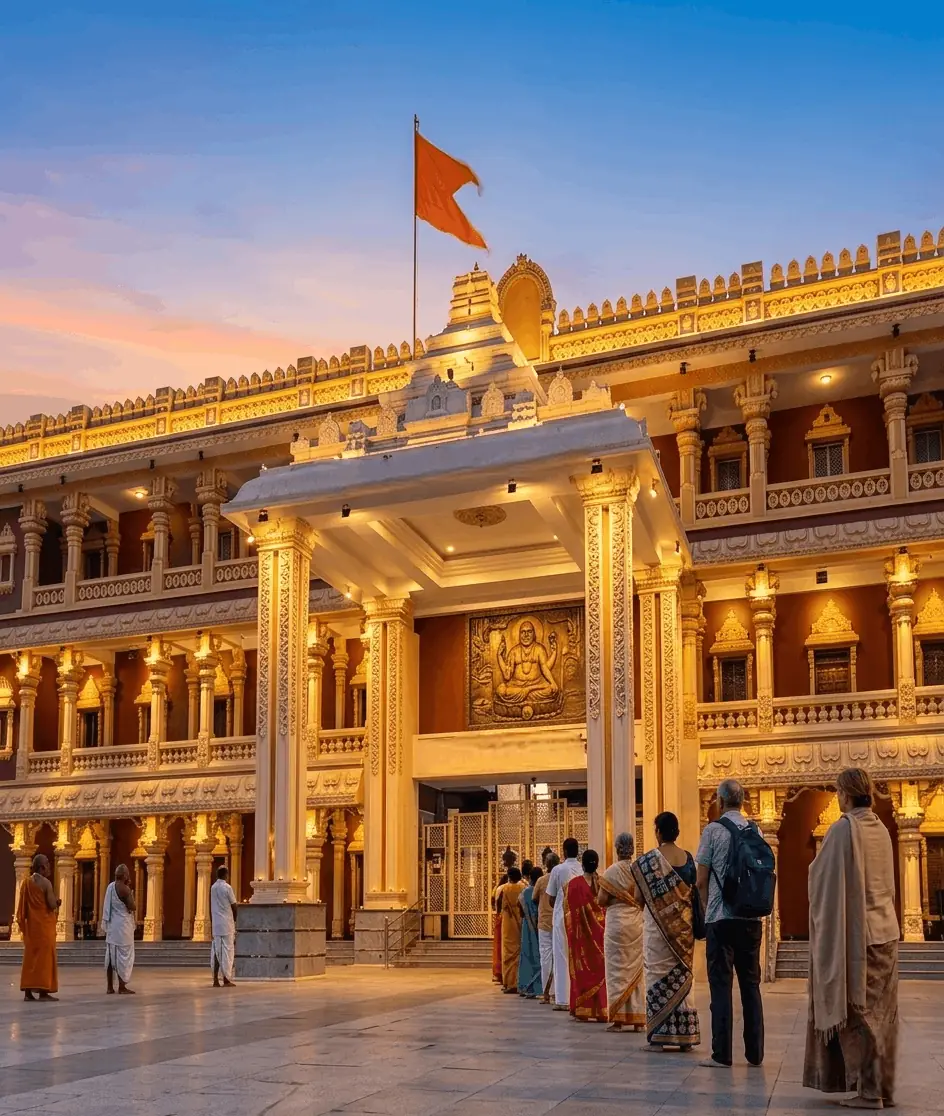
Accurate information about Mantralayam Temple timings can make a major difference to your pilgrimage, especially if you’re travelling from Bengaluru, Hyderabad, Chennai, Vijayawada or nearby towns. Darshan, seva, pooja and accommodation arrangements may follow separate schedules, and festival days can bring changes that aren’t reflected in old travel posts.
This article explains how the Mantralayam temple visit generally works, how to verify the latest official timings, what to know about booking and queues, and how to plan respectfully around the Sri Raghavendra Swamy Matha. You’ll also find practical answers about location, entry, rooms, festivals and common mistakes.
A visit to Mantralayam is not always limited to walking into a temple and standing in a queue. Devotees may plan ordinary Darshan, participate in a seva, collect prasada, attend aarti, visit associated shrines or arrange a room through the Matha. Each activity can have its own reporting time, counter procedure and closing interval.
The most important point is that a timing printed on an old blog, social media image or travel video may no longer be current. Temple administrations sometimes adjust schedules for festivals, special observances, dignitary visits, crowd control, maintenance or religious programmes. A schedule can also distinguish between the time the premises open, the time Darshan begins, the last entry time and the time a particular seva is performed.
For that reason, treat online timing information as a planning reference rather than a guarantee. Before leaving home, check the official website, official booking portal or a verified notice issued by the Sri Raghavendra Swamy Matha administration. If you’re already travelling, confirm the position at an authorised information counter instead of relying on a tout or an unverified accommodation agent.
The same care applies to booking. A Darshan arrangement, a seva ticket, a room reservation and a donation receipt are not necessarily interchangeable. Knowing which service you’re booking helps you arrive at the correct counter with the right identification and enough time for reporting.
Mantralayam is located in Andhra Pradesh, on the banks of the Tungabhadra River and close to the Karnataka border. It’s widely associated with the Sri Raghavendra Swamy Matha, also known as Matha Mantralaya.
Because the town lies near a state boundary, visitors often ask whether Mantralayam is in Karnataka or Andhra Pradesh. The temple town is in Andhra Pradesh, although Karnataka is close and many pilgrims travel from cities in that state.
The central focus of the pilgrimage is the Brindavana of Sri Raghavendra Swamy, a revered Madhva saint and spiritual teacher. Raghavendra Swamy is connected with the Dvaita tradition associated with Sri Madhvacharya. Devotees visit the Matha for Darshan, prayer, seva, spiritual guidance and participation in religious observances connected with the saint’s teachings.
Religious belief is personal, so descriptions of blessings or spiritual benefit should be understood within the faith of the devotee rather than as a measurable promise. The Matha’s importance is also cultural.
Mantralayam brings together pilgrims, musicians, scholars, Haridasa traditions, families and communities linked with Madhva worship. Kannada, Telugu, Tamil, Marathi, Hindi and English may all be heard around the pilgrimage area.
The wider town includes accommodation facilities, food services, local transport, shrines and places connected with the pilgrimage. Some visitors also look for a museum or heritage-related attraction, while others focus entirely on the Brindavana and daily seva. Your plan should allow time for both the religious schedule and the practical movement between lodging, counters and temple areas.
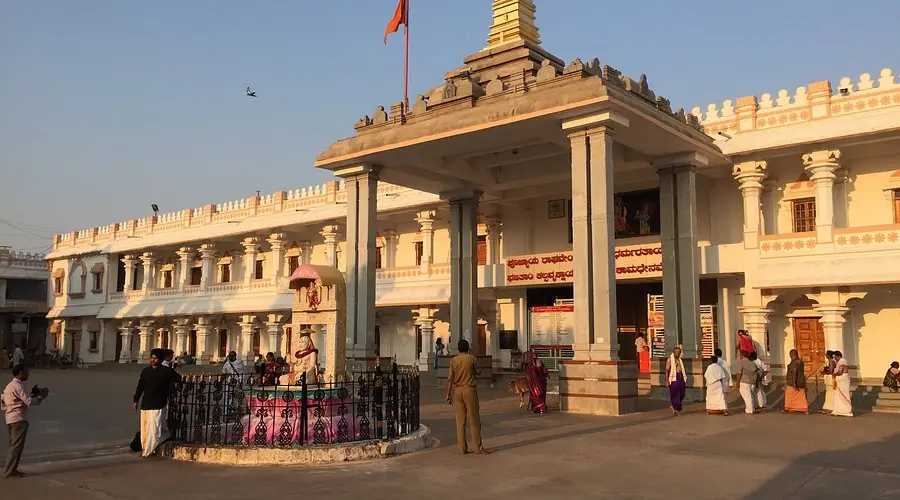
Devotees commonly come to offer prayers, fulfil a vow, participate in a seva, mark a family occasion or seek quiet spiritual guidance. Some arrive as part of a larger group organised by a bhajana mandali or religious institution. Others make a short stop during a longer South Indian pilgrimage that includes temples in Andhra Pradesh and Karnataka.
Questions such as why Raghavendra Swamy chose Mantralayam are often answered through Matha tradition and hagiographical accounts. These accounts carry deep significance for followers, but online articles should not present devotional narratives as independently verified historical facts. For a respectful and reliable understanding, consult publications or notices issued by the Matha itself.
Darshan means the opportunity to have the sacred sight of the deity or Brindavana. At Mantralayam, the visitor’s experience may depend on the day, the current ritual sequence, crowd level and whether a special event is taking place. Temple opening hours, Darshan availability and the last permitted entry can therefore be different things.
Rather than memorising a single daily timetable, look for the latest official schedule under headings such as Darshan, daily programmes, pooja timings, seva timings or temple information. Confirm whether the posted time applies to the main Matha, a particular shrine, a seva reporting counter or a residential facility.
On an ordinary day, arrive with enough margin before the time you hope to enter. This allows for footwear storage, security checks, queue formation, moving through the campus and asking directions. If you’re travelling with elderly people, children or someone who needs assistance, a generous buffer is more useful than trying to arrive exactly at the stated opening time.
| Visit requirement | What the time usually refers to | What you should verify |
|---|---|---|
| General Darshan | Period during which eligible visitors may join the Darshan arrangement | Opening, last entry and any temporary pause |
| Seva or special pooja | Ritual performance or reporting window for ticket holders | Booking category, reporting location and dress or entry rules |
| Aarti or scheduled ritual | A particular worship service attended under temple arrangements | Whether public participation is allowed and where to assemble |
| Accommodation check-in | Time window for receiving a room or lodging allocation | Identity documents, counter hours and cancellation conditions |
Do not assume that a shorter queue means the temple is about to close or that a longer queue indicates a special Darshan category. Queue movement may change when a ritual begins. Follow announcements and instructions from authorised volunteers.
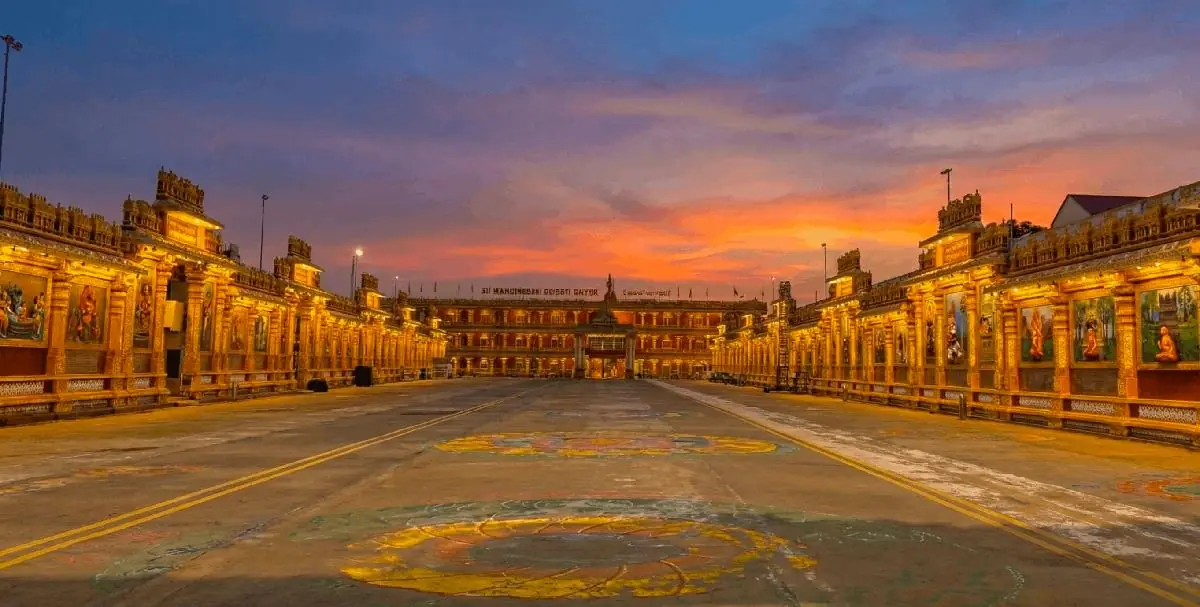
Many Indian temples organise daily worship around morning, midday and evening rituals, but the exact public schedule at Mantralayam must be confirmed through official channels. A ritual may temporarily affect the flow of general visitors. The pause may be brief or may apply to a specific area rather than the entire campus.
If your train or bus leaves at a fixed time, don’t schedule Darshan at the last possible moment. It’s safer to complete the temple visit earlier and keep time for collecting belongings, reaching the transport stand and handling unexpected queues. A pilgrim who plans only by clock time often forgets that temple procedures move differently from commercial appointments.
The words seva, pooja and aarti are often used together, but they describe different aspects of temple worship. Pooja refers broadly to ritual worship.
Aarti is a lamp-offering ceremony or worship segment involving a flame. Seva generally means devotional service, and in a temple administration it may refer to a specific worship offering for which a devotee registers or makes an offering according to the approved process.
A seva ticket does not automatically mean a private Darshan or unrestricted access to every area. Its benefits, reporting instructions and participation rules depend on the particular service.
Read the official description carefully before paying. If the listing is unclear, ask the Matha counter to explain whether the booking is for an individual, a couple, a family or a group.
Some devotees select a seva because of its religious significance, while others choose it for a particular time of day. The right choice depends on your purpose and practical constraints. Don’t book a service merely because an agent says it will guarantee immediate entry unless that claim is confirmed by the official administration.
Arrive before the reporting time rather than at the ritual start time. A ticket holder who reaches late may miss the reporting process even if the pooja itself hasn’t begun. Keep a printed or offline copy of the confirmation because mobile connectivity can be unreliable in crowded areas.
Booking at Mantralayam can refer to several separate services: Darshan-related arrangements, seva tickets, accommodation, donations or special event participation. These may be handled through different sections of an official system or through separate authorised counters. Never assume that an online room booking confirms a pooja booking, or that a donation receipt reserves a Darshan slot.
Start with the official website or the verified portal identified by the Matha administration. Check the domain name carefully before entering your phone number, identification details or payment information. Search results can include unofficial pages that use temple photographs and similar wording but have no authority to issue tickets.
A legitimate booking page should show the service name, date, applicant details, payment stage and confirmation information. Read the terms before submitting. Take a screenshot of the confirmation number, save the email or SMS, and carry an identity document matching the booking details.
Room booking deserves particular attention. Availability can depend on the chosen date, room category, maintenance, festival demand and the number of pilgrims in your party.
A room reservation may have a check-in window and occupancy conditions. Ask whether extra guests, early arrival, late arrival and cancellation are permitted rather than relying on assumptions.
Use only contact details published by the Matha or displayed at an authorised temple counter. Be cautious if somebody asks you to pay into a personal bank account, promises a “VIP” entry without written confirmation, or insists that a booking must be completed through a private messaging number.
Do not share one-time passwords or card information with a caller claiming to be temple staff. If payment fails, first check your bank statement and official booking account before attempting multiple transactions. Keep transaction references for follow-up with the authorised help desk.
The official Sri Raghavendra Swamy Matha website is the appropriate starting point for checking current notices and available institutional information. Because websites and booking interfaces can change, verify that the page you use is still the official channel before making payment.
A reliable pilgrimage plan begins with verification, not with a copied timing chart. Use the following process a few days before travel and repeat the check on the day of departure if your visit coincides with a festival or weekend.
On arrival, keep your group together without blocking passages. If a family member has mobility concerns, ask early about accessible routes or assistance. Parents should decide in advance where to meet if the group becomes separated, since mobile reception and crowd movement may make calling difficult.
Mantralayam can be especially busy during major religious observances connected with Sri Raghavendra Swamy, weekends, school holidays and regional festival periods. The annual Aradhana is one of the most significant occasions associated with the Matha, but the dates and public arrangements should be checked through official notices rather than assumed from a generic calendar.
During a peak period, the ordinary Darshan pattern may change. Authorities may introduce queue controls, restrict vehicle movement, alter counter locations, close some areas temporarily or prioritise registered participants in a scheduled programme. Accommodation can become difficult, and transport services may be more crowded than usual.
A practical strategy is to decide whether the festival atmosphere is central to your purpose. If you want to participate in the special observance, plan accommodation and transport well in advance and expect longer waiting periods. If your priority is a quieter prayer visit, consider a less crowded date after checking the current schedule.
Festival travel also requires realistic expectations. A ticket may give you eligibility to report for a service without guaranteeing that every part of the visit will take the same amount of time as on an ordinary day. Weather, crowd barriers, security checks and ritual timings can affect movement.
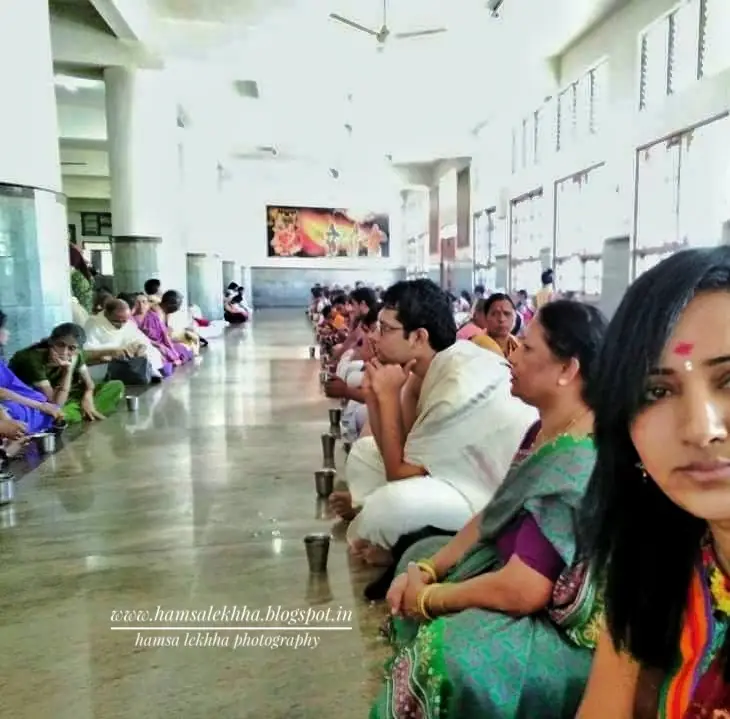
Check weather conditions before travelling, particularly if your route includes long road journeys or time outdoors. Wear comfortable footwear for walking, but remember that footwear may need to be left in a designated area.
Most visitors reach Mantralayam by road or rail, depending on their starting city and preferred route. Travel time varies significantly with train connections, bus schedules, road conditions and the distance between your arrival point and accommodation. Confirm the last local transfer before booking a late-night arrival.
Ask your hotel, Matha accommodation counter or an authorised local information point about the current route to the temple. Avoid accepting unsolicited offers that combine transport, special Darshan and “guaranteed” room allotment for a single cash payment. A low quoted price can hide extra charges or an unauthorised arrangement.
Temple etiquette is straightforward but important. Follow signs, respect the queue, keep conversations quiet near worship areas and comply with instructions about photography or mobile phones. Dress modestly and avoid carrying more than you need.
Visitors sometimes ask whether they can sleep in Mantralayam Temple. The answer depends on what they mean by “temple.” Pilgrims may find accommodation connected with the Matha or nearby lodging, but that doesn’t mean sleeping inside the sanctum or worship area is allowed. Room availability, allotment rules, check-in and identity requirements must be confirmed with the authorised accommodation office.
If you’re travelling with a senior citizen, ask about seating and shorter walking routes as soon as you arrive. Don’t assume that a particular queue is reserved for every person who needs assistance; request guidance politely from official staff.
Source-based example: The Sri Raghavendra Swamy Matha’s own official notices and programme information are the most reliable reference for changes connected with special observances, including Aradhana-related arrangements. Such notices can specify dates, programme details and visitor instructions that differ from the ordinary daily routine. The verified lesson is not a particular crowd number or ticket price; it is that the Matha itself treats special programmes as a separate planning category.
This example matters because many online pages present one fixed “Mantralayam temple timing” as if it applies to every date. An ordinary-day schedule cannot safely be used to plan a festival visit unless the official administration confirms that it remains valid. This is a general travel rule supported by the Matha’s practice of issuing event-specific information.
For clarity, the following is general guidance, not a claim about a particular ticket or date: imagine that a family finds a current official seva notice requiring reporting at a stated counter before a morning ritual. The family should follow that reporting instruction even if a travel blog lists a later general Darshan opening time. The notice governs the booked service; the blog does not.
When comparing information, give priority to sources in this order: a current official notice, an authorised temple counter, a verified booking confirmation, and then reputable government or institutional travel information. Social media posts and old visitor reviews can help you understand what a place feels like, but they shouldn’t determine your booking or arrival time.
The first mistake is treating a search result as an official confirmation. Search engines may display pages that are useful but outdated, particularly for temple timings and accommodation details. Always look for a date, issuing authority and a direct connection to the Matha administration.
The second is booking too late for a festival while assuming that all services remain available until the day of travel. A popular date can affect rooms, transport and seva availability at the same time. If your visit has a fixed purpose, verify availability before finalising tickets for your journey.
Another common error is confusing a Darshan ticket with a seva ticket. Read the service description, reporting point and inclusions. If the wording is unclear, pause the payment and ask the official help desk.
Some travellers also underestimate the effect of queues. Even where the religious ritual itself is brief, entry checks, movement through the campus and crowd controls can take time. Keep your itinerary flexible and avoid booking a return train immediately after the earliest possible Darshan slot.
A little caution protects both your money and the quality of your pilgrimage. It also helps the temple administration manage visitors more fairly.
Mantralayam is especially associated with the Brindavana of Sri Raghavendra Swamy and the Sri Raghavendra Swamy Matha. Devotees come for Darshan, seva, prayer and participation in traditions linked with the Madhva and Dvaita spiritual lineage.
Mantralayam is in Andhra Pradesh, near the Karnataka border. Its location makes it accessible from several Karnataka cities, which is why visitors sometimes describe it loosely as a Karnataka-side pilgrimage destination.
Visitors shouldn’t assume that sleeping inside a worship area is permitted. Ask the authorised Matha accommodation office about available rooms, check-in rules, occupancy and booking requirements.
Devotional and Matha traditions explain the saint’s connection with the place. Because accounts vary in how they present religious history, consult the official Matha’s publications or authorised representatives for the tradition followed there.
That depends on the current arrangement and the type of visit. General Darshan and special seva participation may follow different rules. Verify the latest instruction before travelling.
Check the official website, verified booking portal or an authorised temple counter. Confirm the reporting time, not just the general opening hours, because booked services may require earlier attendance.
A successful visit to Mantralayam depends less on memorising a fixed timetable and more on checking the right source for the right service. Confirm Darshan, pooja, seva, aarti, room booking and festival instructions separately, then keep enough time for queues and local travel. This approach is especially important for families, senior citizens and pilgrims arriving on a fixed train or bus schedule.
Before you leave, verify the latest information issued through the official Sri Raghavendra Swamy Matha channels and save your booking proof offline. With that small final step, your Mantralayam temple visit can be more orderly, respectful and spiritually focused.





