Physical Address
304 North Cardinal St.
Dorchester Center, MA 02124
Physical Address
304 North Cardinal St.
Dorchester Center, MA 02124
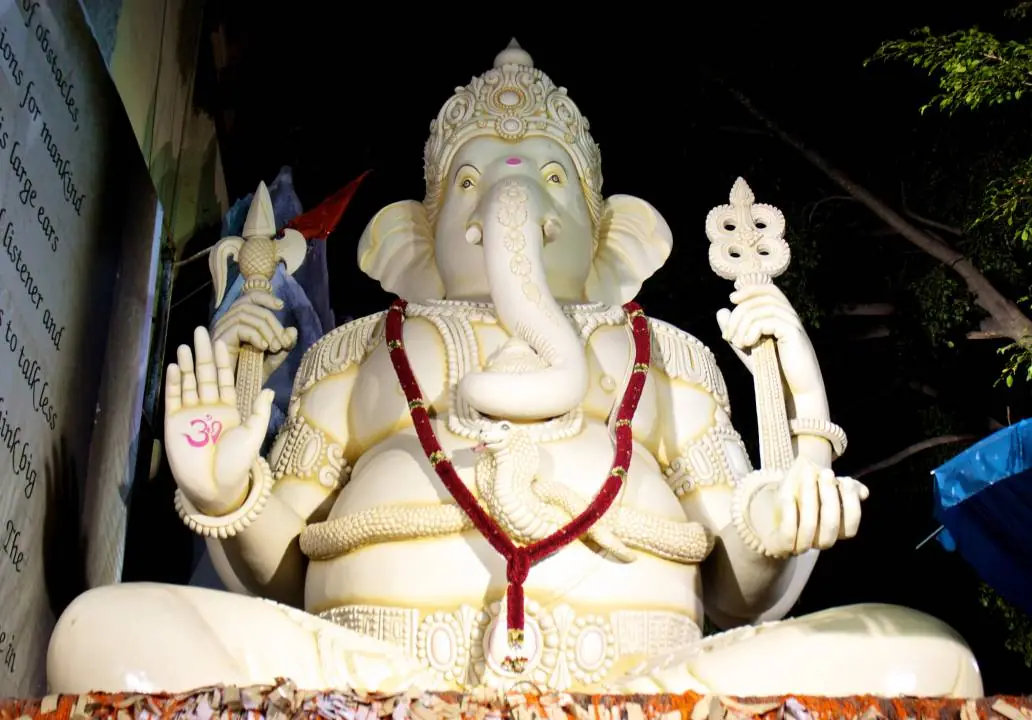
Shivoham Shiva Temple tickets are usually searched alongside questions about entry fees, darshan timings, pooja schedules and the best time to visit the famous Shiva shrine near Bengaluru’s Old Airport Road. The temple’s large seated Shiva statue, spiritual atmosphere and light-and-sound presentation make it different from a quick stop at a neighbourhood mandir.
Since timings, ticket arrangements and special programmes can change by day or festival, checking the latest official information matters. This article explains what visitors should verify before travelling, how to plan darshan, what to expect during pooja services, and how to avoid relying on outdated details found in search results.
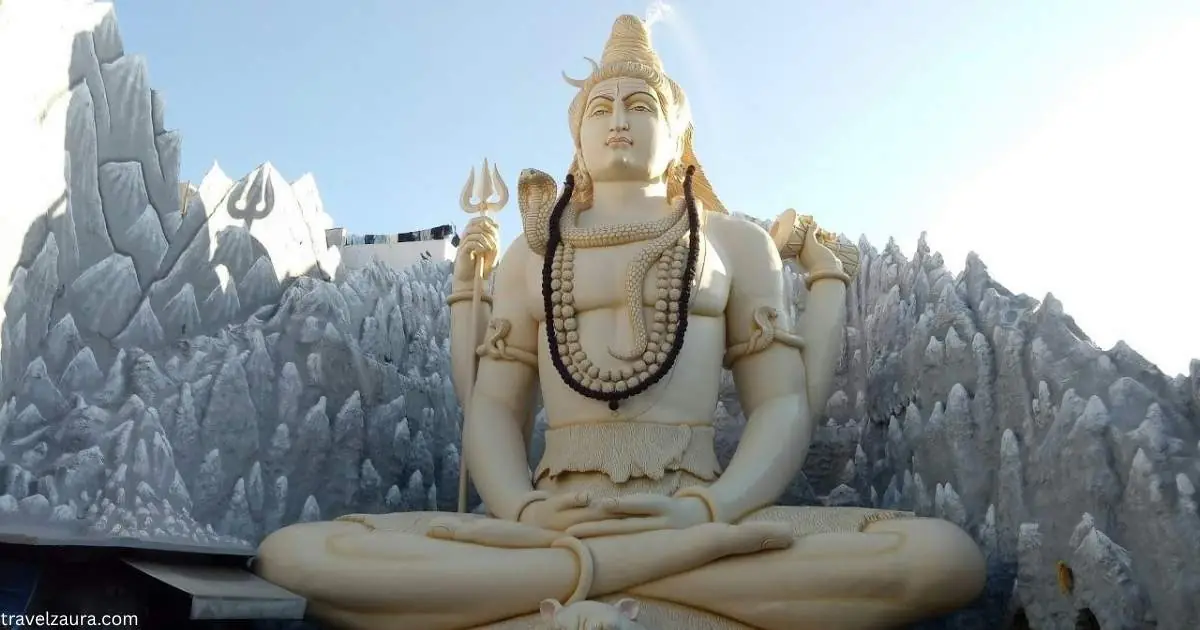
Shivoham Shiva Temple is a prominent Shiva shrine in Bengaluru, Karnataka, associated with the Kempfort area near the Old Airport Road. Its most recognisable feature is the enormous seated statue of Lord Shiva, which has made the temple a popular landmark for devotees, tourists and families. The site is designed not only as a traditional place of worship but also as a visual and educational spiritual attraction, with representations connected to important Hindu pilgrimage traditions.
The name “Shivoham” expresses the idea that the divine presence of Shiva is within every person. In Hindu philosophy, the phrase is linked with awareness of the relationship between the individual self and the divine.
Visitors may come for a personal prayer, a special pooja, a family outing, or simply to experience the temple’s atmosphere. Those reasons can affect how long the visit takes and whether a basic darshan visit is sufficient.
The temple complex has been associated with displays and devotional experiences connected with places such as Amarnath, Badrinath and Kedarnath. References to the Ganges, Himalayan pilgrimage routes and Shiva’s sacred associations help explain why the site appeals to people who may not be able to undertake a long yatra.
These representations shouldn’t be confused with the original pilgrimage destinations themselves. Shivoham Shiva Temple is a Bengaluru shrine and spiritual attraction, not a replacement for visiting Amarnath or the Himalayan temples.
For many visitors, the large statue is the first thing they notice. The deity is shown in a seated posture, creating a powerful visual focus from outside and within the complex.
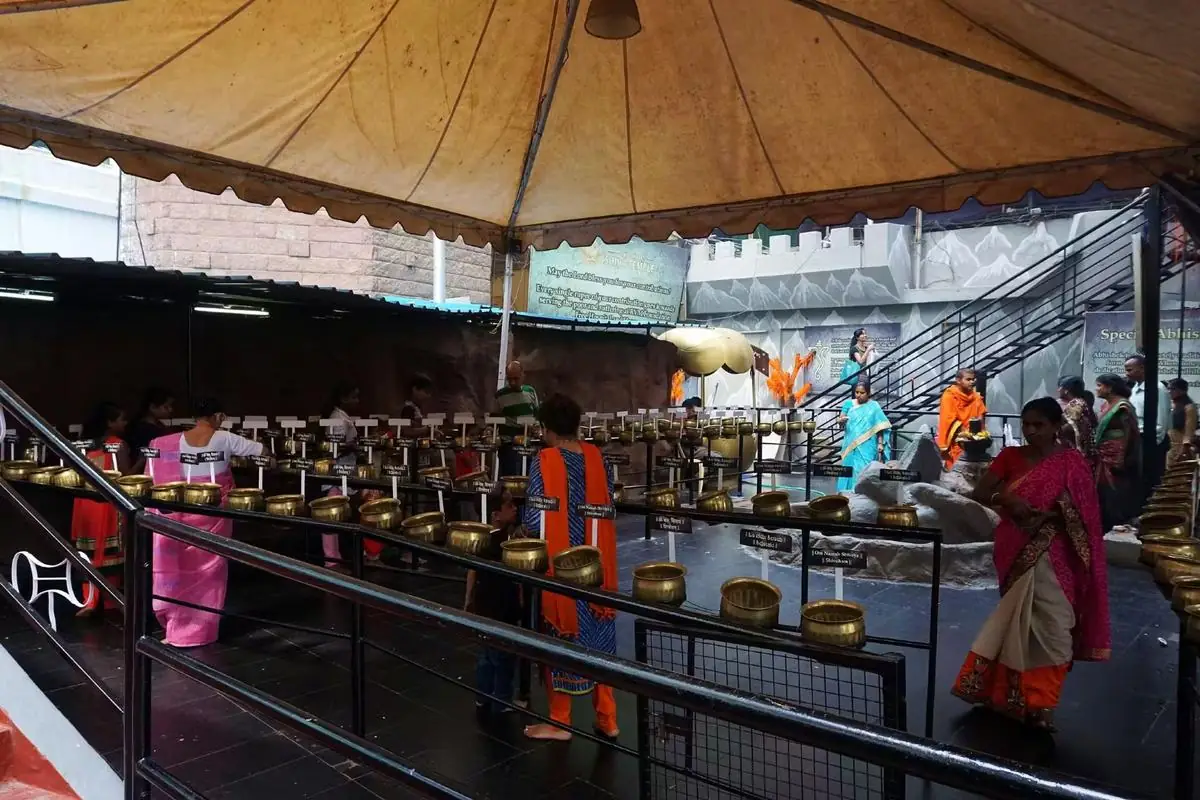
Depending on the programme operating on the day, visitors may also encounter devotional lighting, a light-and-sound presentation or other themed experiences. Such attractions can have separate schedules or arrangements from ordinary temple darshan, so a visitor should not assume that every ticket includes every activity.
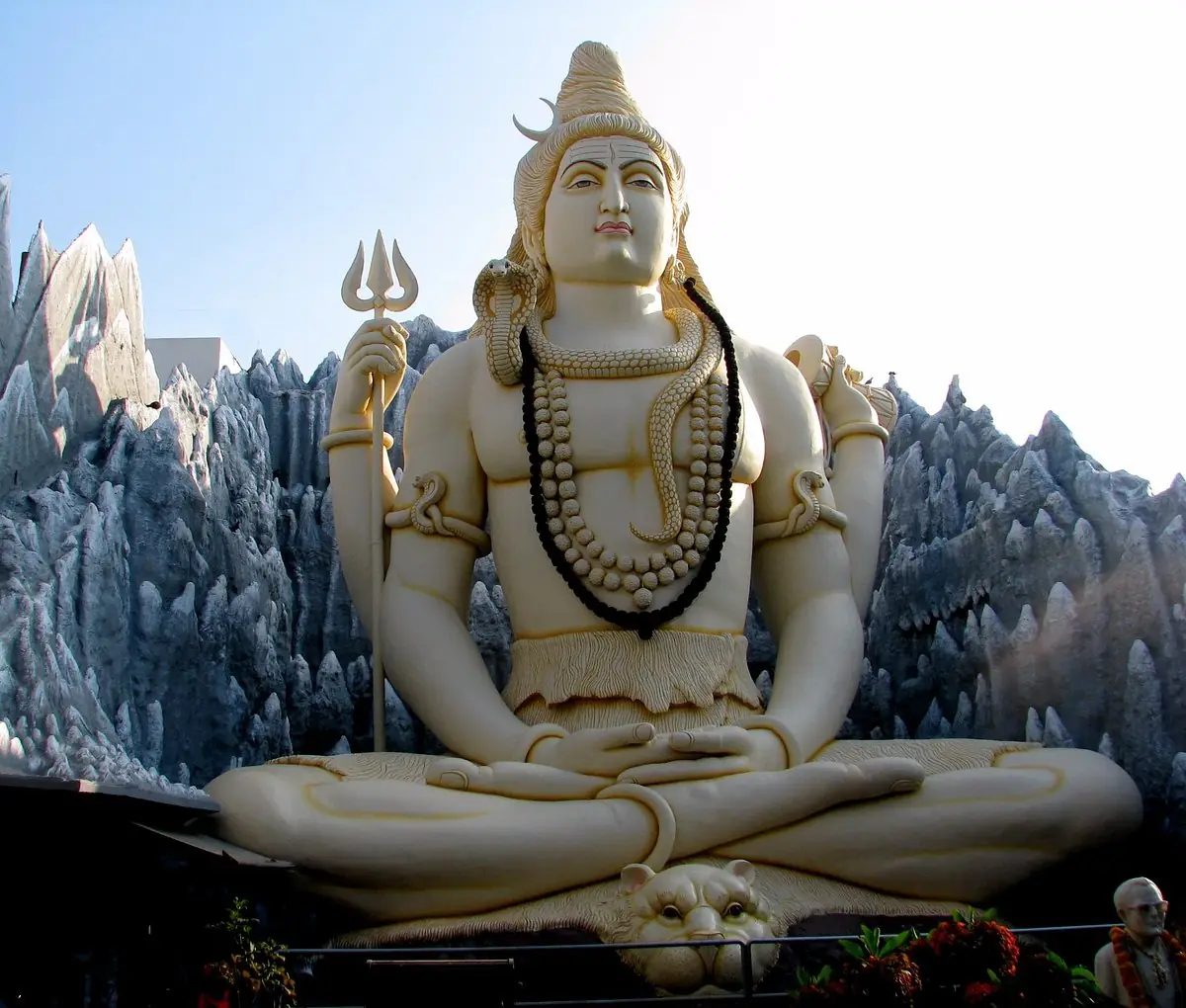
The temple is generally identified with the Kempfort area of Bengaluru, close to Old Airport Road and accessible from several well-known parts of the city. Travel time depends heavily on traffic, especially during office hours, weekends and festival periods. A map estimate may show a short distance from your location, but the actual journey can take considerably longer because Bengaluru traffic changes throughout the day.
If you’re travelling from outside the city, plan the temple visit with a buffer for traffic, parking and entry procedures. Airport-area roads can become busy, and app-based cab drop-off points may not always be immediately beside the entrance. Families with older people or children should confirm the walking distance from the vehicle drop-off point before committing to a tightly timed pooja booking.
There isn’t one universally applicable ticket figure that can safely be quoted for every visit. Entry arrangements may depend on whether you’re visiting for ordinary darshan, a festival programme, a light-and-sound presentation, a special pooja or a group activity. Search pages and older visitor posts often continue to display prices or rules that may no longer apply.
The safest approach is to treat the ticket question as a booking-category question. First identify what you want to attend. Basic temple entry, a special religious service and an attraction-style presentation may be handled differently, even if they take place within the same complex.
| Visit purpose | What to verify before travelling | Why the information may differ |
|---|---|---|
| Ordinary darshan | Whether entry is free, ticketed or subject to a donation arrangement | Normal access may differ from special-event access |
| Special pooja | Booking availability, reporting time, contribution or fee, and participant limits | Pooja services may run only at selected times |
| Aarti or devotional programme | Exact start time and whether visitors need prior registration | Ritual schedules can change on festival days |
| Light-and-sound or themed presentation | Show timing, separate ticket requirement and duration | It may not operate during every temple opening period |
| Group or school visit | Advance permission, group reporting time and contact procedure | Larger groups require additional coordination |
Do not transfer money to an individual phone number, social-media account or unofficial payment link simply because it uses the words “Shivoham tickets.” Use the contact or booking route published by the temple itself. The temple’s official website, Shivoham Shiva Temple’s official visitor information, is the most appropriate starting point for checking current arrangements, contact details and any booking instructions published by the shrine.
If no online ticket is displayed for your intended date, that doesn’t automatically mean the temple is closed or that entry is impossible. Some religious places manage ordinary darshan at the entrance and publish online information mainly for special services. Ask the official contact point whether walk-in entry is available, whether a donation receipt is issued, and whether a separate queue exists for booked pooja participants.
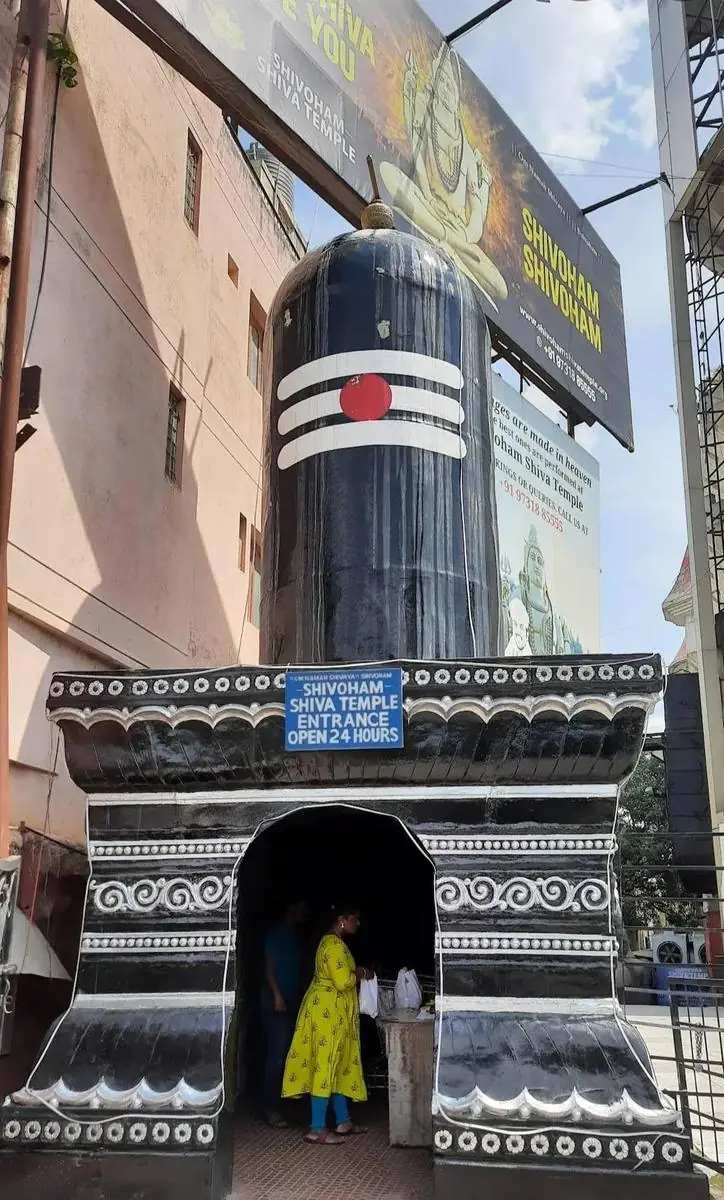
Temple operations can change because of maintenance, crowd control, festival planning, charity events, security requirements or changes to the attraction schedule. A fee shown in an old review may have been accurate at the time but still be misleading today. This is particularly important for visitors travelling from another city who have already paid for transport and accommodation.
Some visitors also use “entry fee” to mean the cost of parking, a pooja contribution, a special darshan receipt or a light-and-sound show ticket. These are not necessarily the same thing. Before paying, confirm what the amount covers, whether children need separate tickets, whether the booking is transferable, and whether cancellation or rescheduling is allowed.
Visitors often search for the opening and closing hours of Shivoham Shiva Temple as though there is one fixed timetable for every activity. In practice, a temple may have a public visiting window, a prayer schedule, a special pooja reporting time and a separate programme schedule. The public may be admitted during one period while a particular ritual is conducted at another.
Because current hours can change, the table below is intentionally a verification framework rather than an invented timetable. It shows the information you should obtain from the official temple channel before setting out.
| Timing to confirm | Question to ask | Planning implication |
|---|---|---|
| Morning opening | What time does visitor entry begin on the chosen date? | Useful for devotees seeking a quieter first visit |
| Daily darshan period | Is ordinary darshan available continuously or in sessions? | Helps you avoid arriving during a temporary pause |
| Morning pooja | Is prior booking required, and when must participants report? | Booked devotees may need to arrive before the ritual starts |
| Aarti timing | Does the aarti occur every day or only on selected occasions? | Festival and weekday schedules may differ |
| Evening closing | When does the last entry or final darshan end? | Closing time may not equal the last permitted entry |
| Special show | Is the light-and-sound presentation operating on the chosen day? | Show tickets may have a separate queue and duration |
When you call or message the temple, ask for the schedule for the exact date rather than requesting “today’s usual timings.” This matters around Maha Shivaratri, Mondays, school holidays and other important religious occasions. A normal weekday pattern may not apply when large numbers of devotees are expected.
Darshan means viewing or receiving the sight of the deity in a devotional setting. It isn’t always the same as participating in a pooja.
A pooja is a ritual offering that may include flowers, water, lamps, chants or other sacred items, while darshan can be a shorter act of prayer before the shrine. Visitors should ask whether a selected ticket is for entry, darshan, participation in a ritual or a presentation.
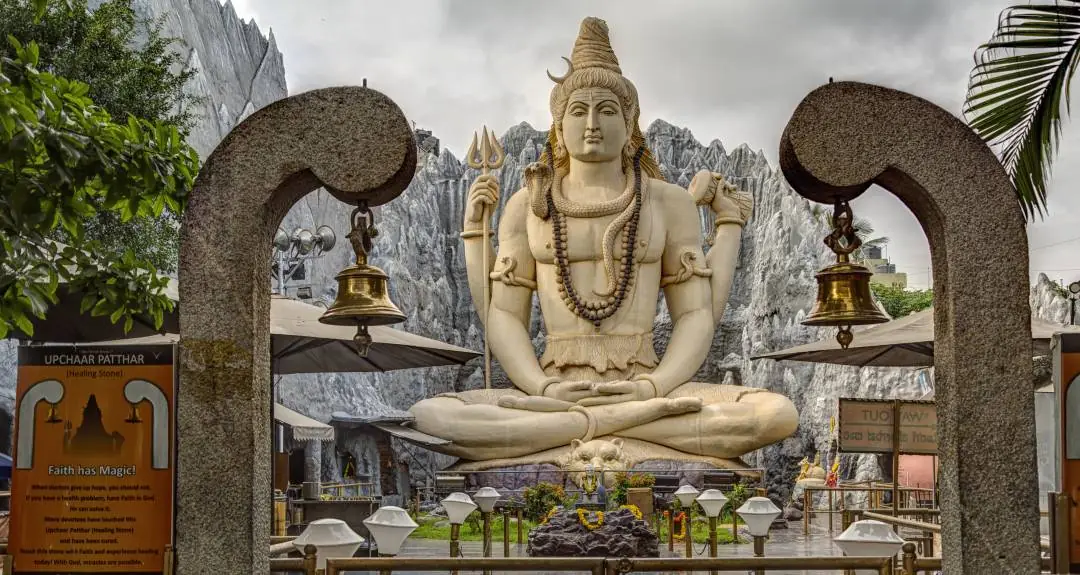
Many devotees prefer to visit at aarti because lamps, chanting and collective prayer create a distinct atmosphere. Yet aarti can also attract a larger crowd. If you want a quieter experience, an ordinary non-festival period may be more suitable than a major Shiva celebration.
Special pooja services may have a reporting time earlier than the actual ritual. For example, a participant might need to complete registration, receive a token or join a designated queue before the priest begins.
Don’t arrive at the listed pooja start time assuming you can walk directly into the ritual area. Confirm whether late arrivals are admitted.
There may also be restrictions on where visitors can stand during worship. A ticket or donation receipt doesn’t necessarily guarantee a particular viewing position unless the temple expressly says so. Treat any booking as permission to participate under the temple’s rules, not as a promise of an uninterrupted or private darshan.
Reliable planning starts with the official source, not with a screenshot shared in a travel group. Information about Shivoham Shiva Temple tickets can become outdated quickly, especially when a page has no visible update date. Use the following process for a safer booking decision.
A genuine booking instruction should explain what you’re buying and how the temple will recognise it. Be cautious if a message creates urgency, promises guaranteed front-row access without an official policy, or asks for payment to a personal account. Religious travel deserves the same payment caution as any other reservation.
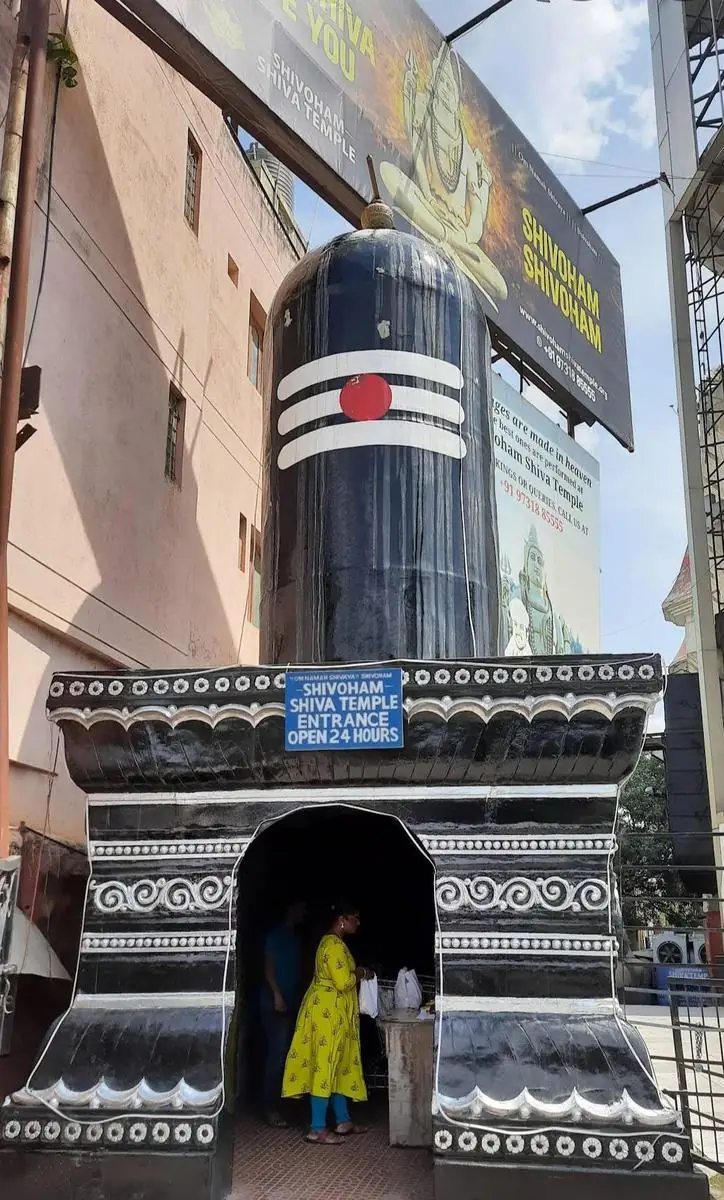
If online booking is unavailable, the temple may accept registrations or contributions at an official counter. On-site arrangements can be practical for local visitors, but they carry a risk for travellers: a service may be full by the time you arrive. Ask whether same-day registration is offered and whether places are allocated on a first-come basis.
At the counter, request a receipt and read the details before leaving. Check the date, service name, number of participants and reporting time.
If the receipt is handwritten, confirm the counter’s name or stamp. Don’t assume that a general donation receipt is proof of a reserved pooja slot unless the staff explicitly confirms it.
A visit can take anywhere from a brief darshan stop to a longer spiritual and cultural experience. The total time depends on crowd levels, whether you’re attending a ritual, how long you spend near the statue and whether a light-and-sound or sound show is operating. There is no reliable single duration for every visitor.
For a simple visit on a quiet day, the prayer portion may be relatively short. A weekend visit with parking, security, queueing, darshan and a scheduled presentation can take much longer. Families should allow extra time rather than booking onward transport immediately after the expected closing time.
| Visit style | Best suited to | Time factors to allow for |
|---|---|---|
| Brief darshan visit | Local devotees with a flexible arrival plan | Traffic, parking, entry queue and prayer time |
| Pooja participation | Visitors seeking a structured religious service | Early reporting, registration and ritual duration |
| Family or tourist visit | People interested in the statue and temple atmosphere | Photography rules, walking, queues and children’s needs |
| Festival visit | Devotees attending a major religious occasion | Heavy crowds, traffic diversions and altered timings |
| Show-based visit | Visitors interested in the light-and-sound experience | Separate ticketing, show start time and seating or queueing |
Wear clean, comfortable clothing suitable for a Hindu temple. Traditional Indian clothing may be appreciated during pooja, but a visitor’s priority should be modesty and respect rather than expensive or elaborate dress. Avoid clothing that could make movement difficult in queues, particularly if you’re travelling with children or older family members.
Footwear may need to be removed in designated areas. Carrying a small bag for footwear can help, though you should follow the temple’s own storage instructions. Keep phones on silent during prayer and don’t block pathways while taking photographs.
Photography rules can vary between the outer premises, statue area and inner worship spaces. A large statue may appear to be an obvious photo location, but that doesn’t mean every angle or ritual moment can be photographed.
Ask staff before using flash, tripods or video equipment. Commercial photography and pre-wedding shoots may require separate permission.
Accessibility can differ across entrances, queues and display areas. Visitors using a wheelchair, walking aid or stroller should ask the temple in advance about step-free access, accessible toilets, seating and the distance from the vehicle drop-off point. A public attraction may have a large open area while still having restricted access around a shrine or ritual zone.
Older devotees may find long standing queues tiring. If the temple offers a senior-citizen, assisted-entry or seating arrangement, confirm it directly rather than relying on a general assumption. Carry water where permitted, plan breaks and avoid arriving dehydrated after a long journey through traffic.
Shiva temples often experience greater demand on Mondays, during Maha Shivaratri and around other important observances. At Shivoham Shiva Temple, the combination of a well-known statue, devotional programming and Bengaluru’s large urban population can make peak dates significantly busier than ordinary weekdays. Crowd levels are not a reason to avoid the visit, but they do require more careful planning.
Festival arrangements may include extended worship, additional security, temporary barricades, restricted vehicle access or changes to the ordinary queue. A temple might also pause tourist-style activities while major rituals are taking place. The most useful question is not simply “Is the temple open?” Ask whether the specific activity you want will operate on that date.
Seasonal weather affects travel as well. Bengaluru’s rain can slow road traffic and make outdoor waiting uncomfortable, while hot afternoons may be difficult for children and older adults. If you’re planning a dawn or evening visit, check transport availability and the expected return journey rather than focusing only on the temple’s advertised opening period.
Avoid assuming that a festival ticket provides priority access unless the official terms say so. Some tickets may only reserve participation in a pooja, while the wider crowd continues to use a common darshan queue. Clear wording protects you from disappointment at the entrance.
Shivoham Shiva Temple connects visually and spiritually with famous Shiva traditions, but it serves a different purpose from a temple yatra to Amarnath, Kedarnath or another historic pilgrimage centre. The Bengaluru shrine is accessible within an urban setting, making it practical for a short devotional visit. A Himalayan pilgrimage involves travel, weather, altitude, physical preparation and, in some cases, registration systems controlled by a shrine board or government authority.
| Factor | Shivoham Shiva Temple visit | Long-distance pilgrimage such as Amarnath or Kedarnath |
|---|---|---|
| Setting | Urban Bengaluru temple and visitor attraction | Remote or pilgrimage-oriented sacred destination |
| Travel planning | Local traffic, parking and city transport | Long-distance transport, route planning and weather concerns |
| Physical demands | Usually limited to walking and standing within the complex | May involve trekking, altitude or strenuous travel |
| Booking authority | Temple management or its authorised booking channel | Often a shrine board, government system or authorised operator |
| Visit length | Can fit into a short city itinerary | Usually requires substantially more travel time |
This comparison is useful because online images can make different sacred experiences look interchangeable. The statue and displays at Shivoham Shiva Temple may help visitors reflect on Shiva’s many associations, including the cave tradition of Amarnath and the mountain temples of the north, but the practical experience remains distinct.
For a visitor, that difference is positive. Someone who has only a day in Bangalore can visit a Shiva temple without arranging a demanding yatra.
At the same time, the visit should be approached respectfully rather than treated only as a photo stop. Learn the basic meaning of darshan, observe the rules and allow devotional activities to take place without interruption.
Official temple booking systems in India show why visitors should distinguish between a general visit and a reserved religious service. Tirumala Tirupati Devasthanams, for example, publishes separate online services for different forms of darshan, accommodation and religious participation rather than treating every temple visit as one universal ticket. Its official systems are a useful real-world example of how a major shrine communicates availability through defined categories and date-specific arrangements.
That example doesn’t prove that Shivoham Shiva Temple follows the same process. It illustrates a broader booking principle: a reputable temple system normally identifies the service, date, eligibility or reporting requirements and confirmation method. If a Shivoham booking message gives none of those details, verify it before making payment.
The same caution applies to screenshots claiming that a “VIP darshan” or “guaranteed front access” is available. Such language should be treated carefully unless it appears in an official notice or is confirmed by authorised temple staff. The existence of structured booking at one Indian shrine cannot be used to invent a similar category at another.
The applicable fee can depend on the type of visit and the date. Ordinary entry, a special pooja and a light-and-sound presentation may have different arrangements, so confirm the current amount through the official temple channel rather than relying on an old review.
Ordinary darshan may be handled differently from special services, but availability and queue rules can change. Ask the temple whether walk-in visitors are accepted on your chosen date and whether a separate booking is needed for pooja or aarti.
Use the date-specific schedule supplied by the temple. Opening hours, last entry, ritual pauses and festival timings may not be identical, and a programme may operate only during selected periods.
A brief darshan can be relatively short, while a visit involving queues, pooja, photography restrictions or a light-and-sound programme takes longer. Traffic and parking near Old Airport Road should also be included in your plan.
It may have a separate schedule or ticket arrangement, but visitors should confirm the current policy. Don’t assume that a temple-entry receipt automatically includes every presentation in the complex.
It can be suitable for families, but crowd levels, walking distances and standing queues vary. Confirm seating, accessible entry, toilet facilities and assisted access if anyone in your group has mobility needs.
Photography may be allowed in some areas and restricted in others. Ask staff before using flash, video equipment or a tripod, and never photograph a private ritual simply because the surrounding statue area is open to visitors.
Choose clean, modest and comfortable clothing. Follow any posted dress instructions, remove footwear where required and avoid carrying unnecessary items into crowded worship areas.
Shivoham Shiva Temple tickets shouldn’t be treated as a single fixed product. The right choice depends on whether you want ordinary darshan, a pooja, aarti or a special presentation, and the most reliable details are the ones confirmed for your exact date. Check the official temple information, save your receipt and allow time for Bengaluru traffic, queues and festival-related changes.
A little verification can make the difference between a hurried arrival and a meaningful visit. Before you leave, ask one final question: has the temple confirmed today’s timing and booking arrangement directly? That simple step keeps your plans current while leaving you free to experience the shrine, the seated Shiva statue and its devotional atmosphere with greater peace of mind.





