Physical Address
304 North Cardinal St.
Dorchester Center, MA 02124
Physical Address
304 North Cardinal St.
Dorchester Center, MA 02124
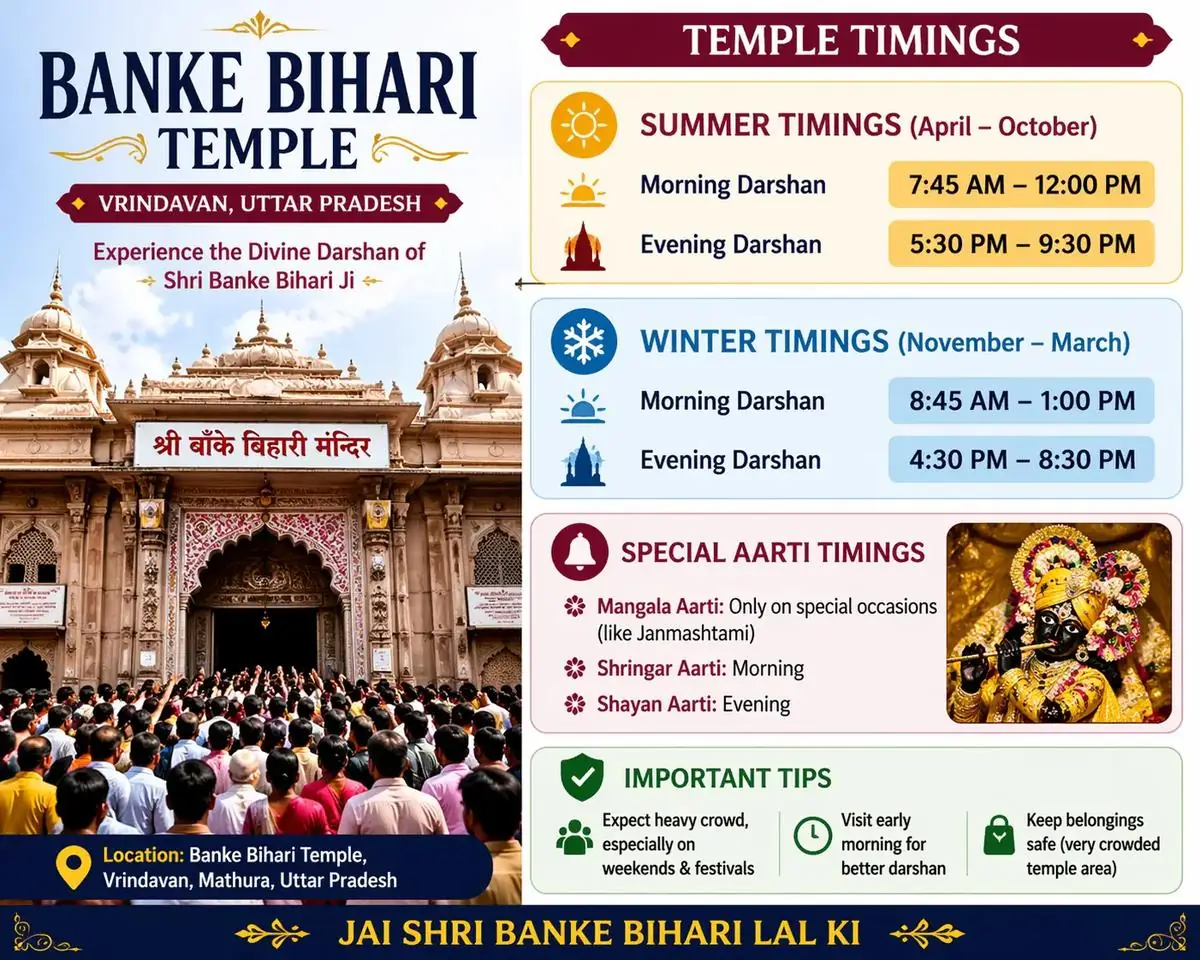
Accurate Banke Bihari Mandir timing matters because a visit to Vrindavan can change with daily worship, seasonal routines, festivals and crowd-control arrangements. The temple may follow separate periods for morning Darshan, Shringar, Rajbhog, evening Darshan and closing rituals, while special days can bring revised entry arrangements.
This article explains how to read the schedule, what to verify before leaving, how Darshan and Pooja visits work, and where booking information should be checked. You’ll also find practical advice for reaching Banke Bihari Mandir, managing queues and avoiding common timing mistakes.
Banke Bihari Temple in Vrindavan is not simply a sightseeing attraction with one fixed opening and closing hour. Its daily routine is connected with worship services, devotional offerings and the temple’s established religious practices. A visitor may therefore see different timings for Darshan, Shringar, Bhog, Aarti-related observances and the final closing of the sanctum.
The schedule can also be affected by the Hindu calendar. A normal weekday, a weekend, a full-moon observance, Holi, Janmashtami, Radhashtami, Diwali or another important festival may not operate in the same way.
Temple management can alter entry arrangements, restrict movement, close the doors temporarily for rituals or issue crowd-management directions. A timing shown in an old travel article may be useful for general planning, but it shouldn’t be treated as confirmation for your travel date.
There’s another practical reason to check carefully: people often use “temple timing” to mean different things. One person may be asking when the gates open.
Another may want the first Darshan, the Shringar period, an evening worship window or the time after which visitors are no longer admitted. These are related but not identical questions.
Before travelling from Delhi, Agra, Jaipur or another city, confirm the latest notice through the official temple administration, an official booking portal if one is being used, or a verified government or local administration channel. The District Mathura, Government of Uttar Pradesh information page for Banke Bihari Temple is useful for confirming the temple’s location and official tourism context, but a district tourism page should not automatically be assumed to show live Darshan availability.
Temple schedules are easier to understand once you separate the day into worship-related periods. A Darshan window refers to the period when devotees can see the deity.
It may not begin at the exact moment the outer entrance becomes accessible, and the flow may be regulated if the inner area becomes crowded. The word “Darshan” describes the devotional act of seeing and being present before the deity; it isn’t the same as a guaranteed appointment slot.
Morning hours are often important to devotees who want to begin the day with Darshan. Shringar refers to the deity’s adornment and presentation, and the routine surrounding it can influence when the public has access. Depending on the day and current temple instructions, visitors may experience a temporary pause or a distinct arrangement around this service.

Bhog is an offering of food made as part of worship. A temple may close or regulate Darshan during an offering or another internal ritual.
Visitors shouldn’t assume that a short pause means the temple has closed for the entire day. It may simply mean that the public Darshan period has been suspended until the worship service is complete.
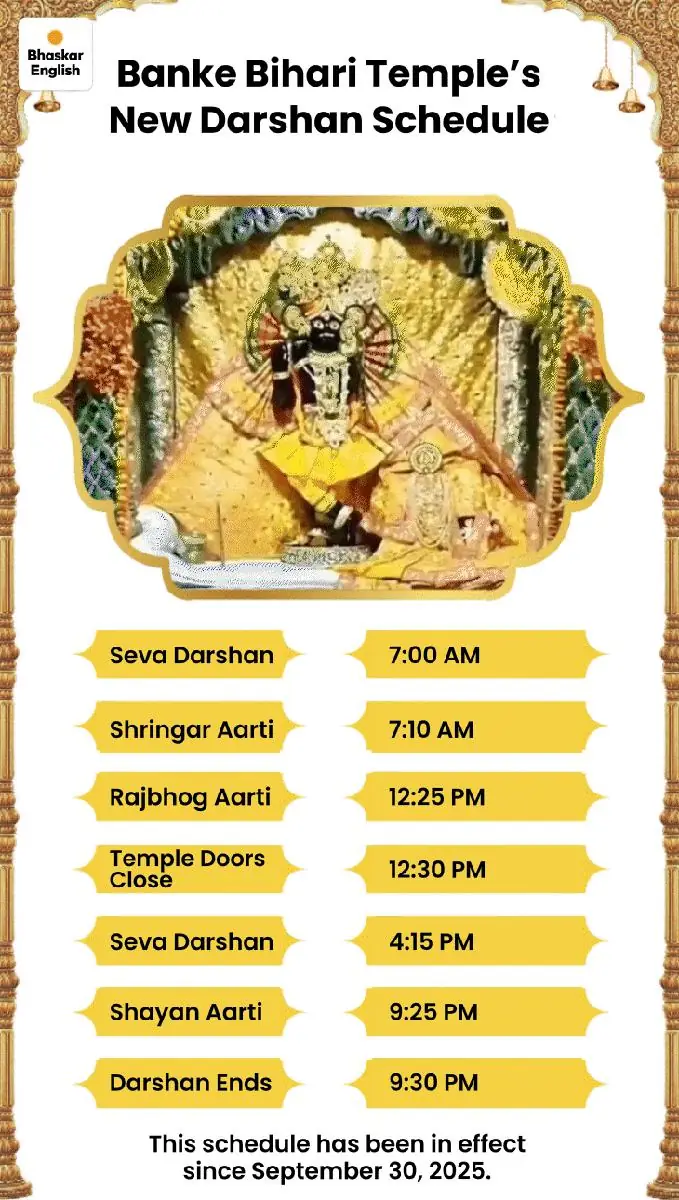
Evening Darshan is usually treated as a separate planning period. Families arriving after local sightseeing often aim for this window, which can make the surrounding lanes especially busy. The closing time shown in a general schedule may refer to the end of public access rather than the exact moment every person has left the premises.
The table below is a planning framework, not a substitute for the current official notice. It shows which questions to ask rather than supplying unverified clock times.
| Timing category | What it generally indicates | What you should verify |
|---|---|---|
| Morning opening | Start of public access or the first available Darshan period | Whether entry begins immediately or after a worship service |
| Shringar period | Adornment and preparation associated with the deity’s presentation | Whether Darshan pauses or follows a special arrangement |
| Bhog or ritual break | A temporary interruption or regulation of public viewing | Expected reopening and whether queues remain inside or outside |
| Evening Darshan | A later public access period before night closure | Last entry, crowd controls and any festival changes |
| Closing | End of ordinary public Darshan for that period | Whether the stated time means gate closure or final exit |
A printed schedule can look stable while the actual visitor experience changes considerably across the calendar. Weekends and public holidays may attract more pilgrims than ordinary weekdays, especially when visitors combine Banke Bihari Temple with other Vrindavan sites. Queue length can influence how quickly you reach the Darshan area even when the official opening period has not changed.
Festival days require extra caution. Holi in Vrindavan, Janmashtami, Radhashtami, Diwali and other major religious occasions can bring large gatherings, traffic restrictions, police arrangements and altered entry routes.
The temple administration may issue separate instructions for crowd movement, security or temporary closure. A schedule copied from a normal day may be unsuitable for these occasions.

Weather affects the comfort of your visit even when it doesn’t change the official hours. Summer afternoons can be difficult for people standing in queues, while winter mornings may require warmer clothing.
Monsoon conditions can slow traffic around narrow streets and create wet or slippery approaches. These are travel-planning concerns rather than proof that the temple has changed its timings, so always distinguish practical conditions from official schedule changes.
Local traffic is another variable. The temple is in the busy Vrindavan area, where roads near popular religious sites can become congested.
A journey that normally seems short may take much longer on a festival day. Plan from your accommodation to the actual approach point, not merely to the city of Vrindavan.
Searches such as “Is Banke Bihari Temple open today?” or “Banke Bihari Temple open tomorrow?” are understandable, but a simple open-or-closed answer may be incomplete. The temple could be open for part of the day while Darshan is paused during a ritual. There may also be a temporary public restriction that isn’t reflected in an old search result.
For a same-day visit, check the most recent verified announcement and confirm whether it refers to the current date. For tomorrow’s visit, check again on the evening before travelling because festival preparations, weather, administration orders or security arrangements can be updated at short notice.
Darshan at Banke Bihari Temple is generally a devotional visit rather than a sightseeing appointment. Visitors enter through the route directed by the local administration or temple staff, wait in the applicable queue and move through the viewing area as instructed. The exact arrangement can vary, so follow signs, barricades, police instructions and temple personnel rather than relying on an older video.
Queues may form outside the temple and in nearby lanes. Even if you arrive before a listed opening period, you may not be among the first people to enter.
Conversely, an official closing time doesn’t mean that a person arriving at that minute will necessarily receive Darshan. Last-entry practices, crowd density and temporary controls can affect access.
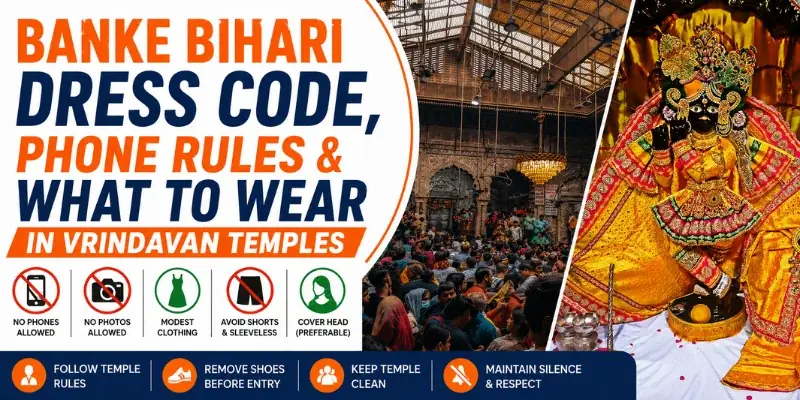
Carry only essential items and keep your belongings secure. Large bags, unnecessary valuables and items restricted by the temple or local security arrangements can slow your entry. Rules may change, so confirm current instructions before visiting rather than assuming that another Vrindavan temple follows identical policies.
Be cautious with people who promise guaranteed instant Darshan, special access or a faster route in exchange for an unverified payment. A claim made near a crowded approach road is not the same as an official temple facility. Ask for written confirmation from the authorised administration before paying for any service.
Many devotees search for Pooja timings when they actually want a personal worship service, an offering, or ordinary Darshan during a worship period. These are different requests. Public Darshan may be available without a separate ritual booking, while a particular Pooja or offering may be subject to temple-specific arrangements, availability and instructions.
Aarti is a devotional ritual involving the offering of light, and its public arrangements can differ from ordinary viewing. Don’t assume that an Aarti mentioned in a social media post is open to every visitor or that reaching the temple at that time guarantees a place close to the sanctum. The administration may regulate access due to space, safety or religious procedure.
If your purpose is a Pooja rather than a brief Darshan, ask the authorised temple office or official booking channel precise questions. Find out whether the service is available on your date, whether advance booking is necessary, what identification is accepted, where you must report and whether the booking confirms participation or only an offering.
Also ask about cancellation, rescheduling and reporting time. A Pooja booking may have a reporting requirement earlier than the worship start, and arriving late could affect participation. Never infer a price, quota or VIP facility from a third-party listing unless the temple administration confirms it.
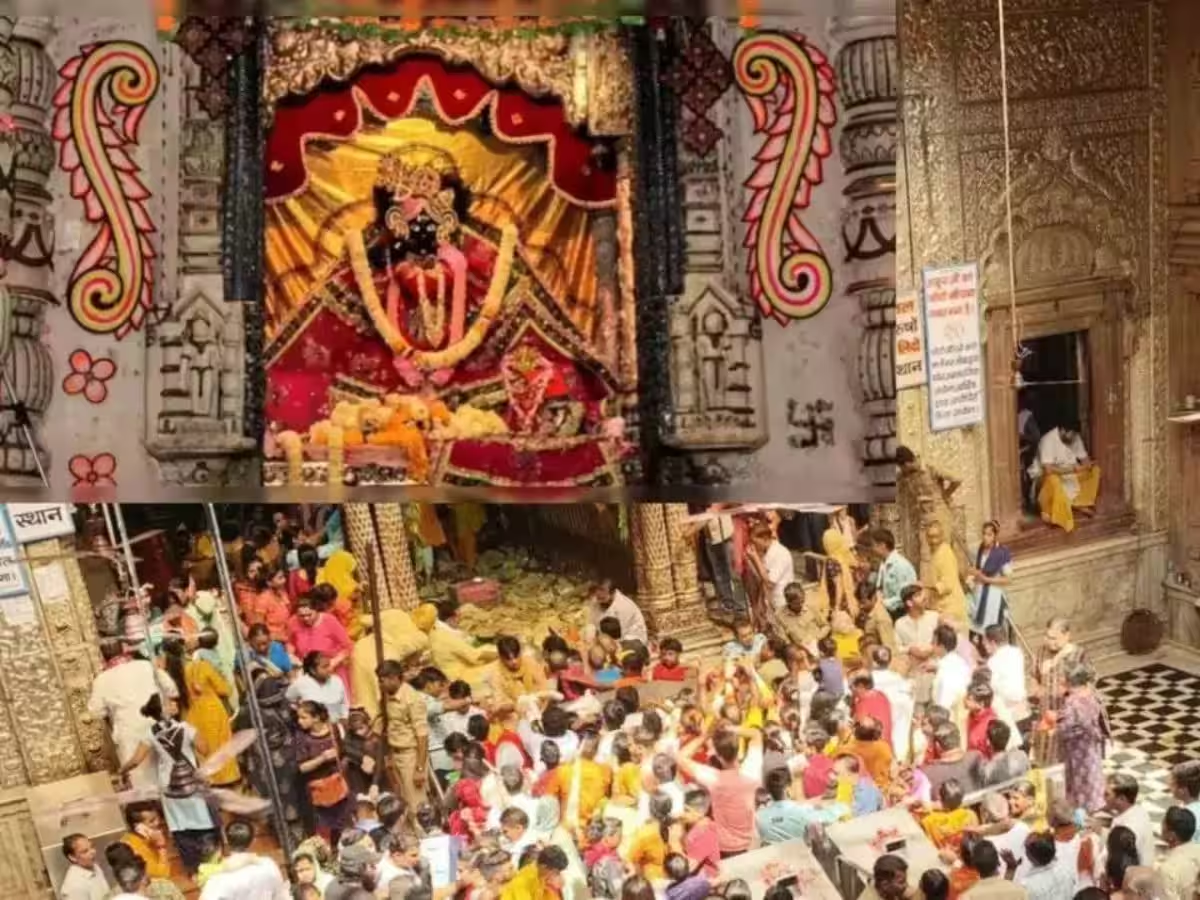
The temple’s daily worship routine is not arranged solely around tourist convenience. A ritual may require the public area to be cleared or access to be paused. This is why a visitor should leave a reasonable buffer instead of booking a train, taxi or return journey immediately after a stated Darshan period.
If you’re visiting with older family members, children or anyone who has difficulty standing, ask locally about the current queue arrangement and available assistance. Don’t rely on a promise that a separate line exists unless it appears in an official notice or is confirmed by authorised staff.
Not every temple visit requires an online ticket, and the presence of a booking page doesn’t automatically mean every Darshan period is reservation-based. Some online services may relate to donations, Pooja offerings, accommodation, special events or another temple function rather than general entry. Read the service description carefully before entering payment or identity details.
Use the official temple website, official booking portal or a verified temple administration notice. Check the domain name character by character, because unofficial websites and social media accounts may use similar wording. Avoid sending money to a personal mobile number, private bank account or messaging-app contact unless that payment method is explicitly published by the authorised body.
A credible booking process should explain what you’re reserving, the applicable date, reporting instructions, cancellation terms and the name of the responsible organisation. It should also give you a transaction reference or confirmation that can be checked. If a page only promises “VIP Darshan” without identifying the authority, treat it as unverified.
“VIP Darshan” is a particularly sensitive search term. Availability, eligibility, price and access conditions can change, and some claims made by agents may not represent an official temple service.
Don’t assume that paying more guarantees a particular viewing position or avoids all queues. Confirm the facility directly through the temple’s current official channel.
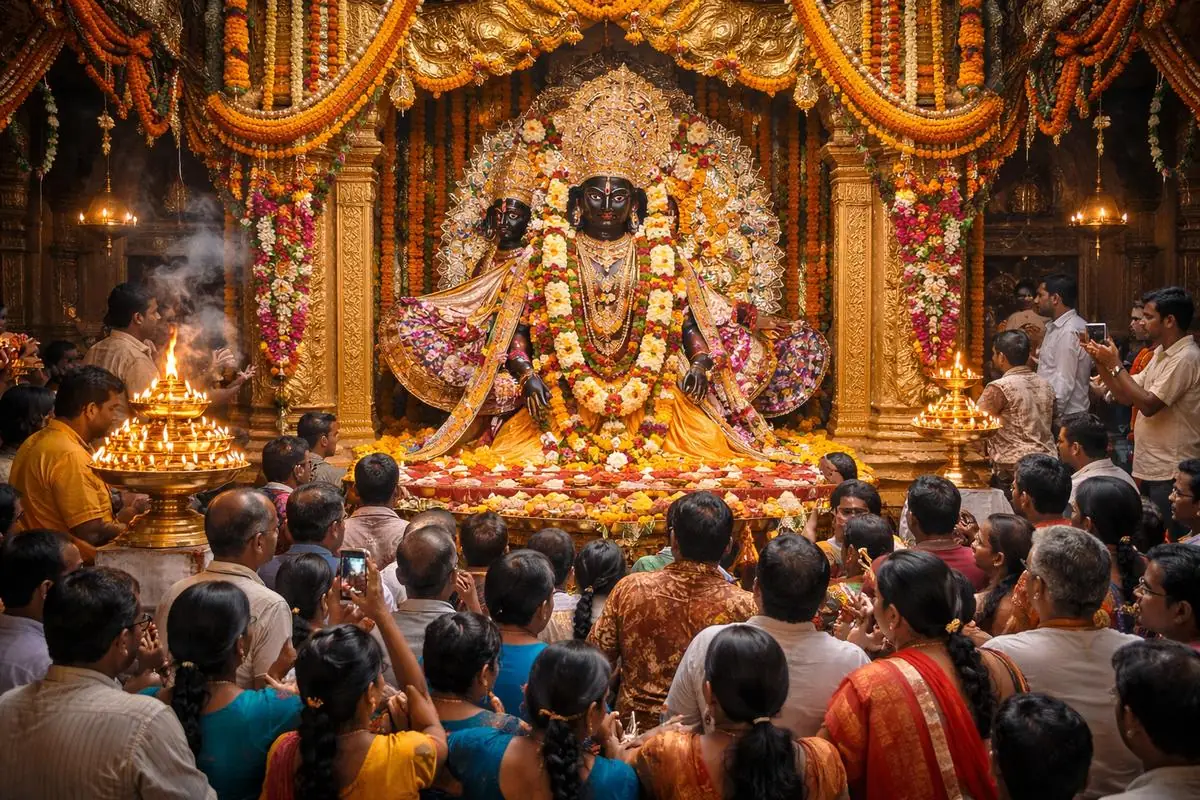
The time shown on a reservation may be a reporting time rather than the exact moment you’ll see the deity. You may need to arrive early for verification, security checks or group movement. If your confirmation says “report by” a particular time, treat that as a deadline, not an invitation to arrive at the last minute.
Save a digital and printed copy of the confirmation if practical. Keep the payment reference, identity details and contact information used during booking. If the portal fails after payment, don’t immediately pay again; first check your bank message, email, booking dashboard and official help channel to avoid duplicate transactions.
The safest approach is to verify the schedule in stages. Start with the date you intend to visit, then identify the exact service you want: general Darshan, morning access, evening access, a Pooja, Aarti-related participation or another offering. This prevents you from treating a broad temple-opening listing as confirmation of a specific activity.
If you can’t find a current update, contact the temple administration through a verified phone number or official contact channel. Ask a specific question instead of saying only, “What is the timing?” For example: “Is general Darshan available during the evening period on [date], and what is the latest permitted entry?” Specific wording reduces confusion.
Begin with your travel logistics. Confirm your hotel location, the route to the temple approach, likely traffic and the amount of walking involved. Vrindavan’s religious areas can be busy, and map-app arrival estimates may not account for barricades or restricted vehicle movement on a festival day.
Choose a target Darshan period but keep a second option. If the morning queue becomes impractical, an evening period may be possible, subject to the latest official schedule. Don’t build your entire trip around a single minute unless you have a verified booking with clear reporting instructions.
Use the authorised route and observe the signs. Ask uniformed police, temple staff or clearly identified administration personnel if you need help locating the queue. Be cautious about accepting directions from people who immediately demand payment or promise a guaranteed shortcut.
Keep your group together without obstructing other devotees. If you’re travelling with children, decide in advance where the family will regroup if movement becomes separated. Older visitors may appreciate a shorter walking plan, a rest period and a visit outside the busiest festival hours, although no time can be guaranteed to be quiet.
Move away from the entrance and exit lanes before stopping to organise belongings or make calls. This helps the queue continue smoothly. If you plan to visit another temple, leave enough time to walk and account for changing local conditions rather than assuming a fixed transfer time.
Respect the character of the place. Dress and behaviour should suit a functioning religious institution, and you should follow its current directions even if a previous visitor describes different rules. A calm, flexible plan is usually more useful than trying to force a tightly timed itinerary.
The most frequent mistake is trusting a schedule without checking its date. Search engines may display old pages, videos or social posts that continue circulating long after a festival arrangement has ended. A schedule can also be accurate in general but unsuitable for your chosen service.
Another mistake is confusing temple opening hours with guaranteed Darshan. The gates may be accessible while a ritual is taking place, or public entry may be controlled because of crowd conditions. Always look for the phrases “last entry,” “Darshan period,” “temporary closure” and “reporting time,” not just “open” and “closed.”
It’s also unwise to believe that a less crowded time can be guaranteed. Early morning, late evening, weekdays and non-festival periods may sometimes feel easier, but crowd levels depend on the date, season, local events and visitor demand. Use these as planning possibilities, not promises.
Illustrative example, not a published schedule: imagine that a family plans a Friday visit and finds a page describing morning Darshan, a midday ritual interval and evening Darshan. The family should not assume that the evening period begins at the same clock time mentioned on the page. They should verify whether the page is current, whether the date falls near a festival, whether general visitors need a booking and what “closing” means for last entry.
This example demonstrates a real planning issue without inventing a Banke Bihari Temple timetable. The verified fact that can be checked through the District Mathura, Government of Uttar Pradesh source is the temple’s official tourism and location context. Live Darshan times, queue conditions and booking availability require confirmation from the temple administration or its current official channels.
That distinction matters for SEO readers as well as pilgrims. A page may rank for “Banke Bihari Mandir timing” while carrying information collected months or years earlier.
Publication date, update date and source ownership are useful clues, but neither guarantees that a schedule is live. The strongest practice is to use general information pages for orientation and official notices for the final decision.
There isn’t one permanent answer that can safely cover every date. Check the latest official temple notice or verified administration channel for today’s morning and evening Darshan, ritual breaks, last entry and closing information. Festival days may follow a different arrangement.
Non-festival weekdays may be easier than major religious dates or weekends, but crowd levels aren’t guaranteed. Arrive with flexibility, check local conditions and avoid assuming that a commonly recommended hour will remain quiet.
Don’t assume that every online VIP Darshan offer is authorised. If an official facility exists for your date, its eligibility, fee, reporting time and access conditions should be stated by the temple administration or official booking portal.
Online booking depends on the current system and the type of service. Some arrangements may concern Pooja, offerings or special events rather than ordinary entry. Use only the official portal and confirm exactly what the booking covers before paying.
Public Darshan may be paused or regulated during worship services, but the precise arrangement can change. Check the current daily schedule and allow extra time rather than treating a ritual interval as a guaranteed reopening minute.
Prefer the most recent information published by the temple administration or a verified official channel. Compare the date, source ownership and service description, and contact the administration if the conflict affects your travel plans.
Banke Bihari Mandir timing is best treated as a date-specific planning detail, not a permanent number copied from an old page. Confirm the Darshan period, ritual breaks, last-entry rule and any booking requirement through an authorised source before you leave for Vrindavan. Festival days deserve a second check because crowd control and worship arrangements may change quickly.
Give yourself travel and queue time, keep your booking proof if you have one, and follow instructions at the temple rather than relying on unofficial promises. Before finalising your journey, verify the latest schedule for your exact date—and ask the administration directly if the information online still appears unclear.





