Physical Address
304 North Cardinal St.
Dorchester Center, MA 02124
Physical Address
304 North Cardinal St.
Dorchester Center, MA 02124
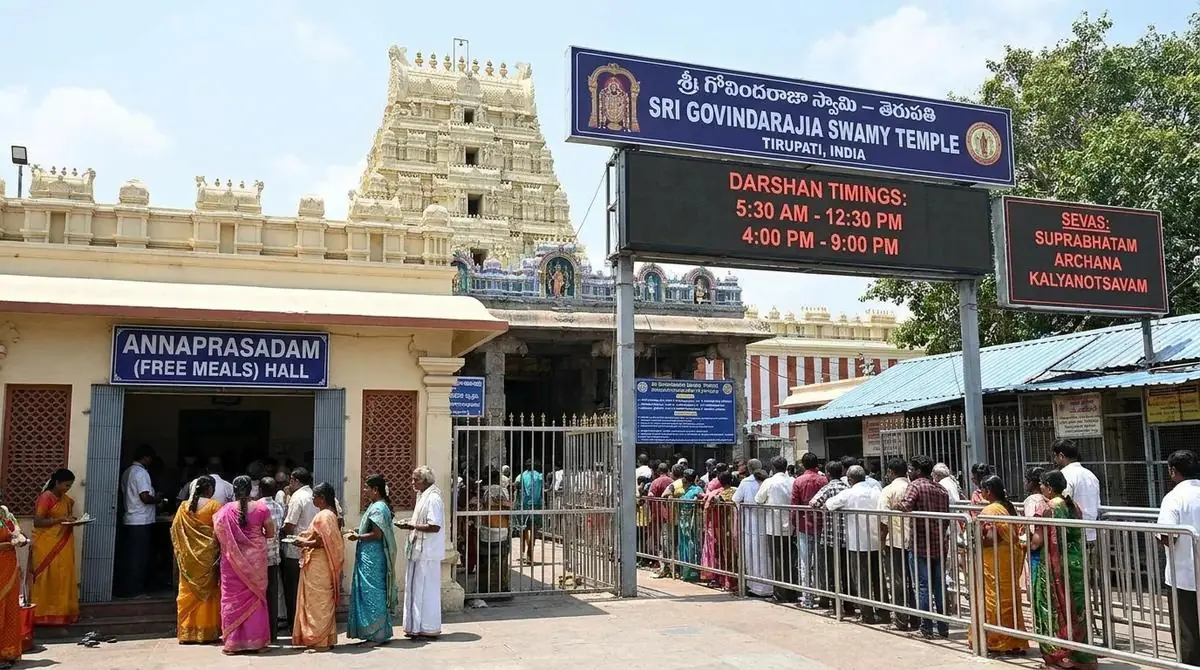
Accurate Govindaraja Swamy temple timings can make a major difference to a Tirupati visit, especially when you’re combining this historic shrine with Tirumala, local sevas, or a train or bus journey. A short delay may affect Darshan, Pooja participation, queue arrangements, and your return plan.
The schedule can change during festivals, special rituals, maintenance, or heavy pilgrim traffic. This article explains the main timing categories, how to verify the latest official notice, what to expect during Darshan, and how to plan a respectful visit to Sri Govindaraja Swamy Temple in Tirupati without relying on unverified listings.
Sri Govindaraja Swamy Temple is located in Tirupati town, making it an important stop for devotees visiting the wider Tirumala area. Many pilgrims include the shrine before travelling uphill to Lord Venkateswara’s temple, while others visit after returning from Tirumala. Because the temple is within the city rather than on the hill, its opening hours often have to fit around railway, bus, hotel, and Darshan plans.
The phrase “temple timings” can mean several different things. It may refer to the time the outer entrance opens, the period when devotees can see the deity, the interval between scheduled rituals, or the time at which the shrine stops accepting visitors.
These aren’t always identical. A temple may remain open to visitors while the sanctum is temporarily unavailable because a Pooja or seva is taking place.
For that reason, a simple search result showing one opening and closing time shouldn’t be treated as a guaranteed appointment. Online directories can be outdated, and a regular-day schedule may not apply during Brahmotsavam, Vaikuntha Ekadasi, major Hindu festivals, or special administrative arrangements. Your safest approach is to check a current notice from Tirumala Tirupati Devasthanams, commonly known as TTD, or confirm directly through verified temple administration channels.
Timing information is especially important in these situations:
Keep a little flexibility in your itinerary. The temple’s religious schedule takes priority over a sightseeing timetable, and the visible queue may not show the full waiting time inside the complex.
A temple day generally follows a sequence of ritual activities rather than a single uninterrupted visitor period. The deity may be prepared for worship, offered specific services, displayed for Darshan, and then attended during closing rituals. The exact names and order of sevas can vary according to the temple’s established practice and the day’s calendar.
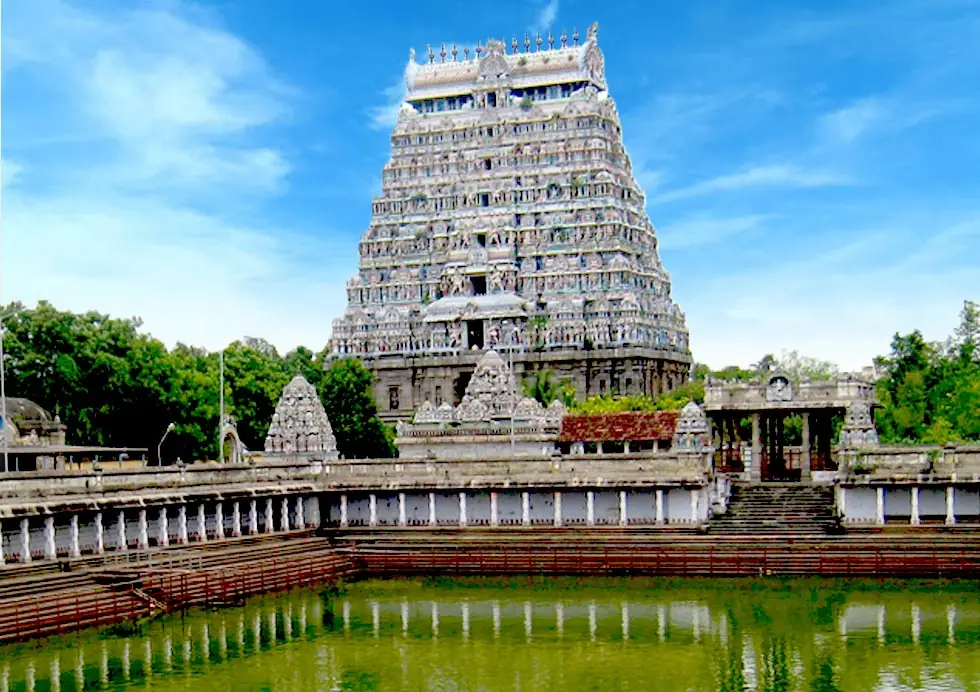
When a listing mentions opening hours, it may describe the time devotees can enter the premises, not the precise moment when the main shrine becomes available. There can be a short operational gap between opening the public area and allowing movement towards the sanctum. Similarly, a closing time may indicate the end of public entry rather than the instant every devotee has left the complex.
Some temples also have a break between morning and evening access. Search phrases such as “Govindaraja Swamy Temple break timings” often come from visitors who arrive in the middle of the day and find that the queue or inner Darshan area is temporarily paused.
Don’t assume a mid-day break exists every day, and don’t assume it has the same length on every occasion. Confirm the date-specific schedule.
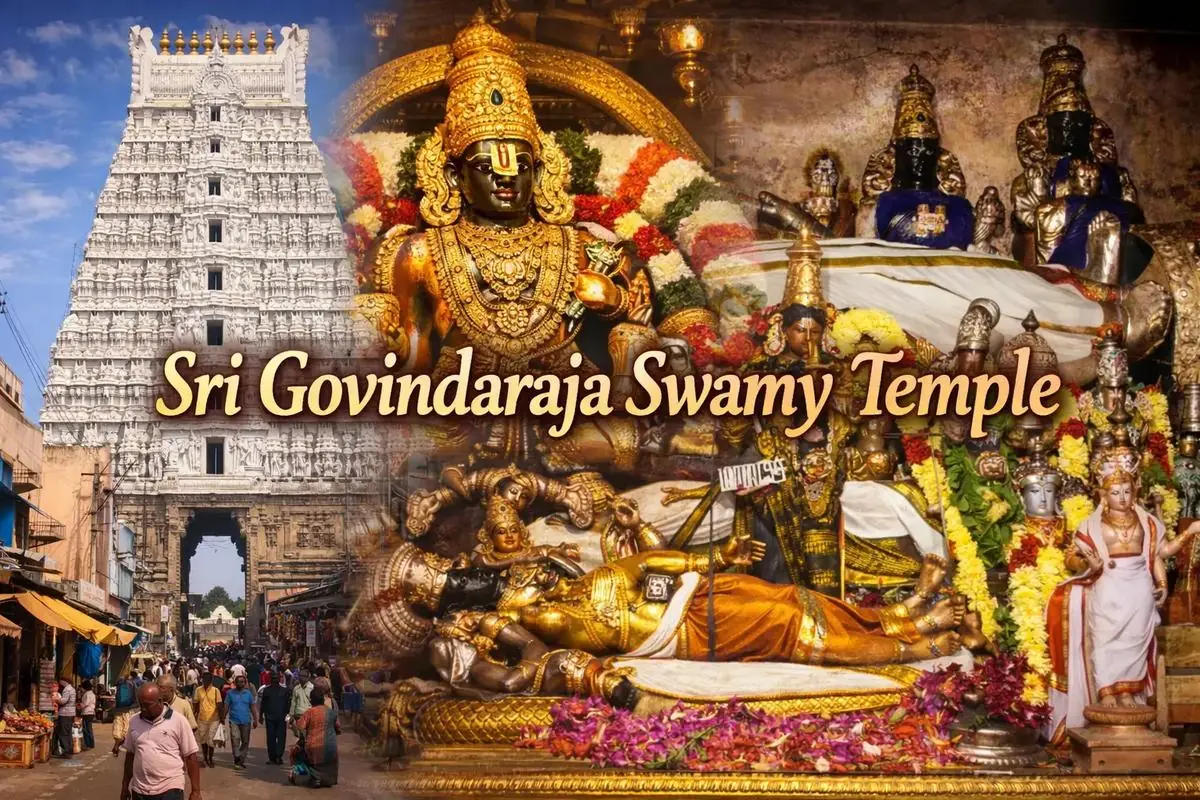
During a Pooja, Aarti, or other seva, access may be regulated even if the temple building itself appears open. This isn’t necessarily a delay or poor organisation; it is part of maintaining the ritual order. Devotees should follow instructions from temple staff and avoid pressing forward when the queue is held.
The most useful questions to confirm before leaving your accommodation are:
These questions are more practical than asking only, “What are the temple timings?” They help you understand how the published schedule affects your actual visit.
Darshan means viewing the presiding deity in a devotional setting. At Govindaraja Swamy Temple, ordinary Darshan and participation in a specific Pooja or seva should be treated as different experiences. Ordinary visitors may join the general queue, while a booked or authorised seva can have separate reporting instructions and a fixed participation window.
For general Darshan, arrive early enough to allow for walking from the road, footwear arrangements, security checks, queue formation, and movement inside the temple. Even if the published opening time appears convenient, reaching at that exact minute may not place you first in line. On a quiet weekday, the experience may be relatively straightforward; on a Saturday, Sunday, festival day, or holiday, the same plan can take considerably longer.
There may also be separate movement patterns for different visitor categories or services. Follow the signs and instructions given at the entrance rather than relying on a previous visit. Queue routes can change temporarily because of crowd control, cleaning, or a ceremonial procession.
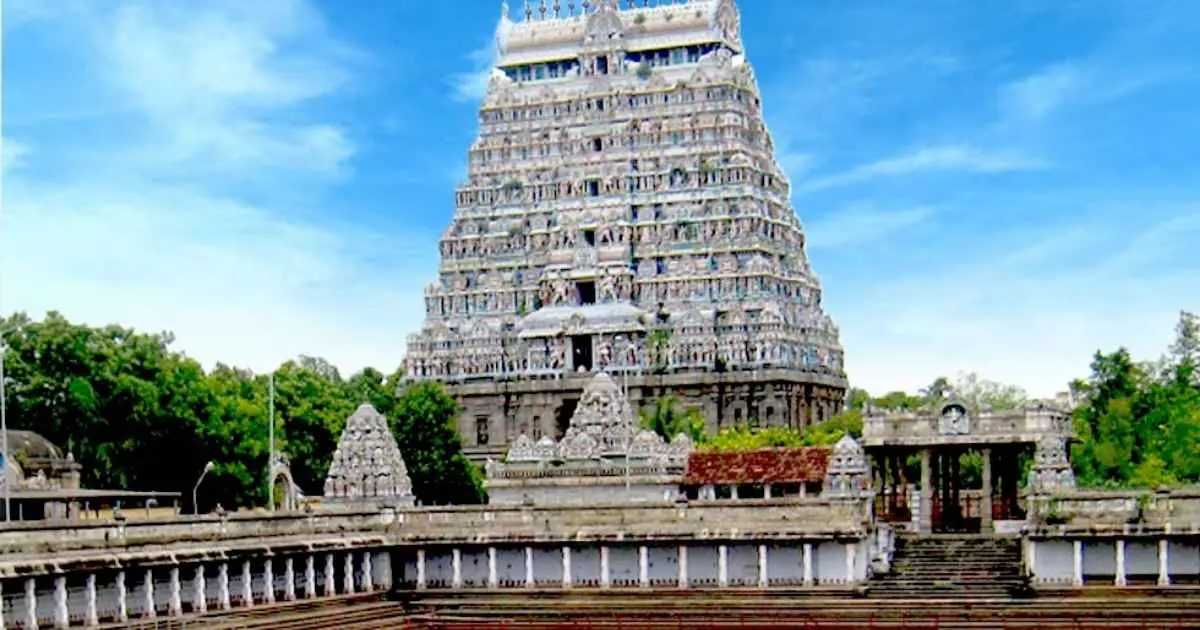
A Pooja is a formal act of worship performed according to the temple’s tradition. Aarti usually refers to the ritual offering of light. “Seva” is often used for a devotional service or an organised worship opportunity. These terms are related, but they don’t automatically mean that every visitor can enter at any time or obtain a ticket at the entrance.
If you want to attend a particular seva, confirm all of the following:
A common mistake is to book a ritual based on its start time and arrive just before it begins. Temple authorities may require devotees to report earlier for verification and orderly entry. The reporting rule, if applicable, should be taken from the current official instructions, not from an old social-media post.
| Visit purpose | What the timing usually tells you | What you should verify |
|---|---|---|
| General Darshan | When public access is expected to be available | Opening, break, final entry, and queue conditions |
| Pooja or seva | When the ritual is scheduled | Reporting time, eligibility, ticket requirement, and entry point |
| Aarti | When the worship ceremony is planned | Whether public viewing is permitted and where devotees must stand |
| Festival visit | How the day’s special programme is arranged | Temporary restrictions, crowd controls, and revised Darshan access |
| Final visit of the day | When public entry may stop | Whether the last queue closes earlier than the outer gate |
The table is a planning framework, not a substitute for a date-specific notice. Temple schedules are administrative information and can be revised.
The most reliable source is the official communication issued by the temple administration or TTD. For current institutional information, check the official Tirumala Tirupati Devasthanams website and look for the relevant temple, notice, Darshan, or online service information. Use the site’s own navigation rather than trusting a screenshot that has been forwarded through a messaging group.
Official information may appear in more than one place. A temple information page can describe the shrine, while a booking section may contain service availability and reservation instructions.
Notices may also be published separately for festivals, special Darshan arrangements, or temporary changes. Read the date and scope of every notice carefully.
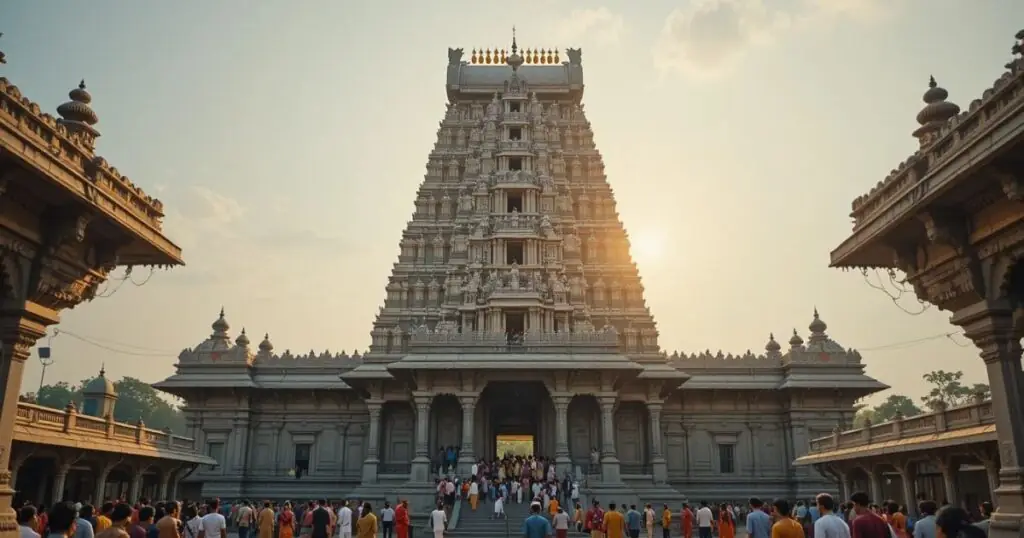
Search engines may show phrases such as “Govindaraja Swamy Temple timings tomorrow,” but the word “tomorrow” makes the result especially vulnerable to becoming outdated. A page indexed months earlier might still use a current-looking title. Always match the schedule to the exact date you intend to visit.
For a same-day change, ask your hotel, transport provider, or local help desk to direct you to an official channel, but treat informal verbal information as provisional. If the matter concerns a paid booking, the official portal or receipt should take priority over advice from an agent or social-media account.
Not every visit to the swamy temple requires an online ticket. General Darshan, a paid seva, a special entry arrangement, and a festival programme may each follow different rules. Booking availability can also depend on the date, quota, service category, and instructions released by the administration.
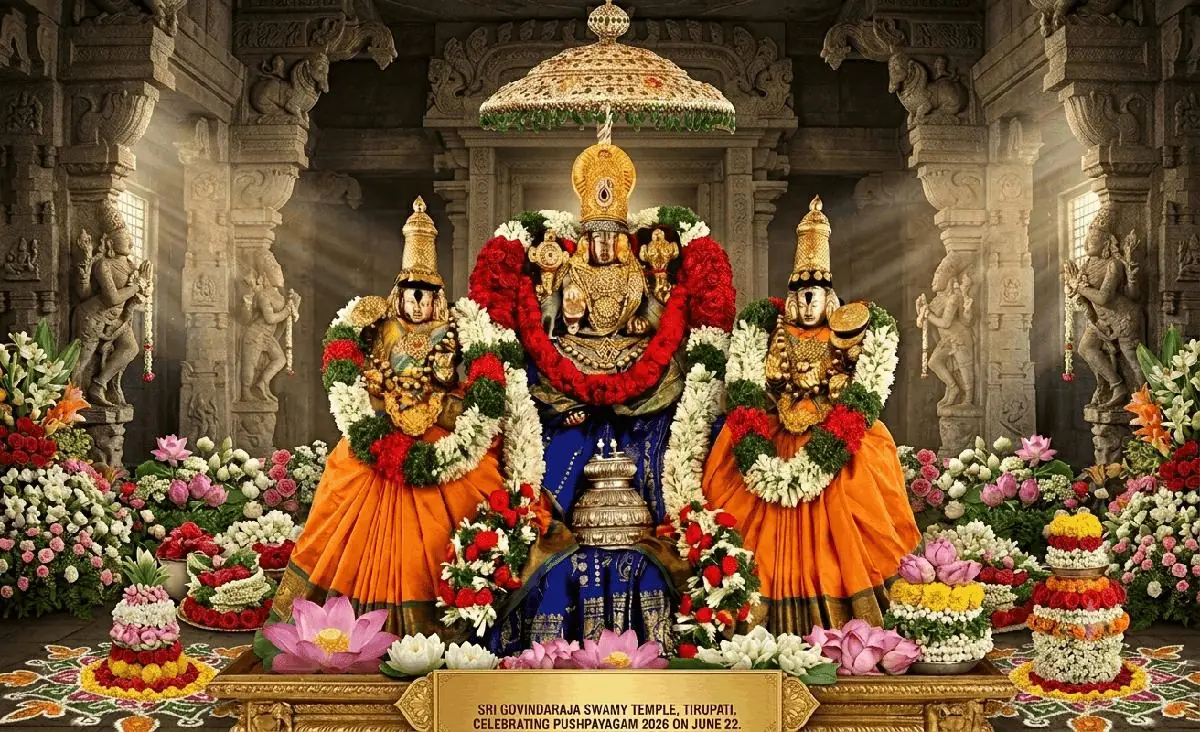
Read the service description in full. Confirm the temple name, date, reporting time, number of devotees covered, identity requirements, and cancellation or modification conditions if they are stated. Don’t assume that a ticket for a Pooja gives automatic access to every part of the temple or guarantees immediate Darshan after the ritual.
Use only the official booking route identified by the temple administration. Be cautious with websites that use temple images, urgent payment language, or promises of guaranteed priority but don’t clearly identify their authority. A genuine booking page should provide a transaction record, service details, and instructions that correspond to the official temple information.
Before completing a reservation, keep these details ready:
Booking “timings” can mean two different things: the time at which a devotee must report for a service, or the period during which online reservations are released. Those are not interchangeable. A portal may accept bookings for a future date while the temple requires ticket holders to arrive well before the actual Pooja begins.
Don’t pay an unofficial intermediary simply because the official quota appears unavailable. First check whether general Darshan is permitted without a reservation, whether another date or service is open, and whether the administration has issued a new notice. Availability is a booking matter, not proof that the temple is closed.
Carry the confirmation in a form that can be shown easily. Network coverage can be inconsistent in crowded areas, and a battery-saving mode or a buried email can slow down verification. A screenshot is useful, but retain the original confirmation as well if the official instructions require it.
Govindaraja Swamy Temple is in Tirupati city, so the journey from your hotel, the railway station, or a bus stand may be easier than travel to the hill shrine. Even so, “nearby” doesn’t mean instantaneous. Traffic, pedestrian movement, parking restrictions, hotel checkout, and festival crowds can all affect the time you need.
Visitors often ask whether they can visit Govindaraja Temple before Tirumala. In principle, many pilgrims plan their town visit before travelling uphill, but the practical answer depends on your confirmed Tirumala reporting time, transport arrangement, and the current temple schedule.
Leave a generous buffer. A queue at one shrine should not put you at risk of missing a separately booked Darshan at another.
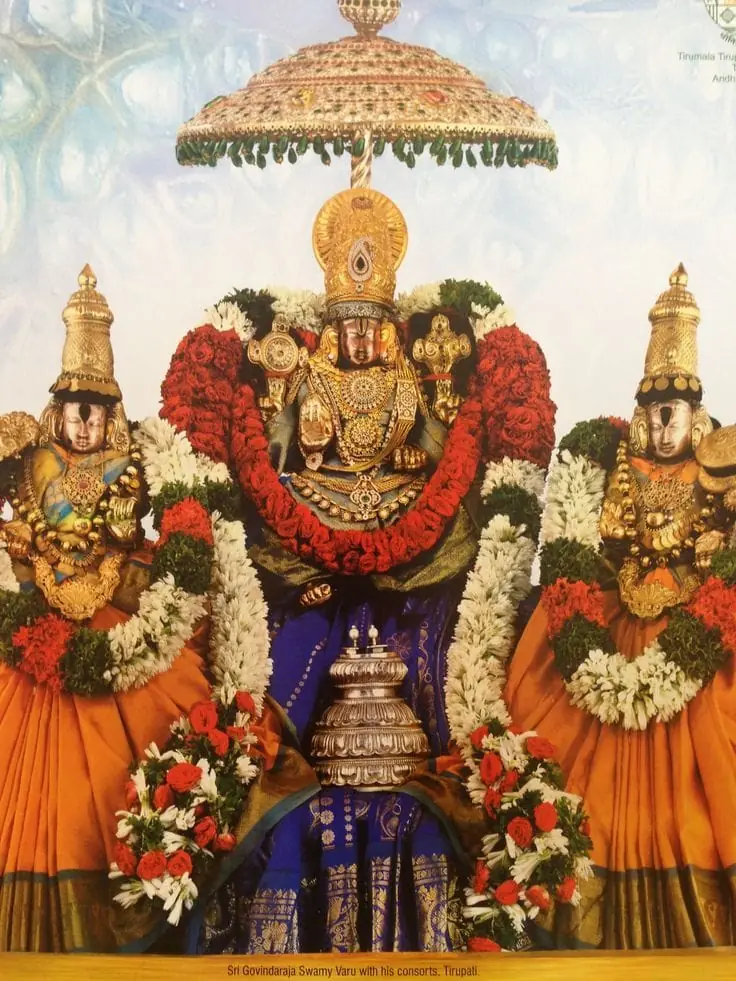
If you’re arriving by train, allow time to leave the station, collect luggage, find transport, and locate the correct entrance. The distance shown on a map may represent road distance rather than the time required to walk through busy streets. If your train arrives close to a scheduled Pooja, a later visit may be less stressful than trying to rush directly into the queue.
Bus schedules and traffic conditions can vary. Ask the driver or conductor for the nearest practical stop, then follow local signage or official directions. Avoid blocking entrances with luggage, and don’t assume that a vehicle can stop directly outside the main shrine gate.
For a combined trip, write down three separate times: your temple arrival target, your booked ritual reporting time, and your next transport or Tirumala obligation. This simple approach exposes conflicts before you leave the hotel.
| Planning point | Why it matters | Safer approach |
|---|---|---|
| Railway arrival | Luggage and local travel can take longer than expected | Keep a buffer before entering the queue |
| Hotel departure | Checkout and transport delays may affect the plan | Confirm your route before the morning rush |
| Tirumala booking | Missing a reporting window can disrupt the rest of the trip | Visit the town temple only with time to spare |
| Festival day | Road movement and queues may be regulated | Check special notices before setting out |
Regular-day timings are least dependable during major religious occasions. Festival rituals may change the normal sequence, and crowd management may limit entry even when the temple itself is active. Special processions can also affect movement near the main shrine and surrounding roads.
During a festival, the most important question isn’t only “When does the temple open?” Ask whether ordinary Darshan is available, whether a separate queue is operating, and whether visitors without a festival-related ticket can enter the relevant area. These arrangements can differ from a normal weekday.
Weekends and public holidays deserve similar caution. A timetable can remain unchanged while the practical waiting period grows because more devotees arrive at the same time. If you want a calmer visit, consider an ordinary non-holiday day, subject to your own travel requirements and the official schedule.
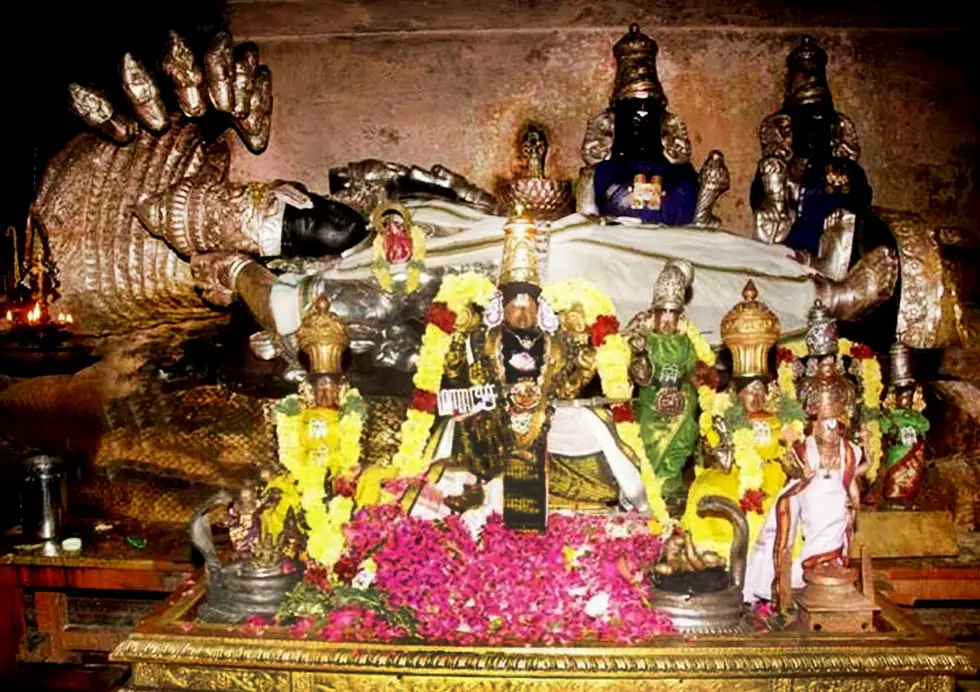
Wear clean, modest clothing suitable for a Hindu temple. Specific dress instructions can change, so follow the current directions displayed by the temple administration. Avoid treating the visit as a quick photo stop; religious areas may restrict photography, bags, footwear, or phone use.
Phone rules are another point that visitors frequently ask about. Don’t assume phones are allowed inside every area simply because you see other people carrying them.
Follow posted instructions and staff directions. If a storage counter is provided, understand its process before joining the queue and keep any receipt safely.
Visitors sometimes search for Govindaraja Swamy Temple Annaprasadam timings. Food distribution, prasadam availability, and service hours may not follow the same schedule as Darshan, and arrangements can change on special days. Confirm whether the facility is operating on your date rather than building your entire meal plan around an unverified listing.
Carry water responsibly, especially if you’re travelling with children or older family members, but respect the temple’s rules about containers and consumption areas. Keep the premises clean and use designated facilities.
A responsible timing article must separate confirmed information from planning advice. The official TTD website is the appropriate authority for current temple notices, service information, and any online booking instructions it publishes. Those official pages should be checked for the date of travel because a general information page doesn’t necessarily confirm the schedule for a particular festival or day.
Illustrative example, not a reported incident: imagine a family reaches Tirupati by train in the morning and has a separately booked Tirumala Darshan later the same day. They find an old page showing a morning opening time for Govindaraja Swamy Temple. Instead of assuming the queue will move immediately, they verify the current notice, ask whether a ritual pause is scheduled, and set a firm departure time for Tirumala.
If the temple is accessible, they complete Darshan with a buffer. If a temporary restriction applies, they avoid risking their confirmed hill Darshan.
This example doesn’t claim that a particular interruption occurred. It demonstrates a sound planning method: distinguish a published regular schedule from a date-specific instruction, then protect the most time-sensitive booking in your itinerary.
A real-world administrative pattern is also clear from the way major temple authorities publish separate notices for regular services and special occasions. A schedule can be valid in one category and unsuitable in another. That’s why the source, date, and service description matter as much as the clock time itself.
When sharing information with relatives or fellow travellers, pass along the official page or notice date instead of copying only the numbers. Context prevents a great deal of confusion.
Use the following sequence whether you’re visiting as part of a short Tirupati trip or combining Sri Govindaraja Swamy Temple with a longer pilgrimage.
This process works because it treats temple access as both a devotional experience and a time-sensitive travel arrangement. You’re less likely to miss a booking, arrive during a ritual pause, or carry items that create problems at security.
The first mistake is relying on one unverified timing page. Search results may mix information from different years, different temples, or different service categories. The second is assuming that a general opening time guarantees immediate access to the sanctum.
Another frequent error is booking transport too tightly around Darshan. Queues don’t always move at a predictable rate, and a short ritual interruption can affect the whole line. If the temple visit is one part of a larger trip, leave room for delays rather than trying to calculate the journey to the minute.
It’s also wise not to judge the temple experience solely by the time spent inside. Security, queue discipline, ritual intervals, and crowd arrangements all contribute to the visit. Patience and respectful conduct make the process easier for you and for other devotees.
The current schedule should be confirmed through the official TTD or temple administration source for your exact date. Check public entry, Darshan availability, ritual breaks, and final entry separately because they may not be identical.
Many pilgrims plan a Tirupati town visit before travelling uphill, but you should compare the temple schedule with your confirmed Tirumala reporting time. Leave enough buffer for queues, transport, and unexpected changes.
Requirements depend on the type of visit and the current instructions. Ordinary Darshan, a special entry arrangement, and a booked Pooja may have different rules. Check the official booking or temple information page before paying.
Phone access can be restricted in particular areas, and rules may be enforced through storage facilities or staff instructions. Follow the notices at the entrance rather than assuming that carrying a phone means you can use it everywhere.
Choose clean, modest clothing appropriate for a Hindu temple and follow any current dress instructions displayed by the administration. If you’re uncertain, check before leaving your hotel.
No. A Pooja or seva has its own ritual schedule, while general Darshan refers to viewing the deity during public access. A seva ticket may also include separate reporting instructions.
Arrive early enough to cover local travel, footwear, security, queue formation, and any required verification. The right buffer depends on the day, your service, and the latest official instructions.
Reliable Govindaraja Swamy temple timings are the foundation of a smoother Tirupati pilgrimage, but the date-specific notice matters more than a fixed number copied from an old listing. Check the official source, separate ordinary Darshan from Pooja and seva arrangements, and protect your transport or Tirumala booking with realistic time buffers.
Before you leave, verify the schedule once more through the temple administration’s current channel. Then travel with the patience and respect that a historic shrine, its deity, and fellow devotees deserve.





