Physical Address
304 North Cardinal St.
Dorchester Center, MA 02124
Physical Address
304 North Cardinal St.
Dorchester Center, MA 02124
Nageshwar Jyotirling timing matters if you’re planning darshan at one of Gujarat’s most revered Shiva temples, especially during a Dwarka–Somnath pilgrimage. Daily opening hours, aarti schedules, abhishek access and crowd levels may differ on Mondays, Mahashivratri and other important days, so relying on an old travel listing can lead to a long wait or a missed pooja.
This article explains the commonly published temple timings, what remains subject to change, how darshan and special pooja arrangements generally work, and how to verify the latest information before you travel. You’ll also find practical advice on reaching Nageshwar, dress expectations, photography, accessibility and combining the visit with nearby sightseeing.
Nageshwar Jyotirlinga, also known as Nageshwar Mahadev Temple, is located near Dwarka in Gujarat’s Devbhoomi Dwarka district. It is traditionally identified with one of the twelve Jyotirlingas of Lord Shiva. The temple stands in the historical region associated with Darukavana, although different religious and historical traditions explain the name and location in varying ways.
Published visitor information commonly places the main daily darshan window in the morning and again in the evening. A frequently listed schedule is 6:00 a.m. to 12:30 p.m. and 5:00 p.m. to 9:30 p.m.
These hours should be treated as a practical reference rather than an unconditional guarantee. Rituals, security arrangements, festivals, maintenance and local administrative decisions can alter access.
| Temple activity | Commonly published timing | What visitors should know |
|---|---|---|
| Morning darshan | Approximately 6:00 a.m. to 12:30 p.m. | Earlier arrival is usually more comfortable, particularly on Mondays. |
| Afternoon interval | Often between 12:30 p.m. and 5:00 p.m. | General entry may pause or become restricted while temple routines continue. |
| Evening darshan | Approximately 5:00 p.m. to 9:30 p.m. | Closing access may be earlier than the listed closing time if queues are long. |
| Aarti and special pooja | Not consistently published in one permanent schedule | Confirm the day’s ritual timing at the temple office or through the authorised temple contact. |
The final entry time is not always the same as the time at which the premises close. If you reach close to 12:30 p.m. or 9:30 p.m., staff may stop admitting new visitors earlier so the existing queue can clear. Plan to arrive at least 30 to 60 minutes before the expected end of a darshan session.
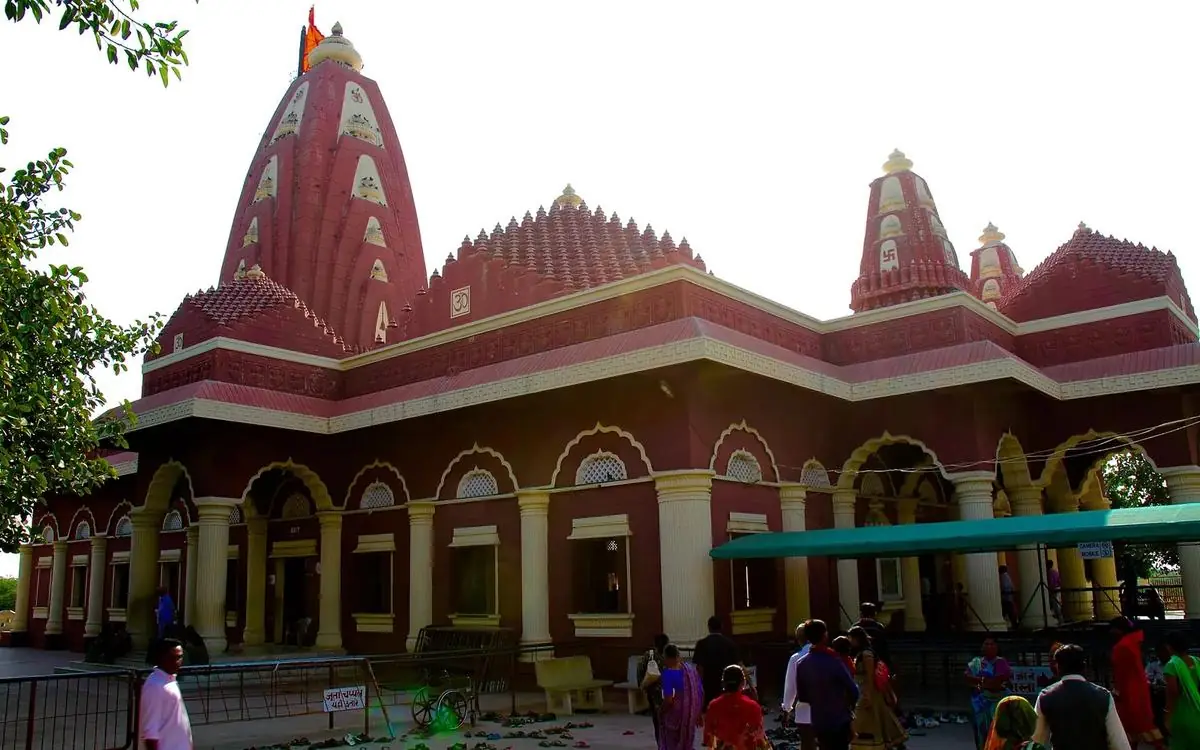
A Jyotirlinga temple is not operated like an ordinary tourist attraction. The day is organised around worship, bathing or abhishek rituals, offerings, aarti, cleaning and crowd management. During some rituals, devotees may be asked to wait outside the sanctum or follow a controlled queue even though the wider temple complex remains open.
Monday is traditionally associated with Lord Shiva and can bring a larger number of devotees. Shravan or Sawan, Mahashivratri, Nag Panchami, Kartik-related observances and major local religious events may also affect the Nageshwar temple schedule.
On such days, the temple may open early, extend public access, introduce barricades or create separate arrangements for special offerings. None of those changes should be assumed without confirmation.
Weather also matters in coastal Gujarat. Hot afternoons can make an evening visit more comfortable, while rain, strong wind or unusually heavy traffic may affect the time it takes to reach the temple. A schedule shown on a hotel notice, map listing or old pilgrimage itinerary can remain online long after the local practice has changed.
Think of the stated opening and closing hours as a broad visitor window. Within that window, the precise experience can vary. A person arriving at 6:00 a.m. may find a quieter queue than someone visiting on a festival morning, while an evening visitor may encounter a rush from people returning from Dwarka sightseeing.
The safest approach is simple: confirm the schedule on the day of your visit, especially if you’re travelling a long distance or connecting Nageshwar with Somnath.
Darshan means viewing or receiving the sight of the deity. At Nageshwar, ordinary darshan generally involves joining the visitor queue and proceeding through the permitted area of the temple.
The time spent inside may be brief when crowds are heavy, but that does not make the visit less meaningful. Temple queues are designed to allow as many devotees as possible to pray safely.
Abhishek refers to the ritual bathing of the Shiva lingam with substances such as water, milk or other permitted offerings. Whether a visitor may personally perform abhishek, touch the lingam or take part in a particular ritual depends on the temple’s current rules. Public information about sparsh darshan is not always consistent, and practices can change during crowded periods or important festivals.
For that reason, you should not rely on an online statement claiming that every visitor can touch the Jyotirlinga. Ask the authorised temple counter whether personal abhishek or sparsh darshan is operating on your chosen date, what items are permitted and whether a receipt is issued. If an offering is arranged through an unauthorised intermediary, there may be no assurance that it is recognised by the temple.
| Visit type | Likely planning approach | Best suited to |
|---|---|---|
| General darshan | Join the regular queue during published visitor hours. | Most pilgrims and families |
| Morning visit | Arrive before the first busy period and ask about active rituals. | Visitors wanting a calmer start |
| Evening visit | Allow for a queue after nearby sightseeing and before closing access. | Travellers with a full daytime itinerary |
| Special pooja or abhishek | Confirm availability, reporting time, identity requirements and receipt process. | Devotees seeking a named ritual |

Aarti is a devotional ceremony using lamps, chants and music. The exact Nageshwar Jyotirling Aarti timing may be announced locally rather than maintained as a permanent online timetable. If attending aarti is important to you, ask whether devotees can remain in the temple during the ceremony or whether the public queue is paused.
During a major ritual, the sanctum may be temporarily closed to ordinary darshan. This is normal in many temples and does not necessarily mean the temple itself is shut. Arriving with a flexible schedule is better than building an entire journey around an unverified minute-by-minute timetable.
Booking arrangements at religious sites can change more often than the basic opening hours. Some days may permit direct registration at a temple counter, while other services may be handled through an authorised trust office or a designated booking channel. A third-party travel agent may offer a package, but that service is not automatically the same as an official temple booking.
Before paying for abhishek or any priority service, identify exactly what the charge covers. It may include a ritual sponsorship, a receipt, a priest-led offering or a place in a designated queue.
It may not include transport, guaranteed contact with the deity, a private sanctum visit or permission to touch the lingam. Ask for those details in clear language.
VIP darshan is another area where travellers should use caution. The phrase may refer to a genuine temple-approved facility, a local priority queue or simply a package sold by a private operator. Nageshwar’s current availability, price and access rules should be confirmed from the official temple office or authorised booking source rather than assumed from a hotel or taxi driver.
Do not share an OTP, card details or identity document with an unknown person who promises instant entry. If an online page does not clearly identify the responsible trust or temple authority, treat it as unverified. A proper booking should provide a recognisable receipt and instructions for reporting.
Verification is especially important because Nageshwar is part of a wider pilgrimage route. Travellers often combine Dwarka, Bet Dwarka, Rukmini Devi Temple, Nageshwar and Somnath. A delay at one stop can affect hotel check-in, transport connections and the next darshan, so a five-minute call or local confirmation can save hours.
This process also helps expose misleading information. If one website says the temple is open continuously while the temple counter mentions an afternoon interval, the local authorised notice should receive greater weight.
Nageshwar is situated on the Dwarka–Beyt Dwarka route in Gujarat’s Saurashtra region. It is commonly visited from Dwarka, and many pilgrims include it in a broader Char Dham or western India temple itinerary. The road journey can be straightforward, but traffic, ferry connections and sightseeing stops can make the day longer than expected.
If you’re staying in Dwarka, leave enough time for the road trip, parking and the walk from the vehicle area. Exact travel time depends on your starting point and conditions, so it’s unwise to schedule a special pooja immediately after another attraction without a buffer. The same principle applies if you’re travelling from Somnath or planning a return journey by train.
| Planning choice | Advantages | Possible difficulty |
|---|---|---|
| Early morning from Dwarka | May offer cooler weather and a better chance of reaching before crowds build. | Requires an early start and confirmation that the intended ritual is operating. |
| Late afternoon visit | Fits well with a daytime Dwarka itinerary. | Traffic and the evening queue may reduce available time. |
| Private car or taxi | Flexible for Nageshwar, nearby sightseeing and return travel. | Agree clearly on waiting time and whether the driver will return after darshan. |
| Multi-temple tour | Useful for combining Nageshwar with Dwarka and other attractions. | A delay at one temple can make the schedule unrealistic. |
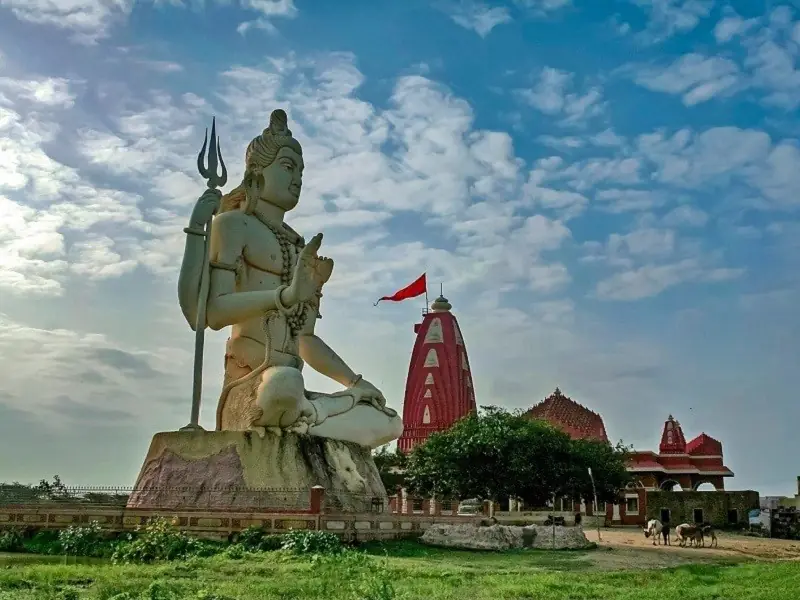
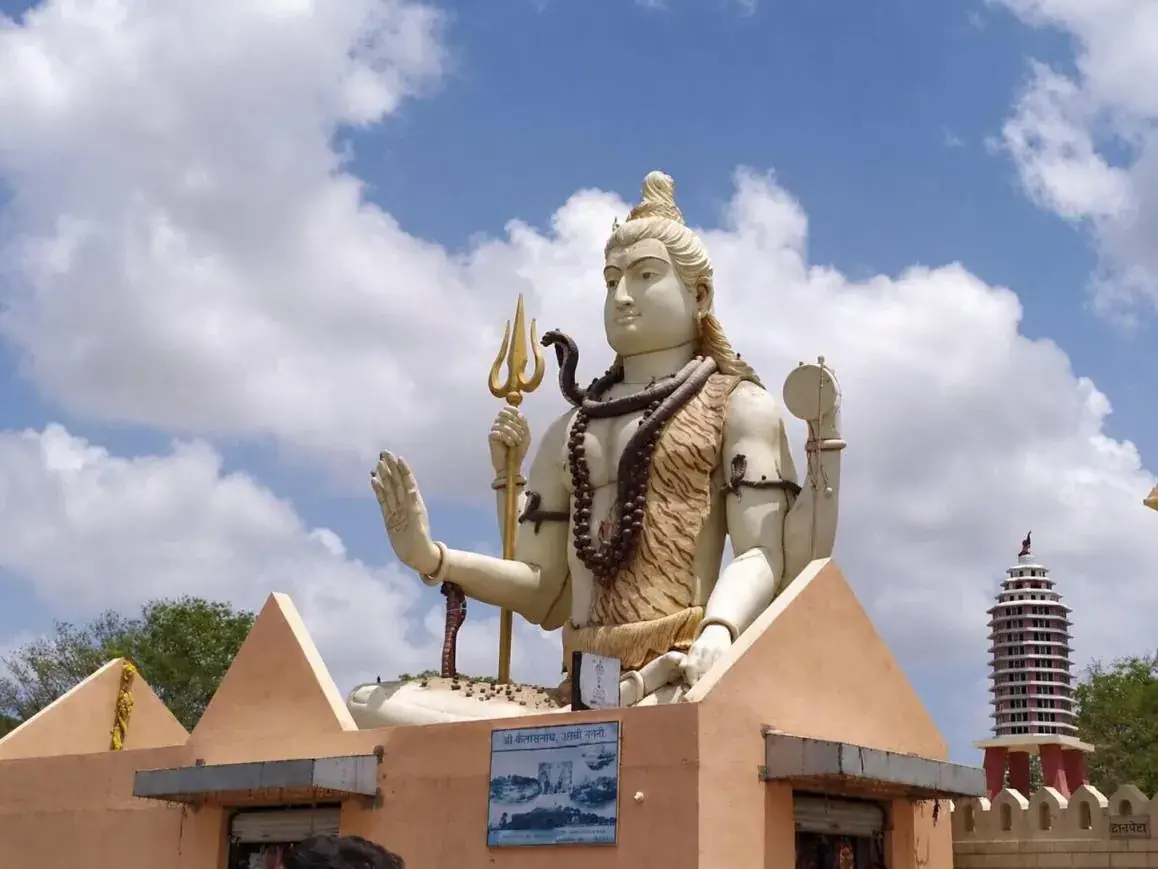
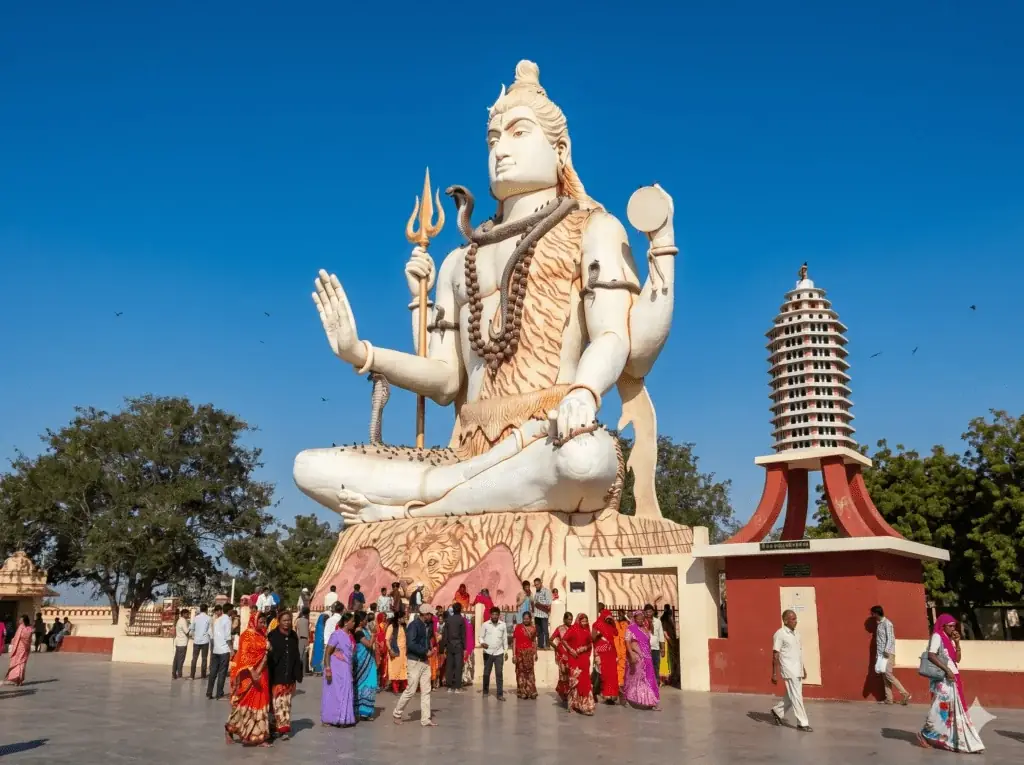
The large Shiva statue near the temple is a familiar landmark for visitors and makes the site easy to recognise. It is also a popular photography point, but the sanctum and interior areas may have stricter rules than the open surroundings. Confirm where photography is permitted instead of assuming that a camera allowed outside can be used throughout the complex.
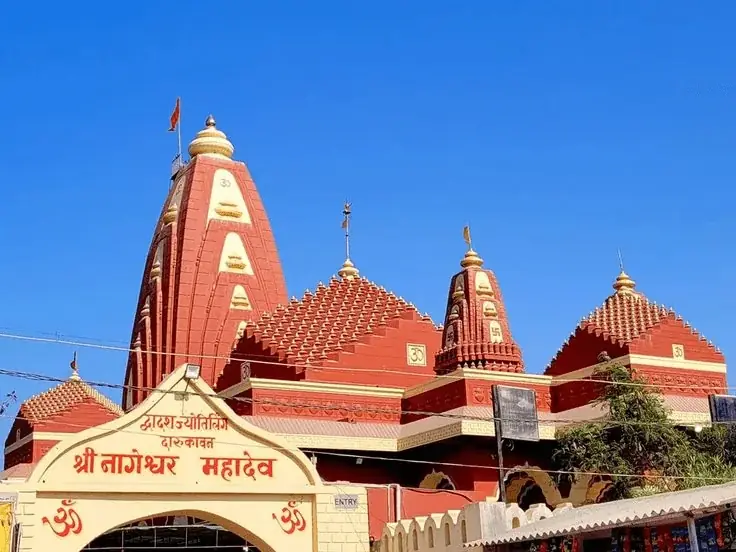
Gujarat Tourism’s official destination material presents Nageshwar Jyotirlinga as a major Shiva pilgrimage site near Dwarka and highlights the prominent Shiva statue associated with the complex. This is a useful real-world example of how a government tourism body distinguishes the temple’s location and visitor relevance from the separate question of live ritual scheduling. In practical terms, use the government listing to plan the destination, then confirm the day’s darshan and pooja details with the temple authority.
Dress respectfully for a Jyotirlinga temple. Indian visitors commonly choose clean, modest clothing that covers the shoulders and knees.
For special pooja or abhishek, the temple may apply additional expectations, and some rituals may have separate arrangements for men and women. Because rules can be updated locally, ask before changing clothes or purchasing ritual items.
Carry a government-issued photo ID if you have booked a service or if the temple office requests identification. Keep your phone, wallet and other valuables secure. Footwear is normally left in a designated area, so wear something easy to remove and avoid carrying more than you need into the queue.
Accessibility can vary. Older visitors or people with limited mobility should ask about ramps, seating, queue alternatives and vehicle drop-off points before entering.
A temple complex may have a relatively accessible outer area but still involve steps, uneven ground or a long standing queue near the sanctum. The availability of assistance is best confirmed locally rather than presumed from a general travel listing.
There is no single guaranteed “best” time for every visitor. The early morning often appeals to devotees who prefer cooler temperatures and a quieter start, while the evening session may suit people completing other Dwarka sightseeing first. On ordinary weekdays, arriving well before the end of a session gives you more protection against queue delays.
Mondays and festival dates can be substantially busier than a regular weekday. Mahashivratri is particularly important for Shiva devotees, and Shravan brings additional pilgrimage activity in many parts of India. During these occasions, roads may be crowded, queue systems may be extended and ordinary personal offerings may be limited.
Waiting time is influenced by more than the number of visitors. Aarti, security checks, group arrivals, special pooja movement and weather can all slow the line. Rather than promising a fixed number of minutes, allow a broad buffer and avoid booking a train or bus immediately after darshan.
| Factor | Morning | Evening |
|---|---|---|
| Temperature | Usually more comfortable, especially in warmer months | Often cooler than the afternoon |
| Schedule risk | Early rituals may affect the first queue period | Late arrivals may face last-entry restrictions |
| Route planning | Leaves time for other temples and sightseeing | Works well after a Dwarka day trip |
| Recommended buffer | Arrive before the intended ritual or darshan window | Reach well before the published closing hour |
If your priority is a special pooja, choose the session based on the temple’s reporting instruction, not simply on personal preference. If your priority is a peaceful visit, avoid major festival days and keep the itinerary flexible.
Commonly published information lists morning darshan from about 6:00 a.m. to 12:30 p.m. and evening darshan from about 5:00 p.m. to 9:30 p.m. Confirm the current hours and last-entry policy before travelling.
The frequently reported opening time is 6:00 a.m., with an afternoon interval and evening access until around 9:30 p.m. The exact opening, closure and ritual interruptions can change on festival days.
Do not assume that touch or personal abhishek is always permitted. Ask the authorised temple office about the current sparsh darshan rule, the applicable ritual and whether a booking or receipt is required.
Availability and meaning of VIP darshan may vary. Confirm whether the facility is officially operated by the temple or trust, what it includes and where you must report. Be cautious with unofficial agents.
Online booking arrangements can change, and several private pages may use similar wording. Use only a booking channel clearly identified by the temple or its authorised trust. If no current official portal is confirmed, enquire at the temple counter rather than paying an unknown intermediary.
Aarti timings may be handled through the daily temple routine and may not remain fixed online. Confirm the day’s schedule locally, including whether general devotees can remain inside during the ceremony.
Keep at least one to two hours for a regular visit, with additional time on Mondays and festival days. Add travel, parking, security and queue delays before scheduling another temple.
Published Nageshwar Jyotirling timing is a useful starting point, not a promise that every ritual and entry rule will remain unchanged. For a smooth visit, confirm the opening window, last entry, aarti interruption, special pooja reporting time and festival-day arrangements shortly before you leave. Keep your booking receipt and identification ready, and allow more time than the map suggests.
Nageshwar is both a sacred Jyotirlinga temple and an important stop on a Gujarat pilgrimage route. Check the latest official information before your journey, then arrive with patience and respect. A little verification can turn a tightly timed stop into a more meaningful darshan.





