Physical Address
304 North Cardinal St.
Dorchester Center, MA 02124
Physical Address
304 North Cardinal St.
Dorchester Center, MA 02124
Guruvayur temple online booking can make a pilgrimage to Kerala’s famous Sri Krishna Temple easier, but only when you use the correct service and verify the latest notice. Darshan, vazhipadu, prasadam, accommodation and special entry may follow different procedures, and the temple’s daily routine can change on festival days.
Before travelling, you need clear information about opening hours, reporting time, identity proof, payment confirmation and possible queues. The practical details below explain how Guruvayur Devaswom services generally work, what you should confirm online, and how to avoid relying on unofficial booking claims.
Guruvayur Temple, also known as the Guruvayur Sri Krishna Temple, is dedicated to Guruvayoorappan, a form of Lord Krishna worshipped in Kerala. The shrine is one of the most important Vaishnava pilgrimage centres in South India.
Devotees visit for darshan, marriage ceremonies, first-feeding rituals, offerings, prasadam and other religious services. That popularity also creates heavy demand for information about entry and bookings.
The phrase “online booking” can refer to several different services. It may mean an online vazhipadu reservation, a prasadam order, Devaswom room booking, a paid special darshan arrangement, or a service connected with a particular ritual.
These are not automatically the same as a general temple entry pass. A receipt for one offering, for example, may not give you priority access to the sanctum or permission to bypass the normal queue.
The safest starting point is the official Guruvayur Devaswom website, along with current notices displayed by the Devaswom. Check that the domain, payment page and receipt details match the official service before entering personal or card information. Search results, social-media posts and travel videos may contain outdated timings, old ticket references or unofficial phone numbers.
Some terms seen in searches deserve particular caution. “VIP darshan,” “1000 RS ticket,” “free darshan,” “virtual queue” and “queue reservation” are often used loosely by visitors and third-party websites. The availability, name, fee and conditions of any paid or priority service must be confirmed directly with Guruvayur Devaswom. Never assume that a ticket sold for a pooja or offering includes a separate darshan privilege unless the official receipt clearly says so.
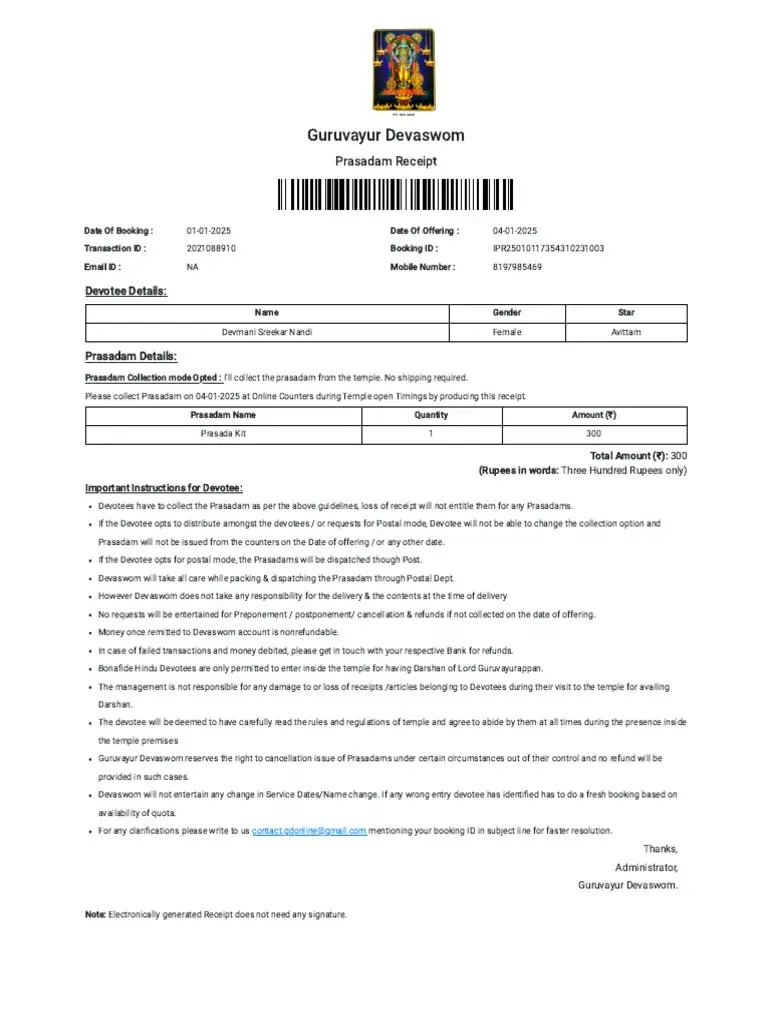
A valid booking confirmation normally identifies the devotee, service, date, reference number and payment status. Depending on the service, it may also show a reporting time, counter, venue or QR code.
Keep the confirmation on your phone and carry a printed copy if possible. Screenshots are useful when mobile connectivity is weak, but they shouldn’t replace the original receipt or transaction record.
Guruvayur Temple follows a traditional worship routine, so the premises are not operated like a tourist attraction with one uninterrupted visiting window. The day includes opening worship, various poojas, offerings, ceremonial processions and closing rituals. The sanctum may be inaccessible during particular rituals even when devotees are present within the temple complex.
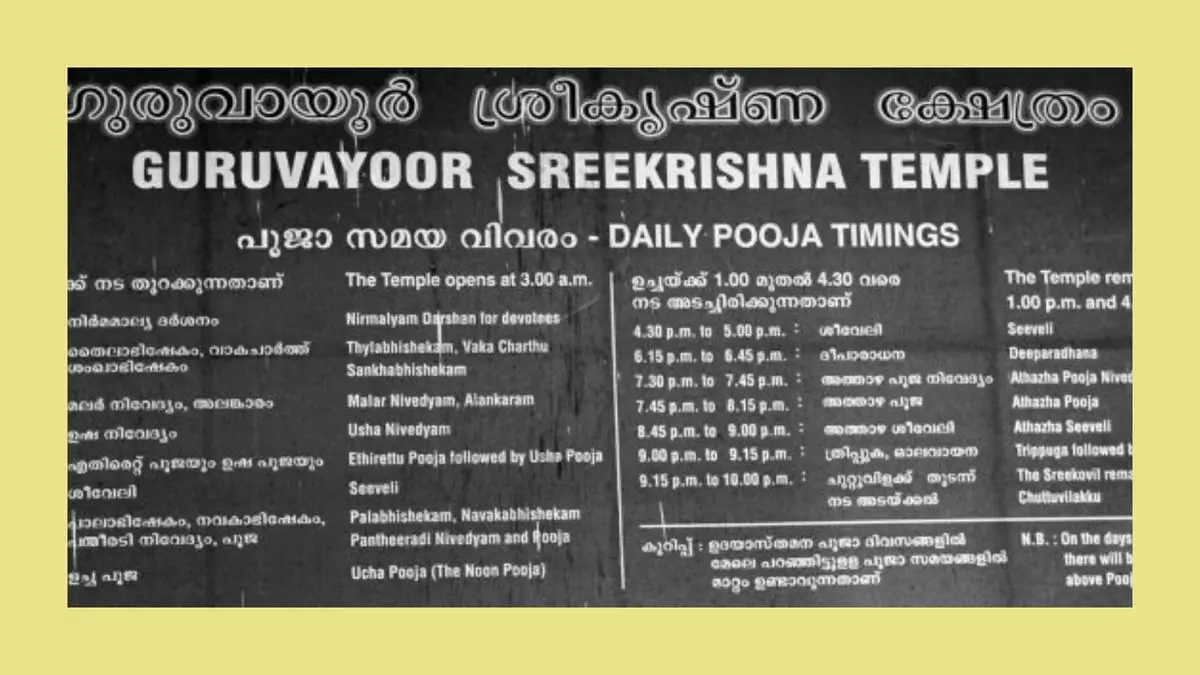
Commonly published schedules describe an early morning opening around 3:00 a.m., a morning session continuing until approximately 12:30 p.m., an afternoon reopening around 4:30 p.m., and evening worship continuing until roughly 9:15 p.m. These are widely circulated routine timings, not a guarantee for every date. Exact darshan timings can be affected by festivals, special poojas, temple functions, VIP visits, crowd-control measures and operational decisions by Guruvayur Devaswom.
| Part of the day | Commonly published routine | What visitors should understand |
|---|---|---|
| Early morning | Temple activity begins around 3:00 a.m. | Early worship can attract a substantial pilgrim crowd; confirm the day’s entry procedure. |
| Morning session | Usually continues until about 12:30 p.m. | Ritual breaks and pooja timings can affect the movement of devotees. |
| Afternoon | Commonly resumes around 4:30 p.m. | There may be a gap in public darshan during the afternoon closure. |
| Evening session | Often continues until approximately 9:15 p.m. | Evening crowd levels vary, particularly during weekends and festival periods. |
Those times should be treated as a planning reference, not as a final booking authority. The official temple notice board and Guruvayur Devaswom announcements take priority over older travel pages. If your train, flight or wedding schedule depends on a narrow window, contact the temple helpline or the relevant Devaswom office before paying for travel.
Darshan also takes longer than the stated opening hours suggest. A queue may form before the gates or designated entry point, and security checks can slow movement.
Waiting time depends on the day, season, temple events and crowd-management arrangements. No responsible source can promise a fixed number of minutes for general darshan.
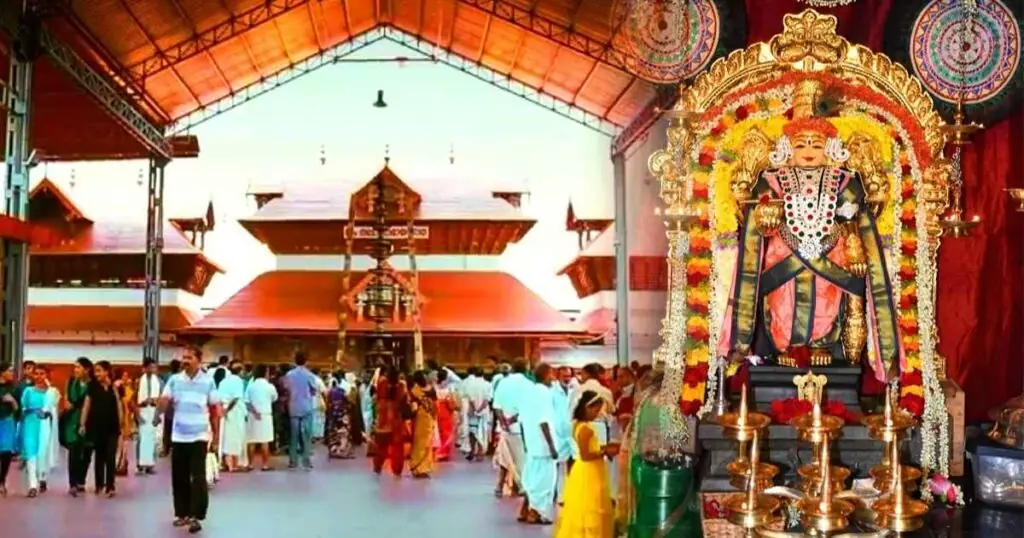
Morning visitors should remember that arriving at 3:00 a.m. doesn’t mean walking directly to the sanctum. You may need to locate the correct queue, store prohibited belongings, pass security and follow instructions from temple staff. Evening visitors should allow time for traffic, parking, changing into appropriate clothing and the possibility of a queue that extends beyond the apparent gate area.
On Ekadashi, Vishu, Janmashtami, Mandalam-related occasions, school holidays and other major religious dates, the normal pattern may not be a reliable indicator of crowd levels. Festival arrangements can also change access routes and parking plans. Check the official notice shortly before departure, even if you booked weeks earlier.
One of the most important distinctions is between entering the temple for darshan and reserving a religious service. Guruvayur Devaswom may provide online facilities for offerings known as vazhipadu, accommodation, prasadam or other approved services.
Each booking has its own rules. A devotee booking a pooja may need to report at a specified counter, while a person reserving a room may receive separate check-in instructions.
Vazhipadu means an offering or religious service made at the temple on behalf of a devotee. Online vazhipadu booking is useful for people who want to reserve an offering before arriving, but the service name, date and beneficiary details must be entered accurately.
Some offerings may be collected in the form of prasadam, while others are performed according to the temple’s schedule. The receipt should explain what is included.
Accommodation booking is a separate matter. A Devaswom room booking or lodging reservation usually concerns a room, not a guaranteed darshan slot.
Check-in and check-out times, identity requirements, room allocation and cancellation conditions can differ from pooja arrangements. If you’re travelling with elderly family members, confirm the distance between the accommodation and the temple and ask whether lift or ground-floor options are available.
| Service searched by devotees | What it generally relates to | What you must verify |
|---|---|---|
| Darshan booking | Entry or an approved arrangement associated with temple viewing | Whether the service is currently offered, its reporting point and entry conditions |
| Free darshan | Regular devotee entry under the temple’s prevailing system | Queue route, crowd controls and whether a separate pass is required that day |
| VIP or special darshan | A paid or priority category if officially available | Official name, fee, eligibility, inclusions and whether it applies to all visitors |
| Vazhipadu booking | Reservation of a pooja or offering | Offering date, devotee name, collection method and receipt requirements |
| Prasadam booking | Reservation or purchase of temple offerings | Collection time, counter, quantity restrictions and availability |
| Devaswom room booking | Temple-managed accommodation where available | Check-in rules, identification, cancellation and room allocation |
Searches for a “1000 Rs ticket” are especially prone to confusion. A price mentioned by a visitor may refer to a particular offering, a historical arrangement, a special occasion or a service no longer available.
Don’t transfer money based only on the amount quoted in a social-media post. Look for the exact service in the official online booking portal and preserve the receipt generated after online payment.

If a page promises immediate VIP darshan, no queue, guaranteed access or a fixed entry time, treat the claim carefully. Ask whether the seller is Guruvayur Devaswom or an officially authorised counter. A legitimate service should identify its terms clearly, including who can use it, whether children need separate registration and what happens if the temple changes its schedule.
The term “virtual queue” also needs verification. Some temples use a digital queue system, while others use physical lines, tokens or service-specific counters.
Guruvayur’s current arrangement may vary. Don’t download an unknown app or share an Aadhaar card, OTP or card PIN with an intermediary claiming to reserve a temple queue.
The booking process depends on the service shown by Guruvayur Devaswom, but the checking method below helps reduce errors. Use a current browser, a working mobile number and an email address you can access while travelling. Enter names exactly as they appear on the identity document that you expect to carry.
After booking, compare the receipt with your travel plan. A booking date is not necessarily a promise that the temple will operate on its ordinary timetable. If a festival notice later changes the entry system, contact the official temple helpline or booking office using a number published by Guruvayur Devaswom, not a number forwarded through an unknown WhatsApp group.
Payment problems are common on busy pilgrimage portals. First check your bank statement, SMS and email before attempting another transaction.
If money was debited but no booking confirmation appeared, record the transaction reference and contact the official support channel. Avoid paying a second time until the status is clarified.
Booking cancellation and refund terms differ by service. Some offerings may not be cancellable after a cut-off time, while an accommodation reservation may have a separate policy. The receipt and official terms should control the decision; statements from agents cannot override them.
Guruvayur Temple follows traditional entry practices, and visitors should dress modestly and be prepared to follow instructions from temple officials. Men are commonly expected to wear a traditional dhoti or mundu for entry into the inner temple areas, while women generally wear sarees, salwar-style attire or other respectful traditional clothing. Rules can be applied differently by area and may be updated, so confirm current requirements before travelling.
Carry a valid identity document if your booking names a specific devotee. An Aadhaar card may be accepted for some Indian identity checks, but it shouldn’t be assumed to be the only acceptable document.
The booking instructions should state what is required. For children, senior citizens and people whose names differ between documents, ask the official counter in advance.
Photography rules are not merely a matter of personal preference. Temple areas can have strict restrictions because of ritual practice, crowd movement and security. Even if another visitor is using a phone, follow the posted signs and staff directions rather than copying them.
Accessibility planning should happen before arrival. Ask the Devaswom or accommodation desk about step-free access, queue assistance and the nearest permitted entry route. A companion may be able to help an elderly devotee, but priority access should never be assumed unless the temple has officially announced it.
Families should keep the group together before security and agree on a meeting point outside the busiest area. If one person has the booking confirmation on a phone, send a copy to another adult. Children should carry a contact detail card, particularly during crowded festival days.
Large groups may need more time than individual visitors because every member may be checked separately. A single booking confirmation may not cover everyone. Read the participant limit and enter each required name before payment.
Guruvayur’s daily routine is shaped by worship rather than by a fixed tourist timetable. Festival days, auspicious Malayalam calendar dates, weddings, school holidays and weekends can bring large crowds. The exact impact varies: one occasion may alter entry routes, another may affect parking, and a third may change the timing of a particular pooja.
Build flexibility into your itinerary. If you have a railway departure, wedding appointment or onward flight, don’t schedule it immediately after your expected darshan. A published opening time tells you when temple activity begins, not how quickly you’ll complete security, queueing and exit procedures.
| Travel situation | Safer planning choice | Reason |
|---|---|---|
| Ordinary weekday visit | Check the routine schedule and arrive before the reporting time | Queues may still form, but planning is usually less complex than on major festival days. |
| Weekend or public holiday | Allow extra time for entry and local traffic | More pilgrims can affect queues, parking and accommodation availability. |
| Major festival or auspicious date | Confirm the latest Devaswom notice immediately before travel | Normal timings and routes may be modified for crowd management or rituals. |
| Group with elderly visitors | Ask about accessible routes and avoid a tightly timed onward journey | Standing and walking time can be difficult during busy periods. |
There is no reliable way to guarantee that an online reservation will eliminate waiting. Even a paid service may require reporting, verification or movement through a controlled route. A queue can also be created by security checks rather than by darshan alone.
Accommodation near the temple can fill quickly during popular periods. If you’re using a Devaswom room booking, confirm the booking separately from your temple service. Travellers staying in a private hotel should ask whether the property can explain the current route without promising unofficial priority entry.
A useful real-world example is the way temple trusts and Devaswom bodies separate digital services instead of treating every payment as a general entry ticket. Guruvayur Devaswom’s official online services have been used for offerings, accommodation-related requests and other approved transactions, with the service selected before payment. The practical lesson is simple: the receipt’s wording matters.
For example, if a devotee books an online vazhipadu and receives a confirmation for that offering, the document should be used according to its stated instructions. It shouldn’t automatically be presented as a VIP darshan pass. Likewise, a room reservation confirms accommodation subject to its terms; it doesn’t by itself confirm temple entry, a shorter queue or access during a ritual closure.
This distinction reflects the wider practice of official religious booking systems in India. The Tirumala Tirupati Devasthanams, for example, publishes separate digital services for darshan, accommodation and other pilgrim facilities rather than presenting one generic booking product.
That model is a useful comparison, but its rules must not be imported into Guruvayur. Each temple trust controls its own categories, fees, availability and identity checks.
When assessing a booking page, ask three questions: who issued it, what exactly was purchased, and where must the devotee report? If those answers are unclear, pause the transaction. A credible official system should provide a transaction trail, not merely a phone number and a request for an advance transfer.
Do not assume that regular or free darshan requires an online ticket. The temple’s current entry system may use a physical queue, a token, a digital arrangement or another process. Check the latest official notice before travelling, especially during crowded dates.
First confirm whether an official VIP or special darshan category is currently available. Use only the service displayed by Guruvayur Devaswom or an authorised temple counter. Verify the official fee, reporting point, identity rules and inclusions before payment.
The phrase may refer to a particular offering or an arrangement described by visitors, and its meaning can change. It isn’t safe to treat “1000 RS ticket” as a permanent official product. Search the current official booking categories and read the service description instead.
A virtual queue may not be available in the same form at all times. Check the current Devaswom announcement rather than relying on an app or third-party claim. If no official option is shown, plan for the regular entry process.
Carry the identity proof named in your booking instructions, along with the booking confirmation. Aadhaar may be useful for Indian visitors, but acceptance depends on the service and current rule. Keep the mobile number used during booking active until the visit is complete.
Not automatically. Vazhipadu booking reserves an offering or religious service. Any connection between that booking and a special entry arrangement must be stated clearly by the official temple authority.
Cancellation and refund rules depend on the service. Check the receipt, terms shown before payment and the official support channel. Don’t rely on an agent’s verbal promise about a refund.
Use the phone number published on the official Guruvayur Devaswom website, current notice board or verified receipt. Numbers copied into social-media posts may be outdated or fraudulent. Never share an OTP, card PIN or banking password with someone claiming to be a temple representative.
A successful visit depends less on finding a dramatic “no-queue” promise and more on matching the right service to the right day. Confirm the latest darshan timings, booking availability, dress rules, reporting point and festival changes before you leave. Keep your receipt, QR code and identity proof together, and allow extra time for security and crowd movement.
Guruvayur temple online booking is most useful when it gives you a traceable, official reservation rather than an uncertain shortcut. Recheck the Devaswom notice shortly before your journey: the final question isn’t only whether a slot is available, but whether its conditions still fit the way you plan to worship.





