Physical Address
304 North Cardinal St.
Dorchester Center, MA 02124
Physical Address
304 North Cardinal St.
Dorchester Center, MA 02124
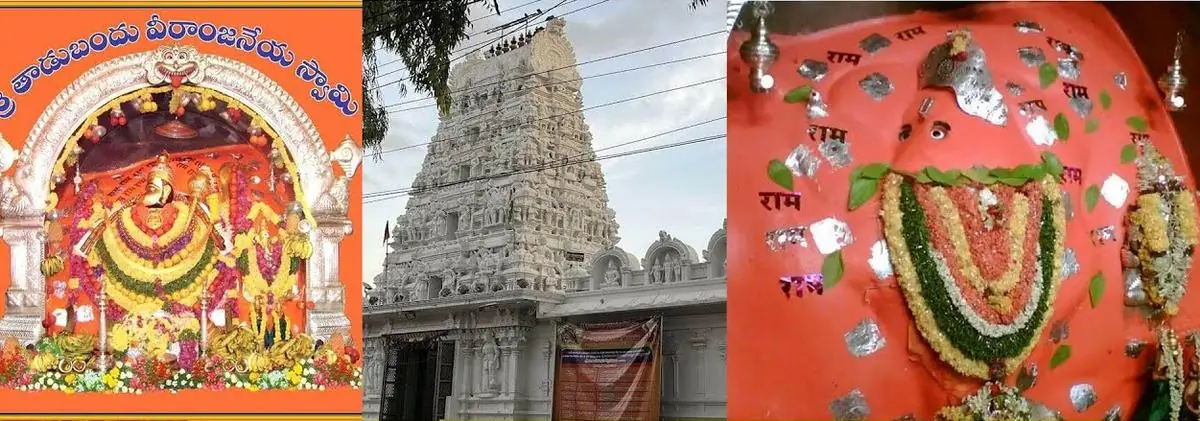
Tadbund Hanuman Temple is a well-known place of worship for devotees in Secunderabad and the wider Hyderabad region. Many visitors come to pray to Sri Veeranjaneya Swamy, seek help during difficult periods, perform vehicle pooja, or attend Hanuman-related festivals.
The practical details matter just as much as the spiritual purpose: Darshan timings, pooja availability, booking procedures, crowd conditions, and temporary restrictions may change without much notice. This article explains how to plan a respectful visit, what is publicly clear, what should be verified before travel, and how to avoid relying on unconfirmed timing or ticket information.
The temple is generally associated with the Tadbund area near Sikh Village, making it accessible from several parts of Hyderabad and Secunderabad. Since current official schedules and booking arrangements can vary, readers should treat the verification steps in this article as an essential part of planning rather than a formality.
Tadbund Hanuman Temple has a strong devotional presence in the Secunderabad area. Worshippers visit the shrine to offer prayers to Hanuman, also called Anjaneya, Maruti, or Veeranjaneya Swamy.
In Hindu tradition, Hanuman is associated with courage, discipline, loyalty, protection, physical strength, and devotion to Lord Rama. These associations explain why people often pray at a Hanuman temple before an important journey, examination, business decision, family event, or personal challenge.
The temple’s location also contributes to its popularity. Tadbund lies within the urban fabric of Secunderabad, close to busy roads, residential neighbourhoods, commercial areas, and transport routes. It is not a remote pilgrimage site requiring a long journey into the countryside.
A person may visit before work, during a family outing, or as part of a larger circuit of temples in Hyderabad. That accessibility has helped the shrine become part of the everyday spiritual life of local residents.
Many devotees are especially interested in Tuesday and Saturday visits. These days are traditionally connected with Hanuman worship in several parts of India, although practices can differ from one temple to another.
On such days, the queue may become longer, special offerings may be arranged, and the time required for Darshan may increase. A quiet weekday visit can feel very different from a crowded festival morning.
It’s also important to distinguish popularity from claims that cannot be verified. Online pages sometimes describe a temple as the “most powerful” or attach specific miracle stories to it.
Faith is personal, but such statements shouldn’t be treated as official historical evidence. The reliable point is that the shrine holds significance for many devotees and remains an active place of worship in the Tadbund-Secunderabad area.
The temple is located in the Tadbund area of Secunderabad, within Hyderabad’s larger metropolitan region. Search results may describe the address using Tadbund, Sikh Village, Secunderabad, or nearby road and landmark references.
This can create confusion for visitors who expect one standard postal description. Before leaving, compare the temple name with the map pin, the locality, and the route shown by your chosen navigation service.
For local residents, public transport, taxis, auto-rickshaws, private cars, and two-wheelers are common ways to reach the area. Travellers arriving at a railway station, airport, or bus point should allow extra time for city traffic. A route that looks short on a map may take longer during office hours, school dispersal periods, weekend shopping hours, or festival gatherings.
Parking is another practical concern. A temple may not have enough dedicated parking for all visitors, particularly during peak worship periods.
Roads near an active shrine can also be affected by temporary barricades, police arrangements, street vendors, or local traffic controls. Don’t assume that a location pin guarantees a convenient drop-off directly outside the entrance.
Before travelling, save the following information offline or in a note on your phone:
If you’re visiting from outside Hyderabad, confirm whether your driver understands the difference between Tadbund and other Hanuman temples in the city. Temple names can sound similar, and a cab driver may know a popular landmark rather than the exact shrine you intend to visit.
Darshan means viewing or receiving the blessing of the deity. It doesn’t necessarily mean that the sanctum remains accessible in exactly the same way throughout the day.
A temple may open its outer area while the main shrine is temporarily closed for cleaning, decoration, Naivedyam, aarti, or another ritual. That is why a single “opening hours” entry on a directory may not tell you the whole story.
For Tadbund Hanuman Temple timings, use the temple’s latest notice, official communication channel, or direct confirmation from temple staff whenever possible. Public listings can become outdated, especially if they were created during an earlier schedule. A recent visitor review may also describe a special-day arrangement rather than the regular weekday routine.
Ask specifically about four separate points:
The last-entry question is often overlooked. If a temple closes at a stated evening time, the queue may stop earlier to allow all visitors inside to complete Darshan.
On a crowded day, management may regulate entry before the nominal closing time. Calling shortly before departure is safer than relying on an old search snippet.
Timings may change because of a festival, a special alankaram, a VIP visit, maintenance, crowd management, local restrictions, or an internal temple decision. Such changes aren’t unusual in Indian temples. They don’t necessarily mean that a listing is fraudulent; they may simply show that the listing has not been updated or that the day is exceptional.
For broader religious context, the official Incredible India tourism portal can help with general travel planning, but it should not be treated as the final authority for this temple’s daily Darshan schedule.
Visitors searching for Tadbund Hanuman Temple pooja timings may be asking about several different services. A regular Darshan visit, an Archana, a special Sankalp, an Abhishekam, a vehicle pooja, and a festival offering can each have a different procedure. Some may be available only during a particular ritual window, while others may depend on priest availability or advance registration.
Common forms of worship at Hanuman temples can include flowers, coconuts, betel leaves, sindoor-related offerings, Archana, aarti participation, and recitation of Hanuman Chalisa. The exact practice at Tadbund should be confirmed at the temple itself. Devotional customs are not identical across all shrines, and an item accepted in one temple may be restricted in another.
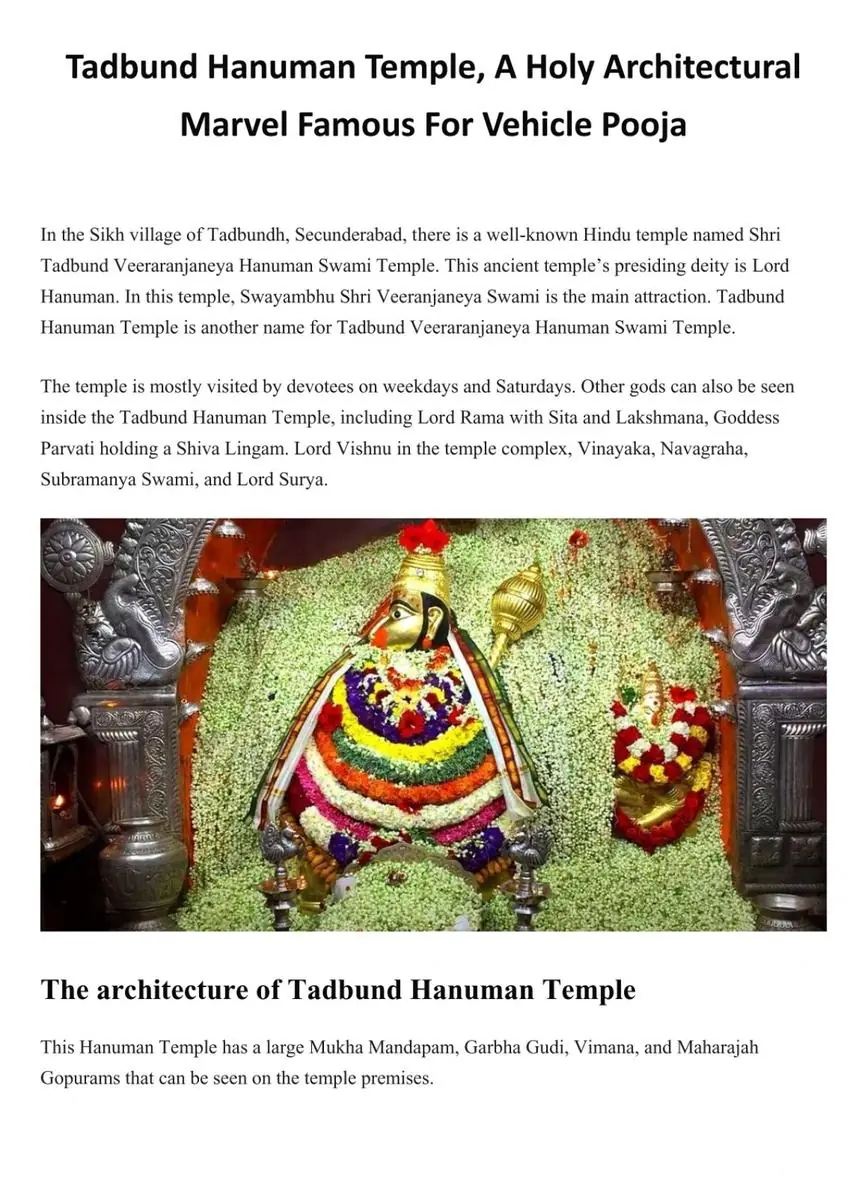
Archana generally involves offering prayers in the devotee’s name, often with details such as a family member’s name or a stated intention. If you want an Archana, ask whether a token must be obtained before joining the queue. Find out where the receipt is issued, whether the offering is performed at a fixed time, and whether the devotee needs to remain present.
Some temples accept requests only during designated hours because priests follow a fixed ritual sequence. A visitor who arrives shortly before aarti may be asked to wait until the service ends. Patience is part of temple etiquette, especially when several families have registered for the same ritual.
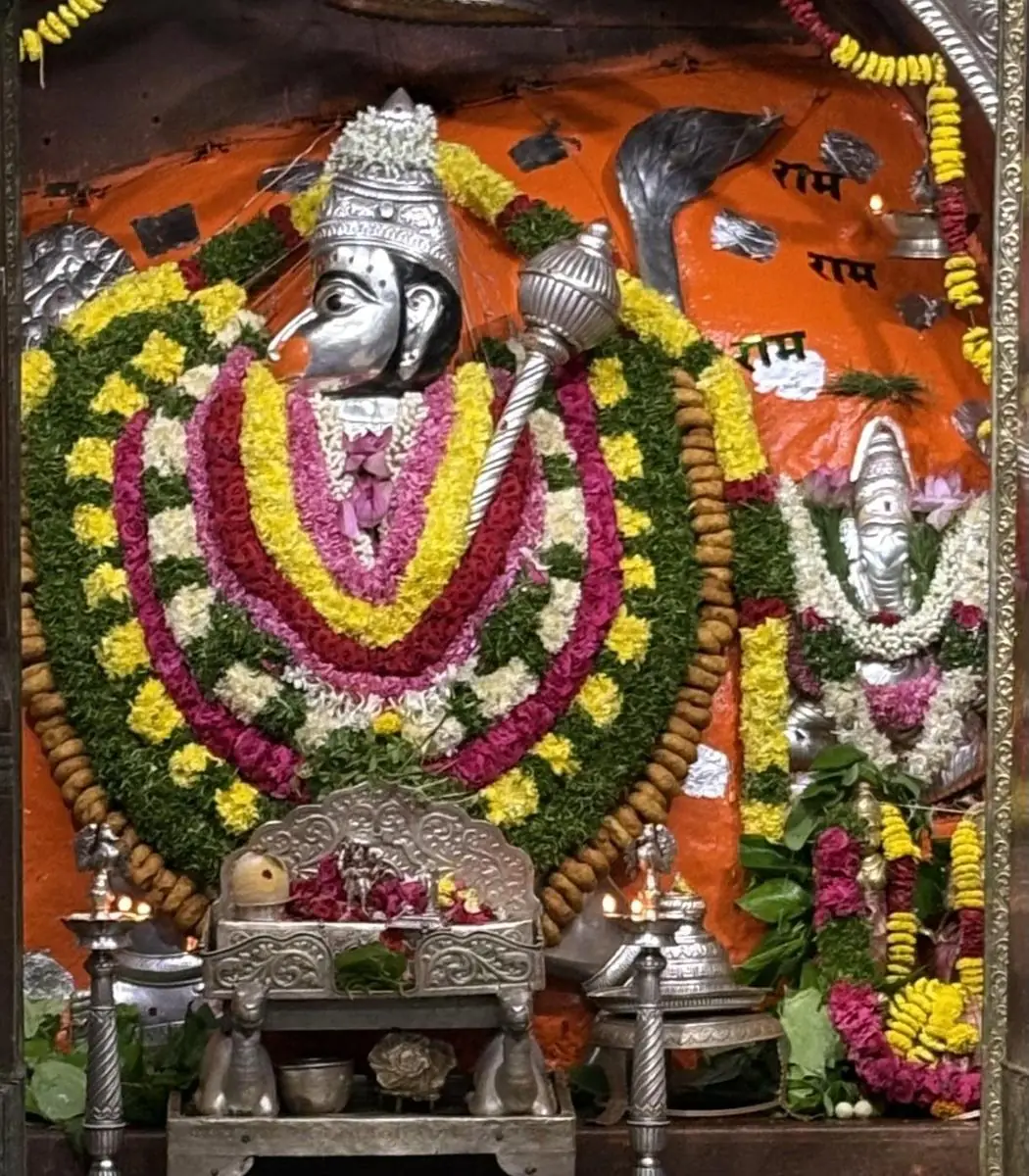
Abhishekam is a ceremonial bathing or anointing of the deity using permitted substances. It’s usually more structured than ordinary Darshan. The temple may restrict direct participation, supply the materials itself, or allow devotees to sponsor the ritual without entering the sanctum area.
Do not bring milk, oil, water, sindoor, or other materials without checking first. The shrine’s priests or management may have specific instructions concerning quantity, purity, packaging, and where an offering should be deposited. A service listed online as “available” may still require prior approval on a particular day.
Vehicle pooja is one of the most frequent practical searches associated with the temple. People may bring a new car, motorcycle, commercial vehicle, or another vehicle to seek blessings before use. Hanuman worship is often connected in devotees’ minds with protection during travel, courage, and safe movement, which makes this service meaningful for families and vehicle owners.
The phrase “vehicle pooja timings today” should be treated carefully. A current schedule may not be published consistently online, and availability can depend on the priest, temple crowd, space outside the shrine, traffic conditions, or a festival arrangement. Never assume that an old listing or a directory’s “open now” label confirms that vehicle pooja is being conducted at that moment.
Before bringing a vehicle, ask the temple office:
Keep the vehicle clean and avoid blocking the main entrance. A temple road is not a private ritual area, and parking in front of a gate can obstruct elderly devotees, emergency movement, or other visitors. If the staff directs you to a particular spot, follow that instruction even if another location appears more convenient.
There may be no single publicly verified “ticket price” that applies in every situation. A vehicle pooja charge, if applicable, can depend on the service selected and the temple’s current decision. Request an official receipt where one is issued, and avoid paying unofficial intermediaries who claim they can guarantee immediate access.
Searches for Tadbund Hanuman Temple online booking often reflect uncertainty about special pooja reservations, vehicle services, or festival entry. Not every temple operates a full online booking platform. Some rely on an in-person counter, telephone confirmation, a local trust office, or a limited digital arrangement for selected services.
Look for a booking link only through a source clearly associated with the temple management or a recognised temple trust. A professional-looking webpage isn’t proof that it is official. Check the domain, contact details, receipt information, refund terms, and whether the page identifies the managing organisation.
A safe verification process looks like this:
Be especially cautious with advertisements promising guaranteed Darshan, instant VIP access, or unusually high charges. Temple administration may offer legitimate priority or sponsored services, but the terms should be transparent. A genuine booking normally provides a clear service name, reporting instruction, payment record, and contact path for changes.
If no online booking facility is currently confirmed, that doesn’t mean a visit is impossible. It may simply mean that visitors must approach the counter during the temple’s stated service hours. Ask about token distribution early, because a limited number of ritual slots can fill before the main Darshan queue becomes busy.
The best time to visit depends on your purpose. Someone seeking a brief, quiet Darshan may prefer a regular weekday and should avoid the busiest prayer periods.
A devotee who wants to participate in a particular aarti or festival may accept a crowd in return for the religious atmosphere. There’s no universal answer that works for every visitor.
Tuesday and Saturday often attract more Hanuman devotees in many regions. Hanuman Jayanti, Ram Navami-related observances, special Alankaram days, and other local religious events can bring additional visitors. The exact festival calendar and arrangements at Tadbund should be verified for the relevant year, because dates follow the Hindu lunar calendar and temple programmes may differ.
Arrive with extra time if you’re travelling with children, older adults, or people with mobility concerns. Queues may move slowly, and standing space may be limited.
Carry water for the journey, but follow the temple’s rules about food and drink inside the premises. Footwear storage, mobile phone restrictions, photography rules, and queue entry points may also be managed differently on crowded days.
| Visit purpose | Likely planning priority | What to verify |
|---|---|---|
| Ordinary Darshan | Lower-crowd period on a regular day | Opening, closing and last-entry times |
| Tuesday or Saturday visit | Earlier arrival and additional waiting time | Special queue or altered schedule |
| Archana or Sankalp | Token or counter procedure | Registration window and devotee presence |
| Vehicle pooja | Space, priest availability and reporting time | Booking, fee, parking and permitted vehicle area |
| Festival visit | Traffic, barricades and long queues | Festival notice and temporary entry rules |
The table is a planning framework, not a substitute for the temple’s current announcement. A regular schedule can be suspended or adjusted for a major ritual. Treat the day’s notice as more reliable than a general travel article.
Temple etiquette is simple: dress respectfully, follow the queue, listen to volunteers, and don’t obstruct the worship area. Indian temples welcome people from many backgrounds, but each shrine may maintain its own rules for dress, offerings, photography, and movement around the sanctum.
Wear clean, comfortable clothing that allows you to sit or stand without difficulty. Traditional attire isn’t always compulsory, but clothing that is modest and suitable for a religious place is the safest choice. If you’re planning to perform a ritual, ask whether there are additional dress expectations.
Before entering, check whether footwear must be left at a designated counter. Keep valuables secure, particularly during crowded periods.
A small bag is easier to manage than large luggage, and some temples may restrict oversized items. Don’t carry flammable materials, alcohol, tobacco, or objects prohibited by temple policy.
Photography can be restricted near the sanctum even when it is permitted in the outer courtyard. Don’t photograph priests, worshippers, children, or ritual preparations without permission. Flash photography can disturb worship and may violate the temple’s instructions.
Visitors with disabilities, pregnant people, senior citizens, and families with small children should ask staff about accessible routes or priority arrangements. The availability of such assistance may vary. It’s better to request help politely than to assume that a particular queue is open to everyone.
Prasad and offerings should be accepted or placed according to the temple’s directions. If you’re unsure whether a flower, fruit, oil, or other item is allowed, ask before purchasing it from a nearby vendor. Temple-adjacent sellers aren’t necessarily authorised representatives of the temple, so keep donation and purchase decisions separate.
Hanuman temples often become especially active during Hanuman Jayanti, Tuesdays, Saturdays, and occasions connected with Lord Rama. At Tadbund, special decorations, chanting, aarti, distribution of Prasad, and extended devotional activity may be arranged. The atmosphere can be deeply meaningful, but it may also involve dense queues and altered traffic patterns.
Festival dates can’t be safely guessed from the Gregorian calendar alone. Hindu observances may be calculated according to local Panchang traditions, and a temple may announce its programme separately. Check the current year’s notice for the date, start time, special pooja registration, and any restrictions on ordinary Darshan.

Hanuman Jayanti is commonly associated with the birth of Hanuman, although the date and customary observance vary by region. If you plan to attend, contact the temple well in advance. Ask whether the main celebration takes place in the morning, evening, or across several sessions.
On a major occasion, the temple may separate queues for general Darshan, sponsored rituals, senior citizens, or invited guests. Carry only what you need, use public transport where practical, and expect delays. Don’t rely on a normal weekday map journey or ordinary parking assumption.
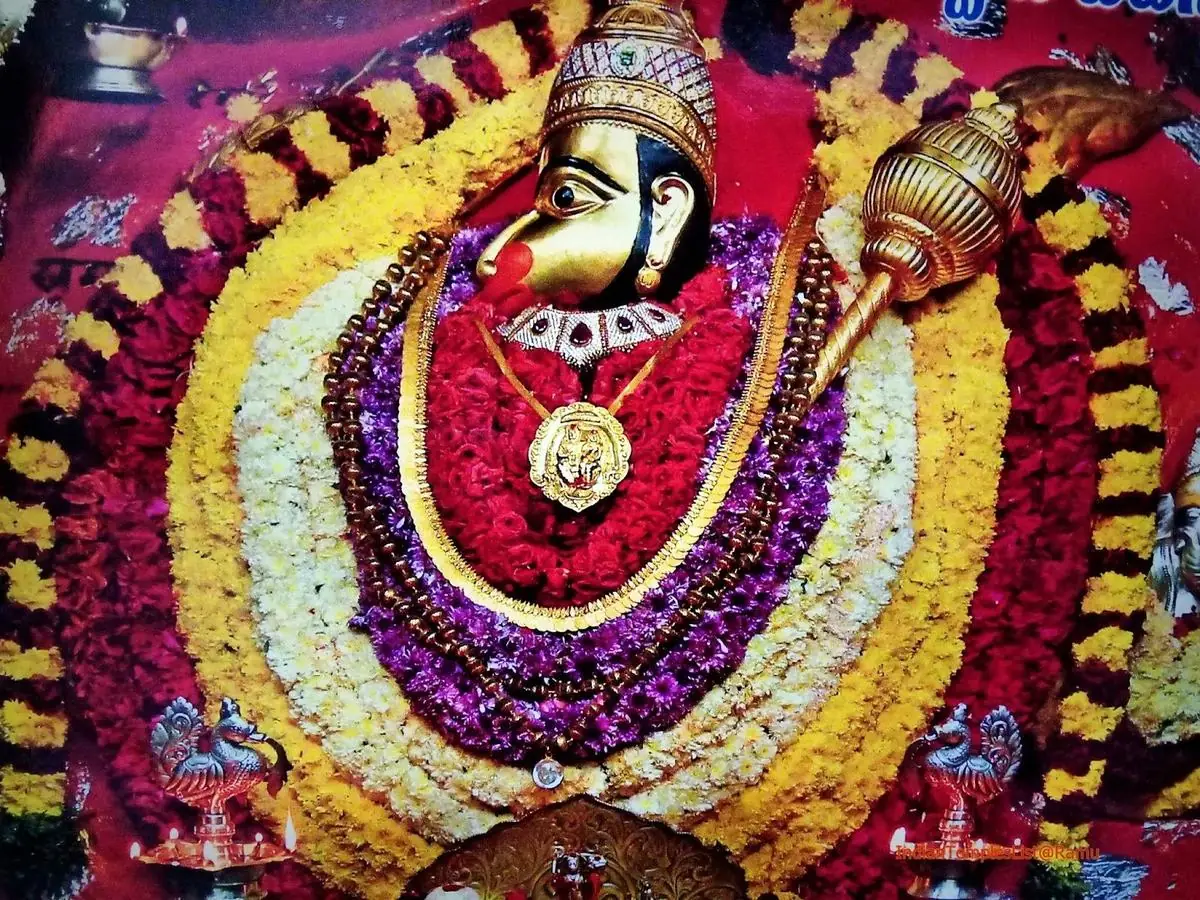
Alankaram refers to the decoration or adornment of the deity. A special Alankaram may attract devotees who want to see a particular form of worship, but it may also change the time at which the sanctum is visible. Similarly, a Bhajan, homam, or extended aarti can affect general movement inside the temple.
If the purpose of your trip is a specific ritual rather than ordinary Darshan, ask whether visitors may watch the ceremony or only receive Prasad afterward. This small clarification can prevent disappointment, especially when travelling from another city.
People often search for the Tadbund Hanuman Temple story because a shrine’s local history adds meaning to a visit. In many Indian temples, the story of the deity, the founding of the shrine, and its growth through community support may be preserved through oral tradition, family memory, inscriptions, trust records, or local publications.
Online descriptions may connect the temple with an old Hanuman image, a village settlement, a saint, a military or neighbourhood history, or a devotional event. Unless the account is supported by a temple publication, archival record, government heritage source, or clearly identified historical work, it should be presented as local tradition rather than established fact.
The Tadbund and Sikh Village area has its own urban and community history, but that broader history shouldn’t automatically be used to make precise claims about the temple’s founding date. A shrine may be old in local memory while its present structure is newer, renovated, or expanded over time. Many temples have several layers of history: the original place of worship, a later sanctum, a rebuilt entrance, and modern facilities.
This distinction matters for readers who want reliable information. A respectful article can acknowledge devotional belief without inventing a date, founder, miracle, or royal connection. If you hear a story from a priest or local elder, ask whether it is recorded in temple literature and note the source before repeating it as history.
For researchers, useful questions include:
Example only: Imagine a family from another part of Hyderabad planning a Sunday visit for ordinary Darshan and a vehicle pooja. This is a planning illustration, not a report of a verified temple schedule or an actual family’s experience.
The family first contacts the temple’s confirmed phone number and asks whether vehicle pooja is available on Sunday, whether a token is required, and whether the car can be brought near the designated ritual area. They also ask about the regular Darshan window and whether Sunday has any special programme. Because the answers may change, they save the conversation details and check again before leaving home.
They decide not to carry a large bag. The children wear comfortable, respectful clothing, and an older family member is given a seat during the journey.
The driver keeps the vehicle documentation available, although the temple may not require it. On arrival, the family follows the staff’s parking instructions instead of blocking the entrance.
If the vehicle pooja counter is closed or the waiting list is full, the family has a backup plan: complete ordinary Darshan and ask whether another suitable time is available. They don’t pay a third-party person who promises to bypass the queue. This approach is practical because it protects the family from wasted travel, unclear payments, and avoidable conflict.
The lesson is straightforward. A good temple visit doesn’t depend only on knowing a general opening time. It depends on matching the service you want with the correct counter, ritual period, entry rule, and crowd expectation.
Searches for “Tadbund Hanuman Temple contact number” or “timings phone number” can produce several results, and not all of them are current. A number copied from a directory may belong to a nearby shop, an old caretaker, a travel listing, or a private individual. Confirm that the person answering identifies the temple or its management before relying on the information.
Use a short, specific call script:
Don’t share unnecessary personal information over an unverified call. For online payments, check that the name of the recipient matches the temple trust or authorised service provider. Keep screenshots of confirmations, but remember that a screenshot alone doesn’t prove authenticity.
If the temple doesn’t maintain an official website or regularly updated social channel, direct confirmation becomes even more important. You can also ask a local resident, hotel desk, or nearby recognised institution for directions, but use those sources for navigation rather than as final proof of ritual timings.
It is known as a prominent Hanuman shrine serving devotees in the Tadbund, Sikh Village, Secunderabad, and Hyderabad areas. Its urban location, devotional importance, and association with prayers, Archana, festivals, and possible vehicle pooja make it relevant to both local worshippers and visitors.
Yes, the Tadbund area is associated with Tadbund Hanuman Temple, also referred to in some listings through its deity name, Sri Veeranjaneya Swamy. Confirm the exact map location before travelling because similarly named Hanuman shrines may appear in searches.
A current daily schedule should be confirmed through the temple’s official communication channel or by calling the verified temple contact. Timings can change for aarti, special pooja, festivals, maintenance, VIP visits, or crowd control, so an old online listing may not be reliable.
Ordinary temple Darshan and paid devotional services are separate matters. Don’t assume that a service charge, Archana fee, donation, or vehicle pooja payment is an entry fee. Ask the temple counter whether general entry is free and request clear information about any optional or sponsored service.
That depends on the temple’s current system. Some services may use an online booking method, while others may require an in-person token or direct confirmation. Use only a booking link or payment method clearly published by the temple management.
For a quieter experience, a regular non-festival weekday may be more manageable, but the temple’s actual crowd pattern can vary. Tuesdays, Saturdays, and Hanuman-related festivals are often busier in many places. Verify the day’s schedule before deciding.
Photography rules may differ between the outer premises and the sanctum area. Follow displayed notices and staff instructions, and ask before photographing rituals, priests, or other devotees.
A visit to Tadbund Hanuman Temple becomes easier when you separate confirmed information from assumptions. Check the latest Darshan schedule, ask specifically about the pooja or vehicle service you need, verify any booking or payment process, and allow extra time for festivals and crowded days. Respectful dress, patient queue behaviour, and attention to temple instructions will make the experience smoother for you and other devotees.
Because schedules can change, confirm the temple’s current notice or contact details immediately before travelling. With that small step, your visit to the Sri Veeranjaneya Swamy shrine in Tadbund can be planned with both practical care and genuine devotion.





