Physical Address
304 North Cardinal St.
Dorchester Center, MA 02124
Physical Address
304 North Cardinal St.
Dorchester Center, MA 02124
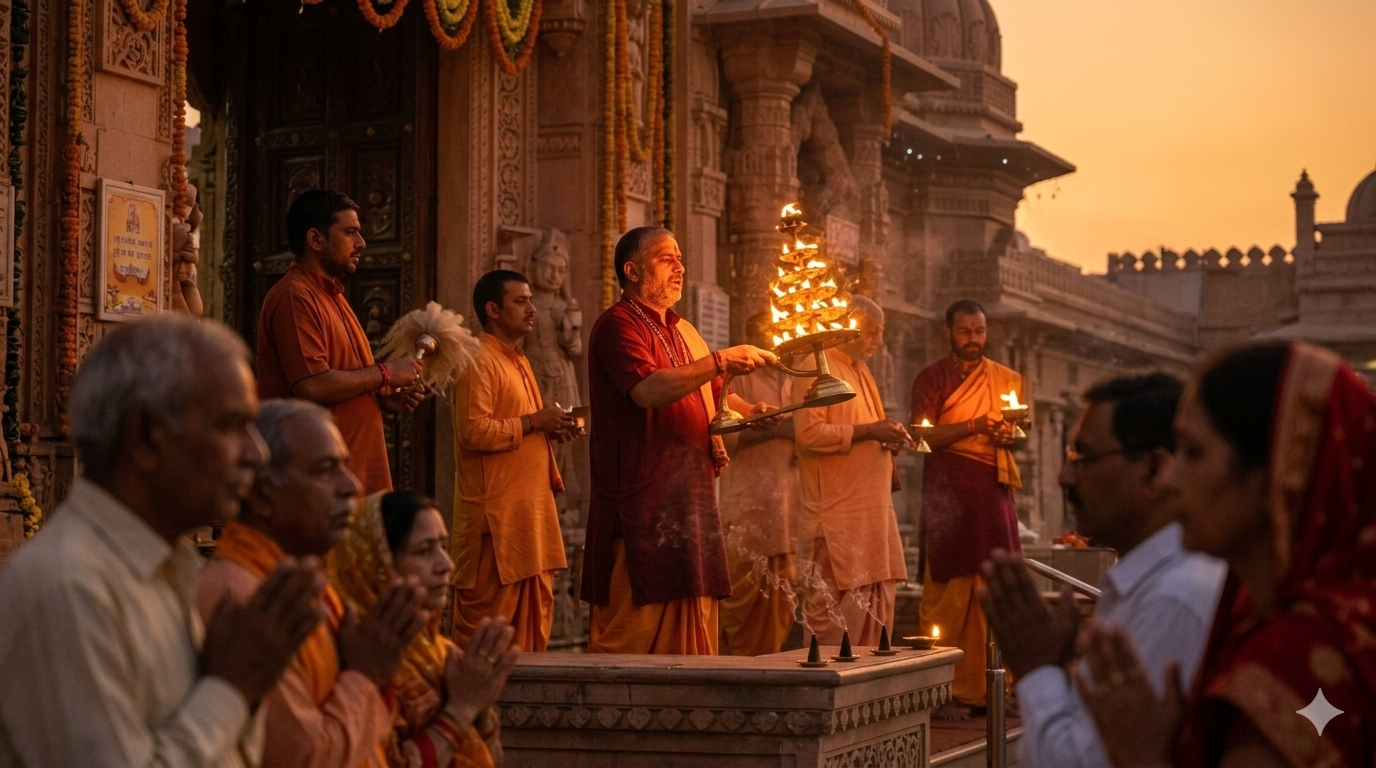
If you’re trying to nail down the exact Khatu Shyam Mandir timing before you travel, you’re not alone. Thousands of devotees search for this every week, especially before big weekends or festival dates, because getting the timing wrong can mean standing outside a closed gate or missing your favorite Aarti by ten minutes. This guide walks you through the current darshan hours, the daily Aarti schedule, how things shift during festivals, and — just as important — when you should actually go if you want a calm, unhurried darshan of Shyam Baba.
We’ll also cover a few things most guides skip entirely, like what to do if you show up outside temple hours and how to time your travel from Jaipur or Ringas so you’re not rushing at the last minute.
Let’s get straight to it, since that’s probably why you’re here.
The temple runs on two seasonal schedules — one for summer, one for winter — and it opens twice a day with a break in between for rituals and cleaning. Here’s the shortest possible version:
That’s the baseline. During major festivals, these hours can extend, and we’ll get into exactly when and why below.
The temple doesn’t run on a single fixed clock year-round, and that trips up a lot of first-time visitors. The Khatu Shyam Darshan Time actually moves with the seasons, mostly because of Rajasthan’s brutal summer heat and shorter winter daylight hours.
During summer, the temple opens earlier — 4:30 AM — to let devotees complete their morning darshan before the heat becomes unbearable. Sikar district regularly sees daytime temperatures climb past 40°C in peak summer months, so an early start isn’t just tradition, it’s practical.
The gates close at 12:30 PM for the midday break, then reopen at 4:00 PM once the heat eases and stay open until 10:00 PM.
Winter mornings in Rajasthan are cold, so the temple pushes its opening back to 5:30 AM. You’ll find the same midday-to-evening pattern, just shifted: darshan runs until 1:00 PM, then resumes at 5:00 PM and closes at 9:00 PM.
If you’re planning a trip in December or January, dress warmly — mornings here can dip close to single digits Celsius, and you’ll likely be queuing outdoors before sunrise.
Most guides just list the two schedules without explaining why they exist. The short answer: it comes down to devotee comfort and safety. Early summer openings reduce the risk of heat exhaustion among elderly pilgrims waiting in line, while the later winter start accounts for colder, darker mornings when footfall is naturally slower anyway. The switch typically aligns with the change from Chaitra to Ashwin months on the Hindu calendar, though the temple trust confirms exact transition dates closer to each season on its official channels.
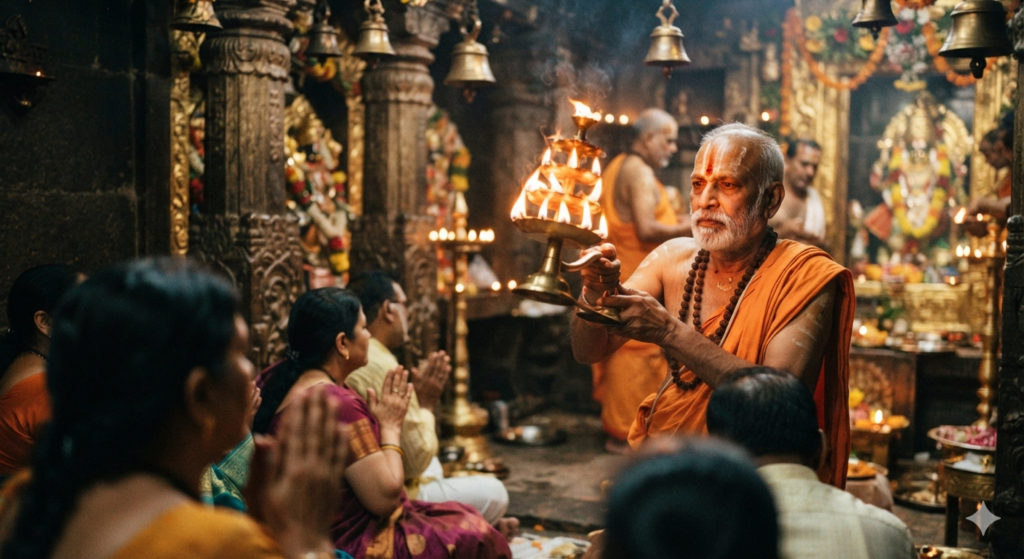
Darshan hours tell you when you can enter. The Aarti schedule tells you when the temple comes alive. If you time your visit around one of these, you’ll walk away with a completely different experience than a quick walk-through darshan.
| Aarti Type | Summer Timing | Winter Timing | What Happens |
| Mangala Aarti | 4:30 AM | 5:30 AM | The very first prayer of the day, marking the temple’s opening |
| Shringar Aarti | 7:00 AM | 8:00 AM | Shyam Baba’s idol is adorned and dressed for the day |
| Bhog Aarti | 12:30 PM | 12:30 PM | Offering of food (bhog) before the midday closure |
| Sandhya Aarti | 7:30 PM | 6:30 PM | Evening prayer, usually the most crowded of the day |
| Shayan Aarti | 10:00 PM | 9:00 PM | The final prayer before the temple closes for the night |
Mangala Aarti is for the early risers — it’s quiet, less crowded, and honestly, one of the more peaceful ways to start a temple visit. Shringar Aarti follows a couple of hours later, once Shyam Baba’s idol has been decorated, and it tends to draw a slightly bigger crowd since it lines up with regular morning darshan hours.
This one happens right before the temple’s midday break. It’s shorter than the others, and most devotees treat it as the natural closing point for a morning visit before heading out for lunch and rest.
Sandhya Aarti is arguably the most attended of the day — the evening crowd tends to be thicker, especially on weekends. Shayan Aarti, the last of the day, is calmer again since it happens right before closing and many day-trippers have already left.
This is where a lot of temple guides get vague, and it’s genuinely one of the most useful things to understand before you travel.
During Phalgun Mela — the biggest annual fair at Khatu Shyam Mandir, held in the Hindu month of Phalgun (typically February–March) — the temple extends its hours considerably to accommodate the massive footfall. Gates often stay open for extended stretches, sometimes running close to round-the-clock during the peak days of the fair. Exact extended hours are announced by the temple trust closer to the event each year, so it’s worth checking the official website in the weeks leading up to it rather than relying on last year’s schedule.
On Ekadashi and Janmashtami, the temple usually keeps its standard seasonal hours but sees a sharp spike in visitors, particularly in the evening. The Aarti timings generally stay the same — it’s the crowd density around them that changes dramatically.
Here’s something most competing guides gloss over with vague phrases like “long queues.” The honest answer is that wait times at Khatu Shyam Mandir vary enormously depending on the day, the season, and whether you’ve booked a VIP or Tatkal pass versus general entry.
On a regular weekday outside festival season, general darshan can take anywhere from 15 to 45 minutes. During Ekadashi weekends or the early days of Phalgun Mela, that can stretch to well over an hour, and on the single busiest day of the fair, some pilgrims report waiting several hours in the general queue. If you’re travelling specifically during Phalgun Mela, it’s worth building serious buffer time into your day — or seriously considering a VIP or Tatkal pass, since the whole point of those passes is to bypass exactly this kind of congestion.
There isn’t a single official published wait-time figure from the temple trust, so treat these as realistic expectations based on typical festival crowd patterns rather than guaranteed numbers.
Knowing the hours is one thing. Knowing when within those hours to show up is what actually determines whether your trip feels peaceful or exhausting.
October through March is generally considered the sweet spot. The weather is far more manageable than the summer months, and outside of Janmashtami and any Ekadashi falling in that window, crowds tend to be noticeably thinner than during Phalgun Mela season.
Early morning — right around Mangala Aarti or shortly after — is consistently the calmest window. Late evening, close to Shayan Aarti, is the second-best option since most day-visitors have already left by then.
This is where a one-size-fits-all tip like “just go early” stops being useful. Different visitors need different strategies:
Real-world example: A family from Delhi visiting during a regular October weekend reported completing general darshan in under 20 minutes by arriving right at the 5:30 AM winter opening — compare that to a Phalgun Mela weekend, where similar general-queue waits have stretched past two hours. The month and the hour you pick genuinely changes the experience that much.
If you’re short on time — say, you’re passing through Rajasthan on a tight itinerary — a VIP (₹100) or Tatkal (₹150) pass is the practical choice, since general darshan queues can eat up hours you might not have during peak periods. If you’re visiting on a quiet weekday with no time pressure, general darshan works perfectly well and costs nothing.
This one rarely gets addressed anywhere, but it matters. If you arrive during the midday closure window (roughly 1:00 PM–4:00 PM in winter, 12:30 PM–4:00 PM in summer), you simply won’t be able to enter — there’s no partial access or waiting area darshan during this break. Plan your arrival either before the midday closure or after the evening reopening; showing up in that gap means wasted travel time. It’s a small detail, but it’s exactly the kind of thing that ruins a first-time visitor’s schedule if nobody mentions it upfront.
Ringas Junction is the nearest railway station, roughly 17 km from the temple, and the drive typically takes 25–35 minutes depending on traffic and road conditions. From Jaipur International Airport, it’s about 80 km, which usually works out to a 1.5 to 2-hour drive by road.
Buses, shared autos, and taxis all run regularly between Ringas, Jaipur, and Khatushyamji. If you’re aiming for an early Mangala Aarti, it’s worth arranging your taxi or transport the night before rather than hunting for one at 4 AM — options thin out considerably before sunrise, especially outside festival season.
Q1. What are the current Khatu Shyam Mandir timings? Summer hours run 4:30 AM–12:30 PM and 4:00 PM–10:00 PM. Winter hours run 5:30 AM–1:00 PM and 5:00 PM–9:00 PM.
Q2. What time is Mangala Aarti at Khatu Shyam Mandir? 4:30 AM in summer, 5:30 AM in winter — it’s the first Aarti of the day.
Q3. Does the temple stay open all day during Phalgun Mela? Hours are significantly extended during Phalgun Mela to handle the crowd surge, though exact timings are confirmed by the temple trust closer to the event each year.
Q4. Can I enter the temple during the midday closure? No. The temple closes fully between morning and evening darshan sessions, so there’s no entry during that window regardless of the pass you’re holding.
Q5. What’s the best time of day to avoid crowds? Early morning right after opening, or late evening near Shayan Aarti, are consistently the quietest windows.
Q6. Do Aarti timings change on Ekadashi or Janmashtami? Generally no — the Aarti schedule stays the same, but crowd volume around each Aarti increases sharply.
Q7. How early should I arrive for Sandhya Aarti? Given it’s typically the most crowded Aarti of the day, arriving 30–45 minutes early is a reasonable buffer, especially on weekends.
If you’re mapping out a 2026 visit, the real trick isn’t just memorizing the hours — it’s matching the right hour to your own situation, whether that’s an elderly parent who needs a shorter wait, a toddler who can’t sit still in a queue, or a tight one-day itinerary through Rajasthan. Once you’ve got that sorted, the rest of the trip tends to fall into place on its own.