Physical Address
304 North Cardinal St.
Dorchester Center, MA 02124
Physical Address
304 North Cardinal St.
Dorchester Center, MA 02124
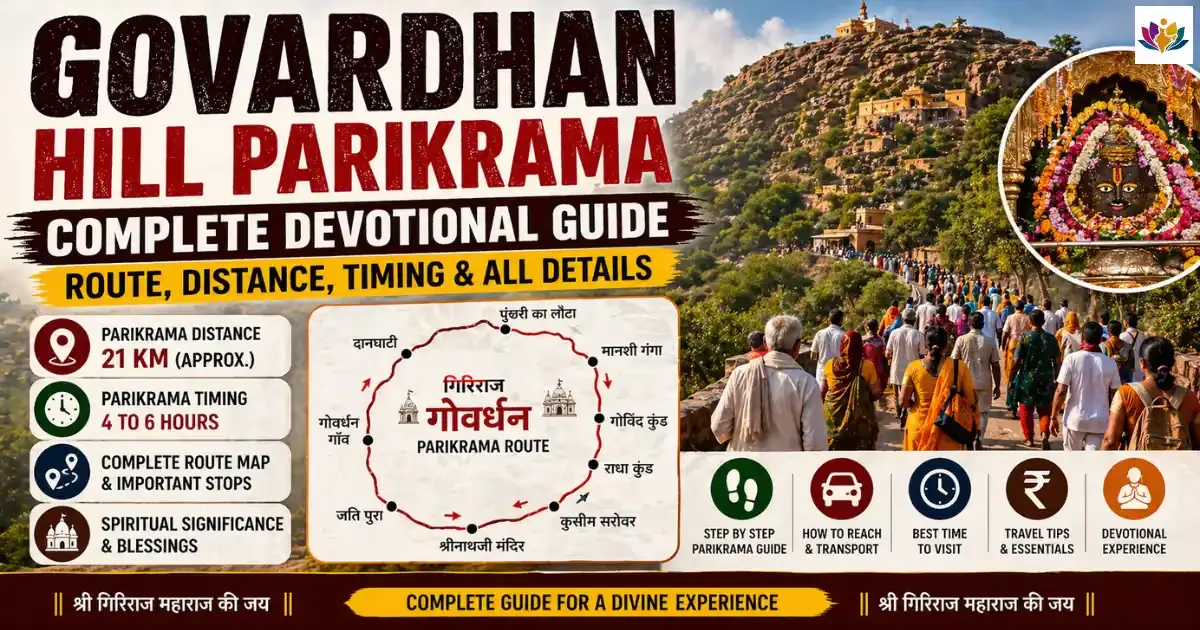
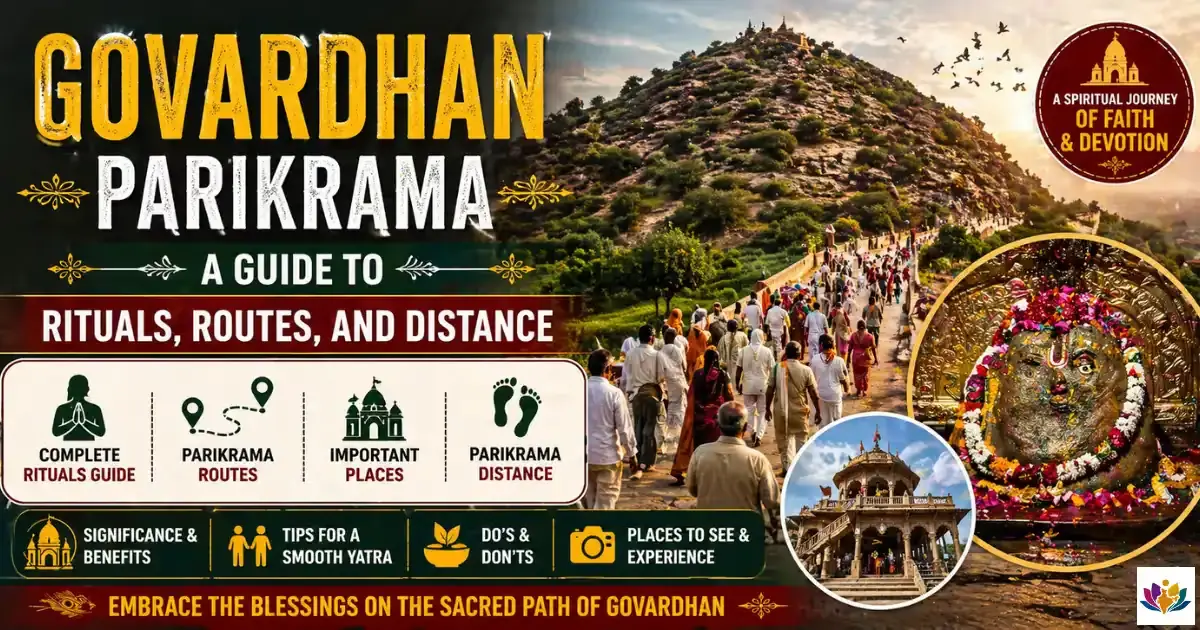
The Govardhan Parikrama distance is generally understood as about 21 kilometres around Govardhan Hill, although the exact walking distance can vary with the route, temple visits, and short detours. That figure matters because it affects your arrival time, footwear, water, Darshan plans, and return journey to Mathura or Vrindavan.
Temple opening hours, Pooja schedules, Aarti arrangements, and booking rules may also change on festivals and busy days. The practical details below will help you plan the sacred walk respectfully, check current information, and avoid treating an approximate route length as a fixed official measurement.
For many devotees, this is more than a road journey. It is a slow pilgrimage through Braj, passing sacred spots connected with Sri Krishna, Radha Kund, Mansi Ganga, and other places of worship.
The commonly cited Govardhan Parikrama distance is approximately 21 kilometres. This refers to the traditional circumambulation route around Govardhan Hill, not necessarily a single measured road with identical starting and ending points for every visitor.
In everyday use, people may begin at different locations, visit additional temples, walk on a service lane, or leave the main path briefly for Darshan. Those choices can make the distance on a phone-based map slightly shorter or longer.
In Hindu pilgrimage practice, parikrama means moving around a sacred object while keeping it on the right side. Devotees may walk around Govardhan Hill as an act of reverence associated with Lord Krishna and the Braj pilgrimage tradition. Some people complete the route in one continuous walk, while others divide it into manageable portions or use local transport for part of their broader Mathura Vrindavan trip.
The 21-kilometre figure should therefore be treated as a practical planning estimate rather than a guarantee that every person will cover precisely 21.000 kilometres. A person who starts near Mansi Ganga and follows the recognised circuit may record a different reading from someone beginning at another point. GPS accuracy can also change near crowded markets, buildings, and narrow lanes.
Several factors explain the variation:
For planning purposes, assume a full circuit will require a significant part of the day unless you walk quickly and take very few breaks. The route is not simply a sightseeing loop. You’ll need time for drinking water, resting, crossing busy stretches, waiting at temples, and observing local customs.
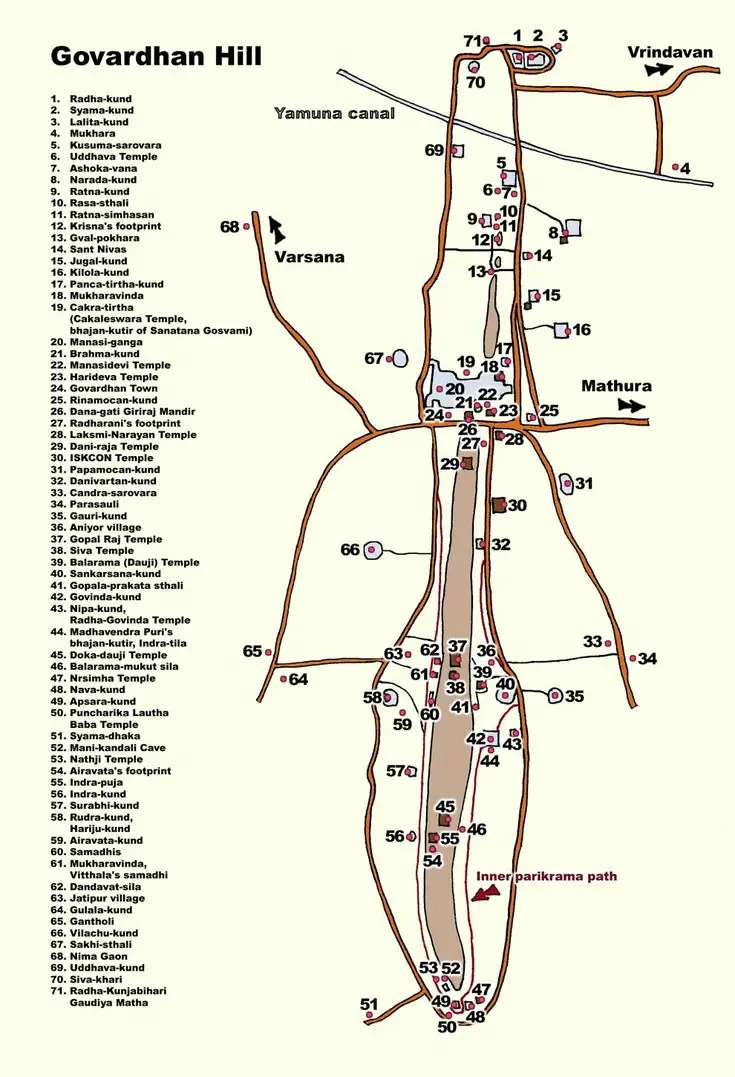
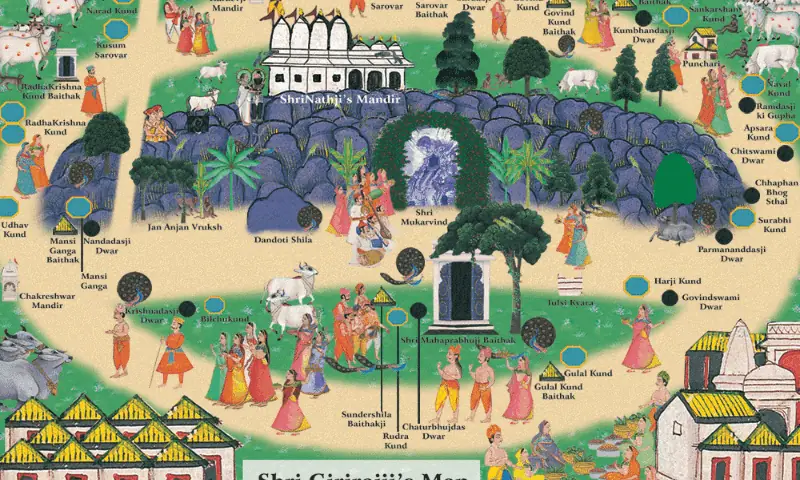
The traditional circuit passes through a landscape of temples, kunds, ashrams, village roads, market areas, and open stretches associated with Braj devotion. Govardhan Hill itself is central to the pilgrimage.
According to Vaishnava tradition, Sri Krishna lifted Govardhan Hill to protect the people of Braj from the storm sent by Lord Indra. Visitors may hear different devotional explanations of the route, and local priests can provide guidance about the significance of particular stops.
Mansi Ganga is one of the prominent sacred locations in Govardhan. Radha Kund and Shyam Kund are also important pilgrimage places in the wider circuit and are visited by many devotees. The route may include references to Kusum Sarovar, Punchari, Aniyor, and other local sites, though the exact sequence depends on the direction and starting point you choose.
Not every point on a map is a formal temple entrance, and not every shrine has the same Darshan process. Some are small roadside Mandirs where visitors can offer prayers quickly.
Others may have a queue, a defined sanctum-entry arrangement, or a particular Pooja timetable. The presence of a shrine doesn’t automatically mean that online booking is available.
| Planning item | What it usually means | What you should verify |
|---|---|---|
| Full parikrama | Approximately 21 km around the Govardhan area | Current route, diversions, and local starting guidance |
| Darshan timing | Period when devotees may see the deity | Opening, closing, and interruption periods at the specific temple |
| Pooja timing | Scheduled worship or ritual service | Whether prior registration, a receipt, or priest coordination is required |
| Aarti timing | Devotional lamp ceremony at a temple | Daily schedule and special arrangements on festival days |
| Booking timing | When an online or counter reservation can be made | Official portal availability, identity requirements, and cut-off time |
A useful planning habit is to separate the parikrama route from the temple schedule. You may be able to walk along the route at a particular hour, but a specific Mandir may be closed for cleaning, Bhog, private worship, or a scheduled break. Temple access and the ability to perform a paid or special Pooja are separate matters.
There is no single correct answer because time taken depends on pace, weather, crowd levels, footwear, health, and the number of stops. A person walking steadily without long temple visits may finish considerably sooner than a family that pauses frequently. A devotee observing the parikrama as a reflective pilgrimage may intentionally walk slowly.
As a general planning principle, allow several hours rather than treating the distance like a short urban walk. A comfortable walking pace for a healthy adult is not the same as a pilgrimage pace on uneven or crowded roads.
Heat, humidity, dust, and the need to stand in queues can reduce your speed. Older visitors, children, and people with knee, heart, respiratory, or balance concerns should plan additional rest and should not feel pressured to match another person’s schedule.
Early morning is often preferred by walkers because the conditions may be more comfortable than the hotter part of the day, but you must check local access, lighting, security, and temple opening arrangements before deciding to begin very early. A late-night start shouldn’t be assumed to be safe or appropriate merely because the route is traditionally visited by pilgrims.
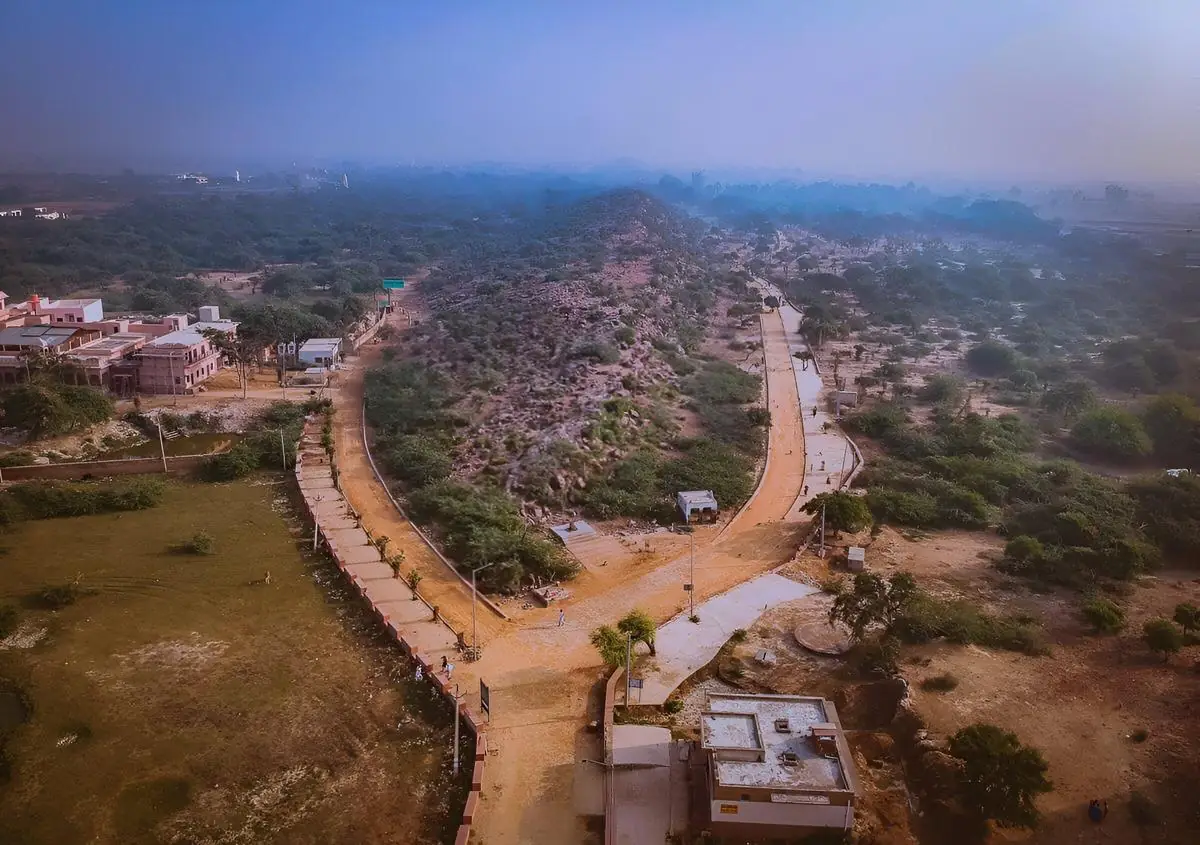
Some visitors use an e-rickshaw, auto-rickshaw, or other local transport for nearby sightseeing, but transport arrangements don’t automatically represent completion of a walking parikrama. If your religious intention requires a full walk, clarify the accepted practice with your family tradition, guide, or trusted local priest before starting.
Dandavat parikrama takes much longer and places considerable physical demand on the body. It should be undertaken only with appropriate preparation, supervision where needed, and respect for public safety. Never block traffic, obstruct a temple entrance, or create a hazard for other devotees while following a personal devotional practice.
Carry enough time in reserve. If you have a train, bus, hotel check-out, or airport transfer, don’t schedule it immediately after your estimated finishing time. Delays at a crowded temple or an unexpected route diversion can affect the whole day.
Darshan means viewing or having the devotional sight of the deity. It doesn’t always mean that a visitor can enter the inner sanctum, touch an idol, or remain in front of the shrine for an extended period. Each temple administration may set its own entry rules, queue arrangements, photography restrictions, and visitor flow.
Pooja is a worship service that may be performed by temple priests on behalf of devotees. Depending on the Mandir, a Pooja may be available at a counter, through a trust office, through a booking portal, or only by local arrangement.
Don’t assume that a general Darshan ticket includes a special Pooja. These are often separate services with different procedures.
Aarti is a ritual involving lamps and devotional singing. It can attract large crowds, particularly on major Vaishnava festivals, weekends, full-moon occasions, and important Braj celebrations.
The published Aarti time may indicate the scheduled start of the ritual, not the ideal time to arrive. You may need to reach earlier for security screening and queue formation.
Temple timings can vary because of seasonal routines, festival arrangements, deity Bhog, cleaning, maintenance, local administration orders, or crowd-control needs. A temple may also temporarily limit access during a ceremony. These changes can happen even when a third-party travel page continues to display an older schedule.
For current information, check the specific temple’s official website, verified social channel, official booking portal, or notice issued by the temple trust. If a small shrine doesn’t maintain a website, ask at the authorised temple office or a clearly identified information counter. Be cautious about social media posts that provide a payment number without identifying the responsible trust.
Official government tourism information can help with destination context and broad location planning; for example, the official Incredible India information on Govardhan is useful for understanding the destination, but it shouldn’t be treated as a substitute for a temple’s same-day Darshan notice.
Not every temple in Govardhan requires a booking for ordinary Darshan. Some Mandirs allow general entry without a ticket, while special Pooja, guided services, donations linked to a receipt, accommodation, or festival arrangements may use a booking system. The word “booking” can therefore refer to several different things, and you should identify the exact service before paying.
An online ticket reservation may ask for the devotee’s name, mobile number, identity details, preferred date, service type, and number of participants. Requirements vary.
Some portals issue a confirmation instantly, while others show a request or receipt that must be presented at a counter. A payment success message isn’t always the same as a confirmed appointment.
Booking cut-off times and release windows can change without notice. A portal may release festival slots in stages, close reservations after capacity is reached, or suspend online services during a local event. If the official portal doesn’t show a reservation option, don’t assume that an unofficial agent can guarantee entry.
When a paid Pooja is important to your visit, contact the temple administration through a verified channel before travelling. Ask whether the service is available on your chosen day and whether you need to report before the listed Pooja time. Arriving at the last minute may mean missing the service even if you hold a valid receipt.
There isn’t one universally suitable starting point for every pilgrim. Many visitors begin near a well-known temple or a traditional access area, while others start close to their accommodation. Your choice should depend on the route you’ve been advised to follow, your planned Darshan stops, parking or drop-off access, and the time of day.
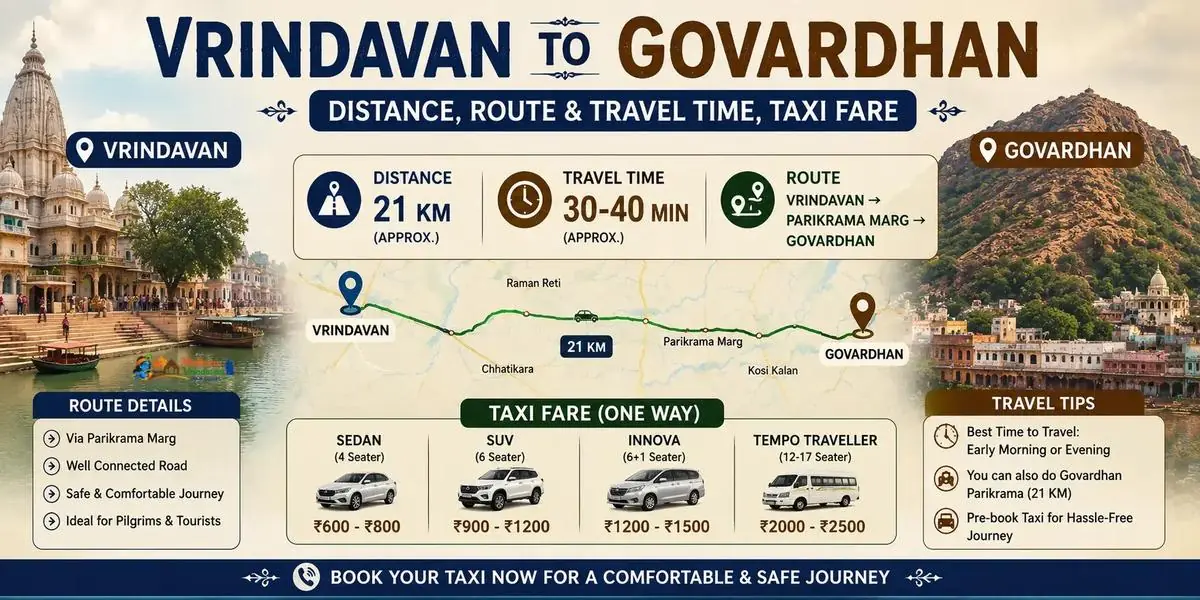
If you’re travelling from Mathura or Vrindavan, plan the transfer separately from the parikrama. Traffic, local road conditions, festival crowds, and vehicle restrictions can make a short map distance take longer than expected. The distance from your hotel to Govardhan is not the same as the Govardhan Parikrama distance, so include both figures in your day plan.
Arrive with enough time to locate a safe drop-off point, use a toilet, buy water, and confirm the first temple’s status. If you have a booked Pooja or Aarti, reach the reporting location before the required time rather than aiming to arrive exactly at the start. Some temple entrances may be different from the location shown in a general map listing.
Plastic waste, loud music, and careless behaviour can disturb both worshippers and local residents. Keep the path clear, use bins where available, and follow instructions from temple volunteers and local authorities. A pilgrimage is easier for everyone when visitors respect the place as a living religious community rather than treating it only as a tourist route.
Govardhan can become especially busy during festivals associated with Braj and Lord Krishna, including Govardhan Puja and other important religious occasions. Crowd volume can affect road movement, vehicle entry, temple queues, accommodation, food availability, and the time needed for Darshan. A route that feels straightforward on a quiet weekday may require much more patience during a major celebration.
Festival schedules often involve temporary barricades, one-way pedestrian movement, additional police deployment, and altered parking locations. The usual starting point may not be usable. Temple administrations may also issue separate notices for special Aarti, Bhog, or restricted entry, so an ordinary daily timetable may not apply.
Check announcements close to the date of travel. Information from a previous year can provide context but cannot confirm the current year’s timings, because festival dates and crowd-control plans may differ. Hotels, local transport operators, and social media groups can offer practical observations, but the temple trust or district administration should be your final reference for official restrictions.

Walking in strong sun can cause fatigue long before you finish the route. During hot conditions, schedule rest, drink water regularly, and avoid assuming that devotion requires ignoring signs of illness. In cooler months, early mornings may feel cold while the afternoon becomes more comfortable; clothing should allow for both parts of the day.
Rain can make sections slippery or muddy and may affect temporary stalls, road crossings, and footwear. Carrying a lightweight rain layer can be more useful than relying on a forecast viewed several days before departure. Weather alerts and local announcements are more relevant on the actual travel date.
If you’re travelling with older relatives, agree in advance on meeting points and a backup transport plan. Mobile networks can become congested in dense crowds. Children should have a contact card or a trusted adult’s phone number, and families should avoid splitting up near busy temple gates.
A good plan doesn’t remove the spiritual character of the journey. It simply reduces avoidable confusion. Use the following process several days before travel, then repeat the most important checks on the day you leave.
If your plans change after you arrive, ask the temple administration before switching to a different Pooja or paid service. A receipt for one service may not be transferable to another. Clear questions are better than relying on assumptions made by a tout or unverified intermediary.
The most frequent mistake is treating the 21-kilometre estimate as if it guarantees a fixed completion time. Distance is only one part of the day. Queues, weather, prayer stops, footwear restrictions, traffic crossings, and the pace of the slowest person in your group all influence the result.
Another problem is using an old screenshot for temple timings. A timetable saved from a previous visit may no longer apply during a festival or seasonal change. Verify it again, especially if your visit depends on one specific Aarti or Pooja.
Illustrative example, not a reported visitor case: imagine a family reaching Govardhan from Vrindavan with a morning Pooja reservation and plans to complete the full walk. If they schedule the Pooja, the 21-kilometre circuit, lunch, and a same-afternoon return bus with no spare time, the plan is fragile. A queue, a road diversion, or a slower walker could cause them to miss the bus.
A better approach would be to confirm the Pooja reporting time, arrive early, keep the parikrama pace realistic, and reserve a later return option. The example demonstrates a planning principle rather than claiming that a particular family or temple followed this itinerary.
The commonly accepted planning figure is about 21 kilometres around Govardhan Hill. The measured distance can vary according to the starting point, route diversions, temple visits, and map method.
It depends on walking speed, breaks, weather, crowd levels, and Darshan stops. Plan for several hours and add a buffer rather than using a fast walking estimate for your entire pilgrimage day.
Vrindavan and Govardhan are separate pilgrimage areas. You can travel from Vrindavan to Govardhan and begin the parikrama there, but the transfer distance and the 21-kilometre circuit should be planned separately.
There may not be one universal booking requirement for the entire walking route. Individual temples may have their own rules for special Darshan, Pooja, Aarti, or other services. Check the specific temple’s official channel.
No. Darshan, Pooja, and Aarti times may change because of festivals, Bhog, maintenance, seasonal practice, crowd control, or local administrative directions. Verify the current schedule shortly before visiting.
Many pilgrims prefer a cooler part of the day, but the appropriate start depends on lighting, safety, local access, weather, and your temple schedule. Confirm current conditions rather than assuming that a very early or late start is permitted.
Some can, but ability varies widely. Consider health, heat, rest facilities, footwear, and an alternative transport plan. No visitor should feel compelled to continue through pain, dizziness, or serious exhaustion.
Use the relevant temple’s official website, verified booking portal, official trust notice, or authorised administration counter. Government tourism pages are useful for destination information but may not publish same-day temple schedules.
The Govardhan Parikrama distance is best treated as an approximate 21-kilometre pilgrimage circuit whose real duration depends on people, purpose, season, and temple arrangements. Confirm your starting point, current route conditions, Darshan and Pooja timings, and any booking requirement before setting out. Keep your schedule flexible enough to respect both the sacred character of the journey and the practical realities of a busy Braj destination.
Before travelling, check the latest notice from the relevant Mandir or temple administration and save your booking details offline. Then plan your walk with enough time for rest, queues, and an unhurried Darshan. A verified timetable and a realistic route plan will help you experience Govardhan with greater comfort, care, and respect.





