Physical Address
304 North Cardinal St.
Dorchester Center, MA 02124
Physical Address
304 North Cardinal St.
Dorchester Center, MA 02124
Reliable Ghati Subramanya Temple timings matter because a listed opening hour does not always mean uninterrupted darshan, a running pooja counter, or immediate entry. The temple near Doddaballapura, Bengaluru, may follow different arrangements on ordinary days, Sundays, festivals, and booked seva days.
Before setting out, check the difference between public hours and ritual slots, confirm whether tomorrow’s darshan is affected by a special schedule, and allow time for queues. The points below also cover online booking, dress and entry expectations, route planning for a one-day trip, and the questions to ask the temple trust or authorised office. Hours and fees can change, so an old listing should never be treated as a promise.
The most useful starting point is to separate the temple’s public opening hours from the timings of individual rituals. A gate may remain open while an abhisheka, naivedya, cleaning period, or crowd-control measure briefly changes the way general devotees enter the shrine.
Many Google Maps and travel-directory listings commonly display the regular public opening window as approximately 6:00 a.m. to 8:30 p.m. That range is helpful for rough travel planning, but it should not be treated as a live official notice for a particular date. I have not assumed that every pooja, aarti, seva counter, or sanctum remains continuously available throughout those hours.
| Schedule item | Useful planning reference | What you should confirm |
|---|---|---|
| Regular public opening | Public listings often show an approximately 6:00 a.m. to 8:30 p.m. window. | Check the latest notice, especially on a festival, maintenance day, or major holiday. |
| General darshan | Usually takes place during public access hours when the shrine is open to visitors. | Ask whether entry is temporarily paused for a ritual or queue-control arrangement. |
| Pooja or abhisheka | Available only during service-specific periods and may require a token or payment. | Confirm the start time, reporting time, receipt requirements, and daily availability. |
| Aarti | Linked to the temple’s ritual sequence rather than the full opening window. | Verify the exact day’s aarti time with the temple office or notice board. |
| Special seva | May operate on selected days and under separate registration rules. | Check whether online booking, an offline counter, or advance registration applies. |
| Online booking | Use only an active platform identified by the temple administration or authorised department. | Confirm payment status, reporting time, cancellation terms, and whether the booking covers darshan or only the ritual. |
If a notice at the temple gate gives a different time from an older online listing, follow the notice for that day. Web pages and map profiles can remain unchanged even when a temple modifies its special-day schedule.
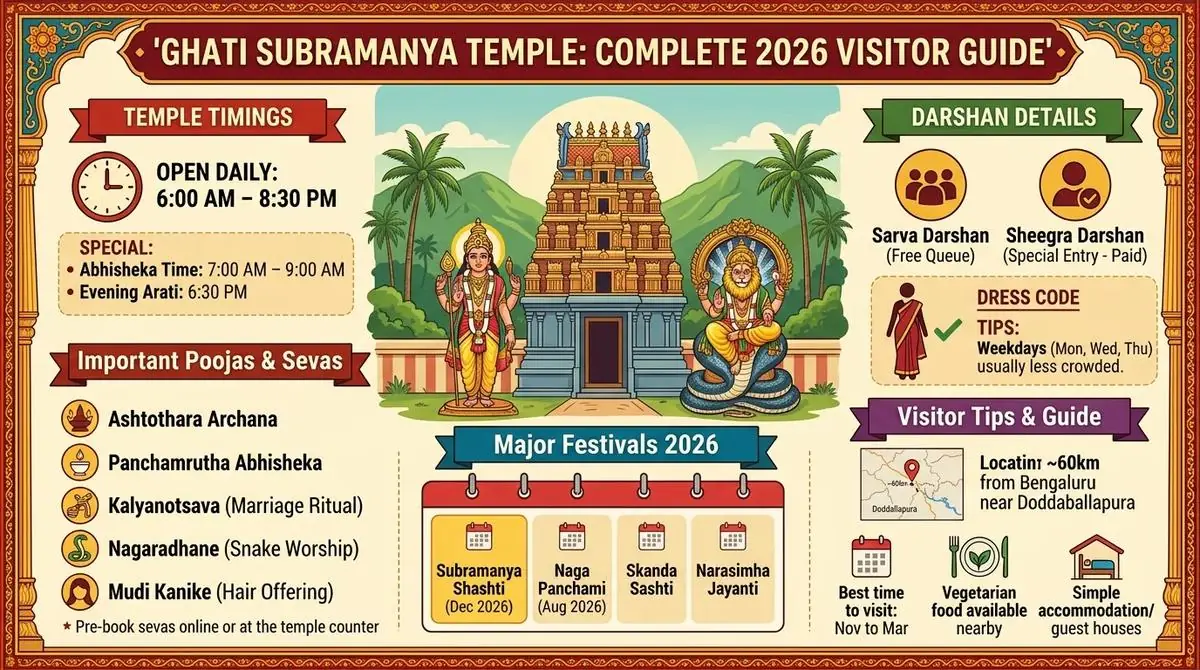
Darshan means viewing the deity in a devotional setting. General darshan is the option most visitors mean when they ask for temple timings. It normally does not mean that a devotee has booked a particular ritual or received permission to remain in front of the idol for an extended period.
Pooja is a worship service performed according to a prescribed ritual. It may include offerings, chanting, flowers, lamps, or other elements. Abhisheka, where offered, refers to ritual bathing of the idol with permitted substances. These services can affect the movement of the general queue, even if the temple itself has not closed.
Aarti is the offering of a lighted lamp during worship. Many temples conduct aarti at set points in the daily ritual cycle, but a general opening-and-closing listing cannot establish the exact aarti time. That is why a visitor who wants to attend a specific aarti should ask for the schedule rather than simply arrive during the broad public hours.
Seva means a devotional service that a devotee may sponsor or join under the temple’s rules. Some sevas have limited tokens, reporting deadlines, or separate counters. A seva receipt may give access to the ritual but not necessarily priority for every part of general darshan.
Ghati Subramanya is known for its association with Lord Subramanya and Narasimha. The deity arrangement and the temple’s religious importance are described in the widely used reference entry on Ghati Subramanya Temple. Devotees may come for different reasons, including a regular visit, family worship, a festival, or a sarpa-related ritual, so the experience can vary considerably from one day to another.
During a ritual, the inner area may be temporarily controlled or the queue may move more slowly. None of that necessarily means the temple has closed. If your priority is a quiet general darshan, ask whether a major pooja is due before joining the queue.
Sunday is often a practical day for families travelling from Bengaluru and nearby areas, but convenience can bring a larger crowd. The temple may retain its normal broad opening window while the time needed for parking, walking to the entrance, queueing, and receiving darshan becomes longer.
For that reason, “Is Sunday a good day?” has no single answer. Sunday can suit visitors who work during the week, while a non-festival weekday may be more comfortable for someone seeking a shorter visit.
Neither option guarantees a quiet queue. Local events, school holidays, auspicious dates, and family groups can change the pattern.
Festival days require extra care. Subramanya-related observances, Shashti dates, annual fairs, and other local celebrations may bring additional pooja, special alankara, processions, offerings, or crowd-control arrangements. The exact dates can follow a regional or lunar calendar, and the associated timings may be announced closer to the event.
During a major festival, the temple may:
Do not use a normal weekday schedule to plan a festival visit. Ask specifically about the date, not merely whether the temple is open. A useful question is: “Will general darshan be available throughout the public hours, or are there restricted periods because of the special programme?”
Booking rules are among the least reliable details to copy from an old travel page. A temple may accept some offerings at an offline counter, make selected services available through an authorised online system, or change the procedure during a festival. The availability of online payment does not automatically mean that every visitor can reserve a guaranteed darshan slot.
Start by identifying what you actually want. General darshan, an individual pooja, abhisheka, a sarpa-related seva, and participation in aarti are different requests. They can have separate counters, fees, reporting times, and queue arrangements.
Do not send money to a personal UPI number, social-media account, or unofficial intermediary merely because the message uses the words “temple booking.” Verify the name of the temple, the service, the date, and the refund or cancellation rule. If no official online booking facility is clearly identified, plan to enquire at the authorised counter instead of assuming that a third-party reservation is valid.
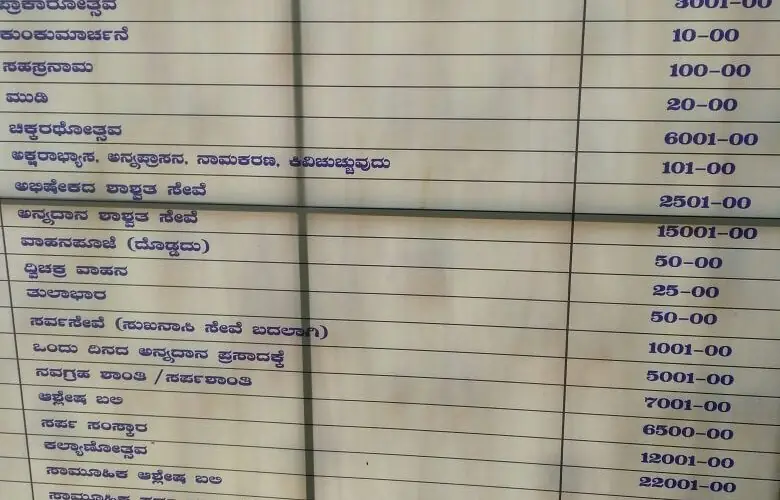
Fees also change. A price printed on an old blog, a screenshot, or a visitor’s social-media post may not match the current board. Ask whether the amount is per person, per family, per receipt, or per ritual, and whether additional offerings are optional or included.
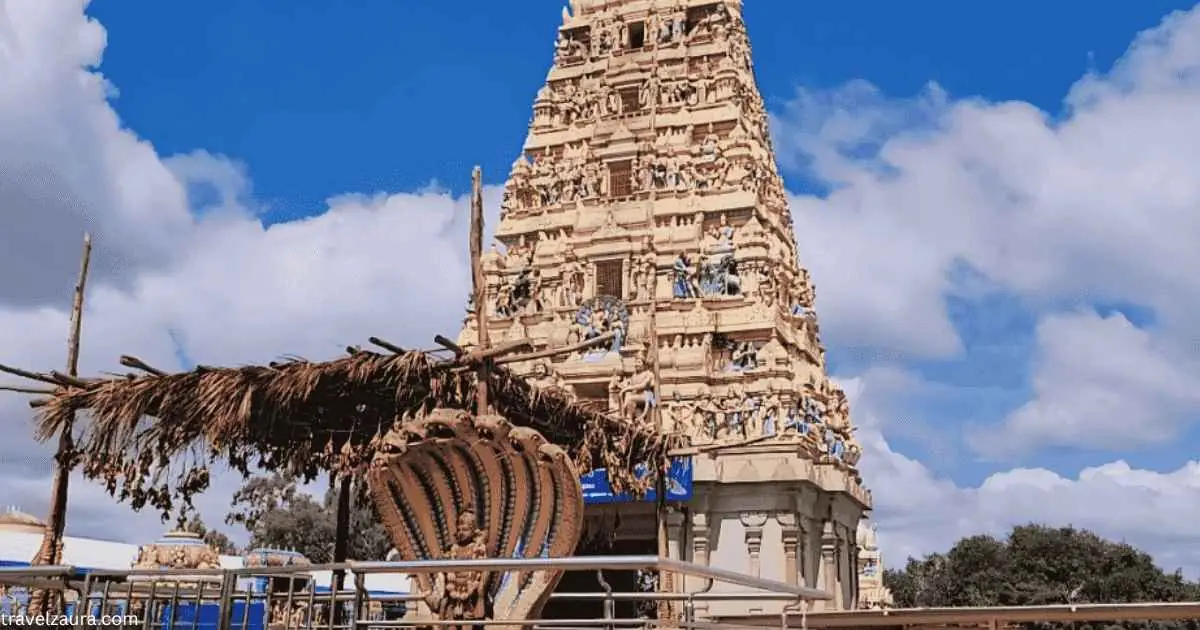
Arrival time depends on your purpose. A person seeking ordinary darshan has more flexibility than someone holding a seva receipt with a fixed reporting time. For a booked ritual, reaching the temple well before the printed reporting time is sensible because the road, parking area, footwear counter, queue, and registration desk can each take time.
A practical buffer of 30 to 60 minutes before a fixed seva reporting time is often more comfortable than arriving at the last minute. This is planning advice, not an official rule. If your receipt instructs you to report earlier, follow that instruction instead.
For general darshan, early morning is usually a sensible choice for visitors who prefer to avoid the strongest daytime heat and the possibility of a longer weekend queue. The exact crowd pattern changes, so do not assume that a weekday morning will always be empty or that an afternoon visit will always be quick.
Queue management can also change the apparent temple timings. A gate may be open, yet entry may be slowed because the inner area is full.
Follow barricades, signage, and volunteer instructions rather than trying to merge into a different line. Keep your receipt available if you have booked a seva, and do not block the entrance while searching for payment details on your phone.
Visitors travelling with older people, children, or anyone with mobility concerns should allow extra time for walking and standing. Ask staff about the currently permitted assistance arrangements. Facilities and routes may not be identical on a normal day and a major festival day.
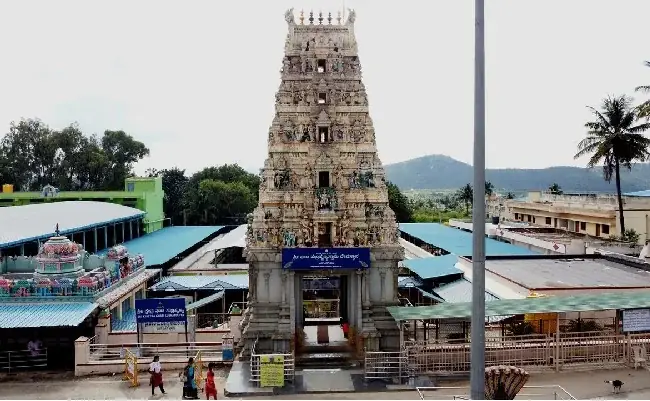
Ghati Subramanya is associated with the Doddaballapura area of Bengaluru Rural district, making it a possible one-day trip from Bengaluru for many visitors. The actual distance depends on your starting point, chosen road, traffic, and diversions. A distance shown from central Bangalore should not be applied automatically to a trip beginning in the airport corridor, northern suburbs, or another town.
Check the route on the morning of travel and save the temple name in the map application before leaving. Some search results can point to similarly named religious places, so confirm that the destination is the Ghati Subramanya temple near Doddaballapura. If you are taking a taxi or auto-rickshaw for the final stretch, agree on the return plan rather than assuming frequent vehicles will be available at your preferred time.
A one-day trip works best when the darshan plan and the return plan are treated separately. First allow time for the temple visit, queue, pooja or seva, and a possible delay.
Then add road time, a meal break, fuel, parking, and a margin for traffic. A tightly packed itinerary can become stressful if a festival fair or special queue is operating.
Food arrangements deserve a separate check. Do not assume that prasada, annadana, or a temple food counter will operate at the same time every day.
If your visit is early or late, carry drinking water and make a meal plan that does not depend entirely on the temple’s food timings. Follow local instructions about where food and offerings may be consumed.
Before leaving Bengaluru, confirm these travel details:
Nearby places can be added only after the temple timing is confirmed. Visiting several locations may sound efficient, but a delayed darshan or changed seva schedule can affect the entire trip.
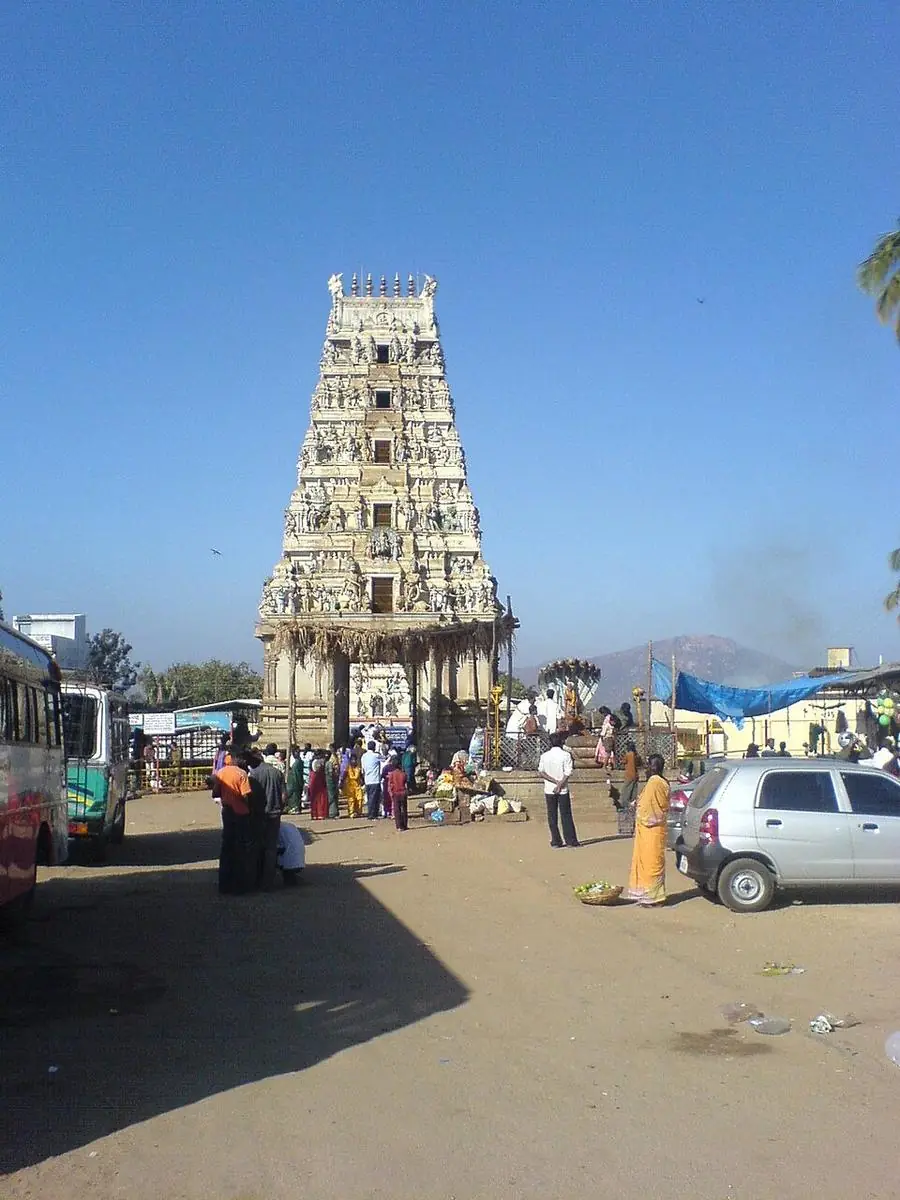
A modest, clean, and comfortable outfit is the safest choice for a temple visit. The exact dress code, if any, should be confirmed from the current notice board or temple office. Avoid treating a general online comment as a formal rule, but do respect any instruction displayed at the entrance.
Footwear normally has to be left in the designated area, and some rituals may require additional instructions about personal belongings. Carry only what you need. Large bags, food containers, photography equipment, or offerings that have not been approved may slow entry or be refused.
Photography and video rules can differ between the outer premises and the inner shrine. Follow the signs and staff directions.
Do not photograph a ritual, priest, or another devotee closely without permission. A phone set to silent is a small courtesy that helps maintain a calm atmosphere.
Offerings should be purchased or prepared according to the temple’s instructions. If you are visiting for a particular pooja, ask whether the temple supplies the required items or whether a permitted set must be obtained at a designated counter. Avoid buying an expensive ritual package from an unverified person outside the temple gate.
People with medical conditions should plan for heat, standing, and limited access to seating in a busy queue. Carry essential medicines and do not skip food or water merely to match someone else’s devotional routine. Religious participation should be respectful, but personal safety remains important.
Entry arrangements may be different for children, elderly visitors, people with disabilities, and those attending a booked seva. Ask politely before joining a line if you need assistance. The correct route can change during a festival, so yesterday’s directions may not apply today.
Some devotees visit Ghati Subramanya because of beliefs connected with sarpa dosha, a concept in Hindu astrology associated with perceived serpent-related planetary influences. It is a religious and astrological belief, not a medical diagnosis or a guaranteed explanation for personal problems. A temple ritual should not replace professional medical, legal, or financial advice.
If you are considering a sarpa-related pooja or seva, ask the temple administration what the service is officially called and what participation involves. Important details may include whether the devotee must be present, whether family members can join, how many people a receipt covers, which offerings are permitted, and whether the ritual is held every day or only on selected dates.
Do not assume that a service advertised by a private agent outside the premises is an official temple seva. Request a receipt from the authorised counter and compare the service name with the temple’s own board. If online registration exists, the official instructions should explain the reporting place and timing.
Festival days can combine a special ritual with a fair atmosphere. Vendors, additional offerings, processions, and temporary stalls may make the surrounding area busier than the shrine’s ordinary schedule suggests. A visitor who wants only a brief general darshan may prefer a non-festival weekday, while someone seeking a particular observance may accept the crowd as part of the experience.
Lord Subramanya is the central devotional focus, while the association with Narasimha is an important part of the temple’s identity. Visitors who are unfamiliar with the shrine should avoid assuming that every idol, ritual, or inner area follows the same access rules. Ask before entering a restricted space or offering items at a particular sanctum.
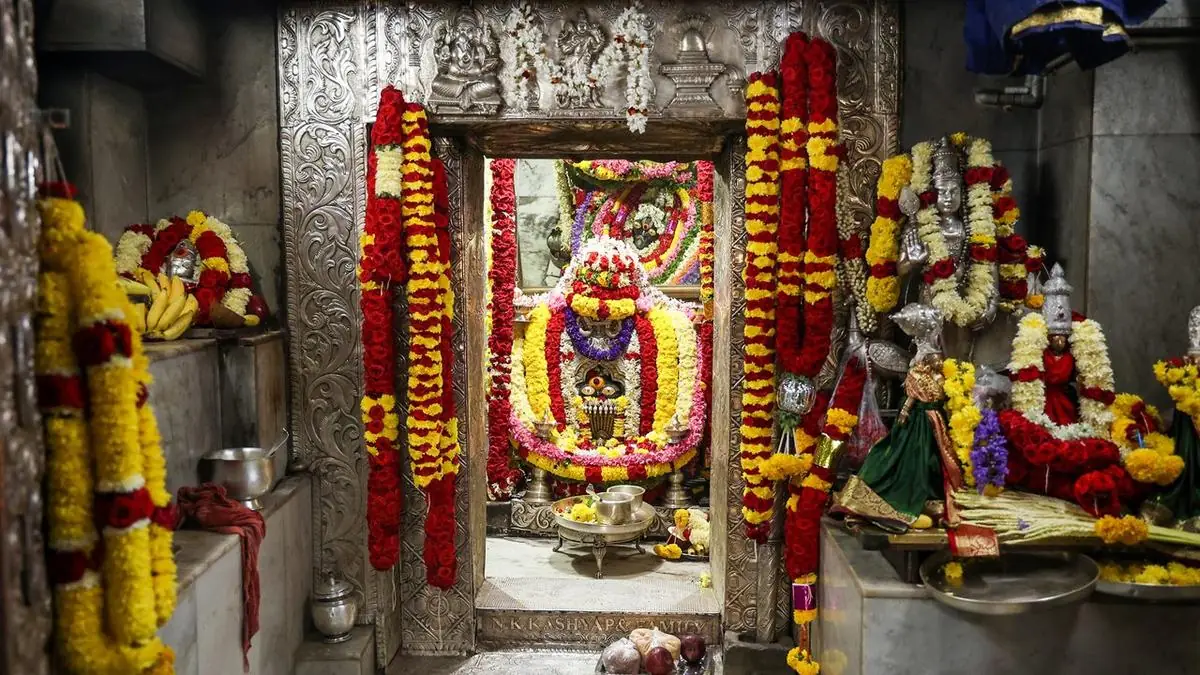
Searching “Ghati Subramanya temple timings tomorrow” is a sensible first step, but search results can mix old pages, map listings, festival posts, and visitor comments. Use the search to locate the relevant office or notice, then confirm the information through the most direct available channel.
A useful verification order is:
When you call or visit the temple office, ask short and specific questions. “What time does the temple open?” is less useful than “Will general darshan be available tomorrow between the public opening and closing hours?” Add the day, date, number of visitors, and the ritual you want to attend.
Ask whether there is a morning or evening interruption, whether a festival programme is planned, whether the pooja counter closes before the temple, and whether the contact number can confirm online booking. Also ask where a booked devotee should report. These details often matter more than the broad opening range.
Take a screenshot of the current notice with the date visible. If the information is only verbal, write down the name of the office or counter that confirmed it. That small record can prevent confusion if you reach the temple and find a special-day arrangement.
Ghati Subramanya is a real temple in Karnataka with a distinctive association with Lord Subramanya and Narasimha. The reference source linked earlier describes this religious and architectural identity, but it does not make an old online timing listing a permanent promise. This is important because the meaning of a temple’s identity and the operating hours of its counters are two different kinds of information.
For example, a visitor may know from a reference source that the shrine is an important place for devotees of Subramanya, yet still need to ask the temple office whether a particular sarpa-related seva is available on the intended date. Religious significance does not, by itself, confirm a booking window or a daily aarti time.
Imagine a family travelling from Bengaluru on a Sunday for general darshan, with one member also interested in a special pooja. This is an illustrative planning example, not a claim about a real family or a recorded temple visit. The family should first confirm the public opening range and ask whether the pooja requires advance booking.
If the ritual has a fixed reporting time, they should plan to arrive with a buffer for traffic, parking, footwear, registration, and the queue. If the seva is unavailable, they can still decide whether to proceed for general darshan rather than paying an unverified intermediary. They should also keep the return journey flexible because a Sunday crowd may make the visit longer than the broad temple hours suggest.
The same method works for a solo visitor, an elderly couple, or a larger group. Confirm the date-specific schedule, distinguish general darshan from paid seva, carry the receipt if any, and keep food and transport arrangements independent of an assumed prasada or closing time.
Public listings commonly display an approximate opening window of 6:00 a.m. to 8:30 p.m., but this should be treated as a planning reference rather than a guaranteed live schedule. General darshan can be affected by pooja, aarti, festival arrangements, or temporary queue control, so confirm the date before travelling.
A non-festival weekday may be more comfortable for visitors who prefer a quieter visit, while Sunday is convenient for many families travelling from Bengaluru. The best day depends on your purpose. If you want a particular ritual, choose the date on which the temple office confirms that seva rather than selecting a day only because it is less crowded.
Yes, it can be practical as a one-day trip from Bengaluru or nearby areas, provided you allow time for the road, parking, darshan, food, and the return journey. Check the route distance from your exact starting point and avoid adding several nearby stops until the temple schedule is confirmed.
Wear modest and comfortable clothing and follow the latest instructions displayed at the entrance. The exact rules for clothing, photography, bags, footwear, and special rituals can change, so ask the temple office if your visit involves a booked seva or festival day.
Check the latest temple notice or authorised office information first, then use a verified contact number to ask about general darshan, pooja interruptions, festival timings, and booking counters. Google Maps can help with route planning, but its displayed hours may not reflect a last-minute change.
The safest way to use Ghati Subramanya Temple timings is to treat the broad public hours as a starting point, not as a promise of uninterrupted darshan or a guaranteed seva slot. Confirm tomorrow’s schedule, festival status, booking rules, and reporting time through the temple trust or authorised office before leaving home.
Carry a receipt if you have booked a pooja, allow extra time on Sundays, and keep your travel and food plans flexible. A short confirmation call can make the difference between a smooth darshan and a wasted journey, so check the latest notice before you set out.





