Physical Address
304 North Cardinal St.
Dorchester Center, MA 02124
Physical Address
304 North Cardinal St.
Dorchester Center, MA 02124
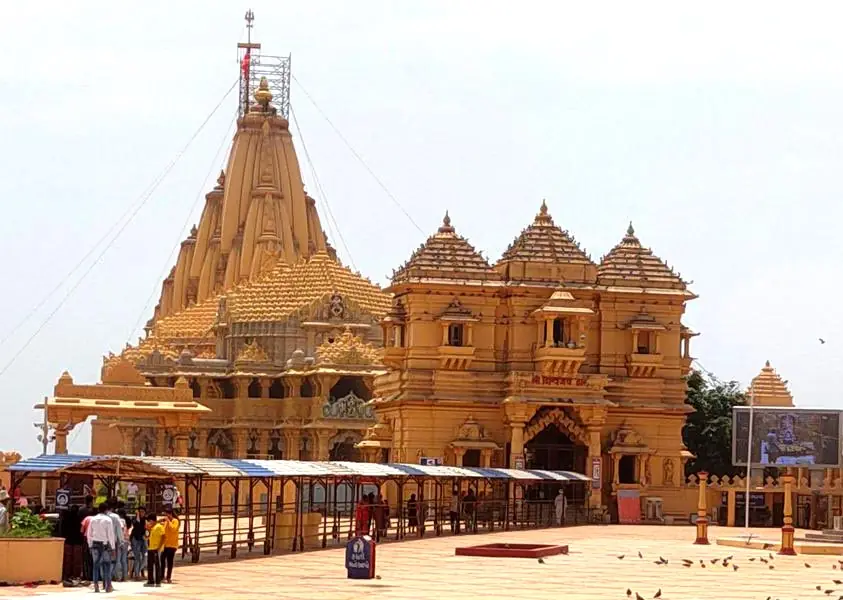
Reliable Somnath temple timings can make a major difference to a pilgrimage or a short Gujarat sightseeing stop. The main temple has a published daily darshan window, but pooja, aarti, seva, security, and festival arrangements don’t always follow the same clock. If you’re trying to catch morning darshan, a noon aarti, or the evening light-and-sound experience, a few minutes of planning can prevent a long wait or a missed ritual.
This article explains what the regular schedule means, how to distinguish open darshan from a booked pooja, where online booking fits, and which details to confirm before you leave home. It also addresses entry rules, crowd patterns, travel from Ahmedabad and nearby places, and the checks that matter on a special day.
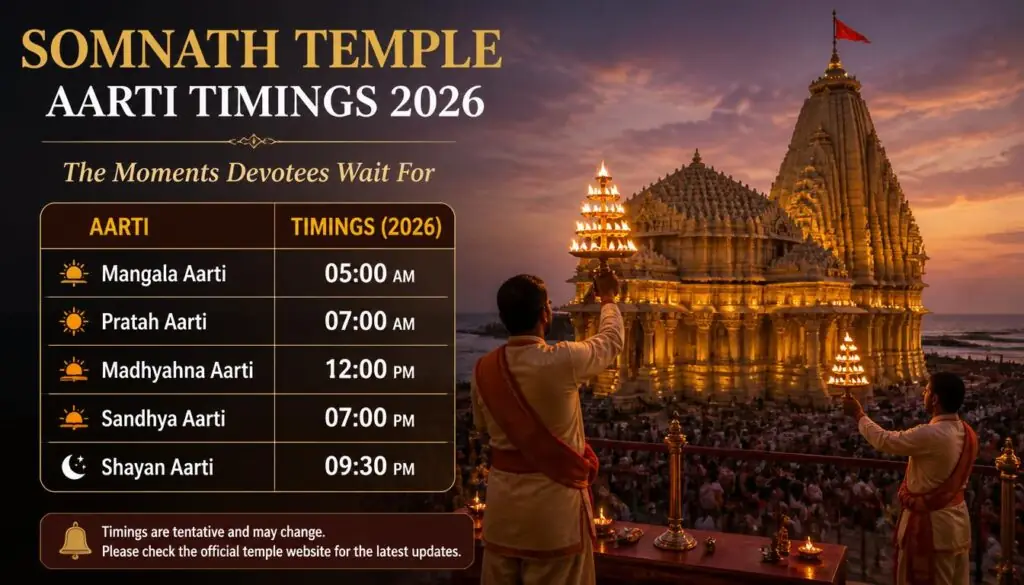
The regular public schedule published by the official Shree Somnath Trust is the most useful starting point for planning a visit. The main darshan window is generally listed from 6:00 a.m. to 10:00 p.m., while aarti is traditionally scheduled three times during the day. These timings refer to the principal temple’s routine worship and darshan arrangements, not necessarily to every counter, seva desk, accommodation office, or special attraction on the complex.
| Temple activity | Regular published timing | What visitors should understand |
|---|---|---|
| General darshan | 6:00 a.m. to 10:00 p.m. | The usual open-darshan window for devotees, subject to security and special-day arrangements. |
| Morning aarti | 7:00 a.m. | A fixed worship period that may attract a concentrated crowd around the ritual time. |
| Noon aarti | 12:00 noon | The midday aarti is separate from general darshan and should not be confused with a pooja booking. |
| Evening or sandhya aarti | 7:00 p.m. | A popular evening worship period; arrive early if witnessing the ceremony matters to you. |
| Light and sound show | Check the date-specific notice | The show schedule, language, ticketing, and operation can change with season and special events. |
| Online pooja or seva booking | Depends on the selected service | Booking windows and availability are separate from the temple’s daily opening hours. |
According to the official Shree Somnath Trust, general darshan timing and aarti timing are published as separate pieces of information. That distinction matters. A visitor can arrive during the broad darshan window but still find that a particular pooja has already started, that a seva needs advance registration, or that entry movement is temporarily controlled during a ceremony.
The 6:00 a.m. opening and 10:00 p.m. closing are best treated as the regular public schedule. They are not a guarantee that every gate, booking counter, cloakroom, or nearby attraction will operate for the entire period. Before travelling, check the latest official notice for the day you plan to visit, especially if your itinerary depends on a late-night arrival, a festival, or the light and sound show.
Darshan means viewing and offering prayers to the deity. At Somnath, ordinary open darshan is different from attending a scheduled aarti or purchasing a specific pooja seva. The regular window gives visitors flexibility, but the experience can feel very different at 6:00 a.m., around noon, and during the evening rush.
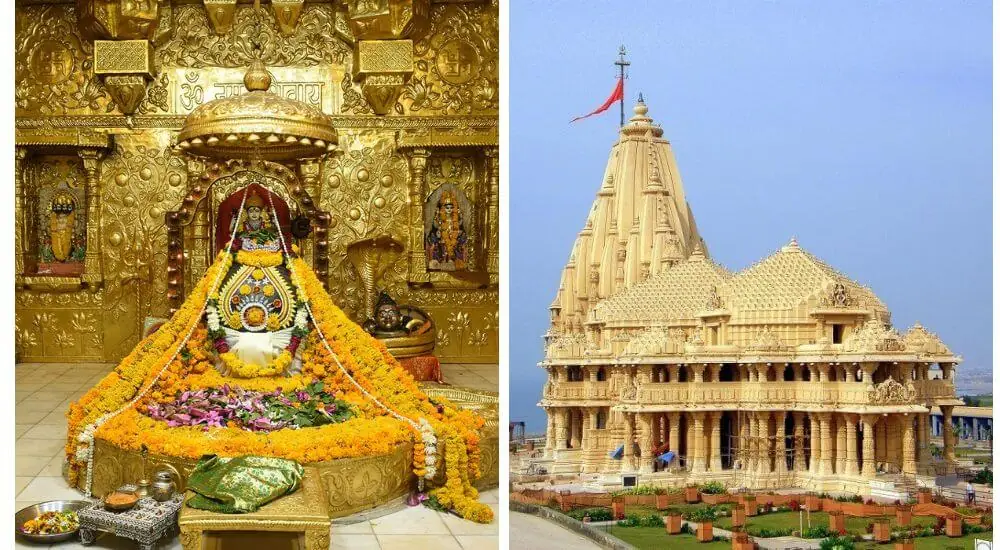
Morning darshan is often preferred by visitors who want cooler weather, a calmer start, or enough time for sightseeing around Prabhas Patan later in the day. Reaching before the first major aarti can help you avoid the crowd that gathers near the ritual period, although the quietest time is not guaranteed on Mondays, weekends, Shravan days, or holidays.
If you want to attend the 7:00 a.m. morning aarti, do not plan to reach the entrance at exactly 7:00. Security screening, footwear arrangements, and queue movement take time. A practical visitor should allow a buffer before the scheduled aarti, while remembering that the temple trust does not promise a fixed waiting time for every day.
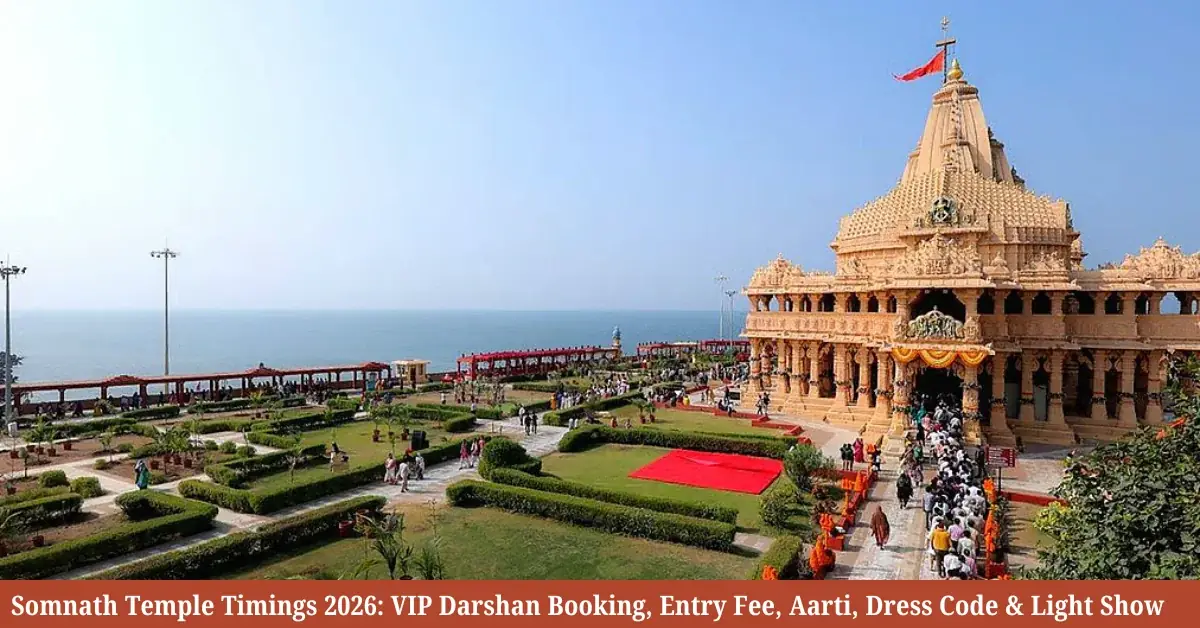
The period between the morning and noon rituals can be convenient for families and tour groups. The 12:00 noon aarti may bring a fresh wave of devotees, so the queue can become more concentrated around that time. If your main aim is open darshan rather than participation in the noon aarti, arriving outside the immediate pre-aarti period may make the visit easier.
Darshan movement may be managed differently during the ceremony itself. A visitor who reaches the temple during aarti should follow instructions from temple staff and security personnel rather than assume that the usual queue will move at the usual speed. The worship schedule has priority over a visitor’s private timetable.
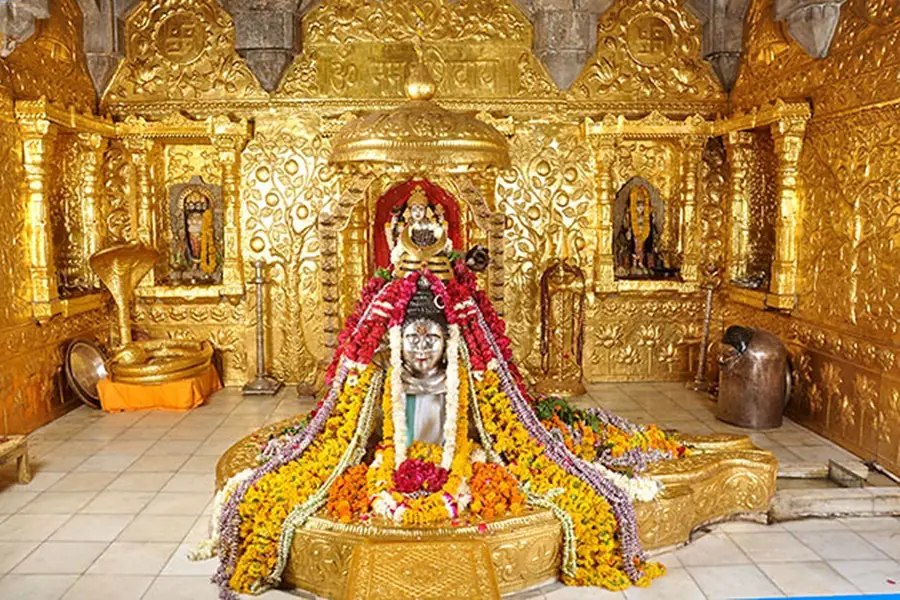
The evening is usually the busiest planning period because visitors combine the 7:00 p.m. sandhya aarti, sightseeing, and the light-and-sound programme. People arriving after a day tour may reach the entrance together, creating crowds even when the temple remains open for several more hours.
If you want only evening darshan, you can consider visiting before the aarti crowd builds or later after the main ceremony, provided the official schedule still shows open entry. If you want the aarti and the sound show, keep enough time between activities for queue movement, security checks, and the possibility of a delayed start. Never treat a search result saying “open now” as more reliable than an official same-day update.
These terms are often used together, but they describe different experiences. An aarti is a public worship ritual involving lamps, music, chanting, and offerings.
At Somnath, the regular morning, noon, and evening aartis are part of the daily temple rhythm. Seeing an aarti does not automatically mean that you have booked a personal ritual.
A pooja is a worship service performed according to a particular form or purpose. Some pooja options may be arranged for an individual, family, or group through the temple trust’s designated system.
A seva generally refers to a devotional offering or service associated with the temple. The exact services, documents, payment requirements, and availability can change, so the current listing should always take priority over an old travel article.

Someone searching for “Somnath darshan booking price” may actually be looking for one of three things: ordinary temple entry, a special darshan arrangement, or a paid pooja or seva. Those are not interchangeable. General open darshan may follow the public temple schedule, while a booked ritual may have its own reporting time and instructions.
Similarly, an online confirmation for a pooja does not necessarily function as a general entry pass for everyone in your group. Read the confirmation carefully. It may specify the devotee’s name, reporting location, permitted participants, identity requirements, or a time by which you must reach the office.
Aarti timings are more structured than ordinary queue movement, but the visitor experience can still change during a festival, security review, dignitary visit, or major temple event. A scheduled aarti may continue while access routes are temporarily regulated. The best approach is to arrive early, follow staff instructions, and avoid making a tightly connected plan that leaves no room for delay.
If you are travelling with elderly relatives, children, or someone who cannot stand for long, ask the official temple office about current assistance and queue arrangements before making a paid booking. Do not rely on an unofficial promise of priority access. The trust’s own terms and on-site instructions are the controlling rules.
Schedules displayed on search pages, social media posts, hotel desks, and old videos can remain visible long after a festival or administrative change has ended. For the latest information, use the official Shree Somnath Trust website and check the relevant notice, booking page, or visitor-information section. The official source is also the safest place to confirm whether a pooja, seva, sound show, or accommodation service is operating on your chosen date.
Booking hours are not the same as temple hours. A temple may welcome open-darshan visitors from early morning while a particular booking desk opens later, closes earlier, or accepts only advance requests. Online services can also have date-specific availability rather than remaining open continuously.
Be careful with payment requests sent through private messages or unfamiliar websites. A legitimate booking page should clearly identify the temple trust or its authorised system, explain what the payment covers, and provide a traceable confirmation. Do not pay for a “VIP darshan” promise merely because an intermediary says it will bypass the normal queue.
For ordinary visitors, open darshan and online pooja booking should be treated as separate decisions. You may be able to visit the temple without making a pooja reservation, but you should confirm the current entry system before travelling because temple administration and crowd-control measures can change.
Temple opening time is not the same as the time you should reach the entrance. You need to account for the journey from your hotel, parking or drop-off, security screening, footwear, storage of restricted items, and the distance to the queue. On a regular day, a modest buffer before your intended darshan is sensible; on a busy day, give yourself substantially more time.
Queue management may be especially important around the morning aarti, noon aarti, evening aarti, weekends, and festival dates. Groups should decide on a meeting point outside the controlled entry area because mobile-phone use may be restricted and members can become separated during screening. Keep children and older family members close rather than assuming the line will move at a steady pace.
Somnath’s visitor instructions have traditionally restricted mobile phones, cameras, and other electronic gadgets in the main temple area. Rules can apply differently to the outer premises, security zone, sanctum area, or cloakroom, so check the current notice rather than carrying valuable equipment and hoping it can be stored.
Do not depend on a locker being available at the exact moment you arrive. Carry only what you need, keep identification and booking details accessible, and follow the instructions given by the temple’s security staff. The same rule applies to bags, food, water bottles, footwear, and other items that may be restricted at the entrance.
Choose clean, comfortable clothing that is respectful of the religious setting and practical for standing in a queue. Security checks can take longer if visitors arrive with large bags, unnecessary accessories, or prohibited objects. Dress guidance and entry rules can be updated by the temple administration, so the official visitor notice remains the final reference.
Photography, recording, loud conversation, and attempts to move against the queue can disturb other devotees. A peaceful visit depends as much on following the entry process as on selecting the right timing. If you need assistance because of mobility, age, or a health condition, ask temple personnel politely before entering the most crowded section.
Regular temple timings are a useful baseline, not a promise that festival days will feel routine. Maha Shivratri, the Shravan month, Mondays during Shravan, Diwali-period holidays, Kartik observances, and major local celebrations can bring more devotees and additional worship arrangements. The temple may issue special-day schedules, alter access routes, add security controls, or announce separate instructions for particular rituals.
Maha Shivratri deserves special care because Lord Shiva devotees often plan a night-time or extended religious visit around the festival. Do not assume that the normal 6:00 a.m. to 10:00 p.m. pattern explains the entire festival arrangement. If the trust announces extended worship, special queues, or restricted movement, those instructions take precedence over the usual timetable.
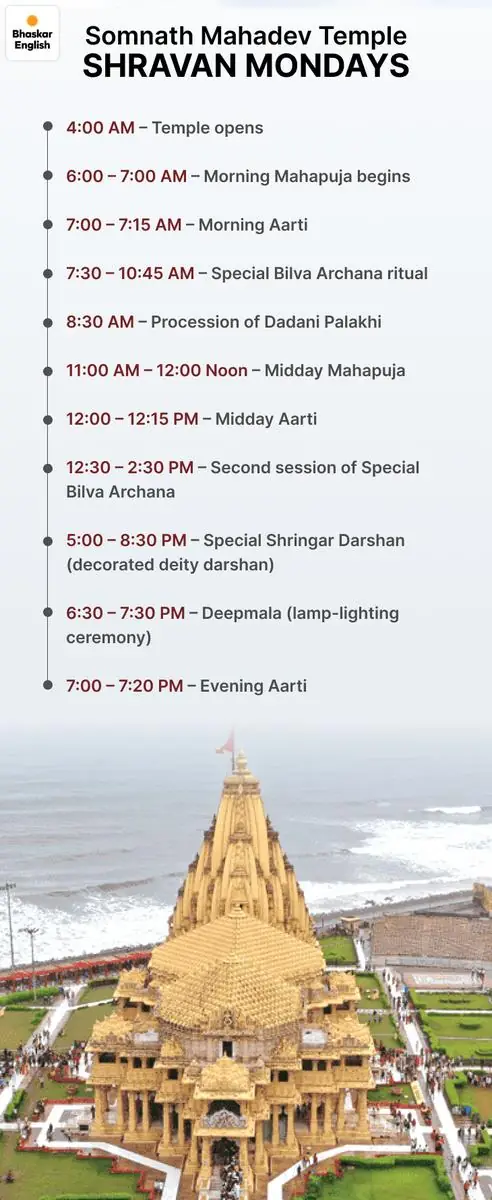
Visitors searching for Somnath temple timings in Shravan month should check the exact date rather than rely on a month-long assumption. Mondays, auspicious tithis, and weekends may be busier than other days within Shravan. A schedule for one Monday cannot automatically be applied to the following Monday.
During a high-footfall period, arriving just before an aarti can create the least predictable experience. If the ritual is your priority, reach well before the listed time. If you want a quieter open darshan, consider a less congested period shown by the official notice, while accepting that the temple cannot guarantee a crowd-free visit.
Festival crowds aren’t a reason to avoid Somnath, but they do require realistic planning. A visitor who understands that special-day schedules can replace regular temple timings is less likely to miss a ritual or arrive with an unsuitable assumption about entry.
The Somnath light and sound show is a separate attraction from temple darshan. It may explain the shrine’s history, religious importance, and architectural story through narration, lighting, and sound. Its operating days, start time, language, seating, ticket process, and cancellation arrangements should be confirmed through the official temple information for the date of your visit.
Do not assume that the sound show begins immediately after the 7:00 p.m. evening aarti. The actual gap may be affected by crowd movement, security, seating, or a revised programme. If you plan both activities, leave a practical gap instead of booking transport or dinner for the exact minute the aarti is expected to end.
The temple’s association with Lord Shiva and its long religious history are central to the visitor experience. The Somnath Trust presents the shrine as one of the important Jyotirlinga temples, and many devotees visit for prayer, while others come to understand the site’s history and architecture. Both forms of visit benefit from respectful behaviour and accurate timing information.
There are also sightseeing opportunities around the wider Prabhas Patan and Somnath area. A local tour may include nearby heritage, coastal, or religious places, but travel time between them is not part of the temple schedule. If your itinerary includes the sound show, do not fill the afternoon so tightly that a delayed return leaves you rushing through security.
“Jay Somnath” may be heard as a devotional greeting or seen on local signs and visitor material. It is useful to remember that the temple visit is not only a timed attraction; aarti, darshan, history, and local customs shape the experience. Plan the practical details, then leave enough space to participate respectfully.
Somnath is in Gujarat’s Gir Somnath district, near Veraval and Prabhas Patan. Travellers arriving from Ahmedabad should separate the intercity journey from the temple plan. A train, bus, hired car, or tour vehicle may reach the town at a time that looks convenient on paper but still leaves you needing transport from the station, bus stand, hotel, or parking area to the temple entrance.
Somnath darshan bus timings are transport timings, not temple timings. A bus operator’s arrival estimate does not guarantee that you will reach the queue in time for the 7:00 a.m., 12:00 noon, or 7:00 p.m. aarti. Check the current timetable with the relevant transport operator and build in a delay buffer for road conditions, boarding, luggage, and local traffic.
People staying in Veraval or nearby accommodation can often plan more flexibly than visitors arriving from Ahmedabad on the same morning. Those coming for a single-day tour should decide which activity matters most: open darshan, a particular aarti, the sound show, or broader sightseeing. Trying to fit all of them into a narrow schedule can create unnecessary stress.
Example, not a report of a named traveller: suppose the official trust’s regular listing remains 6:00 a.m. to 10:00 p.m. for darshan, with aartis at 7:00 a.m., 12:00 noon, and 7:00 p.m. A visitor staying nearby could arrive before 7:00 a.m. for morning darshan, complete nearby sightseeing later, and return in the evening only if the official notice confirms the evening programme and sound show.
This example is verifiable by checking the published Shree Somnath Trust timetable for the selected date; it does not claim that a particular visitor followed this plan. Its practical lesson is simple: choose one primary time-sensitive activity, keep a second activity conditional, and avoid treating the listed temple hours as a guarantee of transport availability or a fixed queue duration.
If you are travelling with a tour operator, ask whether the itinerary includes only an outside visit, open darshan, aarti participation, or a separately booked pooja. Those descriptions can mean different things. Get the arrival time, waiting arrangements, device-storage instructions, and return departure time in writing before the tour begins.
A last-minute check is especially valuable if you are travelling during a festival, arriving late, or booking a ritual. The following questions address common search queries without treating changeable information as permanent.
The regular darshan window published by the official Shree Somnath Trust is generally 6:00 a.m. to 10:00 p.m. Confirm the date-specific schedule before travelling because festival arrangements, security measures, or special events can affect ordinary entry.
Do not assume that an unofficial agent’s VIP promise represents an authorised temple facility. Check the current official trust information for any special darshan category, eligibility, fee, or booking rule, and rely only on the process published by the temple administration.
General darshan and aarti are separate parts of the schedule, and movement may be regulated while the ritual is taking place. If you arrive during aarti, follow staff instructions and expect queue movement or access routes to differ from normal conditions.
Mobile phones, cameras, and other electronic devices are restricted in the main temple area according to the temple’s visitor guidance. Carry as little as possible and check the current storage or cloakroom arrangement before entry; do not assume that a private locker will always be available.
Check the official Shree Somnath Trust website and its latest notices for tomorrow’s darshan, aarti, pooja, seva, and sound-show information. Recheck shortly before departure, especially if tomorrow is a weekend, Shravan Monday, Maha Shivratri, or another high-footfall day.
The most dependable way to use Somnath temple timings is to treat the regular 6:00 a.m. to 10:00 p.m. darshan window as a starting point, then verify aarti, seva, booking, entry, and festival details separately. Reach early for the ritual that matters most, carry fewer belongings, and leave room for security and crowds.
Before you set out for Gujarat, check the latest notice from the temple trust rather than relying on an old search snippet or verbal promise. With that final timing check, you can visit Somnath with a clearer plan and a more respectful, unhurried experience.





