Physical Address
304 North Cardinal St.
Dorchester Center, MA 02124
Physical Address
304 North Cardinal St.
Dorchester Center, MA 02124
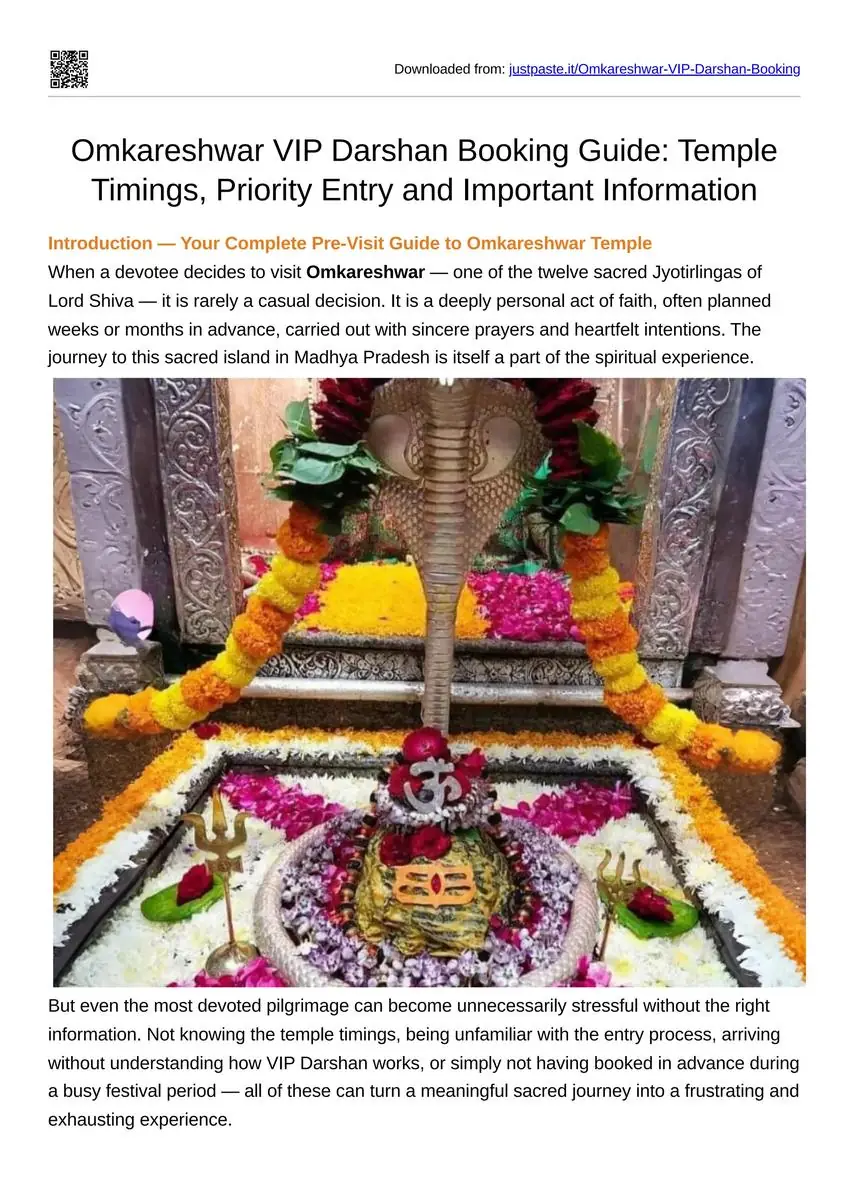
Planning Omkareshwar VIP Darshan is less about finding a single universal time and more about matching your visit to the temple’s live entry rules. The Omkareshwar Temple, on Mandhata Island in Madhya Pradesh, can have different windows for ordinary darshan, special entry, pooja, and aarti, especially on Mondays, weekends, and festival days. A ticket may also be available online on one day and only through an on-site counter on another.
This article explains how to check the latest notice, understand the Omkareshwar VIP Darshan price without relying on stale listings, prepare identity proof, and reach the shrine with a realistic time buffer. It also separates darshan access from ritual bookings so your plan is clear.
VIP darshan generally refers to a paid or specially managed entry arrangement that may reduce waiting compared with the ordinary queue. At Omkareshwar, the wording used for this facility can change.
A notice or booking page may call it VIP Darshan, special entry darshan, direct darshan facility, शीघ्र darshan, or another local term. These labels should not be treated as interchangeable until the current temple notice explains exactly what the ticket includes.
The facility usually concerns access to the shrine, not automatic permission to perform a pooja or touch the deity. A visitor with a special entry ticket may still need to pass through security, follow a separate queue, and leave the sanctum area within the time allowed by temple staff. The ticket may also be valid only for darshan and not for a particular aarti, abhishek, or seva.
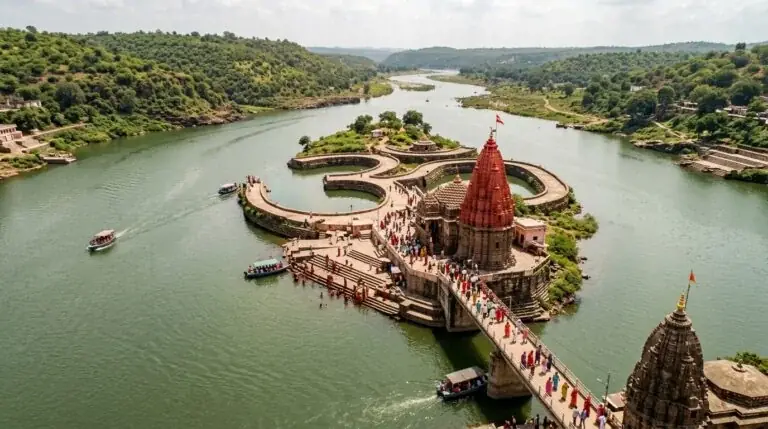
Omkareshwar Temple is associated with the Omkareshwar Jyotirlinga and stands on or around the pilgrimage area known as Mandhata Island. Many pilgrims also visit Mamleshwar Temple on the opposite side of the Narmada River.
In local and pilgrimage usage, Mamleshwar is also connected with the name Amaleshwar Jyotirlinga. These are related destinations, but a booking for Omkareshwar Temple should not be assumed to cover Mamleshwar Temple, or the reverse.
The phrase “VIP” can also create an incorrect expectation of immediate entry. Queue movement depends on crowd control, security checks, ongoing rituals, and directions from the temple trust.
If the sanctum is temporarily closed for aarti or a scheduled pooja, even a special entry group may have to wait. The practical benefit is usually a different access channel, not a guarantee that every ritual restriction will be bypassed.
Before paying, read the ticket description carefully. Some arrangements are issued for a particular person or family, while others may require devotee registration for every visitor.
A receipt may show a reporting time but not promise entry at the exact minute. It may also list a separate counter, gate, or meeting point.
That distinction is important for families travelling a long distance. A ticket should be viewed as a controlled entry service, not as a package covering every religious activity in the town.
Searches for the Omkareshwar VIP Darshan time often produce a single morning or evening slot. Such listings can become inaccurate quickly.
The temple’s daily functioning may include opening hours, ordinary darshan windows, special entry windows, pooja breaks, aarti periods, and a closing time. These are different pieces of information, and one published time cannot describe the entire day.
The first distinction is between the temple being open and a particular ticket counter accepting visitors. A gate may remain open for general pilgrims while VIP or special entry registration has already stopped.
In the same way, an online ticket may show a reporting window that is earlier than the expected darshan movement. Always read the words around the time: “reporting,” “entry,” “darshan,” “counter closing,” and “temple closing” do not mean the same thing.
The second distinction is between a routine day and a special-day schedule. A regular weekday may have a predictable rhythm, while a Monday, Shravan period, Mahashivratri, major Hindu festival, or locally announced religious event can bring crowd restrictions. The temple administration may alter access routes or pause a special facility without changing every public page that mentions ordinary Omkareshwar Temple timings.
| Visit component | What it normally describes | What you should verify |
|---|---|---|
| Regular darshan | General access for pilgrims using the standard queue | Opening window, queue location, temporary closures, and security rules |
| VIP or special entry darshan | A separately managed route or ticketed access facility | Reporting time, ticket validity, identity requirements, and whether bookings are open |
| Pooja or seva | A ritual or offering booked separately from ordinary viewing | Booking category, participant limit, ritual time, and permitted materials |
| Aarti darshan | Viewing or joining a scheduled worship ceremony | Whether separate permission is needed and whether general entry pauses during aarti |
| Ticket counter | On-site issue or verification of tickets and registrations | Location, operating hours, accepted payment method, and same-day availability |
For a reliable answer, use the latest notice issued by the temple administration or the authorised booking system rather than a travel page copied from an earlier season. If the official page shows only a general schedule, contact the temple office or the listed helpdesk and ask specifically about the VIP or direct darshan facility for your date.
Many pilgrims type “Omkareshwar VIP Darshan official website” into a search engine and then open the first page that displays a price. That approach is risky because search results can include travel agents, old advertisements, hotel pages, and unofficial ticket sellers. A genuine booking page should identify the responsible temple trust, government-authorised platform, or clearly named temple administration.
Look for consistent information across the official notice, the booking page, and the contact details displayed by the temple authority. A page that gives a price but no issuing authority, no terms, and no way to verify a booking should not be treated as an official source. The same caution applies to social media posts: they can help you find an announcement, but the final confirmation should come from the issuing authority.
Do not assume that a website using the words “VIP darshan” is automatically operated by the temple trust. The name of the service provider matters. If the page redirects to a payment screen with unclear ownership, stop and verify the source through the temple’s published contact channel.
Availability can also differ between an official mobile application, a government service portal, and an on-site counter. An online page showing “not available” does not necessarily prove that no offline facility exists, just as an agent claiming to have a slot does not prove that the temple is accepting that category. Ask the authority which channel applies to your travel date.
The Omkareshwar Darshan booking price is not safe to quote as a permanent number unless it appears in the current official booking flow or notice. Fees can change because the temple administration revises categories, introduces a temporary arrangement, changes the service provider, or suspends a facility during high-crowd periods. A price shown on an old blog or a social media image may no longer apply.
The same caution applies to the phrase Omkareshwar VIP Darshan price. Confirm whether the amount is per person, per family, per receipt, or per ritual.
Check whether taxes, platform charges, donation components, pooja materials, or convenience fees are included. If a page provides one combined amount without an itemised description, ask for clarification before making payment.
An Omkareshwar VIP Darshan ticket online may require several details. These can include the visitor’s name, mobile number, date of visit, number of devotees, age details, and identity information.
The exact fields are determined by the booking platform. Enter names carefully because mismatched information may create a problem at the verification counter.
Online ticket booking normally begins with selecting a date and a service category. If the facility is capacity-controlled, the calendar may show only selected dates or reporting windows.
A successful payment is not enough unless the system generates a confirmation, receipt, or booking reference. Save a digital copy and carry a backup screenshot, while also keeping the original identity document named in the booking.
Read the cancellation and rescheduling terms before payment. Some religious bookings are non-refundable, while others may allow changes only before a stated cut-off.
A platform may also cancel or modify a service because of a festival schedule, security order, or temple administration decision. The refund process, if any, is controlled by the issuing platform, not by a travel agent who merely helped with the form.
For Omkareshwar VIP Darshan offline arrangements, go only to the authorised counter identified by the temple trust or current notice. Ask staff where the official Omkareshwar VIP Darshan ticket counter is located, whether same-day tickets are issued, and what identity proof is required. A counter may stop issuing tickets before the temple’s main closing time, particularly if the remaining queue cannot be processed safely.
Carry the people who are named on the booking whenever possible. If one family member is collecting tickets for others, ask whether the counter permits that arrangement and whether copies of identity documents are needed. Do not pay a person standing near the temple gate unless the official counter clearly identifies that person as an authorised representative.
Keep the receipt until your group exits the designated route. It may be needed for verification, a correction, or a query about a duplicate payment. If the counter is closed or the special category is suspended, the standard darshan queue may be the only available option.
Visitors often use the word darshan for every temple activity, but the administrative meaning is narrower. Darshan is the act of viewing or presenting oneself before the deity. Pooja is a worship ritual, while seva usually refers to a devotional service or offering category.
Aarti is a ceremonial worship sequence involving lamps and prayers. Each may have a separate timing and permission system.
A special entry ticket generally relates to movement toward the shrine. It does not automatically include abhishek, a personal sankalp, a priest-led pooja, or participation in aarti. If your main purpose is a ritual rather than a quick temple visit, search for the relevant seva category instead of purchasing the first VIP option shown online.
Aarti darshan can be especially confusing. Some temples allow visitors to watch an aarti from a designated area, while others restrict access because the ceremony takes place inside a controlled space.
During an aarti, ordinary and special queues may pause. The pause is part of the temple’s ritual and security management, not necessarily a failure of the ticket service.
These questions matter for older visitors and families with children. A pooja may take longer than a simple darshan visit, and its reporting procedure may be stricter. Plan the rest of the day around the ritual rather than trying to fit a ritual into a narrow travel connection.
The safest description is the one printed on the current receipt. If the receipt says “darshan,” don’t assume it includes “pooja.” If it says “seva,” ask what the devotee is actually permitted to do and where the group must report.
“Can we do sparsh darshan at Omkareshwar?” is a common question, but the answer can change with ritual practice, crowd levels, security orders, and the day’s arrangements. Sparsh darshan generally means being permitted to touch the deity, the lingam, or a designated sacred object. It should never be assumed merely because a person has purchased VIP or direct entry access.
At some times, physical contact may be restricted for all visitors. At other times, it may be allowed only under a specific ritual category, during a limited period, or for people meeting conditions stated by the temple administration. A priest, ticket seller, hotel employee, or online agent cannot reliably promise sparsh darshan unless the official temple notice expressly provides it.
The phrase direct darshan facility can also be misunderstood. “Direct” may refer to a separate queue, a faster route to the viewing area, or a controlled entry through a particular gate. It does not necessarily mean walking directly into the sanctum or avoiding all security procedures.
Ask these questions at the official helpdesk before payment:
A respectful approach is essential. Temple staff may close physical access during aarti, cleaning, abhishek, security checks, or an unexpectedly heavy rush. The final instruction at the shrine controls the visit, even if an older website page uses broader language.
Temple entry guidelines are designed to protect the sanctum, manage large groups, and maintain the religious character of the site. Rules can cover clothing, footwear, mobile phones, cameras, bags, food, liquids, offerings, and the number of people allowed through a gate at one time. Because these rules may change, read the current notice instead of relying on a previous visitor’s account.
Identity proof is particularly important for paid or reserved services. Carry the original document used during devotee registration, along with the booking confirmation.
The name on the document should reasonably match the name on the ticket. If a child, elderly person, or family member does not have the document listed by the portal, contact the booking authority before travelling.
Queue management can involve barricades, token checks, security screening, and temporary holding areas. A VIP line may still have a waiting period if several groups report at once.
Staff may combine or redirect queues to keep movement safe. Follow the route shown on the ticket, and don’t leave the line to join another channel unless authorised personnel instruct you to do so.
Visitors with mobility limitations should ask about the distance between the entry gate, waiting area, and shrine. An online ticket may shorten queue time but not remove walking, stairs, or crowd movement. A companion should know the reporting point and carry the documents for the group.
Regular schedules are least reliable on high-demand days. Mondays, public holidays, Shravan observances, Mahashivratri, and other major festival periods may attract more pilgrims to the Omkareshwar Jyotirlinga. The temple administration can introduce barricading, additional security, restricted access, separate token distribution, or a temporary suspension of special entry.
Festival timings may also be published separately from the routine daily schedule. A notice can specify a special opening, a ceremonial closure, a changed aarti time, or a limited number of tickets. If two pages show different timings, use the newer notice issued by the responsible authority and confirm the discrepancy before leaving.
Do not treat a festival booking as proof that the ordinary queue will operate normally. A ticket may have a reporting location different from the usual gate. The temple may also ask ticket holders to arrive earlier because traffic and pedestrian controls affect access to Mandhata Island.
Choose a date only after checking the special-day schedule. If your travel is flexible, a non-festival weekday may offer a simpler experience, though no day can guarantee a particular waiting time. Book transport with enough flexibility to absorb security checks, traffic, parking, and movement between Omkareshwar Temple and other pilgrimage sites.
Arrive well before the reporting window printed on your ticket. A practical buffer should account for finding the correct counter, verifying identity, storing restricted items, and reaching the assigned queue. During a major festival, build a much larger margin rather than arriving at the exact start of the slot.
Families should decide in advance who will keep the tickets, who will accompany children, and where the group will meet if security separates members. Mobile networks can become unreliable in crowded areas, so save important details offline.
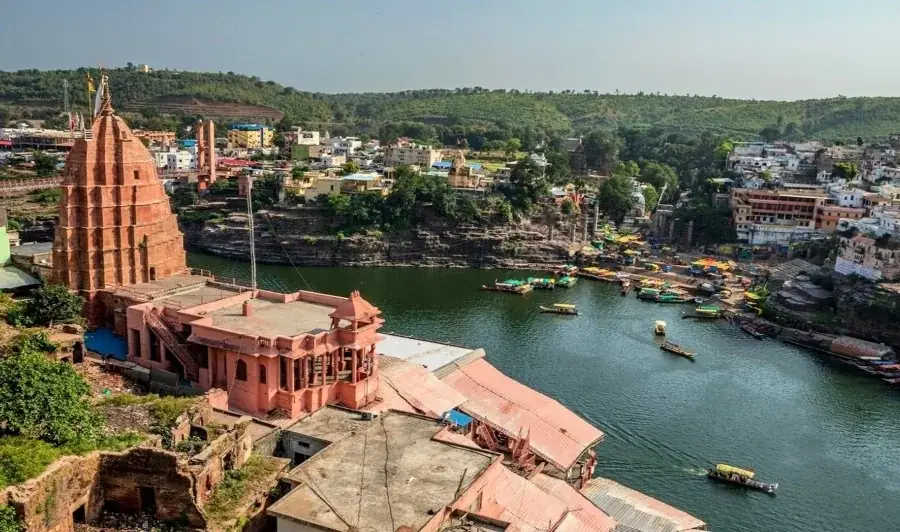
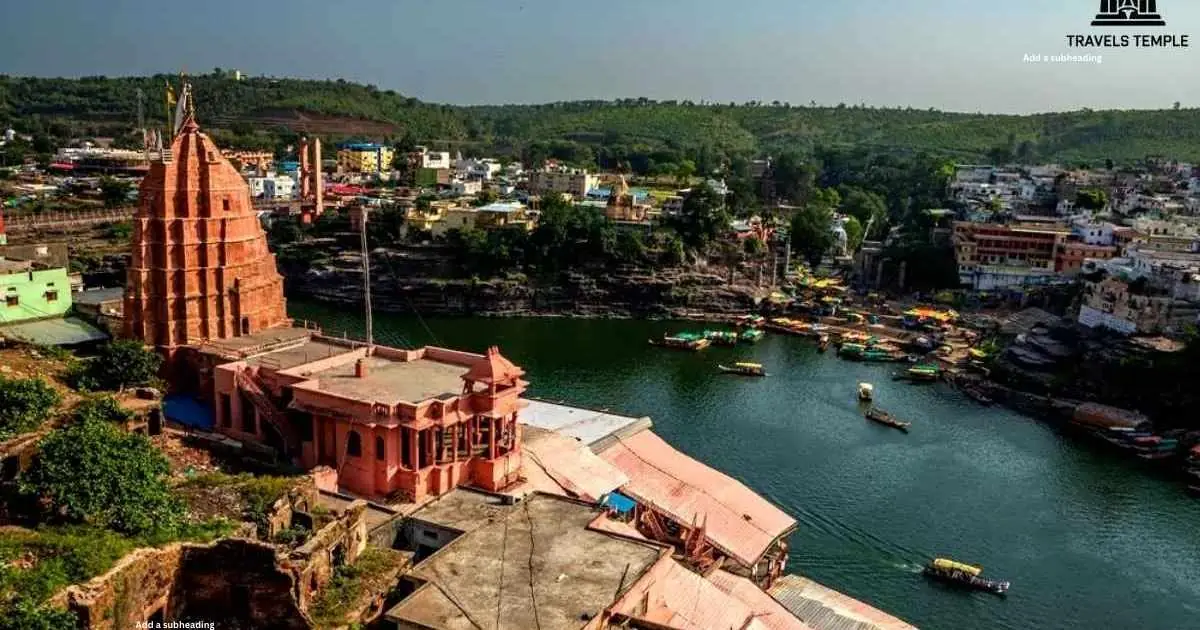
Omkareshwar is not just a single gate on a city street. The pilgrimage area includes Mandhata Island, approaches connected with the Narmada River, the main Omkareshwar shrine, and nearby religious destinations. The distance between a parking area, a ticket counter, a bridge or access route, and the temple entrance can affect your schedule.
The location also matters if you want to visit Mamleshwar Temple or the site associated with Amaleshwar Jyotirlinga on the same day. A darshan booking at Omkareshwar does not reserve a route or entry at Mamleshwar. Check each temple’s arrangements independently, especially if your group includes elderly people or anyone who cannot walk comfortably for long periods.
Visitors arriving from elsewhere in Madhya Pradesh should confirm the final local approach rather than planning solely from a map estimate. Traffic diversions, festival barricades, parking restrictions, and pedestrian-only areas can change the time needed after reaching the broader town. Ask your accommodation or the official local helpdesk for the current access route, while treating unofficial promises about ticket availability with caution.
Keep the day’s plan simple. A good order may be to reach the reporting point first, complete the booked darshan, take a short break, and then visit another shrine or riverside area if time and access conditions permit. Trying to fit several rituals into a narrow schedule creates unnecessary pressure and may cause you to miss a reporting window.
Real-world reference example: A visitor planning a Jyotirlinga pilgrimage first needs to establish the correct destination before checking tickets. The Madhya Pradesh Tourism information on Omkareshwar identifies the pilgrimage destination in Khandwa district, Madhya Pradesh, and describes its connection with Mandhata Island and the Narmada River. That information is useful for route planning and for distinguishing the main pilgrimage area from unrelated listings.
The same example shows why destination information and ticket information should be kept separate. A tourism page can help a traveller understand the location, nearby attractions, and broad character of the pilgrimage site. It should not be treated as proof that a particular VIP ticket is available on a chosen date unless it directly publishes that current facility.
A careful visitor would use the destination information to plan the journey, then check the temple trust or authorised booking system for the live Omkareshwar VIP Darshan time, price, reporting gate, and entry rules. If the online page and the counter provide different information, the visitor should request clarification from the issuing authority before making a second payment.
Use a short verification routine on the day before travel. Screenshots are useful, but they should show the booking reference, date, reporting window, and service name clearly. Keep the original confirmation available in case the counter needs to scan or inspect it.
Check the booking once more if your visit falls near Mahashivratri, Shravan, a public holiday, or a major local celebration. A current notice can override a routine timetable. It’s better to spend a few minutes confirming the arrangement than to depend on a price or timing copied from an old listing.
There is no single permanent amount that can safely be applied to every date and service. The current Omkareshwar VIP Darshan price should be checked on the authorised booking page or at the official ticket counter. Confirm whether the amount is per person, per group, or connected with a separate pooja or seva.
No ticket can guarantee an exact completion time. Waiting may be affected by security, aarti, pooja, crowd levels, festival controls, and the number of groups reporting together. Arrive before the stated reporting time and leave a generous buffer before transport, hotel check-in, or another temple visit.
Sparsh darshan depends on the current temple rules and the specific ritual or access category. VIP or direct darshan does not automatically grant permission to touch the deity. Ask the temple administration for written confirmation on your date, and follow the final instruction of the authorised staff at the shrine.
The required document depends on the booking system and the type of service. Carry the original identity proof used during devotee registration, along with the booking confirmation. If the name, age details, or group information is incorrect, contact the issuing platform before travelling rather than waiting until the counter.
Availability can vary by date, season, and the facility operating at that time. An online ticket may be offered through an authorised platform, while offline booking may be handled at an official counter when capacity permits. Never assume that a third-party agent’s claim proves availability; verify the current channel with the temple trust or booking authority.
A smooth visit depends on separating the live darshan schedule from general travel information. Before leaving, confirm the current Omkareshwar VIP Darshan availability, reporting point, fee, identity requirements, and any festival restrictions through the authorised source.
Keep your booking and documents ready, allow extra time for queue management, and remember that special entry does not automatically include pooja, aarti, or sparsh darshan. With those checks complete, you can approach the Omkareshwar pilgrimage with clearer expectations and a more dependable plan.





