Physical Address
304 North Cardinal St.
Dorchester Center, MA 02124
Physical Address
304 North Cardinal St.
Dorchester Center, MA 02124
Planning a pilgrimage to Sabarimala in 2026 begins with checking the authorised online booking system, not with relying on forwarded messages or old festival calendars. Sabarimala online booking 2026 may include virtual queue darshan tickets, accommodation services, and selected pooja bookings, but availability depends on the Travancore Devaswom Board’s schedule and government instructions. Opening dates, reporting slots, and daily capacity can change for the Mandala-Makaravilakku season, monthly pooja days, and special events.
This information will help you understand how darshan reservations work, where temple timings fit into your travel plan, what documents to carry, and how to verify the latest notice before you leave for Kerala. Treat every date and slot as subject to confirmation on the official portal.
Sabarimala, located in Pathanamthitta district of Kerala, is one of India’s most important pilgrimage centres. The hill shrine is dedicated to Lord Ayyappa and attracts millions of devotees during the annual pilgrimage season. Unlike a typical temple visit, the journey involves a substantial forest and hill route, prescribed religious observances, controlled crowd movement, and several transport and security checkpoints.
The phrase “Sabarimala online booking 2026” usually refers to the digital arrangements made for devotees who want to reserve or register for temple access. The exact services may vary by season, but the booking system has commonly been associated with:
Online registration doesn’t mean that every part of the pilgrimage is completed digitally. You’ll still need to travel to the designated base area, pass through security and verification points, follow the route assigned by officials, and observe the temple’s customs. A confirmed slot is permission to report for darshan within an approved arrangement; it isn’t a guarantee that the entire journey will take only the time shown on the ticket.
Many devotees search for the Sabarimala virtual queue booking available date for October or November 2026. In practice, the release schedule is normally linked to the final pilgrimage calendar, crowd-management decisions, and administrative approval. The Travancore Devaswom Board or the authorised government-supported booking platform may release dates in phases rather than publishing the complete year at once.
That means an old screenshot showing a booking opening time should not be treated as proof for 2026. Check the official website, the notice displayed inside the booking account, and announcements from the Travancore Devaswom Board before making non-refundable travel arrangements.
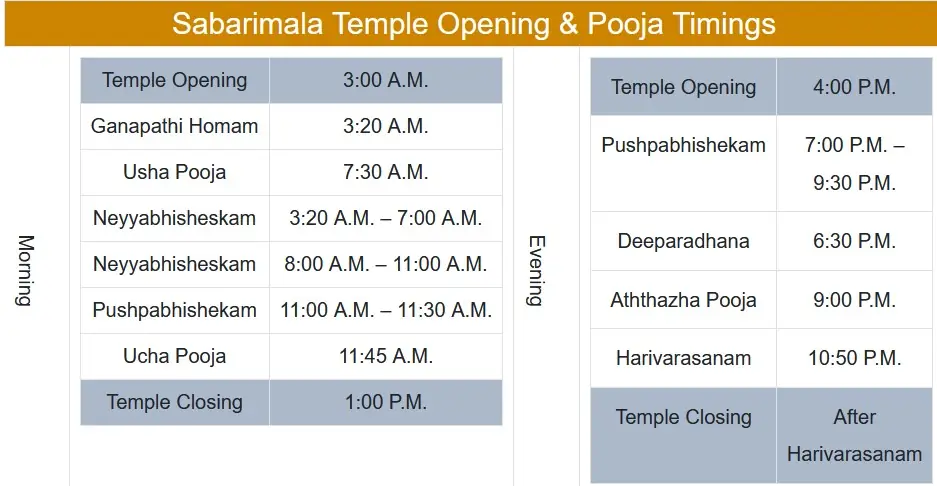
Sabarimala doesn’t operate like a city temple that opens every morning throughout the year. The shrine opens for defined periods, including the Mandala pilgrimage, Makaravilakku-related observances, monthly Malayalam-calendar pooja days, Vishu-related rituals, and other notified occasions. The opening and closing dates for 2026 must be confirmed from the annual temple calendar or the latest official notice.
Daily pooja schedules can also change according to the season. A familiar sequence may include early-morning worship, offerings, regular darshan, afternoon closure, evening opening, and night rituals, but the public access window is not always identical on every day. Special ceremonies, crowd restrictions, weather, and ceremonial processions can affect the practical timing of entry.
| Planning item | What it generally means | What you should verify for 2026 |
|---|---|---|
| Temple opening period | The shrine is open only during notified pilgrimage and pooja periods. | Exact opening and closing dates in the official Sabarimala calendar. |
| Darshan slot | A reserved reporting window or virtual queue allocation for devotees. | Slot date, reporting location, allowed group details, and validity. |
| Morning pooja | Early-day ritual service, often followed by public darshan arrangements. | Whether the pooja is open for online booking and its reporting time. |
| Afternoon interval | A period when public access may be restricted or the temple may close temporarily. | Daily operational notice for the selected pilgrimage date. |
| Evening rituals | Evening worship and associated darshan period. | Current opening time, queue restrictions, and final entry instructions. |
| Night closure | The time after which ordinary darshan and entry are stopped. | Final reporting and closing time announced for that day. |
Do not assume that a pooja booking gives you priority access at every stage of the journey. A booked service may have a separate reporting point, and the temple administration may require devotees to arrive well before the ritual begins. Carry the printed or digital receipt, but follow the instructions displayed at the site if they differ from an old confirmation message.
The Mandala season is the busiest period, generally associated with a 41-day observance followed by major events around Makaravilakku. The broad religious cycle is familiar to devotees, but the exact public opening schedule, virtual queue capacity, and transport plan are announced for each season. Monthly pooja openings are usually shorter and may have different demand patterns.
Peak seasons can fill quickly because devotees travel in groups, buses arrive from several states, and many pilgrims plan accommodation well in advance. If your dates are flexible, a less crowded notified opening may offer a more manageable pilgrimage experience. Even then, you must confirm that the temple is open to the public on your intended date.
Use only an authorised booking channel. Search results and social-media posts can lead to unofficial agents, copied forms, or pages that ask for unnecessary payments. The official Sabarimala booking portal should clearly identify the responsible authority, display current notices, explain the service being offered, and provide a verifiable receipt after successful payment or registration.
The exact screen names may change, but the normal process is likely to follow the steps below. Read each page carefully before submitting information.
A successful transaction and a confirmed booking aren’t always the same thing. If money is deducted but no receipt appears, don’t immediately pay again.
First check the booking history, transaction status, and official help instructions. Keep the bank reference number so the payment can be traced.
Requirements can differ between services and seasons, so follow the current form rather than copying a previous year’s checklist. Commonly requested details may include the devotee’s full name, age, gender, mobile number, email address, identity document information, and travel group details. Children and senior citizens may be subject to separate instructions or assistance arrangements.
Carry valid original identification whenever the booking notice requires it. A screenshot with someone else’s name won’t normally substitute for the required document. If a group is travelling together, each person should have a booking record or be included exactly as instructed by the system.
Virtual queue registration is a crowd-management tool. It allows the administration to distribute arrivals across dates or time windows instead of allowing everyone to gather at the same point simultaneously. It doesn’t remove waiting entirely, particularly during weekends, public holidays, Mandala days, Makaravilakku-related events, or other peak periods.
Your booking may display a reporting time at a base camp or designated access point. Arriving late can create a serious problem because the system may not hold the slot indefinitely.
At the same time, arriving extremely early can add unnecessary congestion if officials are processing an earlier group. Follow the reporting instruction on the current confirmation rather than relying on a general estimate found online.
| Booking or visit type | What it may help with | What it does not necessarily guarantee |
|---|---|---|
| Virtual queue darshan | Controlled access and an assigned reporting arrangement. | Immediate sanctum entry or no waiting on a crowded day. |
| Pooja booking | Participation in a specific listed ritual or offering. | Priority through every checkpoint or unrestricted movement. |
| Accommodation booking | A place to stay if rooms are available and the reservation is confirmed. | Darshan access unless a separate registration is completed. |
| Group registration | Administrative convenience for travelling devotees. | Permission to add unregistered people at the last minute. |
| Offline assistance | Help at an authorised counter or information centre where provided. | Availability of a slot after online capacity has been filled. |
Waiting periods are difficult to predict. They depend on the number of pilgrims, route conditions, security checks, weather, transport flow, and temporary restrictions near the hill shrine.
Allow enough time for walking, rest, food, water, queue movement, and return travel. A tight plan that assumes you’ll finish at an exact minute is risky.
Many Ayyappa devotees observe a period of discipline before the pilgrimage, traditionally associated with the mala and a 41-day vratham. Practices can vary by family, community, and guidance from a guru swami. If you’re unfamiliar with the customs, ask an experienced devotee or temple authority rather than treating internet summaries as binding religious instruction.
Dress should be modest and suitable for walking, changing weather, and temple access. Devotees commonly wear simple, comfortable clothing associated with the pilgrimage, but the current entry instructions should take priority. Avoid carrying unnecessary valuables, large bags, prohibited substances, or items that may delay security screening.
Temple access is governed by official directions that can change for crowd control, safety, court orders, health concerns, and special events. Read the notice connected to your booking, not just the general information displayed on an older webpage. Rules may apply to age groups, children, women, senior citizens, persons with disabilities, group movement, and permitted routes.
Photography and videography may be restricted in temple areas or at particular points along the pilgrimage route. Even where mobile phones are permitted during part of the journey, that doesn’t mean photography is allowed near every shrine or ritual. Follow signs, announcements, and instructions from security personnel.
Sabarimala is a demanding pilgrimage site. The route, slopes, distance, weather, and crowd density can be difficult for people with heart conditions, respiratory illness, mobility limitations, or other health concerns. An online ticket doesn’t change the physical demands of reaching the temple.
Speak with a qualified medical professional if you have a health concern, especially if you’re travelling with older family members. Carry medicines in labelled packaging, keep emergency contacts available, and learn where the official medical assistance points are located on your route. Don’t depend on an internet post for a current emergency number; confirm it through the season’s official notice or local administration.
Accommodation is a separate planning issue from darshan. A devotee may have a confirmed virtual queue slot but no room near the base camp, or may reserve a room without holding a temple entry slot. Check the booking category, check-in time, cancellation policy, room occupancy, and distance from the reporting point before paying.
Facilities may be available at or near places such as Pamba, Nilakkal, or other designated pilgrimage centres, but availability changes sharply during peak seasons. Some facilities are managed by temple authorities, while others are operated by government agencies, cooperatives, or private establishments. Verify who issued the receipt and whether the facility is actually connected with your temple booking.
Transport arrangements can also be seasonal. Buses, parking controls, shuttle services, and road access may be adjusted during the busiest days.
If you’re travelling by train or air, build a buffer between arrival and reporting time. Delays on the final hill route can affect your booking even when your long-distance transport arrives on schedule.
| Planning choice | Advantages | Points to check |
|---|---|---|
| Travel on a less crowded notified day | Potentially easier movement and more manageable waiting. | Whether the temple and desired pooja services are open that day. |
| Stay near the reporting location | Reduces the risk of late arrival. | Check-in rules, cancellation terms, and transport availability. |
| Travel in a registered group | Shared planning and support for elderly or first-time pilgrims. | Whether every group member is included in the booking record. |
| Use an authorised accommodation service | Clearer receipt and recognised customer-support route. | Who manages the property and whether the reservation is genuine. |
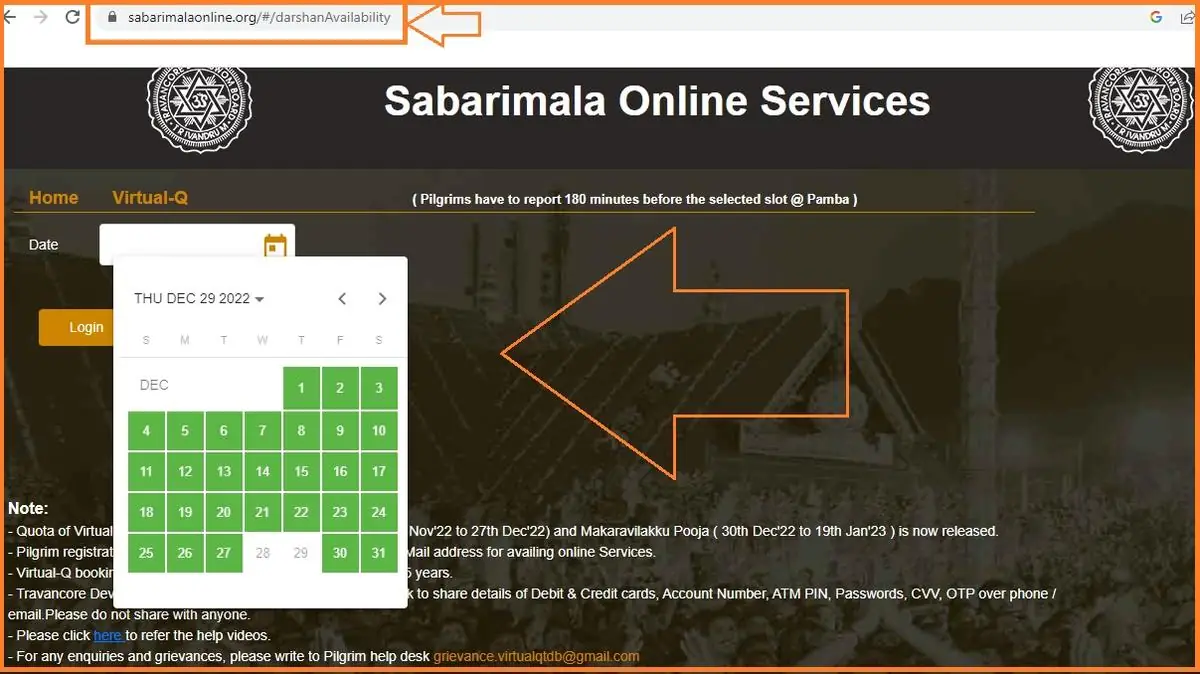
A useful real-world example is the digital workflow published through the Sabarimala online service associated with the Travancore Devaswom Board. Devotees are asked to select an available service or darshan arrangement, enter personal details, choose an available date where applicable, and retain the resulting confirmation. This illustrates an important practical point: registration is tied to the service and date shown by the system, not to a general promise of entry at any time during the season.
The portal’s own notices and the Board’s seasonal announcements should be treated as the controlling information. If the system later changes a reporting point or suspends a slot, the latest official instruction takes precedence over a saved blog post, agent message, or previous-year calendar. This is why checking the account and official notices shortly before travel matters.
Search engines may show pages with attractive booking buttons, but appearance alone doesn’t prove authority. Before entering an identity number or making payment, compare the portal name with a notice from the Travancore Devaswom Board, Kerala government, or another clearly identified official authority. Look for secure payment processing, a receipt, customer-support information, and a consistent domain.
Use this verification routine before you finalise your journey:
Be especially careful with phrases such as “guaranteed VIP darshan,” “instant confirmed slot,” or “no queue entry.” Unless the official temple authority explicitly offers that service, such claims deserve caution. Sabarimala’s crowd system exists precisely because demand can exceed the practical capacity of the route and shrine.
Don’t transfer money to an unknown person because the official calendar shows no availability. Check whether another notified date is open, whether a later release phase has been announced, or whether the official system provides a waitlist or alternate procedure. If no authorised option exists, postponing the trip is safer than arriving without the required registration.
Accommodation availability shouldn’t be confused with darshan availability either. A hotel may accept your room booking even when the temple’s virtual queue is full. Confirm both independently before you commit to travel expenses.
The release date depends on the official 2026 pilgrimage calendar and administrative announcements. Booking may open in stages for different periods or services. Check the authorised portal and the Travancore Devaswom Board’s latest notice rather than relying on an unverified “opening date” circulated online.
The requirement can depend on the season, crowd-control policy, and type of visit. Virtual queue registration or another approved process may be required during busy periods, while procedures can differ during specific monthly openings. Confirm the rule for your exact date before travelling.
Accommodation services may be offered through authorised temple, government, or approved facility channels, subject to availability. A room reservation doesn’t automatically function as a darshan ticket. Keep both confirmations if you need both services.
Check your bank account and booking history before attempting another payment. If the amount was deducted, save the transaction reference and follow the official refund or support procedure. Duplicate payments can complicate reconciliation.
Requirements can vary according to the current portal and age category. Enter every traveller exactly as instructed, including children, and carry the documents requested for each person. Don’t assume a child can be added at the reporting point.
Some systems restrict changes or don’t permit them after confirmation. Read the cancellation and modification conditions before payment. If the portal provides no edit option, contact the official support channel rather than using an intermediary.
Use the reporting time printed on your confirmation and allow additional time for transport, parking, security, walking, and crowd movement. The correct buffer depends on your route and the day’s conditions, so an exact universal arrival recommendation would be unreliable.
Sabarimala online booking 2026 will be most useful when it’s treated as one part of a carefully checked pilgrimage plan. Confirm the temple opening period, reserve only through an authorised system, match every name with valid identification, and separate darshan, pooja, accommodation, and transport arrangements. Keep your confirmation offline and recheck the latest notice shortly before departure, especially if you’re travelling during a peak festival period.
Dates and timings can change for reasons outside a devotee’s control. Before you set out, ask yourself one practical question: have you verified the current official instruction for your exact date, reporting point, and service? That final check can prevent avoidable expense and help you approach the pilgrimage with greater confidence and respect.





