Physical Address
304 North Cardinal St.
Dorchester Center, MA 02124
Physical Address
304 North Cardinal St.
Dorchester Center, MA 02124
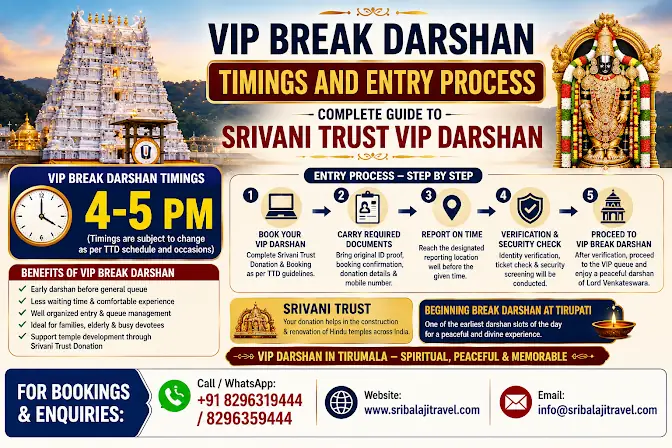
Tirupati VIP Darshan is intended for approved categories of pilgrims who need a regulated, quicker route for worship at the Sri Venkateswara Swamy Temple in Tirumala. It isn’t simply a premium ticket that anyone can buy at a fixed price, and terms such as VIP Break Darshan, protocol entry and recommendation-based access often refer to different arrangements.
Knowing the distinction can save you from unreliable agents, incorrect booking claims and unnecessary travel expenses. The latest schedules, quota rules and reporting instructions should always be checked before your journey because Tirumala Tirupati Devasthanams can revise them for festivals, security requirements and crowd management.
At Tirumala, “VIP Darshan” usually refers to a controlled darshan facility for eligible individuals rather than one universal product with a single online ticket. The most familiar term is TTD VIP Break Darshan. Historically, break darshan has been associated with selected guests, public representatives, officials, donors, people carrying valid recommendation letters and other categories approved by the Tirumala Tirupati Devasthanams, commonly known as TTD.
The word “break” relates to a break in the regular sequence of certain temple rituals or darshan arrangements, allowing an approved group to enter during a designated period. The exact operational pattern can change. A pilgrim should therefore avoid assuming that an old travel article, social-media post or agent’s message describes the current system.
VIP access is also discussed through labels such as L1, L2 and L3. These classifications have been used in different periods to distinguish protocol dignitaries, donors, recommendation-based visitors and other authorised categories.
Their practical application, eligibility and documentation requirements are matters for the current TTD administration. They should not be treated as interchangeable public ticket types.
Some visitors confuse VIP Darshan with Special Entry Darshan, often called the TTD 300 rupees Darshan. Special Entry Darshan is a paid, scheduled darshan facility made available through official channels when quotas are released.
It’s generally a different service from recommendation-based or protocol VIP Darshan. A ₹300 Darshan ticket, where available, doesn’t automatically provide VIP Break Darshan.
The temple itself is the Sri Venkateswara Swamy Temple, popularly called the Tirumala temple or Tirupati Balaji temple. “Tirupati” is the city at the foot of the hills, while the principal shrine is located at Tirumala. That distinction matters when arranging accommodation, transport, reporting time and luggage movement.
Searches for “Tirupati VIP Darshan ticket,” “Tirupati VIP Darshan ₹10,000” and “VIP Darshan online booking” often bring together several unrelated services. A quoted amount might refer to a donation-linked facility, a travel package, accommodation, transport or an unauthorised intermediary’s fee rather than an official darshan charge.
There is no safe basis for assuming that a “VIP Darshan ₹10 ticket” or a “VIP Darshan ₹10,000 online booking” advertised outside the official system is genuine. Confirm the product name, amount, quota, identity requirements and issuing authority before paying.
The Sri Venkateswara Swamy Temple follows a ritual timetable rather than ordinary tourist opening hours. Daily worship may include Suprabhatam, Thomala Seva, Archana, scheduled darshan periods and Ekanta Seva. These rituals are part of temple practice, and public access during each period depends on the seva category, ticket availability and administrative instructions.
It’s misleading to describe the shrine as simply opening at one time and closing at another. The temple’s daily cycle continues through ritual transitions, controlled queues and different entry windows. Darshan may be paused, restricted or reorganised when a ritual is being conducted, when security arrangements change or when an unusually large crowd is present.
| Activity or facility | What pilgrims should understand | Timing guidance |
|---|---|---|
| Suprabhatam | Early-morning ritual service, generally connected with a limited seva quota | Usually scheduled before regular daytime activity; verify the date-specific time |
| VIP Break Darshan | Controlled entry for eligible and approved categories | Often linked to a designated break period; do not rely on a fixed time without confirmation |
| Special Entry Darshan | Paid, time-linked darshan when TTD releases tickets | Report according to the slot printed on the official booking confirmation |
| Sarva Darshan | Free darshan subject to queues, tokens or crowd-management instructions | Availability and waiting time can change substantially during the day |
| Ekanta Seva | Night ritual marking the close of the temple’s public daily cycle | Late-night timing and access are restricted; confirm current seva information |
The table gives a planning framework, not a promise of a particular daily timetable. TTD may publish separate schedules for ordinary days, weekends, Brahmotsavam, Vaikunta Dwadashi, Vaikunta Ekadasi and other important occasions. Temple rituals may also be adjusted for administrative or religious reasons.
For a genuine booking or visit, use the official TTD online services and the current notices issued by the temple administration. The official portal is the appropriate place to check release dates, quota availability, terms, reporting instructions and cancellation conditions. Do not treat a screenshot from a messaging group as proof that a slot is still valid.
A darshan slot is not always the exact minute at which you’ll stand before the deity. It is commonly a reporting window or assigned time for reaching the specified entry point. Security screening, queue movement, ritual pauses and crowd volume can affect the actual darshan time.
Arriving late can create problems, particularly if your ticket is tied to a specific date and slot. Plan to reach Tirumala early enough to locate the correct entry point, store prohibited items and complete security checks. If you’re travelling with older adults or children, allow additional time instead of building your itinerary around the minimum possible gap.
Eligibility depends on the category recognised by TTD at the time of the visit. Protocol VIP Darshan is generally connected with government or constitutional protocol, public representatives, official guests and other dignitaries covered by applicable instructions. Such pilgrims may have to follow a process involving the relevant office, protocol channel and identity verification.
Recommendation-based access is different. A TTD recommendation letter may be submitted by an authorised person or office, but possessing a letter does not necessarily guarantee acceptance, a particular date or entry for every person named on it. TTD can reject incomplete, altered, late or improperly submitted documents.
Donor-related privileges, if applicable to a particular donation scheme, are governed by the conditions of that scheme. Donors should read the current benefit terms rather than relying on informal claims that a certain contribution guarantees immediate access. Entitlements may have limits on dates, accompanying pilgrims, frequency or documentation.
Older references to L1 VIP Darshan, L2 VIP Darshan and L3 VIP Darshan deserve special caution. These labels have appeared in public discussions and administrative contexts, but pilgrims shouldn’t assume that an online seller can provide a legitimate L1, L2 or L3 booking. Ask which current TTD order or official facility the term refers to, and insist on an official receipt or acknowledgement.
The phrase “Supreme Court quota” is sometimes used loosely in conversations about temple access. A court-related direction, protocol category or institutional arrangement is not the same as a ticket that the general public can purchase. If you hear this phrase from an agent, ask for the official basis and verify it directly with TTD or the relevant authority.
The same principle applies to claims that a local contact can arrange “guaranteed VIP darshan.” No private person can legitimately override temple security, quota limits or document verification. A credible arrangement will identify the issuing authority, reporting location, date, names of permitted pilgrims and conditions of entry.
TTD does not necessarily release every darshan, seva, accommodation or transport quota on the same timetable. Some facilities are opened in advance in batches, while others may appear according to an announcement. Availability can disappear quickly on weekends, school holidays and festival dates, but a busy calendar is not proof that an agent’s “confirmed VIP seat” is authentic.
For ordinary pilgrims, the key search terms are often Tirupati Darshan online booking, Tirupati Darshan tickets, Special Entry Darshan and accommodation. The official TTD portal may require account creation, pilgrim details, identity information and payment through the available payment gateway. Enter names exactly as they appear on the identification document you’ll carry.
| Option | Who it generally serves | Is it the same as VIP Break Darshan? | What to verify |
|---|---|---|---|
| Special Entry Darshan | General pilgrims who secure an officially released paid slot | No | Price shown by TTD, date, time slot and reporting point |
| Sarva Darshan | Pilgrims using the free darshan route | No | Current token or queue instructions and estimated waiting conditions |
| Divya Darshan | Eligible pilgrims arriving through designated footpaths, when available | No | Footpath entry rules, token process and identity requirements |
| VIP Break Darshan | Approved recommendation, donor, protocol or other authorised categories | It is the VIP category commonly meant by the term | Approval, letter validity, reporting instructions and permitted companions |
The price of a Special Entry ticket should be taken from the current official booking screen, not from a search result or a travel package. The same caution applies to the often-mentioned “TTD 300 rupees Darshan” and “₹300 Darshan ticket online booking.” A genuine ticket should show an official transaction reference, pilgrim details, date, slot and issuing system.
For official information, check the TTD official online services portal before making payment. TTD domains and service interfaces can change, so type the address carefully or reach it through a verified official announcement rather than clicking an unsolicited message.
Recommendation-linked bookings follow a different path. The recommending office may have to submit the request within a prescribed period, and the pilgrim may need to collect or confirm an acknowledgement. Don’t pay a middleman merely because they use official-sounding abbreviations.
Carry the original identity document used for the booking, along with the printed or digital confirmation. Names, ages, photographs and identification numbers may be checked at entry. If a recommendation letter lists accompanying pilgrims, every member should carry the required proof; one person’s approval does not automatically authorise an unlisted relative or friend.
Security screening is strict. Large bags, electronic equipment, food, footwear and other items may need to be deposited or left at approved facilities, depending on the current instructions. Keep valuables to a minimum and avoid assuming that a hotel locker or vehicle will remain conveniently accessible once you enter the queue area.
Dress should be modest and suitable for a Hindu temple. TTD may apply specific dress expectations for different services, and the practical requirement can be stricter than what a visitor expects from an ordinary sightseeing trip. Wear comfortable traditional or respectful clothing, and avoid arriving in attire that could create a dispute at security.
Photography and videography inside restricted temple areas are generally not permitted. Mobile phones and smart devices may be restricted, deposited or required to remain switched off. Follow staff directions even if another visitor appears to be using a device; enforcement may differ between public areas and the inner temple zones.
Pilgrims with mobility limitations, serious medical conditions, infants or advanced age should ask TTD staff about the current assistance process before arriving. Accessible support may depend on the service, entry gate, crowd level and available facilities. Don’t assume that a VIP category removes the need for walking, standing or security screening.
Take prescribed medicines in permitted packaging and carry essential medical information. Heat, hill travel, stairs and long periods of standing can be demanding, particularly for visitors arriving from different climates. Arrange rest, hydration and transport with realistic margins rather than relying on a narrow itinerary between darshan and a return train.
Families should agree on a meeting plan before entering a crowded area. Children may become separated during queue movement, so keep contact details with them in an age-appropriate way and follow the designated assistance procedures if a separation occurs.
Tirumala’s crowd pattern changes sharply around Brahmotsavam, Vaikunta Ekadasi, Vaikunta Dwadashi, New Year holidays, school vacations and major regional festivals. During these periods, the administration may alter quotas, suspend certain services, introduce additional controls or revise access for security reasons.
A festival schedule can also affect accommodation and road traffic in Tirupati and Tirumala. A pilgrim with a valid darshan booking may still need extra time to reach the reporting point because buses, private vehicles and pedestrian routes can be heavily managed. Check transport advisories on the same day as your journey, not only when booking months earlier.
Waiting time is impossible to guarantee for most categories. A scheduled Special Entry slot may reduce uncertainty, but screening, queue integration and ritual breaks still influence the actual experience. Sarva Darshan can involve substantially longer waiting, particularly when crowd levels rise, while VIP arrangements may still require reporting and controlled movement.
Seasonal weather creates its own practical issues. Monsoon rain can affect footpaths and road travel; summer conditions can make exposed waiting areas uncomfortable; winter mornings may feel cold on the hill. Pack according to the season without bringing prohibited items, and check whether your chosen footpath or transport service has special instructions.
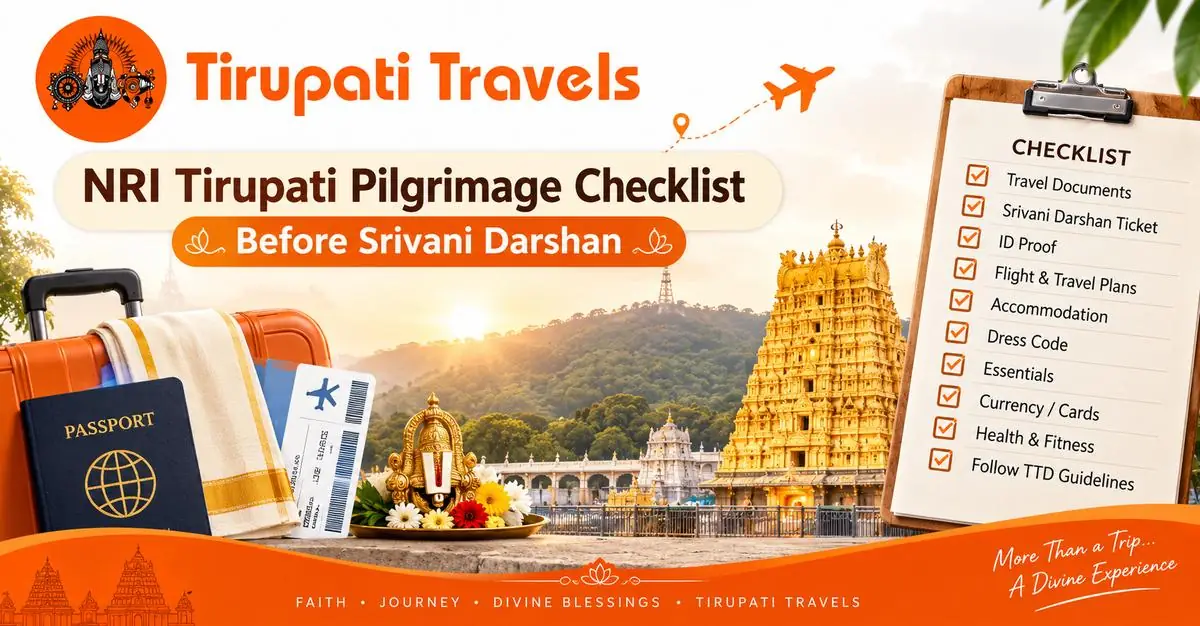
A useful real-world example is the way TTD separates online services instead of presenting every temple visit as one generic ticket. Its official booking system has historically required pilgrims to select a specific service, date and slot, provide personal details and retain a transaction confirmation. That structure demonstrates an important point: a search phrase such as “Tirupati VIP ticket” doesn’t identify a valid product by itself.
The official system’s use of account-based booking, pilgrim data and transaction records is also why screenshots, forwarded payment requests and informal lists should not be treated as proof of entry. The relevant evidence is the confirmation issued through the authorised TTD channel and any additional approval required for a recommendation or protocol category.
TTD’s published notices and booking interfaces are the reliable reference for current rules. If a page shows no VIP Break Darshan option for general booking, that absence is meaningful; it’s not an invitation to find a private seller who claims to access a hidden quota. Similarly, if a Special Entry Darshan quota is sold out, paying a different amount to an intermediary doesn’t transform it into an official VIP facility.
This example is verifiable through the TTD portal and its official notices, but the exact screens, release periods and labels may change. Use the current version of the system at the time of booking rather than relying on an archived walkthrough.
The first mistake is treating VIP access as a luxury upgrade available at a standard counter. Eligibility, recommendation, donor conditions and protocol rules matter more than a claimed price. If someone says that every visitor can obtain VIP Break Darshan by paying ₹10,000, ask for the official service name and written terms.
The second mistake is confusing Tirupati city with the Tirumala shrine. Your hotel, bus stand or railway station may be in Tirupati, while the temple and many reporting points are on the hill. Travel time, security checks and vehicle restrictions need to be part of your plan.
Another common error is booking accommodation or transport before confirming darshan availability. A room doesn’t guarantee temple entry, and a darshan ticket doesn’t guarantee a particular view, ritual or time before the deity. Keep these services separate in your planning.
Visitors also underestimate document accuracy. A spelling difference, missing identity proof, unlisted companion or expired document can lead to difficulty at verification. Review every name immediately after booking and contact the official support channel if correction is permitted.
There isn’t one universal public price for all VIP categories. The cost depends on the recognised facility, donation or official arrangement, and some protocol categories may not operate as ordinary paid bookings. Check the current TTD notification or booking page instead of trusting a package price.
No. Special Entry Darshan, commonly associated with the TTD 300 rupees Darshan, is a scheduled paid facility for eligible general pilgrims when released. It is separate from VIP Break Darshan, protocol access and recommendation-based entry.
Not necessarily. VIP Break Darshan may require an approved category, recommendation, donor entitlement or protocol process. A general online account does not automatically create eligibility for it.
It may refer to an unofficial package, a separate donation-related arrangement or an outdated claim. There’s no reason to assume that ₹10,000 is a universal official VIP Darshan cost. Verify the exact service and issuing authority before paying.
Carry the booking confirmation, the original identity document used during booking and any valid recommendation, donor or protocol paperwork. Every accompanying pilgrim may need separate identification.
Follow the reporting time printed on the official confirmation and allow extra time for reaching Tirumala, parking or bus transfer, security screening and luggage deposit. Reporting late can jeopardise a time-linked booking.
Restricted temple areas generally do not permit photography or videography. Follow the current instructions of TTD security staff and leave prohibited devices in an authorised deposit facility where required.
A successful Tirupati VIP Darshan visit depends less on finding a dramatic “premium” offer and more on matching your eligibility to the correct TTD service. Confirm whether you need VIP Break Darshan, Special Entry Darshan, Sarva Darshan or another authorised facility; then check the date, reporting point, documents and latest temple instructions before travelling.
Schedules, quotas and access rules can change close to festivals or for operational reasons. Before you leave, revisit the official TTD booking system and notices, keep your confirmation accessible, and treat any guaranteed offer outside that process as a warning sign. The most meaningful preparation is simple: verify first, travel with realistic time, and let the current instructions—not an old promise—shape your Tirumala visit.





