Physical Address
304 North Cardinal St.
Dorchester Center, MA 02124
Physical Address
304 North Cardinal St.
Dorchester Center, MA 02124
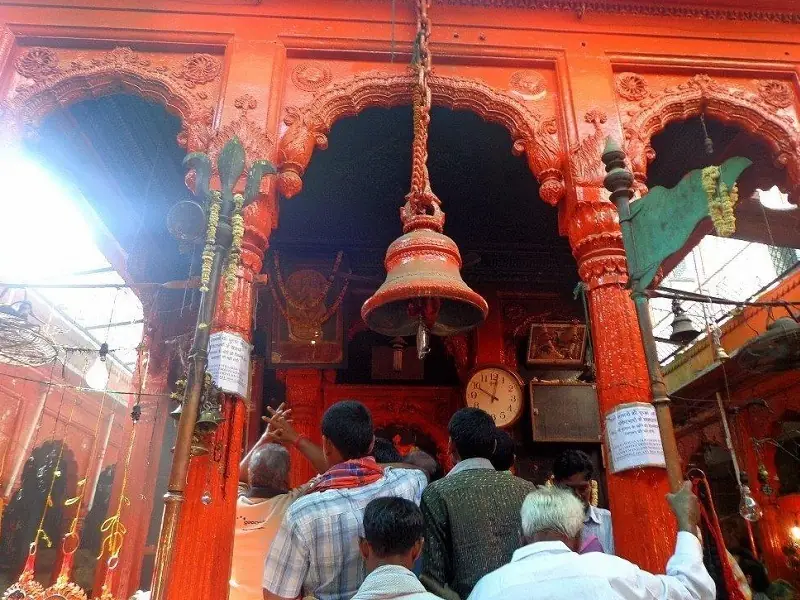
Planning a visit around Kaal Bhairav Mandir Varanasi timings requires a little more care than relying on a single timetable found online. The temple’s darshan hours, aarti schedule, queues, and entry arrangements may change on festival days, during special rituals, or because of local crowd management.
This article explains how to check the latest opening and closing information, understand pooja and aarti periods, plan transport from the railway station or airport, and prepare for a respectful visit. You’ll also find practical guidance on booking questions, peak crowds, nearby temples, and what to do if the published schedule differs from the one announced at the temple.
Kaal Bhairav is an important religious destination in Varanasi and is traditionally regarded as a guardian form of Lord Shiva and Kashi. A little timing preparation can save you from arriving during a ritual pause or facing an unexpectedly long queue.
Visitors searching for Kaal Bhairav Mandir Varanasi timings usually want one simple answer: the exact time at which the temple opens, closes, and allows darshan. In practice, the schedule can be more fluid. Daily worship, shrine cleaning, special offerings, crowd control, VIP movement, maintenance, and festival arrangements may affect the hours visible to general devotees.
Online listings often show different opening and closing times because they may have been updated on different dates or may combine the broader temple operating period with the shorter window for a particular ritual. A listing might describe when the premises are generally accessible, while another may refer to the period when a specific shrine or inner area is available for darshan. Neither should automatically be treated as the final authority.
The safest approach is to use online information as a planning reference and verify it shortly before your journey. Check the temple’s official communication channel, an official booking portal if one is provided, or the temple office and helpline. If you’re already in Varanasi, confirm the day’s announcement with a responsible temple representative rather than relying only on a hotel driver, tout, or unverified social media post.
Timing verification becomes especially important if your visit is tied to a train, flight, booked pooja, or a same-day yatra covering Kashi Vishwanath and other shrines. A delay of even an hour can affect the entire route. It’s better to leave some flexibility than to build a tightly packed itinerary around an unconfirmed schedule.
Search results use the word “timings” for several different things. Before you make plans, identify which one you actually need:
These categories may overlap, but they aren’t identical. A temple can remain open while a particular ritual temporarily limits movement near the sanctum. Similarly, a visitor who arrives before the listed closing time may not receive darshan if the queue has already been stopped.
Reliable planning starts with checking the date of the information, not just the time displayed. A page with no update date, no temple contact details, and no indication of whether its information is official should be treated cautiously. This is particularly true for popular Varanasi temple searches, where old timings continue to circulate through travel websites and map listings.
Begin by looking for an official temple website, temple trust notice, government tourism listing, or verified temple communication account. The official Incredible India information on Varanasi can help with broader destination planning, although a tourism page may not provide the live darshan schedule for a particular day. For the latest operational detail, the temple’s own announcement or office remains more useful.
Call or message before travelling if the available information is unclear. Ask a direct question: “What time is general darshan available tomorrow, and is there any special restriction or ritual pause?” This wording is more helpful than asking only for the “opening time,” because it encourages the person responding to mention queue cut-offs and special arrangements.
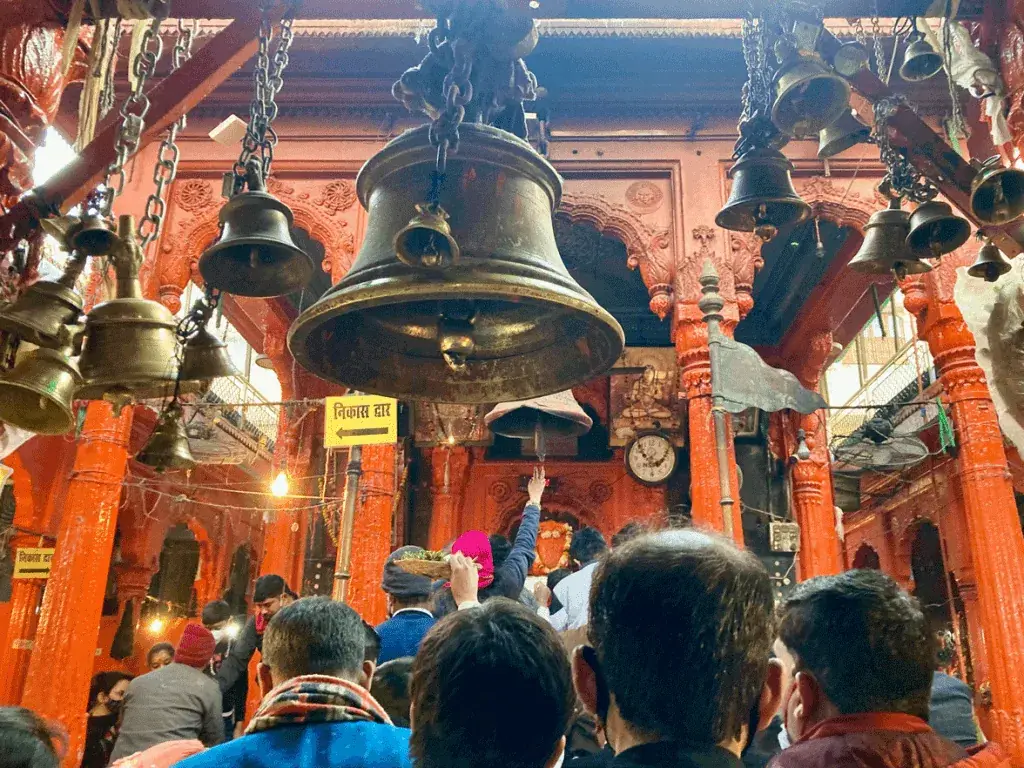
When no dependable current schedule is published, don’t guess an exact time simply because several websites repeat it. Note the uncertainty in your travel plan, arrive during a broad likely access period, and reconfirm locally. This is more dependable than treating a static listing as a guarantee.
Devotees travelling from outside Varanasi should also check their return connection. A late-night darshan plan may be affected by a long queue, road restrictions, or the time required to reach the station or airport. In a busy pilgrimage city, the temple schedule is only one part of the timing calculation.
Darshan at Kaal Bhairav Mandir is shaped by the size of the shrine, the narrow approach lanes, and the number of devotees arriving at the same time. Even if the temple is technically open, the experience can vary greatly between a quiet weekday and a major religious occasion. Queue movement may be steady at one moment and slow later if a ritual is taking place near the sanctum.
General darshan normally means viewing the deity according to the temple’s ordinary visitor arrangements, without booking an exclusive ritual. The line may be managed through barricades or local volunteers.
Follow instructions given at the entrance, even if they differ from a schedule you saw online. Temple staff may temporarily alter movement to protect worshippers and preserve the ritual atmosphere.
Visitors sometimes assume that reaching the temple just before the closing time is sufficient. That can be risky.
Queue entry may be stopped earlier, especially when the remaining crowd cannot be accommodated before a scheduled closure or worship service. If your visit matters, arrive with enough margin for walking, finding the entrance, depositing belongings if required, and joining the correct line.
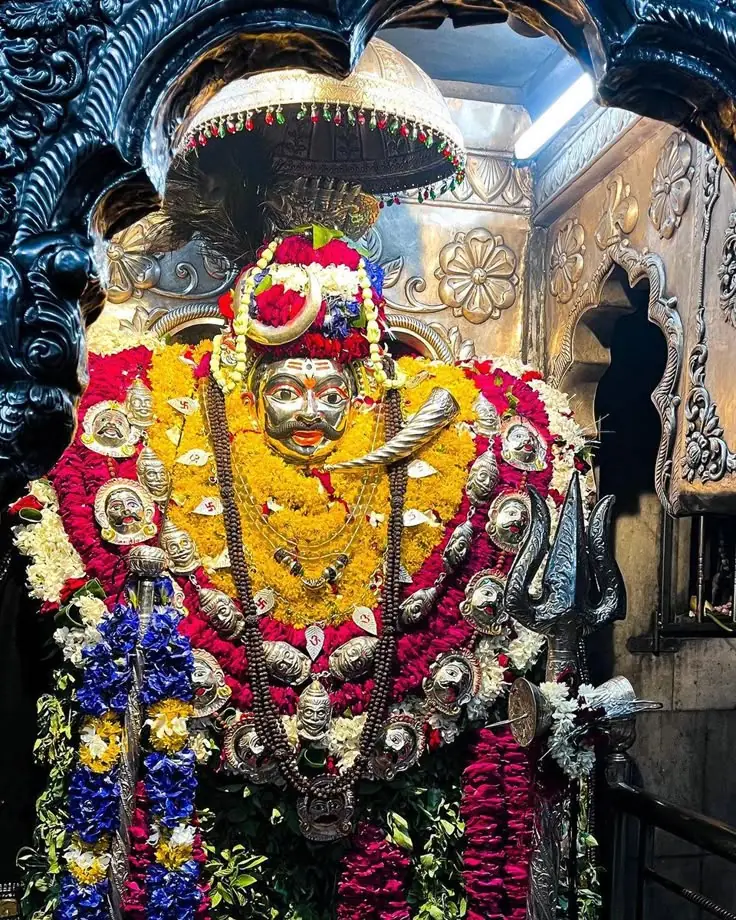
Expect higher demand around religious festivals, important tithis, weekends, public holidays, and occasions associated with Bhairava worship. The night period can also attract devotees who prefer a quieter or more traditional atmosphere, but “night” doesn’t automatically mean fewer people. Local residents, pilgrims, and organised groups may arrive together.
Early morning can be a sensible choice for visitors who want to avoid the strongest daytime heat and combine the temple with other parts of a Kashi yatra. Yet the earliest period may coincide with opening rituals, cleaning, or restricted movement. Ask whether ordinary darshan begins immediately or after the initial worship sequence.
Keep the following practical points in mind:
Darshan is not a race. A calm approach helps you respond if the entrance, queue, or ritual sequence changes during your visit.
Pooja timings are often more difficult to confirm than general darshan timings because they depend on the day’s worship sequence and the type of service requested. Some rituals are part of the temple’s daily routine, while others may be available only through a booking, priestly arrangement, or a specific occasion. A visitor asking for “aarti timing” should clarify whether they mean witnessing the regular evening worship, participating in a sankalp, or sponsoring a named pooja.
At a Shiva-related shrine, worship may include offerings, mantra recitation, oil or lamp rituals, and other customary practices. The exact procedure, permitted materials, and access for devotees can differ by temple.
Don’t assume that a pooja format advertised for Kaal Bhairav at another city, such as Ujjain, applies in Varanasi. Kaal Bhairava traditions are widespread, but each temple has its own local practice.
For a pooja booking, ask for the full process rather than only the price. Find out the reporting time, identity details required, whether all participants may enter the ritual area, what items are included, and whether the booking is refundable if the temple changes the schedule. A genuine booking channel should be able to explain these points clearly.
Never publish or rely on an unverified “fixed aarti time” as though it were permanent. Daily rituals can begin at broadly similar periods while still shifting according to the temple calendar. Festival worship, night observances, and special adornment of the deity may make the ordinary schedule temporarily unavailable.
Devotees who want to attend aarti should arrive earlier than the advertised start, because the available viewing area may fill before the ritual begins. Keep your phone on silent, follow the instructions of the temple staff, and avoid blocking the passage for people entering or leaving.
One of the most common questions is whether VIP darshan can be booked at Kaal Bhairav Mandir. The answer should not be assumed from arrangements at Kashi Vishwanath, another Varanasi temple, or a different Bhairav temple elsewhere in India. Each shrine decides whether it offers priority entry, paid services, online slots, or only ordinary queue-based darshan.
If an official booking facility exists, the booking window may open according to a calendar, a daily quota, or the availability of priests and temple staff. Some services may require advance details, while others are handled at a counter on the day. Because these procedures can change, use only the current official portal or the temple office’s confirmed instructions.
Be particularly careful with claims such as “guaranteed entry in five minutes,” “direct sanctum access,” or “mandatory VIP fee.” Such statements are not proof of an official service. Ask for a printed receipt, digital confirmation, or clearly identified temple authorisation before paying. Don’t hand over large sums to someone who approaches you in the lane and says the ordinary queue is closed.

Online booking can be convenient when the service is genuinely managed by an official institution. Read the terms before payment and check whether the confirmation identifies the temple, service, date, participant name, and reporting instructions. Save a screenshot, but also keep the transaction reference because mobile connectivity in crowded areas can be inconsistent.
On-site booking may require waiting at a designated counter. Ask the staff to explain the token system, accepted payment methods, and cut-off time.
If the counter is closed, don’t assume a private intermediary can sell an equivalent service. A temple receipt and an agent’s handwritten note are not interchangeable.
Remember that a paid pooja doesn’t always mean immediate general darshan. These are separate arrangements unless the temple explicitly states otherwise. If you’re travelling with a group, confirm whether one representative can complete the process or whether every participant must be present during registration.
Festival periods can change Kaal Bhairav Mandir Varanasi timings more significantly than an ordinary weekday. The temple may receive larger crowds, conduct additional rituals, regulate the order of entry, or create temporary routes for movement. Police and local administration may also introduce road restrictions near the old city, affecting the time needed to reach the shrine.
Kaal Bhairav worship is closely connected with the religious life of Kashi, so special lunar dates and observances can draw visitors from across Uttar Pradesh and beyond. Kal Bhairav Jayanti, major Shiva-related occasions, and other locally important days may involve extended worship or unusual crowd patterns. The name and date of an observance can also be described differently across regional calendars, so verify the exact day for the year of your visit.
On a festival day, the temple may be open for long periods but still difficult to access. A route that takes a short time on a quiet morning can become slow because of barricades, pedestrian diversions, waiting areas, and restricted vehicle movement. Taxi drivers may be required to stop well away from the temple lanes.
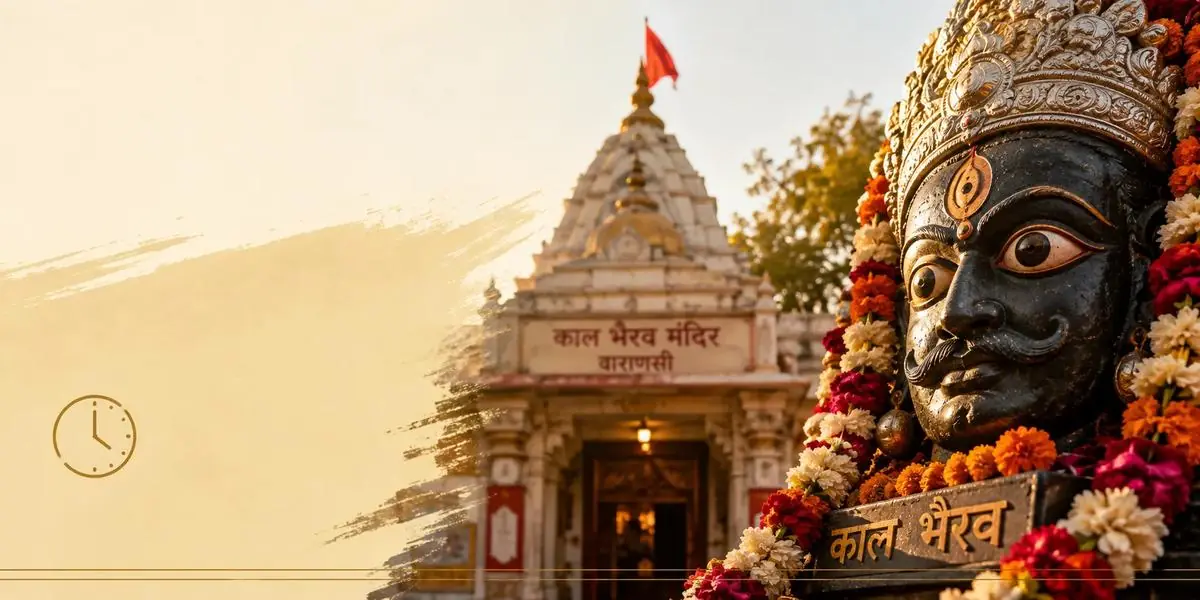
Special occasions can be spiritually meaningful, but they demand patience. If your priority is a calm first visit, an ordinary weekday may be easier. If you specifically want to experience the festival atmosphere, accept that access and timing may be less predictable.
Example only—not a verified account of a particular visitor or a guaranteed temple schedule: imagine a family arriving in Varanasi by train and hoping to visit Kaal Bhairav, Kashi Vishwanath, and another nearby shrine on the same day. They find three different online listings for the Bhairav temple and cannot confirm which one is current.
Instead of selecting the earliest listed opening time, the family contacts the temple’s current official channel and asks about general darshan, the likely queue situation, and any special event on their travel date. The response indicates that the schedule may change during a ritual, so they avoid booking a tight return train and keep the first part of the day flexible.
They choose transport only to the point where vehicles are allowed, then walk through the remaining lanes. Each person carries minimal belongings, and the family agrees on a meeting point in case the group separates. After darshan, they leave enough time before visiting the Vishwanath temple because security checks, queues, and local traffic may take longer than expected.
This example doesn’t establish actual timings or official rules. Its purpose is to show the reasoning that makes a pilgrimage plan safer: verify the date, distinguish general darshan from pooja, allow a buffer, and avoid treating a third-party listing as a guarantee. The same method works whether you’re travelling alone, with children, or as part of a larger yatra.
A different practical choice may suit a solo traveller. Someone staying nearby could first walk to the temple area and confirm the queue, while a family with an elderly member might prefer a less crowded period and arrange a slower route. The correct plan depends on the current schedule, mobility needs, weather, and the rest of your itinerary.
Kaal Bhairav Mandir is located in the older part of Varanasi, where lanes can be narrow and vehicle access may not continue to the entrance. The most useful transport question isn’t simply “How far is the temple?” but “Where can my vehicle safely stop, and how much of the route must I walk?” The answer can change during festivals or temporary road controls.
Travellers arriving by rail commonly use Varanasi Junction or another nearby railway station, depending on their train. The nearest railway station in practical terms may vary according to traffic, station access, and the location of your accommodation. A taxi or auto-rickshaw can take you toward the temple area, but ask the driver to explain the drop-off point before beginning the journey.
Those arriving by air can travel from Lal Bahadur Shastri International Airport. Airport-to-old-city travel time is not fixed because it depends on traffic, road conditions, and the time of day. If your flight lands close to the temple’s closing or a booked pooja’s reporting time, keep a substantial buffer rather than assuming the distance is the only factor.
Do not judge the route only by map distance. A short road distance can still involve a slow approach, pedestrian congestion, and walking through crowded lanes. If you have mobility limitations, ask the temple or a trusted local contact about the closest practical stopping point before leaving.
The table below is designed for planning rather than as a declaration of official hours. It compares the type of visit and the timing questions you should verify. Exact schedules for Kaal Bhairav, Kashi Vishwanath, Sankat Mochan, Annapurna, and other temples must be checked separately because one temple’s timetable does not govern another.
| Visit type | What to verify | Main timing risk | Practical approach |
|---|---|---|---|
| Ordinary Kaal Bhairav darshan | Opening period, queue entry, temporary pauses | Queue may close before the stated closing time | Arrive early and confirm locally |
| Aarti attendance | Ritual start, viewing access, seating or standing area | Access may be restricted during worship | Reach before the announced start |
| Booked pooja or sankalp | Reporting time, documents, receipt, participant rules | Late arrival may cancel or alter the service | Keep booking proof and arrive with a buffer |
| Festival or special tithi | Special entry system, route restrictions, revised schedule | Large crowds and road closures | Use an open-ended itinerary |
| Multi-temple yatra | Separate schedule for every shrine | Delay at one temple affects the next | Prioritise one or two key visits |
This comparison also explains why a single answer to “What time does the temple open?” may not be enough. A visitor attending a booked ritual has a different timing requirement from someone making a short general darshan visit. Your plan should be based on the purpose of the visit, not just the first time shown in a search result.
Kaal Bhairav is worshipped by devotees as a powerful form of Bhairava, associated with the protection of Kashi and with Lord Shiva’s fierce aspect. Visitors come for blessings, personal prayers, family traditions, and religious observances. You don’t need to be an expert in ritual practice, but showing patience and respect helps preserve the experience for everyone.
Offerings should follow the temple’s accepted practice. Ask at an authorised counter or the temple office if you’re unsure about oil, flowers, prasad, or other items.
Avoid buying an expensive package from an unknown person simply because they claim it is compulsory. If a ritual has specific materials, the official priest or counter should be able to explain the requirement.
Dress modestly and keep your behaviour quiet near the shrine. Temple rules about photography, footwear, bags, and mobile phones can vary, so follow the notices in force on the day. Don’t touch the deity, railings, offerings, or ritual objects unless a temple representative expressly permits it.
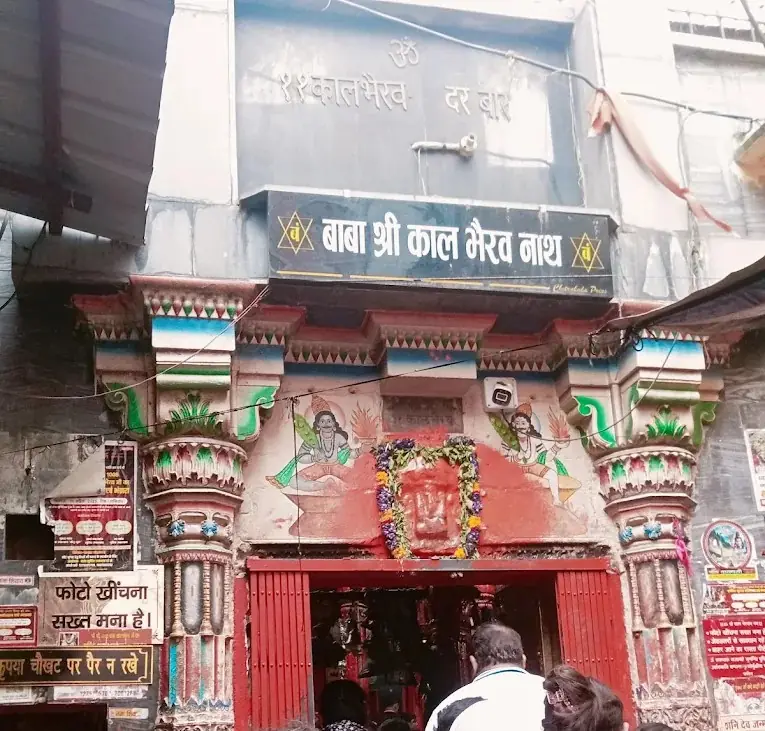
People often focus on reaching the shrine and forget the return journey. Decide how you’ll leave, especially if you’re visiting late, travelling with older relatives, or heading to the railway station. A little preparation keeps the religious visit from becoming unnecessarily stressful.
Published timings can differ and may change according to daily rituals, festivals, crowd control, or temple decisions. Confirm the current schedule through the temple’s official communication channel or office before travelling, and ask specifically about general darshan and queue cut-off time.
Darshan availability is not always identical to the broad opening period. The queue may be paused for worship or closed before the listed closing time, so arrive early and verify the day’s arrangement locally.
Don’t assume that a VIP or priority service is available merely because an agent offers it. Check whether the temple currently authorises such a facility, and pay only through a confirmed official channel that provides a receipt or booking reference.
Advance booking may be useful for a specific ritual, but the process depends on the temple’s current arrangements. Confirm the reporting time, participant rules, cancellation conditions, and what the fee includes before making payment.
No temple visit should be treated as mandatory for every traveller. Many devotees consider Kaal Bhairav an important part of their Kashi pilgrimage, while others may have different spiritual priorities. Visit if it is meaningful to you and follow the temple’s rules.
Many visitors include both shrines in a Varanasi itinerary, but their timings, security arrangements, queues, and access rules are separate. Verify each temple independently and leave enough time for walking and local traffic.
For dependable Kaal Bhairav Mandir Varanasi timings, check the latest official information close to your travel date, then verify the queue and any ritual restrictions when you reach the area. Treat online listings as useful leads rather than permanent guarantees, especially during festivals, special pooja days, and crowded weekends.
Plan a flexible route, carry only what you need, and allow time for the old-city lanes and your onward journey. If you’ve recently visited the temple and found a useful official update or practical access detail, sharing it with fellow devotees can help them prepare their own visit more responsibly.





