Physical Address
304 North Cardinal St.
Dorchester Center, MA 02124
Physical Address
304 North Cardinal St.
Dorchester Center, MA 02124
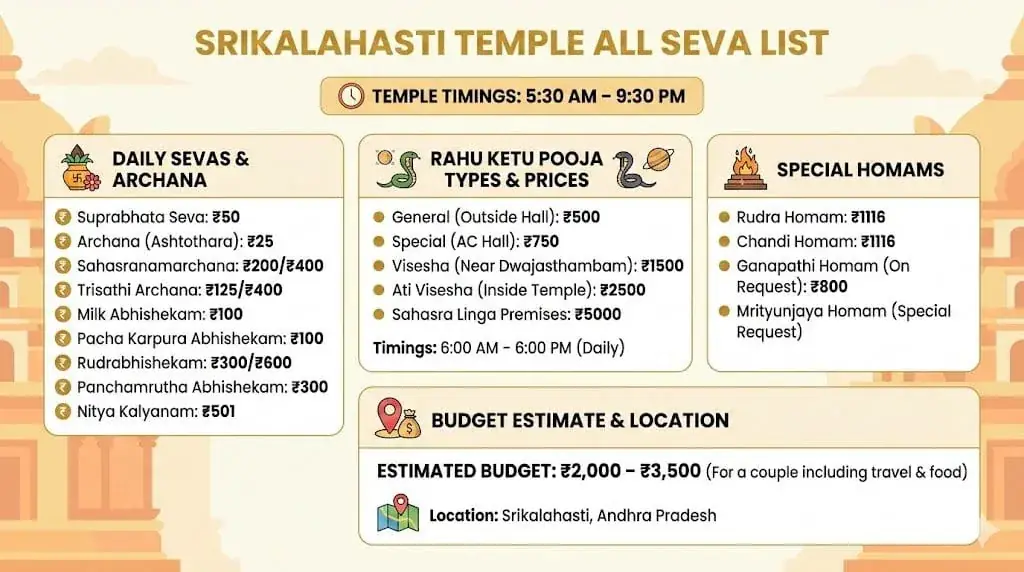
Visitors checking the Srikalahasti Rahu Ketu pooja timings need more than a single clock time. At Sri Kalahasti, the booked ritual slot, temple opening hours, darshan queue, and same-day restrictions can all affect how smoothly a visit works. Rahu Ketu Pooja is normally arranged separately from ordinary darshan, so the two timings shouldn’t be treated as interchangeable.
Schedules, ticket price, pooja cost, and availability may change with weekdays, festivals, maintenance, or temple administration decisions. The safest approach is to confirm the latest official notice or booking record, then plan your travel, dress, arrival buffer, and entry documents around that information rather than relying on an old listing.
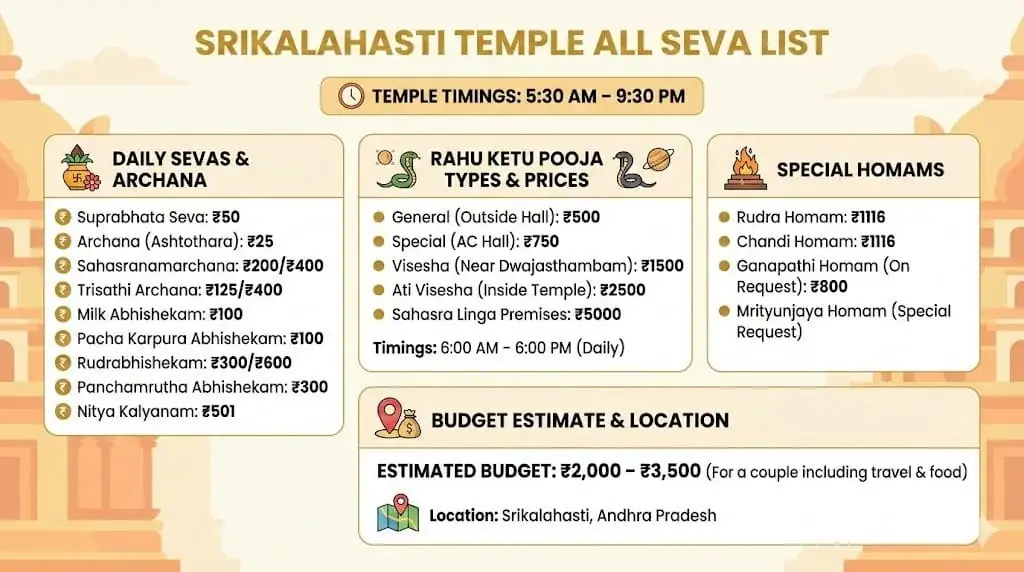
The phrase “Srikalahasti Rahu Ketu pooja timings” can refer to several different parts of a temple visit. Some visitors mean the hours during which the Rahu Ketu Dosha Nivarana Pooja is conducted.
Others are asking about the temple’s opening and closing hours, the time allowed for darshan, the ticket counter schedule, or the online booking window. These are connected, but they aren’t the same timetable.
Darshan means seeing or approaching the presiding deity according to the temple’s entry arrangement. A pooja is a ritual offering performed according to a prescribed procedure, while a seva generally refers to a devotional service that may be booked or sponsored. Aarti is a worship ceremony involving lamps and prayers, and its timing may be separate from both darshan and the Rahu Ketu ritual.
For that reason, a visitor shouldn’t assume that arriving during temple opening hours guarantees entry into a pooja session. The temple may open for general worship before a particular seva begins, or a booked ritual may have a reporting time that comes before the actual ceremony. Last entry, queue closure, and ticket-counter hours can also be different from the time at which the main shrine closes.
Rahu Kalam creates another common point of confusion. In traditional astrology, Rahu Kalam is a daily period calculated from sunrise and the weekday.
The temple’s Rahu Ketu Pooja is a separate religious service, and a published pooja slot shouldn’t automatically be replaced by the day’s Rahu Kalam. If a priest, booking receipt, or official temple notice gives a reporting time, that instruction should take priority for your visit.
The practical rule is simple: read the date, session, reporting instruction, and entry category together. A time printed on an old travel page may describe a regular arrangement, while the current temple notice may show a revised morning session, afternoon session, or evening session.
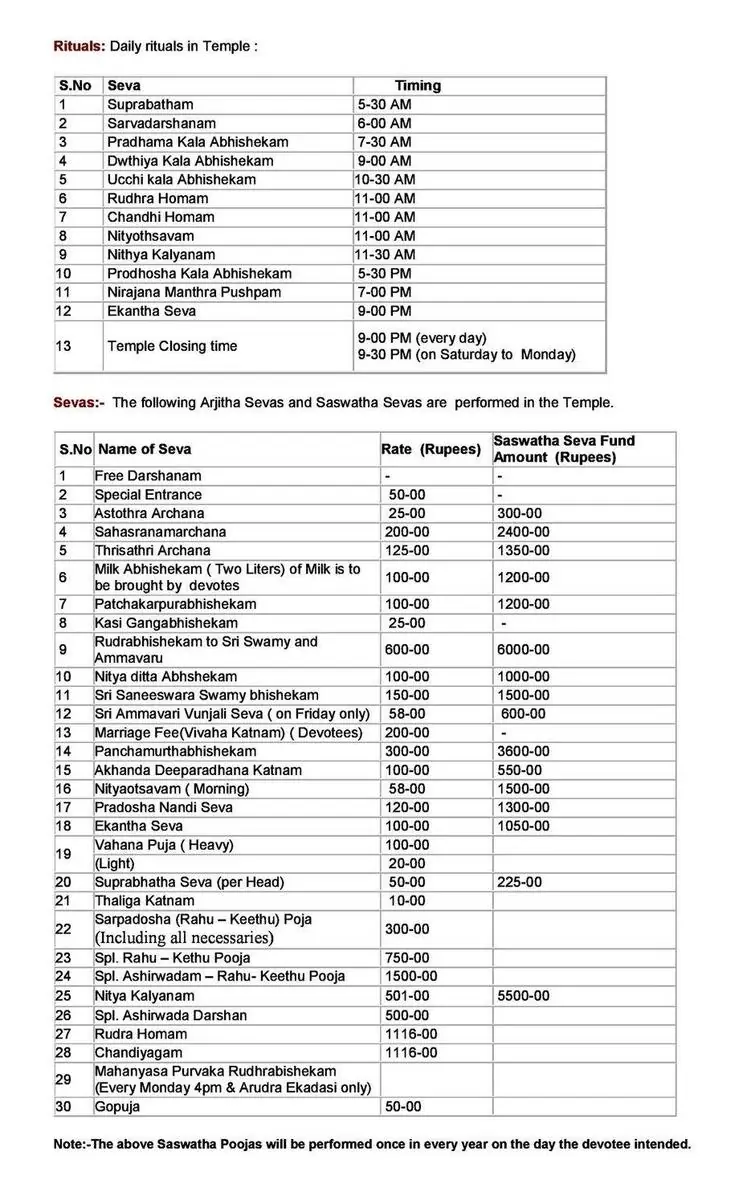
Understanding the schedule components helps prevent a rushed or incomplete visit. Srikalahasti Temple may have different arrangements for general worship, special services, and ceremonies. The exact sequence can change, so the table below explains what each timing represents without presenting an unverified fixed hour as permanent.
| Visit component | What the timing controls | What may change | Where to verify |
|---|---|---|---|
| Temple opening and closing | When visitors can enter the temple premises or approach permitted areas | Festival arrangements, maintenance, crowd restrictions, and special ceremonies | Latest official temple notice or temple office |
| General darshan | Entry into the regular worship queue | Queue length, last-entry time, crowd controls, and temporary route changes | Temple notice board, official staff, or current visitor instructions |
| Rahu Ketu Pooja | Reporting and participation in the booked ritual | Session availability, pooja dates, reporting point, and seating or batch procedure | Booking receipt, official booking page, or temple counter |
| Aarti | Time of a lamp-offering or worship ceremony | Access for devotees, festival sequence, and whether general entry is paused | Current temple display or official announcement |
| Seva booking | Participation in a particular devotional service | Ticket category, availability, cancellation terms, and reporting rules | Official seva booking system or temple trust |
This distinction matters particularly for families travelling from another city. Someone who checks only the temple’s opening time may arrive after the reporting cut-off for the Rahu Ketu service. Someone who checks only the pooja slot may not allow enough time for parking, footwear storage, security screening, or the general darshan queue.
Some listings use labels such as morning session, afternoon session, and evening session. These labels can be helpful, but they don’t necessarily describe the full duration of the ritual.
Ask whether the displayed time is the reporting time, the start of the pooja, or the expected entry time. That small clarification can prevent a missed booking.
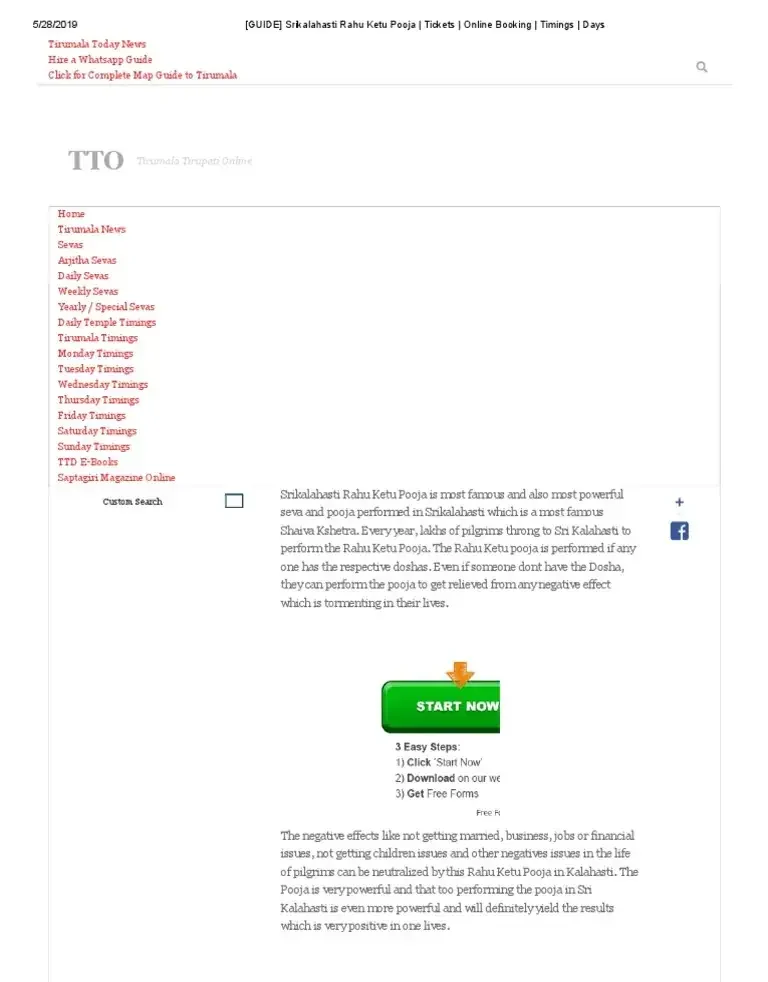
“Srikalahasti timings tomorrow” is a useful search, but a search result alone shouldn’t be treated as confirmation. Temple information is frequently copied across travel pages, social-media posts, and booking aggregators. Those pages may continue showing a regular schedule even after the temple has introduced a special-day arrangement.
For the current source, start with the official Srikalahasti Temple website. Look for the current notice, pooja booking area, temple schedule, or official contact details. If the website directs devotees to a linked booking platform, make sure the platform is reached through the official temple’s own information rather than through an advertisement or an unverified message.
Use this verification routine before travelling:
It is sensible to check once when booking and again shortly before departure. A late update may affect entry lanes, parking, queue management, or the timing of a special ceremony even if your ticket itself remains valid. If you’re travelling overnight, confirm the information before leaving home rather than waiting until you reach Srikalahasti.
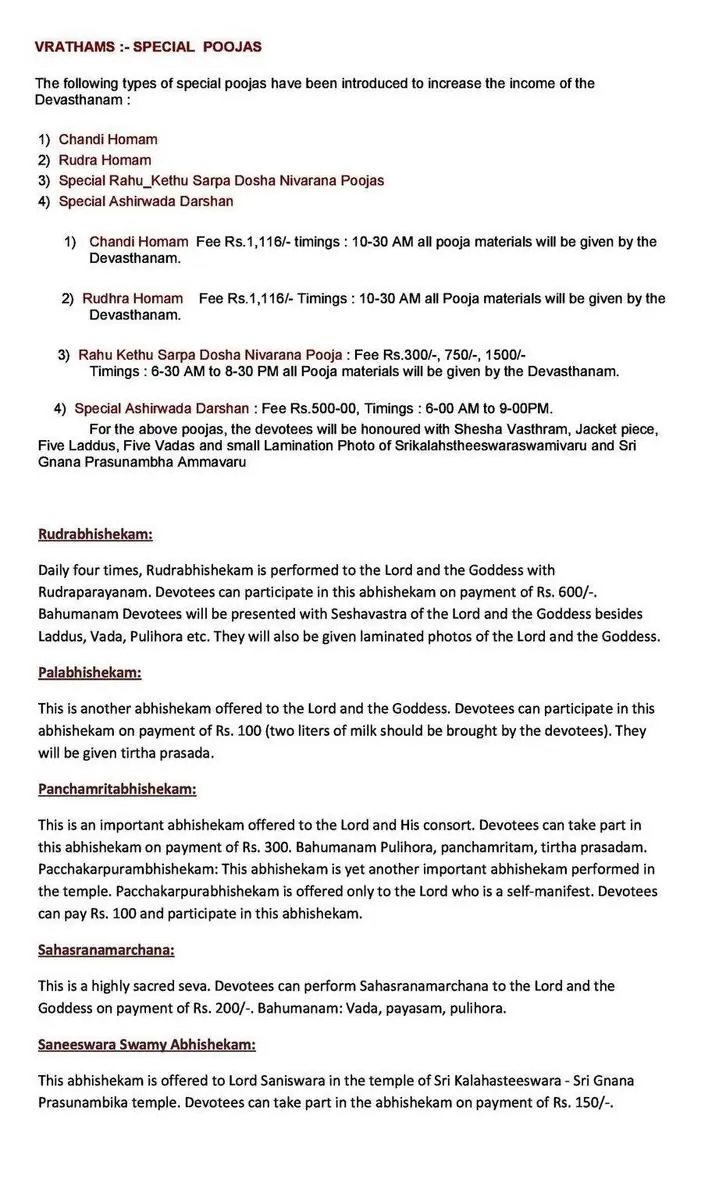
Online ticket booking is useful when the temple makes advance reservation available for the selected Rahu Ketu service. It can reduce uncertainty about availability, but it doesn’t remove the need to read the conditions attached to the booking. A ticket may be valid only for one date, one category, or one reporting window.
Some temple systems display options such as a general ticket or VIP ticket. Those labels should be understood from the official booking page itself. A VIP ticket may relate to a particular entry route or priority arrangement, but it shouldn’t be assumed to include every form of darshan, a special seating area, or a shorter waiting time unless the official description says so.
Ticket price and pooja cost can vary according to the selected service, the date, the category, and any change made by the temple administration. Rather than quoting an old amount, check the total shown immediately before payment and compare it with the receipt generated after the transaction. Keep a record of any service charge, convenience fee, or donation component if the system separates those items.
When a portal uses the phrase “Srikalahasti Temple Sevas online booking,” it may be referring to a wider menu of services rather than only Rahu Ketu Pooja. Read the service name slowly. A similar-looking option may be a different seva with a different reporting point or eligibility condition.
Before completing payment, confirm these details:
Don’t buy duplicate tickets from multiple platforms simply because the first confirmation email is delayed. First check the booking status and the transaction record. If the payment was debited but no ticket was issued, use the official support route or temple contact number rather than paying again immediately.
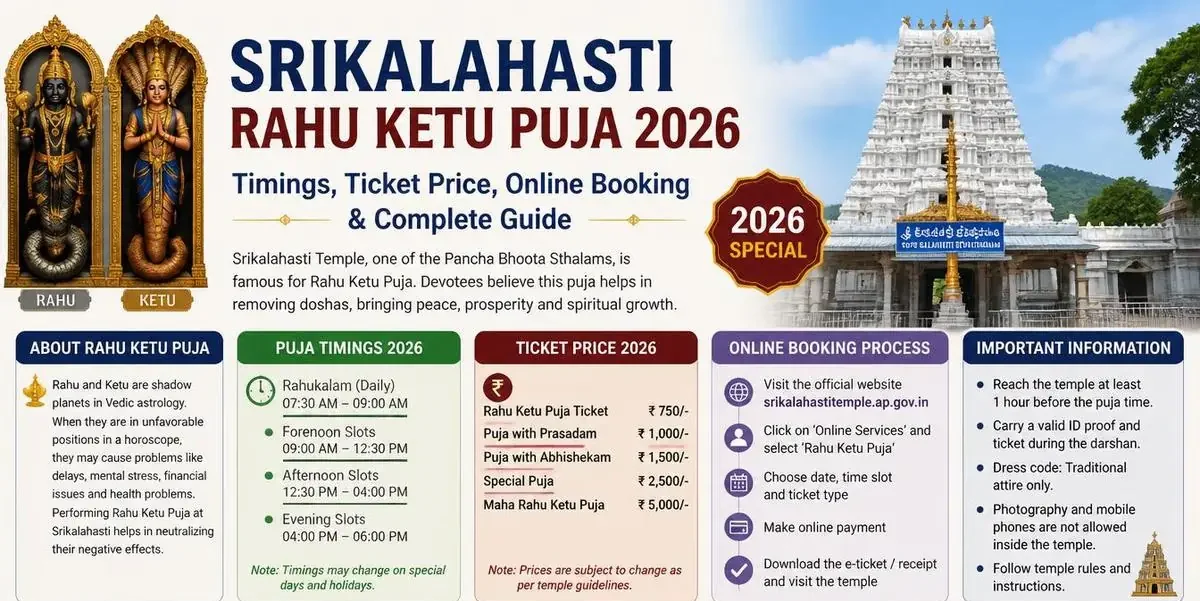
Temple opening and closing hours are only one part of the arrival plan. You also need to consider the time required for travel from the railway station or bus stand, local traffic, footwear storage, security checks, ticket verification, and the queue leading to the relevant service area. These steps become more important if elderly people, children, or anyone with limited mobility is travelling with you.
Try to reach before the reporting time printed on the booking record, not at the last possible minute. A reasonable buffer is especially important for an early morning session, a weekend visit, or a festival day. Since the precise buffer depends on transport and crowd conditions, the temple staff’s current instruction is more useful than a generic promise that a queue will move quickly.
The temple ticket counter may follow a schedule that differs from online booking availability. A service can appear online as unavailable while a counter has a separate process, or a counter may stop issuing tokens before the temple premises close. Never assume that a general ticket purchased at the counter will be accepted for a booked pooja session.
Ask staff where the pooja queue begins and whether it is separate from the general darshan line. Queue management can involve barricades, batch calls, token checks, or a temporary route through another entrance. Follow the current signs even if an older visitor video shows a different path.
Keep the following points in mind on arrival:
Aarti timings can affect the flow of visitors too. During an important ceremony, some routes may become temporarily restricted or more crowded. The safest plan is flexible: complete the booked service first, then arrange ordinary darshan or additional worship only if the current temple staff confirms that there is enough time.

Sunday is a popular day for temple visits because many people are free from work or school. That does not automatically make Sunday the spiritually “best” day for every devotee, nor does it guarantee that the Rahu Ketu service will run in exactly the same way each week. Sunday timings should be checked for the specific date, especially if the visit is planned around a long weekend.
Amavasya, or the new-moon day, may be significant to some families who choose it for prayers connected with ancestral concerns or astrological beliefs. Other devotees select a date recommended by their family priest.
These personal choices don’t replace the temple’s published availability. If a date is important to you, confirm the pooja dates early and check whether the portal treats it as a regular or special schedule.
Festival timings can change the rhythm of the entire temple. A special procession, alankaram, aarti, ceremonial preparation, or additional security arrangement may affect general darshan and the movement of pooja participants. The presence of a festival doesn’t mean every service is cancelled, but it does mean that ordinary timings should not be assumed.
For visitors planning a 2026 trip, there is no single universally correct answer to “which day is good for Rahu Ketu Pooja?” The suitable date may depend on the devotee’s religious practice, the advice they follow, the official booking calendar, and their ability to manage crowds. A date that is personally meaningful but unavailable through the temple is not a confirmed appointment.
Check these items for a special-day visit:
Plan for a slower visit on a high-demand date. A calm weekday may be more practical than a crowded Sunday if your main goal is to attend a booked ritual without rushing.
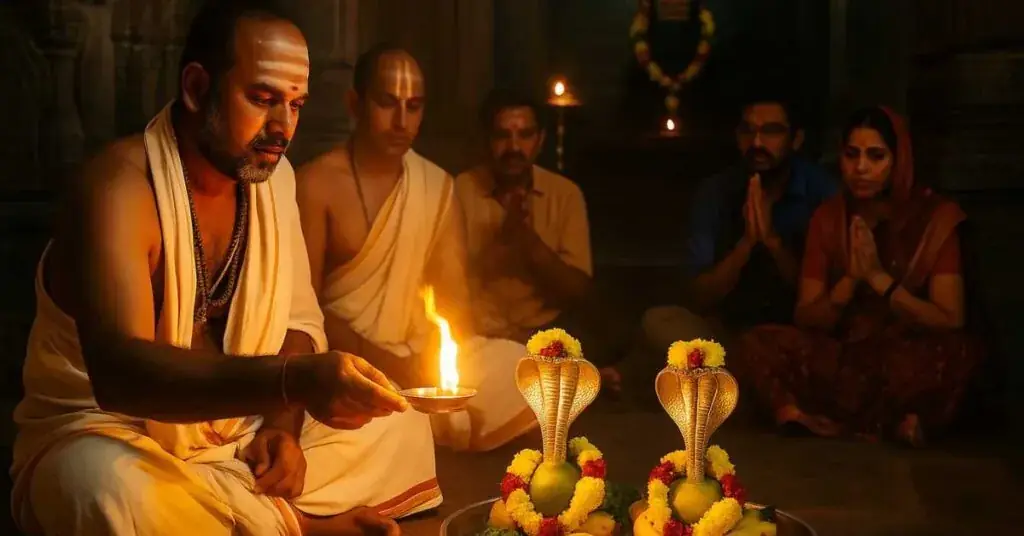
Devotees commonly seek Rahu Ketu Pooja, also called Rahu Ketu Dosha Nivarana Pooja, in connection with beliefs about Rahu dosha, Ketu dosha, Sarpa Dosha, or Kala Sarpa Dosha. These are terms used in Jyotish traditions to describe particular planetary or serpent-related interpretations in a horoscope. Different astrologers and families may interpret them differently.
The temple ritual should be approached as a religious practice, not as a guaranteed solution to a medical, financial, legal, or relationship problem. A respectful explanation can acknowledge the devotee’s faith without promising a result that the temple’s official notice does not promise. If a serious personal difficulty is involved, religious observance and qualified practical support need not be treated as competing choices.
Pooja duration is another detail that is often misunderstood. A listing may show a start or reporting time without stating how long the complete experience will take. The ritual itself, waiting for a batch, distribution of prasad, movement to darshan, and exit from the premises can all add time.
Ask the booking counter or official support team whether the stated time is the start of the ceremony or the time by which devotees must report. If the service is conducted in batches, one group may enter while another waits. Don’t schedule a train, interview, return bus, or airport transfer immediately after the pooja unless you have a generous margin.
Rahu Kalam should also be kept in perspective. It is a daily astrological time period derived from sunrise and the weekday, whereas the temple’s pooja schedule is an administrative and ritual timetable. If your family priest recommends a particular muhurta, compare that advice with the temple’s actual available dates and slots before making travel arrangements.
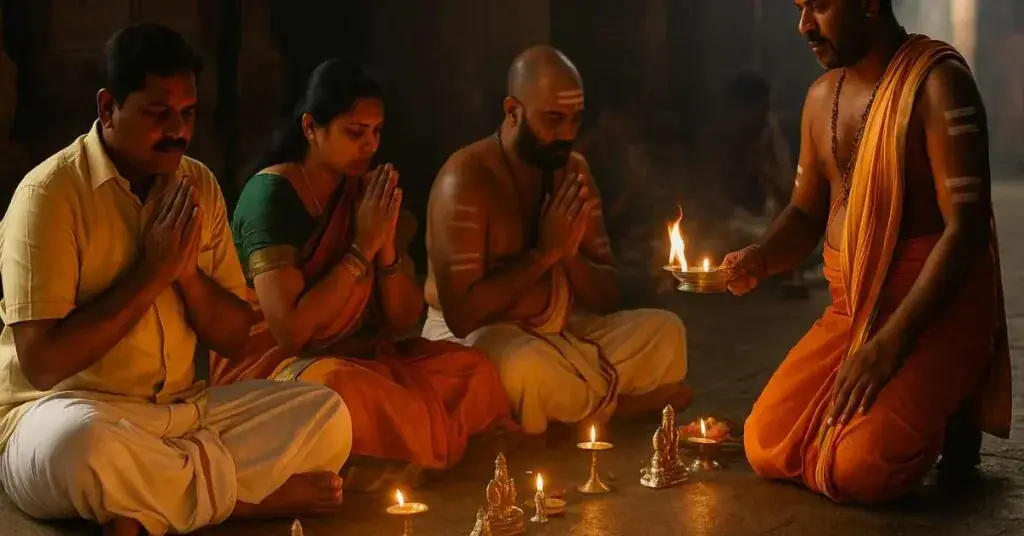
Questions about dress colour are common among Rahu Ketu Pooja visitors. Some devotees follow a family custom involving dark or specific colours, while others choose simple traditional clothing.
Unless the current temple notice states a mandatory dress colour, don’t present one colour as an official universal rule. Clean, modest, comfortable clothing that complies with the temple’s posted entry rules is the safer baseline.
If your priest or booking instruction specifies a dress colour, follow that instruction as part of your personal observance. If the temple has a separate dress code, that rule takes priority at the entrance. Carrying an extra shawl or change of clothing can be practical for a long journey, but it doesn’t replace checking the current entry conditions.
Many people ask whether they need to take a bath after Rahu Ketu Pooja. There is no single answer that can be applied to every devotee, because bathing customs may come from family tradition, the advice of a priest, or a specific ritual instruction.
A temple may not impose a universal bath-after-pooja requirement. If your receipt or priest gives a direct instruction, follow it; otherwise, ask the temple office rather than relying on a forwarded message.
Before leaving for Srikalahasti Temple, pack only what is genuinely useful. Large bags can slow down entry if storage facilities are limited or if security checks take time. Keep important documents and medication with you, subject to the temple’s rules about what may be carried inside.
Don’t carry ritual materials based solely on an internet checklist. Some services include materials, while others may require devotees to obtain them from an authorised counter. Ask before purchasing items from an unauthorised seller, particularly if the booking instructions already specify what is included.
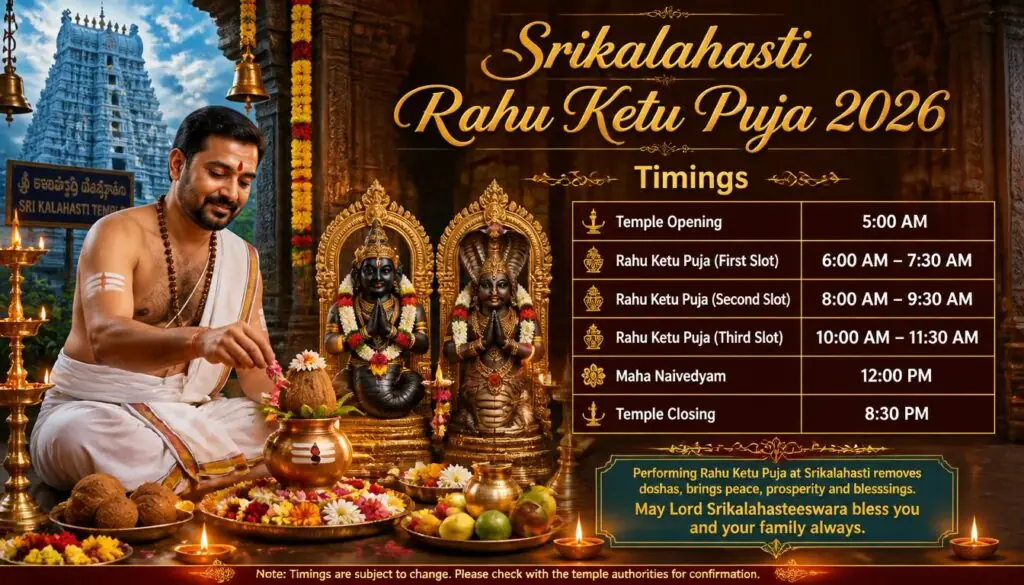
A useful real-world example is the official temple booking record itself. Suppose the current Srikalahasti Temple website displays a Rahu Ketu service for a particular date and provides a selected category, reporting instruction, and payment receipt.
That live record is the evidence a visitor should use to plan the visit. It is more reliable than a third-party page that gives a fixed time without showing the date, category, or source of the information.
The point is not that every date will show the same service or availability. The verifiable facts are the ones displayed by the temple’s current system: whether the date is open, what service has been selected, what payment has been accepted, and what arrival instruction has been issued. Keep those details together rather than saving only a screenshot of a clock time.
Imagine that a family selects a Sunday Rahu Ketu Pooja online and receives a confirmation for a morning session. Before travelling, they should check whether the receipt gives a reporting time or only the session label. They should then confirm the latest Sunday notice, ask whether the pooja queue is separate from general darshan, and leave enough time for transport and security checks.
If the official page later marks the date as a special schedule, the family should read the updated instruction and contact the temple if the change is unclear. They shouldn’t assume that the original session label automatically overrides a newer notice. This example is illustrative, but the planning habit is practical: the booking record, current temple notice, and official contact response should agree before the journey begins.
The best practical time is the officially available slot that suits your religious observance and travel plan. Don’t assume that Rahu Kalam itself is the required pooja time. Check the temple’s current booking calendar, reporting instruction, and any advice from your family priest or authorised temple staff.
There is no single date that is universally best for every devotee. Sunday, Amavasya, or a festival date may have personal significance, but those days can also have different crowd levels and special-day schedules. Confirm the 2026 date through the official calendar and make sure the service is actually available.
A bath-after-pooja rule may depend on family tradition or a priest’s instruction. It shouldn’t be presented as a universal temple requirement without a current official notice. If your booking instructions say nothing, ask the temple counter or the priest conducting the ritual for the appropriate practice.
Follow any dress instruction printed by the temple or given with your booking. If no mandatory colour is stated, choose clean, modest, comfortable clothing and respect your family’s devotional custom. Avoid treating an unverified colour recommendation from a social-media post as an official entry rule.
Tomorrow’s availability depends on the live booking calendar and the temple’s current reservation process. Check the official platform for the service name, ticket price, pooja cost, category, reporting time, and payment status. If no slot appears, contact the official temple office or use the authorised ticket counter only after confirming its current procedure.
For a smooth visit, treat Srikalahasti Rahu Ketu pooja timings as a live temple schedule rather than a permanent number copied from an old page. Confirm the date, service, reporting time, ticket status, entry rules, and official contact details shortly before departure, especially for Sunday, Amavasya, and festival visits.
Save your booking receipt and leave a sensible travel buffer. Once the latest official information is verified, you can approach the darshan and pooja with fewer administrative worries and a clearer plan.





