Physical Address
304 North Cardinal St.
Dorchester Center, MA 02124
Physical Address
304 North Cardinal St.
Dorchester Center, MA 02124
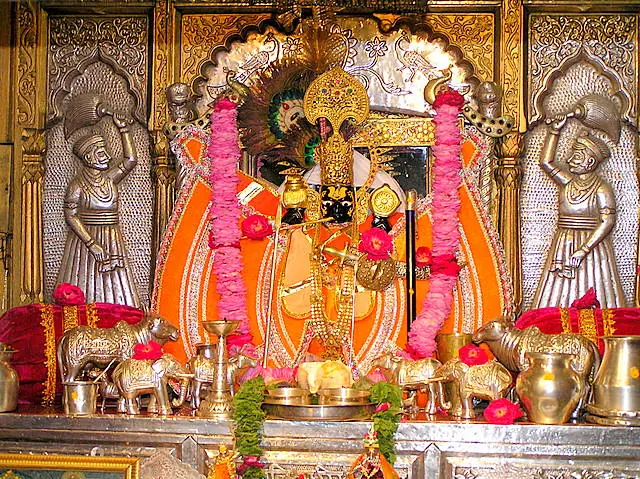
Sawariya Seth Mandir timings matter because a small change in darshan, aarti, or closing hours can affect an entire pilgrimage plan. The famous Sanwariya Seth temple near Mandfiya in Rajasthan attracts devotees travelling from Chittorgarh, Udaipur, Jaipur and other parts of India, especially on festival days. Published schedules may differ by season or occasion, so relying on an old social-media post can be risky.
Before visiting, check the latest notice from the temple trust or confirm by phone. The practical details below explain how to verify timings, plan pooja and darshan, understand crowd patterns, and avoid common travel mistakes.
The daily routine of a Hindu temple is usually built around the deity’s seva, or service. It may include mangala darshan, shringar, bhog, rajbhog, aarti, devotional singing and periods when the sanctum is temporarily closed.
These activities don’t always follow the same public-entry pattern as a tourist attraction. A temple may open for devotees, close the inner area for a ritual, reopen for darshan and then pause again during bhog.
That is why a search for “Sanwariya Seth Temple open today” or “Sawariya Seth Mandir closing time” should be treated as a starting point, not final confirmation. Search results, travel pages and user reviews often carry older information. Even an official-looking timetable may apply only to an ordinary day and not to a major festival, special religious programme or crowd-control arrangement.
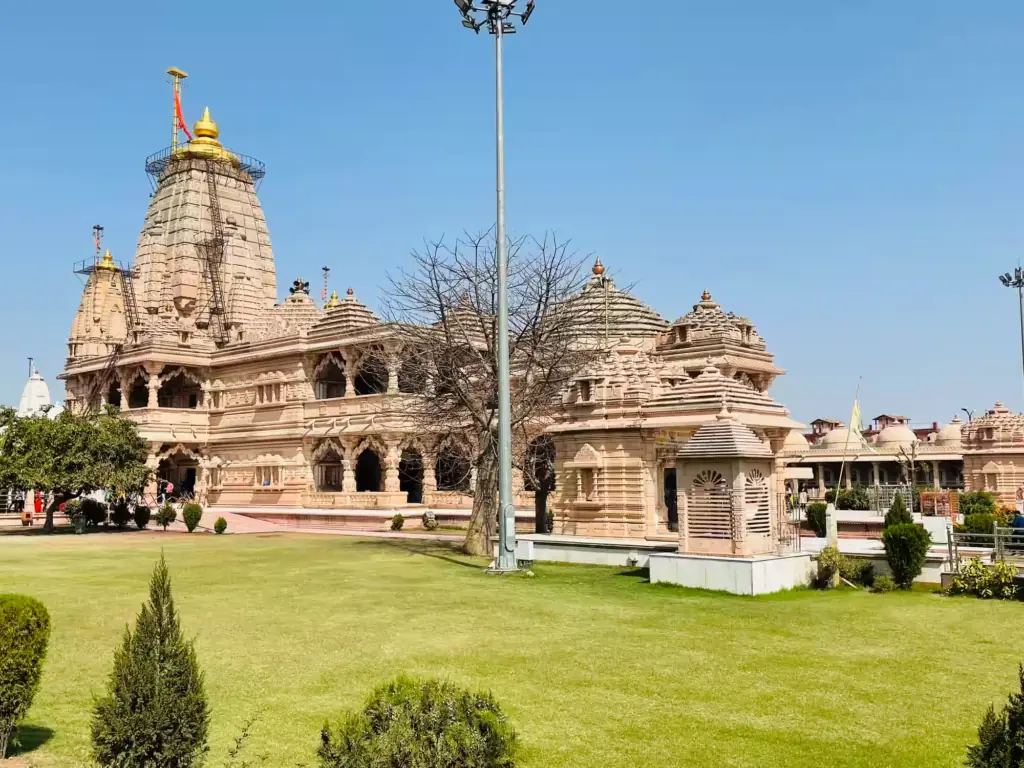
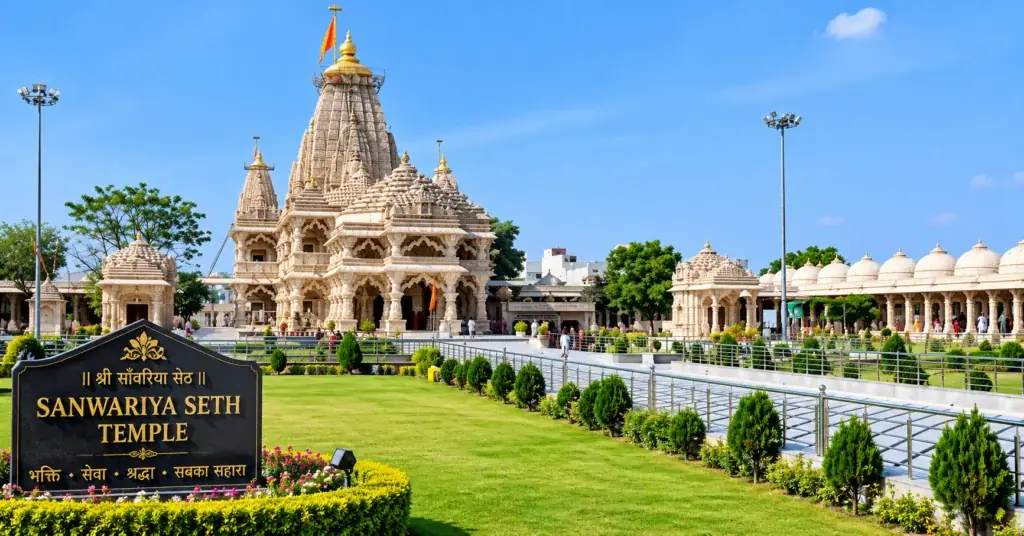
The Sanwariya Seth temple, also written as Sawariya Seth or Sanwaliya Seth, is associated with Shri Sanwariya Seth, a revered form of Lord Krishna. The temple is located at Mandfiya, in the Chittorgarh area of Rajasthan.
It is commonly included in travel plans involving Chittorgarh, Udaipur and nearby religious destinations. Its popularity means that the practical meaning of “timings” includes more than the opening and closing hours.
For a relaxed visit, allow time beyond the darshan itself. Parking, walking to the entrance, queue movement, shoe storage, prasad collection and return travel can all take longer on busy days. A timetable tells you when a ritual is expected; it doesn’t guarantee that your complete visit will fit into the same short window.
There is no responsible way to give one permanent set of hours without confirming the temple’s current notice. Daily darshan timings can be revised by the temple management, and the schedule displayed during one season may not remain valid later. Readers should therefore verify the same-day or next-day arrangement through an official temple contact, official trust notice or an authorised booking channel before starting the journey.
On a normal day, devotees can generally expect the temple routine to be divided into several darshan windows rather than one uninterrupted period. The public may receive darshan during open hours, while the deity’s shringar, bhog or private seva takes place behind closed doors. The exact sequence and duration should be treated as temple-specific information.
| Information to verify | Why it matters | Best time to confirm |
|---|---|---|
| Morning opening and first darshan | Useful for travellers arriving early and planning the day’s route | On the previous evening or before departure |
| Temporary closure for pooja or bhog | You may reach the temple while public viewing is paused | Before leaving your hotel or home |
| Afternoon access | Some temples modify afternoon activity because of seva or rest periods | On the same day |
| Evening aarti and final darshan | Important for visitors travelling back after sunset | Before planning return transport |
| Last entry or queue cut-off | Gate access may stop before the formal closing time | Immediately before visiting |
Remember that “open” and “darshan available” aren’t always identical. The outer temple complex may be accessible while the main deity’s darshan is paused. Conversely, a queue may be admitted before a scheduled closure but not necessarily cleared instantly.
Morning visits are often preferred by devotees who want a quieter atmosphere, though this isn’t a guarantee. The first public darshan may be connected with morning seva, and the queue can become active soon after the gates open. Travellers staying outside Mandfiya should factor in road conditions and local traffic rather than aiming to arrive at the exact opening minute.
Afternoon hours may be less predictable because of bhog, ritual preparation or a temporary pause. An afternoon arrival can work well on a regular weekday, but it’s unwise to assume the same pattern on a festival day. Evening darshan may attract people who have completed their day’s travel, while aarti can create a concentrated rush around one scheduled period.
Aarti is a central part of temple worship. It commonly involves lamps, bells, devotional singing and an offering before the deity. At Sanwariya Seth Mandir, devotees may search specifically for the “aarti time table,” but the schedule should be confirmed through the current temple communication because ritual timings can be adjusted for festivals, special observances or administrative reasons.
The words used in a timetable can also be unfamiliar to first-time visitors. Mangala darshan generally refers to an early worship period associated with awakening or beginning the day. Shringar relates to adornment of the deity.
Bhog is a food offering, while rajbhog often refers to a principal meal offering. Aarti may take place at more than one point in the day.
A temple’s sequence may include preparation before the public sees the deity, an opening darshan, a temporary curtain or closure during offering, and a later viewing period. This is not a rigid formula for every temple, and visitors should not assume that every named ritual is open for public participation. Some are observed by priests and temple servants while devotees wait respectfully.
If your purpose is to attend a particular aarti, ask three separate questions rather than asking only “What are the temple timings?” Confirm the expected start time, the reporting or queue time, and whether general devotees can enter the viewing area during the ritual. Aarti may begin at a stated time, but entry arrangements can be controlled before or during the event.
Dress and conduct matter during worship. Modest clothing is a sensible choice, and visitors should follow instructions about footwear, photography, phones, offerings and movement near the sanctum.
Don’t block a doorway while trying to watch the ritual or take a picture. Temple staff may ask devotees to keep moving so that more people can receive darshan.

Bhog is offered to the deity before prasad is distributed or made available. If you want prasad, ask whether it is collected from a designated counter, included with a booking, or available only during a particular period. Procedures can change, particularly during large gatherings when counters and queues are reorganised.
Special seva may have separate reporting instructions. A donation receipt, booking confirmation or identity document may be relevant for some services, but visitors shouldn’t assume that paying a donation automatically guarantees a shorter queue or direct access. Only the temple’s authorised office or booking system can clarify what a particular service includes.
Booking information is one of the areas most likely to be misunderstood online. Some temples offer advance arrangements for selected pooja, accommodation, donation or prasad services, while general darshan may remain subject to on-site crowd management. The availability of a booking page doesn’t necessarily mean every visitor needs a ticket.
Before paying for anything, check the official name of the trust or temple authority, the website address, the cancellation terms and the service description. Be cautious with social-media accounts that promise guaranteed VIP darshan, instant entry or special treatment in exchange for payment. A trustworthy process should explain the service clearly and provide a receipt or confirmation that can be verified.
VIP darshan is not a universal entitlement. Its availability, category and procedure depend on the temple’s own decisions.
Even where a priority facility exists, the temple may restrict it during peak festivals, security arrangements or exceptional crowd conditions. Confirm the current policy through the official channel rather than relying on a driver, hotel intermediary or informal agent.
If the official website is unavailable or does not show a clear timetable, call the temple office or trust helpline. Ask for the date-specific opening, the aarti schedule, the last general darshan time and any restriction on mobile phones or offerings. Write down the answer and the name or designation of the office contact if practical.
For a broader understanding of the region and nearby visitor information, you can also consult the Rajasthan Tourism information on Chittorgarh. This kind of government tourism source is useful for regional context, but it should not replace direct confirmation of the temple’s own daily ritual schedule.
There is no single best day for every devotee. A weekday outside a major festival may offer a more manageable experience, while a Sunday or public holiday can attract more families and local visitors. People searching for “Sawariya Seth Mandir timings Sunday” should confirm whether Sunday follows the ordinary daily routine; the day may have a different crowd pattern even if the formal schedule is unchanged.
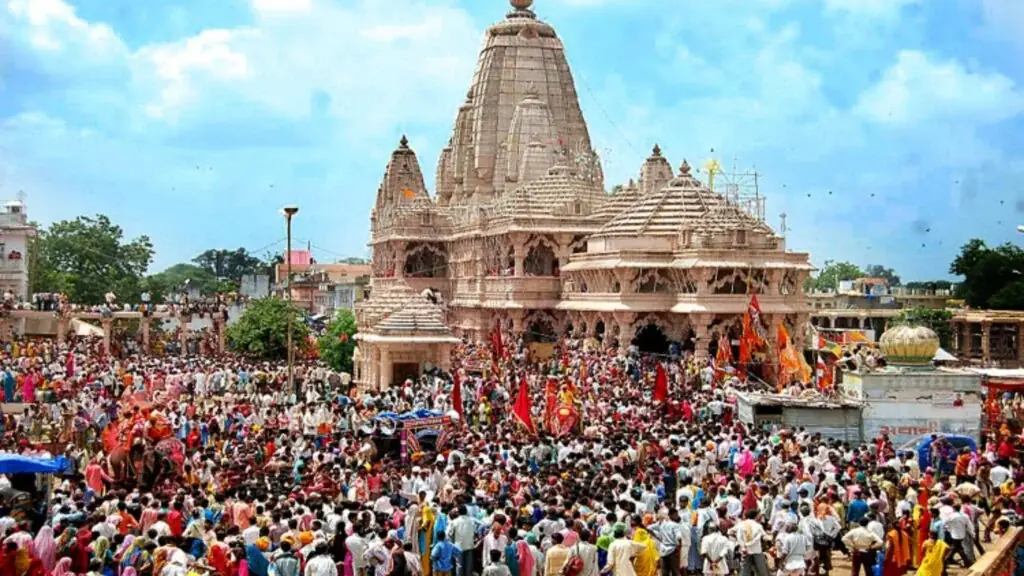
Festivals connected with Lord Krishna, including Janmashtami, can bring special decoration, extended devotional activity and much heavier attendance. Other religious occasions, monthly observances and local celebrations may also affect entry. During such periods, the temple can introduce barricades, separate queues, restricted vehicle movement or changes to the normal darshan route.
Seasonal travel also affects the experience. Rajasthan’s summer heat can make long outdoor queues uncomfortable, while winter mornings may be cold, particularly for people arriving before sunrise.
The monsoon can influence road travel and walking conditions. Carry water where permitted, wear practical footwear and plan for waiting time without assuming that the queue will move at a fixed speed.
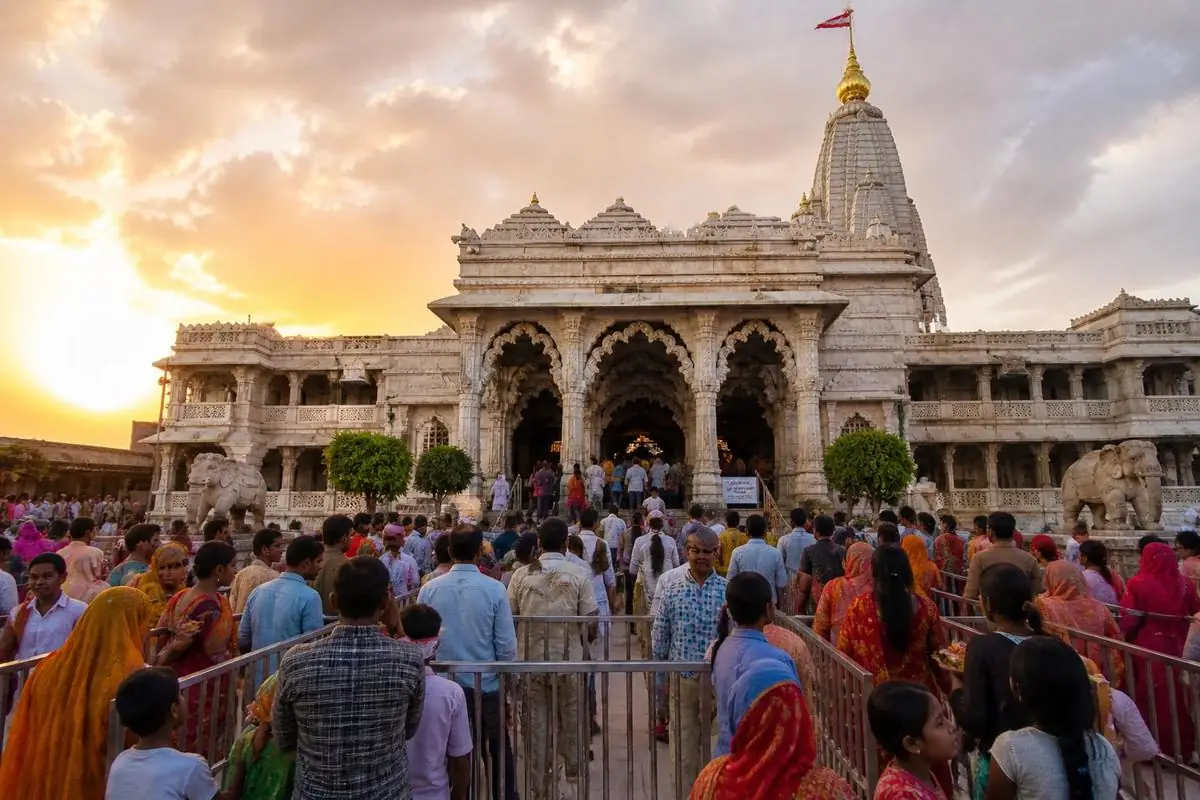
Many pilgrims prefer the first available darshan, but that period can be busy because other visitors have the same idea. Evening aarti may also draw a concentrated crowd. A mid-morning or mid-afternoon period on an ordinary weekday may be calmer, but this is a planning suggestion, not a promise of low attendance.
Large crowds can change the relationship between a published time and actual entry. Security checks may take longer, the queue may be paused for a ritual, and vehicles may be directed to a different parking area.
Add a buffer before your return train, bus or hotel check-out. Rushing through a pilgrimage usually creates more stress than arriving with a flexible plan.
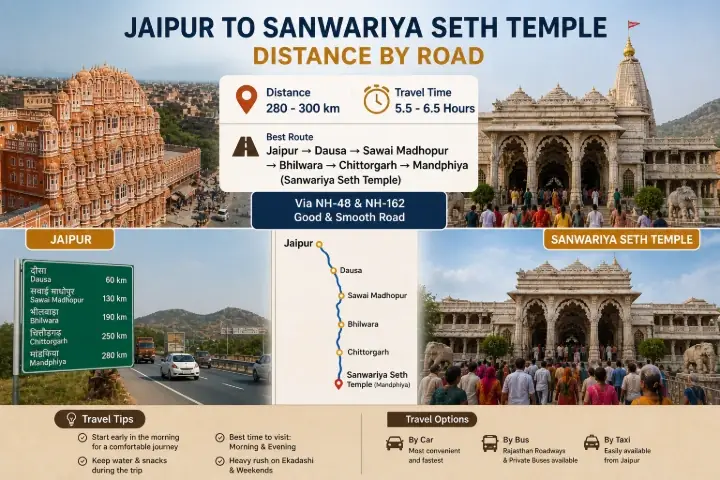
Sanwariya Seth Mandir is associated with Mandfiya in Rajasthan’s Chittorgarh region. Travel searches often combine “Chittorgarh Udaipur,” “Jaipur to Sanwariya Seth Temple distance” and “Chittorgarh to Sanwariya Seth distance.” Exact travel time depends on the route, traffic, roadworks, weather, vehicle type and starting point, so a map application should be checked close to departure rather than relying on a fixed estimate copied from an old article.
If you’re coming from Chittorgarh, the visit may fit into a wider local itinerary. Travellers from Udaipur or Jaipur may need to plan a longer road journey and should be especially careful about the temple’s final darshan window.
An early departure can be useful, but only if the current opening time has been confirmed. Reaching the town after a long drive and discovering a temporary closure is avoidable with one phone call.
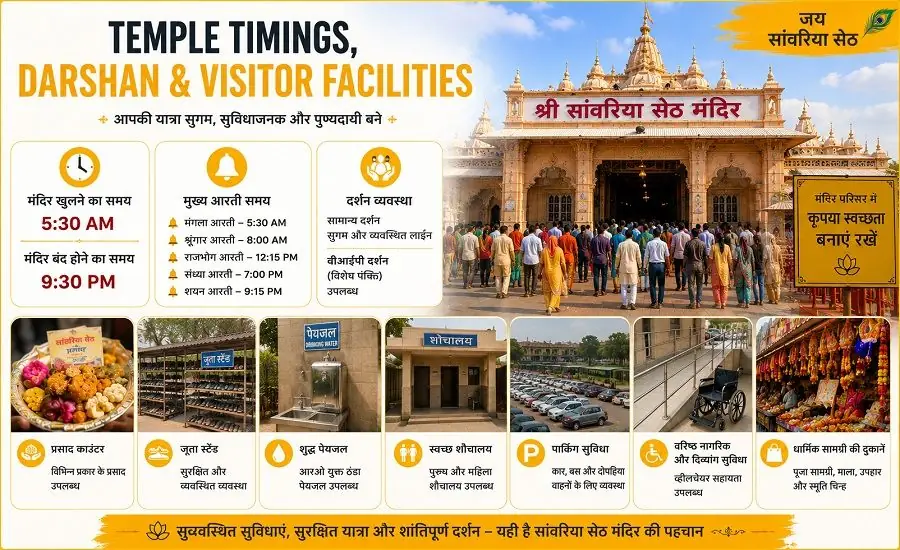
Families with older adults or children should choose a schedule that leaves room for breaks. If someone in your group cannot stand for a long time, ask the temple office about available assistance rather than expecting staff to make an exception at the gate. Visitors with mobility needs should also confirm the route and seating arrangements before travelling.
Temple entry rules can include footwear restrictions, limits on bags, photography controls and instructions about offerings. The most reliable rule is the one displayed at the temple entrance or communicated by the authorised office on the day. Conditions may be tightened during a VIP visit, security alert, festival or unusually large gathering.
Dress respectfully and choose clothing that makes waiting and walking comfortable. A scarf or shawl can be useful, but don’t assume that carrying one meets every local requirement. Religious spaces vary, and staff may direct visitors differently depending on the sanctum, ritual and crowd arrangement.
Keep your phone silent and follow queue instructions. Avoid pushing, arguing or trying to remain in front of the deity after darshan.
If the viewing period is brief, that is usually because many devotees are waiting behind you. Temple visits are shared experiences, not private photo opportunities.
Donations should be made through a recognised counter or authorised digital method. Ask for a receipt if you need one. Never hand over cash to a person who claims that payment is compulsory for ordinary darshan unless the temple’s official instructions clearly say so.
Illustrative example, not a verified live schedule: Suppose a family travelling from Udaipur wants darshan at Sanwariya Seth Mandir on a Saturday and hopes to attend the evening aarti. Instead of selecting a time from an old blog, one family member contacts the official temple office the day before and asks about morning opening, afternoon closure, evening aarti, final entry and parking.
The office confirms the date-specific arrangement, but the family still plans a buffer. They leave early enough to accommodate road delays, keep the booking message and identity documents accessible, and avoid scheduling their return bus immediately after the expected aarti. On arrival, they follow the signs, store footwear as instructed and ask staff whether prasad is distributed before or after the ritual.
This example doesn’t claim that any particular hour, fee or booking rule applies at the temple. Its lesson is the method: confirm the actual date, separate ritual timing from entry timing, and leave space for queue movement. The same approach works for a short visit from Chittorgarh or a longer road journey from Jaipur.
A reliable check should happen as close to the visit as practical. The ideal source is an official website, official temple-trust notice, authorised booking portal or temple helpline. If those channels don’t publish a complete schedule, use them to obtain a direct confirmation rather than filling the gaps with assumptions.

Take a screenshot of the official notice or save the helpline details. If someone at the gate gives different instructions, follow the current on-site direction and ask politely for clarification. Temple operations are sometimes adjusted quickly to protect devotees and preserve the ritual.
Search queries such as “Sanwariya Seth Temple open tomorrow” can help locate recent updates, but date and source still matter. A fresh user comment is not the same as an official announcement. Look for the trust’s name, a verifiable contact number and a clear publication date before treating information as dependable.
The exact hours should be confirmed for your date through the temple’s official channel. A permanent timetable is not safe to publish without current verification because daily darshan, ritual closures and festival arrangements may change.
Devotees commonly plan visits throughout the week, but “open” may mean different things: the complex may be accessible while the main darshan is temporarily paused. Confirm the day’s public-entry and ritual schedule before travelling.
Ask specifically for the final general darshan and last queue-admission time, not only the gate-closing time. A queue may stop earlier, especially during busy periods or aarti arrangements.
That depends on the current temple arrangement. Some aarti viewing may be part of general darshan, while another ritual or special service may require separate instructions. Confirm whether general devotees can enter and where they should report.
Availability and conditions can change. Don’t rely on an agent’s promise; ask the official temple office whether a priority facility exists on your chosen date, what it includes and whether any restriction applies.
They may be. Sundays, Janmashtami and other special occasions can bring heavier crowds, additional rituals, security controls or altered entry routes. Verify the special-day notice instead of applying the ordinary timetable.
Reach early enough to cover travel delays, parking, security and the walking route to the entrance. The right arrival time depends on the confirmed darshan window and expected crowd, so a fixed universal recommendation would be misleading.
The temple is associated with Mandfiya near Chittorgarh in Rajasthan. Use a current map route and verify the destination name, especially if you’re travelling from Udaipur, Jaipur or another district with similarly named religious places.
The safest way to use Sawariya Seth Mandir timings is to treat them as date-specific temple information, not a permanent number copied from a search result. Confirm opening, ritual pauses, aarti, final entry and booking requirements through the temple’s authorised channels, then build your travel plan with a sensible buffer. That small effort can protect your darshan from avoidable delays.
Before you leave for Sanwariya Seth Mandir, check the latest notice once more and save the official contact details on your phone. If you’ve recently visited, sharing a current, clearly dated experience with other devotees can help—but always distinguish personal observation from an official schedule.





