Physical Address
304 North Cardinal St.
Dorchester Center, MA 02124
Physical Address
304 North Cardinal St.
Dorchester Center, MA 02124
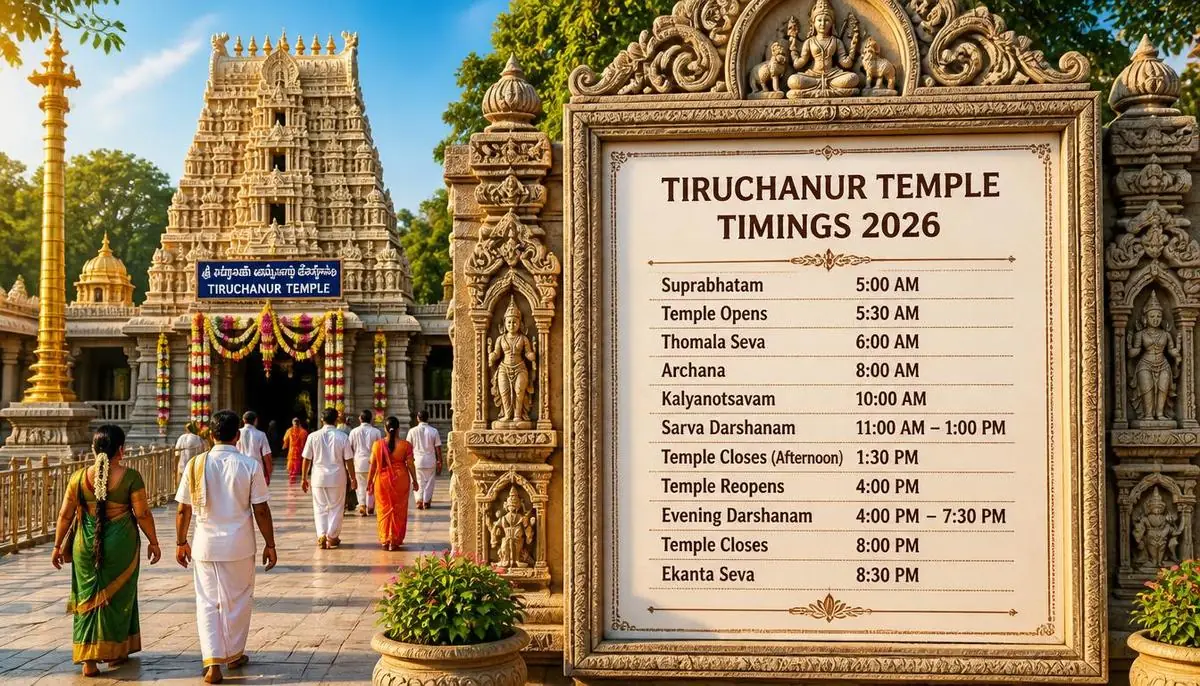
Near Tirupati, Tiruchanur Temple is the Sri Padmavathi Ammavari Temple, a major shrine dedicated to Padmavathi Devi, the consort of Lord Venkateswara. Known also as the Padmavathi or Padmavati temple, it sits in Tiruchanur, close to Tirupati in Andhra Pradesh.
A useful visit depends on more than knowing when the gates open. Rituals can pause general darshan, paid sevas may have separate reporting times, and festival days can bring crowd controls or revised entry arrangements. The practical details below will help you check the latest timings, understand booking choices, and plan a smoother visit from Tirupati or Tirumala.
Tiruchanur Temple is formally known as Sri Padmavathi Ammavari Temple, Tiruchanur. The presiding deity is Sri Padmavathi, also written as Padmavathi Devi or Padmavati Devi.
In Vaishnava tradition, she is regarded as an incarnation of Goddess Lakshmi and the divine consort of Lord Venkateswara of Tirumala. For many devotees, visiting the ammavari temple is an important part of a pilgrimage that also includes the Venkateswara temple on the hill.
The temple is located at Tiruchanur, a town near Tirupati in Andhra Pradesh. This distinction matters for travel planning: Tirupati is the main city and transport hub, Tiruchanur is the location of the Padmavathi shrine, and Tirumala is the separate hill area where Lord Venkateswara is worshipped. A person may casually refer to all three places as “Tirupati,” but the roads, queues, accommodation areas, and darshan arrangements are not identical.
The shrine is associated with the temple pushkarini, or sacred tank, and with the lotus symbolism connected with Padmavathi. Traditional accounts describe the goddess as emerging from a golden lotus, which explains why lotus imagery is important in the temple’s religious identity. On special occasions, devotees may also see elaborate alankaram, including gold-toned ornaments and festival decoration, though the exact presentation belongs to the day’s ritual schedule.
People visit for several different reasons. Some come for ordinary darshan, some have booked a seva, and others arrive as part of a family pilgrimage after visiting Tirumala. These purposes affect how early you need to arrive and which entry instructions apply.
That is why a search for “Tiruchanur Temple timings” needs a little more context than one opening-and-closing figure. The temple’s public access is shaped by ritual activity, crowd management, ticketed services, and announcements from the Tirumala Tirupati Devasthanams, commonly called TTD.
There is no single permanent clock time that should be copied blindly for every visit. A temple may open for the day while a particular ritual is still in progress, and general darshan may be held temporarily during an important pooja. Similarly, an evening closing time can refer to the end of public entry, the end of a darshan window, or the completion of the final ritual rather than the moment every activity stops.
For a regular weekday or non-festival day, think of the schedule in layers. Early morning is usually associated with preparatory worship and opening rituals. Public darshan then operates around the temple’s pooja commitments.
Afternoon and evening access may follow a different pattern, especially if a paid seva or special ritual occupies the sanctum. The exact clock schedule should be checked through the current TTD notice, official booking system, or temple enquiry channel before leaving.
| Visit element | What it means | How the timing may work | What you should confirm |
|---|---|---|---|
| Temple opening | The start of the day’s ritual and visitor arrangements | Public entry may begin after staff preparation or an opening ceremony | Opening time and whether the first period is available for general darshan |
| General darshan | Regular viewing of the deity without joining a specific paid seva | May operate in one or more windows rather than continuously | Queue entry, last entry, token rules, and any temporary suspension |
| Pooja or archana | Worship performed according to the temple’s ritual calendar | Can interrupt or restrict public movement for a short period | Whether visitors may watch, participate, or must wait outside |
| Paid seva | A scheduled service for which a devotee may need a ticket or booking | Usually has a fixed reporting time that is earlier than the ritual itself | Reporting location, ticket validity, identity proof, and late-entry policy |
| Aarti or harati | The offering of a lit flame as part of worship | May be linked to a ritual session and not offered as a separate visitor slot | Whether the public can attend and whether separate access is required |
| Closing period | The point after which public entry or darshan ends | May be followed by final worship or preparation for the next day | Last queue entry, closing notice, and any evening service timing |
Use the table as a planning framework, not as a substitute for a live schedule. A listing that says “open all day” may still involve short closures for pooja, security reasons, or crowd movement. On the other hand, a listed ritual time does not always mean that every visitor can enter the sanctum or stand inside the ritual area.
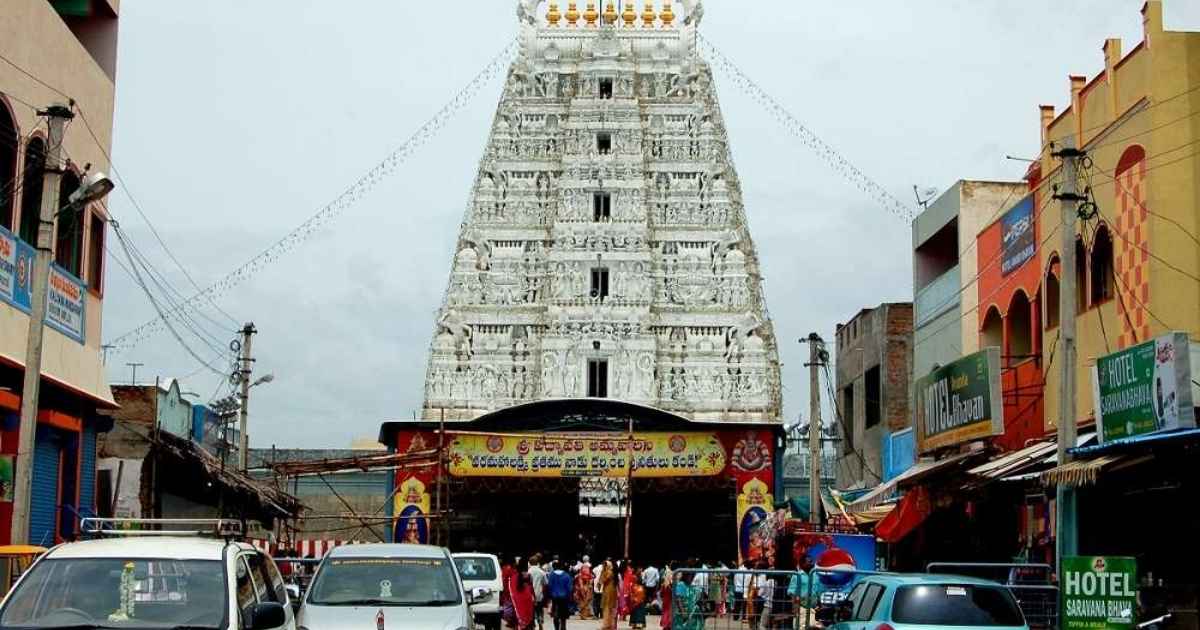
Look for the words used in the notice. “Darshan timing” normally refers to a public viewing period. “Reporting time” means the devotee must reach a particular gate or counter before the seva begins. “Last entry” is especially important because arriving before the published closing time may still be too late if the queue has already been stopped.
It is sensible to check the schedule at three points: the evening before travel, on the morning of departure, and again after reaching Tirupati if the visit falls on a weekend or festival day. Every timetable should be treated as changeable unless the official notice specifically confirms the arrangement for your date.
Many first-time visitors use darshan, pooja, aarti, and seva as if they mean the same thing. They do not. Understanding the difference helps you choose the right ticket and prevents disappointment at the entrance.
Darshan means seeing or receiving the sight of the deity. At Tiruchanur, general darshan usually refers to joining the public queue and proceeding through the designated viewing route. It does not necessarily include a personal ritual, a priest-led offering, or permission to remain before the deity for an extended period.
Pooja is worship performed according to prescribed procedures. It may include offerings, recitation, decoration, archana, or other ritual elements.
A pooja can be conducted for the temple as a whole, or a particular seva may allow devotees to participate in a limited way. The ticket name and current instructions decide what access is included.
Aarti, also called harati in many Indian temple settings, involves the presentation of a flame before the deity. It can form part of a larger worship session. The presence of an aarti on the daily ritual calendar does not automatically mean that visitors receive a separate aarti ticket or can enter at any time around it.
Seva means service or devotional participation. In temple administration, it often refers to a scheduled ritual for which a devotee books a place. Some sevas are paid, some have limited quotas, and some may be available only on selected days. “Paid” does not mean that the devotee controls the ritual or can choose any arrival time; the temple’s rules remain applicable.
Before booking, ask four simple questions:
These distinctions also explain why a pooja schedule can look shorter than the overall temple opening period. A ritual may be limited to a particular group while general visitors enter before or after it. If you only want to see Padmavathi Devi, check the general darshan arrangement instead of booking a seva simply because its name appears prominently online.
Online booking is useful for devotees who want a specific seva or a confirmed date, but the process is controlled by the temple administration and available quotas. The most reliable source is the official TTD system. Use the official Tirumala Tirupati Devasthanams booking portal and read the service description for the exact date you intend to visit.
Booking screens and release procedures can change. A service may not appear because its quota has not opened, because the date is full, because the service is not offered that day, or because the temple has revised arrangements for a festival. Do not interpret an empty screen as proof that the temple is closed.
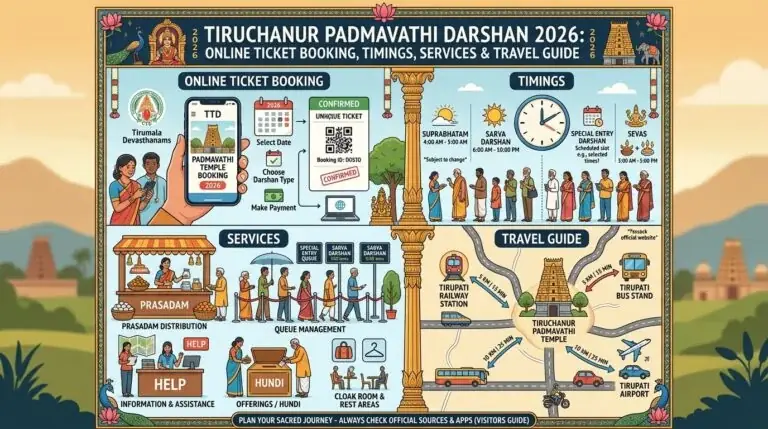
The word “ticket” can cause confusion. There is not one universal Tiruchanur Temple ticket price covering every visitor. Ordinary darshan, special entry, and different sevas can have separate arrangements and charges.
Some services may have no availability on a particular day, while a different category may remain open. The current amount shown by the official booking system for your selected service is more dependable than a price copied from an old travel page.
Some visitors prefer to reach Tiruchanur and enquire at the authorised counter or temple office. This can be practical for general darshan, but it should not be treated as a guarantee of a paid seva ticket. Counter hours, quota availability, and queue arrangements can change without matching the timetable printed in an old brochure.
On arrival, ask only staff or an authorised help desk about the correct queue. Avoid people who promise faster entry, claim to represent the temple trust, or offer a ticket without a verifiable receipt. A forwarded message, social-media screenshot, or agent’s verbal assurance is not a substitute for an official confirmation.
If your booking is for a specific seva, reach earlier than the ritual start. The reporting gate may be away from the main darshan entrance, and security screening can take time. A booking confirmation normally proves eligibility for the service; it does not remove the need to follow queue, dress, identity, or late-arrival rules.
Tiruchanur is close to Tirupati and is normally approached by road. Visitors arriving by train can plan from Tirupati railway station, while those arriving by bus can use the Tirupati bus stand and local transport services. Autos, taxis, app-based cabs where available, and city bus services may all be used, but the best choice depends on traffic, luggage, group size, and the time of day.
Searches for “Tirupati bus” can return several different results, including intercity buses, local routes, and services connecting Tirupati with Tirumala. Check the destination carefully. A bus going towards the Tirumala hill is not automatically the right service for Tiruchanur, and a route that passes near the temple may not stop at the entrance you need.
Travelling from Tirumala requires additional planning because Tirumala is on the hill and Tiruchanur is in the Tirupati-area plains. You must allow time to descend, find road transport, manage traffic, and complete security at the second temple. The distance shown by a map app will vary according to whether you start at the Tirumala bus station, a guesthouse, the Tirupati railway station, or another location.
A combined itinerary is easier when you avoid tight connections. If the Tiruchanur darshan is the priority, complete it before committing to a Tirumala reporting time. If a Tirumala seva has a strict check-in, schedule the Padmavathi visit afterwards only if the official transport and time window make that realistic.
People arriving from north India or from other south Indian pilgrimage places may be unfamiliar with the local road pattern. Keep your hotel address, the temple name in Telugu or English, and a local contact number saved offline. This is particularly helpful when a driver recognises “Padmavathi Ammavari Temple” but not a shortened phrase such as “the Tirupati temple.”
Do not forget the return journey. Festival traffic can delay autos and cabs, and parking areas may be redirected. If you are travelling to the railway station or airport after darshan, keep a generous buffer instead of relying on the shortest route shown during a quiet hour.
Regular timings are most useful for ordinary weekdays. Weekends, public holidays, school vacations, and major religious observances can produce a very different experience. The temple may remain open while the queue becomes much longer, or a special-day notice may alter the entry route, darshan window, or availability of sevas.
Tiruchanur is especially associated with the annual Brahmotsavam of Padmavathi Ammavaru and the important Panchami Theertham, also called Chakrasnanam in the festival context. These events follow the Hindu calendar, so their dates change from year to year. TTD’s festival announcements are the proper source for the relevant year; an old festival timetable should not be used as a current travel plan.
Festival arrangements can include barricaded routes, separate queues, restricted vehicle movement, additional police or security checks, and changes to ordinary darshan. A seva that appears bookable on a normal day may be suspended, shifted, or handled through a different reporting arrangement during a major celebration. The temple’s regular closing hour may also have less practical meaning if public entry is stopped earlier for crowd control.
Friday worship, special alankaram, Navaratri-related observances, and other calendar occasions can also attract more visitors, although the scale depends on the particular day and year. Do not assume that every special day has the same crowd pattern. The official notice should tell you whether there is a special queue, a token system, a restricted entry period, or a separate booking quota.
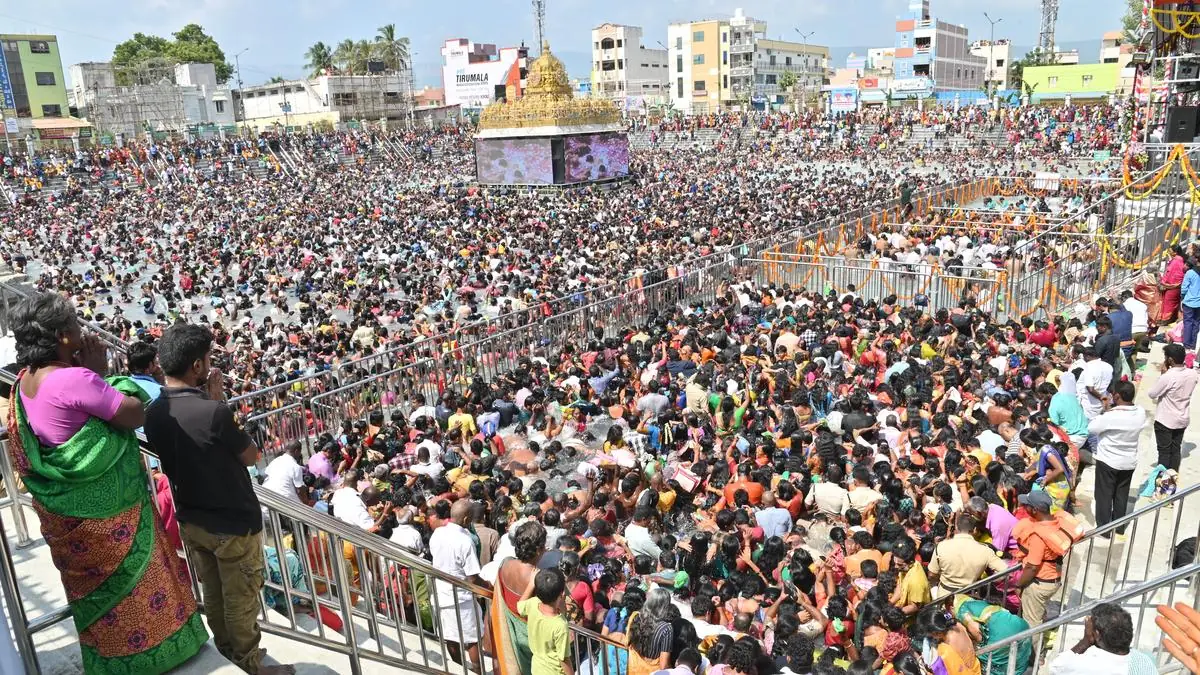
Special-day schedules are not merely longer versions of regular timings. They are separate operating plans. Treat them that way, particularly if you are travelling with children, elderly relatives, or a group with a fixed return train.
Temple entry rules exist to protect worshippers, preserve the sanctity of the shrine, and manage large numbers of people safely. The exact instructions displayed at Tiruchanur can change, so follow the current notices even if you have visited before. Rules at Tiruchanur may not be identical to the rules you encountered at Tirumala or another temple.
Dress respectfully and choose clothing that is comfortable for standing or walking in a queue. If your seva ticket specifies a dress standard, follow that instruction rather than assuming ordinary visitor clothing will be accepted for the ritual. Children should be dressed practically, especially if the waiting area is crowded.
Security screening may restrict large bags, sharp objects, photography equipment, food items, or electronic devices. Do not assume that a phone can be carried into every area. Look for official storage counters or instructions at the entrance, and avoid leaving valuables with unlicensed individuals outside the temple.
Queue management can involve separate lines for general darshan, booked sevas, senior citizens, differently abled visitors, and other authorised categories. A separate line is not automatically available merely because a person is elderly or travelling with a child. Ask staff about the current facility and carry any required proof.
Before leaving your hotel, check the following:
Arriving early is useful, but “early” should mean before the reporting time or the beginning of the expected queue period, not necessarily hours before a ritual for which you have no ticket. Excessively early arrival can leave families waiting outside without improving their access. The right buffer depends on the day, booking category, traffic, and crowd forecast.
A common pilgrimage question is whether to visit Padmavathi Temple first or go directly to Tirumala. Many devotees follow the customary practice of first offering respect to Padmavathi Devi and then visiting Lord Venkateswara. This reflects religious tradition and personal belief, but it should not be presented as a universal administrative rule that overrides your booked darshan time.
For a visitor making an independent trip, the practical order depends on the schedule. If you have an early or fixed Tirumala reporting time, missing that appointment can create a bigger problem than changing the order of temple visits. If you are staying in Tirupati and have flexible general darshan, visiting Tiruchanur before travelling up the hill may be convenient.
Remember that “Tirupati temple” can mean different places in everyday conversation. The Padmavathi shrine is at Tiruchanur, while the famous Venkateswara shrine is at Tirumala.
A route between them is not the same as a short walk between two nearby gates. Road traffic, hill transport, security checks, and bus availability all affect the journey.
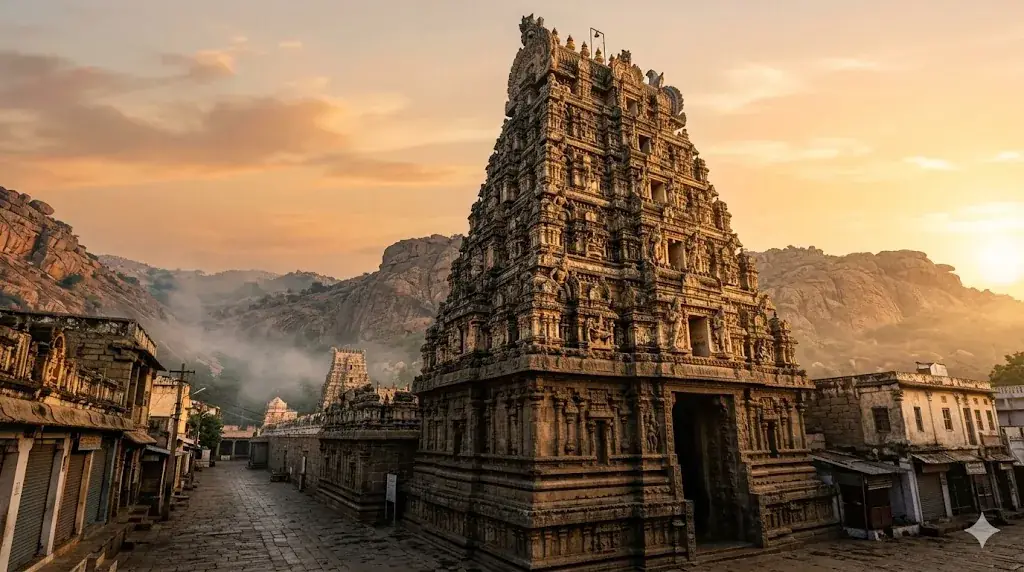
Padmavathi first: This suits devotees who want to follow the customary order and have sufficient time before a Tirumala booking. Start from the railway station, hotel, or bus stand, complete the Tiruchanur visit, and then travel towards the hill.
Tirumala first: This is sensible when a booked seva or fixed darshan slot on the hill is the main commitment. After descending, you can visit Tiruchanur if the temple’s current darshan window and your transport schedule allow it.
Separate days: Families, senior citizens, and visitors arriving after a long journey may find this the least stressful option. It avoids turning a devotional visit into a race between two queues.
There is no need to force one order on every traveller. Respect the tradition that matters to you, but protect your confirmed reporting time and your group’s physical comfort.
Timing information becomes reliable only when it is connected to a date. A page that was accurate during a previous Brahmotsavam may be wrong for this year, and a normal-day schedule may not apply during a government holiday or special temple event. Give priority to information issued by Tirumala Tirupati Devasthanams, the temple’s authorised counters, and current notices displayed at the shrine.
Use an official source hierarchy. First, check the current TTD temple, darshan, and booking information. Next, read any date-specific advisory or festival announcement.
If the information still appears unclear, contact the authorised temple enquiry channel or ask staff after reaching Tirupati. Travel blogs and map listings can help with location, but they should not be your final authority for a pooja time, ticket fee, or closure.
Before departure, record the following details in one place:
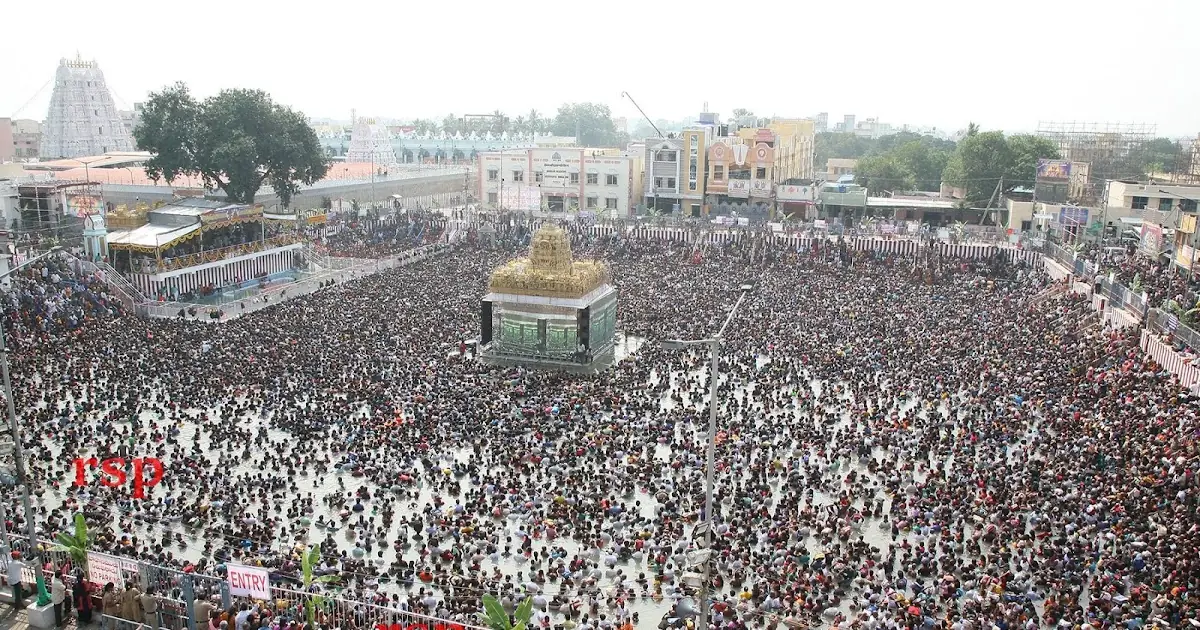
Panchami Theertham at Tiruchanur is a useful real-world example of why ordinary timings cannot be applied automatically to a festival day. TTD’s official festival communications identify the event as an important occasion associated with Padmavathi Ammavari Temple. For that date, a visitor must look for the year-specific notice covering public access, routes, crowd arrangements, and any changes to ordinary darshan rather than relying on a standard weekday listing.
The lesson is practical, not hypothetical: a person who normally arrives for a regular queue should not assume that the same gate, waiting area, or entry window will operate during a major festival. The official TTD announcement is the verifiable source for that year’s instructions. If a third-party page shows a different time, follow the current temple notice and ask authorised staff for clarification.
Save the official page or confirmation only after checking that it refers to your date. Be cautious with screenshots that do not show a publication date, service name, or issuing authority. A legitimate link should lead to an official booking or information system, not a request to transfer money to a private account.
Tiruchanur Temple is famous for Sri Padmavathi Ammavaru, also known as Padmavathi Devi or Padmavati Devi. She is traditionally worshipped as the consort of Lord Venkateswara and an aspect of Goddess Lakshmi. The temple’s pushkarini, lotus symbolism, daily worship, and annual festivals also make it an important stop for devotees visiting the Tirupati–Tirumala region.
The exact opening, darshan, pooja, aarti, and closing timings can change by date. General darshan may pause during rituals, while special days can have separate queues or restricted access.
Check the current TTD notice or authorised booking information on the day before travel and again on the morning of your visit. Do not treat an old timetable as a permanent schedule.
Online availability depends on the service, date, quota, and current TTD arrangements. Use the official booking system, select the correct Padmavathi temple service, and read the reporting instructions before payment.
Keep the confirmation and carry the required identity document. A general darshan visit and a paid seva are separate categories, so choosing one does not automatically provide access to the other.
There is no single fee that applies to every kind of visit. Ordinary darshan, special entry, and individual sevas may have different arrangements, and availability can vary.
The official booking page or authorised counter should show the current amount for the selected service. Avoid relying on an old price list or paying an unverified agent who promises a different ticket.
Tiruchanur and Tirumala are separate locations: Tiruchanur is near Tirupati in the plains, while Tirumala is on the hill. The actual road distance and travel time depend on your starting point, transport, traffic, and hill access arrangements.
Allow a substantial buffer between visits, especially if one of them has a fixed reporting time. A map route from Tirupati railway station will not give the same result as a route from Tirumala.
Many devotees prefer to visit Padmavathi Temple first as a matter of tradition. The practical decision should also consider your confirmed darshan or seva time at Tirumala.
If the hill appointment is fixed, protect that reporting time; if your day is flexible, the customary order may suit your pilgrimage. There is no reason to risk a booked service simply to follow an order that your transport schedule cannot support.
A successful visit to Tiruchanur Temple starts with matching the right information to the right date. Check whether you need general darshan or a seva, confirm the reporting instruction, and allow extra time if your trip includes Tirumala, a festival, or a return train.
Before you leave, verify the latest official schedule, booking status, entry rules, and transport conditions. With those details in hand, you can approach Padmavathi Devi’s shrine with fewer avoidable surprises and plan your Tirupati pilgrimage with confidence.





