Physical Address
304 North Cardinal St.
Dorchester Center, MA 02124
Physical Address
304 North Cardinal St.
Dorchester Center, MA 02124
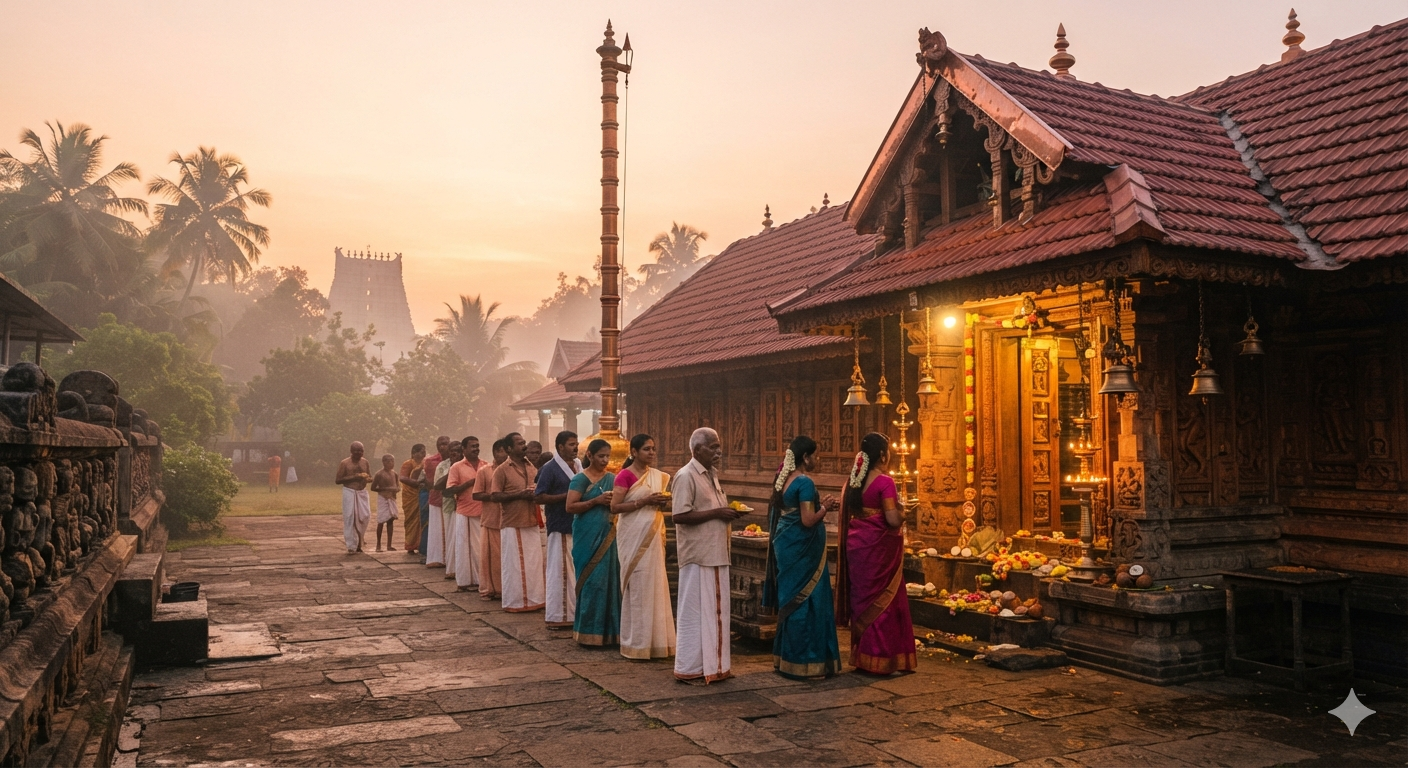
If you’re planning a trip to Udupi and typing “Udupi Krishna Temple timings” into your search bar at midnight, you’re not alone. This is one of the most searched questions among devotees heading to Karnataka’s coastal temple town, and for good reason. Get the timing wrong and you could land right in the middle of the 1 PM to 3 PM closure, staring at a shut gate instead of Lord Krishna’s face through the famous nine-holed window.
This guide breaks down exactly when to go, what happens at each hour, and how to time your visit around the rituals you actually want to witness. You’ll also find a few things most guides skip entirely, like how the temple’s twice-a-decade Paryaya festival can quietly rewrite the entire daily schedule for weeks.
Here’s where a lot of online guides trip up. Search around and you’ll find one site claiming the temple opens at 4:00 AM, another insisting it’s 4:30 AM, and a third saying 5:30 AM. The confusion usually comes from older festival-season schedules getting mixed up with the regular daily routine.
Based on the temple’s own information and multiple current visitor guides, the widely followed daily schedule looks like this:
| Ritual / Activity | Timing |
| Temple Opens (General Darshan) | 5:30 AM |
| Morning Darshan Window | 5:30 AM – 1:00 PM |
| Afternoon Closure | 1:00 PM – 3:00 PM |
| Evening Darshan Window | 3:00 PM / 5:00 PM – 9:00 PM |
| Ratri Puja | Around 7:30 PM |
| Rathotsava (Chariot Procession) | Around 7:00 PM – 8:00 PM |
| Ekanta Seva (Night Closing) | 8:30 PM – 9:30 PM |
A quick and honest disclaimer: even temple-focused travel sites disagree on the exact minute the evening darshan reopens, and the closing time swings between 9:00 PM and 9:30 PM depending on the source. The safest move is to plan your visit for the middle of a darshan window rather than the very start or end, and to call the temple office or check krishnamatha.org the day before you travel. Temples run on tradition, not on rigid corporate schedules, and small adjustments happen more often than travel blogs let on.
The morning stretch is where most of the ritual density happens. It typically opens with Nirmalya Visarjana, the removal of the previous day’s flowers and offerings, followed by the first bathing rituals for the deity. Panchamrita Abhisheka, the ceremonial bath using five sacred substances, usually happens in this early window, and it’s one of the more visually striking moments of the day.
By mid-morning, you’ll see Alankara Puja, where the idol is decorated, and later Mahapuja, the primary worship ceremony. If you arrive anywhere between 8 AM and 11 AM, you’ll likely catch at least one of these in progress. Just don’t cut it too close to 1 PM. The gates close on schedule, and pilgrims who arrive at 12:55 PM often end up disappointed.
Evening is when the temple comes alive in a different way. This is when families, tourists, and working devotees who couldn’t make the morning slot tend to show up, so expect slightly heavier footfall than a quiet Tuesday morning.
Ratri Puja and Ranga Puja happen in close succession around 7:30 PM, and the Utsava or Rathotsava, the chariot procession around the temple car street, usually follows soon after. The night closes with Thottilu Puja, a cradle ceremony, and finally Ekanta Seva, when the deity is symbolically put to rest for the night. If you’ve never seen a temple close for the night, this is worth staying for. It’s quieter and more intimate than the morning rush.
Krishna Janmashtami is the big one. Expect the temple to stay open well past its usual closing hour, with continuous darshan running through the night in many years. Madhva Navami, which marks the anniversary of Sri Madhvacharya, also brings extended hours and additional rituals.
The lesson here is simple: if your visit falls anywhere near a major festival date on the Hindu lunar calendar, throw the “regular” schedule out the window and check for a festival-specific timetable instead.
Not every visitor wants the same thing. Some people want five quiet minutes in front of the deity. Others specifically want to see the chariot roll down Car Street. Knowing what you’re actually after changes which hour you should aim for.
If a calm, unhurried darshan is your priority, weekday mornings between 6:00 AM and 8:00 AM tend to be your best bet, right after the initial rush of the earliest devotees but before the mid-morning crowds build up. Weekends and the first few days of any month, when devotees traditionally visit for Sankashti Chaturthi or similar observances, tend to be busier across the board.
A devotee I’ll call Radha, who visits Udupi from Bengaluru twice a year, told a local travel forum she always books her train to arrive by 6:30 AM specifically to avoid what she calls “the tour bus hour,” roughly 10 AM to noon, when multiple group tours converge on the temple at once. It’s a small scheduling trick, but it works.
If watching the chariot procession is on your list, get to Car Street by around 6:30 PM, a good 30 to 45 minutes before the scheduled 7 PM start. Processions rarely start to the exact minute, and prime viewing spots along the street fill up fast during the evening rush. The same buffer logic applies to Mangala Aarti in the early morning: arrive at least 15 minutes early if you want a clear view rather than watching over someone’s shoulder.
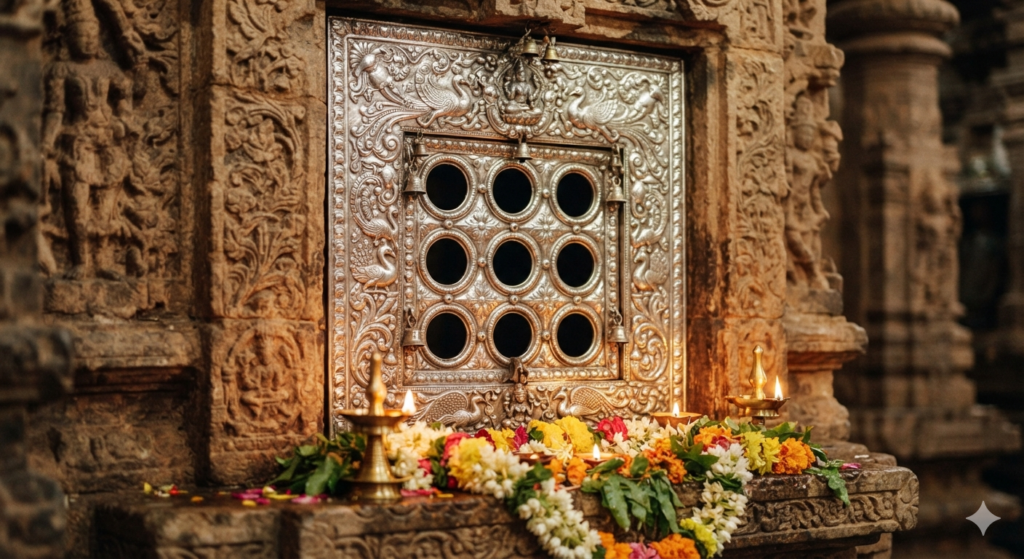
Here’s something most timing guides mention in passing and never actually explain: you don’t walk up to Lord Krishna’s idol directly at this temple. You view it through a silver-plated window with nine holes, known as the Navagraha Kindi, from outside the sanctum.
It’s an unusual setup for a Hindu temple, and it has a story behind it that makes the darshan experience mean a lot more once you know it.
According to the temple’s own account and multiple regional histories, the tradition traces back to the devotee-poet Kanaka Das, who belonged to a community barred from entering the temple in his era. Legend holds that when he was denied entry, the rear wall of the sanctum cracked open on its own, allowing him to view the deity from outside. That opening is sometimes referred to specifically as the Kanakana Kindi, the “Kanaka’s window,” a detail closely tied to the nine-holed Navagraha window devotees use today.
Whether you take the story literally or as devotional legend, it shapes the actual physical experience of your visit. You won’t get a straight-on view of the idol the way you might at other temples. You’ll be looking through a small opening, often alongside dozens of other devotees doing the same thing, which is part of what makes the moment feel different once you’re standing there.
Most guides list sevas as a flat menu with prices attached and leave it at that. The more useful question is: when in the day does each one actually happen, and when do you need to book by?
| Seva / Ritual | Typical Time | Approx. Charge |
| Panchamrita Abhisheka | Early morning (around 5:45 AM) | ₹500 |
| Alankara Puja | Mid-morning (around 8:00 AM) | Included in temple schedule |
| Mahapuja | Late morning (around 9:45 AM) | ₹250 |
| Archana | Throughout the day | ₹100 |
| Tulabharam | By appointment, daytime | ₹500 onwards |
| Annadana Seva | Ongoing, tied to meal hours | ₹1,000 |
| Laksha Deepotsava | Festival occasions only | ₹1,500 |
If you want to sponsor or witness Panchamrita Abhisheka, you need to be there before 6 AM, since it happens right after the temple opens and doesn’t repeat later in the day. Alankara Puja follows a couple of hours later. Both of these are booked either online through the temple’s official channels or in person at the seva counter, and morning slots do fill up during peak pilgrim season, particularly around December and January when many families combine the visit with winter holidays.
Laksha Deepotsava, the lighting of a hundred thousand lamps, isn’t a daily offering. It’s reserved for major festival occasions, so don’t expect to book it on a random Tuesday in March. Annadana Seva, the sponsorship of free meals, runs continuously and ties directly into the temple’s lunch and dinner hours, which we’ll get to next.
This is the part almost every other “complete guide” to this temple leaves out entirely, and it’s arguably the single biggest event on the temple’s calendar after Janmashtami.
Every two years, administration of the Udupi Krishna Matha passes from one of eight monastic institutions to the next, in a ceremony called Paryaya. The current cycle, as listed on the temple’s official site, runs through 2024–26. During the actual handover, the temple sees a dramatic spike in visitors, an extended and modified puja schedule, and processions that can stretch over multiple days. If your travel dates happen to land near a Paryaya transition, expect the “normal” darshan timings in this article to be temporarily meaningless. Book accommodation well in advance if that’s the case, because lodges near Car Street fill up fast.
The temple is managed on rotation by eight mathas, collectively called the Ashta Mathas, all traced back to disciples of Sri Madhvacharya himself. In practical terms for a visitor, this means the head priest, or paryaya swamiji, conducting your darshan changes every two years, and each incoming matha sometimes brings small variations in how certain rituals are timed or presented. It’s a detail that adds real texture to your visit if you know to look for it, rather than just another line in a history section.
Prasadam here isn’t an afterthought. The Anna Brahma tradition of free community meals is one of the temple’s defining features, and it’s worth building your visit around it rather than treating it as a separate errand.
Lunch is typically served from around noon to early afternoon, and dinner runs in the evening, generally somewhere between 7 PM and 9 PM depending on the day. Here’s a practical way to sequence it: catch morning darshan, stay for the late-morning Mahapuja, and head straight into the lunch line before the temple closes for its afternoon break at 1 PM. That way you’re not waiting around outside a shut gate for two hours with nothing to do.
The food itself follows traditional Udupi cuisine recipes, and this detail matters more than it might seem. The entire “Udupi restaurant” style you’ve probably eaten at somewhere in India, the vegetarian thali chains found across the country, actually traces its roots back to cooks trained in this temple’s kitchen tradition. Eating here isn’t just a meal. It’s tasting the origin point of a cuisine that spread across the subcontinent.
Knowing the schedule only helps if you can actually get there in time to use it. Udupi is well connected, but the last stretch of your journey needs a bit of planning if you want to catch the earliest rituals.
If you’re flying in and want to make the first morning darshan slot, you’ll need to land the evening before and stay overnight near the temple. A same-day arrival simply doesn’t leave enough buffer. Train travelers have it easier: an overnight train that reaches Udupi station by 5 AM gives you just enough time for a quick auto ride and a place in line before the gates open.
What time does Udupi Krishna Temple open and close? The temple generally opens at 5:30 AM and closes around 9:00 PM to 9:30 PM, with an afternoon closure between 1:00 PM and 3:00 PM. Exact evening reopening times vary slightly by source, so it’s worth confirming on the day of your visit.
Is the temple open all day, or are there breaks? There’s a midday break, typically from 1 PM to 3 PM, when the sanctum closes for the deity’s rest period. Plan around this gap rather than against it.
What is the best time to avoid crowds? Weekday mornings between 6 AM and 8 AM tend to be the calmest window, before tour groups and weekend pilgrims arrive in larger numbers.
Do temple timings change during Krishna Janmashtami? Yes, significantly. Expect extended hours, often running through the night, along with a packed schedule of special sevas.
How do I know if my visit falls during a Paryaya transition? Check the temple’s official website ahead of your trip. The current cycle runs through 2024–26, and transition dates bring noticeably different timings and much larger crowds.
Can I still get prasadam if I arrive during the afternoon break? Meal timings generally run separately from darshan hours, but it’s smart to eat either right after morning darshan or in the evening slot to avoid any overlap with the temple’s closed hours.
Temple schedules like this one are living things. They shift for festivals, for Paryaya transitions, and sometimes for reasons that only make sense once you’re standing in that queue watching the priests move through their day. The best advice anyone can give you isn’t a fixed timetable. It’s this: build in a buffer, ask a local once you’re there, and let the rhythm of the place guide the last few decisions. That’s usually when a trip like this stops feeling like a checklist and starts feeling like what it actually is.