Physical Address
304 North Cardinal St.
Dorchester Center, MA 02124
Physical Address
304 North Cardinal St.
Dorchester Center, MA 02124
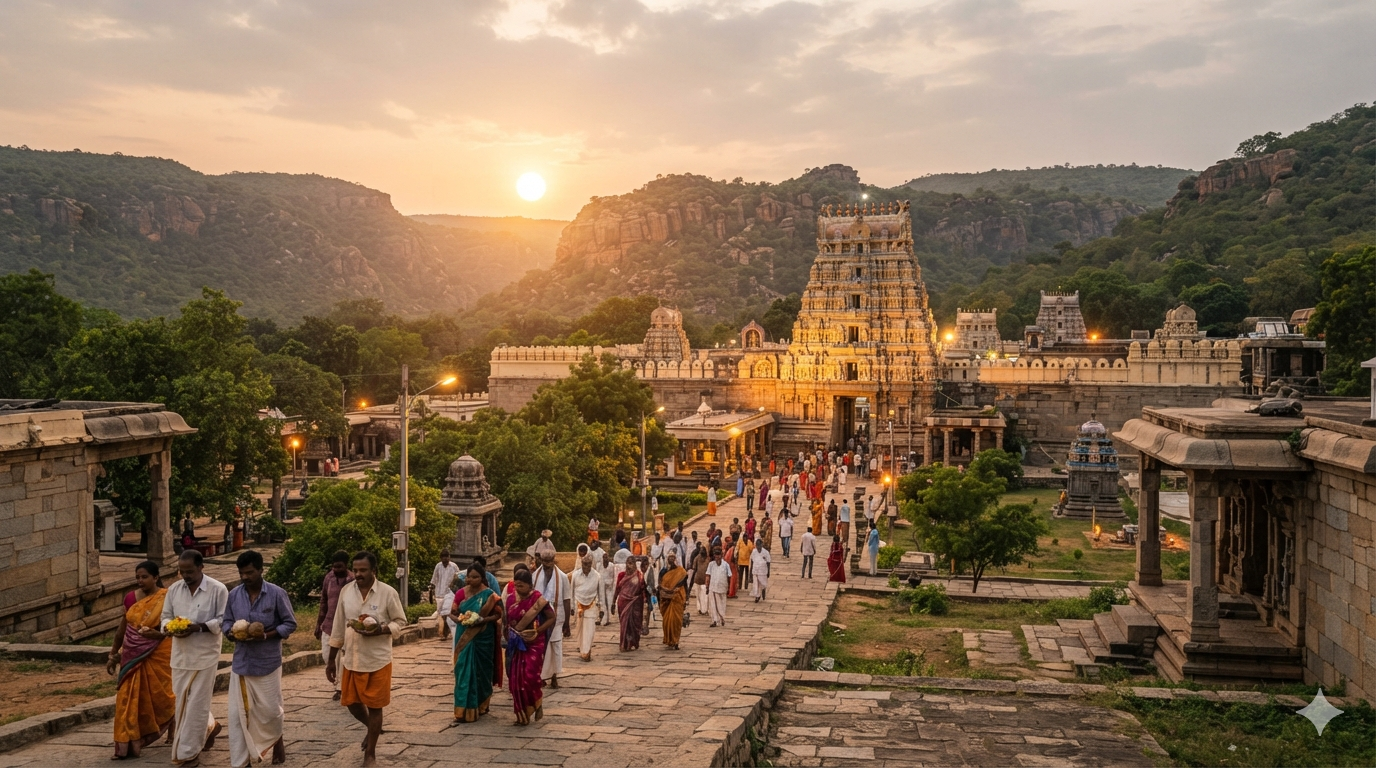
Planning a trip to Srisailam and confused about which darshan slot to book? You’re not alone. Between free darshan, Seegra Darshan, Abhishekam bookings, and a dozen seva options, the temple’s schedule can feel like a maze if you’re doing it for the first time.
Srisailam Temple sits on a hill in the Nallamala forest range in Andhra Pradesh, and it holds a status no other temple in India shares — it’s both a Jyotirlinga and a Shakti Peetha at the same location. That means you get to seek blessings from Lord Mallikarjuna Swamy and Goddess Bhramaramba Devi in a single visit. Getting your Srisailam temple timings right isn’t just about convenience; it directly affects whether you’ll spend two hours in a queue or twenty minutes.
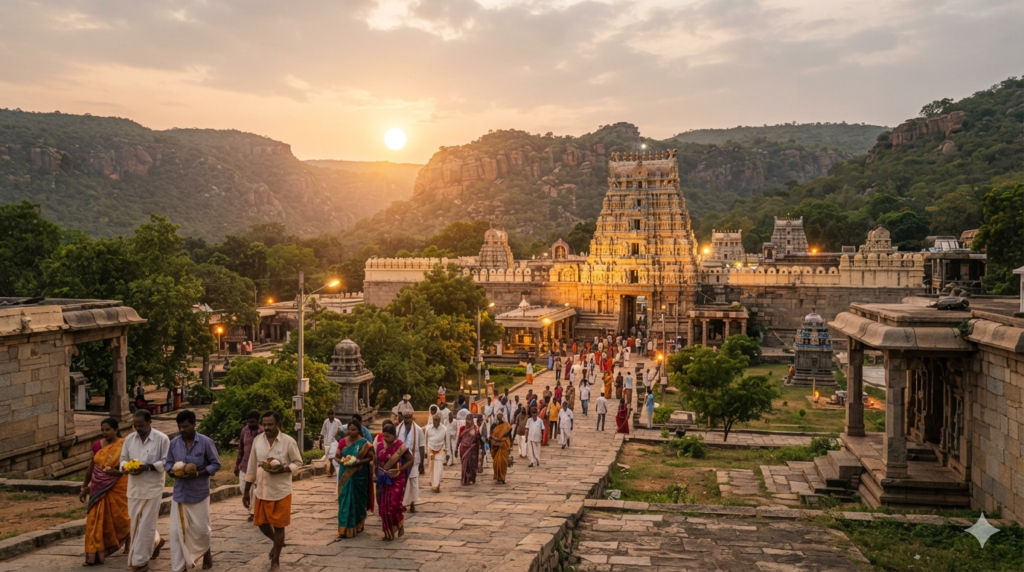
This guide walks you through the actual darshan windows, ticket categories, abhishekam schedules, and booking process for 2026, along with a few practical details most temple guides skip entirely — like what to do if your payment fails mid-booking, or where you can actually stay the night before your slot.
One quick note before we dive in: temple timings and ticket prices at Srisailam, like at most Devasthanam-run temples in India, can shift during festival months or after administrative changes. Always cross-check your final booking details on the official Srisailam Devasthanam portal (srisailadevasthanam.org) closer to your travel date.
Let’s start with the basics, because most people just want to know when the doors are open.
The temple generally follows a two-shift daily schedule. Mornings run early, there’s a midday gap, and it reopens for the evening. Here’s the quick summary:
| Session | General Timing |
| Morning Darshan | 4:30 AM – 1:00 PM |
| Evening Darshan | 6:00 PM – 9:00 PM (extends to 10:00 PM for paid categories) |
| Suprabhata Seva | Pre-dawn, before public darshan opens |
| Sandhya Aarti | Evening, ahead of the closing hours |
Notice the gap between 1:00 PM and 6:00 PM. That’s not an oversight — it’s when the temple conducts internal rituals, cleaning, and shift changes for priests. If you show up at 2:30 PM expecting darshan, you’ll be waiting outside for hours.
The morning window is the longer of the two, stretching across nearly nine hours. This is deliberate. Srisailam draws heavy footfall from Telangana and Andhra Pradesh on weekends, and the extended morning slot helps absorb that volume. The evening window is shorter but tends to be calmer, especially on weekdays — a detail seasoned pilgrims use to their advantage.
Here’s something most guides gloss over: timings don’t stay fixed year-round. During Maha Shivaratri, one of the biggest events on the Srisailam calendar, the temple typically stays open almost round the clock to manage the crowd, with darshan continuing well past midnight. Similarly, during Karthika Masam (the Kartik month, usually falling in October–November) and on Mondays, which are considered especially auspicious for Shiva worship, expect both extended hours and heavier crowds.
If your trip lines up with any of these periods, build in extra time. A darshan that takes 40 minutes on a regular Tuesday can take three hours on a Shivaratri night.
Srisailam offers multiple darshan categories, and picking the right one comes down to your budget and how much time you can spend standing in line.
Here’s how the main options stack up:
| Darshan Type | Approx. Price | Typical Wait Time |
| Free Darshan (Sarva Darshan) | No cost | 1.5–4 hours, longer on weekends |
| Seegra Darshan | Around ₹150 | 30–60 minutes |
| Athi Seegra Darshan | Around ₹300 | 15–30 minutes |
| VIP Darshan | Around ₹500 | Under 20 minutes |
| Bhramaramba Devi Seegra Darshan | Around ₹200 | 30–45 minutes |
These prices are what’s commonly listed by the Devasthanam and travel guides at the time of writing, but temple ticket pricing does get revised occasionally, so it’s worth a quick check on the official portal before you finalize your plan.
Free Darshan is exactly what it sounds like — no ticket cost, open queue. It’s the most commonly used option, and honestly, most devotees are perfectly happy with it on a weekday. The catch is timing: if you’re traveling with elderly family members or young kids, standing for two-plus hours isn’t realistic.
Seegra Darshan cuts that wait roughly in half for a modest fee. Athi Seegra and VIP Darshan go further, and at ₹500, VIP Darshan gets you a noticeably closer view of the sanctum with minimal waiting.
Don’t forget the Goddess. A lot of first-time visitors focus entirely on the Jyotirlinga and skip planning for Bhramaramba Devi’s darshan, which runs on a separate queue system. If completing both darshans matters to you — and for most devotees it does, given the Shakti Peetha significance — factor in time for both lines, not just one.
This is where most temple guides fall short: they list prices but never tell you what the queue actually feels like on the ground.
Sunday is consistently the busiest day at Srisailam. Multiple recent pilgrim accounts describe Sunday Free Darshan queues moving noticeably slower than on any other day of the week, simply due to volume from nearby cities. Monday runs a close second because of its Shiva significance, though the crowd tends to be more spread out across the day.
If you have flexibility, a Tuesday through Thursday morning visit, ideally before 8:00 AM, tends to give you the shortest wait regardless of which darshan category you pick. That’s not a rule the temple publishes anywhere — it’s just what repeated visitor experience points to.
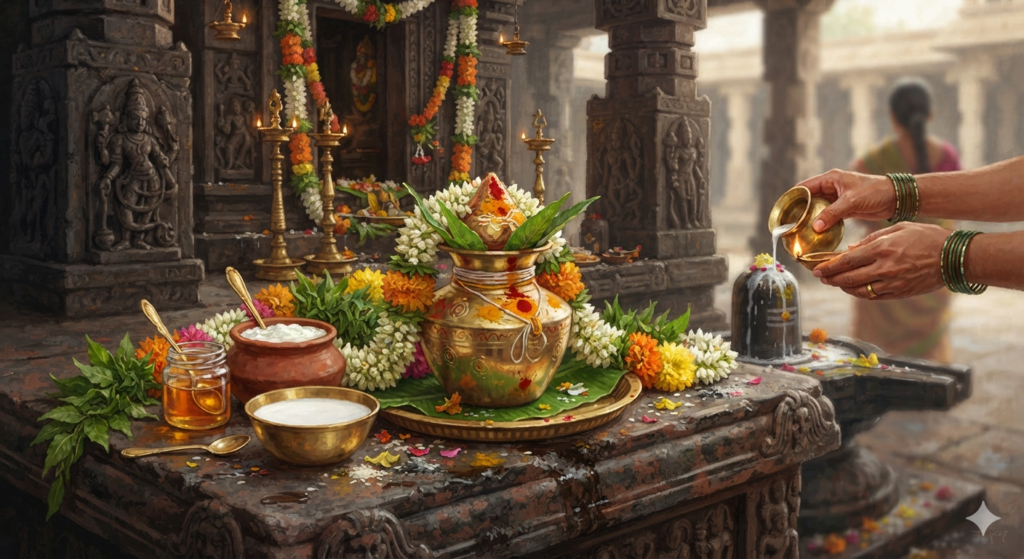
Abhishekam — the ritual bathing of the deity with milk, honey, curd, and sacred herbs — is one of the most sought-after experiences at Srisailam. And it’s also where advance booking matters most, because slots are limited by design.
| Ritual | Approx. Price | Typical Start Time |
| Samuhika Abhishekam (Couples) | Around ₹1,500 | 6:30 AM |
| Rudra Homam | Around ₹1,500 | 7:30 AM |
| Chandi Homam | Around ₹1,500 | 9:30 AM |
| Garbhalaya Abhishekam | Around ₹5,000 | Early morning, pre-booked slot |
| Vrudda Mallikarjuna Abhishekam | Around ₹500 | Morning, timing varies daily |
If you want Sparsha Darshan — meaning you actually get to touch the Jyotirlinga rather than just view it from a distance — this is the ritual that grants that access, and it’s not something you can walk in and request. It has to be pre-booked, the slots are genuinely limited, and they tend to fill up fastest around Mondays and Pradosham days (the 13th day of each lunar fortnight, considered especially significant for Shiva worship).
There’s also a strict dress code attached to this ritual specifically: men wear a dhoti or pancha with no shirt, and women wear a saree or a chudidar with a dupatta. Turning up in regular clothes means you won’t be allowed in, even with a confirmed booking.
These three homams run at staggered times through the morning rather than all at once, which actually works in your favor if you want to attend more than one. Mrityunjaya Homam in particular doesn’t follow a fixed daily slot — it’s scheduled based on the day’s overall ritual calendar, so it’s worth confirming the exact time when you book rather than assuming it matches the others.
Beyond Abhishekam, Srisailam offers a genuinely wide range of sevas, and it helps to think about them by what you’re actually seeking rather than just scrolling a price list.
For marriage and relationships:
For children and family milestones:
For health and protection:
A real example helps here. Say a family from Hyderabad wants to perform Aksharabhyasam for their child during the auspicious Vidyarambham period. They’d typically book the slot online weeks in advance, travel up the night before, and complete the ritual during the morning darshan window — usually before 10:00 AM, when priests have more availability for individual ceremonies. Families who show up without pre-booking often find themselves squeezed into whatever slot is free later in the day, which isn’t ideal for a ceremony this personal.
If travel isn’t possible, the Devasthanam runs virtual sevas where temple priests perform the ritual on your behalf while you participate remotely — Chandi Homam, Rudra Homam, Kumkumarchana, and Mrityunjaya Homam are all available this way. It’s a genuinely useful option for NRIs or elderly family members who want the ritual done but can’t make the physical trip up the hill.
Booking ahead isn’t just convenient at Srisailam — during peak season, it’s close to essential if you want a guaranteed slot instead of hoping the free queue moves fast enough.
This part barely gets covered anywhere, but it matters. If your payment fails after the amount is deducted, don’t rebook immediately — wait a few hours and check your registered email or the booking dashboard first, since duplicate charges usually reverse automatically within a working day. If they don’t, the portal typically has a grievance or support contact for payment disputes.
As for changing a slot once it’s confirmed: generally, the Devasthanam doesn’t allow modifications or cancellations on paid tickets. This is a stricter policy than a lot of first-time visitors expect, so double-check your date and darshan type before you hit pay — there’s usually no undo button here.
After darshan, prasadam counters distribute laddus, vibhuti (sacred ash), abhishekam theertham, and blessed rudraksha malas. Distribution generally follows the rhythm of the rituals themselves — right after the morning Suprabhata Seva, again after the midday abhishekams wrap up, and once more following the evening Sandhya Aarti. If you want extra laddus to take home for family, the counters near the exit gates typically stay open through standard daytime hours, separate from the main prasadam handout after your own darshan.
Mobile phones and cameras are banned inside the temple premises entirely — not just discouraged. Most guides mention the ban and stop there, but here’s what actually happens: you’ll need to deposit your phone, camera, and any leather items at designated locker counters near the entrance before joining the darshan queue. Both free and paid locker options are usually available, so it’s worth carrying a few small notes in case the free counters are full.
The dress code is enforced, not suggested. Men wear a dhoti, pancha, or kurta-pyjama; women wear a saree, half-saree, or a modest salwar-kameez. Western wear and anything considered revealing will get you turned away at the gate, no exceptions, even with a valid ticket.
By road, this is the most common route pilgrims take. APSRTC and private buses connect Srisailam to Hyderabad (roughly 215 km, a 4.5 to 6-hour drive), along with Vijayawada and Kurnool. One thing to plan around: the forest road through the Nallamala Hills closes to traffic at night for wildlife safety reasons, so time your travel to arrive during daylight hours.
By rail, the nearest station is Markapur Road, about 85 km out, with taxis and buses covering the rest of the distance. By air, Rajiv Gandhi International Airport in Hyderabad is your closest option, followed by a taxi or state bus for the hill route.
This is a gap in almost every existing guide. The Srisailam Devasthanam runs its own guest houses and choultries directly on the temple premises, and these are usually the most convenient and budget-friendly option if you can book one in advance through the same portal used for darshan tickets. They fill up fast during Shivaratri and Karthika Masam, so book weeks ahead if your trip falls in that window.
Private hotels and lodges are also available in the town, generally offering more amenities at a higher price, and they’re a safer bet if you’re booking last-minute since Devasthanam accommodation tends to sell out first.
Another detail rarely addressed: if you’re traveling with elderly parents or a family member with mobility challenges, standing through a Free Darshan queue for hours simply isn’t realistic. Seegra or VIP Darshan is the practical choice here, since the shorter queue times matter more than the ticket cost for anyone who can’t stand for extended periods. It’s worth calling the Devasthanam helpline ahead of your visit to ask about wheelchair assistance at the entrance, since provisions can vary and aren’t always advertised clearly online.
Can I do Abhishekam without pre-booking? Generally, no — especially for Garbhalaya Abhishekam, which is tied to Sparsha Darshan access. Walk-in availability, when it exists at all, is unreliable and shouldn’t be your primary plan.
What happens if I arrive after my booked slot time? Policies vary, but arriving late can mean losing your slot entirely or being pushed to a later, unconfirmed queue. Aim to arrive at least 30–45 minutes early to account for security checks and locker deposits.
Is VIP Darshan worth the price for a family of four? If your group includes children, elderly members, or anyone who can’t stand for long stretches, yes — the time saved usually outweighs the cost difference compared to Free Darshan.
Do timings change during the monsoon season? The hill road through Nallamala can face weather-related delays, so while temple hours themselves don’t typically change, your travel time might. Check road conditions before setting out during monsoon months.
Can I book Sparsha Darshan on the same day as my visit? It’s risky. These slots are limited and tend to be booked out days or weeks in advance, particularly around Mondays and festival dates.
If there’s one thing worth remembering about Srisailam, it’s this: the temple rewards planning far more than it punishes spontaneity. A few minutes spent checking the calendar for Pradosham dates or Shivaratri timing before you book can be the difference between a rushed, crowded visit and one that actually feels like the spiritual reset you came for. So before you lock in your travel dates, ask yourself — is this the calmest window you could pick, or just the most convenient one?