Physical Address
304 North Cardinal St.
Dorchester Center, MA 02124
Physical Address
304 North Cardinal St.
Dorchester Center, MA 02124

Sugam Darshan Ayodhya is generally understood as an arranged or facilitated entry option for devotees visiting the Shri Ram Janmabhoomi Mandir, but the exact process, availability and terminology can change. A successful visit depends on checking the latest official notice rather than relying on forwarded messages or old social-media posts.
Before travelling, you’ll want clarity about darshan timings, booking windows, pooja schedules, identity requirements, entry rules, festival crowds and possible restrictions. This article explains how to plan respectfully and practically, while separating dependable guidance from details that must be verified for your chosen date.
The phrase “Sugam Darshan” literally suggests easier or facilitated darshan. In everyday use, pilgrims may use it to describe a reserved, assisted, or specially managed opportunity to enter a temple and have darshan with less uncertainty than simply arriving without a plan. In Ayodhya, searches for Sugam Darshan are most often connected with the Shri Ram Janmabhoomi Mandir and the arrangements made for devotees visiting the temple complex.
That wording needs some care. A search result, travel agent, local counter, or social-media post may call an arrangement “Sugam Darshan,” while the official temple trust may use a different name for the same category or may change the system altogether. A pass shown online isn’t automatically genuine, and a payment request isn’t proof that an official booking exists.
For that reason, treat Sugam Darshan Ayodhya as a visitor-intent term, not as a permanent guarantee of a particular ticket, price, queue length or access route. The authoritative source is the official temple trust, its authorised booking system, an official helpline, or a notice displayed at the temple. The official Shri Ram Janmabhoomi Teerth Kshetra website is a sensible starting point for checking announcements, services and current instructions.
Darshan is not the same as a private audience, a guaranteed viewing duration, or permission to enter every part of the complex. Even a facilitated visit remains subject to security screening, crowd management, temple rituals and the instructions of temple staff. Your pass, if one is issued, normally supports an entry process; it doesn’t override a temporary closure or a ritual being conducted inside the sanctum area.
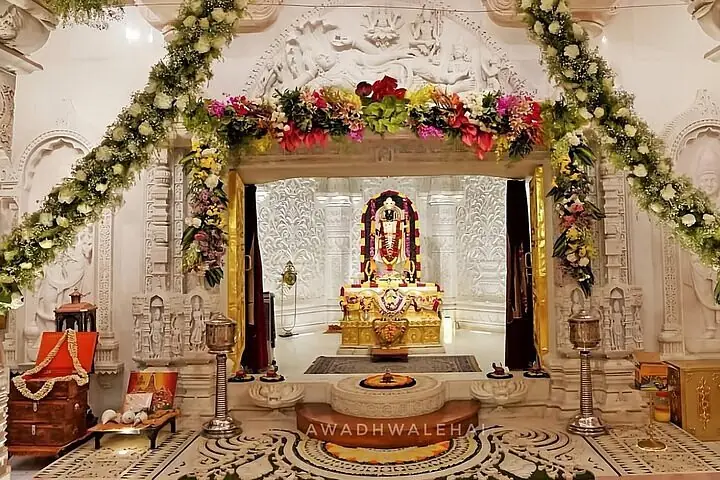
Indian temples use several terms for different visitor services: general darshan, paid darshan, special entry, priority darshan, assisted darshan, parchi, token and seva. Their meanings vary from one temple board to another. A “free pass” may refer to a no-fee registration, while a “special pass” may relate to a particular service rather than a faster queue.
When you ask about Sugam Darshan in Ayodhya, ask a precise follow-up question: Is this an official entry registration? Is there a fee? Which gate should be used?
What time should the devotee report? Does the pass apply to all members of a group? Clear questions reduce the chance of paying for an unofficial promise.
Booking arrangements can change because of demand, security reviews, construction work, festivals, visits by dignitaries, maintenance, weather, or decisions taken by the temple administration. A process that existed during one month may be paused or replaced later. This is why a fixed booking window copied from an old article should never be treated as current confirmation.
Start with the official temple website or officially identified booking portal. Check whether the page displays a current notice, a date-selection option, a service name, instructions for identity verification and a confirmation mechanism.
If the official site directs devotees to an app, counter or helpline, use only the route named there. Avoid links received through WhatsApp unless you can independently confirm the same address from an official source.
Booking “timings” can mean two different things. It may refer to the hours during which a devotee can reserve a slot, or it may mean the reporting time printed on the pass.
These aren’t interchangeable. A booking portal could remain open for a period while the available date slots are already full, and a devotee who arrives outside the reporting window may be asked to follow the general process.
Don’t assume that an online booking automatically guarantees immediate entry. Security checks, queue formation, biometric or document verification, and movement between designated areas can still take time. If you’re travelling with elderly relatives, children or a person with a disability, ask the official helpline specifically about assistance rather than relying on a third party.
A temple day is shaped by worship, not only by visitor convenience. The schedule may include opening rituals, mangala or morning worship, regular darshan, bhog, cleaning, afternoon arrangements, evening worship and closure. The public may not be allowed inside during every ritual, even if the complex remains active.
Exact Shri Ram Mandir darshan timings should be verified for the date of your visit. Publishing a single permanent timetable without a current official source would be misleading. Temple timings can be adjusted for special pooja, religious observances, crowd control, security requirements or a change in the daily ritual sequence.
Pooja timings deserve separate attention. A visitor may be able to attend or observe a general darshan period but not enter during a restricted ritual.
Some pooja or seva services may require prior registration, a separate contribution, a different reporting point or specific eligibility conditions. Never presume that a Sugam Darshan registration includes participation in a pooja.
| Information to verify | Why it matters | Best source |
|---|---|---|
| Temple opening and closing periods | Determines whether you can reach the entry queue in time | Current official temple notice or helpline |
| General darshan windows | Helps you choose a suitable travel and reporting plan | Official temple authority |
| Pooja and bhog periods | Darshan may pause or follow a different route | Official daily schedule, where published |
| Sugam or facilitated-entry reporting time | Late arrival may affect admission or queue placement | Booking confirmation and official instructions |
| Festival-day changes | Normal arrangements may be suspended or restricted | Festival notice from the temple or administration |
Think of the schedule as a working plan rather than a train timetable. Build a buffer around the reporting time, particularly if you’re arriving from Lucknow, Varanasi, Prayagraj or another city in Uttar Pradesh. Roads near major religious sites can become slower during peak hours, and security checks may take longer than expected.
Normal darshan generally means following the regular public entry and queue system. A devotee may arrive during the permitted period, undergo screening and proceed according to the instructions in force that day. This route may be free, but “free” doesn’t mean there will be no waiting, registration, token system or restrictions.
Sugam Darshan, where offered under that name, is intended to make the process more organised or accessible. It may involve a scheduled reporting time, a designated route, a registration record or a controlled visitor group. Whether it is faster than general darshan depends on the crowd, the number of active slots, security conditions and the functioning of the system on that date.
| Feature | General darshan | Facilitated or Sugam Darshan arrangement |
|---|---|---|
| Planning style | Usually based on current public entry instructions | May involve advance registration or a reporting slot |
| Queue experience | Can vary substantially with visitor volume | May be more structured, but no fixed speed should be assumed |
| Cost | Depends on official temple policy | Must be confirmed from the official source; avoid unofficial sellers |
| Entry certainty | Subject to capacity and same-day restrictions | Subject to valid confirmation, identity checks and temple decisions |
| Suitability | Useful for flexible travellers | Helpful for people planning around a particular date or group |
The comparison is descriptive, not a promise of a particular service. The name and rules must be confirmed before you pay or travel.
In particular, be cautious of anyone claiming to provide an “VIP pass” through personal contacts. Official temple access is controlled by the authorised institution and security personnel, not by a casual intermediary.
Usually, a pass should be understood as permission to follow a specified entry arrangement, not as an assurance of a private or uninterrupted view. Devotees may have only a short moment for darshan because many people are waiting. Photography, stopping in front of the deity, carrying offerings or sitting in a passage may be restricted.
Approach the visit with the right expectation. The value of a facilitated arrangement lies in orderly access and better planning, not in bypassing every rule applied to other devotees.
Questions about “Sugam Darshan Ayodhya ticket price” are common, but an exact amount should only be stated when it appears in a current official notice. Temple services can be free, contribution-based, paid, temporarily unavailable or structured differently for different categories. An old screenshot with a rupee amount is not reliable evidence of the current policy.
Some legitimate temple services may ask for a contribution or service fee, while ordinary darshan may follow another arrangement. The important distinction is whether the charge is displayed through an official channel and whether you receive a verifiable confirmation. A demand for cash at an unrelated hotel, travel desk or private office deserves caution.
Before making a payment, check the following details:
Never share an OTP with a person claiming to “activate” a pass. Don’t install an unknown application sent by a stranger, and don’t scan a QR code merely because it uses the temple’s name or image. Fraudsters often use religious urgency—“slots closing now” or “last VIP entry”—to pressure pilgrims into quick payments.
Unable to book Sugam Darshan Ayodhya is a common type of search because portals may show no slots, reject a document, time out or stop accepting applications temporarily. First, check whether the issue is a full quota, a closed booking window, a technical problem or a service suspension. Take a screenshot of the error, but don’t keep submitting payments repeatedly.
Use the official contact method listed by the temple. If no current online option is available, ask whether an authorised on-site process exists. Arriving at an unofficial counter with the expectation of converting a failed online attempt into a paid entry can create both financial and practical problems.
Entry rules are designed around security, crowd movement and the sanctity of the temple. They can differ according to the area being visited and may be updated without much notice. Carry the identity document named in your booking instructions, and make sure the details match the confirmation.
A devotee should generally plan for a security screening and restrictions on bags, electronic equipment, footwear and personal belongings. The permitted list can change, so confirm it through the current official notice. Storage facilities, if available, may have limited capacity and may not accept every item.
Practical preparation includes:
Families should decide in advance where to regroup if a member becomes separated. Older visitors may need a slower walking plan, rest breaks and assistance from an authorised volunteer or help desk. Do not assume that a pass automatically provides wheelchair support or priority seating; ask the official team before the visit.
Temple etiquette matters as much as paperwork. Avoid pushing, arguing with volunteers, blocking passages for photographs or treating the shrine as a sightseeing backdrop. A calm, respectful approach makes the experience better for your group and for other devotees.
Ayodhya’s visitor flow can rise sharply around major religious festivals, school holidays, long weekends and special observances. Ram Navami, Deepavali-related celebrations, important dates in the Hindu calendar and events associated with the temple may bring additional security measures and altered entry arrangements. The exact effect differs from year to year, so a general seasonal assumption isn’t enough.
During high-demand periods, the temple may restrict walk-in access, change queue routes, pause a special service or require devotees to follow a different registration process. Public information can also move quickly through local administration channels. Check announcements close to travel and again on the morning of the visit if your accommodation or transport plan allows it.
Festival planning requires flexibility. A pass for one date may not be valid on another, and a schedule shown during an ordinary weekday may not apply during a major celebration. Even if your booking is confirmed, allow extra time for road diversions, parking arrangements, security checks and movement from the transport drop-off point.
If your priority is a calmer experience rather than attending a particular festival, consider a non-holiday date and keep your itinerary light. Don’t combine a tightly timed temple visit with a train or flight departure immediately afterwards. Delays are possible even when the official darshan schedule is running normally.
Visitors from outside Uttar Pradesh should also account for local transport between Ayodhya Dham railway station, bus points, hotels and the temple area. Confirm the final approach route with your accommodation, but treat advice from private drivers as logistical guidance—not as proof of a special entry route.
A respectful visit may require accepting that the temple’s needs come first on exceptional days. Rituals, security and the safety of devotees can lead to temporary changes. That isn’t necessarily a failure of the booking system; it’s part of managing a major pilgrimage destination.
Example only: Imagine a family of four from Kanpur planning to visit Ayodhya on a weekday. They find an online reference to Sugam Darshan, but the page doesn’t clearly show whether the service is active or whether a fee applies. Rather than paying a local agent immediately, they check the official temple source, confirm the current reporting instructions and save the confirmation connected to each family member.
The family then builds a flexible day. They leave time for travel from their hotel, carry only essential items, keep identity documents accessible and avoid scheduling a return train immediately after the expected darshan period. Before leaving the hotel, one member checks for a new temple notice because a special religious event has been announced locally.
At the entry point, the family follows the security team’s instructions. They don’t assume their registration includes a separate pooja, photography permission or a private viewing. If a temporary crowd-control change sends them to another queue, they ask an authorised volunteer for directions rather than accepting help from an unknown tout.
This scenario doesn’t claim that a specific family, time or booking outcome is verified. It illustrates a sound decision process: confirm the source, understand what the registration actually provides, keep documents ready and leave room for temple-led changes.
Many difficulties begin before a visitor reaches the temple. The most common mistake is trusting an old timing or price because it appears in a search result. Search engines can continue showing pages after a temple has changed its process, and social posts often remove the date from an announcement.
Another mistake is confusing a hotel package with an official temple booking. A tour operator may arrange transport, accommodation or a local escort, but that doesn’t mean it can issue an authorised darshan pass. Ask for the temple-issued confirmation and verify it independently.
Watch for these warning signs:
Visitors also underestimate walking and waiting. Comfortable footwear may not be usable inside the temple area, while loose footwear can be difficult to manage near a busy entrance. Keep your plan simple, listen to the staff and avoid carrying possessions that create delays at screening.
Finally, don’t treat a donation or contribution as a purchase of spiritual entitlement. Giving support to a temple or charitable activity should be voluntary and made through a recognised channel. A contribution doesn’t excuse discourtesy, nor does it guarantee that every requested service will be available.
Check the current official temple website, authorised booking portal, helpline or temple notice. Search for the exact service name, read the eligibility and reporting instructions, and use only the channel identified by the temple authority. If the service is unavailable online, ask whether an official counter or alternate registration process is operating.
Online booking may be offered when the temple authority activates it, but availability and procedure can change. Don’t assume that every website offering a pass is authorised. Confirm the domain and service details through the official trust before entering personal information or making a payment.
There isn’t a safe universal answer without a current official notice. Some arrangements may be free, while another service may involve a stated contribution or fee. Verify the present policy, receipt process and cancellation terms before paying anyone.
The total time depends on the reporting process, security screening, crowd volume, temple rituals and the route in operation. A facilitated entry arrangement may make the visit more organised, but it doesn’t guarantee a fixed duration or an immediate view of the deity. Keep a generous buffer in your itinerary.
No. A temple’s daily rhythm may include rituals during which public movement is paused or adjusted.
Festival days, special worship, security requirements and administrative decisions can change the schedule. Confirm the date-specific information before travelling.
Assistance may be available through authorised temple or administration arrangements, but the details should be confirmed in advance. Ask about accessible routes, seating, wheelchair use, companions and reporting requirements. Don’t rely on an unofficial agent’s promise of priority access.
Contact the official booking support channel promptly and ask whether correction is possible. Carrying a mismatched document can create difficulty at verification. Avoid editing a pass yourself or purchasing a second pass from an unverified seller until the issuing authority explains the correct procedure.
A reliable plan for Sugam Darshan Ayodhya begins with one habit: verify close to the travel date. Check the official service status, reporting time, identity requirements, pooja interruptions, crowd advisories and festival changes before you leave. Keep your expectations realistic—an organised entry can help, but temple rituals and public safety remain the priority.
Save the official notice, carry the required documents and leave time for security and local travel. When you approach the temple with patience and accurate information, your darshan experience is more likely to feel peaceful rather than rushed. Before booking transport, ask yourself one practical question: have you confirmed the current arrangement directly with the authorised temple source?





