Physical Address
304 North Cardinal St.
Dorchester Center, MA 02124
Physical Address
304 North Cardinal St.
Dorchester Center, MA 02124
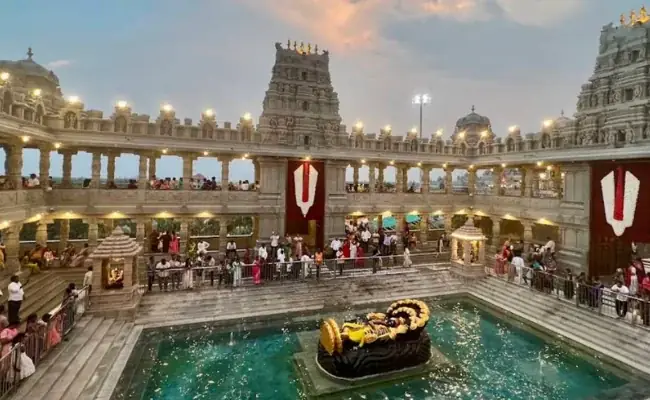
Swarnagiri temple timings matter because a visit to the Swarnagiri Venkateswara Swamy Temple near Bhuvanagiri, Telangana, can involve more than simply reaching the entrance. Darshan timings, seva schedules, crowd controls, prasadam availability, and festival changes may all affect your day.
Exact hours can also change without much notice, so relying on an old social-media post is risky. This article explains how to check today’s temple timings, plan Sunday visits, understand pooja and darshan arrangements, estimate time at the temple, and confirm practical details such as entry tickets, food, dress code, parking, directions, and nearby places before you travel.
Whether you’re travelling from Hyderabad or visiting Bhuvanagiri as part of a wider pilgrimage, a little preparation can prevent a long wait or a missed seva.
The phrase “Swarnagiri temple timings” usually refers to several different schedules rather than one fixed opening-and-closing period. A visitor may be asking about the temple opening time, the hours for general darshan, a special entry darshan slot, Suprabhata Seva, Abhishekam, Archana, aarti timings, or the final entry before the temple closing time. These activities can follow separate arrangements.
Temple schedules are also shaped by daily worship. A sanctum may not remain open for public viewing during every ritual, even when the temple complex itself is accessible.
During a pooja, alankaram, naivedyam, or other ritual service, devotees may be asked to wait until the prescribed darshan window resumes. That is normal temple practice and shouldn’t automatically be treated as a closure.
Special days create another layer of uncertainty. Brahmotsavam-related observances, Vaikunta Ekadashi, Ugadi, festivals associated with Lord Venkateswara, public holidays, weekend crowds, VIP visits, maintenance work, or crowd-management decisions may alter entry arrangements. The temple trust may also change the queue system or restrict access to particular areas.
For that reason, treat any timing displayed on an unofficial directory, map listing, travel video, or old visitor review as a starting point only. Before leaving home, confirm the latest information through the temple’s official website, official booking portal, verified temple notice, or published helpline. If those channels are unavailable, contact the temple office directly and ask specifically about general darshan, seva timings, and last entry.
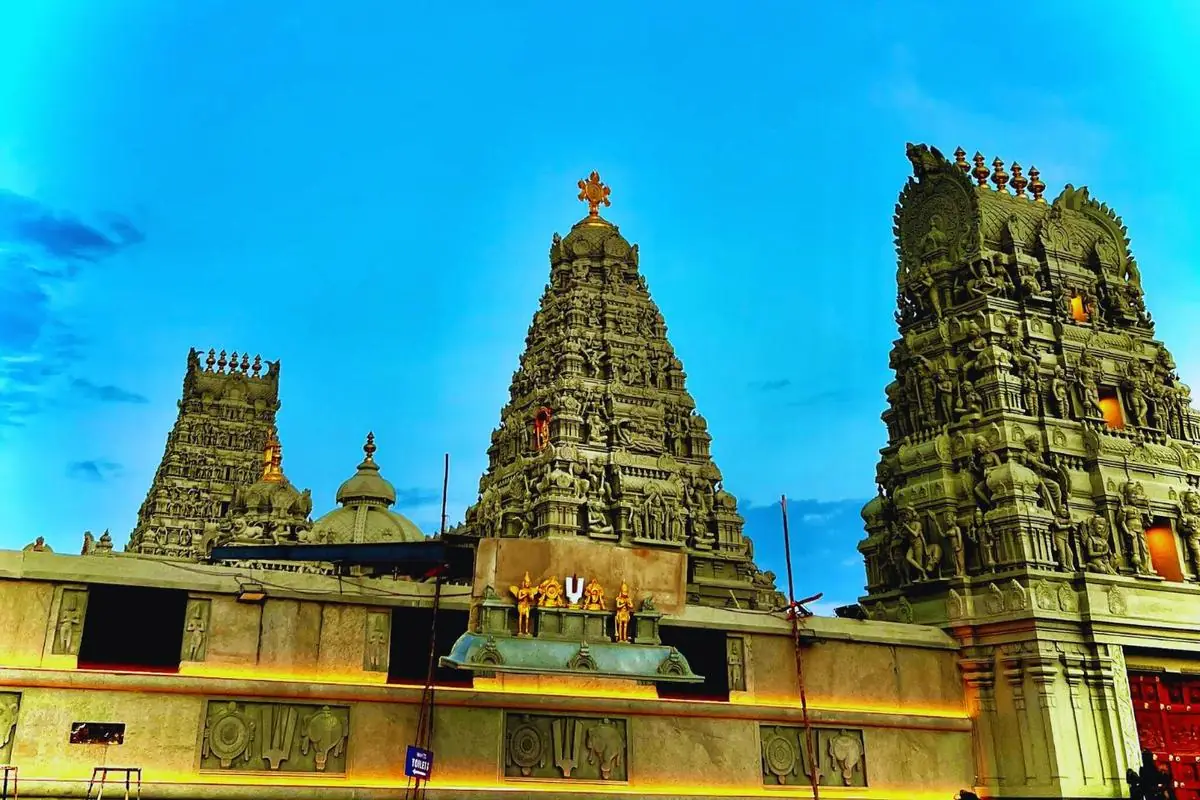
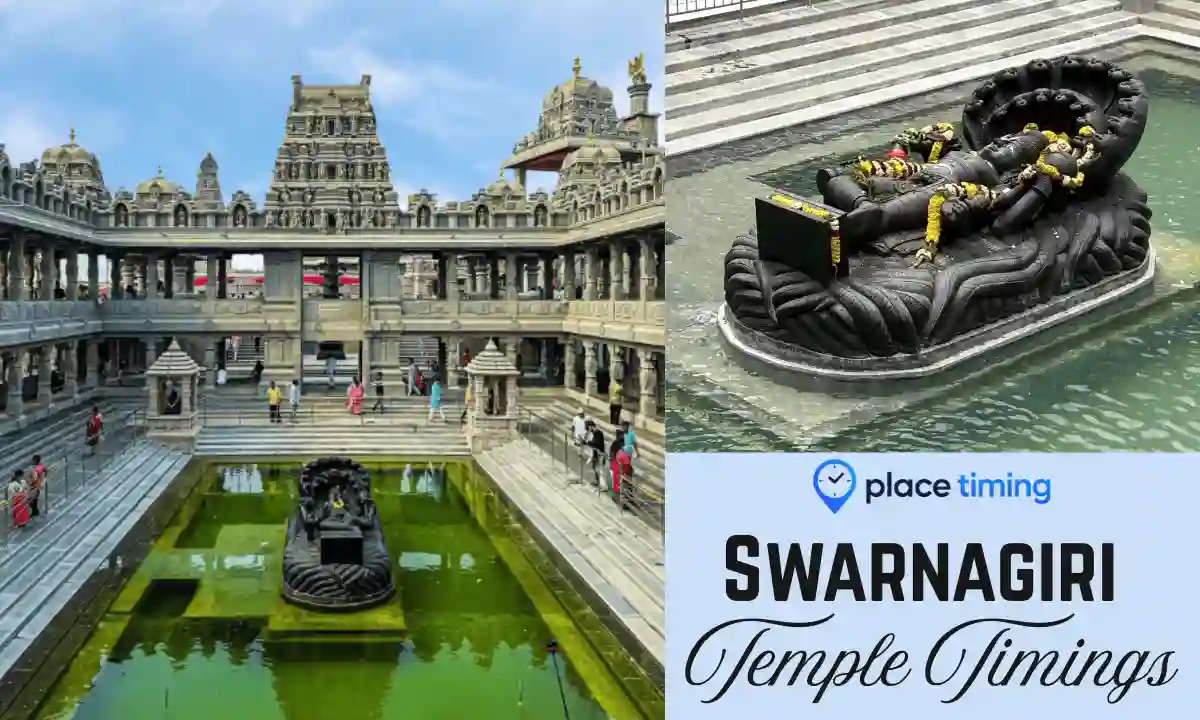
The Swarnagiri Venkateswara Swamy Temple is associated with the Bhuvanagiri area of Telangana and is visited by devotees seeking darshan of Lord Venkateswara. Search results may use slightly different spellings, including Swarnagiri Temple, Swarnagiri Venkateswara Temple, or Swarnagiri Venkateswara Swamy Temple. Checking the locality and map pin is important because similarly named temples can appear in search results.
Bhuvanagiri is within reach of Hyderabad by road, making the temple a practical choice for a day visit for many families. The actual Swarnagiri temple distance depends on your starting point, route, traffic, and the exact entrance selected in a navigation app. A route estimate from central Hyderabad may differ considerably from one beginning at the airport, Secunderabad, or an outer suburb.
Road travel needs a time buffer. Traffic around Hyderabad, roadworks, weekend movement, and festival-day congestion can make a journey longer than a map’s normal estimate.
If your plan includes a reserved seva, don’t schedule arrival for the exact booking time. Aim to reach the broader area early enough to locate parking, walk to the entrance, pass security, and find the correct queue.
Before travelling, confirm these location details:
For wider regional travel information, you can also consult the official Telangana Tourism website. Use it for destination context, not as a substitute for the temple’s current darshan notice.
People often search for “today’s temple timings” or “tomorrow’s temple timings” because they’re planning a short-notice visit. That search intent is sensible, but a standard business listing may not show temporary changes. The most reliable answer comes from a current notice issued by the temple authority itself.
When calling, avoid asking only “What time does the temple open?” A clearer question is: “What are the general darshan timings today, what is the last entry, and are any rituals or crowd restrictions expected?” If you’re travelling with elderly people or children, ask about queue access, seating, footwear arrangements, and whether a shorter route is available.
The temple closing time may not mean that every devotee inside must leave at that minute. Security checks, queues, and ritual transitions can create a separate cutoff.
Similarly, a posted opening time may indicate when the outer complex opens, not when the first darshan begins. These distinctions explain why two online listings can appear to contradict each other.
Do the same check for Sunday timings. Sundays commonly attract more visitors, but the exact crowd pattern depends on local observances and the temple’s calendar. Never assume that Sunday is simply a longer version of a weekday schedule.
Darshan timings describe the period in which devotees can seek a view of the deity. They don’t necessarily tell you how long the entire visit will take. Your darshan duration may include the time spent travelling inside the complex, joining a queue, passing security, depositing footwear, moving through barricades, and exiting after the sanctum visit.
There is no responsible way to promise one fixed waiting period without a current crowd update. On a quiet weekday, the movement may feel straightforward; on a festival day, a weekend, or a day with a special ritual, the same route can take much longer. The temple’s queue design and number of open counters can also change the experience.
| Visit element | What to confirm | Why it matters |
|---|---|---|
| Temple opening | When the complex and public entrance open | You may arrive before the sanctum darshan begins |
| General darshan | Available windows and last entry | Shows when you can join the ordinary queue |
| Special entry darshan | Slot time, reporting point, and ticket conditions | A booking may not allow entry at any time of day |
| Seva or pooja | Reporting time and ritual duration | Late arrival could affect participation |
| Temple closing | Final entry versus gate-closing time | You need to leave enough time to reach the queue |
If you’re visiting with senior citizens, plan around comfort rather than the shortest possible itinerary. Carry water where permitted, use the designated seating areas, and ask staff about assistance before joining a long queue. Do not photograph or record restricted areas simply to pass time; temple rules may prohibit cameras or phones in specific zones.
A useful planning habit is to keep the temple visit as the main activity and place other sightseeing afterward. If your darshan takes longer than expected, you won’t be forced to leave midway to meet a second appointment.
Pooja timings are different from ordinary darshan timings. A pooja may be performed for the deity while the public has limited access, or devotees may be permitted to participate through a ticketed seva.
Common terms searched by pilgrims include Suprabhata Seva, Abhishekam, Archana, aarti timings, and Ekanta Seva. The availability and exact meaning of each service must be confirmed with the temple administration.
Suprabhata Seva generally refers to a devotional service associated with awakening the deity in the early morning. Abhishekam refers to ritual bathing or ceremonial offerings, while Archana commonly involves the recitation of names or prayers on behalf of devotees.
Ekanta Seva is typically associated with the deity’s private or closing ritual. These terms have recognised worship traditions, but the procedure at one temple may not be identical to another.
Don’t assume that every seva is open for daily public booking. Some services may be conducted only on selected days, may have limited participation, or may be temporarily suspended during major festivals. A seva ticket can also have a reporting time that is earlier than the ritual’s advertised start.
It’s wise to keep a digital and printed copy of a confirmed booking when possible. A payment receipt alone may not be accepted if the temple requires a specific confirmation document, QR code, or identity proof. Use only the official booking route identified by the temple; avoid sending money to an unverified person who offers faster access through a private message.
Many devotees want a direct answer to “Is there an entry ticket for Swarnagiri Temple?” The accurate response depends on the type of visit and the current policy. A temple may allow general or free darshan while separately offering paid sevas, special entry darshan, parking, accommodation, or ritual services. The existence of one paid facility doesn’t automatically mean that every visitor must buy a ticket.
Likewise, the phrase “ticket price” can refer to different things. It might mean a special darshan ticket, a pooja contribution, a seva booking, a vehicle fee, or a facility charge.
Always read the description attached to the amount before paying. Check whether the amount is per person, per family, per vehicle, or per booking.
Before you travel, verify the following on the official portal or at the authorised counter:
Never purchase a ticket solely because someone outside the temple says that ordinary darshan is impossible. Ask at the official enquiry counter and look for a displayed notice. Fraudulent or unofficial booking promises can create both financial loss and difficulty at the entrance.
Example only, not a verified account of the temple’s current policy: Imagine a family from Hyderabad planning to visit on a Sunday. They see an old online post showing a paid special-entry option and assume it guarantees immediate access.
Before travelling, they contact the temple and learn that the service is unavailable on that particular date, while free darshan remains open with a queue. They then leave earlier, carry the required identification, and keep the afternoon flexible.
The lesson is simple: an old price or booking screenshot cannot establish today’s ticket price or availability. Current confirmation matters more than a confident claim on a travel page.
Regular schedules are easiest to understand on ordinary weekdays, but many devotees intentionally choose festivals, auspicious days, or weekends. These visits can be spiritually meaningful, yet they require more patience. Rituals may begin earlier, the temple may introduce controlled entry, and the ordinary darshan queue may move differently from the published schedule.
Important occasions connected with Lord Venkateswara worship may bring additional decoration, processions, special naivedyam, or extended religious activity. The exact arrangements at Swarnagiri Temple should be verified through a festival notice rather than inferred from another Venkateswara temple’s programme.
Sunday timings deserve separate attention. Families often travel on Sundays because children are off school and working adults have more time.
That can make parking, food counters, queue areas, and nearby roads busier, although actual conditions vary. If you want a quieter visit, ask the temple office which part of the day is usually less congested instead of relying on a generic weekday assumption.
On a festival or special occasion, prepare for changes such as:
Arrive with fewer belongings, wear comfortable traditional clothing, and avoid making a tight return reservation immediately after darshan. A flexible plan is especially valuable if your group includes young children, older adults, or anyone with mobility concerns.
Food arrangements are a common practical concern, particularly for families travelling from a distance. Searches for Swarnagiri temple food timings may refer to prasadam counters, annadanam, canteens, or shops outside the temple. These are not necessarily managed by the same authority and may follow different hours.
Prasadam is sacred food or an offering distributed to devotees. The counter may open only during certain periods, and selected items may sell out.
Annadanam, where provided, refers to the serving of food to devotees as a religious or charitable practice. Its availability, seating capacity, token system, and serving schedule should be checked directly with the temple.
Don’t assume that annadanam is available continuously from opening time until closing. On some days, distribution may be tied to a ritual, a meal period, volunteer capacity, or a special event. If your group includes an infant, a diabetic traveller, or someone who needs medication with food, carry suitable essentials in accordance with the temple’s rules.
Food areas can become crowded after a major darshan wave, especially on Sundays and festival days. If you plan to eat outside the temple, identify a few nearby places in advance, but check current operating hours rather than assuming every restaurant is open late. Keep the temple’s cleanliness instructions in mind and dispose of packaging responsibly.
A respectful dress code helps visitors move through the temple without unnecessary inconvenience. Requirements can vary, so check the latest notice before you leave.
In general, modest, comfortable clothing is a sensible choice for a Hindu temple visit. Avoid clothing that may conflict with posted instructions, particularly during a formal seva or a festival entry arrangement.
Temple rules may cover footwear, photography, mobile phones, bags, food, smoking, alcohol, and access to restricted areas. Some rules apply only inside the sanctum zone, while others apply throughout the complex. Follow instructions from security personnel and volunteers even if a previous visitor was allowed to do something different.
Keep your visit calm and considerate. Speak softly near worship areas, don’t block the queue for photographs, and avoid pushing when the line moves. If you’re carrying a child, hold them securely and remain alert around steps, barricades, and crowded corridors.
Before entry, review this short checklist:
These habits make the visit easier for you and for other devotees. They also reduce the chance of returning to your vehicle for a prohibited item after you have already reached the entrance.
Swarnagiri temple directions should be checked close to the date of travel because road access and parking arrangements can change. A map app may take you to a rear service road, a temporary parking area, or a nearby landmark instead of the principal visitor entrance. Compare the map pin with the address published by the temple.
If you’re driving from Hyderabad, estimate the route in your travel app at the time you expect to leave. Then add a buffer for city traffic, toll stops, fuel, meals, and a possible search for parking. The distance shown in kilometres is less useful than the likely travel duration during your chosen departure window.
Parking facilities may be located away from the main gate. Ask whether two-wheelers, cars, buses, and accessible vehicles use separate areas.
During large events, private vehicles may be redirected, and the final walking stretch may be longer than usual. If you’re travelling by taxi, confirm whether the driver can enter the designated drop-off zone or must stop outside a restriction point.
Nearby places may include local landmarks, food stops, or attractions associated with the Bhuvanagiri area, but don’t assume they are within a short walk of the temple. Check distances separately and avoid adding too many stops to a day built around a time-sensitive seva.
There is no fixed answer because darshan duration changes with the day, crowd, ritual schedule, queue arrangement, and entry category. Allow extra time beyond the published darshan window, particularly on Sundays, festivals, and public holidays. Ask the temple office about current crowd conditions if your journey is time-sensitive.
General entry and paid services may be treated differently. Free darshan may be available while special entry darshan or sevas require payment, but the current policy must be confirmed through the temple’s official channel. Don’t rely on an old ticket price or an unofficial agent.
Check the latest official notice because the temple closing time, final entry, and sanctum darshan closure may not be identical. Rituals, festivals, maintenance, crowd management, and special visits can change the schedule.
They may be, and Sunday crowd levels can also differ even when the regular schedule remains unchanged. Confirm Sunday timings, last entry, parking instructions, and any special seva arrangements before travelling.
Prasadam or annadanam may be available according to the temple’s current arrangements, but food timings and availability can vary. Ask about tokens, serving periods, and outside-food rules before joining a meal queue.
Online booking depends on the temple’s current systems and the type of service. Use only a booking portal linked or identified by the official temple administration. Verify the reporting time, identity requirements, cancellation rules, and whether the booking includes darshan or only a seva.
Reliable Swarnagiri temple timings are less about memorising one daily timetable and more about confirming the right schedule for your exact visit. Check general darshan, last entry, pooja or seva reporting time, food arrangements, parking, and festival notices through the temple’s official channels shortly before departure.
Save the confirmation, keep your itinerary flexible, and allow more time than the shortest online estimate suggests. With those simple steps, your visit to the Swarnagiri Venkateswara Swamy Temple can remain focused on darshan rather than avoidable uncertainty.





